

From the Biggest Lake to the Smallest Bowl
You can remember this route by one thing: the scale keeps shrinking. A lake of 4,500 square kilometers. Water only a few centimeters deep. A 3.5-kilometer prayer circuit. A village of a few dozen households. And, at the end, one bowl of noodles. Nine days, from the biggest thing on the plateau to the smallest.
This is the Qinghai–Gansu–Tibetan route, a loop through high lakes, working monasteries, stone-valley villages and the Yellow River city of Lanzhou. It is not a greatest-hits tour. It is a route that teaches you how to look at scale.
Why This Route Works
First, it is a gentle introduction to the Tibetan plateau. Most of the route sits above 3,000 meters, but the logistics are easier than in Tibet, and most travelers adjust over two or three days. Second, the blues of Qinghai Lake and Chaka Salt Lake look almost unreal. Third, Labrang Monastery is not a museum. It is a working monastery: pilgrims circulate, monks debate, prayers continue whether visitors are there or not.
That mix matters. You get big landscape, but you also get human texture. The route is famous enough to be manageable, and quiet enough that the small things still surprise you.
Day 1–2: Xining, the Slow Start
Land in Xining at 2,200 meters. Do not rush uphill. Start at Kumbum Monastery, known in Chinese as Ta’er Si, for its three treasures: butter sculptures, murals and embroidered hangings. The butter sculptures are made by monks from yak butter, shaped into Buddhas and stories. Their hands stay in ice water while they work, otherwise the butter melts.
Then go to the Qinghai Provincial Museum. It sounds like homework. It is not. It gives you the geography and ethnic context for the next eight days. This day and a half is for your body as much as your curiosity.
Day 3–4: Qinghai Lake, 4,500 Square Kilometers
Head west from Xining over the Riyue Mountain pass at 3,500 meters. The lake itself sits at 3,200 meters. You do not see the whole lake at first. You see one edge, because the far shore disappears.
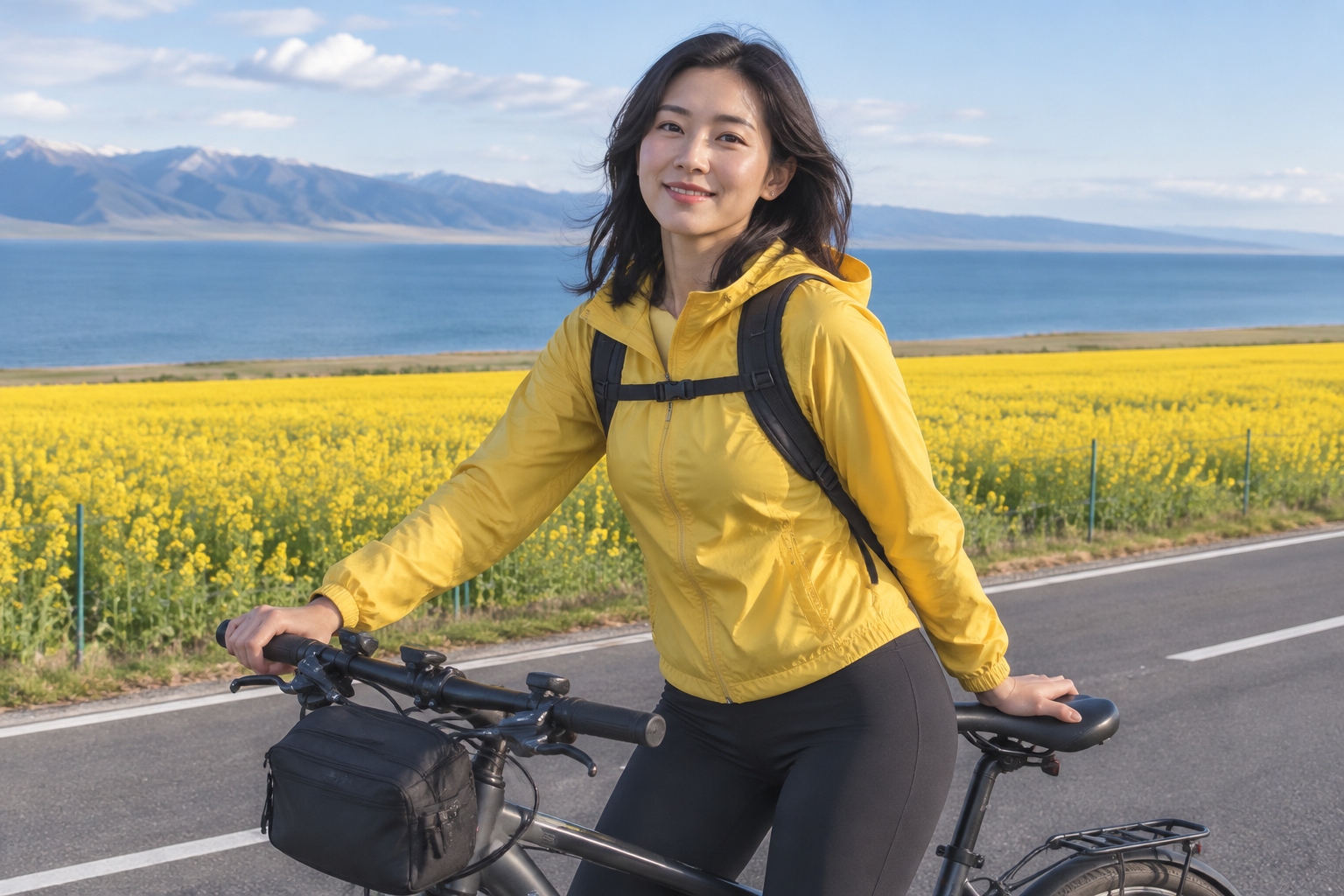
Qinghai Lake covers about 4,500 square kilometers. It is China’s largest lake and its largest saltwater lake. The ring road is 360 kilometers: a full day by car, four or five days by bicycle. From mid-July to early August, rapeseed flowers run yellow all the way to the water. The blue sits above. No filter needed.
On Day 4, cycle a section. You do not need to circle the lake. Choose a flat stretch and ride for two or three hours. The wind is strong. Against it, you barely move. With it, you feel fast. In the evening, wait for sunset by the shore. The lake turns from blue to gray, then purple.
Day 5: Chaka Salt Lake, Water a Few Centimeters Deep
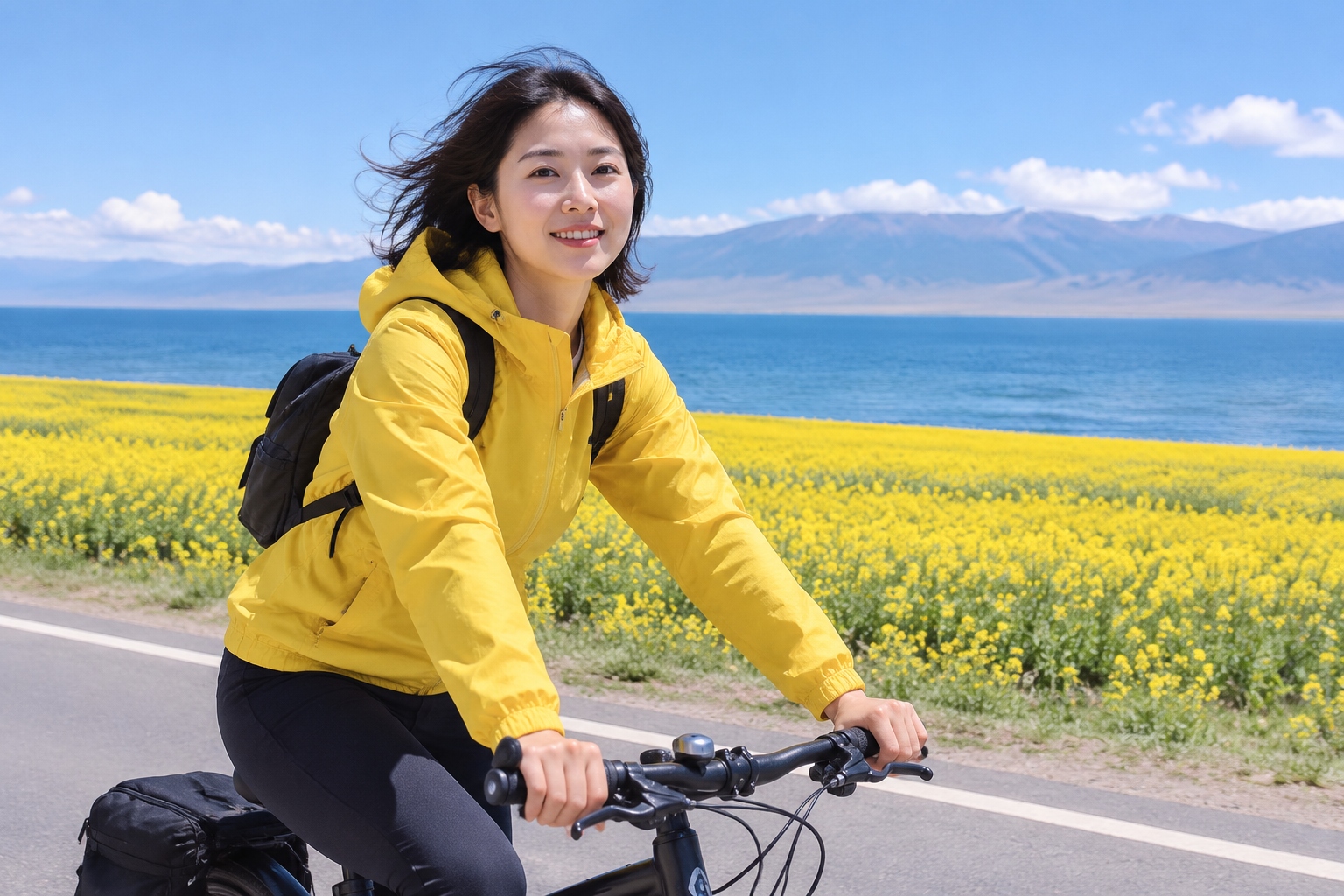
Chaka means salt pool in Tibetan. It is a salt crust under a very thin layer of water. The water is only a few centimeters deep. It does not flow. It mirrors.
This is the famous sky mirror. It only works when there is no wind, and you should avoid midday. Morning and evening are best. At noon the light is harsh and the reflection turns into a white blur. A small train runs to the center of the lake. You can rent shoe covers on site. Salt water damages shoes, and it leaves a white crust on your skin.
People have harvested salt here for more than 2,000 years, and it is still not exhausted. You are not standing on mud. You are standing on the bottom of a lake.
Day 6: Labrang Monastery and the 3.5-Kilometer Prayer Path
Turn southeast, cross the mountains into Gansu, and drop to Xiahe at 2,900 meters. Labrang Monastery was founded in 1709. It is one of the six great Gelug monasteries and has six colleges. It is not a single temple. It is a university. At its peak, more than 3,000 monks studied medicine, logic and astronomy here.
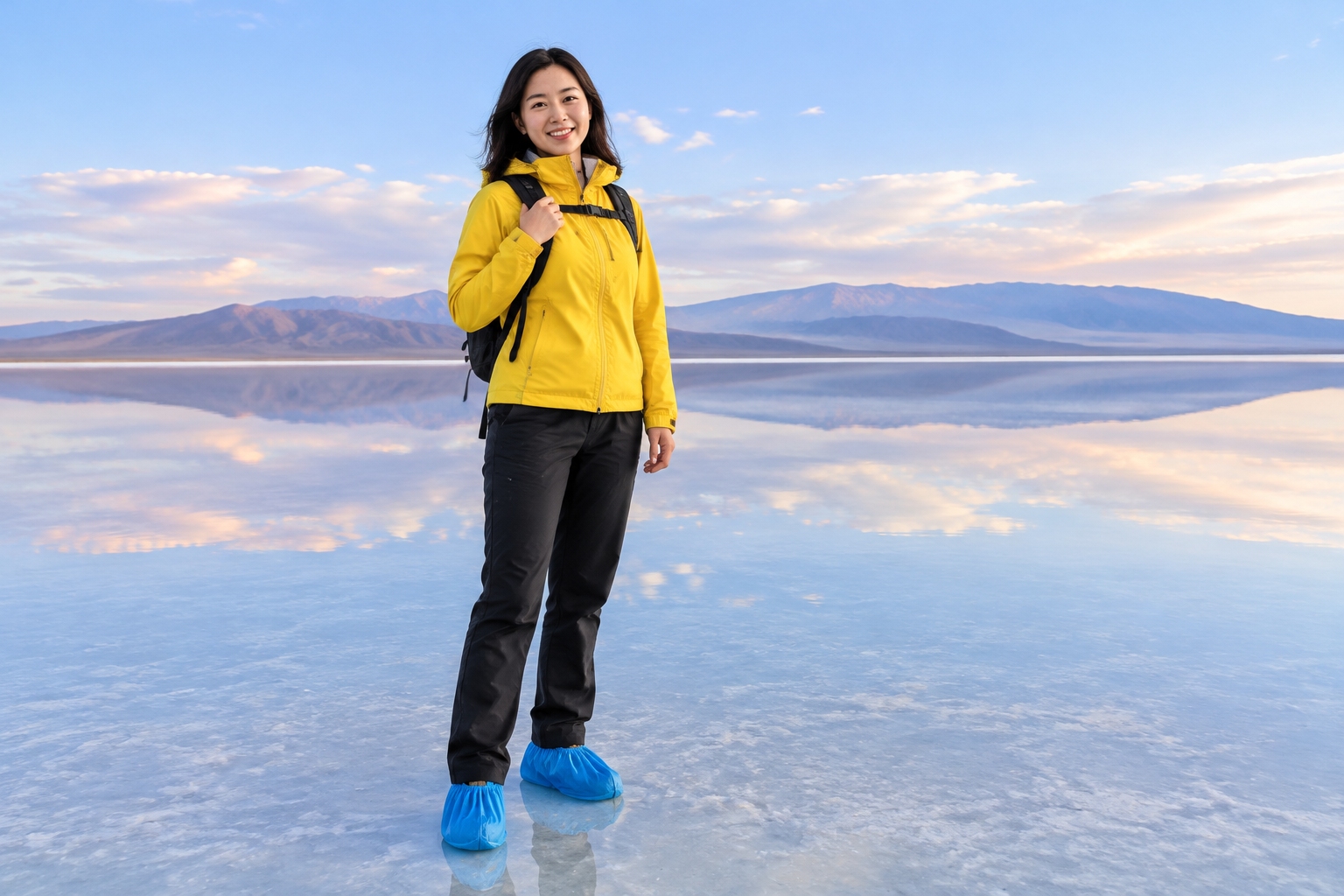
A prayer corridor wraps around the monastery: 3.5 kilometers, more than 1,700 prayer wheels. People come before dawn, many of them older. They walk quickly, one hand turning a wheel, the other holding prayer beads. Join the flow. Walk clockwise. Do not walk against the pilgrims.
In the afternoon, go to the square in front of the Great Assembly Hall for monk debates. Debate is an exam. One monk sits. Another stands, claps, stamps and asks questions loudly. The clap means I have finished, and it also fixes the answer. You will not understand the Tibetan. You will understand who is winning.
This is a living religious place. No photos inside the halls. Ask before photographing a monk’s face. Do not step on thresholds. Do not touch statues or the tops of prayer wheels.
Day 7–8: Zhagana, a Village Inside a Stone Box
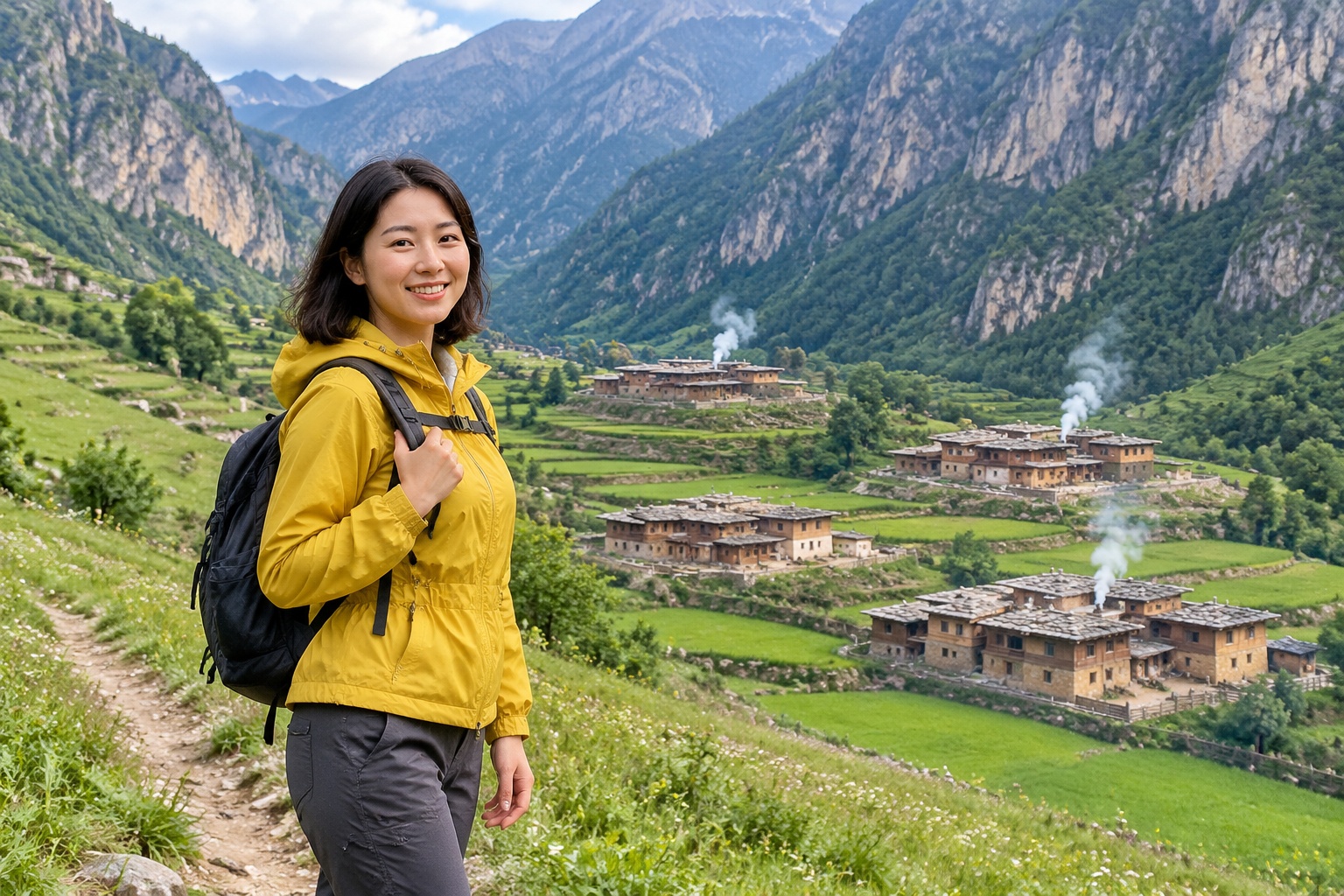
Continue south. The road narrows until it enters a valley. Stone mountains stand on four sides like walls. Four villages sit in the middle. This is Zhagana. In Tibetan, the name means stone box.
A hundred years ago, the explorer Joseph Rock reached this valley. He wrote that if the author of Genesis had seen this place, he would have put the Garden of Eden here. You do not have to believe him. Stand at the village entrance and you will understand why he wrote it.
On Day 8, hike. The route is not hard. Go up from the village, through barley fields, to the meadow at Xiannütan. Look back. Four villages hang on terraces halfway up the mountain. Roofs are made of wooden boards, weighted down with stones. The point is not exercise. The point is to change your view from looking at the village to having the village under your feet.
Stay in the village that night. Conditions are simple. Hot water may run on a schedule. There are no streetlights. Look up: the Milky Way is there.
Day 9: Lanzhou and One Bowl of Beef Noodles
Drive back to Lanzhou. The altitude drops to 1,500 meters. Suddenly, breathing feels easy.
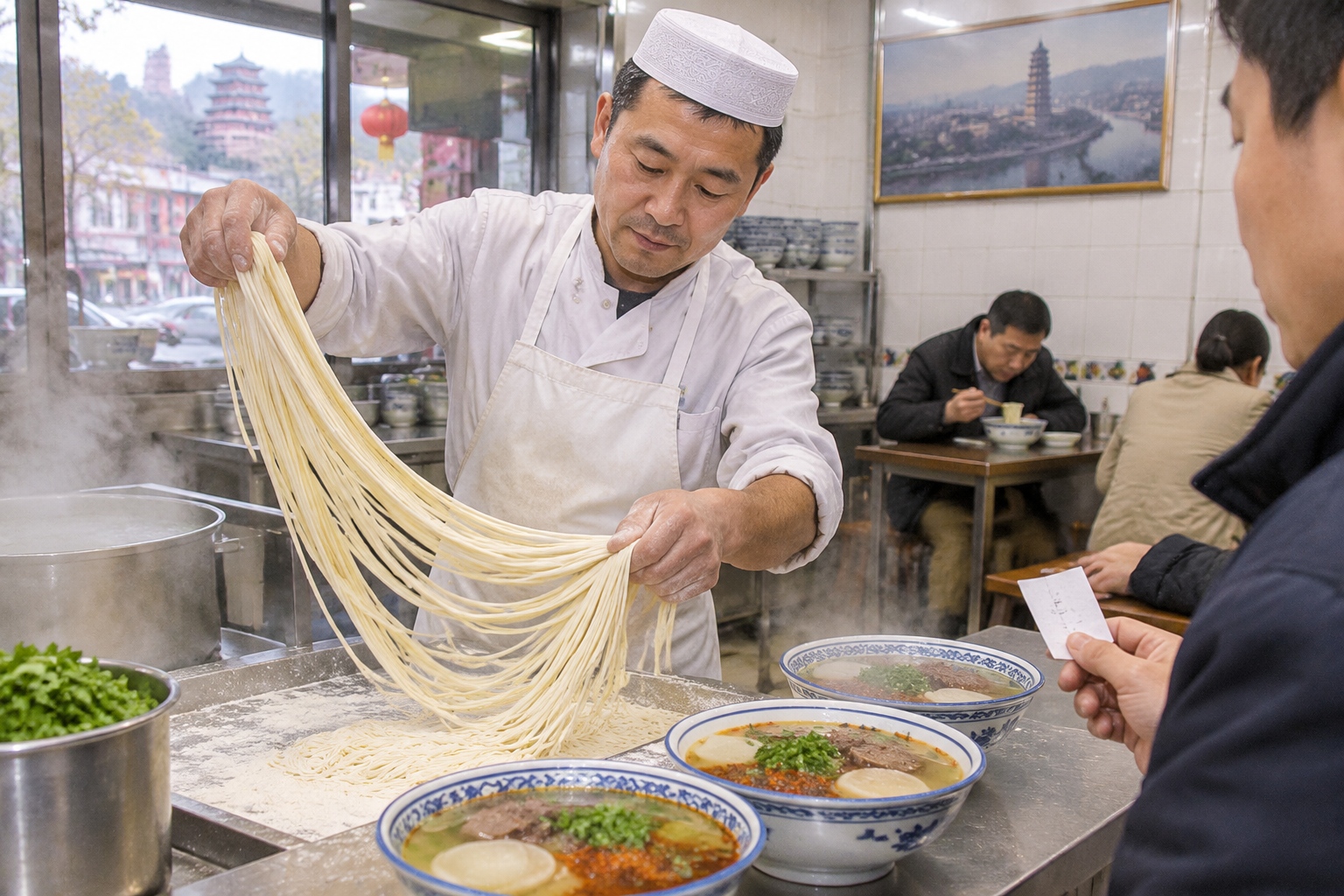
First stop: beef noodles. Locals call it niuda. The standard is one clear, two white, three red, four green, five yellow: clear broth, white radish, red chili oil, green cilantro and garlic sprouts, yellow noodles. You choose the noodle shape: maoxi, xi, erxi, sanxi, jiuye, dakuai, qiaomaileng. Each is a different thickness, and the same cook makes them all. Eat in the morning. Many shops close by 2 p.m.
In the afternoon, walk the Yellow River. Zhongshan Bridge was built in 1909 and is called the first bridge over the Yellow River. The rivets are still in the iron. At the waterwheel park, the big wheels follow a Ming dynasty design and were used to lift river water for irrigation. The river comes from Qinghai. You have just spent eight days upstream.
Six Small Things to Know
Altitude is not extreme, but respect it. Xining is 2,200 meters, Qinghai Lake 3,200, Zhagana around 3,000. On the first night, do not drink, do not take a hot bath, and walk slowly. Most people adjust in two or three days.
Driving days are long. Xining to Qinghai Lake to Chaka, and Xining to Xiahe to Zhagana, can take whole days on the road. Bring motion sickness pills, water and snacks. Many toilets are basic pit toilets.
Four seasons in one day. Early morning can be near zero. Noon can be 25°C. Pack sunscreen and a thin down jacket at the same time. The UV is strong.
Chaka depends on weather. The mirror needs no wind. Rain or strong wind ruins it. That is why it is best placed in the morning or evening.
Monastery rules matter. Walk clockwise around the prayer path. Take off hats and sunglasses inside halls. Keep your voice down. Women should not wear shorts inside halls.
Transport. Fly into Xining. Leave from Lanzhou by air or high-speed rail. In between, use a private car.
Who This Route Is For, and Who It Is Not
It is for people who want to see Tibetan culture but worry about altitude. This is a gentler version of the Tibetan plateau. It is for people who like big landscapes and road trips. It is for people with a real interest in Tibetan Buddhism, who are willing to watch quietly. It is for people who can sit in a car for five or six hours a day.
It is not for people who only want to move between cities and attractions. There is a lot of road time. It is not for people who need hotel standards. The two nights in Zhagana are simple. It is not for late risers. The prayer path and the salt-lake mirror both belong to the early morning.
What You Bring Back
Not dried yak meat or Tibetan silver. You bring back the first edge of the lake after the pass. The stretch of road where rapeseed yellow reaches the water. Your shadow standing on clouds at Chaka. The click of wooden prayer wheels in the dawn corridor. One clap in the debate yard. The village of Zhagana under your feet, with straight lines of cooking smoke. The Milky Way pressing down on stone mountains at night. The bowl of noodles in Lanzhou, and the cook asking what thickness you want.
Nine days, from 4,500 square kilometers to one bowl. The route does not teach you that things are big. It teaches you how to see big things small, close and specific.