
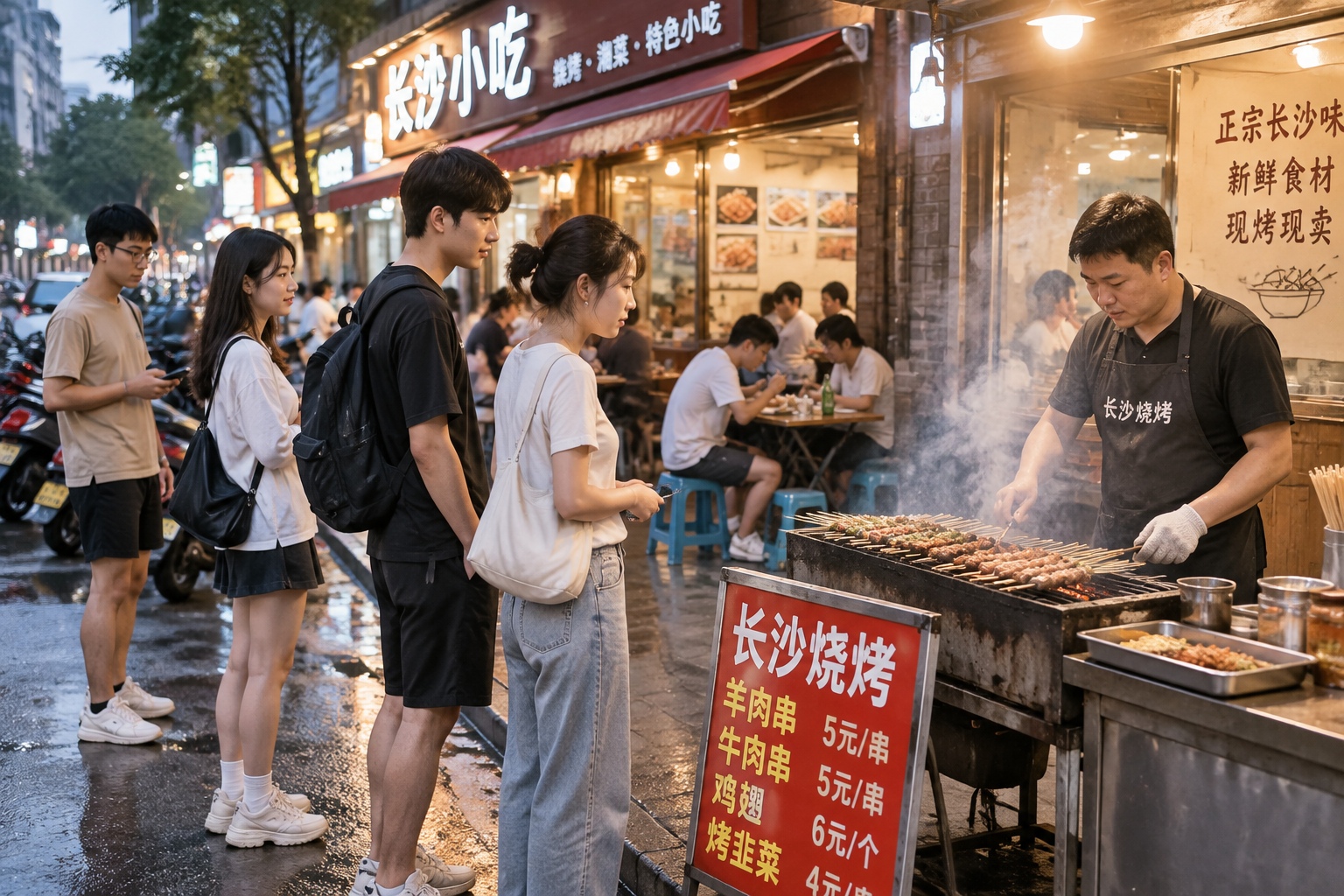

2 A.M. on Jiefang West Road
“How much longer?” a girl in a yellow hoodie asks her friend, standing at a stinky tofu stall on Jiefang West Road in Changsha. There are about twenty people ahead of them. It is two in the morning. Nobody looks like they are leaving.
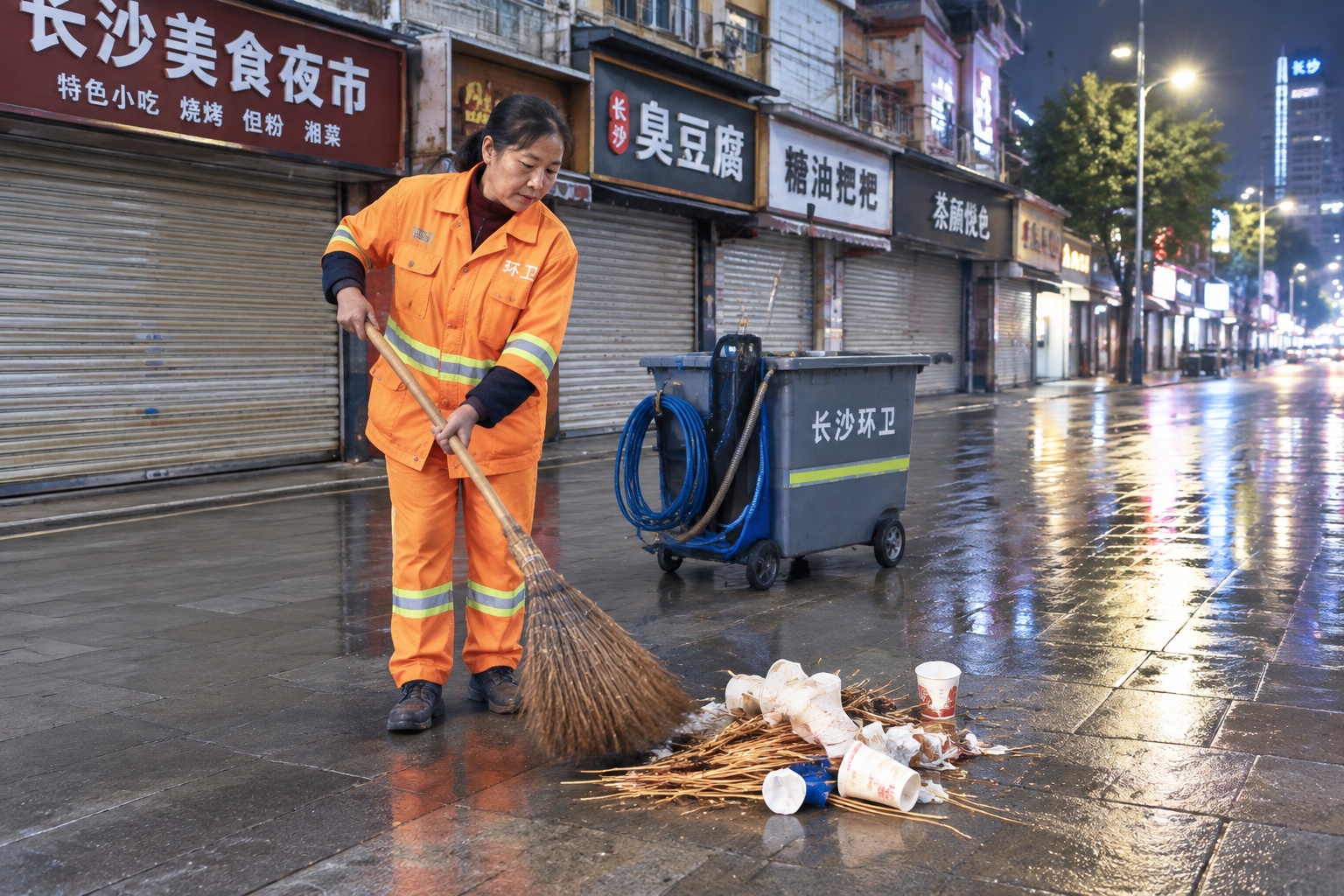
This strip changes completely at night. People spill out of bars holding milk tea. A skewer cook fans his charcoal with one hand and turns meat with the other. Delivery riders weave along the pavement. A man in his early twenties props his phone on a tripod and talks to the camera while comments scroll past. Twenty meters away, a sanitation worker in a reflective vest sweeps bamboo skewers into tidy piles, unhurried, as if waiting for the crowd to thin out on its own.
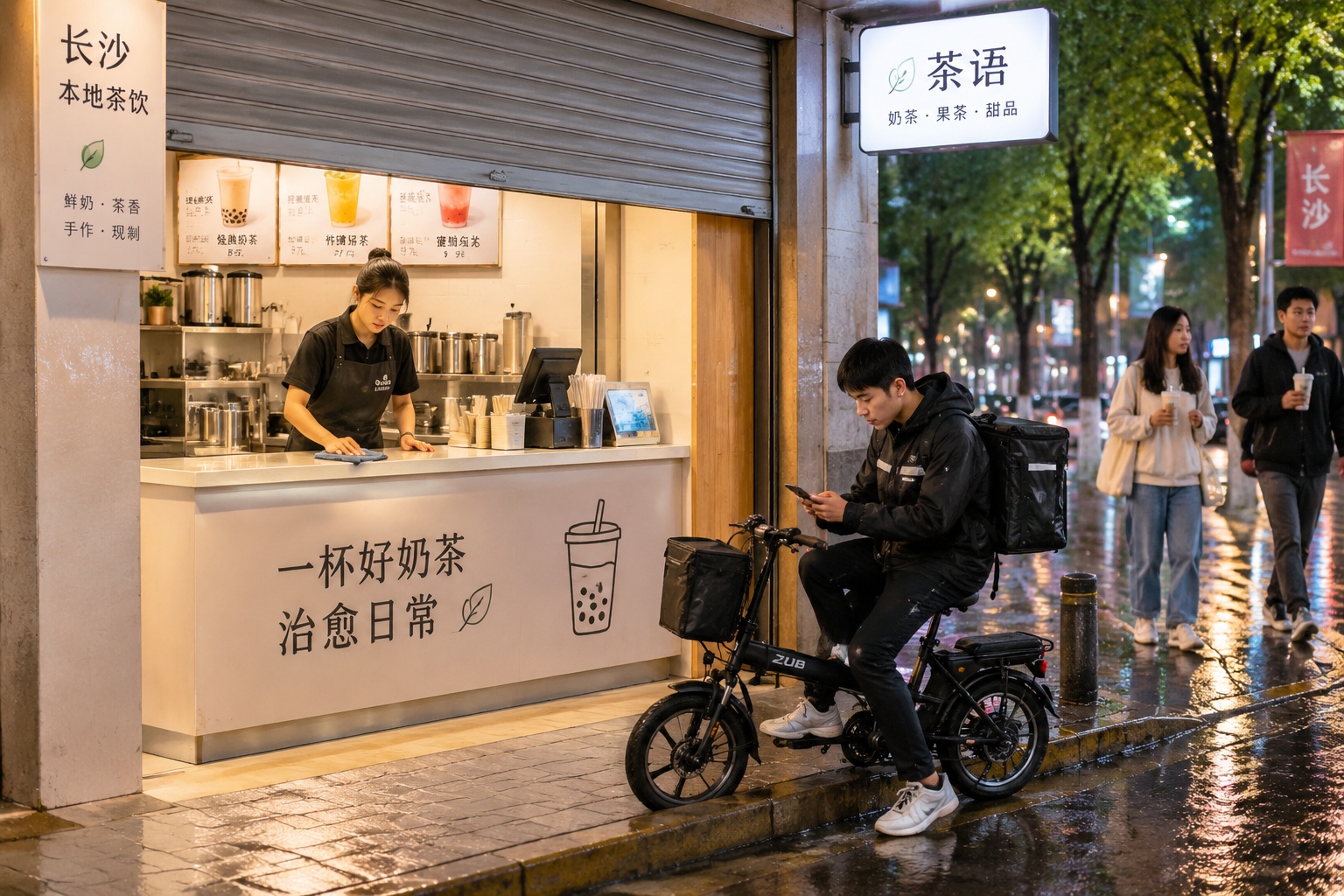
Ten minutes away at Wuyi Square — the city’s central plaza — the convenience store lights are all on. Inside a milk tea shop, a staff member wipes the counter with a damp cloth. A designated driver sits on a folding e-bike by the curb, staring at his phone. His name is Li Wei, and he has already driven three cars tonight. “The real rush is between 2:30 and 3,” he says.
This no longer feels like a “sleepless city” marketing slogan. It is just a normal district running normally.
A Night in Changsha, Hour by Hour
6 P.M. — The First Wave
Just after six, restaurants near the office towers start calling numbers for tables. This is the daytime spilling into the evening. The night begins here.
9 P.M. — Full Volume
By nine, malls and snack streets are fully open. The pedestrian street is packed shoulder to shoulder. Milk tea shops around Huangxing Road run two rounds of queues. Stinky tofu, sugar-oil rice cakes, crayfish — each has its own line. Smoke from grills rises into the street and mixes with gasoline fumes. This is where spending happens, and where money starts to move.
Midnight — A Second City Wakes Up
By midnight the crowd has changed. Diners drift away; drinkers arrive. Bars on Jiefang West Road push the volume up. KTV rooms light up. Foot massage parlors fill too — the two-hour kind, quieter after midnight. Delivery riders keep working, but more and more orders are milk tea and fried chicken. Ride-hailing drivers watch their screens, waiting for surge pricing.
4 A.M. to 6 A.M. — The Handover
At four, bars close and taxi ranks stretch long. At five, street-cleaning trucks roll through, hosing the curb. By 5:30 the first breakfast carts are set up — soy milk, fried dough sticks, and rice noodles steaming in giant pots. At six, the subway shutters go up. Commuters head down the stairs alongside a few young people coming home from the night, makeup smudged. The city never really stops; it just changes shifts.
Why Changsha?
Chengdu and Hangzhou have nightlife too. Shanghai has bars. What makes Changsha different is that the barrier to entry is lower, the volume is louder, and there is a certain gravity to it.
Ask around on the street and you get three explanations.
“Too many young people,” says Liu Jie, who sells grilled skewers on Taiping Street. Changsha has dozens of universities, and plenty of graduates stay because rent and apartment prices are still reasonable by big-city standards. She came from Changde herself and has been here ten years.
“People here just like to go out,” says a driver who works the night shift. He often runs fares between Jiefang West Road and the university district across the river. Changsha’s entertainment culture has been rolling for years — TV variety shows, local music, parties — and a reputation for “Changsha people know how to have fun” gets repeated until it becomes true.
Then there is policy. District governments encourage the night economy: later closing hours, designated night market zones, extended subway hours on holidays. Places like Wuyi Square have put budget into policing and waste handling. Policy did not invent the nightlife, but it does make the night run more smoothly.
Weather plays a part too. Summers here are long and hot, and evenings are the only comfortable hours. Winters are damp and cold, and a hot bowl of rice noodles or a late-night meal makes them bearable. In Changsha, eating and being around people are almost the same activity.
The People Who Keep the Night Running
The loudest sound in a Changsha night is actually the sound of work.
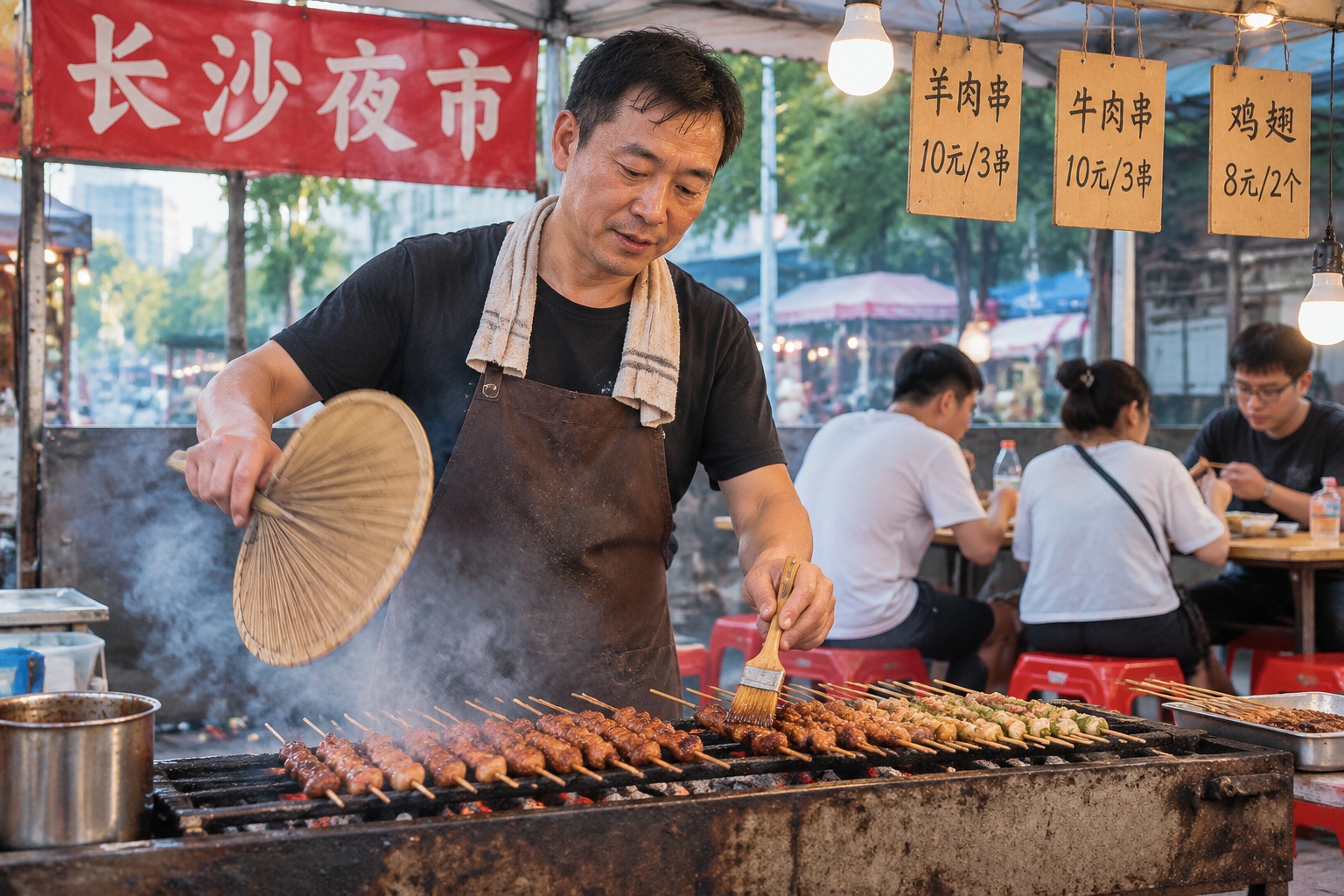
Brother Zhou sells fried skewers on the corner of Taiping Street. He sets up at four in the afternoon and packs away at three in the morning. In peak season he takes home between 8,000 and 12,000 yuan a month, he says, after stall rent, ingredients, and platform delivery fees. “Better than working for someone,” he says. “It’s just hard on the body.”
Milk tea shop staff work in two shifts. The late shift runs from four in the afternoon to one in the morning, and then there is cleaning and stock-taking after the door closes. Most of them are in their early twenties, sharing rent with coworkers. For some, it is a temporary stop — save money, learn a skill, figure out the next thing.
Li Wei used to work in a factory and switched to designated driving because the hours were freer. He leaves home at eight in the evening, gets back at three, and sleeps until noon. He says he misses eating breakfast with his son, but the night pay covers roughly one extra month’s rent every few months.
Then there are the delivery riders, who work after ten at night because there is less competition and better surge pay. And the convenience store cashiers, security guards, cleaners, hotel housekeepers, and parking attendants. By the hour, none of this pays well. But night work carries a premium, and living costs in Changsha are still low enough that many people can stay in the city on this income. They work nights not out of romance, but because the math works.
Who Goes Out at Night, and What It Costs
Changsha’s night crowd divides fairly clearly.
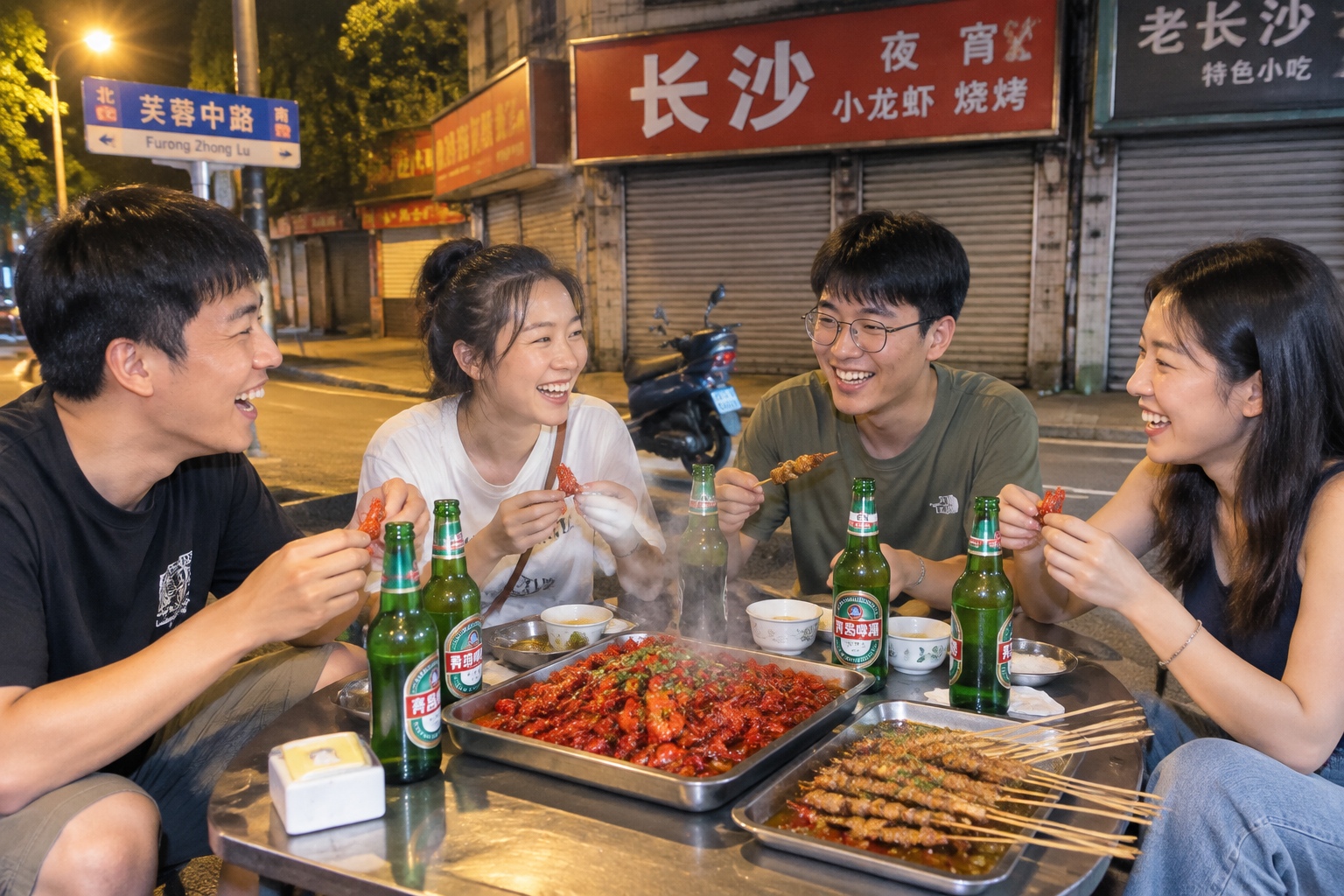
Local young people, meeting for dinner or a date after work. University students, taking the subway or a taxi from the west bank, working with a budget. Tourists, drawn by short videos, queuing and photographing Huangxing Road. And then people off shift, people on shift, and people who just want somewhere to sit and talk.
A late night out here is calculable. A supper of crayfish, skewers, and two beers runs about 60 to 100 yuan per person. Two milk teas are under 40. A taxi across the Xiang River is around 30. A designated driver costs 30 to 60 depending on distance. All in, a night out can cost 100 to 250 yuan and still feel generous. For a 25-year-old earning seven or eight thousand a month, going out two or three times a week is completely manageable. That is the secret of Changsha’s nights: plenty of atmosphere, low barrier to entry.
Safety matters too. Streets at 2 a.m. are still busy, shops are open, lights are on, buses have not entirely stopped. For many young women, being out late in that environment feels far less frightening than it would elsewhere.
How the Night Machine Actually Runs
The night economy does not grow by itself. It runs on a chain of compromises — malls, vendors, platforms, transport, police, sanitation, and residents who have to be at work in the morning.
On holidays, the subway extends its last trains, and night buses run on major routes. Night markets are pushed into designated blocks so the crowds concentrate and do not choke the roadway. Policing on Jiefang West Road after midnight is routine, mostly handling drunks rather than crime. Garbage collection adds night runs because daytime simply cannot absorb the volume.
The friction is real. Residents living above bar streets complain about noise. Vendors and urban management officers circle each other in a long tug-of-war: the vendor needs a living, the city needs order. Inside designated zones you can see the compromise — set up before 6 p.m., pack away by 2 a.m., scrub the oil stains off the pavement. Most nights it works. No night is perfectly quiet.
The Money Trail: One Crayfish, One Milk Tea, One Ride Home
A plate of crayfish sells for about 120 yuan. After the shellfish, spices, gas, stall rent, and labor, the owner keeps less than half — if the tables are full. In the off-season it is a different calculation entirely.
A cup of milk tea at 18 yuan: three or four for ingredients, one for the cup and seal, the rest to rent and wages, plus a cut to the delivery platform.
A 30-yuan ride-hailing trip: the platform takes roughly 20 percent, then fuel or electricity, vehicle wear, and insurance come out of the rest.
A busy night does not automatically mean a profitable one. Good vendors and shop owners make several thousand to just over 20,000 yuan a month. Many simply break even. The night economy does create real jobs, but most of them disappear into the statistics — part-time, per-order, informal.
What Is Changing, and What Is Getting Harder
The nights have shifted in recent years.
Competition is sharper. Every street now has a milk tea shop and a fried skewer cart. Viral shops rise on short-video traffic and can fall on a single bad review. Platforms hold more leverage on pricing.
Costs are up. Rents around Jiefang West Road and Wuyi Square keep climbing. Young consumers spend more carefully. They still go out, but they count each yuan harder — they want the money to feel worth it.
Then there is the exhaustion. Brother Zhou, who has been doing late-night food for thirteen years, says his knees have had enough and he wants someone to take over. Li Wei says he would quit designated driving if he could find a daytime job with similar pay. For now, their nights stay full. As long as the city is awake, someone has to keep watch.
5:50 A.M., the First Bowl of Rice Noodles
Dawn has not quite broken. The stinky tofu stall is empty now, though the oil stains on the pavement are still tacky underfoot. The last few drunk young people lean against a convenience store bin, waiting for a car.
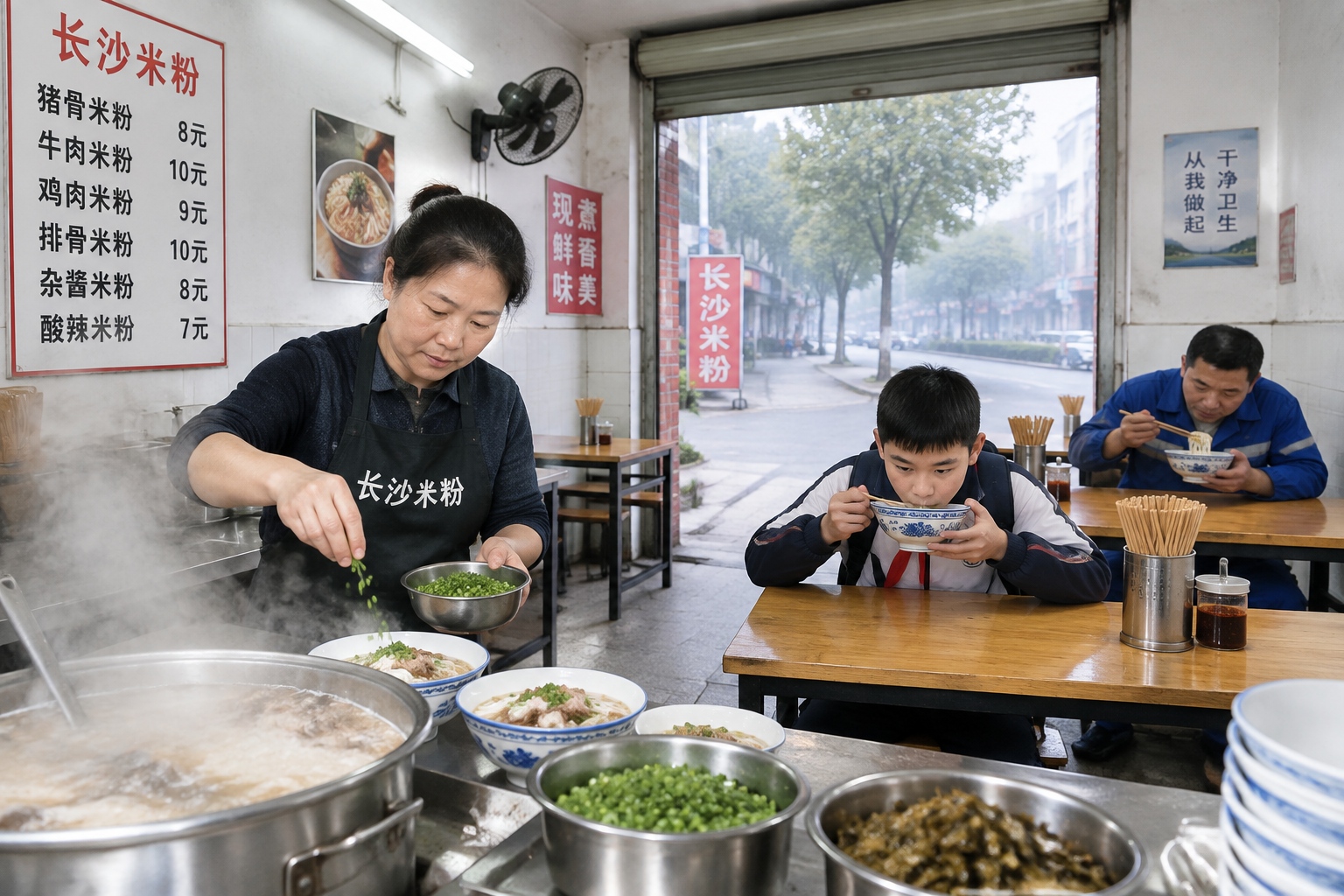
Across the street, the rice noodle shop is already open. Pork bone broth bubbles in a giant pot. A boy in a school uniform drinks his soup. Beside him, a worker in a blue uniform is on his second bowl. The owner scatters chopped scallions and wipes his hands on his apron.
In Changsha, night is not a separate show. It is half of this city’s life. People make money here, spend it here, and sit here — because they do not want to go back to an empty rental room. It is busiest at 2 a.m. because so many people are living the same night in different ways: working, unwinding, waiting, or simply moving forward. People call Changsha a city that never sleeps. Really, it just changes shifts.
Start the discussion at forum.chinacomes.com