
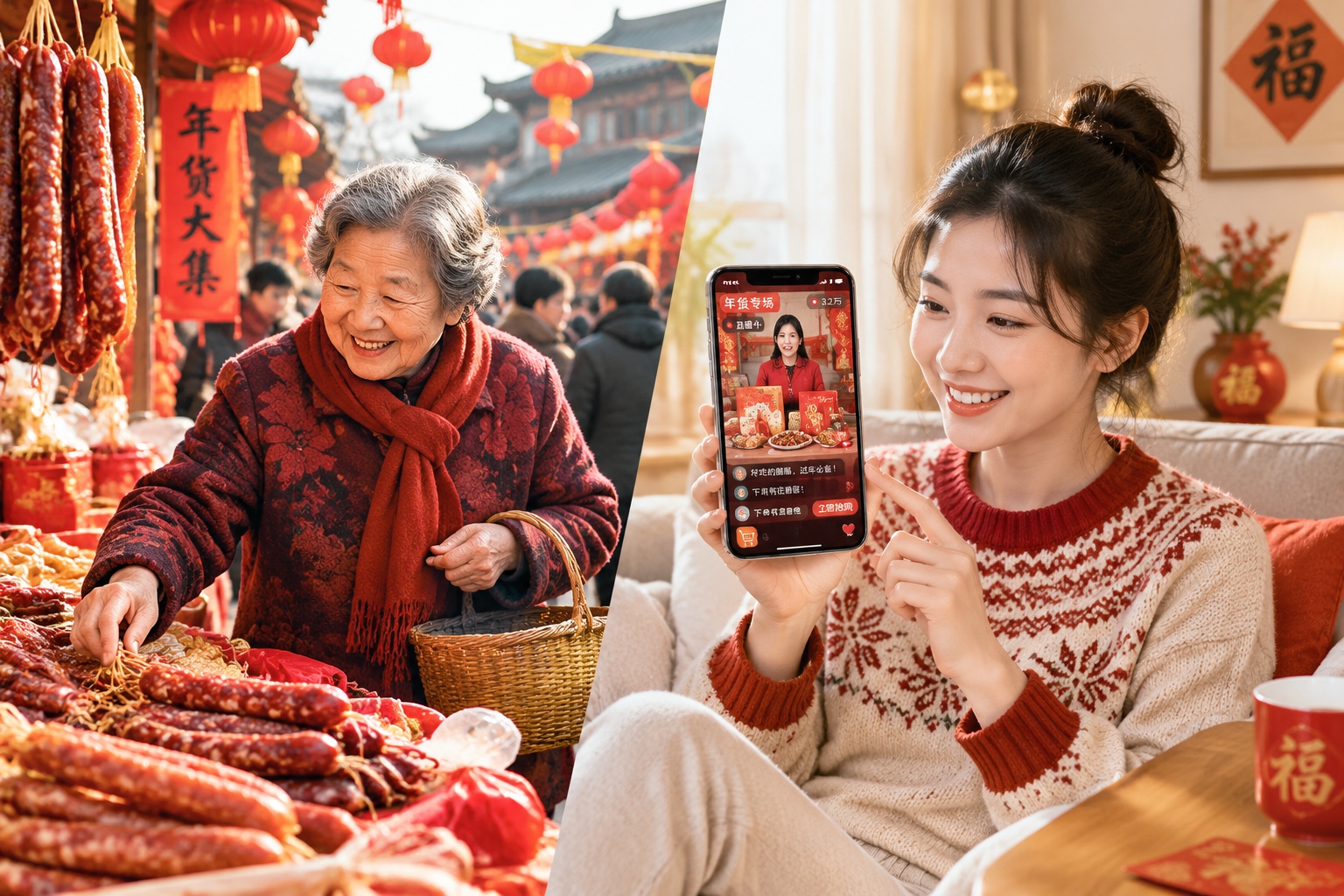

The Smell of Incense and the Glow of a Phone Screen
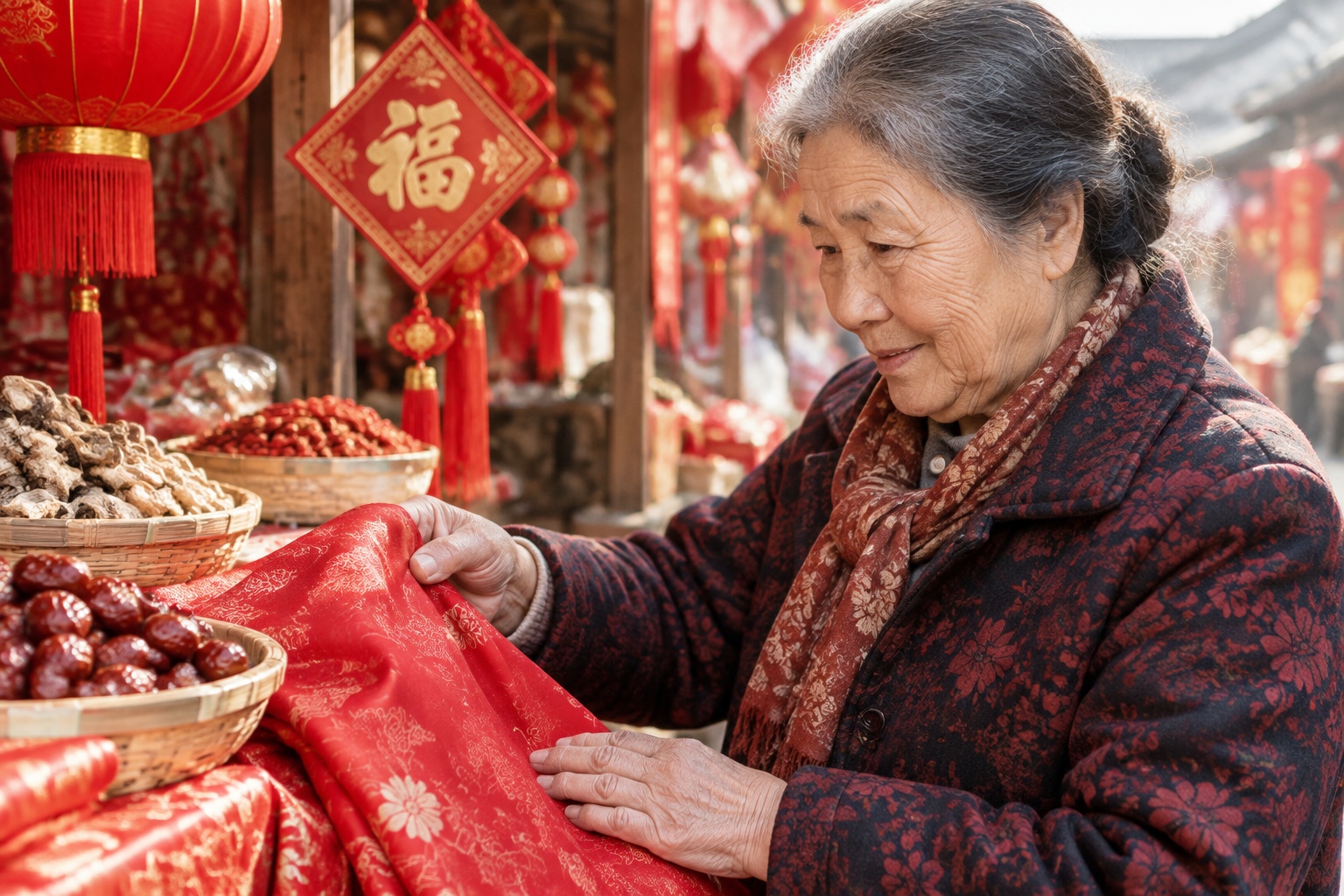
In the narrow alleys of an old market in Chengdu, 68-year-old Auntie Zhang navigates through the crowd with the precision of a local. She touches the fabric of a new year’s quilt cover, sniffs the dried persimmons, and haggles with the vendor over a string of firecracker decorations. To her, buying Spring Festival goods (年货, niánhuò) is a ritual—a sensory experience that signals the start of the holiday.
The Rise of the Livestream Year-End Sale
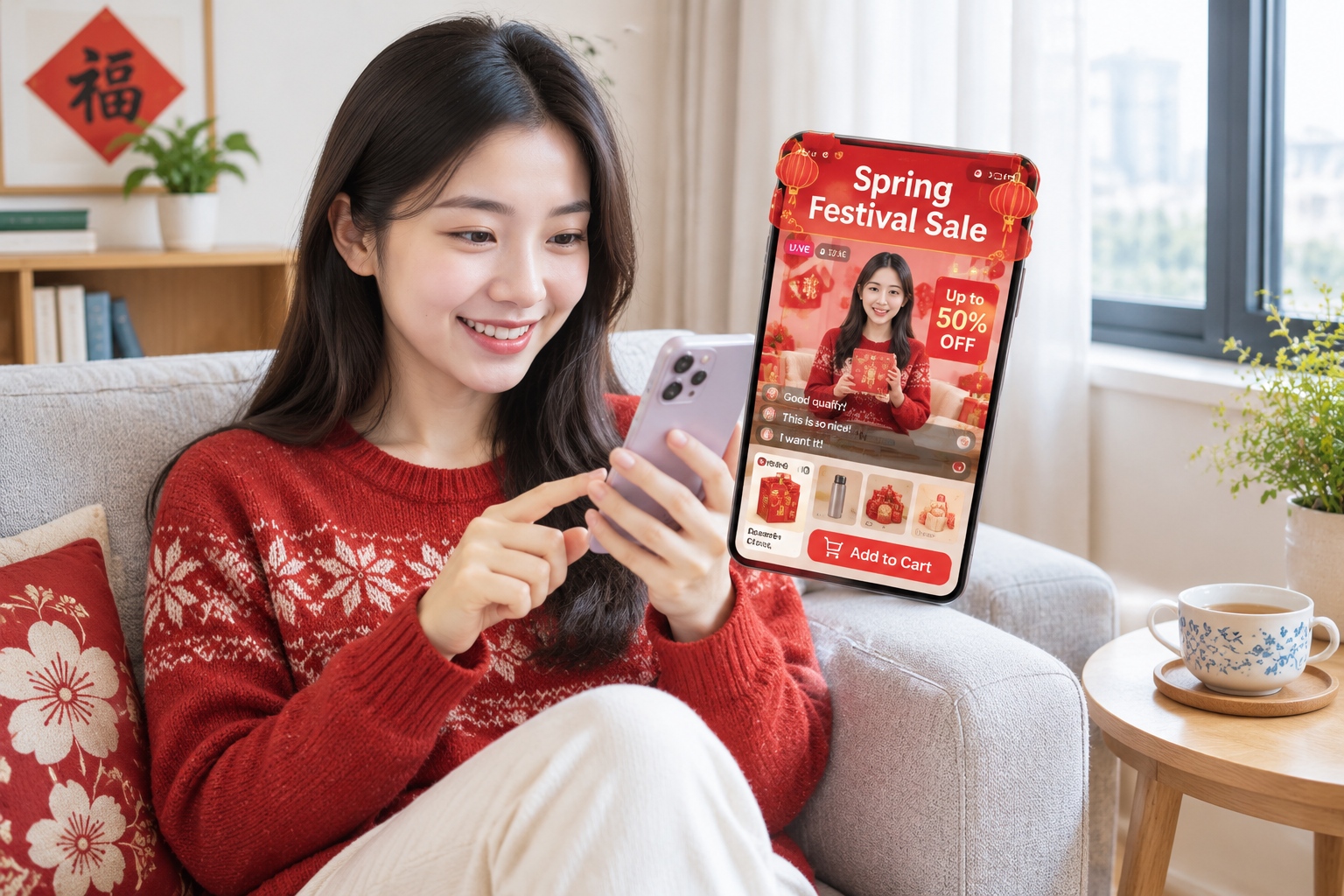
Three hundred kilometers away, her granddaughter Xiao Li is doing the same thing, but from her sofa. Hunched over her phone, she watches a livestream on Douyin (China’s TikTok) where an energetic host is selling “premium gift boxes” of seafood and nuts at a “Spring Festival exclusive” discount. Xiao Li is part of a massive wave: in 2023, Chinese livestream e-commerce sales during the Spring Festival shopping season topped $25 billion, accounting for nearly a quarter of total online retail during that period.
For Xiao Li, convenience trumps tradition. She doesn’t need to brave the cold or argue over prices—she just taps “Buy Now” and the goods arrive in two days. The generational gap isn’t just about channels; it’s about what “quality” means. Auntie Zhang trusts her fingers and eyes; Xiao Li trusts follower counts and reviews.
Two Generations, Two Types of “Nianwei”
Why does this matter? Because buying Spring Festival goods is central to creating “nianwei”—the festive atmosphere. For older generations, nianwei is built through physical labor: visiting multiple stalls, carrying heavy bags, and exchanging New Year’s greetings with familiar vendors. For younger buyers, nianwei is curated: a livestream host’s cheerful voice, flash deals, and unboxing videos create excitement on screen.
This clash is playing out in millions of Chinese homes. Some families fight over it: “You’re wasting money on overpriced online gifts!” others compromise: Mom still buys the fresh pork at the market, while her son orders the snacks online. The result is a hybrid Spring Festival—half analog, half digital.
What’s Driving the Shift?
Three forces are reshaping the Chinese New Year shopping landscape:
1. Platform power. Alibaba, JD.com, and Douyin run “New Year Goods Festivals” with massive subsidies, making online shopping cheaper than physical markets in many cases. The average livestream discount during the 2024 festival was 30% off retail price.
2. Mobile-first youth. Over 85% of Chinese consumers under 35 use livestream shopping apps weekly, according to a 2023 survey. They see nothing unusual in buying a whole roasted duck through a phone screen.
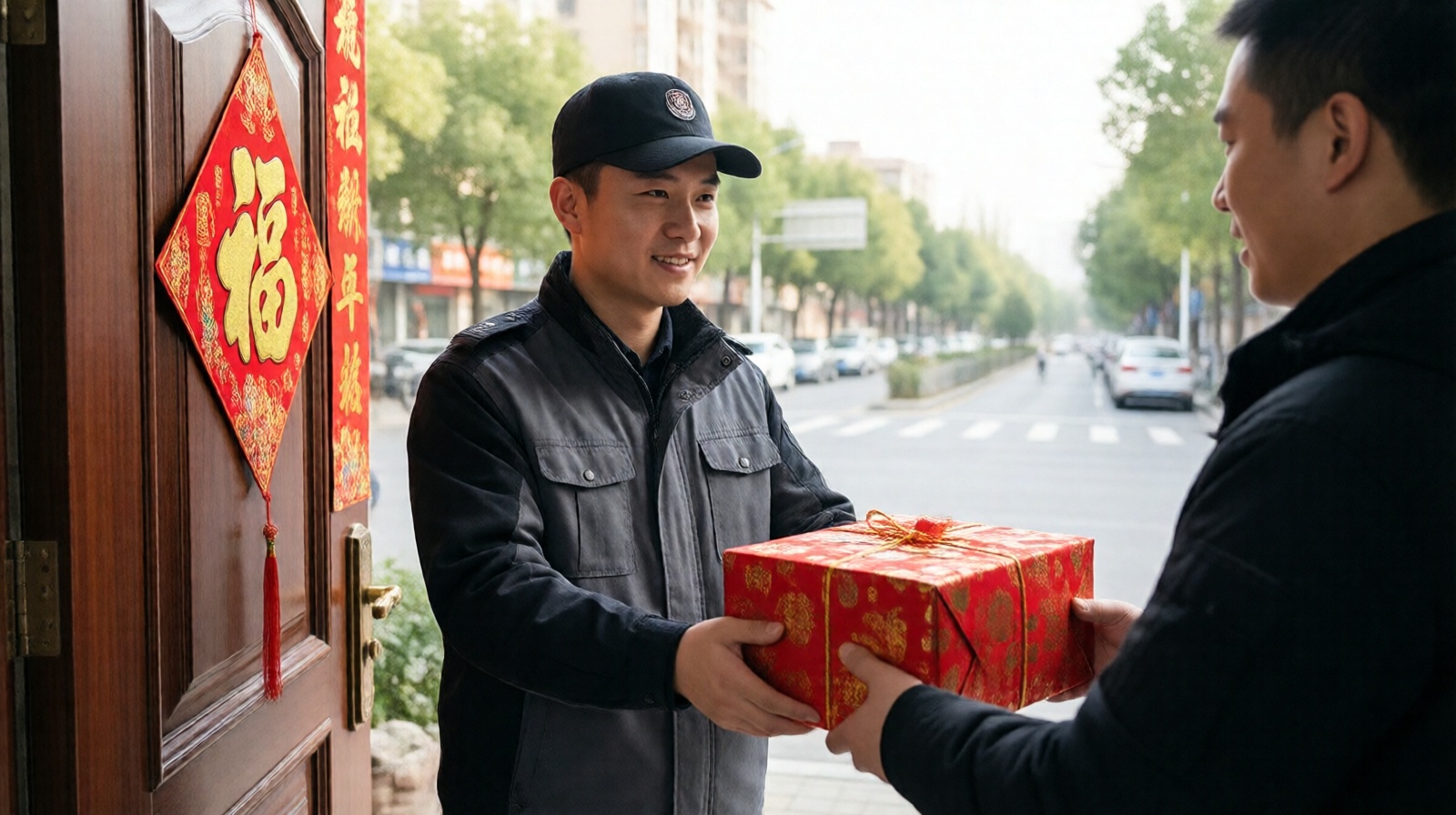
3. Logistics that never sleep. China’s express delivery network keeps running even during the holiday, ensuring that gifts ordered on Lunar New Year’s Eve arrive by midnight. That wasn’t possible five years ago.
The Street Stall Fights Back
But traditional markets aren’t vanishing. Many local governments are revitalizing “Spring Festival fairs” (年货大集) as tourist attractions, blending old-fashioned stalls with QR-code payment and social media check-ins. Auntie Zhang’s market now has a “livestream corner” where vendors broadcast their stalls live. The collision doesn’t have to be a war—sometimes it’s a dance.
As Xiao Li puts it: “Grandma buys the sausages, I buy the fireworks. We just meet in the middle and eat together.”
That may be the real spirit of the holiday: however you shop, the goal is still sitting around a table, sharing food and laughter. The method changes, the meaning endures.
Start the discussion at forum.chinacomes.com