

A Printer Humming in the Living Room
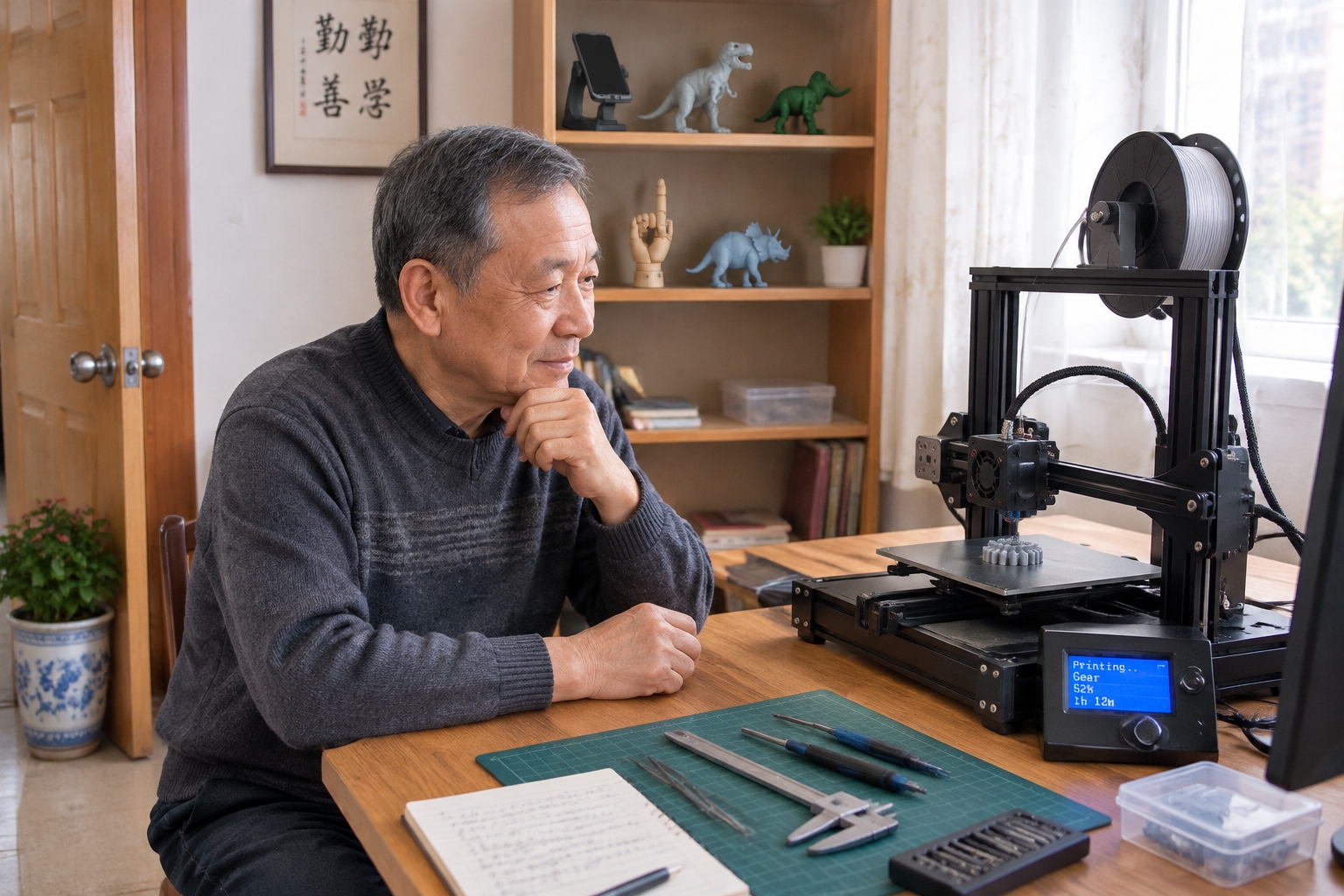
On a Tuesday afternoon in Nanjing, the faint smell of melted PLA filament drifts from the ground-floor apartment of Building 7. The door is propped open with a ceramic flower pot. Inside, 63-year-old Zhang Jianhua sits at a wooden desk cluttered with calipers, tiny screwdrivers, and a half-disassembled electric fan. Beside him, a Creality Ender-3 printer moves its nozzle back and forth, building a small gear layer by layer.
“That’s for the Wang family upstairs,” he says without looking up. “Their rice cooker handle broke. Can’t buy a replacement part anymore. So I print one.”
The whole scene takes up maybe six square meters of his living room. It is not a lab. It is not a startup incubator. It is a neighbor’s apartment, and that makes all the difference.
Small Maker Spaces Are Popping Up Where People Live
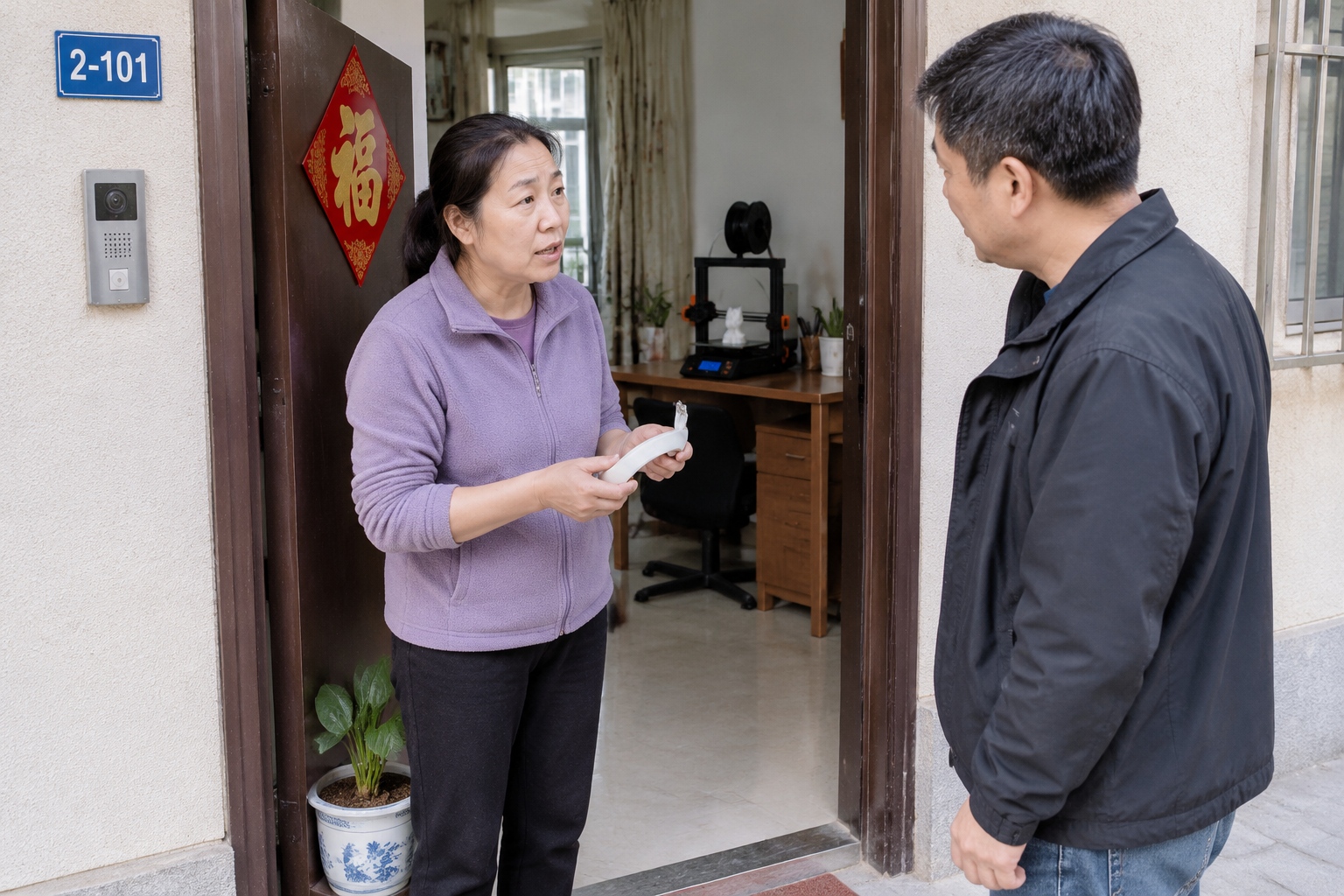
Over the past five years, small-scale maker spaces have been appearing in Chinese residential communities — not in tech parks or university campuses, but in the ground floors of apartment buildings, community centers, and converted storage rooms. Many are run by individuals. Some are supported by neighborhood committees. A few are tiny businesses selling custom-printed items.
The common thread is 3D printing. Entry-level printers now cost between 600 and 1,500 yuan (roughly $85 to $210). Filament spools sell for 50 to 80 yuan per kilogram. Software is free and open-source. The barrier to entry has dropped so low that a middle school student with a weekend and a YouTube tutorial can start printing.
In Nanjing alone, community center staff estimate there are at least 30 to 40 informal maker groups operating in residential areas. Some are just two or three neighbors sharing a printer. Others hold weekend workshops for kids. None of them call themselves “innovation hubs.” They call themselves “the place downstairs.”
The Retired Engineer Who Prints for the Whole Building
Zhang Jianhua spent 35 years as a mechanical engineer at a state-owned electronics factory. When he retired in 2019, his daughter bought him a 3D printer to keep him busy. Within a month, he had printed replacement knobs for his own washing machine, a phone stand for his wife, and a set of tiny dinosaurs for the children on the third floor.
Word spread. Now he has a notebook with 47 names — neighbors who have asked him to print something. A broken latch for a kitchen cabinet. A custom bracket for a wheelchair. A missing piece from a 20-year-old sewing machine. He charges nothing, though people often leave fruit or homemade dumplings at his door.
“I’m not running a business,” he says. “I’m just solving small problems. That’s what neighbors do.”
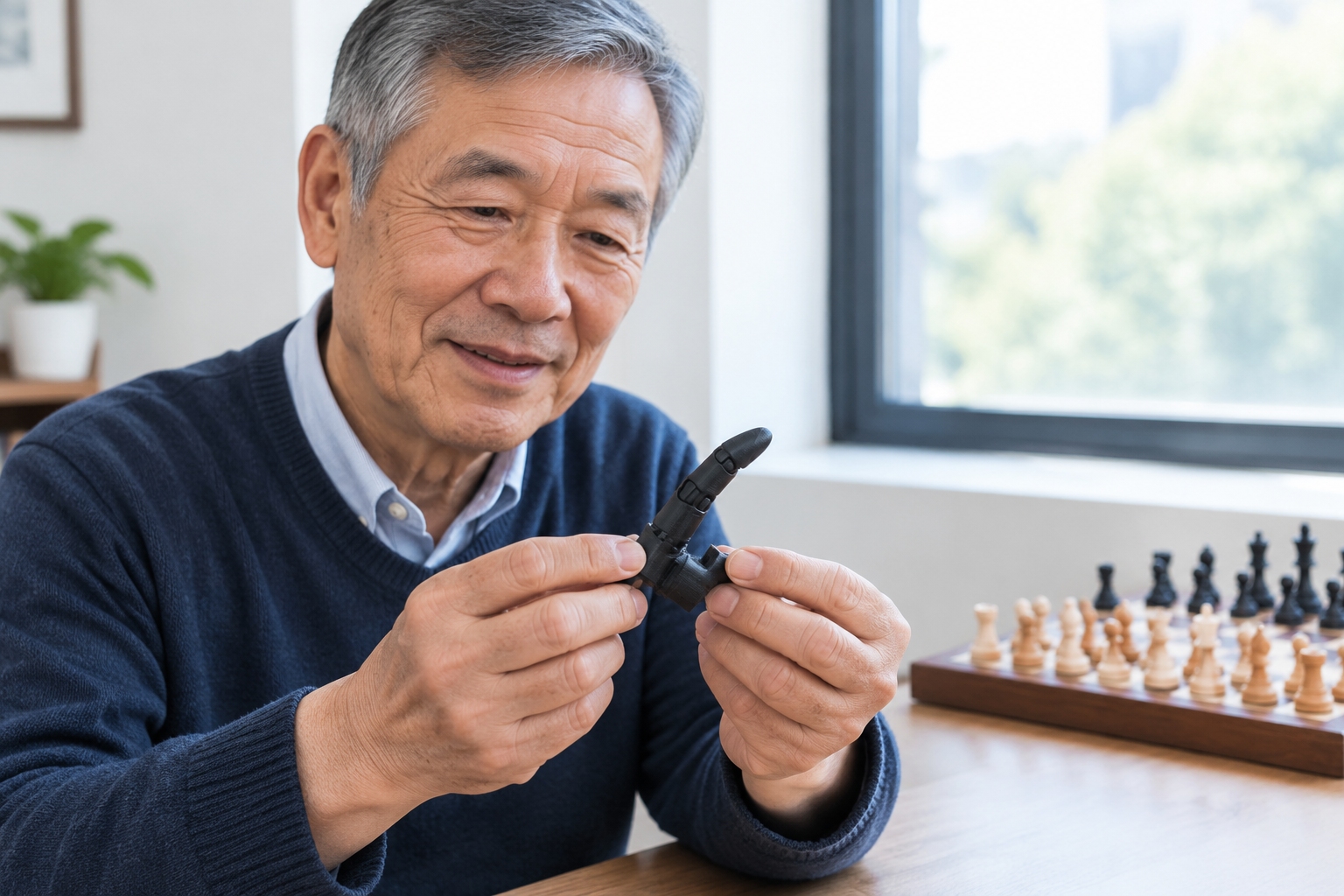
His most ambitious project so far: a prosthetic finger for a neighbor’s father who lost his index finger in a factory accident. Zhang found an open-source design online, adjusted the dimensions in CAD software, and printed it in flexible TPU. It took four attempts. The final version fits. The old man wears it when he plays chess.
From Broken Handles to Science Projects: How 3D Printing Fits Into Daily Life
The uses are relentlessly practical. A young mother on the fifth floor prints custom cookie cutters for her baking side hustle. A middle school student prints geometric models for his math homework. A group of retirees prints garden tools and plant labels for the community garden they maintain behind the building.
What makes this different from a typical makerspace is the proximity. You don’t need to book a time slot or pay a membership fee. You knock on a door. You show the broken part. You come back the next day. The social contract is neighborly, not transactional.
This also creates a quiet form of peer learning. Zhang has taught at least a dozen neighbors how to slice a 3D model using free software. One of them, a 28-year-old delivery driver named Liu Wei, now prints phone accessories to sell on Xianyu, a secondhand marketplace app. He makes an extra 800 to 1,200 yuan a month. “It’s not much,” Liu says. “But it pays for my daughter’s English classes.”
Why This Happens Here: Cheap Hardware, Open Source, and Tight Communities
Several factors converge. Chinese manufacturers like Creality, Bambu Lab, and Anycubic have driven down the cost of desktop 3D printers dramatically. Open-source repositories like Thingiverse and Printables host millions of free designs, many with Chinese-language instructions. E-commerce platforms deliver filament spools to your door in 24 hours.
Government policies around “mass innovation and entrepreneurship” (双创) have also played a role, though mostly indirectly. Community centers in some cities offer free or subsidized equipment. Local governments sometimes fund maker workshops as part of neighborhood renewal programs. But the people running these spaces rarely talk about policy. They talk about convenience.
“I didn’t know it was a national strategy,” Zhang says with a laugh. “I just wanted to fix my washing machine.”

How This Differs From Makerspaces in the West
For readers familiar with makerspaces in the United States or Europe, the contrast is sharp. Western makerspaces are often located in downtown areas, require membership fees, and focus on tools like laser cutters, CNC machines, and woodworking equipment. They serve hobbyists, artists, and startup founders.
China’s community-level maker spaces are smaller, cheaper, and more domestic. They live in apartment buildings. They are run by retirees, parents, and students. The projects are less about prototyping a product and more about fixing a drawer or making a birthday gift.
That doesn’t make them less innovative. It makes them more embedded. The innovation isn’t the technology itself — it’s the social arrangement around it. A printer in a living room becomes a shared resource. A retired engineer becomes a teacher. A broken rice cooker becomes a reason to talk to your neighbor.
What It Looks Like on an Ordinary Evening
At 7 p.m., Zhang’s apartment fills with the sound of two printers running simultaneously. A 12-year-old girl from the sixth floor is watching a small blue elephant take shape. Her mother chats with Zhang’s wife about a upcoming school event. The door stays open.
On the desk, a freshly printed gear sits next to a bag of oranges someone left as thanks. The nozzle keeps moving. The elephant gets its trunk. Outside, the streetlights come on. Inside, nobody is in a hurry.
This is not a story about cutting-edge technology. It is a story about what happens when technology becomes ordinary enough to live next door. In thousands of Chinese communities, that is already the case.
Start the discussion at forum.chinacomes.com