


The three seconds after you tap “donate”
At 11:40 on a Tuesday night, Lin, a 29-year-old product designer in Chengdu, taps her phone three times and gives 50 yuan — about $7 — to a flood-relief project on Alipay. The receipt lands before she sets the phone down. The project page reads: 1,243,870 yuan raised, 8,412 donors, a progress bar, and a photograph of sandbags stacked in a county she has never heard of.
Then she closes the app, and the question stays with her: what actually happened to my 50 yuan?
It is a fair question to ask anywhere. In China it now has a paper trail, because the country’s charity system has been rebuilt over the past decade around a single organising idea — the money has to be traceable.
Your money enters a foundation, not a void
The most useful thing to understand about giving in China is that your donation rarely goes to the person or project pictured on your screen. It goes to a foundation.
To appear on Tencent Charity, Alipay Charity or any other internet fundraising platform approved by the Ministry of Civil Affairs, a project must be owned by an organisation holding a public fundraising certificate (公开募捐资格证书). Only registered charities that have operated for at least two years, and that pass a review by civil affairs authorities, may raise money from the general public. An individual cannot list a project. Neither can a company, unless it partners with a qualified charity.
So the route of Lin’s 50 yuan looks like this: her Alipay balance → the platform’s payment account → the foundation’s bank account, tagged to one specific project → the local partner executing the work in the affected county. The platform is a channel, not the recipient. The foundation is the legal holder of the money and is answerable for it.
Two principles do the heavy lifting. The first is 专款专用 — earmarked funds. Money given to a project that promised winter coats for 500 households cannot quietly be spent on something else. If the plan has to change, the foundation must explain publicly, and where donors can be reached, seek their agreement. The second is pre-filing: before a public appeal opens, its fundraising plan must be filed with the civil affairs department that supervises the foundation.
The rules sitting behind the button
China’s Charity Law took effect in September 2016 and was amended in December 2023; the revised version applies from 5 September 2024, the country’s annual charity day. The amendment tightened three areas in particular: emergency fundraising, online platforms and personal appeals for help.
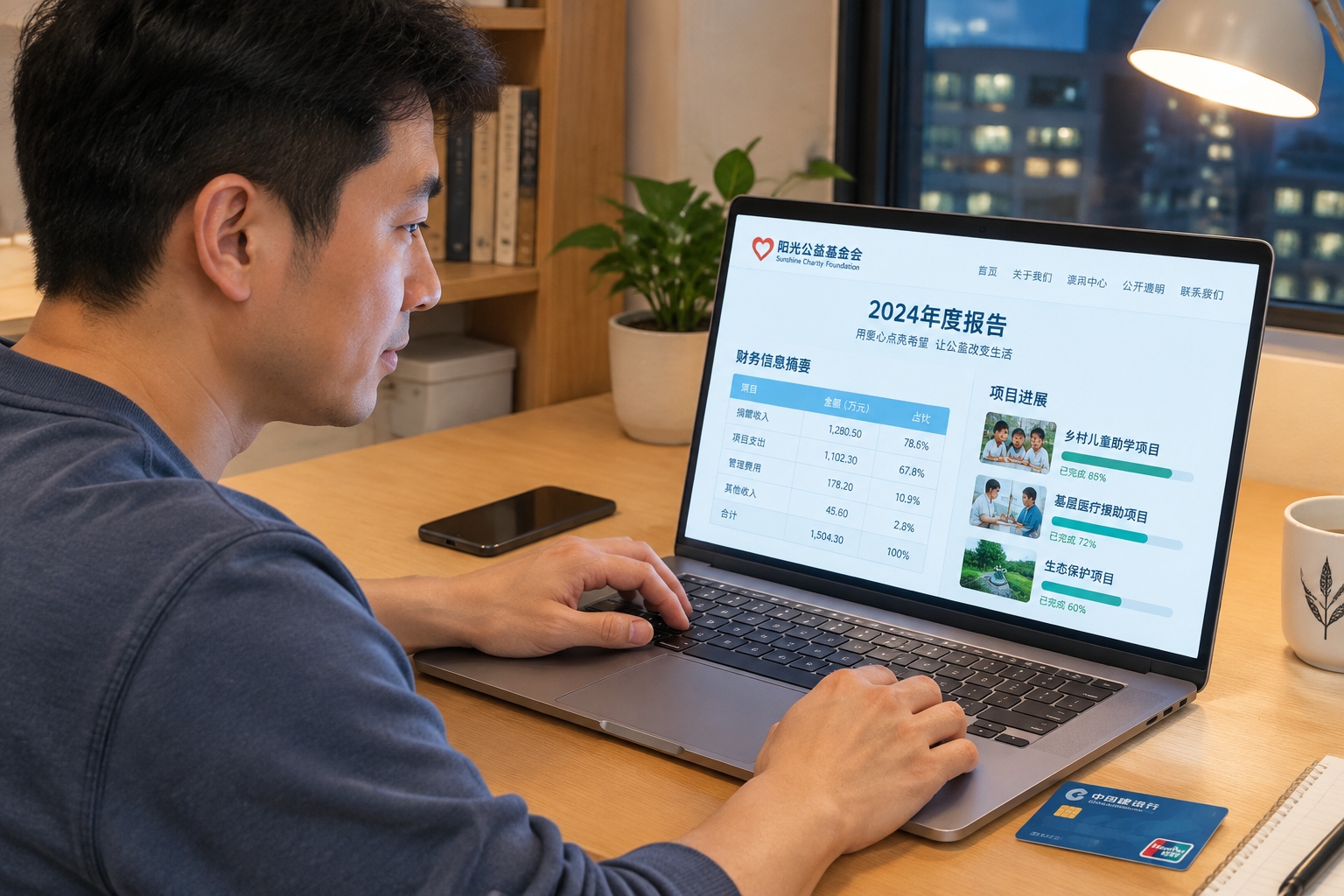
Two numbers matter to any donor. A foundation with public fundraising status must spend at least 70 percent of the previous year’s income on charitable work, and its annual management costs may not exceed 10 percent of total expenditure. Both figures appear in its annual report. A foundation that wants to deviate has to file paperwork and explain itself in public.
During disasters, the revised law also relaxed the timing: an emergency appeal can begin and be filed within ten days afterwards, on the condition that the outcome is disclosed once the response ends. Speed was prioritised, but not at the cost of the record.
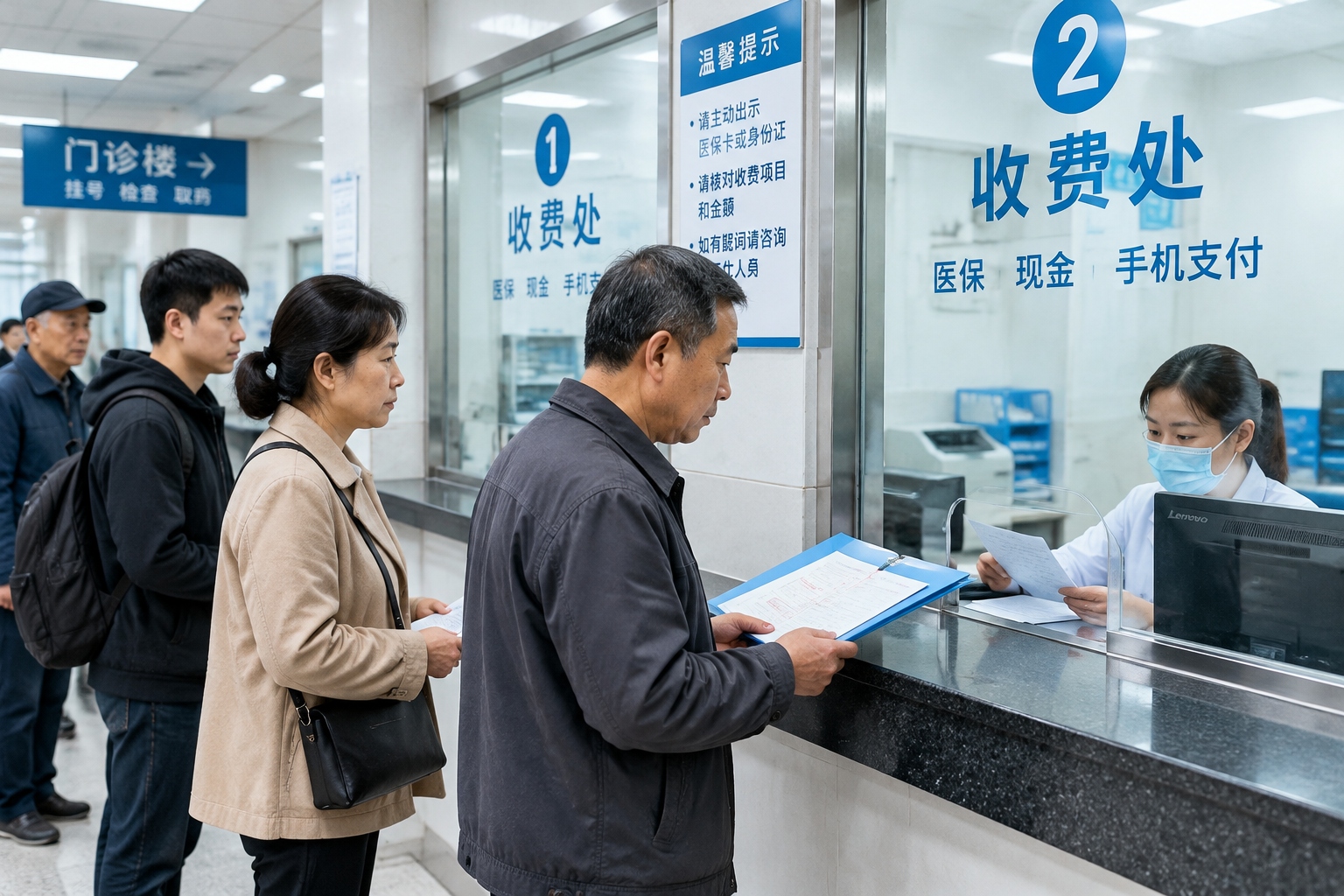
There is one practical detail most donors ignore: ask for the receipt. A formal donation receipt (捐赠票据) from a qualified charity is what allows an individual to deduct up to 30 percent of taxable income, and a company up to 12 percent of annual profit, with a three-year carry-forward. It is also your own proof that the transfer happened.
How to follow the money yourself
The central place to look is a government site with a deliberately unglamorous interface: 慈善中国 (cszg.mca.gov.cn), run by the Ministry of Civil Affairs. Type in a foundation’s name and you can pull up its public fundraising certificate, its filed fundraising plans, its project updates, and its annual work and financial reports.
Disclosure runs on a clock. Ongoing projects are expected to publish progress at least every three months. When a fundraising campaign closes, the organisation should publish a full account of what was raised and spent within three months. Annual reports, including audited financial statements, appear in the first half of the following year. None of this guarantees that every line is a model of clarity — smaller foundations sometimes file thin, formulaic reports — but it does mean there is an official place to look, and grounds for a complaint if what you find does not match the pitch.
Civil-society monitors sit alongside the government ledger. The China Foundation Center publishes a transparency index scoring thousands of foundations on what they disclose, and its rankings are argued over inside the sector. Charities themselves increasingly post monthly spending tables and receipts on WeChat and Weibo, partly because donors now ask.

What a traceable donation actually looks like
Take Free Lunch for Children (免费午餐), launched in 2011 by journalist Deng Fei to pay for hot school meals in poor rural counties. Its public offer is unusually simple: about 4 yuan — roughly 55 US cents — buys one meal. Schools in the programme post photographs of the day’s food; the foundation publishes monthly accounts and annual audited reports; donors get updates that include a picture of the plate their money paid for.
For larger projects, the format to look for is an itemised budget. A rural scholarship page will typically break one student’s year into tuition support, a living stipend, books and winter clothing, the local coordinator’s travel, and a small slice for platform and payment fees — each with a number attached. If you cannot find such a breakdown, ask for it. Qualified foundations are required to disclose how funds were used, and the better ones publish it before anyone asks.
Leftover money is a common source of confusion. If a project raises more than it needs, or a named beneficiary dies or recovers, the funds are normally redirected to a similar purpose — and the redirect must be publicly explained. The money does not simply settle into the foundation’s general account.
The weak spot: appeals for one person
Not all giving in China is charity in the legal sense. When a family posts a medical appeal for a relative on Shuidichou (水滴筹) or Qingsongchou, the money goes to a person, not to a foundation. There is no donation receipt, no tax deduction, and until recently very little legal framework.
The risk became national news in early 2020. Wu Huayan, a 24-year-old woman from Guizhou, drew an outpouring of public sympathy. More than 1 million yuan was raised on her behalf through a project run by a children’s charity; about 20,000 yuan had reached her family before she died in January 2020. The gap between those two figures triggered an investigation, an apology and refunds — and it helped push the rules forward.
Since the 2023 amendment, personal help-seeking is formally recognised in the Charity Law for the first time. Platforms that host it must be designated by the Ministry of Civil Affairs, and they are required to verify identity, medical records and the family’s financial situation. Soliciting help with fabricated information can carry legal consequences. Shuidichou now also charges a service fee — 3 percent, capped at 5,000 yuan, plus a payment-channel fee — and states it up front, a change that irritated many users but made the arrangement explicit rather than hidden.
A short checklist before you give
- Search the organisation on 慈善中国 and confirm it holds a valid public fundraising certificate.
- Donate through a designated platform rather than a personal QR code forwarded in a group chat.
- Read the budget and the updates. A project that has posted nothing in a year is a warning sign, not a rounding error.
- Request the donation receipt, by email or in the app. It is your proof and your tax benefit.
- For individual appeals, prefer cases where the platform pays the hospital directly and medical bills are published.
- If the disclosure is missing, say so. Both the platform and the supervising civil affairs bureau take complaints.
Trust is a lookup, not a promise
Months after that Tuesday-night donation, Lin’s app pushed her a short update: photographs from the county, a table of expenses, and a note explaining where the unused remainder had gone. She had not asked for it. The rule required it.
The system is not flawless. Disclosure quality varies widely, small foundations publish thin reports, and personal appeals remain the least protected corner of Chinese giving. But the direction of travel since 2016 has been consistent: fewer promises, more lines in a spreadsheet, and an official database anyone can open on a phone. For a donor, that is a more useful kind of reassurance than any slogan. If you want to know where your money went, you do not have to take anyone’s word for it. You can look it up.
Start the discussion at forum.chinacomes.com