
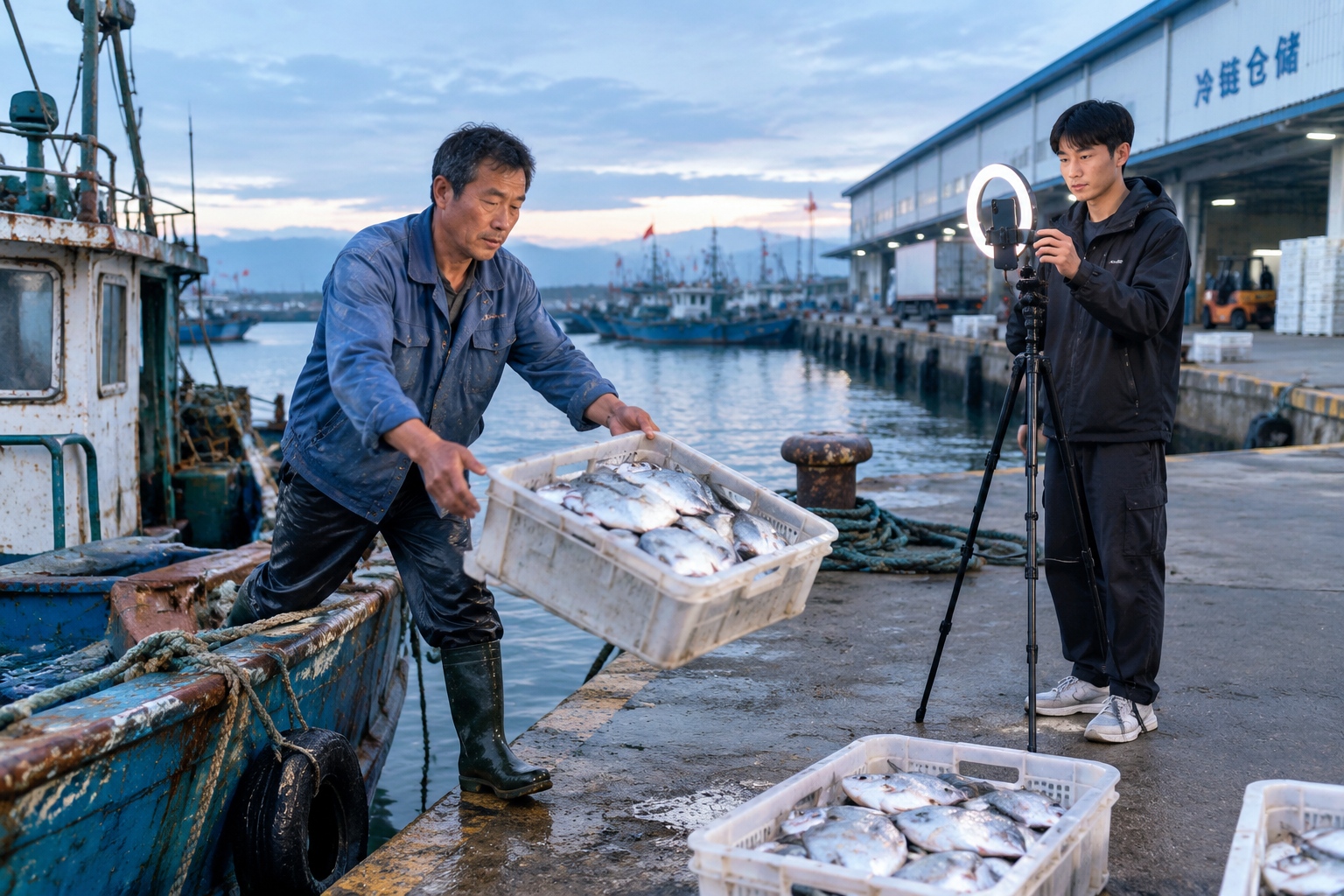

Morning at the Dock: Where the Story Begins
It is 5:40 a.m. at the Shacheng fishing port in Fuding, northern Fujian. The air smells of salt and diesel. A fishing boat, its hull streaked with rust and brine, nudges against the concrete pier. Chen Yubao, 52, tosses a crate of silver pomfret onto the dock. His son, Chen Lei, 26, is already there—not with a notepad, but with a smartphone on a tripod, filming the catch for a live-stream scheduled later that morning.
This is what ‘living off the sea’ looks like in Fujian today. It is not a postcard of straw-hatted fishermen mending nets. It is a hybrid of rubber boots and 5G signals, of ancestral waters and algorithm-driven markets.
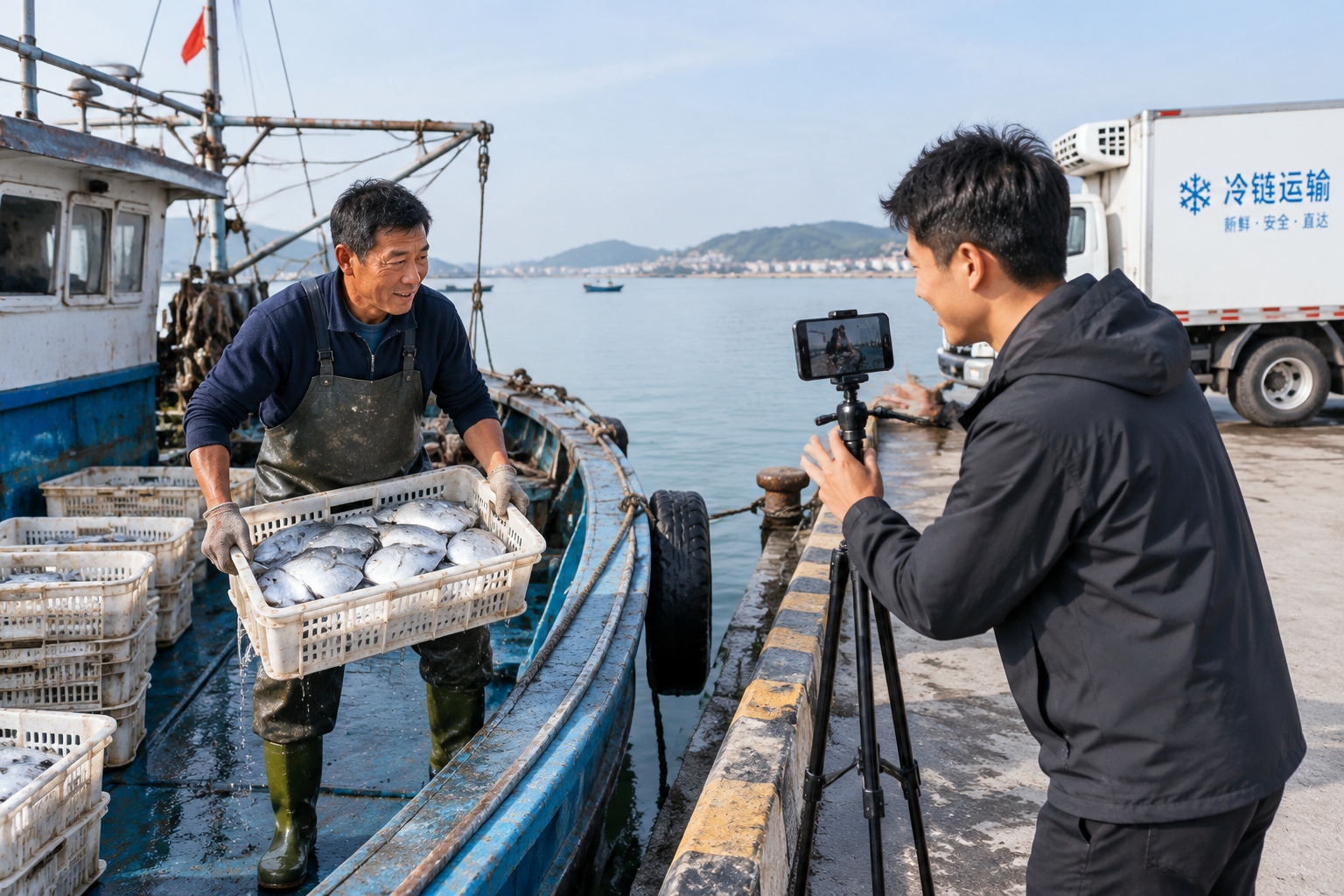
The Cold Chain Revolution: Fresh Fish in 24 Hours
Twenty years ago, Chen Yubao sold his catch to a local wholesaler at whatever price was offered. The fish would travel by truck to regional markets, often arriving soft and tired. Today, within an hour of docking, the pomfret is gutted, flash-frozen at -35°C, and packed into insulated boxes. By 10 a.m., it is on a refrigerated truck heading north to Hangzhou or south to Shenzhen. By the next morning, it can be on a dinner table in Chengdu—1,800 kilometers inland.
This is not a small shift. China’s cold-chain logistics market has grown from roughly 250 billion yuan in 2015 to over 450 billion yuan in 2023, according to industry reports. In Fujian, the provincial government has invested in coastal cold-storage hubs and high-speed rail freight lines that connect ports to inland cities. For families in places like Nanping or Sanming—mountainous cities in Fujian’s interior—fresh seafood is no longer a luxury for holidays. It is a Tuesday night dinner option.
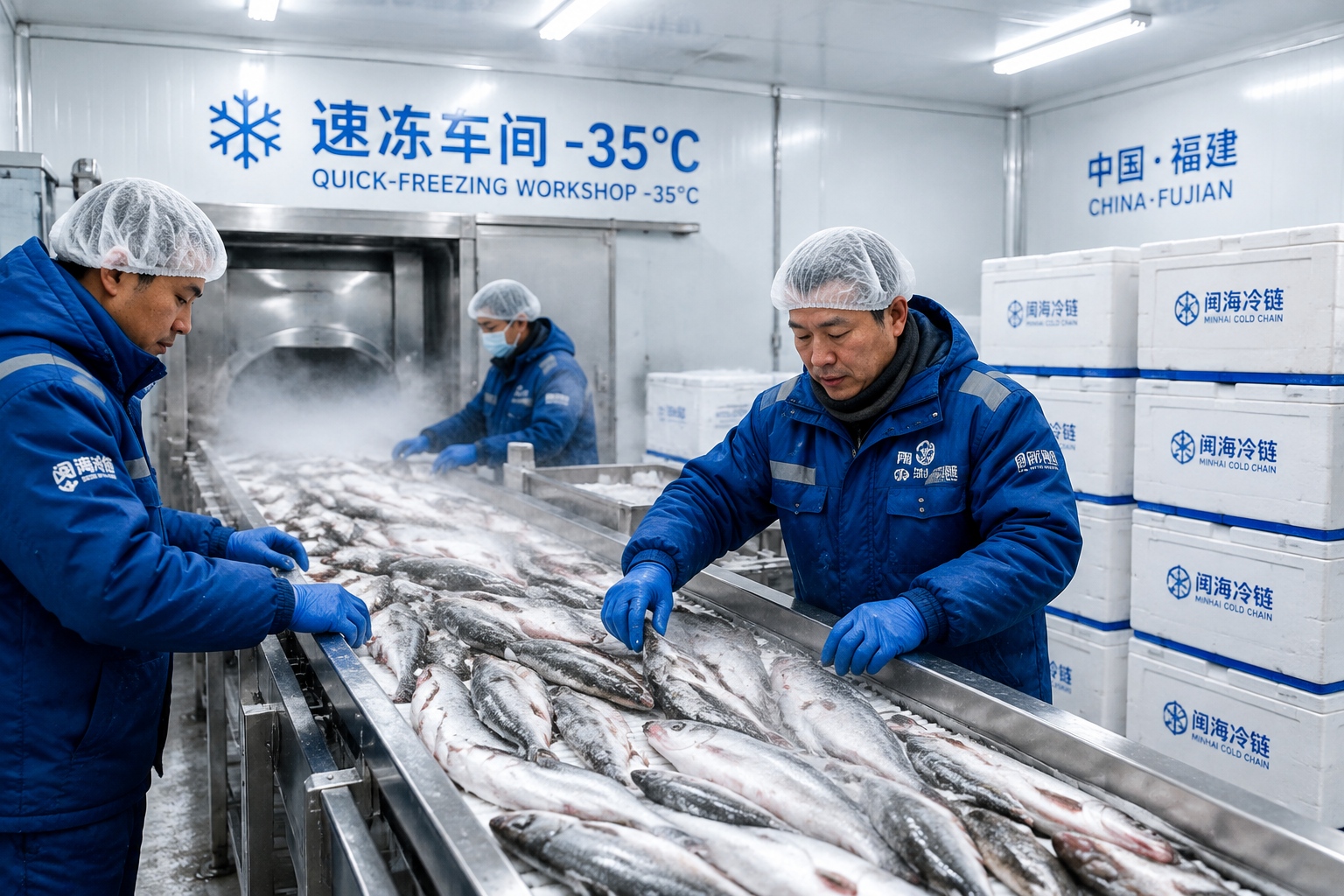
The Digital Marketplace: Selling the Sea on a Screen
Chen Lei started live-streaming two years ago. His channel, ‘Fuding Seafood Brother,’ has 180,000 followers. On a good morning, he sells 300 to 500 orders in two hours—dried shrimp, salted fish, fresh oysters. ‘My dad used to wait for buyers to come to the dock,’ he says, adjusting the ring light. ‘Now I go to the buyers. They are in their living rooms in Beijing or Shanghai, and they watch me pick up a fish.’
This direct-to-consumer model is reshaping trade routes. Traditional wholesalers still exist, but their margins are thinner. Younger sellers like Chen Lei earn more per kilogram by cutting out middlemen. They also bear new risks: shipping delays, customer complaints, platform fees. ‘It’s still the sea,’ he says. ‘Just a different kind of weather.’
Across Fujian, similar scenes play out in Xiapu, Lianjiang, and Dongshan. E-commerce platforms report that seafood sales from Fujian have grown by double digits annually since 2020. The province now has more than 100,000 active online sellers of agricultural and seafood products, many of them under 35.
Dinner in Fuzhou: A Table That Connects Coast and Country
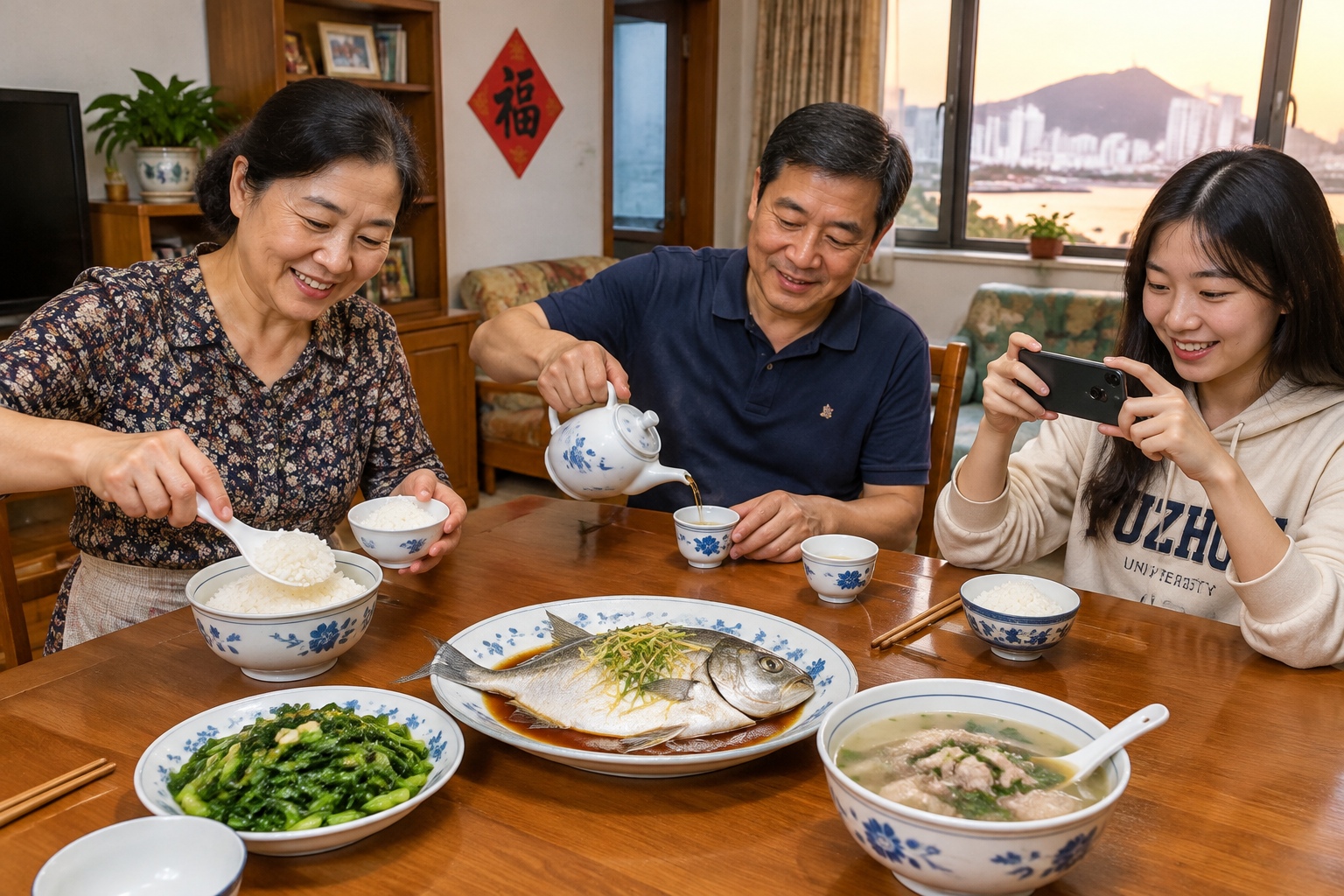
At 6:30 p.m., in a modest apartment in Fuzhou’s Gulou district, Lin Meifang places a steamed pomfret on the table. Her husband, a middle school teacher, pours tea. Their daughter, a university student home for the weekend, takes a photo before anyone eats. The fish came from a live-stream purchased two days earlier. It cost 68 yuan—about $9.50—including delivery.
‘When I was a child, we only ate fish like this during Spring Festival,’ Lin says. ‘Now it’s normal.’ She gestures at the table: stir-fried greens from a local farm, rice from a nearby county, and the pomfret from the coast. ‘Everything is from somewhere, but it all feels close.’
This is the quiet integration that defines modern Chinese consumption. Regional specialties are no longer regional. They are national, and increasingly, global. Fujian’s seafood supply chain is a case study in how infrastructure, digital platforms, and changing household budgets have collapsed distance.
Sustainability: The Next Chapter of ‘Living Off the Sea’
Not everything is simple. Overfishing and coastal pollution have pushed Fujian to experiment with aquaculture quotas, marine protected areas, and restocking programs. In Xiapu, some fishing families now farm kelp and oysters instead of trawling. In Dongshan, a coral restoration project employs former fishermen as divers and monitors.
Chen Yubao is skeptical of some policies but admits the sea is not what it was. ‘We used to catch more with smaller nets,’ he says. ‘Now we go farther and catch less.’ His son sees it differently. ‘We can’t just take,’ Chen Lei says. ‘We have to sell in a way that lets the sea come back.’
For now, the family dinner in Fuzhou continues. The pomfret is flaky, mild, and fresh. It is a taste of the coast, delivered by a system that is neither traditional nor purely modern—just the latest version of an old bargain with the sea.
Start the discussion at forum.chinacomes.com