
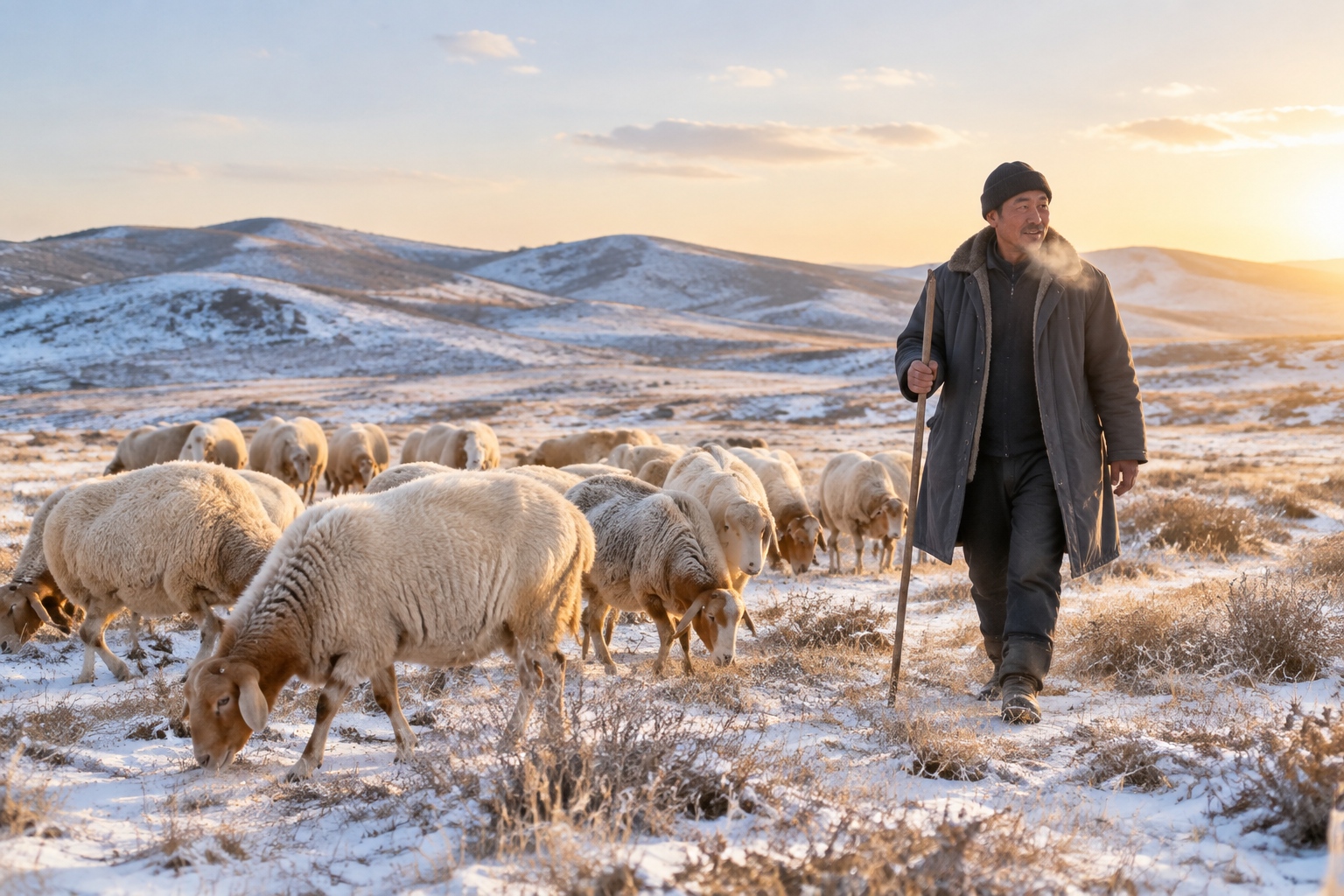

A winter morning in Yanchi County, Ningxia. The temperature has dropped to -15°C, and the ground is covered with frost. Ma Fengshan, a 58-year-old shepherd, opens the wooden gate of his sheepfold, and a herd of tan sheep rush out, their warm breath forming clouds in the air. He leads them across the frozen grassland, past patches of dry grass and low shrubs. This is the daily routine that has shaped one of China’s most prized meats: the tender, fragrant lamb that food lovers across the country wait for all year.
A Sheep Worth Knowing
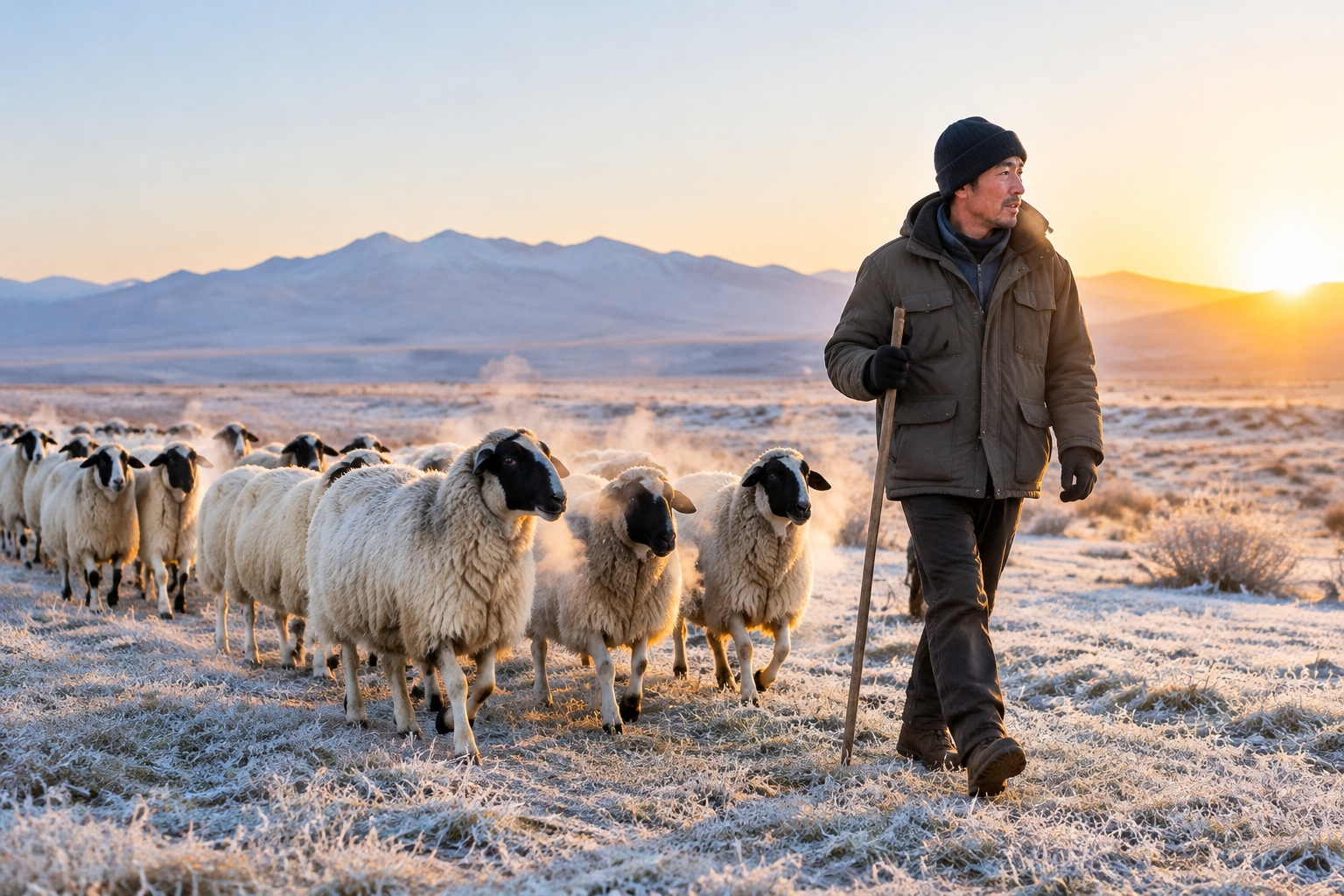
Tan sheep are a native breed of Ningxia, a province in northwest China that borders the Gobi Desert to the west and the Yellow River to the east. They have been raised here for over a thousand years, mostly in the arid grasslands around Yanchi, a small county that has become the heartland of the breed. The sheep are easy to spot: they have a white, curly coat and a black face, and they are surprisingly agile for their size.
What makes tan sheep stand out is not just their appearance but their meat. It has a fine texture, a subtle sweetness, and almost no gamey smell, a common problem with other lamb. For Chinese chefs, a high-quality tan sheep leg is a blank canvas: it can be simmered in clear broth, roasted over charcoal, or stir-fried with spring onions, each method revealing a different layer of flavor.
The Diet That Makes It Tender
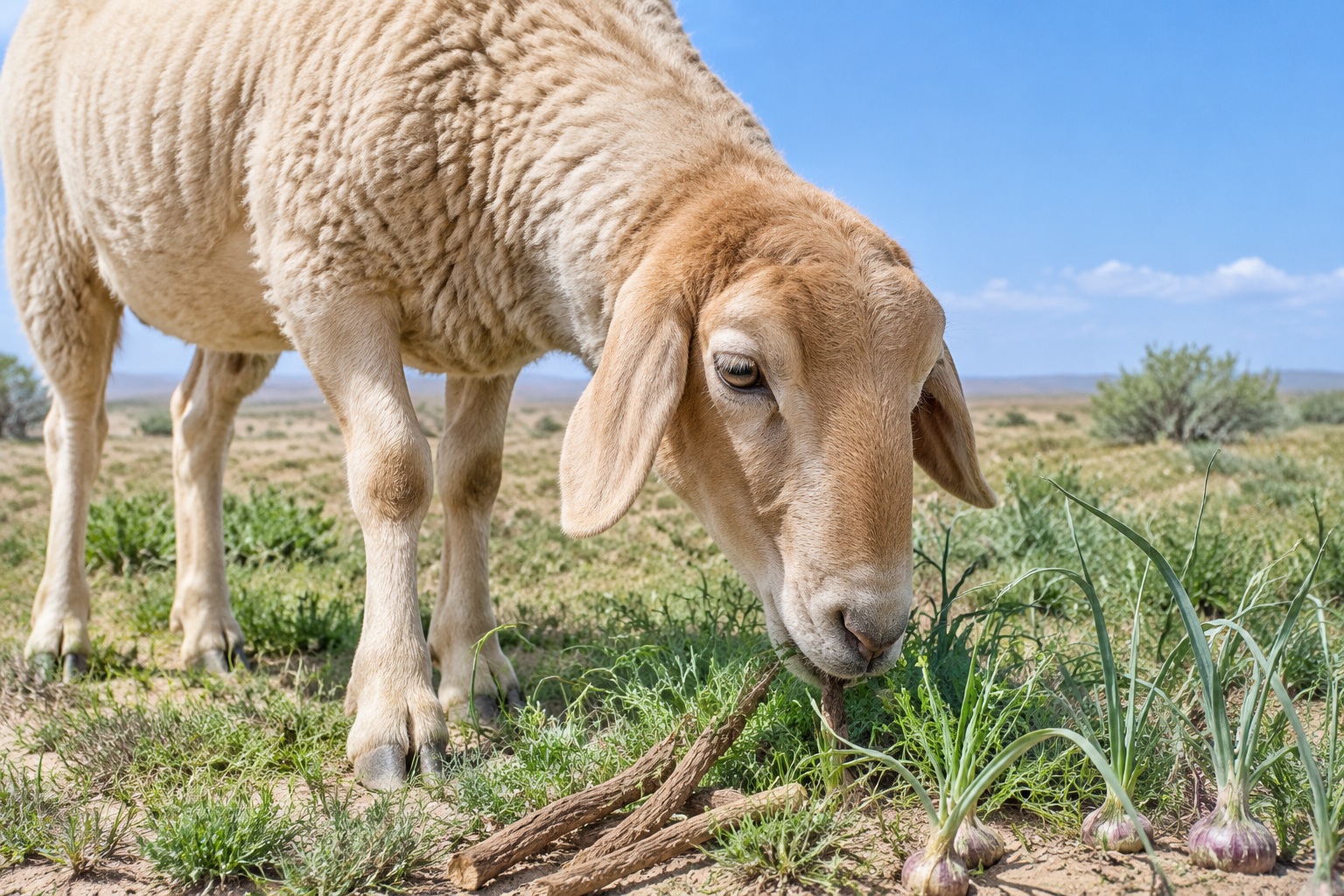
Locals often say that tan sheep “eat Chinese herbs and drink mineral water.” That is an exaggeration, but it points to something real. The Yanchi grassland is home to a variety of plants that are unusual for a semi-arid region: licorice roots, bitter beans, sand onions, and a hardy grass called “boose.” These plants are not just shrubs; they are packed with essential oils and micronutrients that find their way into the sheep’s meat. The alkaline soil and the sulphate-rich water also play a role in reducing the compounds that cause a strong lamb odor.
The sheep are not fed high-protein grains in a factory. They graze freely on the open range, eating whatever the season offers. In winter, shepherds supplement with dry alfalfa and corn, but even then, the animals are never kept in a crowded house for long. “Meat tastes better when the sheep are calm and have room to move,” Ma Fengshan explains, as he points to a group of lambs chasing each other across the snow. “Stress affects the texture. It makes the meat tougher.”
All Grass Is Not Equal
In recent years, local herders have adopted a rotational grazing system, moving the sheep to different sections of the pasture to allow the grass to regenerate. This is not just an environmental practice; it also improves the meat quality. When sheep overgraze one area, they are forced to eat whatever is left, including bitter weeds, and the meat can take on an off-putting taste. By rotating, they always have access to fresh, diverse forage.
The grassland itself is fragile. Yanchi sits at the edge of the Mu Us Desert, and for decades, overgrazing and drought turned the region into a dust bowl. In the 1980s, the government launched a series of projects to restore the grassland, compensating herders for reducing their flock sizes and fencing off large areas for recovery. Today, the grass is thick and many areas are protected as nature reserves. It is a rare success story of ecological recovery in China, and the local sheep industry has been a direct beneficiary.
From Herd to Kitchen: The Modern Touch
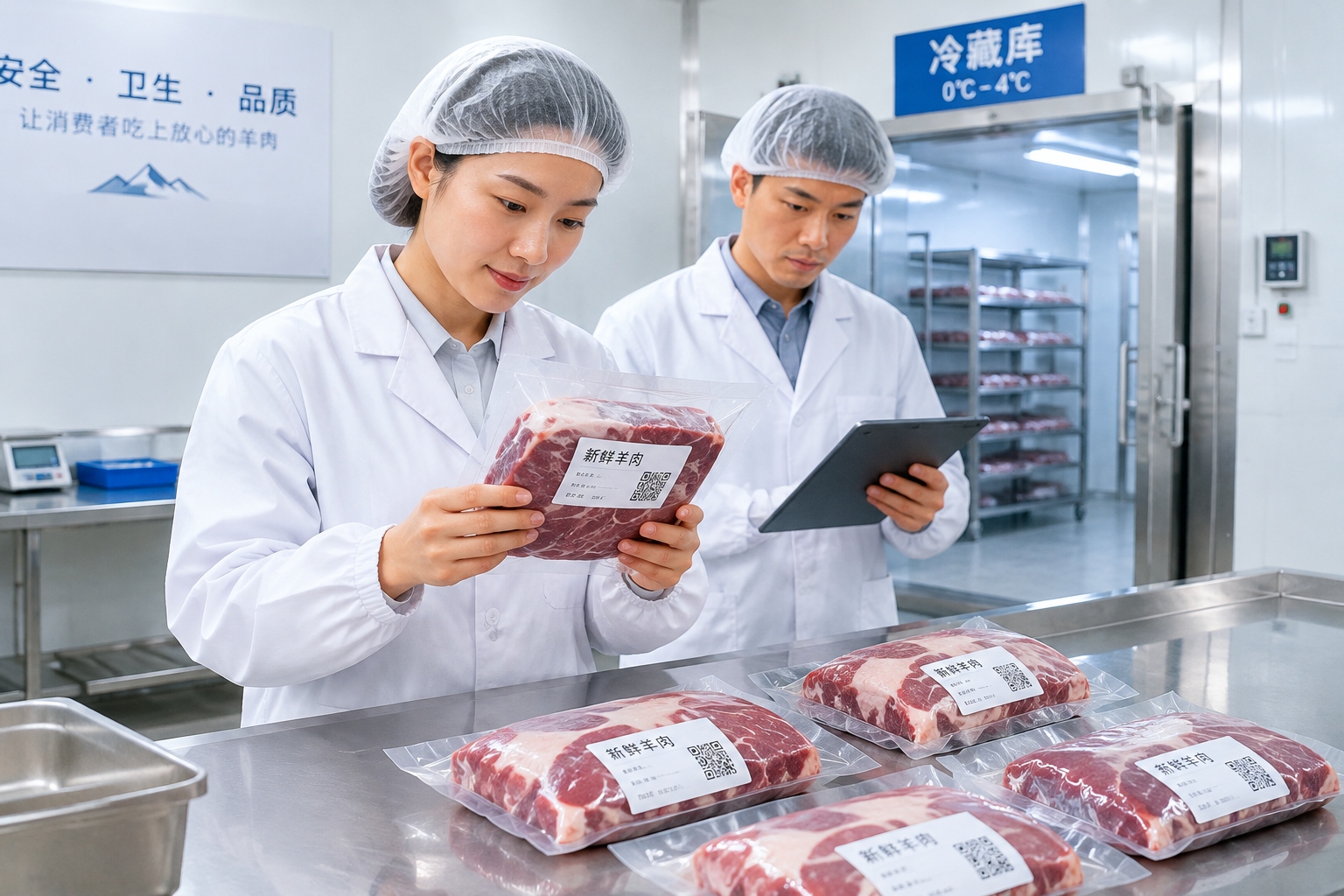
While the sheep are raised traditionally, the processing has gone high-tech. After slaughter, the carcasses are placed in a cooling room for 24 to 48 hours. This is called “draining” or “acid removal.” The cold temperature allows the natural enzymes to break down the tissue, which further tenderizes the meat and enhances the flavor. Then the meat is vacuum-packed and shipped in refrigerated trucks to cities like Beijing, Shanghai, and Guangzhou. Each leg and rack carries a QR code that allows consumers to trace the origin of the meat, down to the specific pasture and the date of slaughter.
Li Xin, a chef at a hotpot restaurant in Yinchuan, the capital of Ningxia, says the locals prefer to eat tan sheep within six months of the slaughter. “The texture really is different from frozen lamb from abroad. It has a delicate, slightly sweet taste, and it cooks very quickly. If you boil it for more than ten minutes, it becomes tough. You have to be precise.”
The Science of Tenderness
Why exactly is tan sheep meat so tender? Meat tenderness is largely determined by three factors: the length of muscle fibers, the amount of connective tissue, and how the muscles are used. Tan sheep have a relatively slow growth rate, which means their muscles develop in a more balanced way. Because they graze freely on uneven terrain, they use their whole body, rather than being confined to a small pen where they only stand or lie. This natural exercise keeps the muscle fibers thin and even.
In addition, the intramuscular fat, also known as marbling, is evenly distributed. This is what gives the meat a juicy, melt-in-your-mouth quality when cooked. A study by the Ningxia Academy of Agricultural Sciences found that tan sheep meat has a higher proportion of monounsaturated fatty acids compared to other sheep breeds, which not only contributes to the tender texture but also makes it healthier.
Where the Grass Meets the Market
The green farming story has also transformed the local economy. Yanchi County now has over 2 million tan sheep and more than 300,000 people are involved in the industry, from herders and feed producers to butchers and restaurateurs. The annual output value exceeds 1.5 billion yuan (about 210 million U.S. dollars). For many young people, however, the dream is not just to breed sheep but to build a brand.
Wei Rong, a 32-year-old entrepreneur, grew up in Yanchi and went to university in Shanghai. She moved back in 2016 and started an online store selling premium tan sheep cuts. “Young people are more willing to embrace e-commerce,” she says. “We sell whole lambs to friends and families during the Chinese New Year, and some customers even pay extra for a live-streamed cooking class.” She is now working with local cooperatives to standardize the meat grading process, hoping to get tan sheep into Michelin-starred restaurants overseas.
Challenges and Hope
Of course, not everything is perfect. Climate change is making droughts more frequent, and the cost of feed has risen. Some herders, especially the older generation, are reluctant to adopt new grazing patterns. The young people who leave for the city often do not want to come back to such a remote, harsh environment. But there is also hope: the government is investing in water-saving irrigation and smart sensors that monitor soil moisture and grass growth. And a new generation of herdsmen, like Wei, is proving that you can make a decent living while caring for the land.
Back on the grassland, the sun is setting, casting a golden hue on the white backs of the sheep. Ma Fengshan slowly walks his flock back to the pens. He has been doing this for 35 years. “My father told me that the grassland is like a child. If you look after it, it will look after you.” He knows his sheep will be sold soon, some to the local restaurant that has served tan sheep for three generations, some to a food stall in Shanghai. But for now, the animals are just sheep, and the pasture is home.
A Final Taste
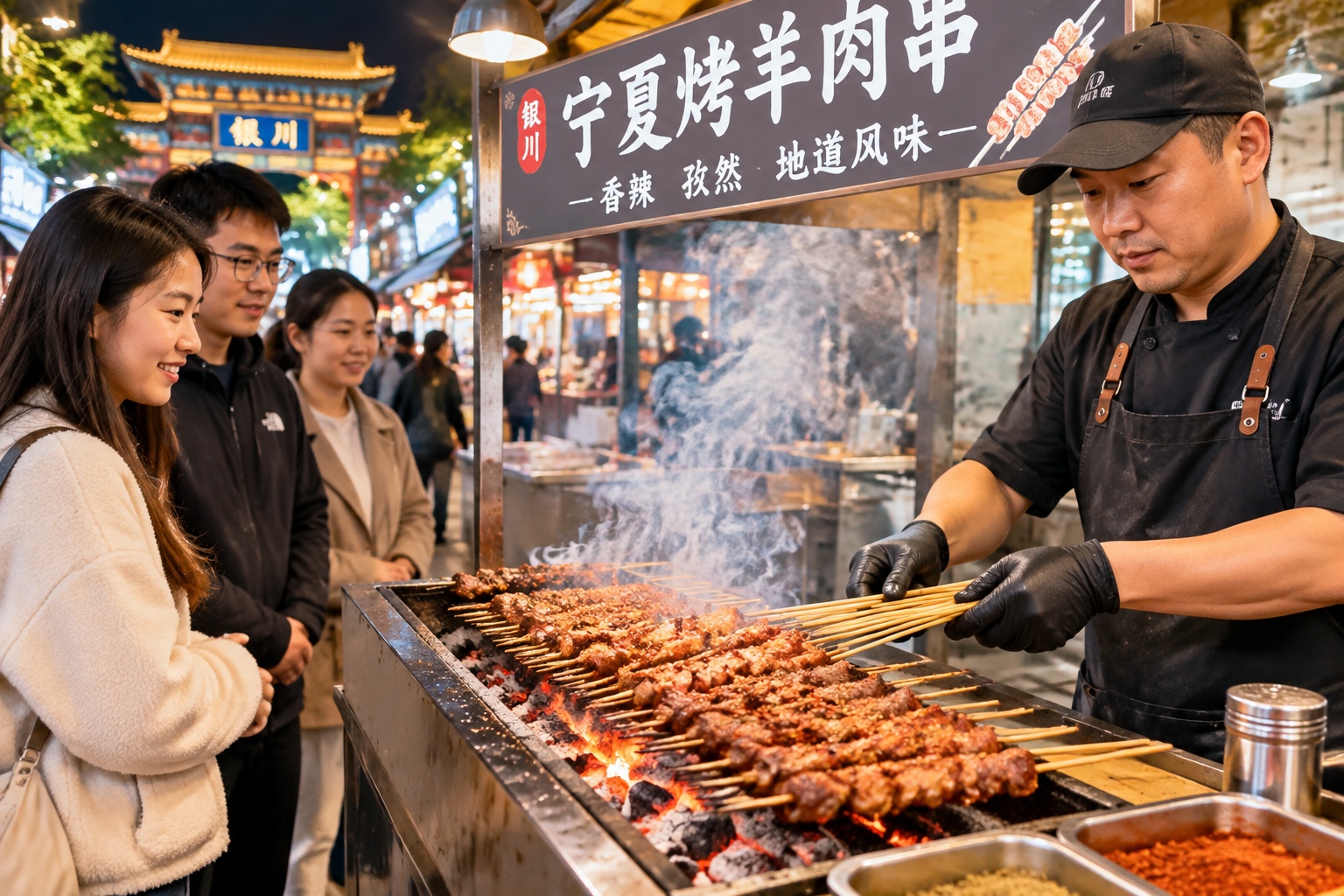
If you want to understand why this meat is so special, you don’t need to read a scientific paper. Just go to a night market in Yinchuan, where skewers of lamb are grilling over open flames. The cook sprinkles a little cumin and chili powder, and as you bite into the meat, it yields gently, releasing a burst of aromatic juice that has a hint of the grassland itself. That is the taste of a place, a tradition, and a way of life that has learned to coexist with the land.
Ningxia tan sheep is not just a breed; it is a symbol of what happens when culinary heritage meets environmental stewardship. And the next time you see a pack of lamb in a Chinese supermarket, you will know that behind the tender meat is a long journey across a changing landscape, and a community that is working hard to keep it alive.
Start the discussion at forum.chinacomes.com