

A First-Timer’s Question
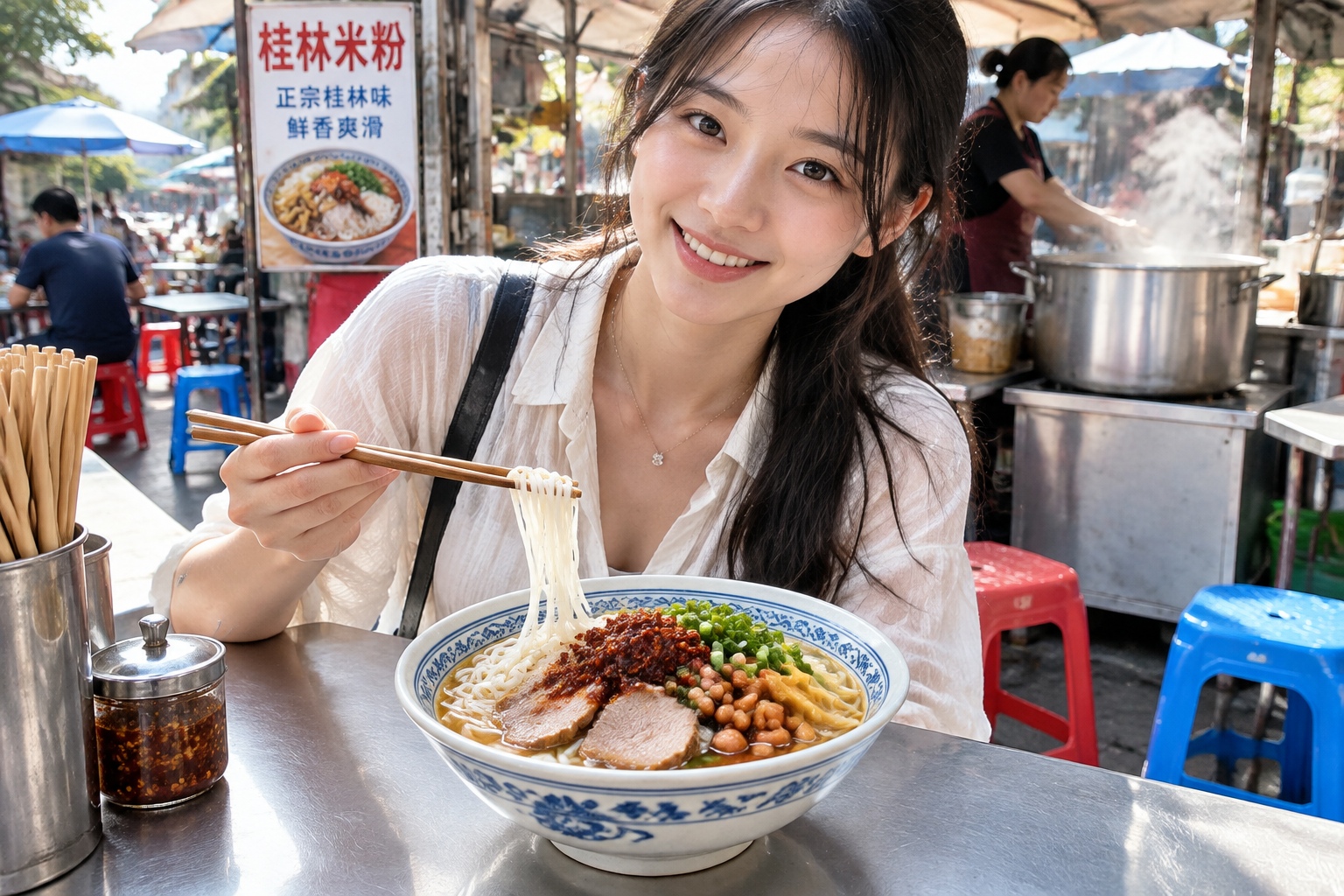
My first week in Nanning, I sat at a tiny street stall with a bowl of Guilin rice noodles in front of me. The broth was milky, the noodles slippery, and the pickled bamboo shoots smelled—there is no polite way to say this—pungent. A British tourist at the next stool leaned over and asked, “Why is everything here both sour and spicy at the same time?”
It is a fair question. Guangxi cuisine rarely appears in the same breath as Sichuan or Hunan cooking, yet its flavors are just as distinctive. The difference is that Guangxi’s sourness and heat are not separate notes. They are braided together, and the result confuses outsiders who expect either a vinegar kick or a chili burn, not both in the same mouthful.
Geography and Climate: How Subtropical Mountains Shaped the Flavor
Guangxi sits in southern China, sharing a border with Vietnam. Most of the region is subtropical: summers are long, humid, and hot; winters are short and mild. In cities like Nanning and Liuzhou, humidity often hovers above 80 percent for weeks. That kind of climate does two things to food culture. First, it makes people want something that cuts through the heaviness—something sour, something sharp. Second, it makes food spoil fast, which pushed local cooks toward preservation methods that happen to produce sour and spicy flavors.
Guangxi is also mountainous. The karst peaks that draw tourists to Guilin and Yangshuo are the same landscapes that historically isolated villages from one another. Over centuries, Zhuang, Yao, Miao, Dong, and Han communities developed their own fermentation techniques and chili traditions. What they shared was a practical logic: ferment what you cannot eat fresh, and use heat and acid to make simple ingredients taste like more.

Sourness: Not Just Vinegar, but Fermentation Wisdom
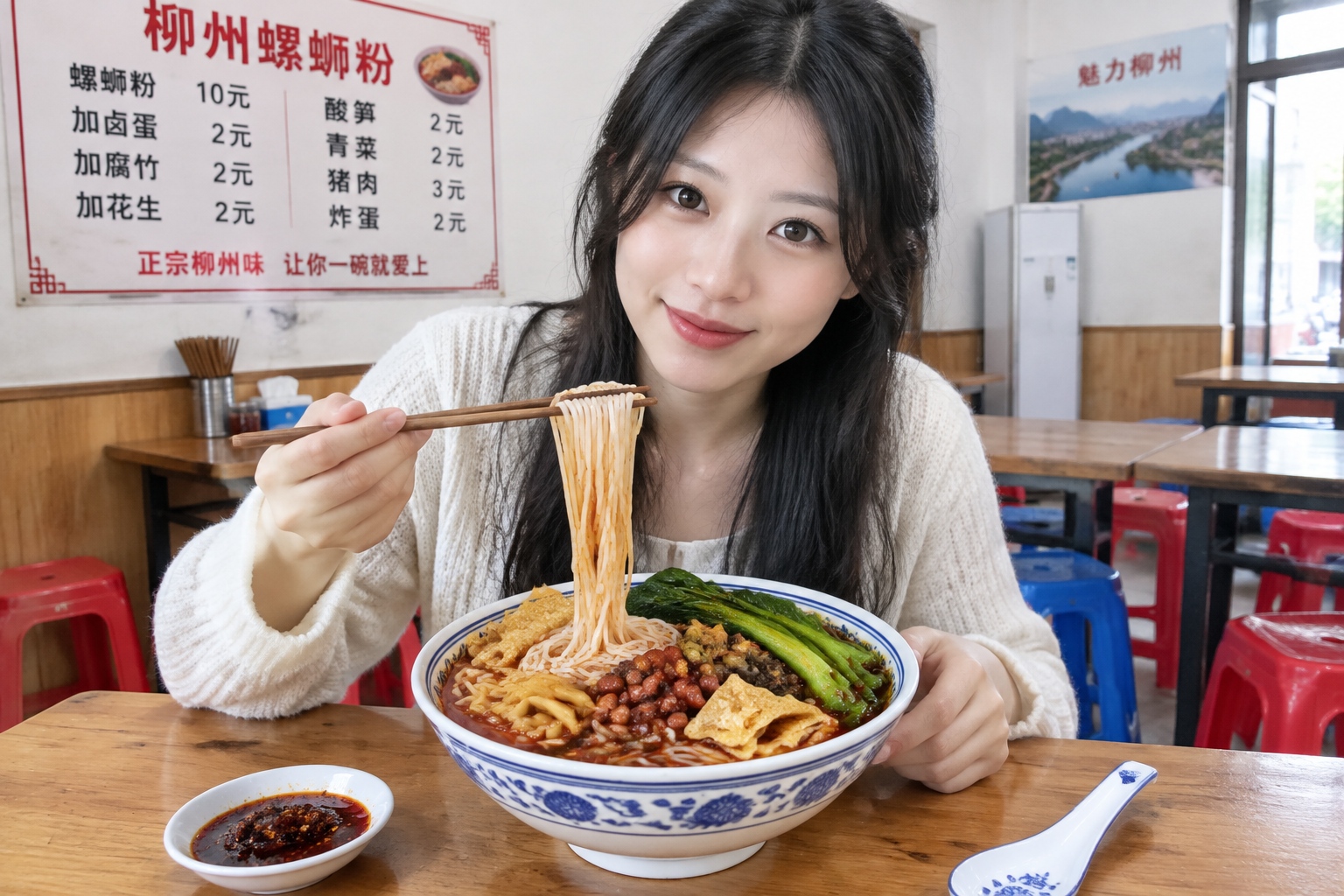
When people outside China think of sour, they think of vinegar or lemon. In Guangxi, sourness comes from fermentation. The most famous example is suan sun—pickled bamboo shoots—which gives Luosifen its unmistakable aroma. The smell is strong enough that hotels in some cities have banned it from rooms. But for locals, that smell is the point: it signals that the bamboo has fermented long enough to develop a deep, funky tang that no vinegar can imitate.
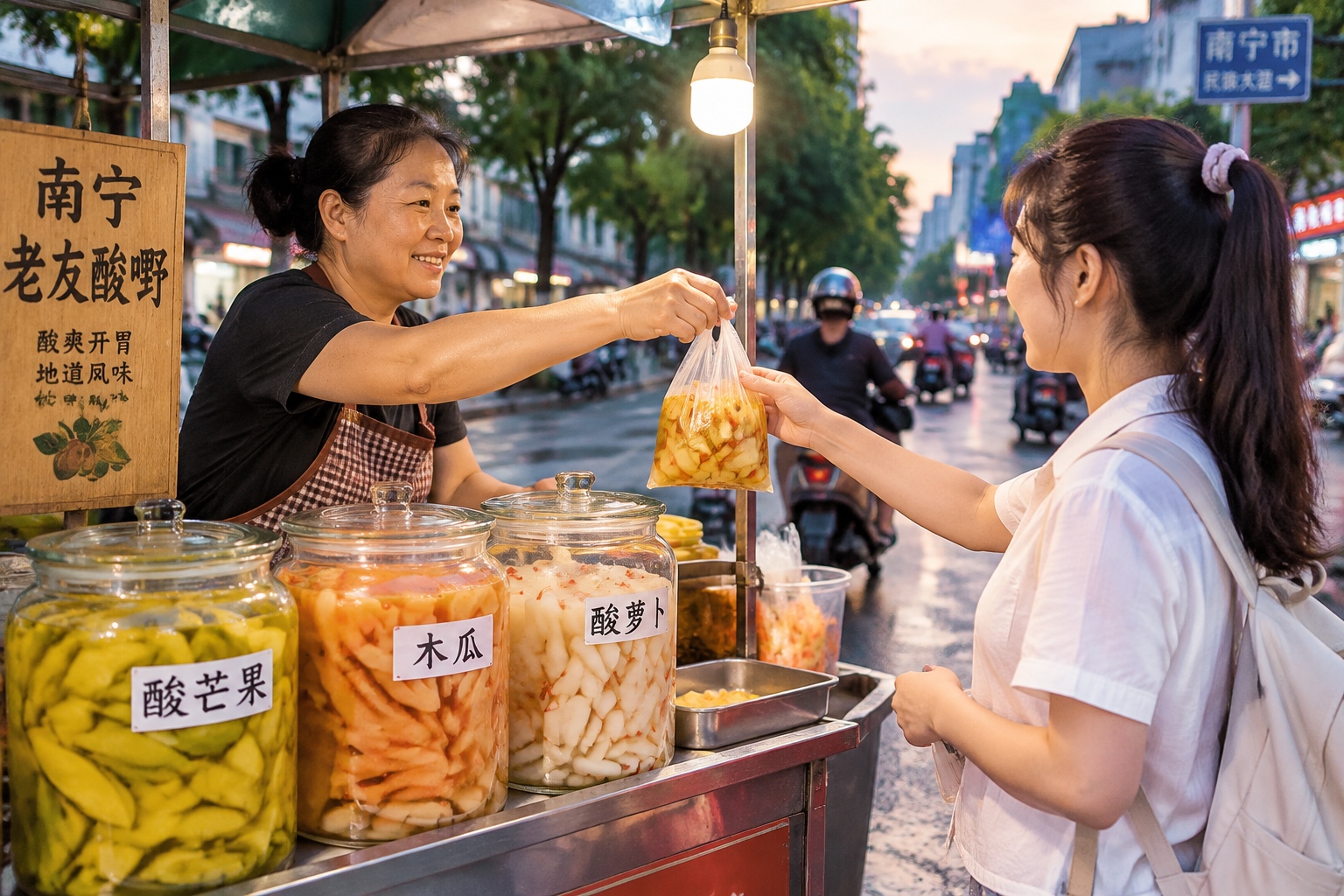
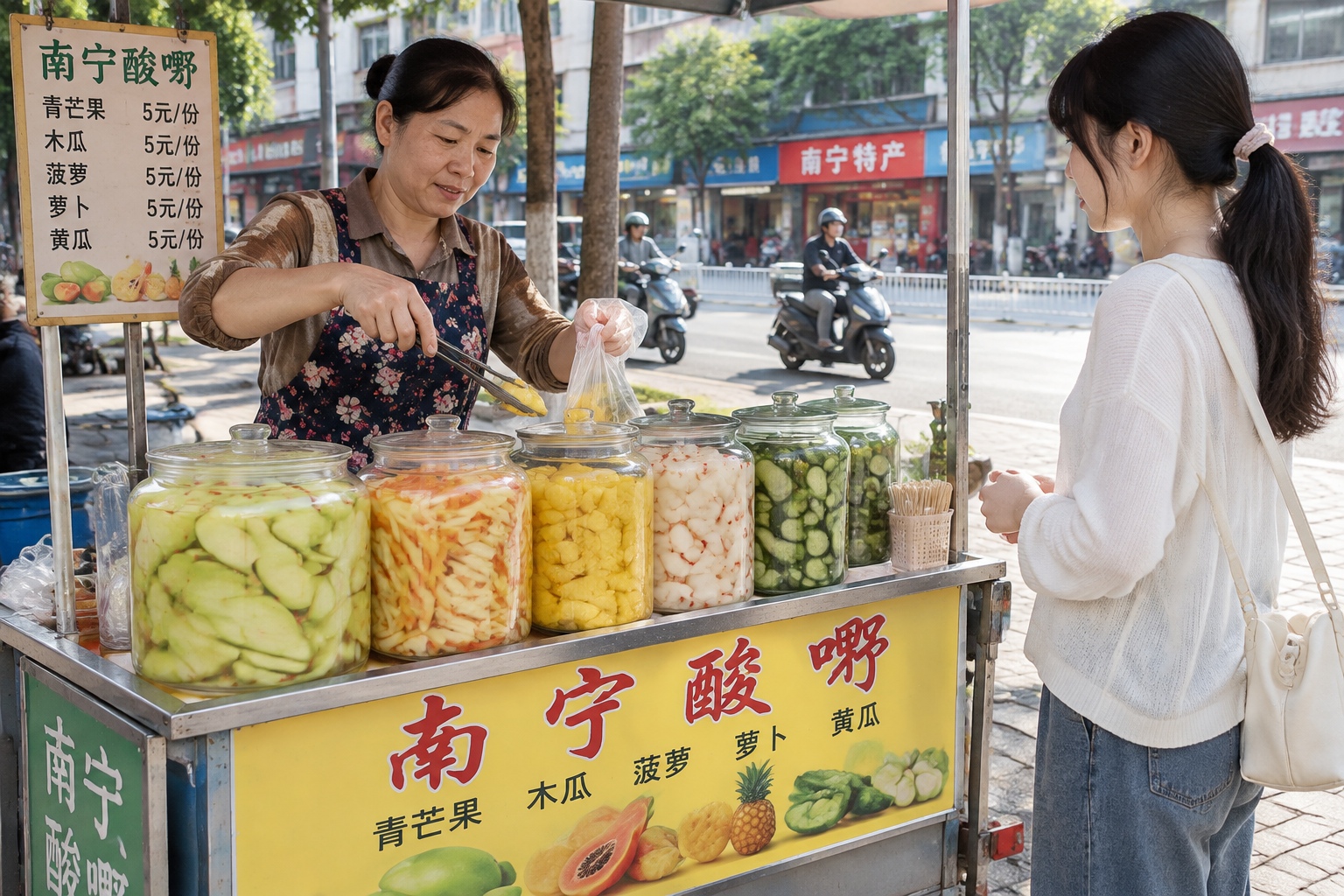
Then there is suan ye, or sour “snacks.” In Nanning, you will find street carts loaded with glass jars of pickled fruits and vegetables: green mango, papaya, pineapple, radish, cucumber, even lotus root. They are soaked in a brine of rice vinegar, sugar, chili, and sometimes herbs. The result is crunchy, sweet, sour, and hot all at once. A local auntie at one such stall on Zhongshan Road told me she has been running her cart for eighteen years. “People think fruit should be sweet,” she said, handing me a bag of pickled mango. “But after a hot day, sweet is too much. Sour wakes you up.”
Heat: The Misunderstood “Guangxi Spicy”
Guangxi is not Sichuan. Its chili culture is younger and less formalized. The heat here tends to be fresh and bright rather than numbing or smoky. In Guilin rice noodles, the chili comes as a paste or oil that you add yourself, along with pickled beans, fried peanuts, and scallions. In Luosifen, the heat is fermented and sour, layered over the bamboo shoots and river snail broth. It is not a wall of fire; it is a slow, tangy burn that builds as you eat.
There is also raw heat. In some rural markets, you will find small green chilies served whole with salt and a squeeze of lime. You bite, you wince, you reach for rice. This is not cuisine designed to impress. It is cuisine designed to make a hot, humid day feel manageable. The chili makes you sweat, and sweating cools you down—or at least makes you feel like you are doing something about the weather.
Flavor Geography: Why Outsiders Only See “Sour and Spicy”
Tourism marketing loves a simple story. “Guangxi: sour and spicy” fits on a poster. It gives visitors something to expect. But anyone who spends a week eating in the region notices what the label leaves out. There is sweetness in the caramelized pork, bitterness in the bitter melon soups, freshness in the steamed river fish, and a deep umami in the fermented bean pastes. The sour and spicy are the loudest notes, but they are not the whole song.
Part of the problem is that Luosifen has become the region’s global ambassador. It is a great dish, but it is also an extreme one: aggressively sour, aggressively smelly, aggressively spicy. When that is your first impression, it is easy to assume everything else tastes the same. It would be like judging all Italian food by one very strong gorgonzola.
Everyday Tables: A Young Guangxi Local’s Day of Eating
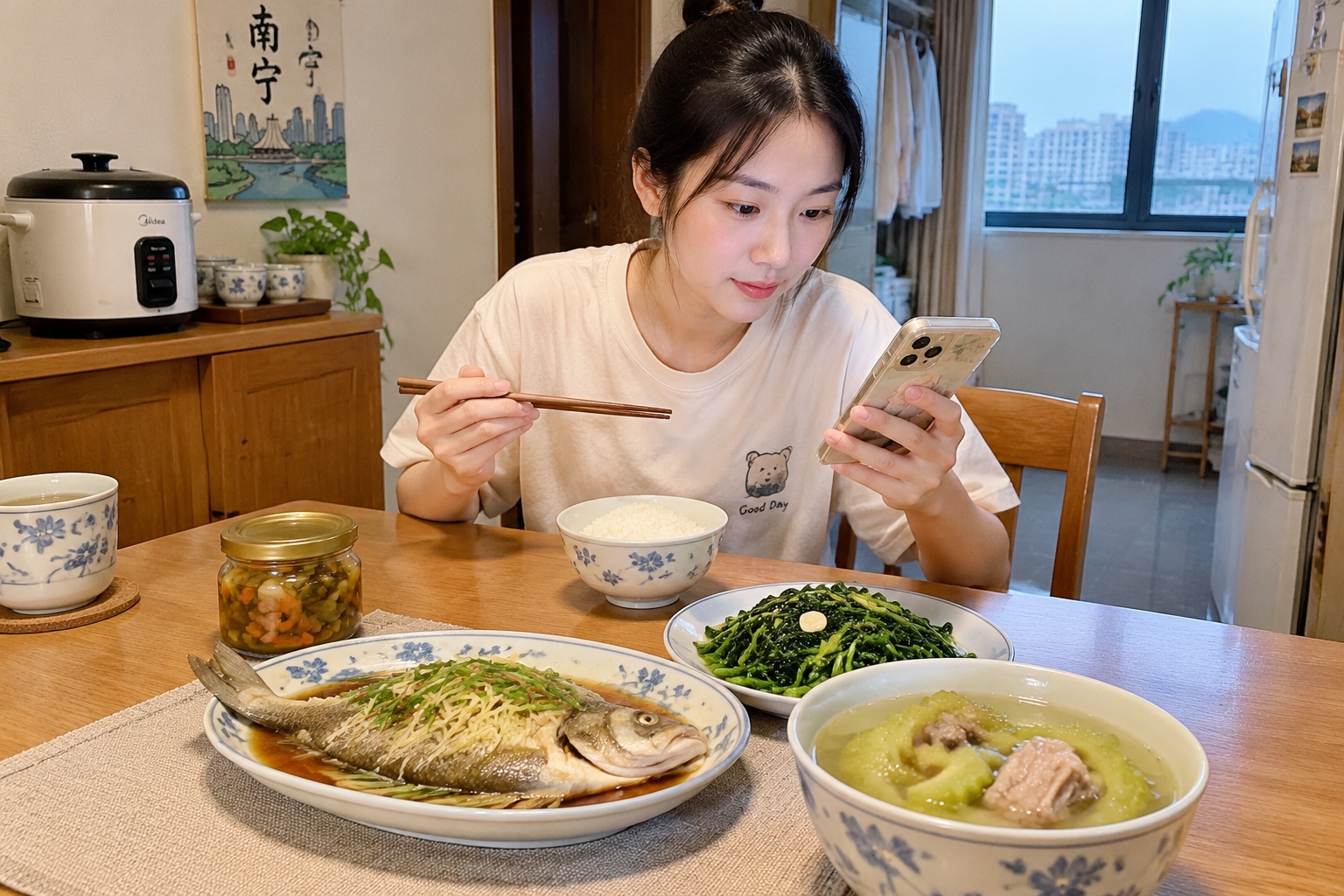
To understand how these flavors actually work, I asked a 26-year-old Nanning office worker named Li Wei to walk me through a typical day. Breakfast is a bowl of rice noodles, usually with pickled vegetables and a splash of chili oil. Lunch is often takeout: stir-fried beef with sour bamboo shoots, or a rice box with pickled radish and a small container of chili sauce. Dinner at home might be steamed fish with ginger, a soup of bitter melon and pork ribs, and a plate of stir-fried greens with garlic. The sour and spicy elements are there, but they are accents, not the main event.
“My grandmother makes her own pickled vegetables,” Li said. “Every family has a different jar. When I moved into my apartment, my mother gave me a jar of her pickling brine. It felt like a housewarming gift and a survival kit at the same time.” That jar is a small example of how flavor connects generations. The sourness is not just a taste; it is a memory of home, a practical skill, and a link to the past.
Conclusion: Understanding Guangxi Flavor Means Understanding Adaptation
The sour and spicy flavors of Guangxi are not a gimmick. They are a response to a specific place: hot, humid, mountainous, and historically isolated. Fermentation preserved food before refrigeration. Chili made simple meals exciting and helped people cope with the climate. Over time, these practical choices became a cuisine.
For visitors, the lesson is simple. Do not come to Guangxi expecting a single flavor. Come expecting a conversation between sour, spicy, fresh, sweet, and bitter. The best way to understand it is not to read a menu but to sit on a plastic stool at a street stall, order something you cannot pronounce, and let the auntie behind the cart explain it to you. She will not use the word “geography,” but she will tell you exactly why the mango is sour and why that is a good thing.
Start the discussion at forum.chinacomes.com