

Morning in Yinchuan: A Bowl of Soup and a Covered Tea
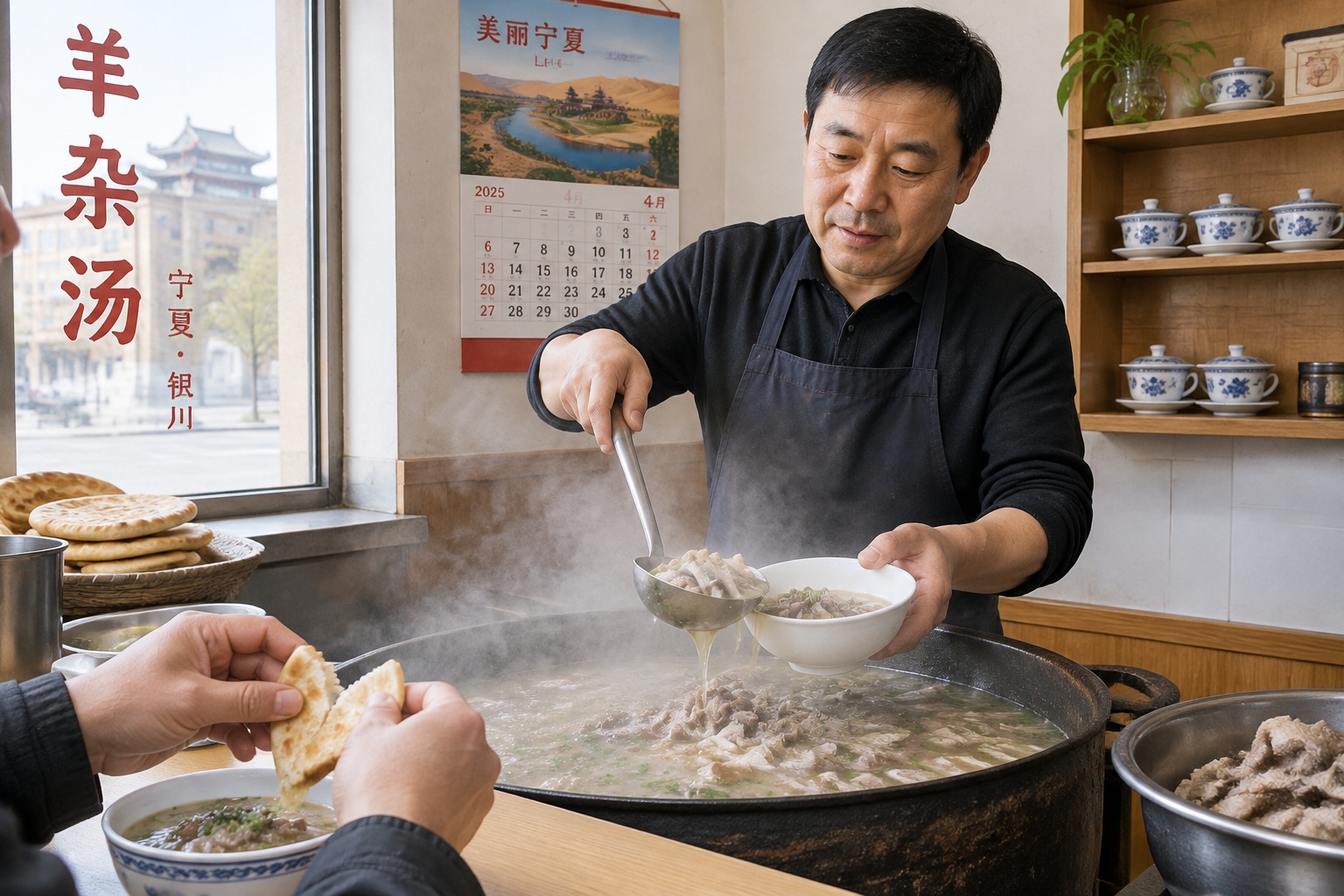
At 7:30 a.m., the air in Yinchuan still carries the dry chill of the northern desert. Inside a small restaurant on Jiefang East Street, steam rises from a large iron pot. The owner, Ma Wenjun, lifts a ladle and fills a white ceramic bowl with lamb offal soup — heart, liver, lung, and tripe simmered overnight with ginger, scallion, and a handful of local chili. He slides it across the counter. A customer adds a spoonful of vinegar and breaks a piece of flatbread into the broth. No words are exchanged. This is breakfast.
Lamb offal soup, or yangzaxui, is not a dish for tourists. It is a working-class staple, eaten before dawn by taxi drivers, market vendors, and office workers. A bowl costs between 15 and 25 yuan (about $2–3.50). Next to it sits a gaiwan — a lidded porcelain cup filled with tea, rock sugar, dried dates, goji berries, and sometimes sesame or longan. The combination is a morning ritual: salty, warming, and slightly sweet.
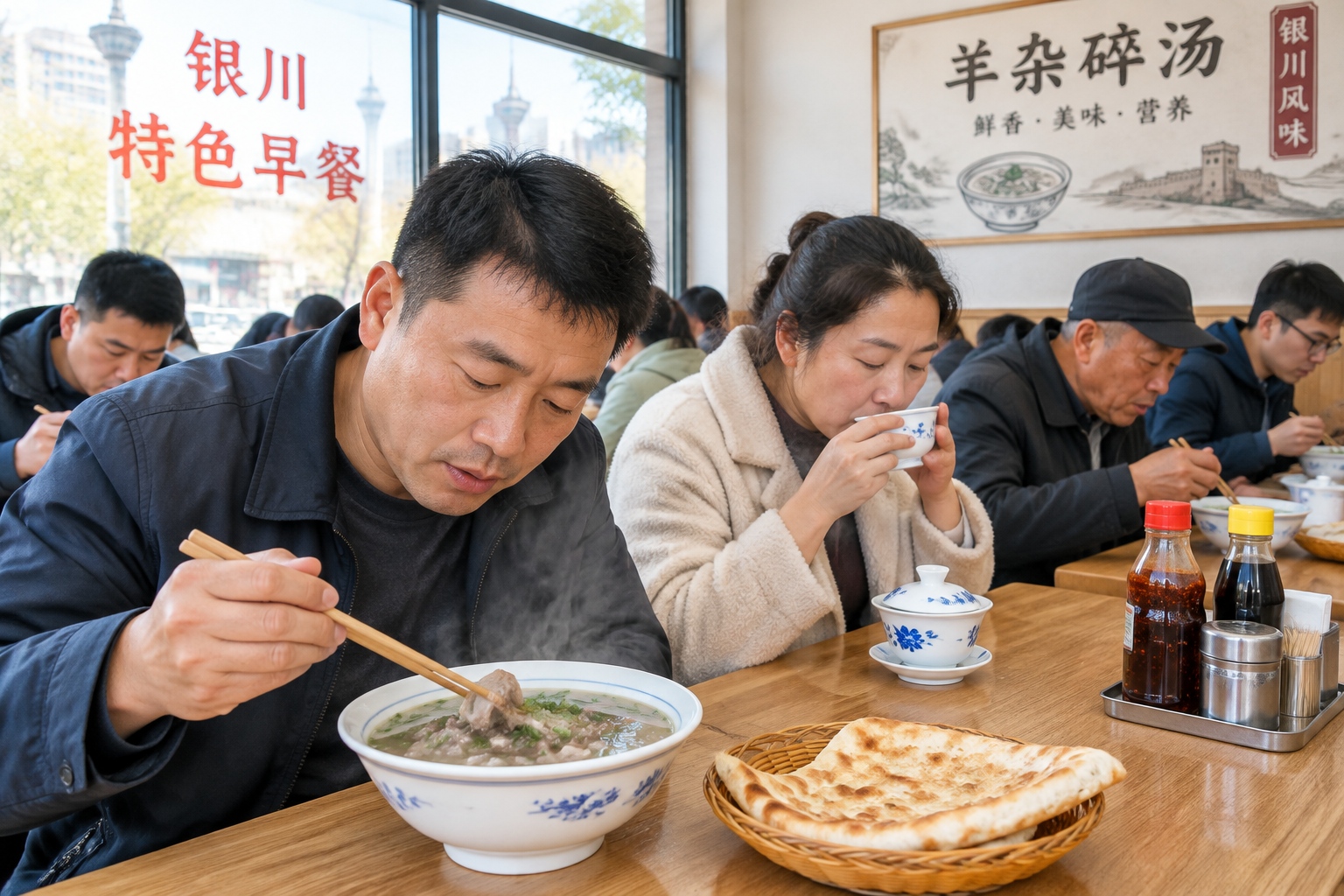
What strikes a visitor is not just the taste but the social rhythm. People sit shoulder to shoulder at narrow tables. Some read news on their phones; others argue quietly about football. The restaurant has no Wi-Fi password on the wall, no QR code for ordering — just a cashier who remembers regulars’ orders. This is not a performance of tradition. It is simply how many people in Yinchuan start their day.
Under Helan Mountain: Where Vineyards Replace Barren Land
An hour’s drive west of Yinchuan, the Helan Mountain range rises like a gray wall. At its foot, the land is dry, rocky, and cold in winter. Twenty years ago, this area was mostly gravel and dust. Today, rows of grapevines stretch across the slope, their leaves silver-green in the sunlight.
I visit Chateau Changyu Moser XV, one of the earliest wineries established here in the early 2000s. A young winemaker, Li Na, walks between the vines. She points to the soil — a mix of sand and gravel that drains quickly. “The mountain blocks the desert wind,” she says. “The Yellow River is nearby for irrigation. But the best part is the temperature difference — hot days, cool nights. That’s what gives the grapes their acidity.”
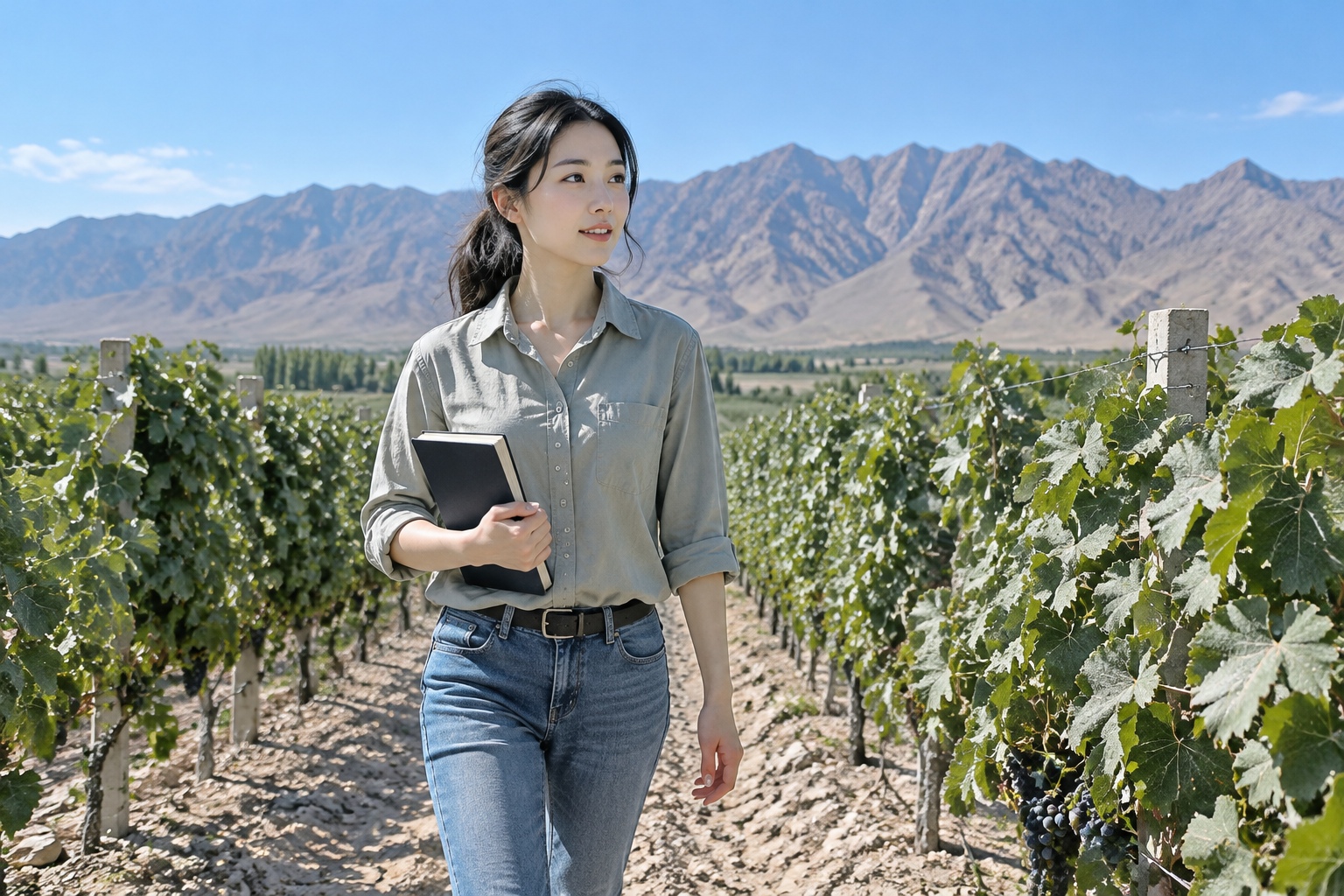
Ningxia’s wine industry is young but growing fast. In 2011, the region had fewer than 50 wineries. By 2023, there were over 200, producing more than 130 million bottles a year. The local government has promoted the area as a “wine corridor,” offering tax breaks and land leases. International competitions have awarded Ningxia wines gold medals, and exports now reach Europe, Japan, and the United States.
From Immigrant Villages to Wine Tourism
But the vineyards are not just about wine. They have changed the lives of people who moved here from poorer parts of Ningxia. In the 1980s and 1990s, the government relocated thousands of families from the southern mountains — where farming was nearly impossible — to the plains near Helan Mountain. These yimin cun, or immigrant villages, were meant to give people a fresh start.
Many of those families now work in the wine industry. They prune vines, harvest grapes, or run small guesthouses for tourists. At a village called Hongqiao, I meet Wang Xiulan, a 54-year-old woman who moved here in 1998. She used to grow corn and wheat. Now she manages a team of ten pickers during harvest season. “We earn three times more than before,” she says. “And my daughter works at a winery tasting room. She speaks some English now.”
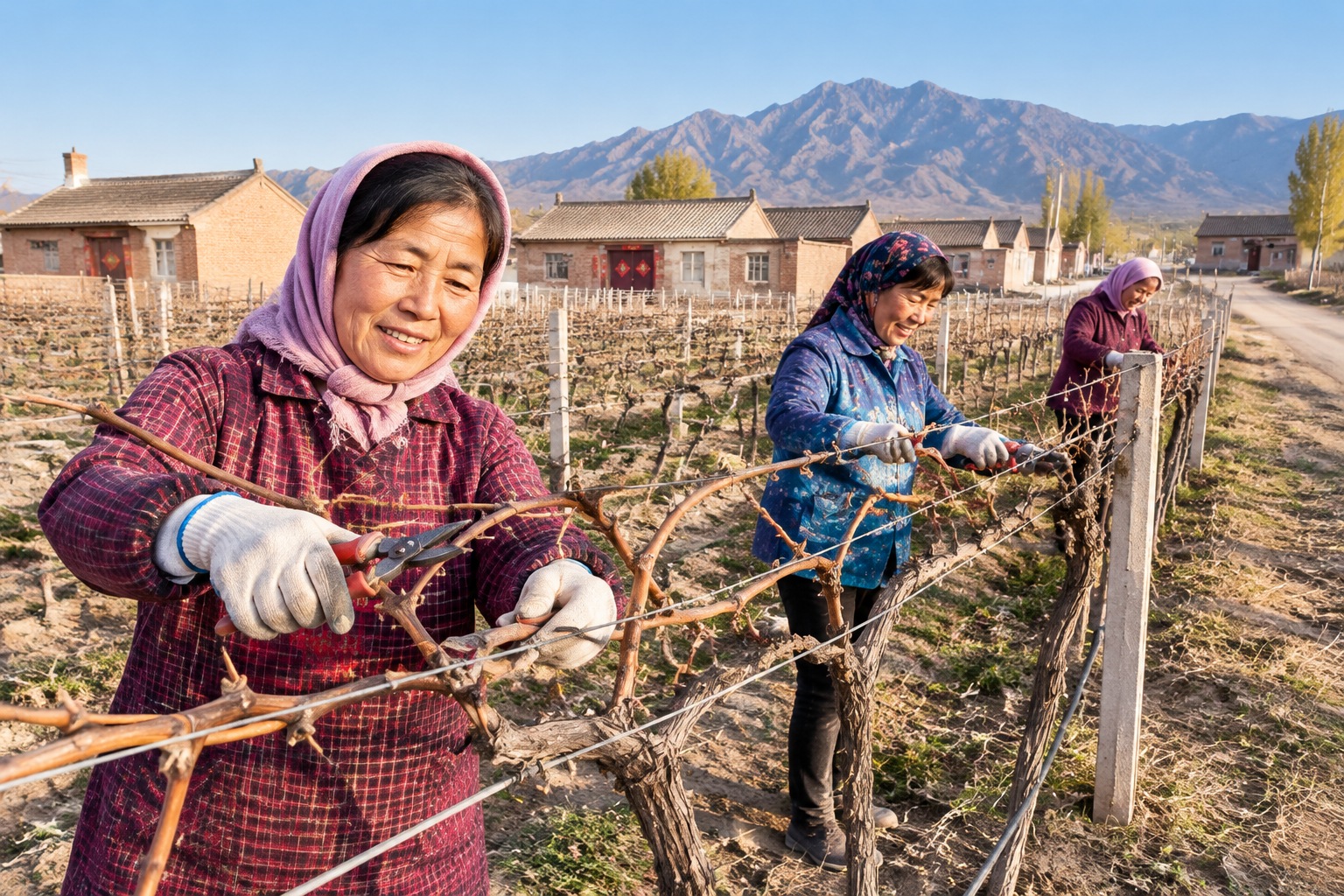
This shift is not without friction. Older residents sometimes miss the old farming life. The work is seasonal, and winters are quiet. But for many young people, the wine industry offers something rare in rural China: a reason to stay.
Hui Culture, Food, and the Question of Alcohol
Ningxia is home to a large Hui Muslim population — about 35% of the region’s 7.2 million people. Hui cuisine is famous for lamb, beef, and noodles, and for avoiding pork. The morning lamb offal soup I ate is a Hui dish, seasoned with spices common in Islamic cooking. But wine is another matter.
Islam prohibits alcohol. Yet many Hui people work in the vineyards and wineries — not drinking, but pruning, harvesting, and selling. This is a practical arrangement. “We don’t drink,” says Ma Xiaodong, a Hui driver who takes tourists to wineries. “But we support the industry because it brings jobs. My brother works in a bottling line. My cousin sells grapes.”
Some wineries have responded by offering halal food in their restaurants and separate tasting rooms for non-Muslim guests. It is a quiet negotiation between faith and economy, one that reflects the broader reality of Ningxia: a place where different traditions share the same land.
Nightfall: Barbecue, Yellow River Irrigation, and the Plains
By 8 p.m., the temperature drops. In Yinchuan’s night market, smoke rises from charcoal grills. Vendors skewer lamb, chicken wings, eggplant, and tofu. The smell of cumin and chili fills the air. Families, students, and taxi drivers gather around plastic tables. A bottle of local beer costs 5 yuan. A plate of grilled lamb skewers, 20 yuan.
This evening scene is possible because of water. The Yellow River flows through Ningxia’s northern plains, feeding a vast irrigation system that dates back to the Han Dynasty (206 BCE–220 CE). Without it, this region would be desert. With it, farmers grow rice, wheat, corn, and vegetables — and now, grapes.
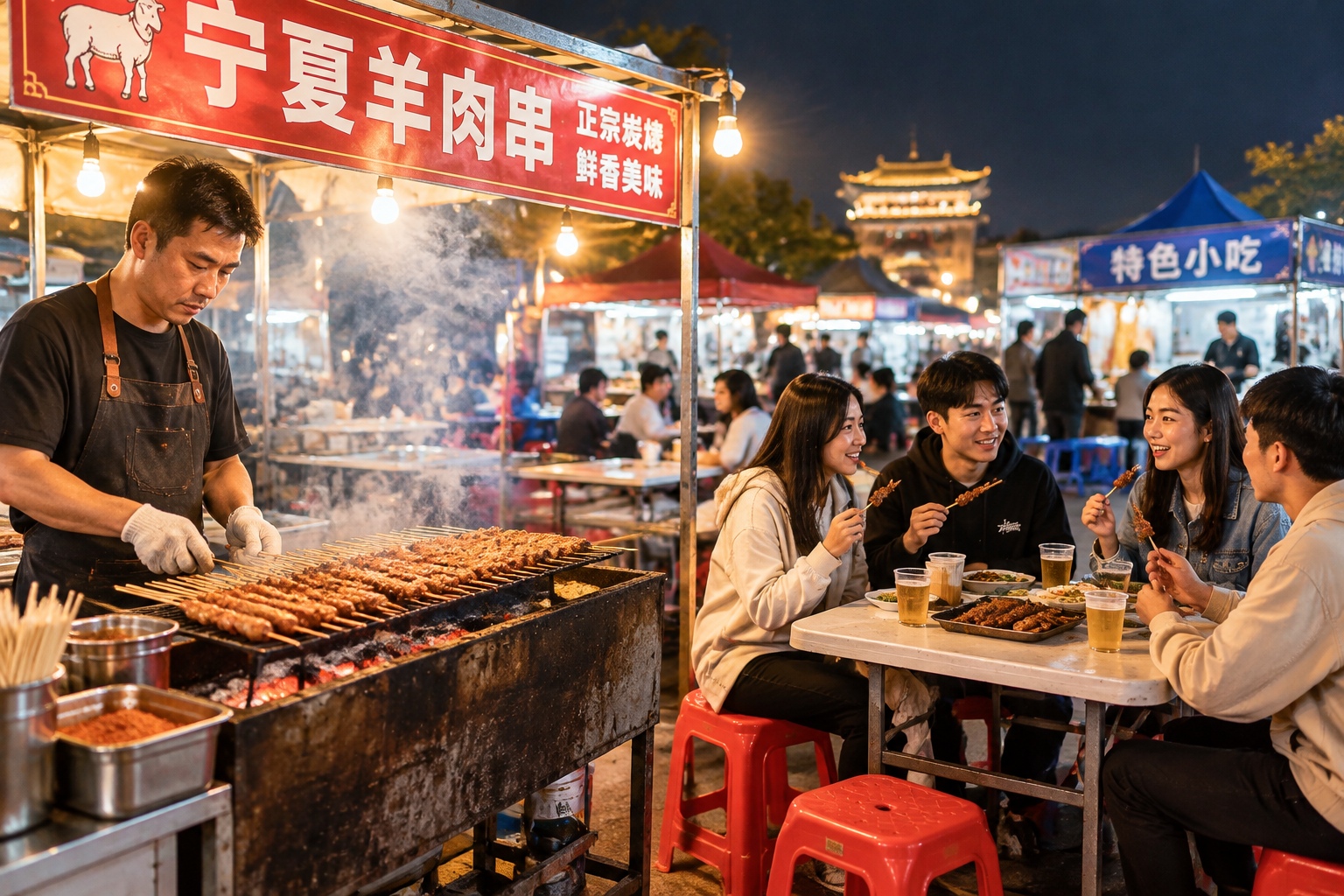
At a barbecue stall, I sit with a group of young engineers who work at a solar power plant nearby. They order lamb offal soup again — but this time as a late-night snack. “We had wine tours today,” one says. “But we still prefer this.” They laugh. The grill hisses. The night goes on.
What This Means for Travelers
Ningxia is not an obvious destination. It lacks the dramatic landscapes of Tibet or the nightlife of Shanghai. But it offers something else: a chance to see how food, faith, and industry intersect in everyday life. You can drink gaiwan tea in a crowded breakfast shop, walk through vineyards that were desert two decades ago, and eat barbecue under the same stars that once guided caravans on the Silk Road.
If you go, come with an appetite. And leave room for a second bowl of soup.
Start the discussion at forum.chinacomes.com