

Introduction: A Sizzling Memory in Hunan’s Mountains
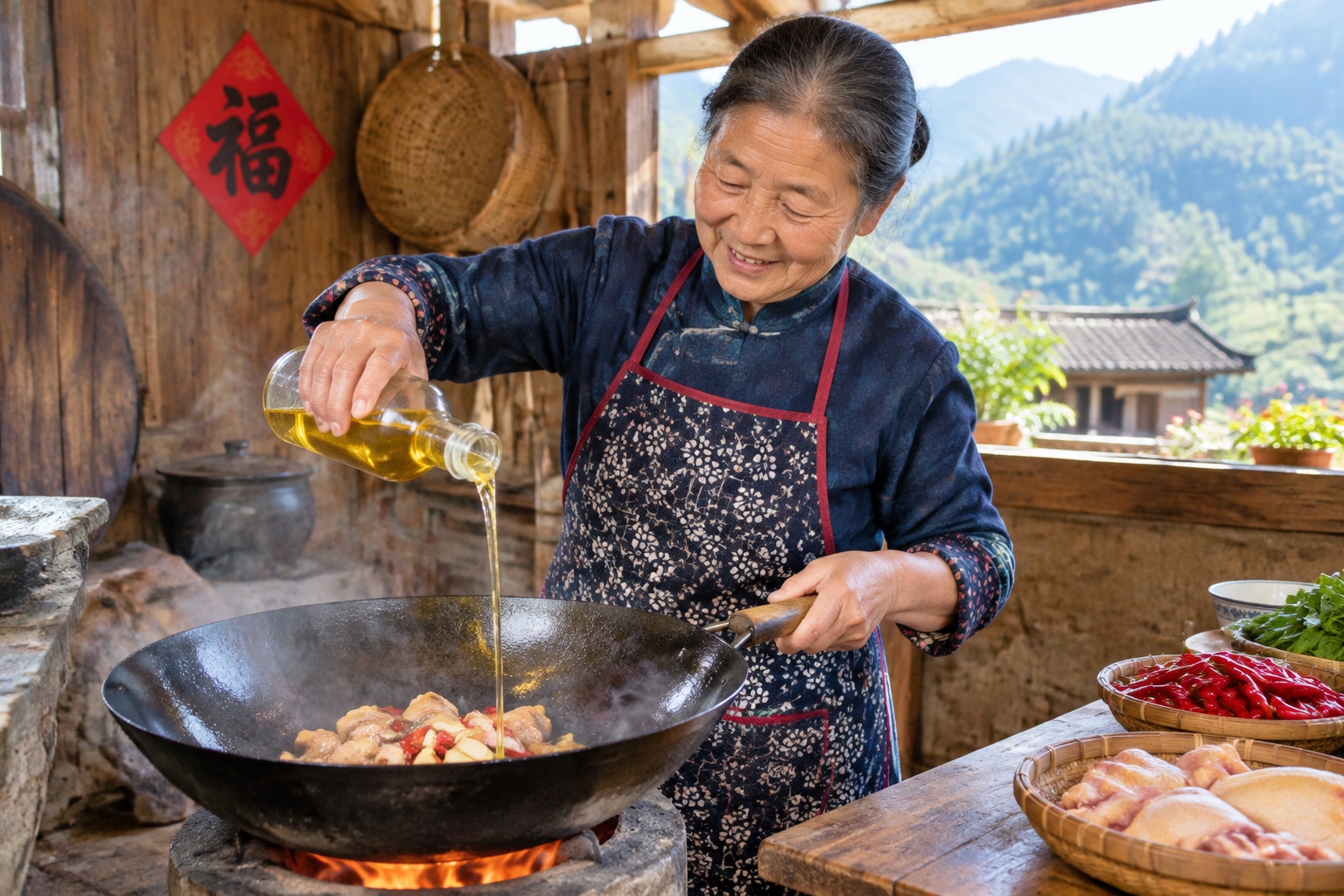
On a cool morning in the village of Xujia, deep in the mountains of Hunan Province, an elderly woman named Ahmay Yu drizzles a spoonful of amber-colored oil into her iron wok. The oil shimmers as it heats, releasing a gentle, nutty aroma that curls around the wooden beams and out into the misty air. She tosses in slices of garden-fresh chili and local chicken, and the sound of sizzling fills the kitchen. This is no ordinary cooking oil — it’s camellia oil, pressed from the seeds of a tree that has quietly thrived on these slopes for centuries.
In China, camellia oil is often called the “Eastern olive oil,” a nickname that reflects both its rich flavor and remarkable nutrition. But unlike olive oil, which has a glamorous Mediterranean story, camellia oil remains a hidden gem from China’s southern hills. So, what makes it so special? Let’s take a closer look.
What Exactly Is Camellia Oil?
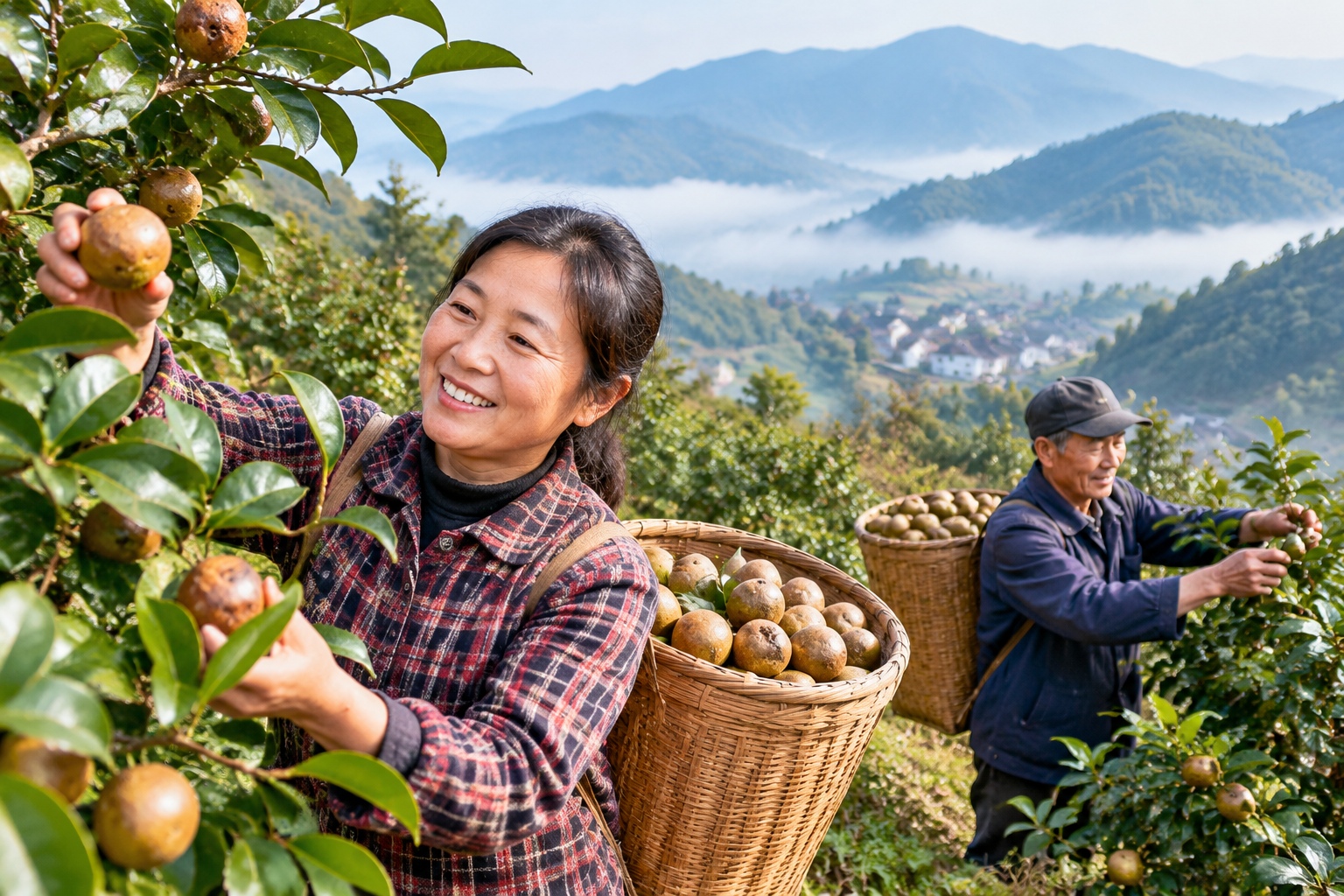
Camellia oil comes from the seeds of the oil tea camellia (Camellia oleifera), an evergreen shrub native to the subtropical forests of southern China. Hunan, with its humid climate and sloping red-earth hills, is one of the best growing regions. Every autumn, villagers handpick the fist-sized fruit — which looks like a small, polished chestnut — then sun-dry and crack them open to release the dark seeds inside.
The processing is surprisingly traditional. Many small farms still use cold-pressing machines that carefully squeeze the oil from the seeds without excessive heat or chemicals. The result is a golden, fragrant oil with a high smoke point (about 252°C), making it superb for both stir-frying and raw seasoning. Nutritionally, camellia oil is loaded with oleic acid — a monounsaturated fat that makes up around 80% of its composition, nearly matching or even surpassing olive oil. It also contains vitamin E, polyphenols, and squalene, all known for their antioxidant and heart-healthy properties.
More Than Just Cooking Oil: Camellia Oil in Daily Life
For Hunan’s mountain families, the oil is far more than a pantry staple. Mr. Liu, a farmer in the nearby Zhangshu village, remembers his grandmother using camellia oil to soothe scraped knees and to moisten dry, cracked skin in winter. In traditional folk use, the oil has been applied to hair, to relieve muscle pain, and as a base for herbal balms. It’s this deep connection to daily wellness that makes it so cherished.
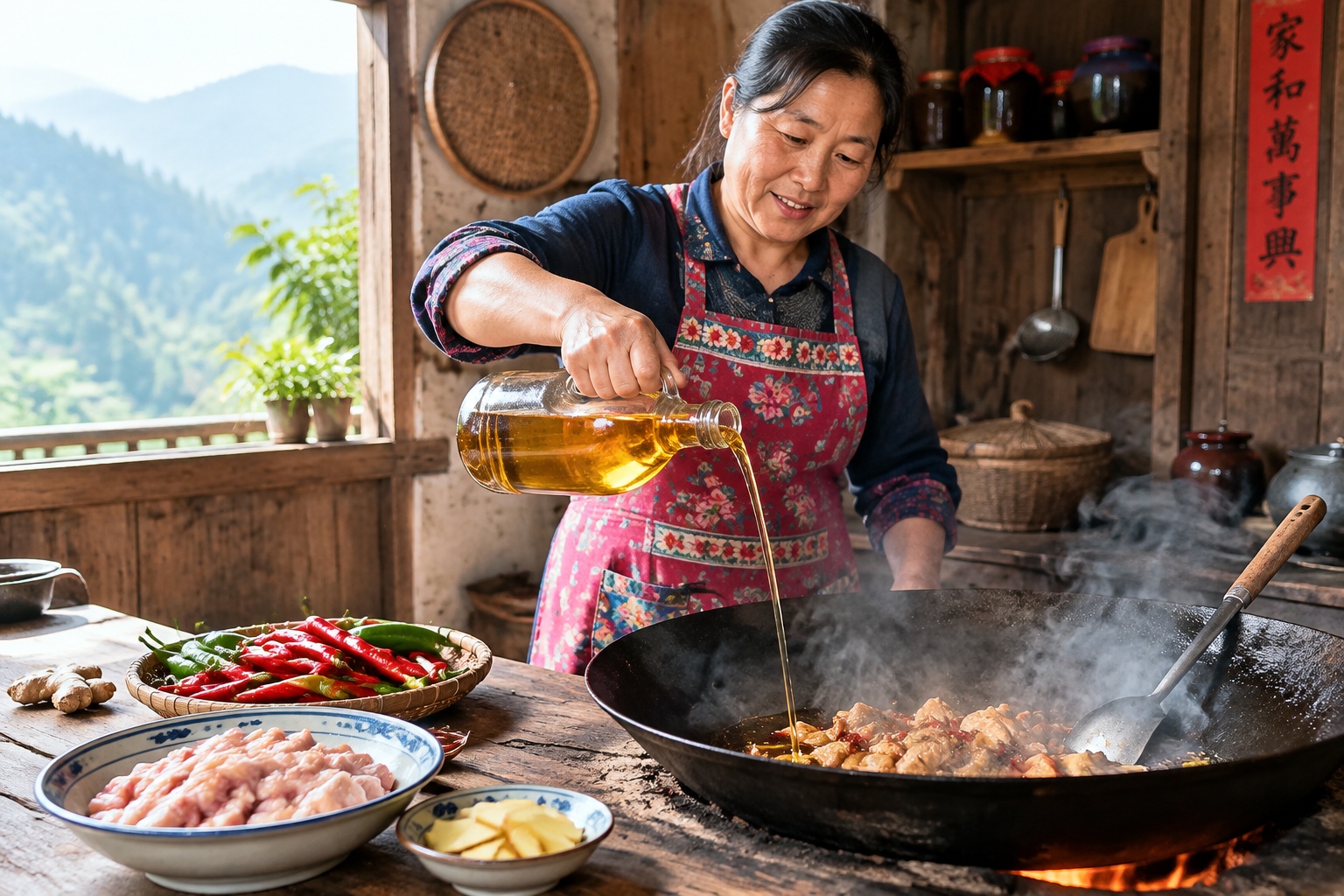
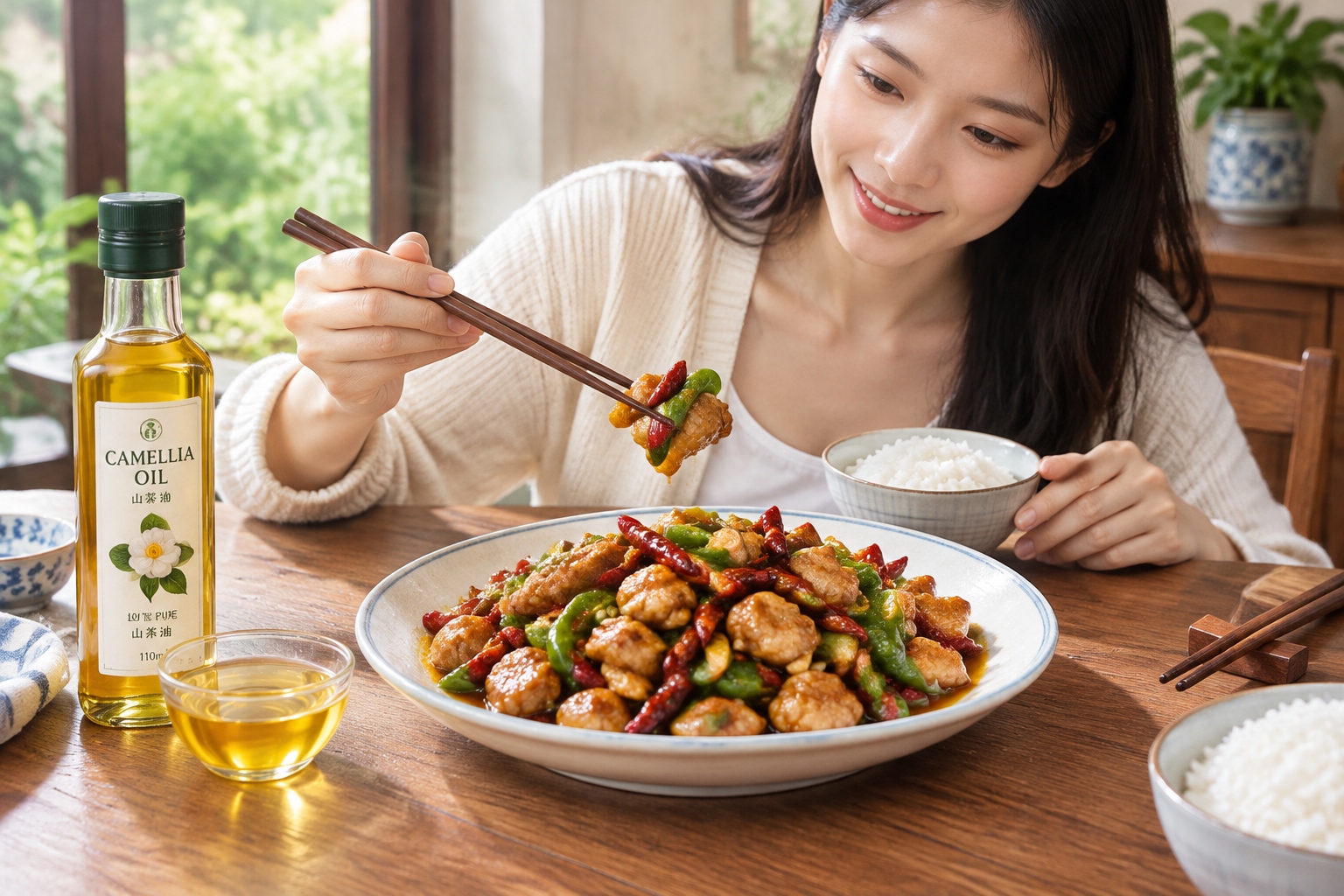
In the kitchen, camellia oil is the secret behind many classic Hunan dishes. The region is famous for its bold, spicy flavors, and the oil adds a clean, earthy backdrop that lets chili and garlic shine. One beloved dish is camellia oil stir-fried chicken, where the oil’s mild smokiness pairs perfectly with ginger and green peppers. Another favorite is steamed fish with camellia oil, where just a few drops brighten the delicate taste of river bass. For locals, a bottle of freshly pressed camellia oil is like a balsamic vinegar from a French estate — each batch carries its own terroir.
A Golden Crop That Is Changing Lives
Beyond the kitchen, this tree has become a lifeline for rural communities. In recent years, Hunan’s provincial government has encouraged the expansion of oil-tea plantations as part of its targeted poverty alleviation program. Villagers who once struggled to make a living from small plots of corn or sweet potatoes now earn steady incomes from harvesting camellia fruit every autumn.
Consider the tale of Xinhua County, a once-remote area in central Hunan. Local cooperatives now manage more than 200,000 mu (roughly 13,000 hectares) of oil-tea forest, connecting them to large-scale processing plants. Farmers who join the cooperatives receive free seedlings, technical training, and a guaranteed purchase price for their harvest. One resident, Mr. Zhou, told me he used to rely on odd jobs in the city. Now he stays home to tend his six mu of tea trees, earning roughly 30,000 yuan (about $4,100) a year. “It’s not a fortune,” he says, “but we can plan our future with our own hands.”
The new generation has also joined the movement. Young people are returning from Shenzhen and Shanghai, bringing eCommerce skills and modern branding ideas. On platforms like Taobao and Douyin, you’ll find a growing number of sellers offering “Hunan camellia oil” with beautiful packaging and videos showing the entire journey from tree to bottle. Overseas, Chinese communities in North America and Europe are starting to recognize the name, and small-scale exports are on the rise.
The Road Ahead: Challenges and Opportunities
Despite its promise, camellia oil faces some uphill battles. Yields are low: a single tree might produce only 20–30 kilograms of fruit in a good year, and the plants take five to seven years before their first commercial harvest. That makes genuine camellia oil relatively expensive — often two to three times the price of standard olive oil. Many consumers outside China have simply never heard of it, and the industry is still building international distribution networks.
Yet there is real optimism. Global demand for healthy, traceable plant oils is surging, and premium products with strong regional stories are thriving. Several Hunan producers have obtained organic certifications such as USDA Organic and EU Organic, and some are partnering with upscale grocery chains in Europe. The key is education — once consumers taste the difference and learn about its health profile, many become loyal converts.
Conclusion: One Drop of Oil, a Whole Chinese Story
Standing in Ahmay Yu’s kitchen, watching the golden oil swirl into the wok, you realize that camellia oil isn’t just a condiment. It’s a symbol of how tradition and innovation can coexist. It speaks of generations of farmers who have cared for these hills, of young entrepreneurs building a bridge to the global market, and of a country where even a simple pantry item carries layers of culture, geography, and human effort.
Next time you see a bottle of camellia oil on a shelf — whether in a specialty store in London or a supermarket in Toronto — pick it up. Taste a drop, and let it carry you to the misty mountains of Hunan, where a tree and its oil tell a story that is both very old and brand new.
Start the discussion at forum.chinacomes.com