


9:40 p.m. in Shenzhen, and a question Western readers keep asking
The last metro trains out of Shenzhen’s Nanshan district leave a little after 11 p.m. Liu Fang usually catches the 10:12. She is 28, a backend engineer at a mid-sized logistics software company, and on this Tuesday she has been at her desk since 9:30 that morning. Her manager left two hours ago. Her team ships a release on Friday.
“Nobody told me to stay,” she says, stirring cold noodles in a takeout box. “But if I leave at seven, the code review pile gets bigger, and then the pile is my problem next week. It’s a trade. I’d rather do it now.”
Stories about Chinese tech workers usually reach the West in one of two shapes. Either they are a wave coming for your job, or they are cogs in a state-directed machine. Both versions are easier to write than the thing Liu Fang is describing, which is a fairly ordinary, fairly pressured, fairly specific working life.
So let’s take the questions overseas readers actually ask, one at a time.
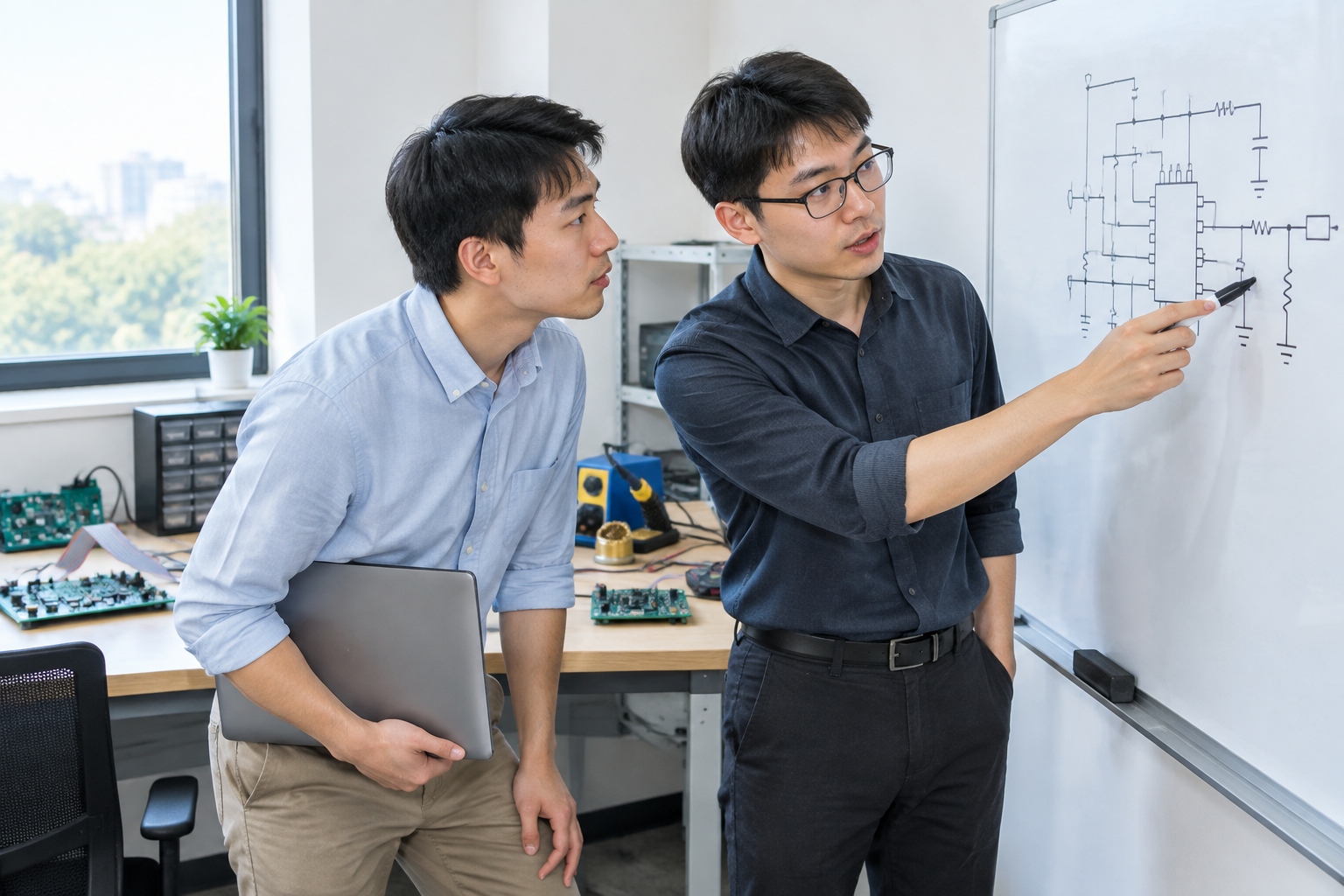
What the “job stealing” story gets wrong
Start with the numbers, because they cut in two directions at once.
Chinese-born engineers are a real presence in American tech. Roughly one in seven H-1B petitions in recent years went to people born in China — although India accounts for a far bigger share, around seven in ten. Chinese nationals also earn a large slice of US engineering and computer science doctorates. Those are facts, not talking points.
But the same country produces well over a million STEM graduates a year and employs tens of millions of people in technology. Almost none of them are looking at a job in Austin. The competition they feel is standing next to them: a colleague, a former classmate, a 26-year-old willing to accept less money for the same title.
And the reverse flow is just as real. China sent roughly 700,000 students abroad in a typical recent year, and by Ministry of Education figures more than 80 percent of self-funded students came home. In the 1990s, staying abroad was the default. It isn’t now.
So the honest description is not a one-way siphon. It’s circulation — with a genuine exception at the very top, which we’ll get to.
996: what the workday is actually like
“996” means 9 a.m. to 9 p.m., six days a week. The phrase went viral in 2019, when programmers posted a GitHub project called 996.ICU — a joke that those hours send you to the intensive care unit. In August 2021, China’s Supreme People’s Court and the Ministry of Human Resources and Social Security jointly confirmed that 996 schedules violate labor law, which caps the standard week at 44 hours.
What changed after that? Less than the campaign slogans suggest, more than the cynics admit.
Big platform companies — Tencent, Alibaba, ByteDance and others — trimmed evening meetings and quietly dropped some Saturday work. The 2022–2023 tech layoffs did the rest. When your team shrinks by a third, the survivors often work harder, not less.
Pay explains why people accept the hours. A senior engineer at a top-tier Chinese internet company can earn 600,000 to 1.2 million RMB a year in total compensation — roughly US$85,000 to $170,000 — in a city where a decent one-bedroom apartment rents for around 5,000 RMB a month. That is a real middle-class ladder, and it is the reason the trade-off keeps getting made.
The 35-year-old line
Ask any Chinese engineer past 30 about the future and you will hear the number 35. Job ads openly state age limits — “under 35” — for roles that in Europe or the US would be treated as mid-career. Employers assume older engineers cost more, resist late nights, and have families pulling at their time. There is also simple supply: every year a huge cohort of fresh graduates arrives willing to start at the bottom.
It is not universal. Chip design, industrial software, medical devices and hardware manufacturing value experience in ways consumer internet does not. A 45-year-old analog circuit designer in Suzhou is not losing sleep over it. A 36-year-old app developer in Beijing probably is.
Three workers, three answers
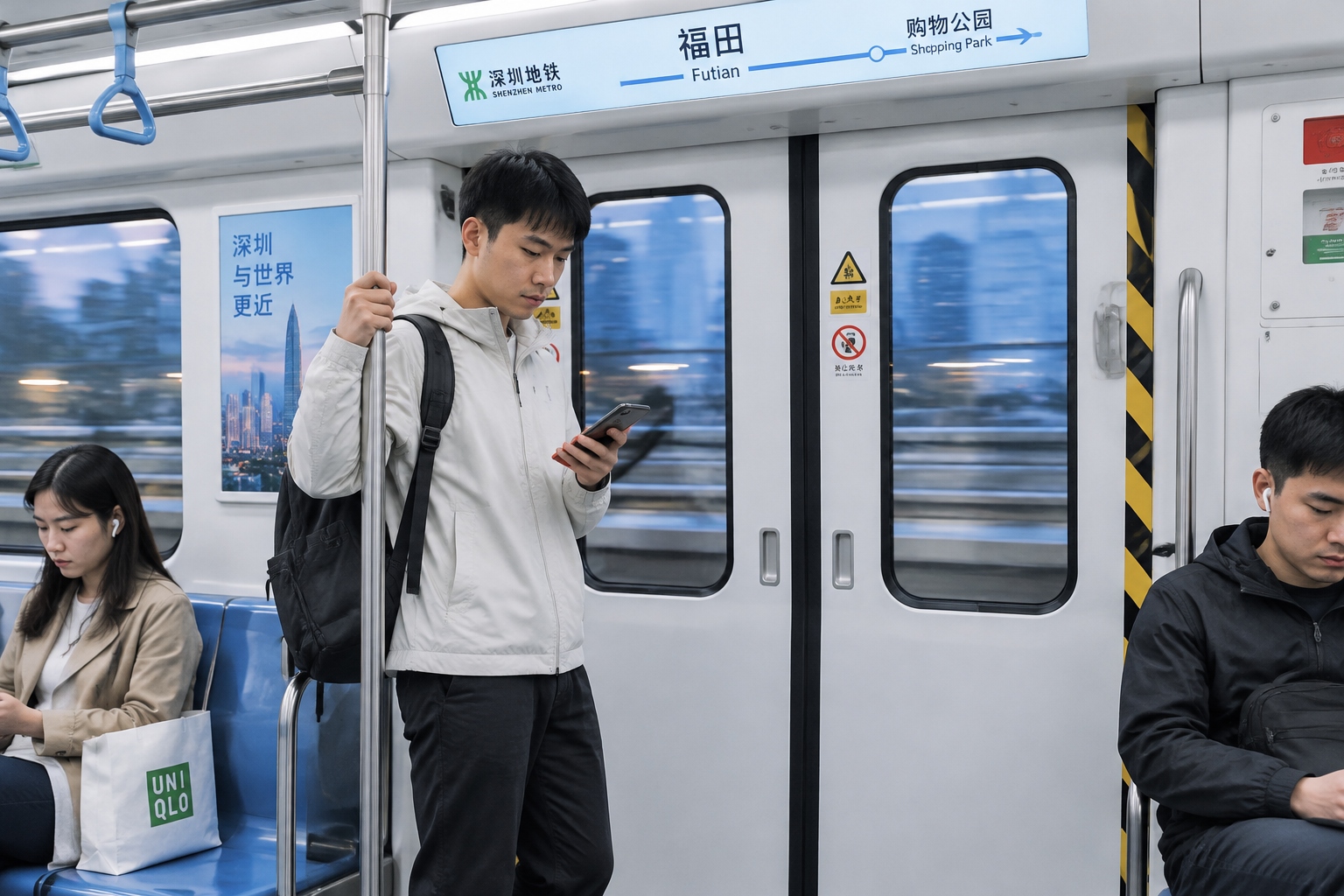
I put the same questions to three people: why here, why not somewhere else, and what happens next. Names are changed at their request.
Chen Hao, 34, chip design engineer, Shanghai
Q: You did your PhD in the US. Why come back?
“Two reasons, one professional, one boring. The boring one is my parents. They’re in their seventies in Jiangsu and I’m an only child. The professional one is that ten years ago, if you wanted to design a serious chip, you went to California or you didn’t do it. That’s not true anymore. My team taped out a 7-nanometer part last year. There’s money here now, and there are problems nobody has solved.”
Q: What’s the cost?
“The hours, and the politics. Export controls mean half my tools sit behind a supply chain that could break next quarter. We burn a lot of energy on workarounds. And I see my American friends less — some of them don’t come here anymore, and honestly, I understand why.”
Zhao Min, 29, product manager, Hangzhou
Q: You were laid off in 2023. What happened?
“I worked at a delivery platform for four years. When the cuts came, my whole department went — about 60 people. I had two months of severance. For six weeks I interviewed every day and I was, honestly, not in a good place.”
Q: And now?
“I’m at a 40-person AI startup. I earn about 30 percent less. I work 10 to 7, five days a week. My mother thinks I’ve downgraded. I sleep eight hours and I have hobbies again. I’d take that trade every time.”
Jason Wu, 41, returned from Seattle to Hangzhou in 2019
Q: You spent twelve years in the US. Why leave?
“My daughter was about to start school. We did the math — private school in Seattle, or a good public school in Hangzhou with money left over. And my parents were getting older. The flight is fourteen hours, and it gets longer every year you don’t take it.”
Q: Do you regret it?
“Some days. I miss the way a disagreement at work in the US stayed a disagreement. Here, a conflict with a colleague can turn personal faster. But I run a team of 25 now, which in Seattle would have taken me another decade. And my daughter speaks two languages without thinking about it.”
Brain circulation, not brain drain

The aggregate picture is return migration. The picture at the top is more contested.
Studies of elite AI researchers have found that a majority of Chinese nationals who earn PhDs at top US programs stay in the United States to work, at least for a decade. So the accurate statement is not “China loses its best.” It is: many go, most come back, and the very top of the field is genuinely fought over — with US labs currently winning more of that fight than Chinese ones.
That is a competitive fact, not a moral one. It is also why Chinese universities and companies have spent the past decade building labs, funding postdocs and paying salaries that would have sounded absurd in 2010.
Can Chinese and Western engineers still work together?

Partly, and noticeably less than in 2015.
Open source never stopped. Chinese engineers are among the most active contributors to PyTorch, Linux and Kubernetes, and a large share of papers at major AI conferences carry at least one China-based author. Code and citations do not check passports.
What changed is the institutional layer. Export controls on advanced chips and lithography equipment since 2022 split parts of the supply chain. Visa screening for Chinese STEM students tightened. Research collaborations have been unwound at some universities, quietly, over compliance concerns.
Yet collaboration survives wherever there is a commercial reason for it. Volkswagen runs a large engineering center in Hefei. Toyota builds fuel-cell and EV operations in Shanghai. Foreign firms still staff “in China, for China” teams, because you cannot sell into this market from a distance. The pattern is thinner, more transactional, and more political than it was — but it has not disappeared.
What this means if you’re reading from outside China
Three things, briefly.
First, the competition most Chinese engineers feel is domestic, not international. If you are a software engineer in Berlin or Toronto, the person most likely to change your working conditions is your own employer’s hiring plan, not a graduate in Chengdu.
Second, the 996 stereotype is real but narrowing. The law is clear, enforcement is uneven, and the layoffs of 2022–2023 did more to shorten hours than any campaign did.
Third, movement runs in both directions, and it responds to policy on both sides. Tighten a visa and you don’t stop talent; you redirect it.
Back to Liu Fang. She caught the 10:12. She is not thinking about your job. She is thinking about a promotion round in March, a mortgage in Longgang, and a younger colleague who is faster than her at a codebase she is still learning.
“I don’t want to take anyone’s job,” she said, closing her laptop. “I just want to keep mine.”
That is most of the story. The rest is politics — and the politics is real, but it isn’t what she was doing at 9:40 on a Tuesday.
Start the discussion at forum.chinacomes.com