

Six in the Morning in Nanchang: A Bowl of Noodles and a Clay Pot of Soup
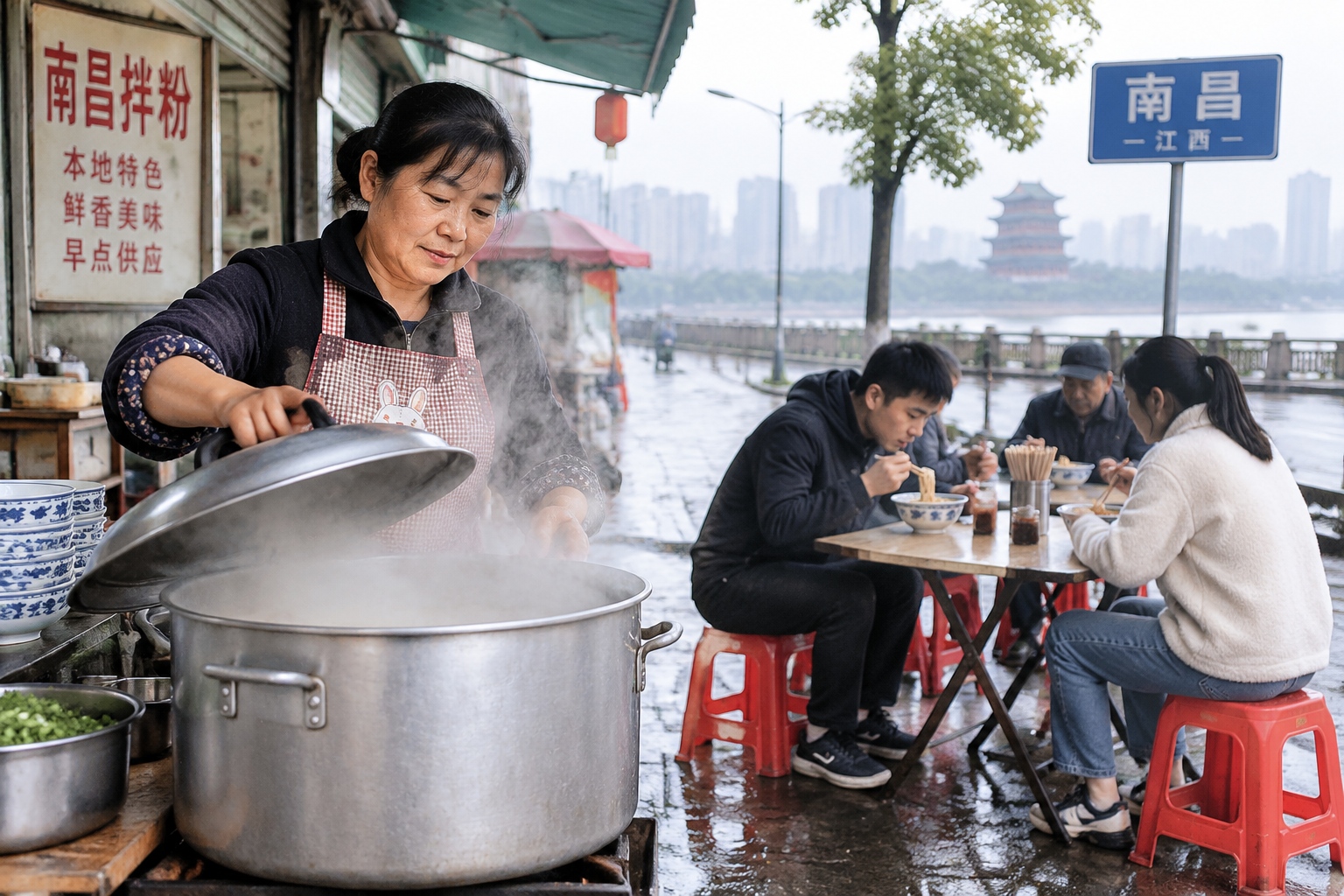
At 6:15 a.m., the sky over Nanchang is still a pale grey. On a side street off Xiangshan Road, a woman named Auntie Liu lifts the lid off a giant aluminum pot. Steam rushes out, carrying the smell of pork bone and earthy herbs. She has been here since 4:30, and the first customers are already lining up on plastic stools.
This is banfen — mixed rice noodles. The noodles are boiled, drained, and tossed in a bowl with soy sauce, chili oil, pickled radish, crushed peanuts, chopped scallions, and a secret splash of broth. It takes her about forty seconds to make one bowl. Next to it, a small clay jar simmers waguantang, a soup slow-cooked in individual earthenware pots. The combination costs about 8 yuan (just over a dollar).

“No noodles without soup, no soup without noodles,” Auntie Liu says, not looking up from her work. “That’s how we’ve always done it.”
Her customers are taxi drivers, hospital workers coming off night shifts, students, and elderly neighbors. They eat standing, squatting, or perched on stools no higher than a foot. The whole meal lasts ten minutes. Then the street empties, and Auntie Liu starts cleaning up. By 9 a.m., she’s gone.
For anyone trying to understand Jiangxi, this is a good place to start. The province is not one of China’s richest or loudest. It doesn’t have the tech glamour of Shenzhen or the international shine of Shanghai. But it has a stubborn, everyday texture that feels increasingly rare.
Jingdezhen: A City Built on Clay
Three hours northeast by train, Jingdezhen looks unremarkable at first — low buildings, grey skies, a river cutting through the middle. But this small city has been making porcelain for over 1,700 years. During the Song Dynasty, its kilns produced ware for the imperial court. By the Ming and Qing dynasties, Jingdezhen porcelain was sailing to Europe, the Middle East, and Southeast Asia. The name itself — Jingde — comes from an emperor’s reign title. Zhen means town. It is literally “the town of Jingde.”
For centuries, the city’s rhythm was defined by the kilns. Workers shaped clay, painted designs, fired pieces in wood-burning dragon kilns that ran up hillsides. The old state-owned factories — like the Universe Porcelain Factory, built in the 1950s — employed tens of thousands. When those factories declined in the 1990s and 2000s, Jingdezhen could have become another faded industrial town.
Instead, something unexpected happened.
Taoxichuan: From Factory Floor to Night Market
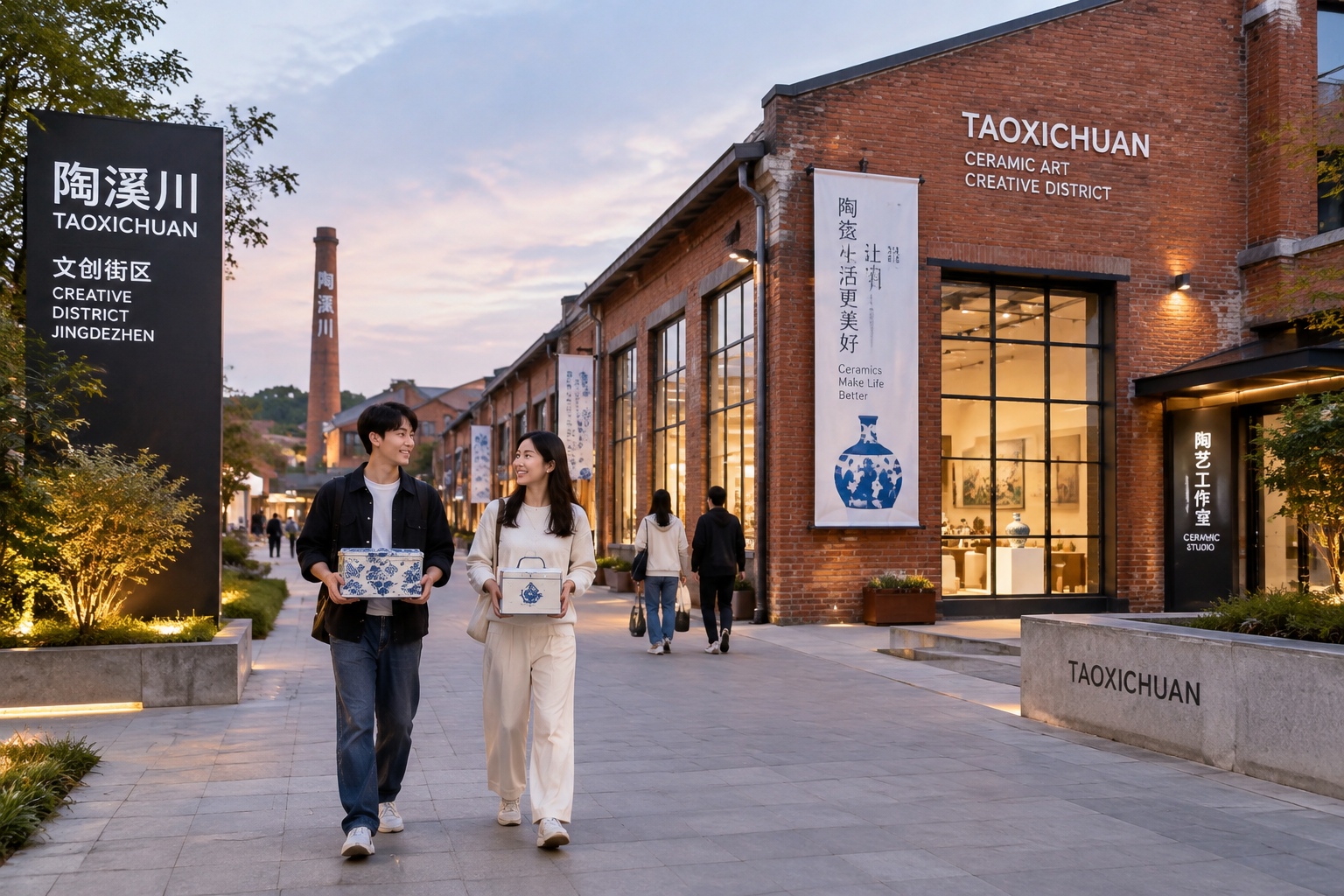
On a Friday evening in Taoxichuan, the old factory buildings are lit up with warm yellow lights. The tall brick chimneys still stand, but now they frame a plaza where young people sell ceramics from folding tables. The place is packed. Music drifts from a small stage. The smell of roasted sausages and milk tea mixes with the faint, earthy scent of clay.
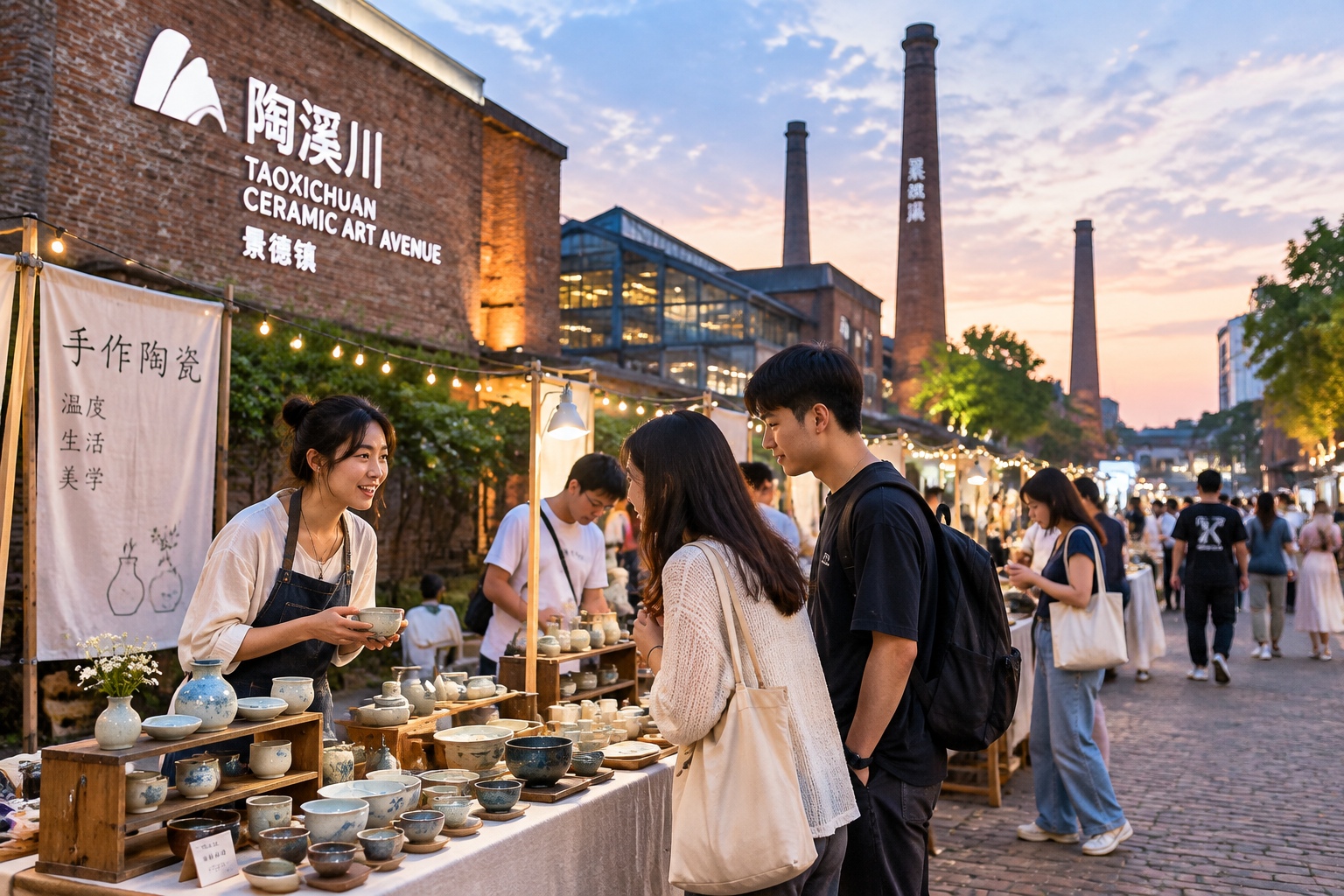
This is the Taoxichuan Ceramic Art Avenue, a creative district built on the site of the former Universe Porcelain Factory. The factory closed in 2008. A few years later, the city and private developers turned the abandoned workshops into studios, galleries, shops, and a weekend night market. The old conveyor belts are still visible in some buildings. So are the brick walls, the high ceilings, and the massive windows that once let in light for hundreds of workers.
Tonight, a young woman named Xiao Yu is sitting behind a table covered with small, hand-painted cups. She is 26, from Hunan province, and has been in Jingdezhen for three years. She calls herself a Jingpiao — a “Jingdezhen drifter.”
“It’s like Beipiao in Beijing,” she explains, “but instead of chasing job opportunities, we’re chasing clay. We come here because we want to make things with our hands. And because the city lets us.”
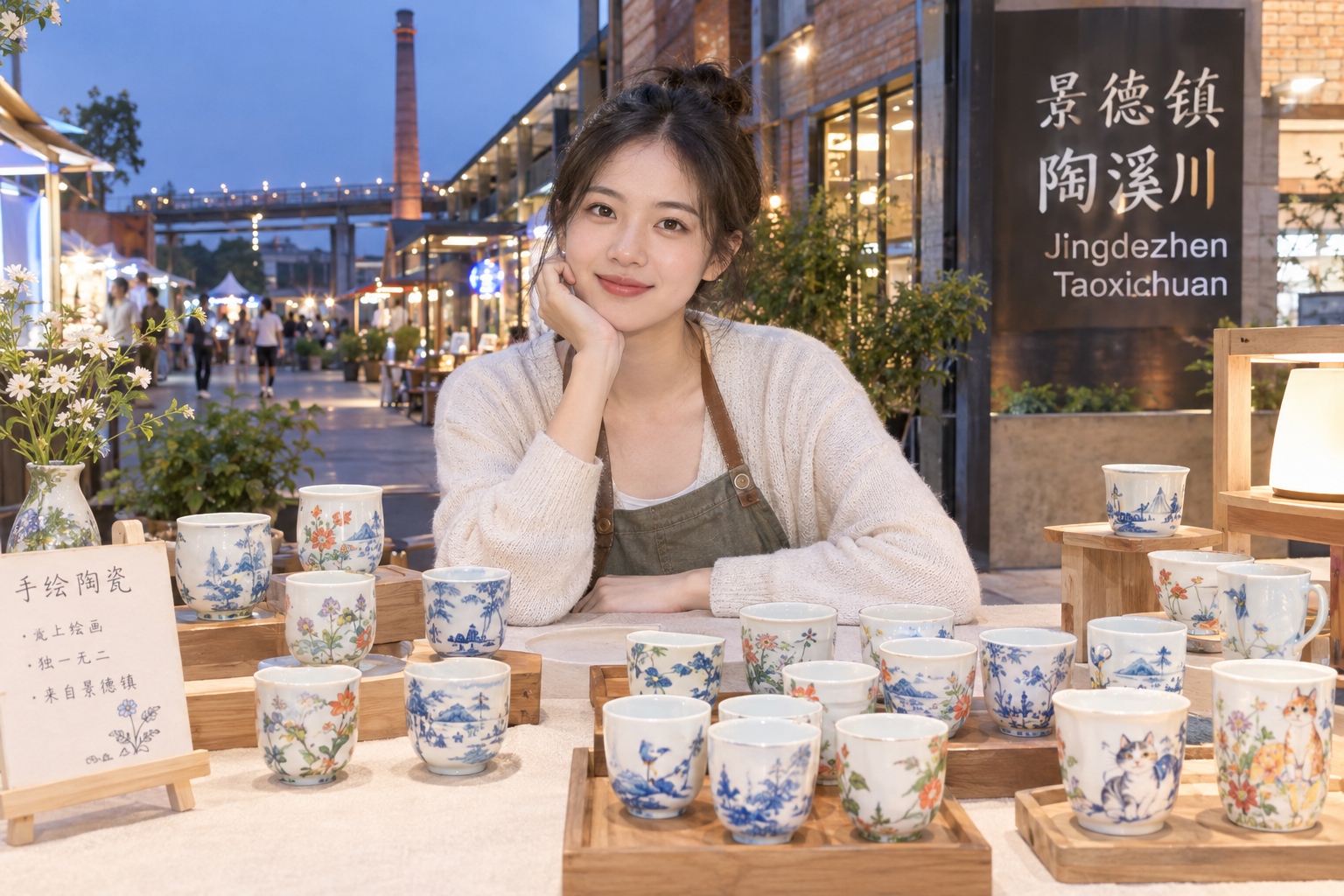
The term Jingpiao (景漂) is a play on Beipiao (北漂), which refers to young people who move to Beijing to seek careers. But while Beijing drifters are often driven by ambition for status or money, Jingdezhen drifters are drawn by craft. They come from art schools, design programs, and sometimes completely unrelated fields. They rent cheap studio spaces in old factory buildings. They fire their work in shared kilns. They sell at night markets, online, or to galleries that have popped up around the district.
“I tried working in an office in Shanghai,” Xiao Yu says. “I lasted eight months. Here, I make less money, but I sleep better.”
The Old and the New, Side by Side
What makes Taoxichuan interesting isn’t just the night market. It’s the way the old and new coexist. Walk five minutes from the bright lights and you’re in a quiet lane where elderly men still sit on wooden stools, hand-painting porcelain plates using techniques passed down for generations. Their workshops are small, cluttered, and smell of glaze and dust. Some have been there for forty years.
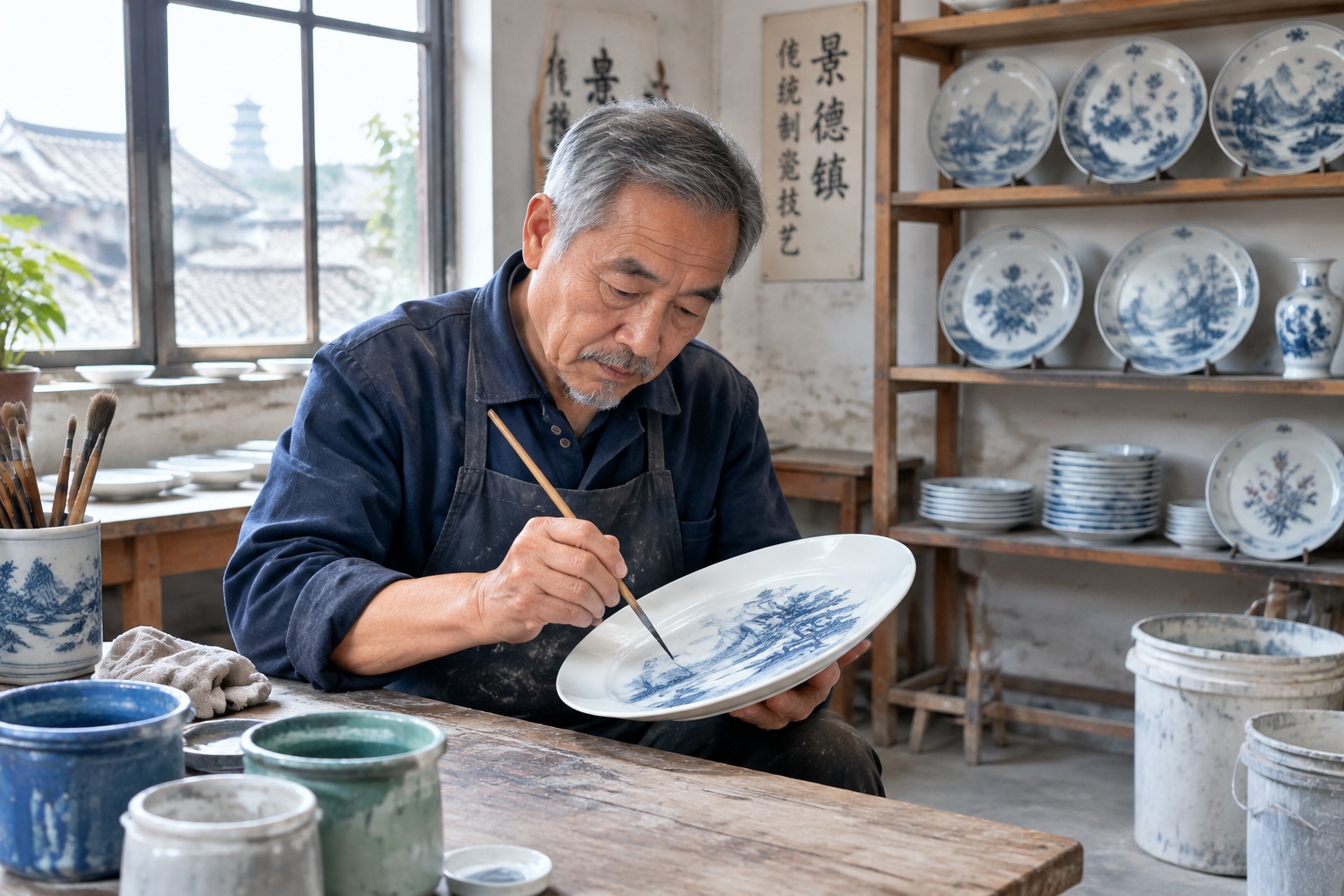
“Young people bring energy,” says Mr. Chen, a 68-year-old porcelain painter who has worked in Jingdezhen since he was 16. “But they also bring competition. That’s fine. The city needs both.”
This coexistence isn’t always smooth. Rents in Taoxichuan have risen. Some older craftsmen have been priced out. The district is now a tourist destination, which means some of the work sold there is more souvenir than art. But the sheer concentration of ceramic activity — the kilns, the suppliers, the galleries, the conversations — keeps drawing people back.
Why Young People Choose This Life
Back at the night market, a 24-year-old named Li Hao is selling tea cups with a matte blue glaze. He studied industrial design in Wuhan. He came to Jingdezhen for a two-week workshop and never left.
“In a big city, you’re a small part of a big machine,” he says. “Here, you can see the whole process. You dig the clay, you shape it, you fire it, you sell it. You know where everything comes from.”
He admits the income is unstable. Some months he makes 3,000 yuan ($420). Some months he makes 10,000. He shares a studio with three other potters. They split the rent, which is about 1,500 yuan a month. They cook together, fire together, and critique each other’s work.
“It’s not a romantic life,” he says. “But it’s mine.”
A Different Kind of Development
Jingdezhen’s revival is not a typical story of Chinese economic growth. There is no massive factory, no tech park, no government mandate to become the next Silicon Valley. Instead, a small city leveraged its cultural heritage and created space for small-scale, handmade production. The result is a place where a 26-year-old from Hunan and a 68-year-old local can both make a living from clay.
Back in Nanchang, Auntie Liu is done for the day. She packs up her pots and stools, wipes down the table, and heads home. Tomorrow, she’ll be back at 4:30 a.m. The noodles will be the same. The soup will be the same. And that, in its own way, is also a kind of craft.
Jiangxi doesn’t shout. It simmers. And for a growing number of young people, that’s exactly the point.
Start the discussion at forum.chinacomes.com