
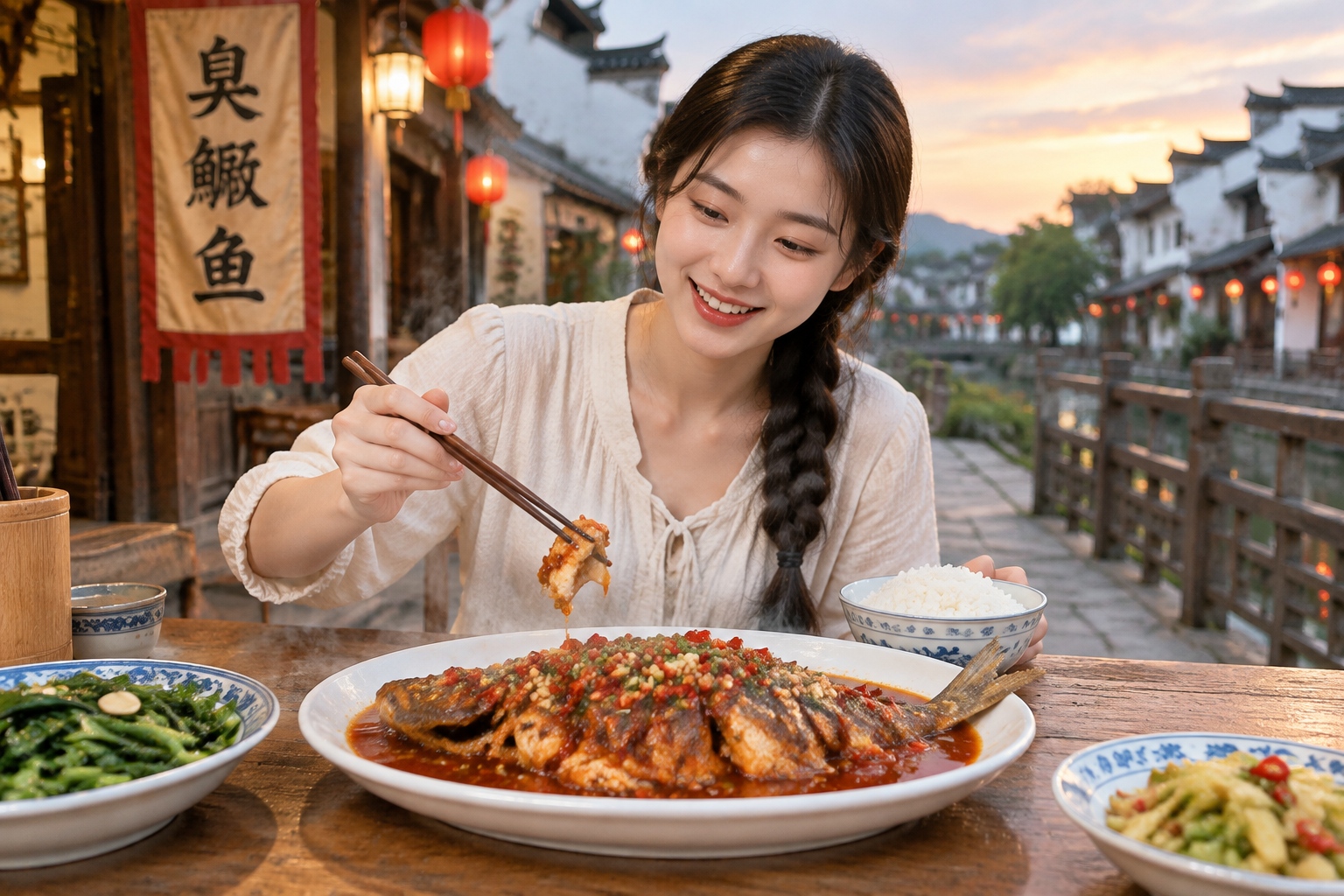

On a narrow street in Tunxi, the old town at the foot of Mount Huangshan, the evening air carries an unexpected smell. It’s sharp, briny, and slightly funky — but not unpleasant. Inside a small restaurant, plates of stinky mandarin fish are being carried to tables. The fish is whole, covered in a reddish-brown sauce, with flakes of white meat falling away from the bone. Locals and tourists alike dig in. “It smells awful but tastes amazing,” says a diner from Shanghai, who’s visiting for the weekend.
What Makes This Fish “Stinky”?
Stinky mandarin fish, known as chou guiyu in Chinese, is one of Anhui’s most famous dishes. The fish is not spoiled in the usual sense—it’s deliberately fermented in a light salt brine for about six to seven days. During this process, proteins break down into amino acids, which gives the fish its deep umami flavor and its distinctive pungent aroma. Unlike heavily cured fish, the texture remains tender, with firm, garlic-clove-like chunks that are easy to pick apart.
“The smell is part of the experience,” explains Chef Hu, who has cooked Anhui cuisine in Huangshan for over 30 years. “When it’s done right, the stink is inviting, not overpowering. It should remind you of aged cheese or miso, not garbage.”
The Geography Behind the Fermentation
To understand why this dish exists, you need to look at the landscape. Huizhou, the historical region now known as the southern part of Anhui Province, is a mountainous area with limited farmland. It’s far from major rivers and lakes, which made fresh fish a luxury. In the days before refrigeration, traders had to transport fish from the Yangtze River basin in the north over mountain paths—a journey that could take days.
To prevent the fish from going bad, they packed it in salt and carried it in wooden barrels. But the warm, humid climate of southern Anhui caused the fish to ferment naturally under the salt. What started as a preservation technique soon became a preferred flavor. Locals discovered that the tender texture and savory richness of the fermented fish made it even more delicious than fresh. By the Qing Dynasty (1644–1911), the method was refined, and stinky mandarin fish became a signature of Huizhou chefs.
A Dish That Traveled with Merchants
The rise of stinky mandarin fish is closely tied to the Huizhou merchants, one of China’s most influential business groups during the Ming and Qing dynasties. These traders left their mountain hometowns to do business across the country, but they carried their tastes with them. Huizhou restaurants sprang up in major cities like Nanjing, Shanghai, and Yangzhou, serving dishes like stinky mandarin fish as a taste of home.
The dish also reflected the Huizhou spirit of frugality. Farmers and merchants didn’t want to waste food, so a method that turned perishable fish into a lasting and delicious meal was highly valued. Over time, it became a symbol of regional identity: the strong flavor mirrored the tenacity of the people who created it.
How Locals Eat It Today
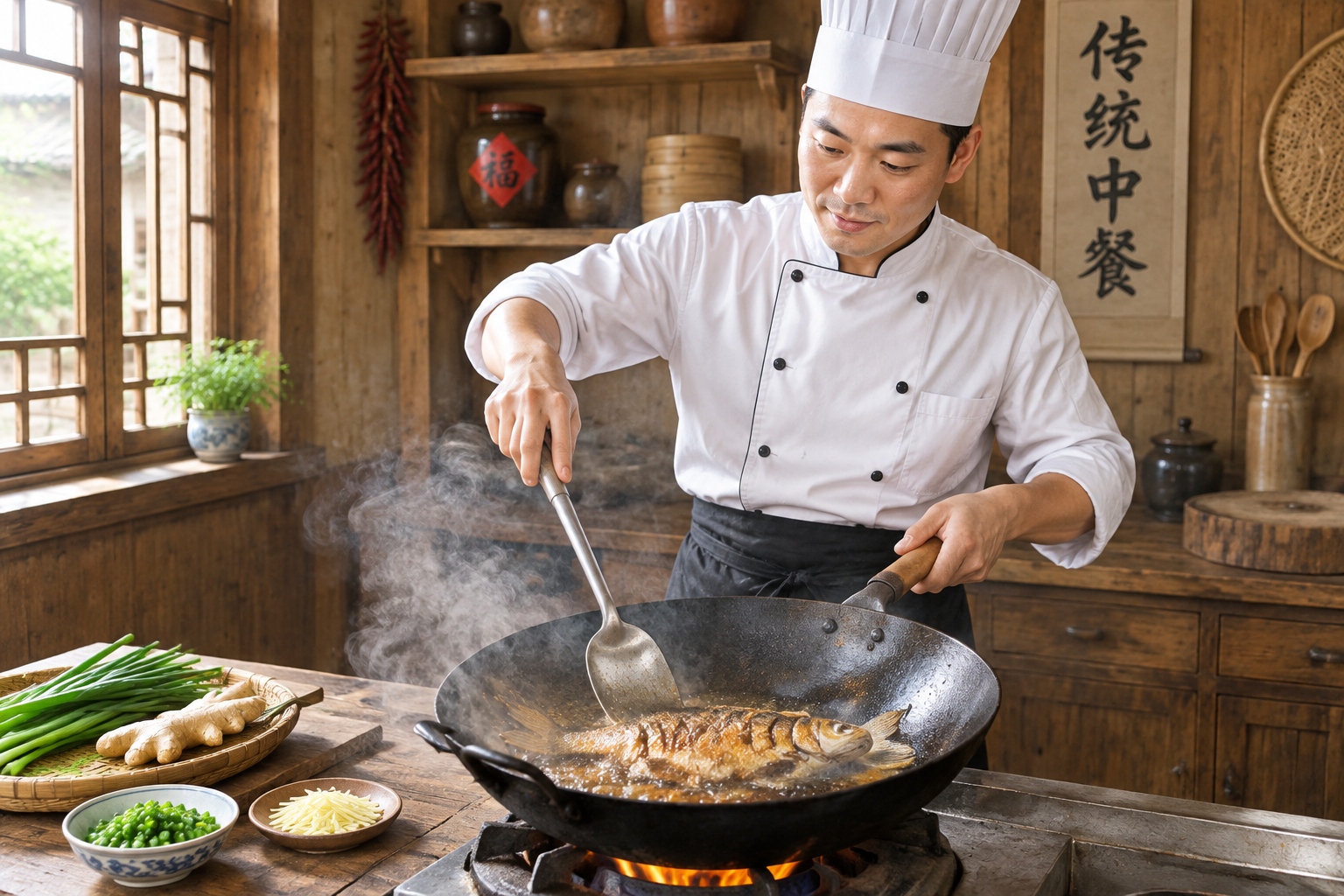
In modern Anhui, stinky mandarin fish is more popular than ever. Every town has its own version, but the classic preparation remains similar: the fermented fish is pan-fried, then simmered with minced pork, bamboo shoots, ginger, garlic, and a generous amount of chili and soy sauce. The sauce is meant to be spooned over rice—many locals say it’s the best part of the meal.
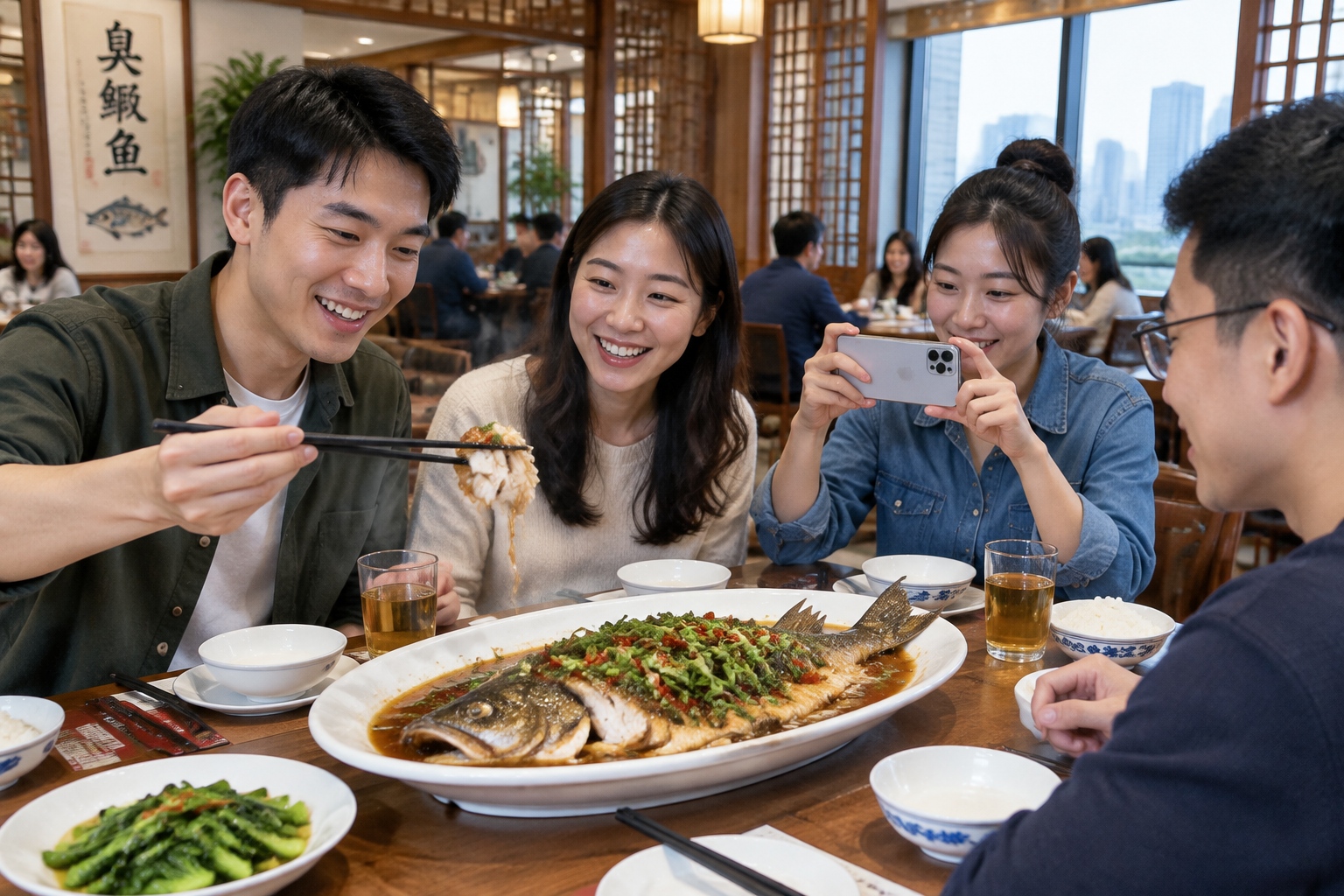
At a bustling restaurant in Huangshan city, the waiter tells me that on weekends they sell more than a hundred plates a day. “Young people love it because it’s photogenic and exciting,” he says. “Foreign visitors usually need a little convincing, but most become fans after the first bite.” Social media has given the dish a second life: videos of people trying stinky mandarin fish for the first time regularly go viral on Chinese platforms like Douyin, and food bloggers often compare it to other strong-smelling delicacies like blue cheese or fermented tofu.
Why It’s the “Soul” of Anhui Cuisine
Many food writers call stinky mandarin fish the soul of Anhui cuisine, but not just because it’s the most famous dish. It embodies everything the cuisine stands for: a deep respect for local ingredients, a clever response to geography, and an unpretentious approach to cooking. Anhui cuisine, unlike some other regional styles, is not about refinement or elaborate presentation; it’s about using what the mountains and rivers provide and turning it into something hearty and satisfying.
The dish also tells a larger story about China. It’s a product of a time when distance mattered, when people had to solve real problems like food preservation under difficult conditions. Today, even with refrigerated trucks and vacuum packaging, many businesses still use the traditional fermentation method because the flavor cannot be replicated. It’s a living piece of history.
An Acquired Taste Worth Acquiring
If you’ve never tried stinky mandarin fish, you might be hesitant. But the people who sell it, cook it, and eat it will all tell you the same thing: once you get past the smell, you’ll discover a flavor that’s unlike anything bland and sanitized. It’s salty, spicy, earthy, and deeply satisfying.
So the next time you see stinky mandarin fish on a menu—in China or in a Huizhou restaurant abroad—don’t let the aroma scare you off. Ordering it isn’t just eating a meal; it’s tasting a hundred years of mountain geography, merchants’ journeys, and the pragmatic creativity of the people who call Anhui home.
Start the discussion at forum.chinacomes.com