
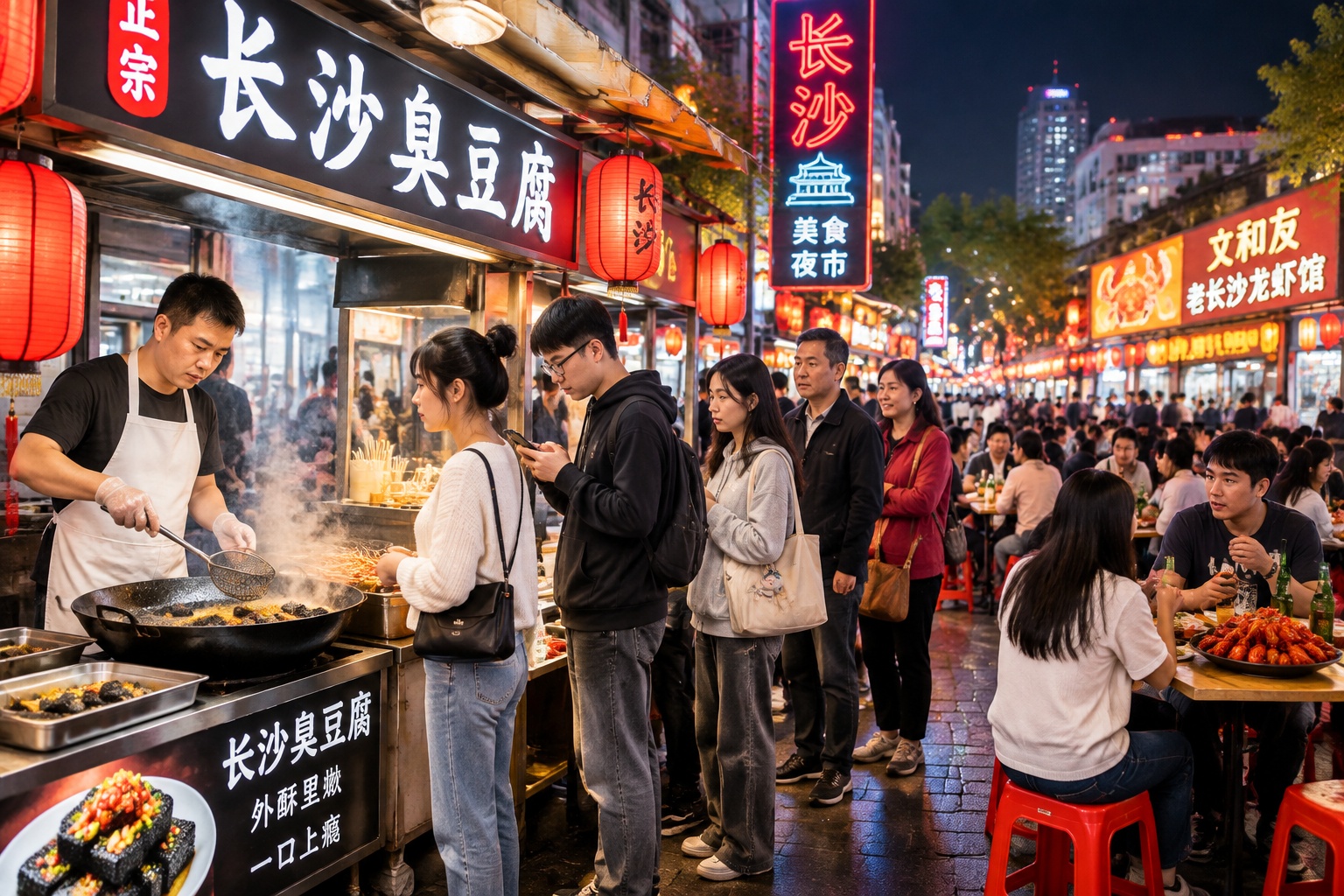

Midnight on Pozi Street: The Queue Starts Before the Oil Is Hot
It’s 11:40 p.m. on Pozi Street, and the smell hits you before you see the stall: fermented tofu, chili oil, garlic, and the sharp tang of a fryer working overtime. A woman in a puffer jacket leans out of a window above the crowd, shouting down to a friend in line. “Dou gan zi! Get me two!” The reply floats up: “Pai le ban ge xiao shi le!” — You’ve been in line for half an hour already.
This is Changsha’s nightly ritual. Stinky tofu — chou doufu — is fried to a dark crisp, dunked in a secret chili broth, and handed over in a paper bowl with a wooden skewer. The line snakes past a milk tea shop and a convenience store, but nobody complains. A man in his fifties, waiting with his teenage daughter, says he’s been coming to this same stall for over a decade. “The taste hasn’t changed,” he says. “The queue has.”
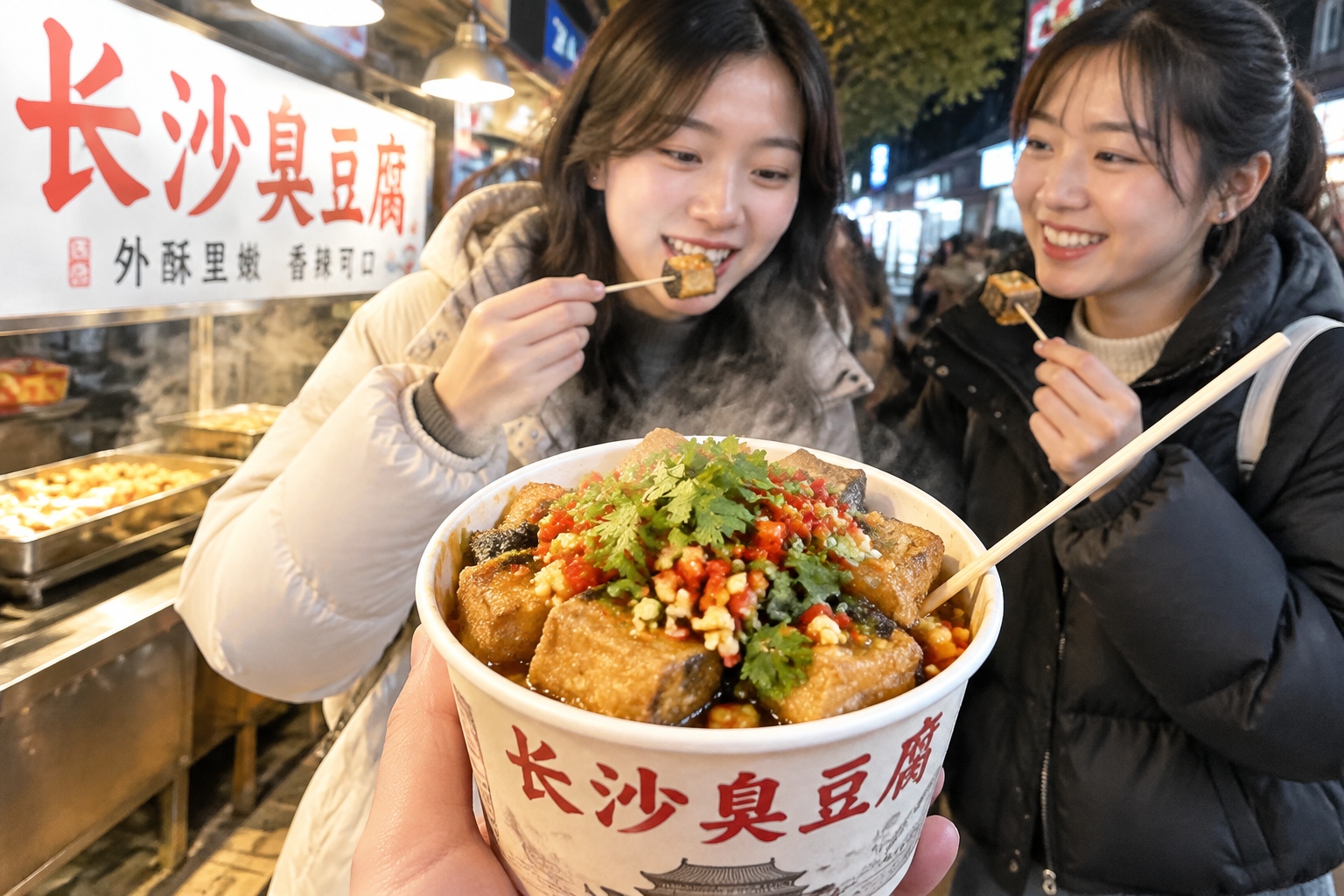
Down the street, the crawfish — xiaolongxia — are piled in red mountains. Diners wear plastic gloves and crack shells with their teeth, tossing empty shells into metal buckets. The noise is constant: laughter, the sizzle of woks, the clink of beer bottles. Vendors shout prices over the crowd. A young couple shares a bowl of tangyou baba — sticky rice cakes fried in brown sugar — and argues playfully about who gets the last piece.
Changsha’s late-night food scene isn’t just about eating. It’s a social engine. The city has a population of over 10 million, and according to local government data, its night-time economy accounts for a significant share of consumer spending. But the numbers matter less than the feeling: the streets are alive at 1 a.m. on a Tuesday. People are out. They are talking, laughing, eating. The city doesn’t wind down — it shifts gears.
Mahjong Parlors: Where Retirees Keep the Night Humming
Three blocks from the food street, the noise changes. A low, rhythmic clatter spills from a ground-floor room: hua-la-la, hua-la-la. The sound of shuffling mahjong tiles. Inside, under fluorescent lights and a ceiling fan that turns slowly, four retirees sit around a square table. A thermos of hot tea sits beside each player. A wall clock reads 12:15 a.m.
“We play until two, sometimes three,” says Uncle Liu, 68, a retired factory worker. He picks up a tile, studies it, discards it with a sharp click. “During the day, we watch grandchildren. At night, we have our own time.” The parlor is one of thousands across Changsha — small, neighborhood-run rooms that charge a few yuan per person for tea and a seat. They are not casinos. They are living rooms for people whose children have grown up and moved out.
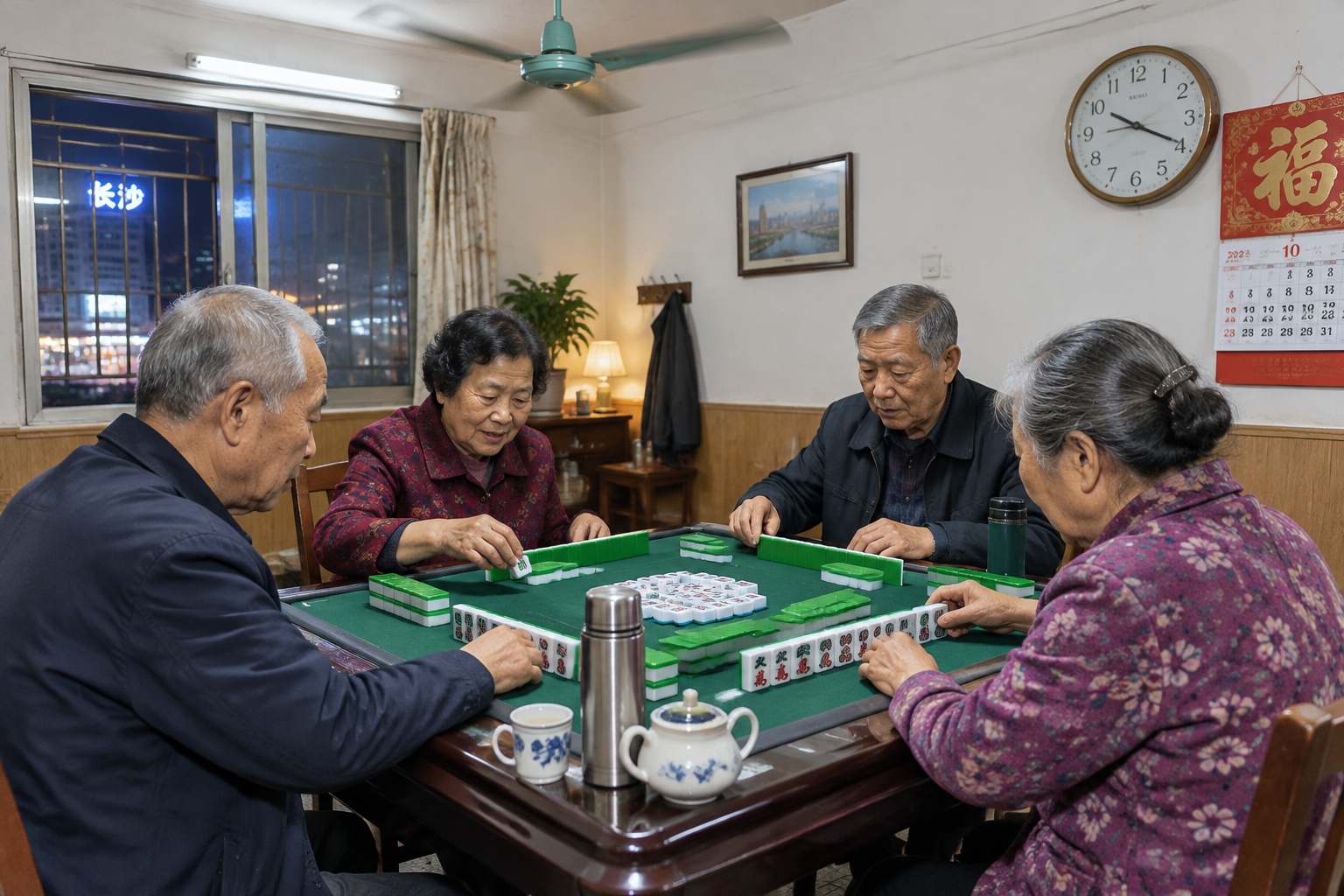
Mahjong in Hunan is played fast, with loud arguments and sudden laughter. A woman wins a hand and slaps her cards down. “Hu le!” The others groan, reach for their wallets, and immediately start shuffling for the next round. The tea is refilled. The fan keeps turning. Outside, the street is quiet except for the occasional scooter. Inside, the night is just getting started.
Sexy Tea and the Youth Economy: Why Young People Wait in Line for a Cup
By 9 p.m. on a Saturday, the line outside a Sexy Tea (Cha Yan Yue Se) shop in the Wuyi Square area stretches around the corner. The brand, founded in Changsha in 2013, has become a local icon — not just for its drinks, but for its aesthetic. The cups feature classical Chinese paintings. The names are poetic: “Orchid Latte,” “Fragrance of Osmanthus.” A 22-year-old college student named Xiao Zhang has been waiting for 25 minutes. “It’s not just the tea,” she says. “It’s the experience. You take a photo, you post it, you feel part of something.”
Sexy Tea is part of a broader wave of new consumer brands that have turned Changsha into a testing ground for youth-oriented retail. The city’s lower rents and strong local culture make it a launchpad for brands that later expand to Beijing and Shanghai. But for the young people in line, the appeal is simpler: it’s a place to meet friends, kill time, and participate in a shared ritual. The line itself is social. People chat, scroll on their phones, and occasionally ask strangers to hold their spot while they grab a snack from a nearby stall.
Xiang River Nights: Karaoke, Joggers, and the City Breathing Out
Along the Xiang River, the night takes on a different rhythm. The riverbank promenade is wide and paved, lined with trees and lampposts. Families walk slowly. Joggers weave past them. And every hundred meters or so, a portable karaoke setup appears: a speaker, a microphone, a small screen showing lyrics, and a person singing — sometimes well, sometimes not.
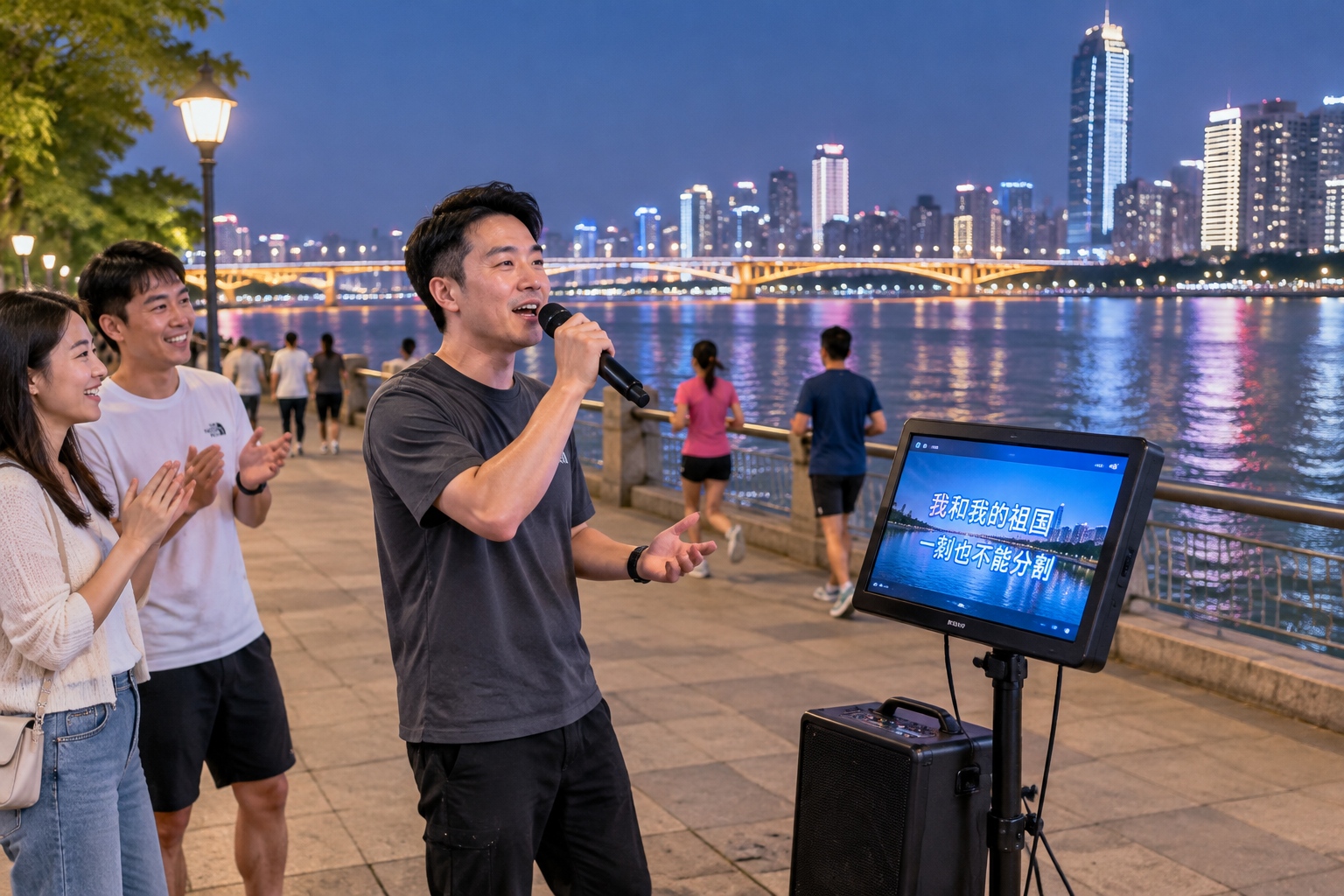
A man in his thirties belts out a classic Cantonese pop song. His friends clap and cheer. A few passersby stop to listen. The river reflects the city lights — bridges, high-rises, the occasional ferry. The air is cooler here, away from the fryers and the crowds. A woman in her sixties walks a small dog. She says she comes here every night. “It’s peaceful,” she says. “But also lively. You can be alone or with people. That’s Changsha.”
The Spice and the Spirit: Understanding Hunan’s ‘Ba Man’ Attitude
Hunan food is not just spicy. It is aggressively, unapologetically spicy — a heat that builds and lingers. The chili pepper is not a garnish; it is a foundation. Dishes like duojiao yutou (fish head with chopped chili) and xiangla xiaochao (spicy stir-fry) are staples. But the food is only one expression of a broader local character.
Hunan people often describe themselves with the phrase ba man — a slang term that roughly means stubborn, tenacious, unyielding. It’s a quality that shows up in history (Hunan produced many revolutionary figures) and in daily life. It’s there in the way a mahjong player refuses to fold a bad hand. It’s there in the way a night market vendor keeps frying until 4 a.m. It’s there in the way young people wait in line for a cup of tea, not because they have to, but because they want to be part of the moment.
But ba man is paired with something else: a deep, almost defiant joy. The night is not an escape from work; it is a celebration of being alive. The spicy food, the loud conversations, the singing by the river — these are not distractions. They are the point.
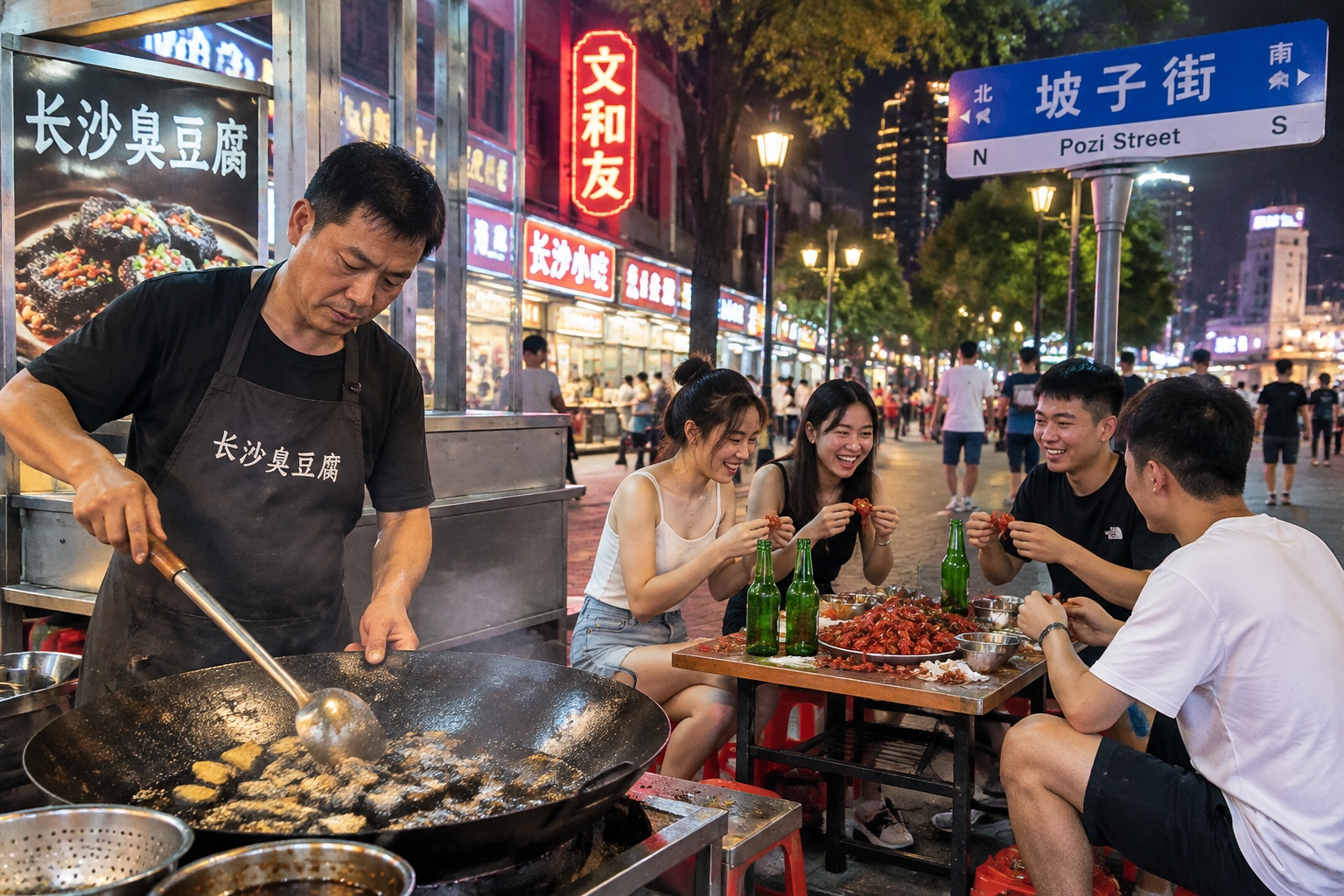
At 2 a.m., Pozi Street is still busy. The fryers are still going. The mahjong tiles are still clacking. The river still reflects the lights. Changsha doesn’t sleep. It just changes the soundtrack.
Start the discussion at forum.chinacomes.com