

The First Bite: Expectation vs. Reality
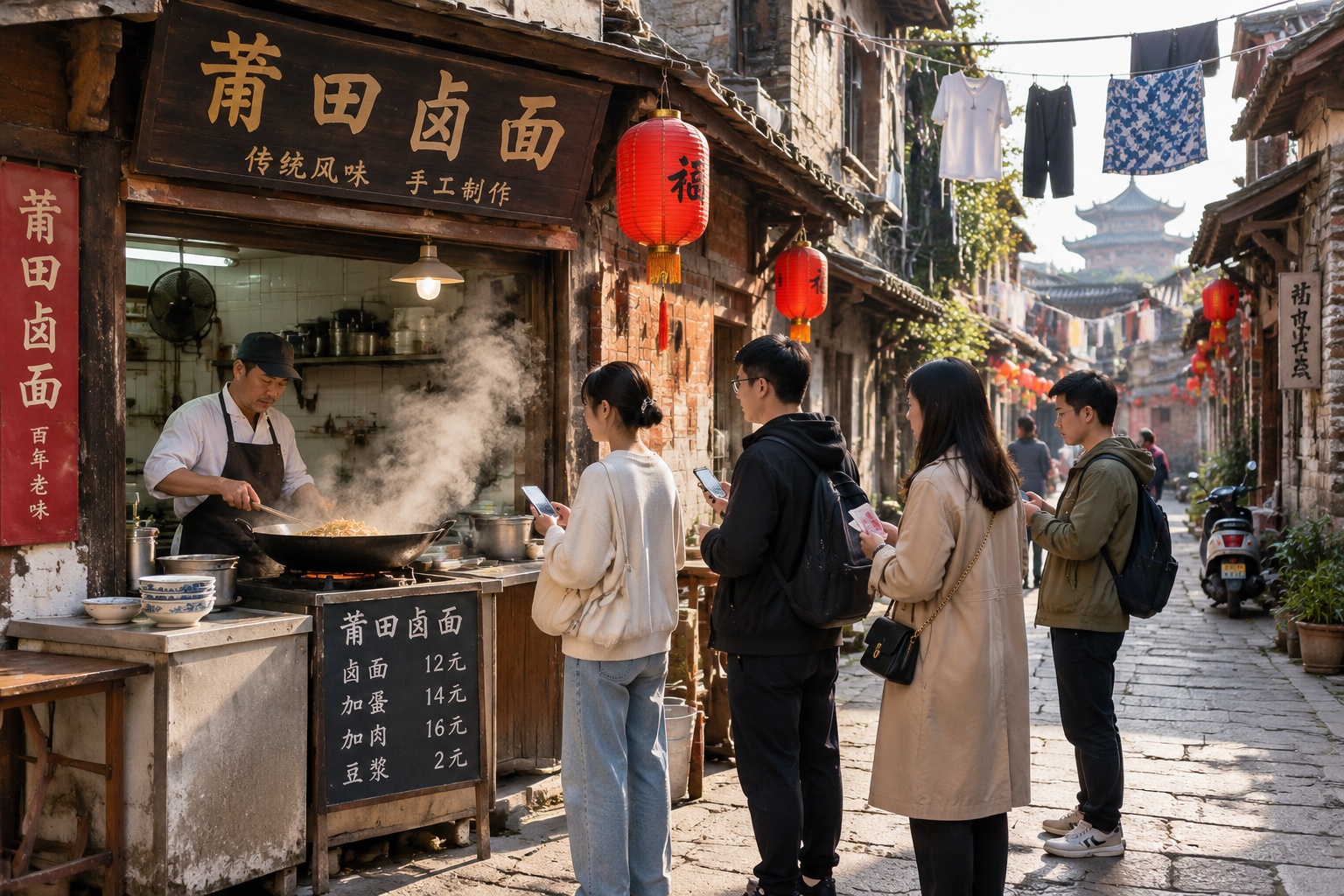
Chen Xiao, a 28-year-old graphic designer from Shanghai, had seen the golden-lit photos on Xiaohongshu (China’s Instagram) for weeks: thick, glistening broth, plump shrimp, hand-pulled noodles tangled with clams and pork. She saved the location of Director Lin’s Old Shop, a name that appeared in every trending post about Putian. When she finally arrived on a Saturday afternoon, the reality was less curated.
The shop sat at the mouth of a narrow alley in Putian’s old town, where the smell of frying garlic mingled with exhaust from passing scooters. Plastic stools wobbled on uneven pavement. A handwritten sign offered only three sizes. No English menu. The owner, a man in his 60s named Lin Guanghui, barely looked up from his large wok as Xiao ordered the large bowl with extra mushrooms.
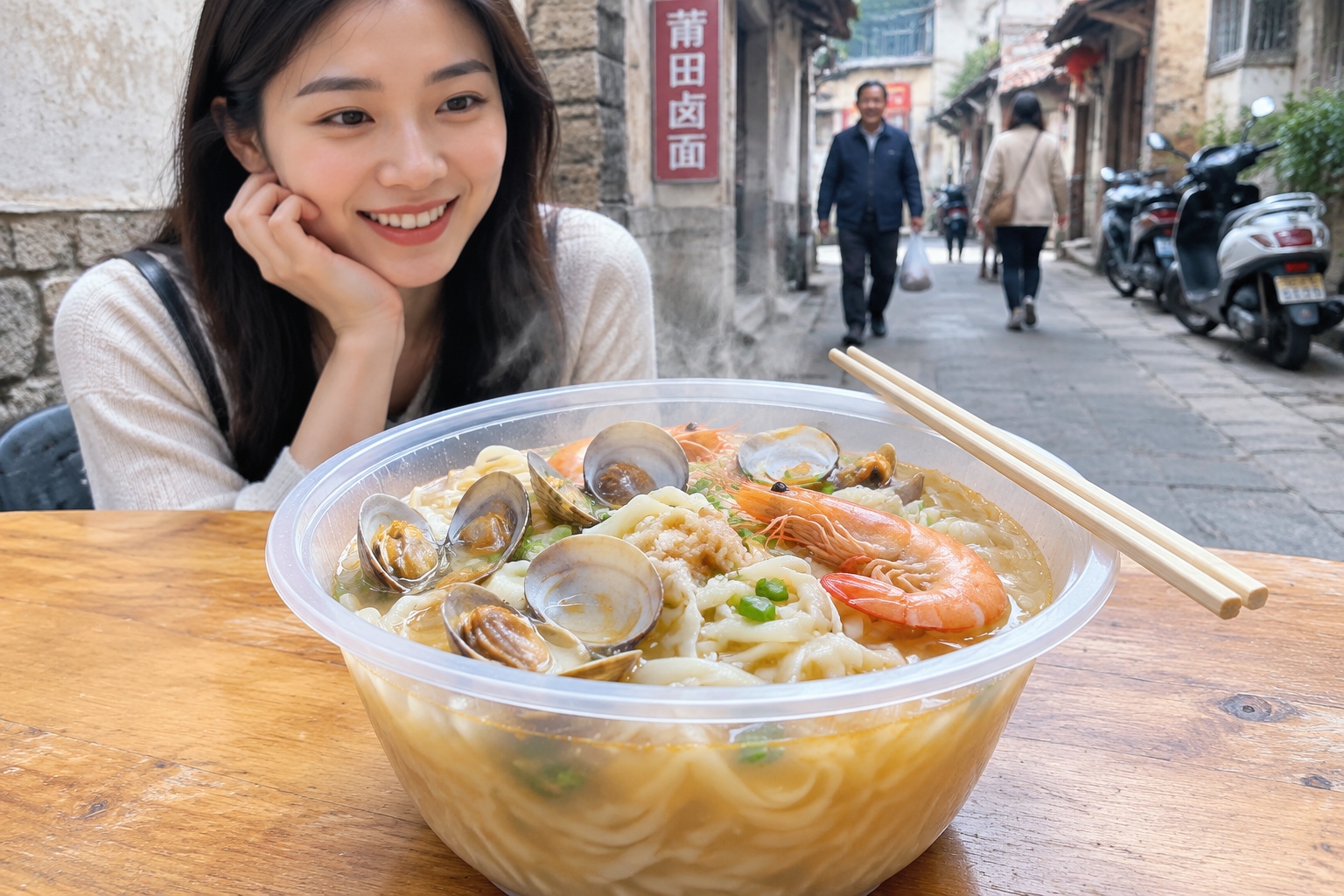
“I expected some kind of influencer-style service—maybe a nice bowl, a little garnish,” Xiao said, laughing. “Instead I got a steaming metal basin that could feed two people.” The portion was enormous. The broth, though less photogenic than the filtered images, carried a deep pork-bone sweetness with a hint of dried scallop. The noodles were chewy, not at all like the soft noodles in the pictures.
Her phone came out anyway. She snapped a quick shot before diving in—no filter, real steam fogging the lens. That picture, she later posted, got more genuine comments than her usual travel shots.
Behind the Viral Hype: What Makes Putian Braised Noodles Authentic
Putian braised noodles (lu mian) are not just another street food trend. For locals, it is a daily comfort food, associated with family gatherings, cold rainy days, and the city’s distinct coastal identity. The key ingredients—fresh clams, pork bones, dried shrimp, and a local variety of oyster—reflect Putian’s position as a port city in Fujian province.
Unlike the thick, saucy noodles found in some Chinese cuisines, Putian lu mian features a thin yet savory broth that is slowly simmered for hours. The noodles are typically flat, wheat-based, and absorb the broth beautifully. What makes it stand out is the la hua (pulled noodles) technique: the dough is stretched by hand repeatedly, creating thin strands that remain springy after cooking.
For an overseas reader: imagine a bowl of ramen that uses a clear seafood-pork double broth, but instead of a refined bowl, you get it in a no-frills alleyway where the cook has been doing the same motion for 40 years. The charm lies in the unstaged authenticity.
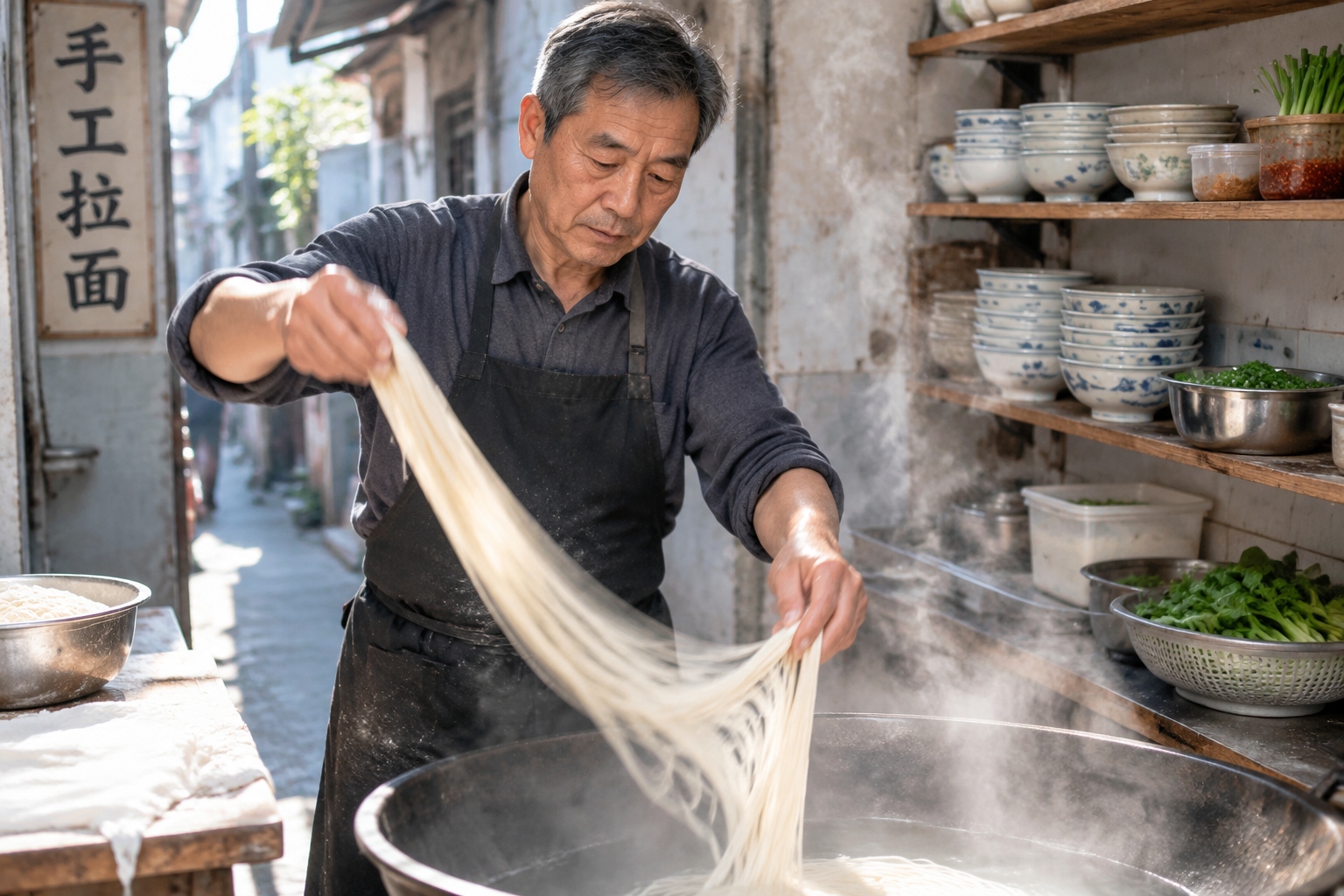
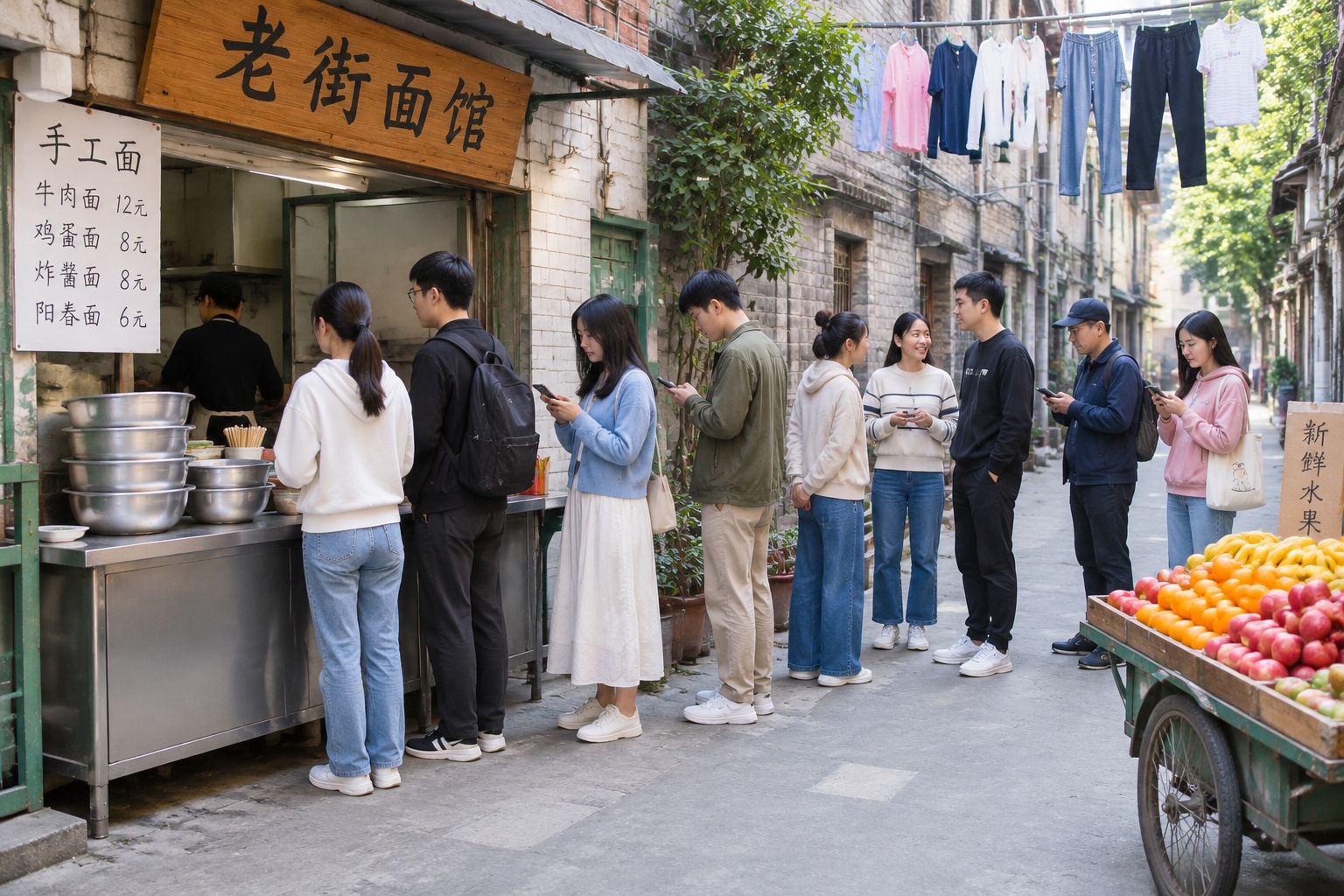
Lin Guanghui, the owner, learned the recipe from his father in the 1980s. “We never changed the broth base,” he told me while deftly flicking noodles into a boiling pot. “Tourists now come with phones, but they still wait like everyone else.” He gestures to the queue, which now snakes around the corner. “The internet made my shop famous, but the taste hasn’t changed.”
The Clash of Two Worlds: Filters vs. Fire
The gap between the online image and the real experience is stark. On social media, the bowls are often staged with wooden chopsticks, polished clay pots, and soft lighting. In reality, the bowls are simple white porcelain, often chipped. The soup is ladled directly from a giant cauldron that has been bubbling since 5 a.m.
For tourists like Xiao, the initial disappointment often gives way to a deeper appreciation. “You realize the real story is not the perfect photo, but the chaos—the shouting of orders, the old lady squeezing past with a basket of greens, the cat sleeping on a sack of flour. That’s the part the algorithm can’t capture,” she said.
This tension is common in China’s food tourism landscape. Many small shops suddenly become “net red shops” (网红店) after appearing on video-sharing apps. While the attention boosts business, it also pressures owners to maintain quality while managing crowds. Some adapt; others stick to tradition and let the hype pass.
Lin’s approach is simple: he limits the number of bowls he makes each day to preserve the broth’s depth. “If I use too much water, the flavor thins. The machine can’t tell,” he said. This scarcity frustrates some visitors but earns him fierce loyalty from regulars.
Navigating the Alley: A Practical Guide for First-Timers
For international travelers who want to experience the real Putian braised noodles, here are a few tips based on firsthand observation:
- Go early or late: The lunch rush (11:30–13:30) is packed. Aim for 10:30 a.m. or 2:30 p.m. for a shorter wait.
- Learn a few words: “Da wan” (large bowl) and “jia liao” (add toppings) are useful. Pointing works too.
- Embrace the setup: You’ll likely sit on a low stool with the bowl balanced on a tiny table. That’s part of the experience.
- Cash is king: Many old alley shops still prefer cash, though QR payments are increasingly accepted.
- Don’t judge by appearance: The broth may look cloudy, even unappetizing. Taste it first before adding chili.
Why This Story Matters: Beyond the Noodles
The case of Putian braised noodles illustrates a broader phenomenon in China: the collision between digital curation and physical reality. The same tension exists in other domains—ancient water towns battling ticket queues, tea houses becoming Instagram studios, noodle shops morphing into photo backdrops.
What makes Putian different is that the old alley culture has not yet been fully commodified. The neighborhood remains a working-class residential area, where the noodle shop is just one thread in a tight-knit community fabric. The grandmas hanging laundry above the shop, the fruit vendor shouting prices, the smell of incense from a small temple next door—these are not props.
For the overseas reader, this story offers a window into how ordinary Chinese people navigate authenticity in an age of viral algorithms. It also shows that the real China is often messier, louder, and more flavorful than the perfectly framed posts suggest.
Back at the shop, Chen Xiao finishes her bowl, using the last piece of bread to mop up the broth. “I came for an Instagram post. I’m leaving full, and a little wiser,” she says. She walks back into the narrow alley, past the line of waiting customers, and disappears around the corner—just another face in the living, breathing neighborhood that has been here long before the first hashtag.
Start the discussion at forum.chinacomes.com