
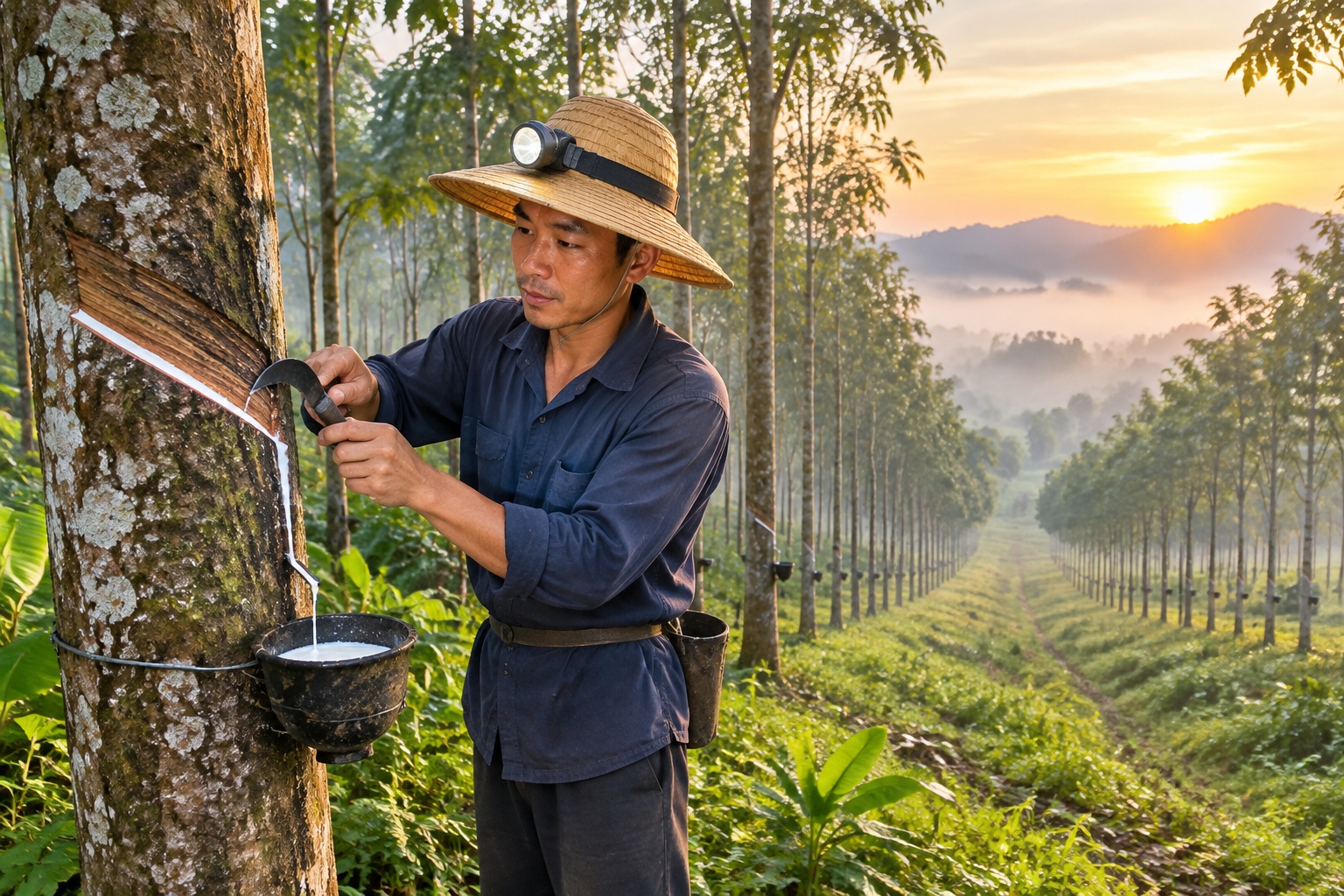

The Headlamp Crew in the Rubber Forest
At 4:30 a.m., it’s still dark in the rubber forest on Hainan island. The only light comes from headlamps worn by tappers as they glide between trees. Each worker stops at a rubber tree, runs a curved knife across the bark with practiced ease, and within seconds a milky white liquid starts dripping into a small cup. No one speaks much. The forest smells of damp earth and fresh latex.
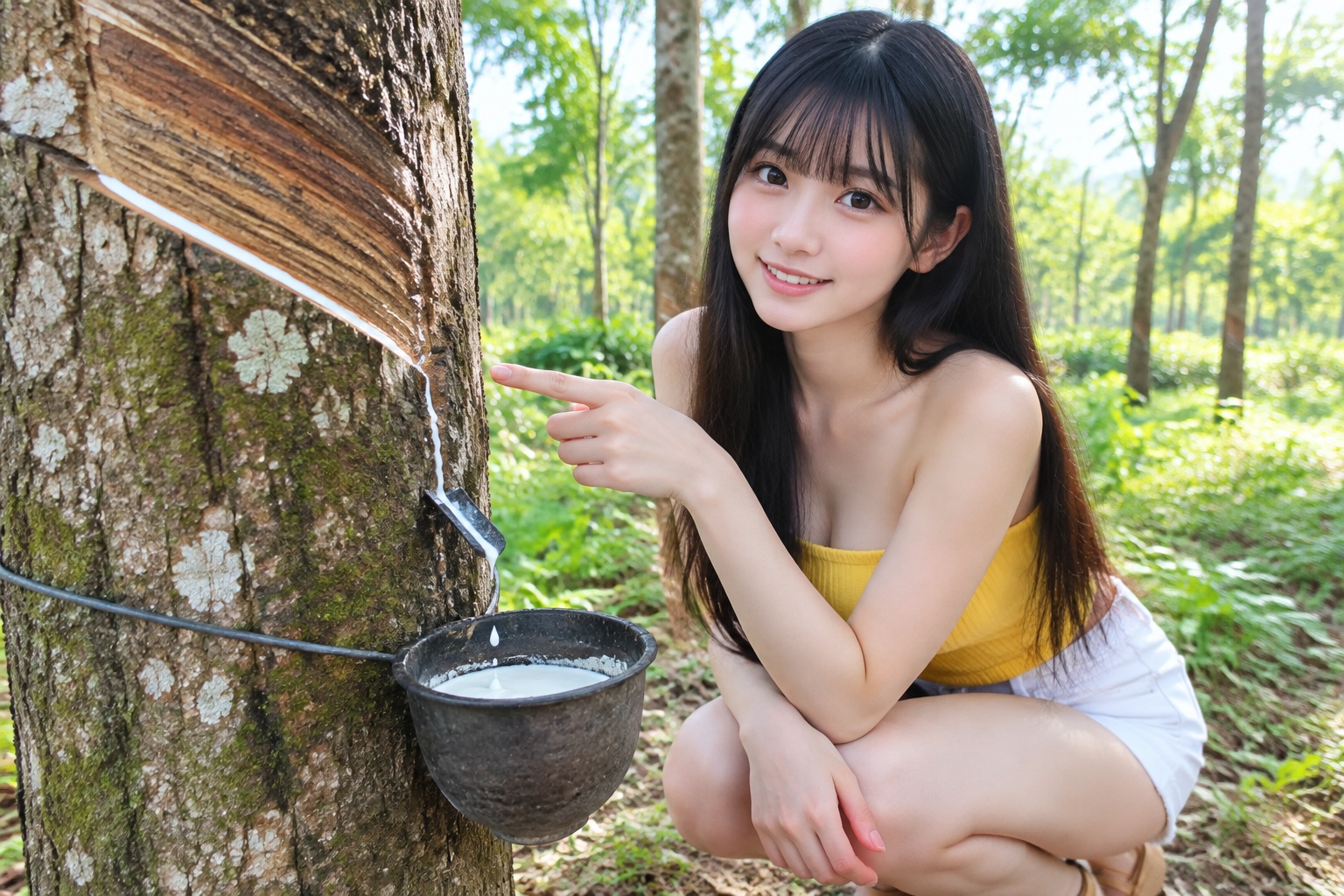
If you grew up outside China, you might associate latex with hospital gloves or mattresses from a shopping mall. But here, the story of the rubber tree is tightly woven into China’s modern history – and it’s a story that still plays out every dawn in the misty hills of Hainan.
Rubber as a Matter of National Survival
Rubber is not native to China. The Hevea brasiliensis tree comes from the Amazon, and for a long time the world’s rubber supply was controlled by a handful of colonial powers. During the 1950s, when Western countries imposed an embargo on trade with China, rubber became a strategic pressure point. Without rubber, you cannot build tyres, hoses, aircraft parts or medical equipment. The young People’s Republic faced a serious problem: the rubber trade was cut off.
The solution was to grow rubber at home. But rubber trees are tropical plants and need year-round warmth and rainfall. Southern China, especially Hainan, seemed to fit—even though it sits at the northern edge of the natural rubber growing zone. In the early 1950s, state farms and soldiers were sent to clear jungle and plant rubber seedlings. Some of those soldiers stayed for decades and became lifelong rubber farmers.
The planters faced enormous hurdles. The trees were susceptible to cold, disease and typhoons, which frequently destroyed newly planted areas. Research stations were set up to develop hardier varieties and new tapping methods. By the 1960s, Hainan’s rubber industry had stabilized, and the island began exporting rubber to other provinces. This self-sufficiency became a point of pride.
The Unromantic Life of a Rubber Tapper
The moment of tapping is only the final outcome of a long, disciplined routine. Tappers usually start work between 1 and 5 a.m., because latex flows best when the air is cool and humid. If you arrive too late, the yield drops – and so does the pay. Their days leave little room for error. Each latex cup must be emptied before it overflows, and trees need to rest between cuts.
The technique itself is harder than it looks. You can’t cut too deep, or you damage the tree. Cut too shallow, and the liquid barely flows. The exact angle, depth and length of the incision are all learned through months of practice. Many experienced tappers can carve a perfect spiral groove in seconds, leaving the tree healthy for another year.
Not all trees are tapped every day. To keep the trees healthy, tappers follow a strict system: a tree is cut at intervals of two or three days, and after a few years, the bark is allowed to rest and regrow. This careful rhythm mirrors a human body’s need for sleep.
In the past, rubber farming was compulsory for many workers. Today, it’s a paying job, though fluctuating prices have made it less attractive for younger generations. Some villages now face an aging workforce. Yet the trees remain, and a growing number of locals are looking at them with fresh eyes.
From Tyres to Pillows: The Latex Revolution
Enter the late 1990s, when China’s urban middle class began to buy better household goods. Memory foam and latex products started appearing in department stores. Hainan producers noticed. Instead of shipping raw rubber sheets to tire factories, they began refining latex into foam for pillows, mattress toppers and king-size mattresses.
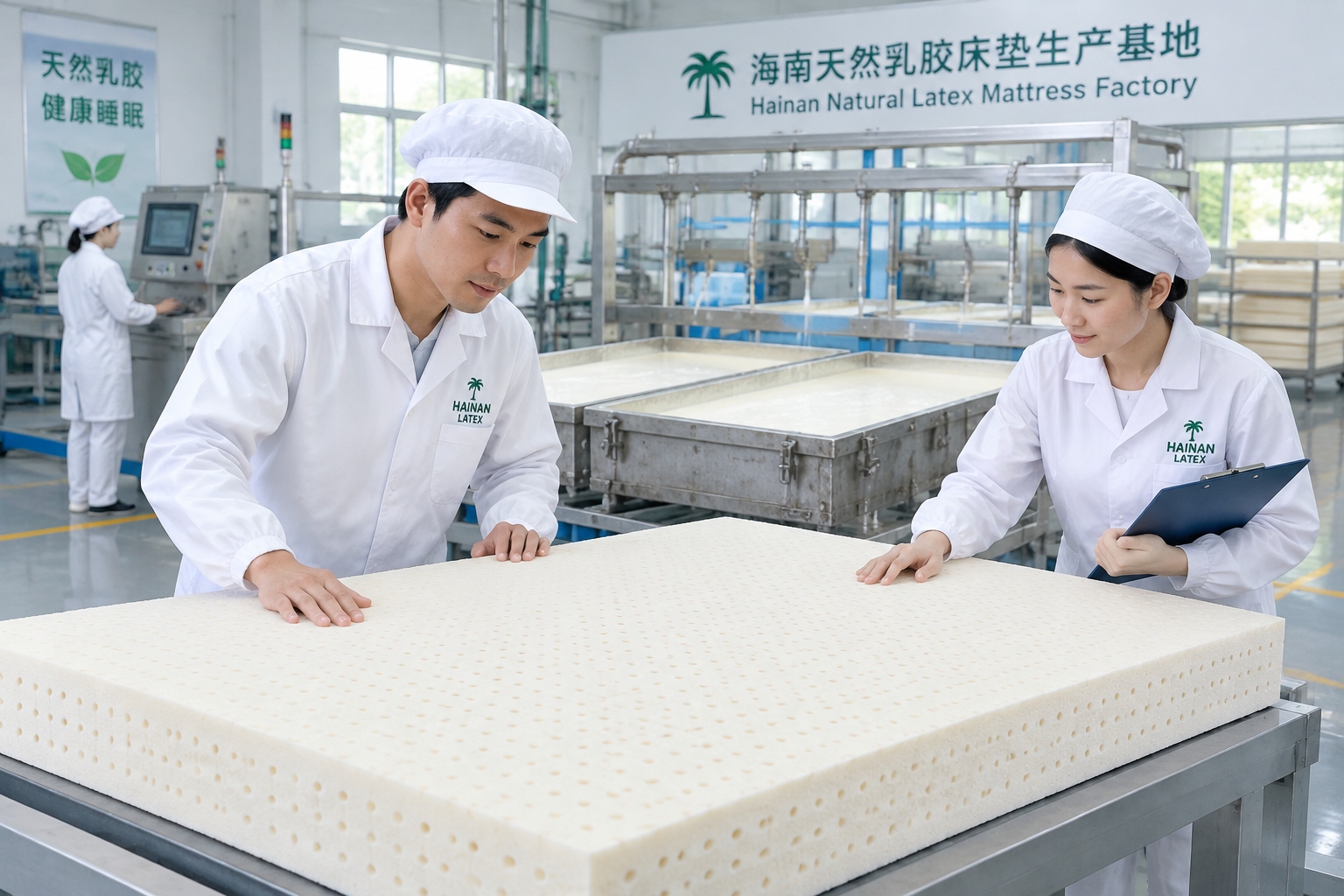
Today, the same rubber estate that once supplied national defence now operates small factories where thick liquid latex is poured into molds, baked into spongy slabs, and cut into bedding. Chinese consumers – often raised on hard wooden beds – have embraced the new softness. “Grandmothers used to say soft beds are bad for your back,” says Wu Meihua, a factory manager in Chengmai county. “Now their daughters are buying latex mattresses and saying they sleep better.”
Chinese bedding brands now spend heavily on marketing that emphasizes “natural latex from Hainan.” The tagline often mentions “island sunlight” and “no synthetic additives,” even though purity levels vary between factories. This boom has created a thriving downstream industry – one that goes far beyond the old state-run farm model.
This shift also opened a niche market for tourism and retail. Visitors on holiday in Hainan can stop at rubber farms that run on-site showrooms, where staff demonstrate how natural latex is made. The scent of rubber, once associated with industrial toil, now reminds people of a good night’s sleep.
Rubber Culture, Tourism and Green Challenges
Deeper in the western hills, rubber plantations have morphed into agri-tourism destinations. Some are adding walking trails, guesthouses and “tapping experience” sessions for tourists. Early birds can join a tapper at dawn, then sit down to a breakfast of rice noodles and fresh coffee. For many visitors, it’s the first time they have seen how a mattress is born.
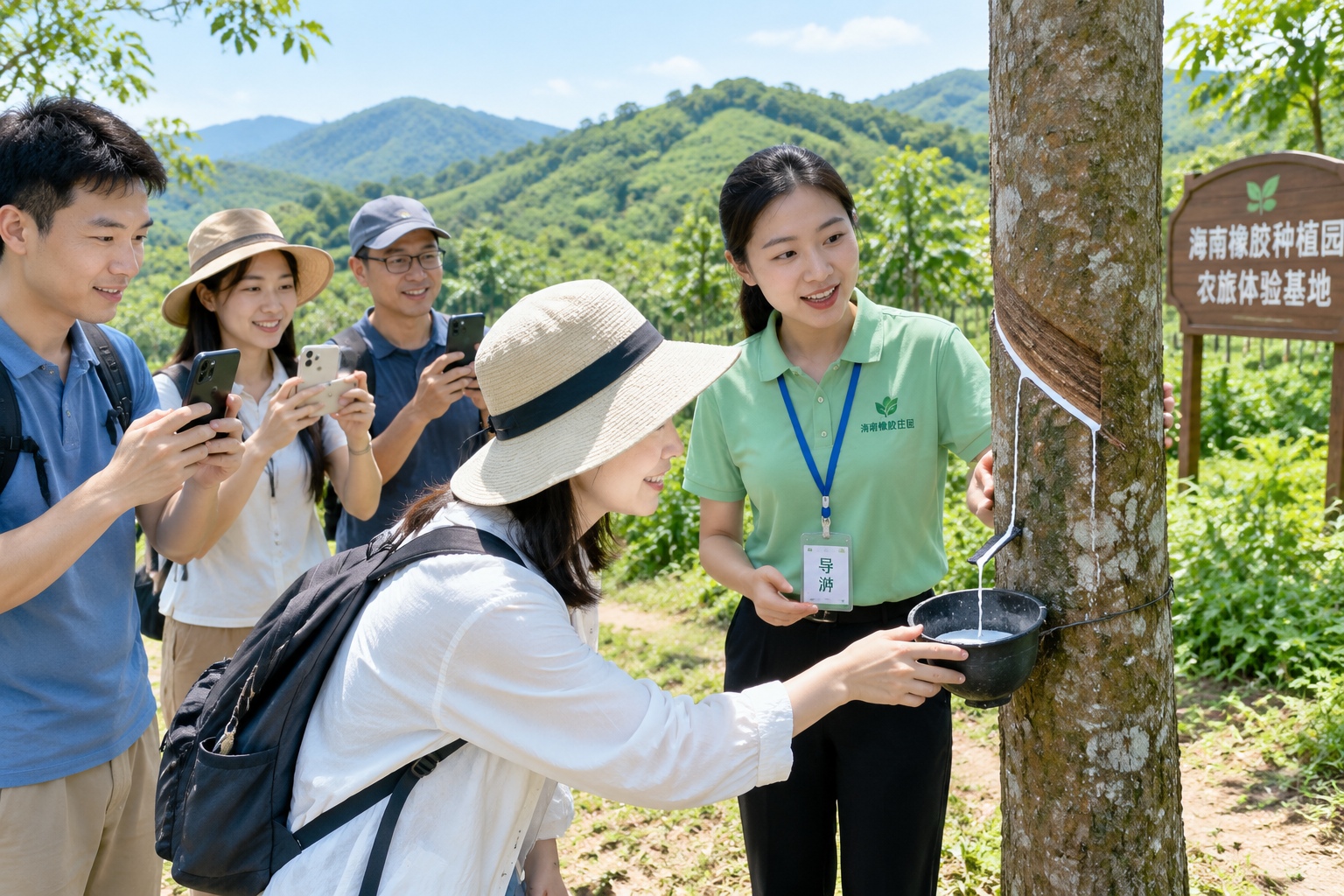
Some farms even offer night tours during the peak tapping hours, complete with bright headlamps and warm milk tea after the session. It’s a far cry from the dusty, government-planned rubber camps of the 1960s.
But the future is not entirely rosy. Natural rubber prices swing with the global market, and synthetic rubber is often cheaper. Environmental concerns also challenge the industry: rubber trees take water and nutrients from the soil, and some plantations replaced natural forests decades ago. Still, hainan is pushing towards more sustainable management, such as intercropping with other trees and reducing chemical use.
Local governments have also tried to reduce the age of rubber trees and promote more efficient tapping knives. Some innovative farms now use electric tapping devices, although the traditional curved knife remains the favorite of veterans. The goal is to keep the industry young enough for the next generation.
If You Visit Hainan, Stop by a Rubber Farm
You don’t need to buy a mattress to appreciate what rubber means to this island. Even a short drive through Hainan’s countryside offers a glimpse of row after row of grey-brown trunks, each decorated with a spiral scar. The trees look silent, but they are working. Latex still drips into cups, just as it did half a century ago – only now it might end up in your bedroom.
It’s a quiet transformation, but a real one. The same tree that once helped a nation survive now helps its people sleep. That’s a story worth telling, and it begins with a sharp blade and a headlamp in the tropical dark.
Start the discussion at forum.chinacomes.com