

A Humid Street and a Bitter First Impression
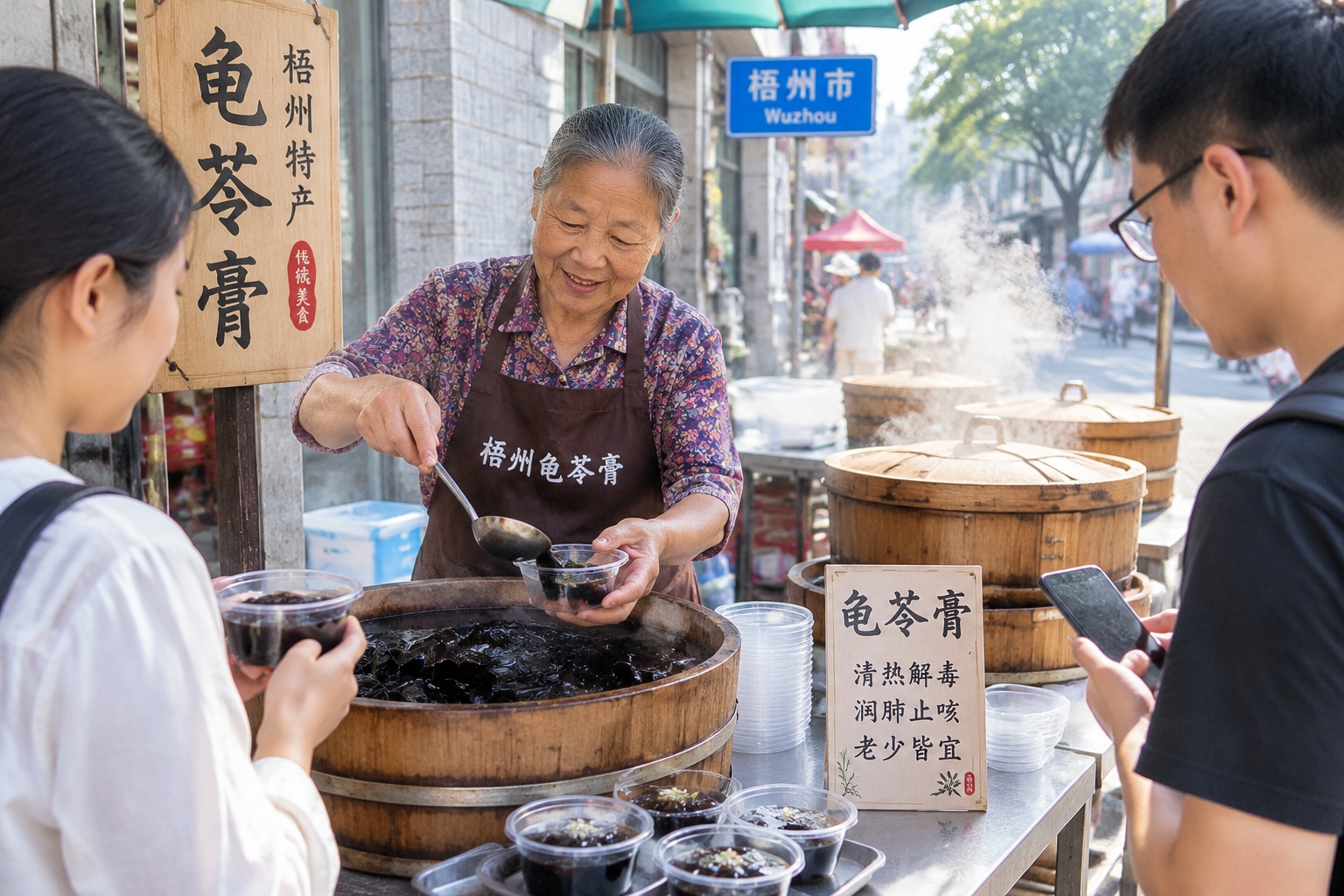
It’s 10 a.m. in Wuzhou, a city on the border where Guangxi meets Guangdong. The air is thick with humidity and the scent of roasted cassia seeds. I’m standing outside a small shop with no signboard, just steam rising from a wooden bucket.
The owner hands me a clear plastic bowl filled with dark brown jelly cubes swimming in a syrupy mixture. “Try it,” she says. “It’s good for your stomach.”
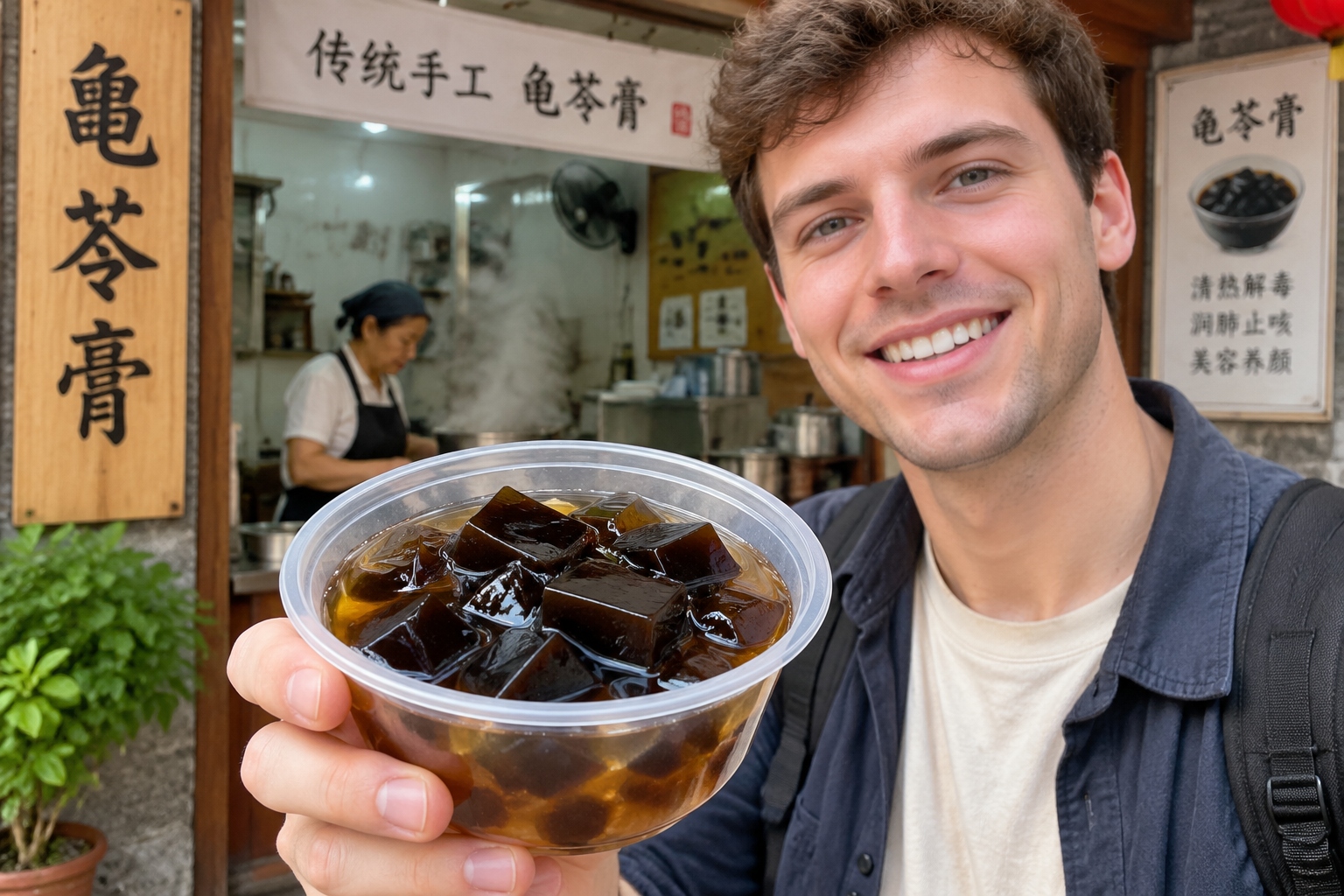
My first bite is a shock. It tastes like charcoal and wild grass, bitter enough to make my eyes water. I expect this to be the end of our food adventure. In many Western countries, if you offer someone something that tastes like dirt, they politely decline. But here, in Wuzhou, it’s just another morning snack.
What is this? Why would anyone eat it? And why do locals smile when I finally take a second bite?
The Philosophy of Eating Medicine
To understand Guilinggao (turtle jelly), you first need to let go of the Western idea that food is just for taste or energy. In China, especially in the south, there’s a concept called “Yi Shi Tong Yuan” — medicine and food share the same origin.
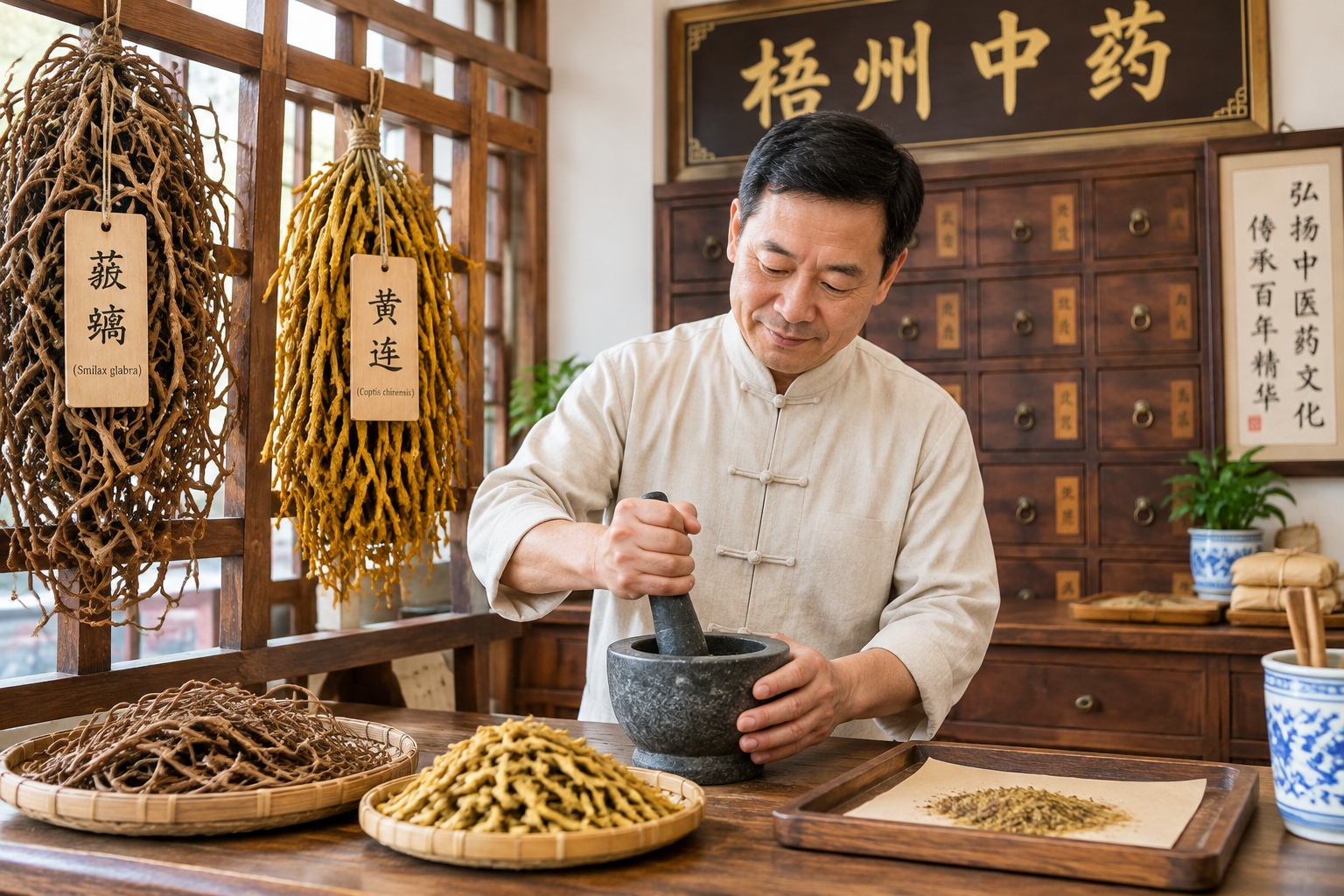
Locals don’t see this dessert as a treat. They view it as a functional tool. Wuzhou sits in a region known for its hot, damp climate, which can lead to digestive issues or fatigue. Guilinggao is made from the skin of soft-shelled turtles and two specific herbs: Coptis chinensis (huanglian) and Smilax glabra (tufuling).
It’s not magic; it’s traditional medicine turned into a snack. The bitterness isn’t an accident; it’s the active ingredient working to cool down the body and clear heat from inside. For locals, eating it in the summer is as natural as wearing light clothes.
This isn’t about exoticism for tourists. It’s about survival and well-being in a specific environment. When you understand that this bowl is essentially a preventative health measure, the bitterness makes sense. It’s the taste of taking care of yourself before you get sick.
From Ancient Soup to Modern Milk Tea
If Guilinggao were stuck in the past, it would be hard for foreigners to embrace. But Wuzhou is a city where tradition dances with modernity.
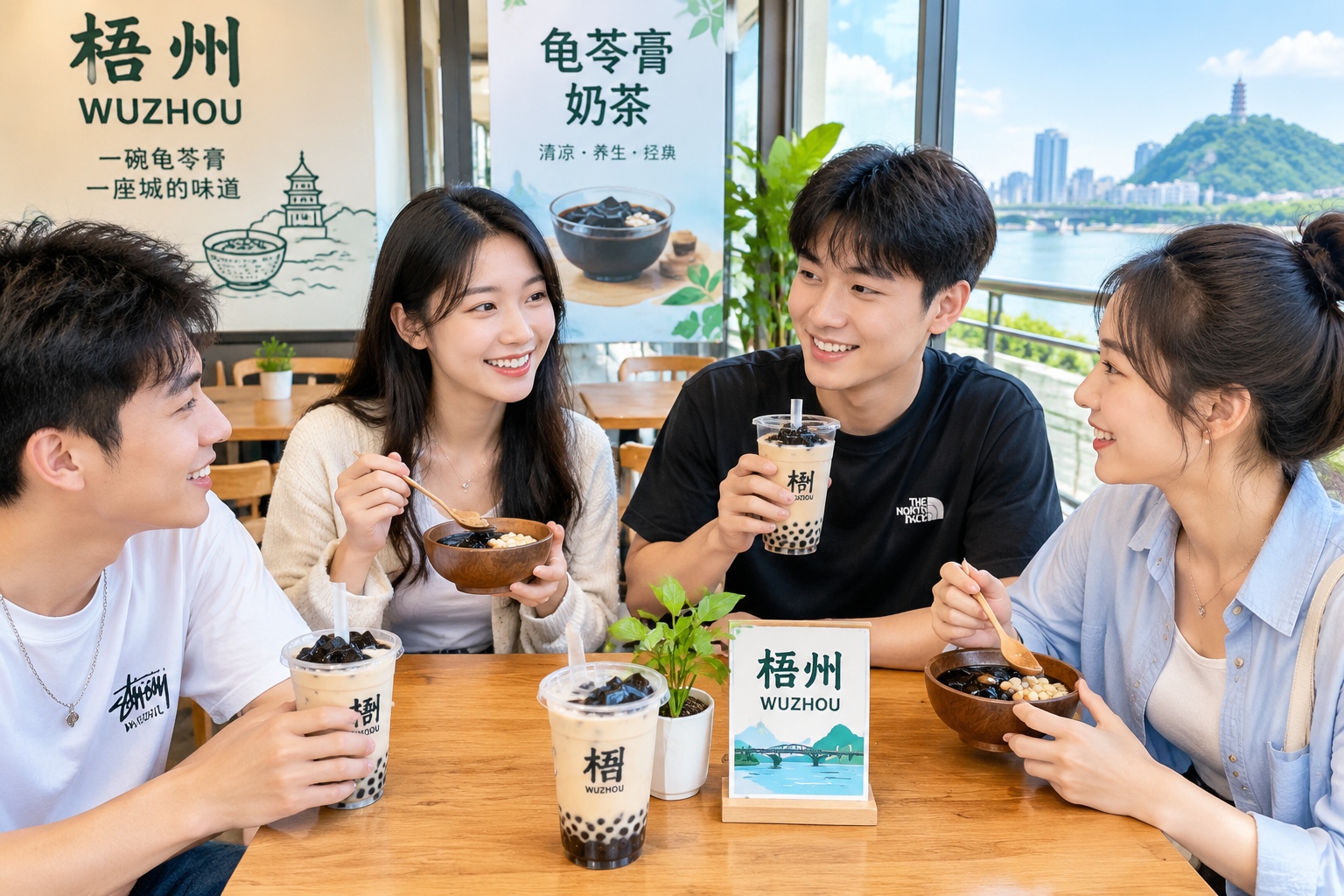
I walked into a trendy cafe near the riverfront and saw teenagers ordering “Guilinggao Boba.” The shop owner has adapted the ancient recipe for the fast-paced youth culture. Instead of just water syrup, they serve it with milk tea, ice cubes, and chewy tapioca pearls.
The result is a creamy, sweet dessert where the bitterness is masked but still present as a background note. It’s a clever compromise: young people get their caffeine fix and texture satisfaction, while still getting the perceived health benefits of the herbs.
This evolution shows something important about contemporary China. Old traditions aren’t museums; they are living things that adapt to survive. The turtle jelly didn’t die out when bubble tea arrived; it evolved. It found a new home in the hands of Gen Z, proving that cultural heritage can be flexible without losing its core identity.
More Than Just Dessert: A Social Glue
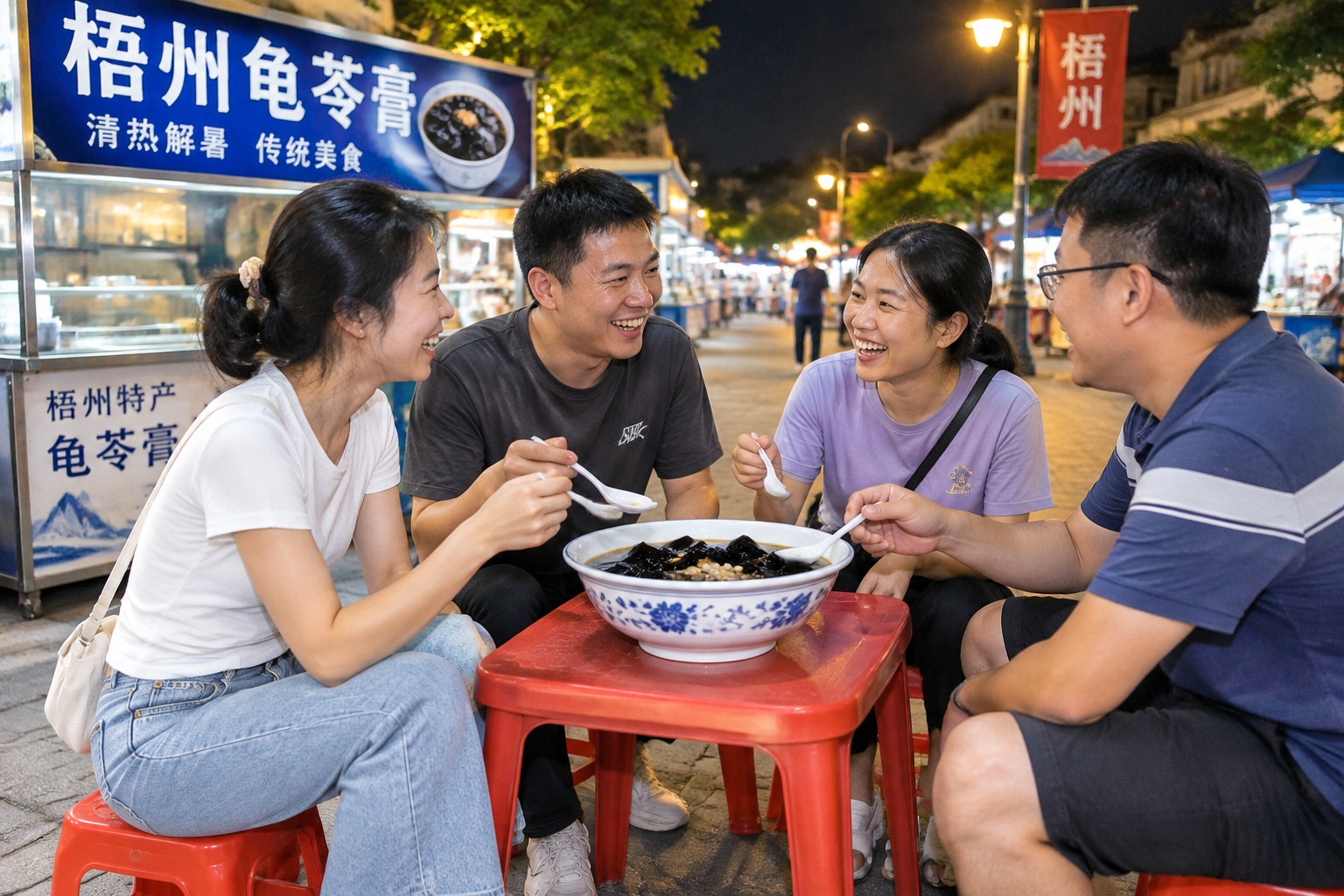
In Wuzhou, Guilinggao is a conversation starter. I watched a group of local students sitting on plastic stools outside a night market, passing the bowl back and forth.
One student explained to me that sharing a bowl of bitter jelly creates a unique bond. “If we like it together, it’s easier to talk about everything else,” he said. It’s a shared experience that breaks down barriers between strangers.
For a foreigner, this is the perfect icebreaker. Asking for Guilinggao signals respect for local customs. When you ask for more honey or less water, you are engaging in a small negotiation of personal taste within a communal setting. It turns eating into an interaction rather than a solitary act.
The shop owners know this too. They don’t rush customers. They watch you take that first bitter bite, wait for your reaction, and then offer advice like, “Try adding some maltose if the bitterness is too strong.” It’s a moment of human connection over a simple bowl of jelly.
A Bite of Real China
Leaving Wuzhou, I realized that this small bowl of dark jelly reveals more about Chinese pragmatism than any skyscraper or high-speed train could.
It shows a culture that prioritizes balance and prevention. It demonstrates how ordinary people integrate ancient wisdom into their daily routines without fanfare. And it proves that food in China is never just about calories; it’s about relationship, health, and history all at once.
If you visit Wuzhou, don’t skip the street stalls because they look too simple. The real story isn’t in the fancy restaurants; it’s in this bowl of bitter jelly sitting on a plastic table, shared with locals who have lived here for generations. It’s a taste test that changes how you see the world.
Start the discussion at forum.chinacomes.com