


Two baozi and a beep
Six fifty on a Tuesday morning in Hangzhou. A woman in a grey jacket stops at a breakfast cart outside a metro entrance and orders two pork buns and a cup of soy milk. The vendor doesn’t reach for cash. She glances at a small screen clipped to the side of the cart, hears a short beep, and is already walking toward the escalator. She stood at the cart for about eight seconds.
Six yuan — under a dollar. No wallet, no password, and in her case, no phone leaving her pocket at all.
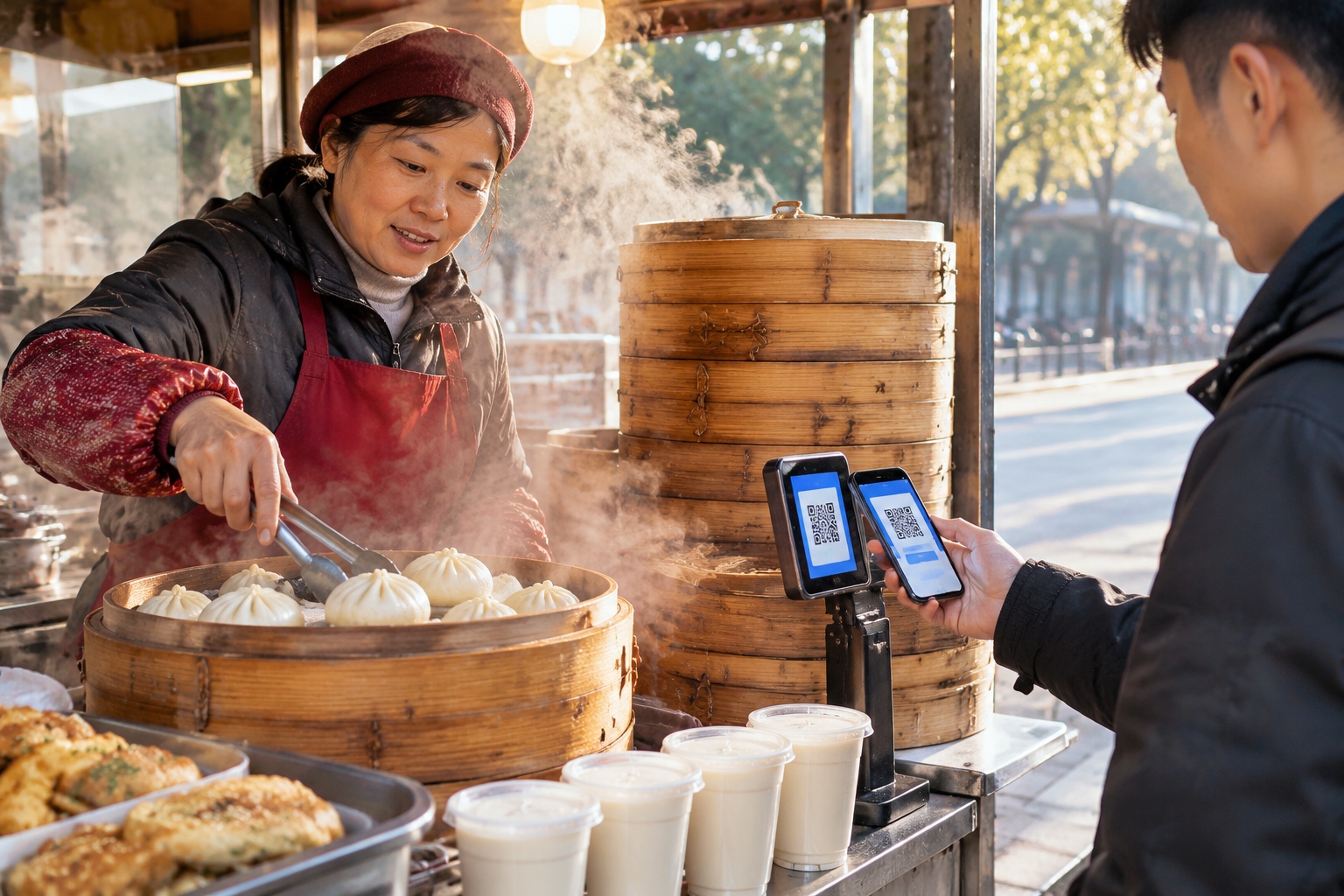
What “cashless China” actually looks like
Visitors often arrive expecting something theatrical. They’ve seen the videos: whole markets running on QR codes, street musicians with a printed square taped to the guitar case. The reality is less cinematic and more interesting.
China has roughly 1.1 billion internet users, and more than 900 million of them pay with their phones regularly. QR codes are taped to vegetable stalls, printed on the backs of taxi headrests, stuck to the side of refrigerator-repair vans. For most urban residents under fifty, the phone is not a novelty payment method. It’s the default — roughly what a debit card is in parts of Europe.
The bigger change came after the QR code. Scanning was always fast, but it still required a phone, an unlock, an app, a camera, a confirmation. Over the past few years each of those steps has been quietly shaved away. The technology didn’t get louder. It got quieter, which is usually the sign that it’s working.
7:40 a.m.: a commute with almost no transactions
Back to the woman in the grey jacket. She reaches the metro gate and doesn’t tap a card or a phone. She looks at a small tablet-sized screen for about a second. The gate opens.
Facial recognition gates have been installed at busy stations in Hangzhou, Shenzhen, Chengdu, Guangzhou and a growing list of other cities. At most stations they’re one option among several: face, QR code, or a physical transport card all work at the same barrier. Commuters who want the face option register once in the metro app, linking a biometric template to their ID.
The trade is explicit. You hand over a piece of your face, and in return you skip the two seconds of fumbling for a phone at 7:40 in the morning with a bag in each hand. At rush hour, two seconds multiplied by a few thousand people per station is a real amount of time. Millions of riders have decided it’s worth it. Plenty of others haven’t, and simply keep using a QR code.
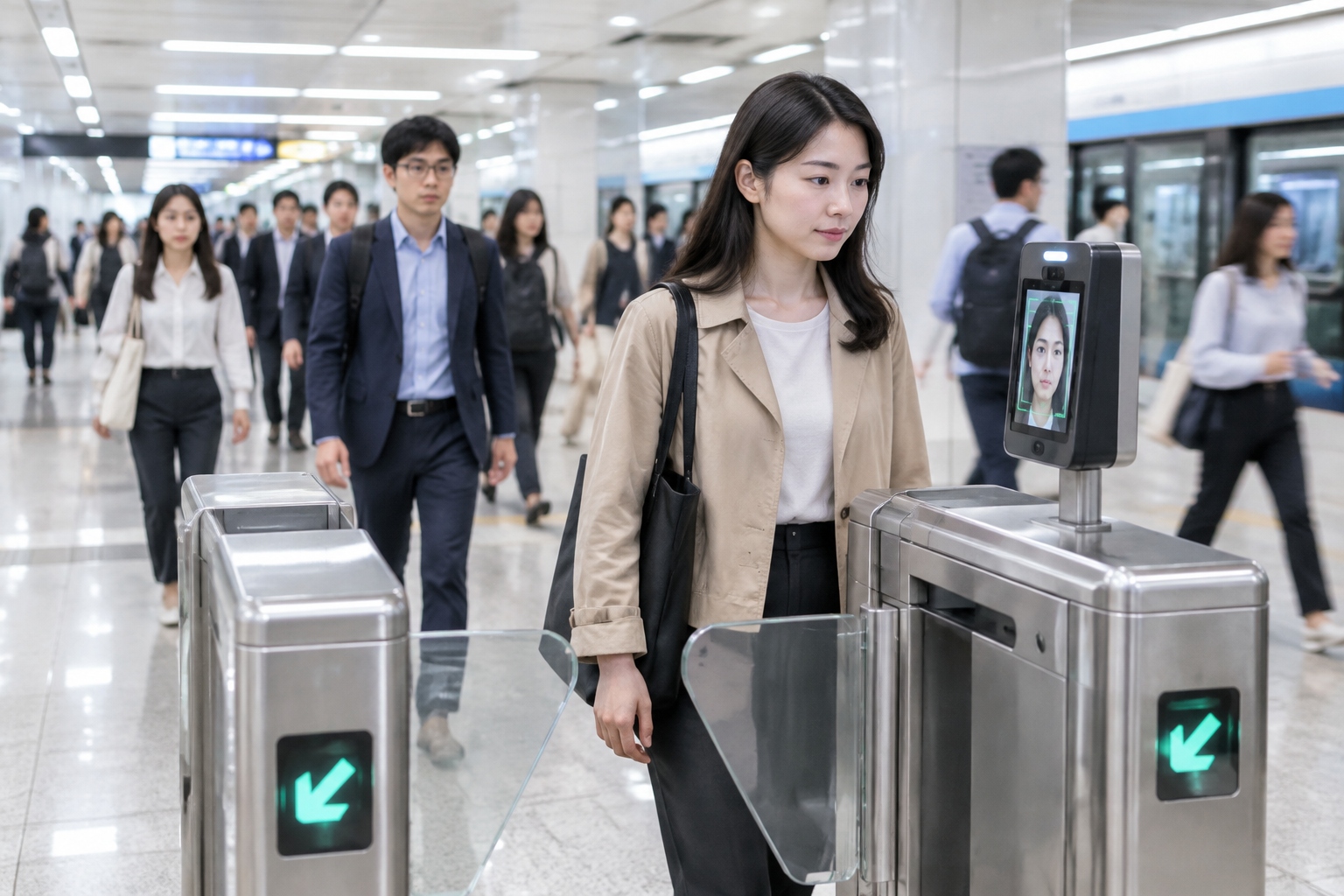
The quiet part is that the metro gate isn’t really about payment. It’s the same pattern repeating across daily life: a small friction gets identified, tested in a few cities, and then absorbed into the background until nobody calls it technology anymore.
Beyond the checkout counter
The side of digital life that visitors rarely see isn’t in shops. It’s at the hospital, the library and the government service hall — the places where paperwork used to eat entire mornings.
The hospital
In most large cities you no longer queue at six in the morning for a specialist appointment. You book a slot a week ahead inside WeChat or Alipay, pay the registration fee in the app, and get a time window. At the hospital, self-service kiosks and QR codes handle check-in, test payments and prescription pickup. Your medical insurance, once a physical card, now exists as an electronic credential that can be confirmed with a face scan at the counter.
Does that make seeing a doctor easy? Not always. Top-tier hospitals in big cities are still crowded, and no app creates more specialists. The queue moved from the corridor into your phone; the shortage of doctors is a separate problem that software can’t solve.
The library, the desk, the certificate
Borrowing a book increasingly means walking in, letting a camera read your face, and leaving with the book. No card, no counter, no librarian if you don’t want one.
Government services have followed the same logic. Provincial apps — Zheli Ban in Zhejiang, Suishen Ban in Shanghai, Yue Sheng Shi in Guangdong — bundle hundreds of services that used to require separate trips: replacing a lost ID card, printing a household registration certificate, checking pension contributions, renewing a business licence. In many provinces an electronic ID works for hotel check-in and some ticket counters. The paperwork didn’t disappear. It moved online and stopped requiring your physical presence.
Who gets left behind
Here’s the number that keeps this story honest: more than 300 million people in China are 60 or older. That’s larger than the entire population of Japan. A good share of them never grew up with smartphones, and a meaningful minority live in villages where the nearest bank branch is a bus ride away.
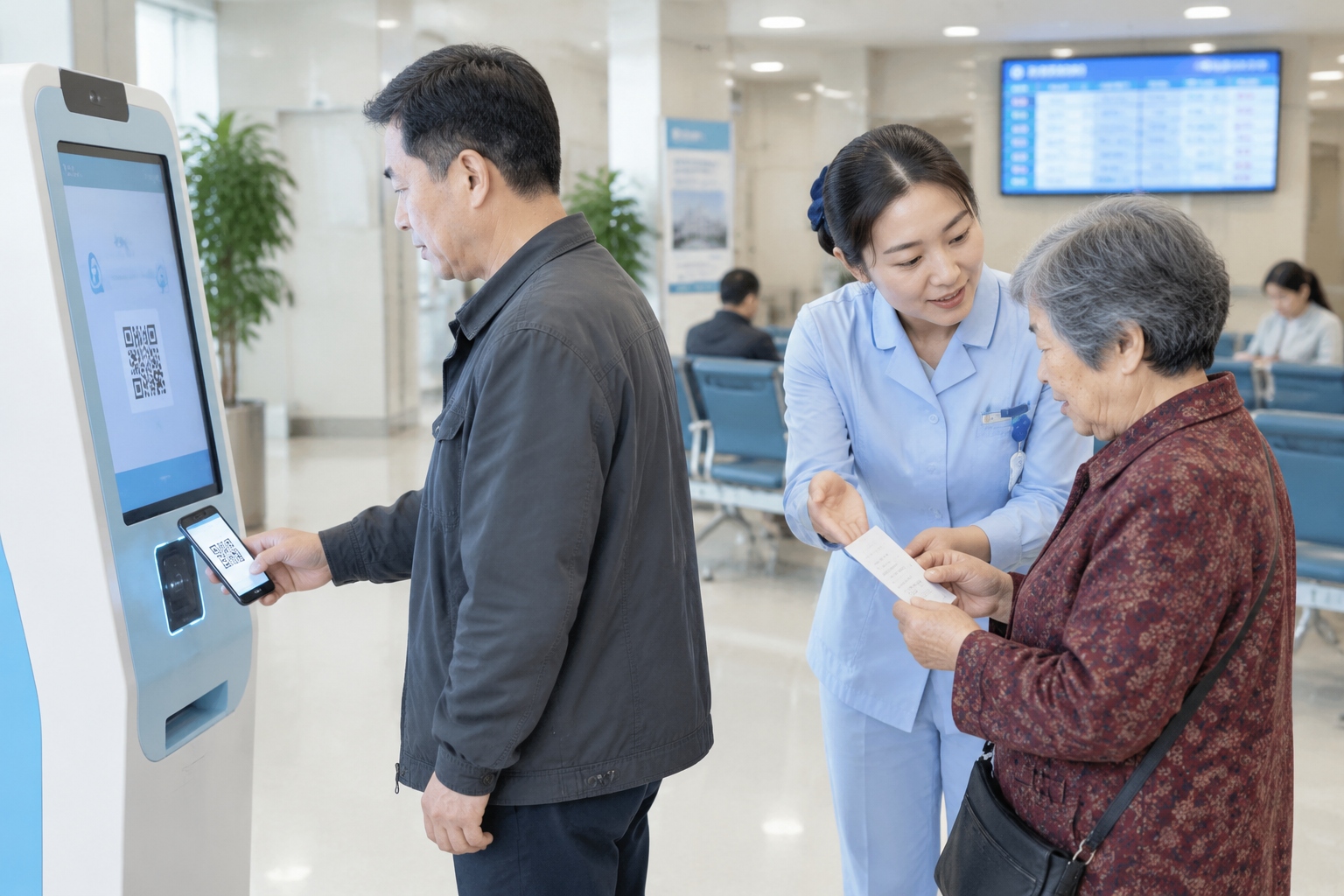
Some learned quickly. Plenty didn’t. So two things happened at once.
First, the products were adjusted. Most major apps now have an “elderly mode” with bigger fonts, fewer buttons and no ads. Community centres and volunteers run phone classes, often taught by retirees to other retirees. Adult children can link a “family card” to a parent’s account, so a mother can pay at the market without ever setting up a bank card herself.
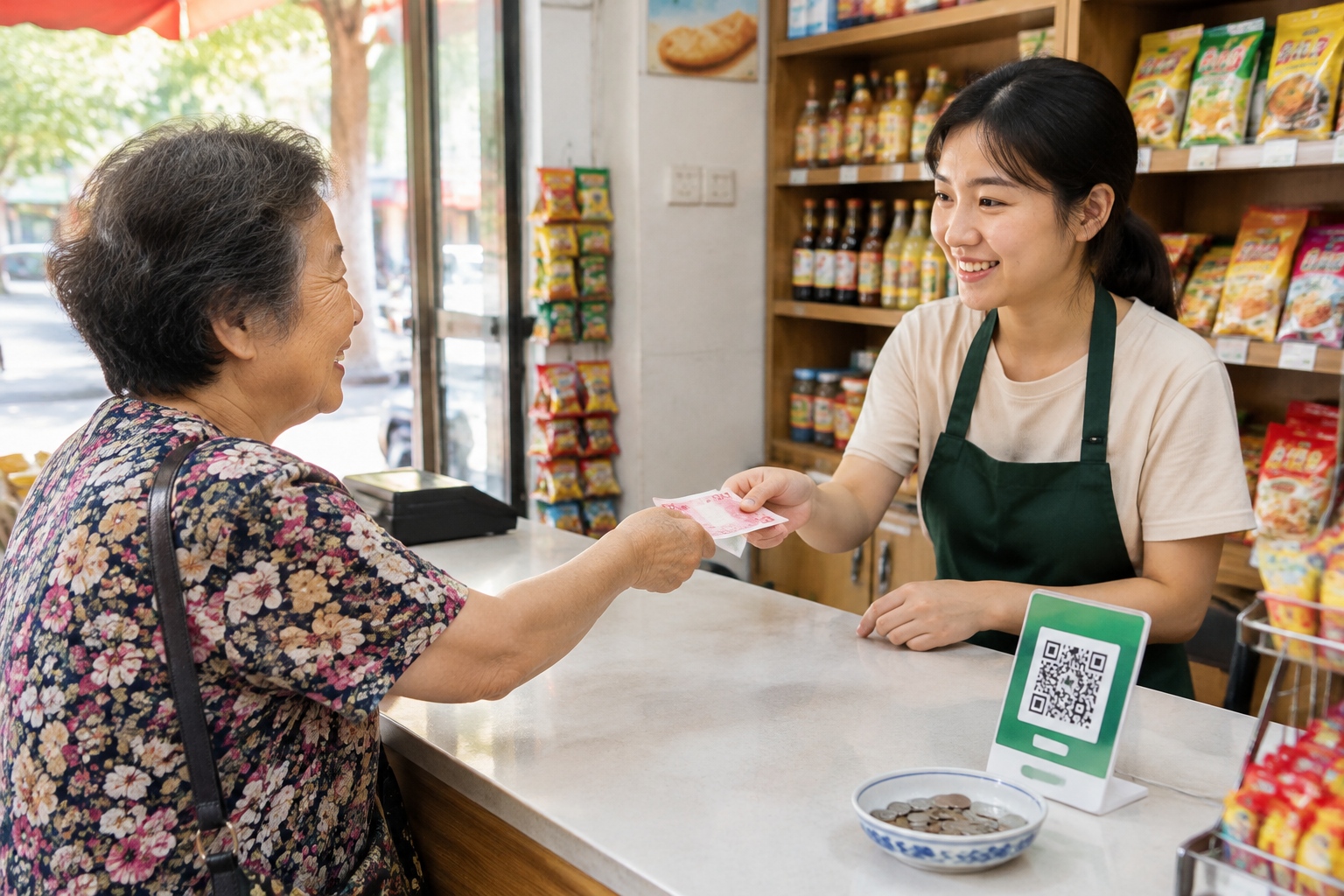
Second, the old systems were deliberately kept alive. The central bank has repeatedly reminded merchants that cash is legal tender and cannot be refused, and has publicised cases of businesses penalised for turning away banknotes. Bank branches still keep counters with human staff. Supermarket self-checkout machines almost always sit next to a staffed till.
None of this erases the gap. A 78-year-old in a rural county still calls a neighbour when a form needs to be filled in online. What it does show is that the digital divide is treated as a known problem with a budget attached, rather than an unavoidable side effect.
Why this matters outside China
Strip away the specifics and this isn’t really a story about China being futuristic. It’s a story about what happens when a country decides that small frictions are worth engineering away at national scale.
Other places are running their own versions. London taps a bank card on a bus. Sweden moved most payments to Swish. India built UPI, a public payments network that now handles billions of transactions a month. The paths differ, but the direction is similar: the payment step should disappear from your attention.
For travellers, the practical change is recent and welcome. Foreign Visa and Mastercard cards can now be linked to Alipay and WeChat Pay, so a visitor can buy noodles from a street stall without opening a Chinese bank account — something that was genuinely painful just a few years ago.
The honest caveat is the trade-off. A system that recognizes your face and tracks your payments is a system that knows where you were at 8:12 on Tuesday morning. Chinese users debate this less openly than Western ones do; some opt out of face payment entirely and stick to QR codes, and that choice is available. The convenience is real. So is the data trail.
The point isn’t the technology
Back at the metro gate, the woman in the grey jacket is on the train, reading something on her phone. Nothing about her morning felt like the future. That’s precisely the achievement.
The test of a technological society isn’t how impressive its demos look. It’s whether an office worker can catch a 7:45 train without thinking, and whether an 80-year-old can still buy groceries on the same street, in the way she always has. China is doing well on the first. On the second, it’s still working — and being honest about that is part of the story.
Start the discussion at forum.chinacomes.com