

A Logger’s Second Life
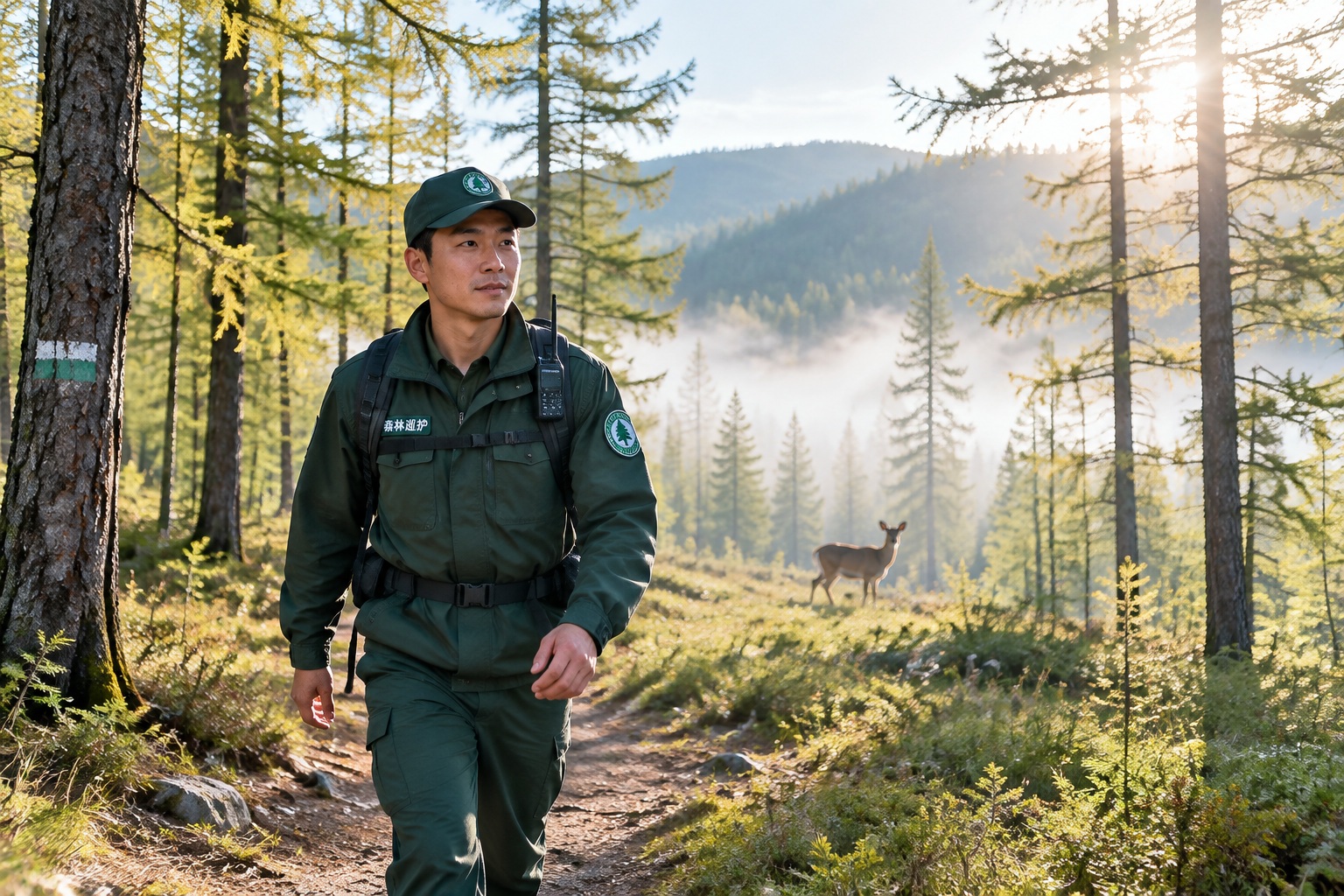
At 5 a.m., when the first light creeps through the larch trees, Wang Jianguo laces up his boots and steps out of his wooden house. He checks his phone – not for messages, but for the weather radar and a map of patrol routes. Twenty years ago, he would have sharpened a chainsaw. Today, his tools are a pair of binoculars, a camera, and a notebook. Wang is a forest ranger in the Greater Khingan Range, a vast mountain area in China’s far northeast that few foreigners have ever seen.
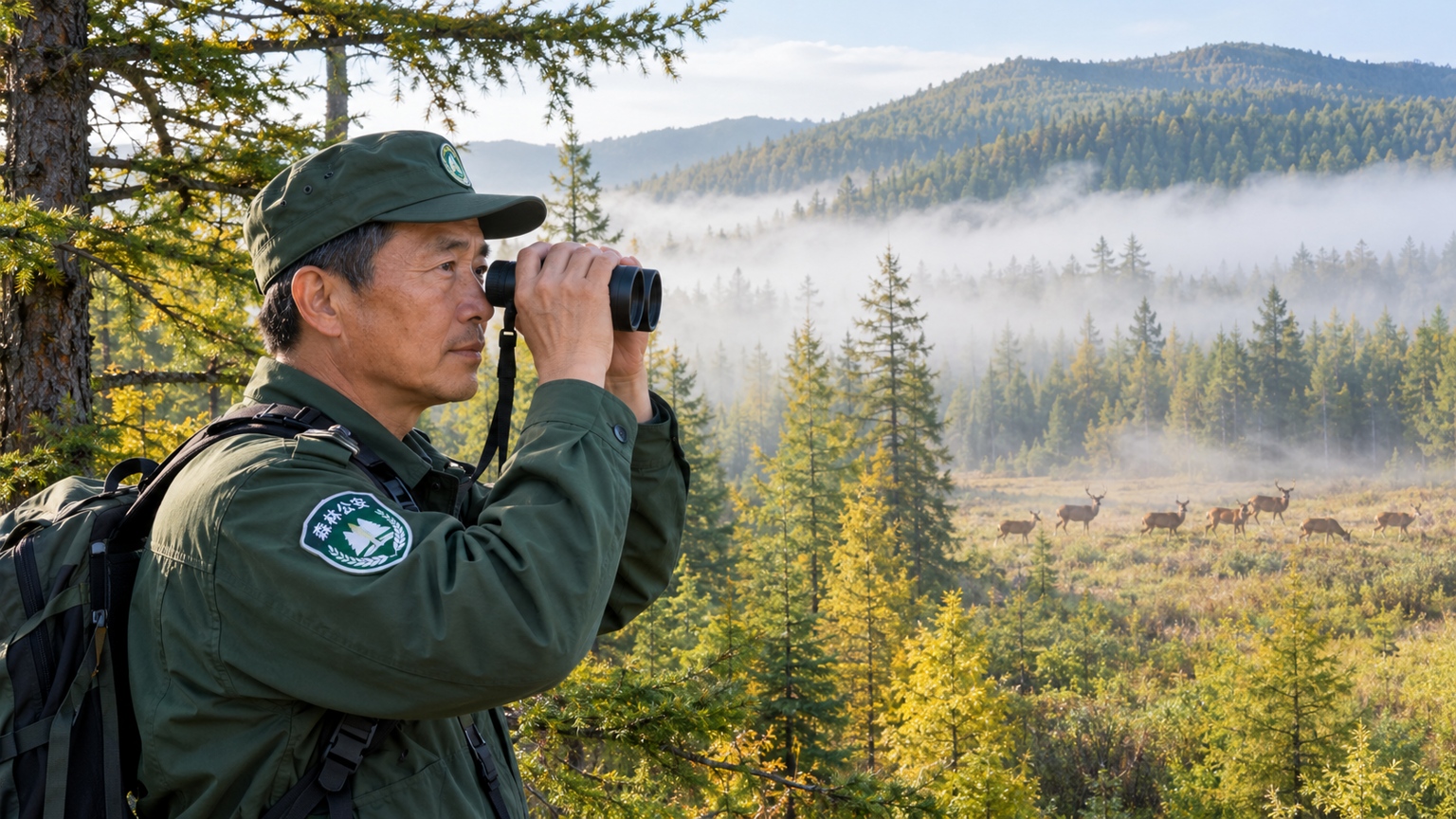
The change in Wang’s equipment reflects a much larger change in this region. For most of the 20th century, the Greater Khingan Range was China’s timber factory. But over the past two decades, it has transformed into something else: a great experiment in ecological recovery. Loggers have become forest guardians. Villages that lived off the axe now live off tourism and wild berries. And the forest itself – once so heavily cut that some areas looked like bald patches – is slowly returning.
Where the Wood Came From
The Greater Khingan Range stretches about 1,200 kilometers in an arc through Inner Mongolia and Heilongjiang Province. It is one of the few places on Earth where permafrost underlies a vast forest. The trees – mostly larch, pine, and birch – are tough survivors of brutal winters. In the 1950s, the Chinese government began large-scale logging here, building work camps and railways deep into the forest. Entire towns grew up around sawmills. At its peak in the 1980s, the region produced more than 10 million cubic meters of timber every year, feeding China’s rapid industrialization.
In the 1990s, the logging intensified even further. “We worked in teams,” recalls Li Shuming, a 76-year-old retired logger. “We used hand saws at first, then chainsaws. We felled trees all day, and the forest seemed endless. But by the late 1990s, the endlessness was over.” Satellite data and on-the-ground measurements showed that forest coverage in the Greater Khingan Range had dropped from about 70% before logging to around 50% by mid-decade. In some places, hills were completely bare.
The Flood That Changed Everything
The turning point came in 1998, when the Yangtze River and the Songhua River both flooded, killing over 4,000 people and displacing millions. Scientists linked the disasters, at least in part, to deforestation: with fewer roots to hold soil, rain turned into landslides and flash floods. The Chinese government responded with the Natural Forest Protection Program (NFPP), a national policy that banned logging in key watersheds and allocated billions of yuan to restore forests.
The Greater Khingan Range was one of the first areas to make changes. Logging quotas were slashed by half, then by more. By 2014, the region was producing less than a tenth of its peak output. On April 1, 2015, the government announced a complete ban on commercial logging across the entire range, making it one of the largest logging bans in the world.
What Happened to the Loggers?
Banning logging is one thing; helping the workers is another. In the Greater Khingan Range, the industry directly employed around 200,000 people in forestry and related services. Many loggers had no other skills. But the government didn’t just leave them behind. Under the NFPP, workers were given three options: become forest rangers, take early retirement, or receive vocational training in other fields.
Wang Jianguo chose the ranger path. “I grew up in a logging family,” he says. “My father was a sawyer, and my first job was pulling branches after the machine cut the tree. When the ban came, I worried about my future. I didn’t know what else I could do.” After a few months of training in forest management and wildlife monitoring, he joined a 12-person patrol team. His daily route covers 15 kilometers of forest.
Not everyone had an easy transition. Some older workers retired with modest pensions. Others, like Li Shuming’s grandson, left for big cities to find work. But thousands stayed, and many found new purpose. Liu Hongxia, a ranger for 19 years, was one of the first women to join a patrol team. “We know every stone and root in this area,” she says. “Who better to protect it than us?”
The Forest Restores Itself
The results are visible from space and from the ground. Forest coverage in the Greater Khingan Range has climbed back to around 80%, according to the National Forestry and Grassland Administration. The average canopy density – the amount of sky blocked by leaves – has also improved. In state-owned forest areas, the above-ground tree volume grew from 1.1 billion cubic meters in 2013 to over 1.4 billion by 2023.
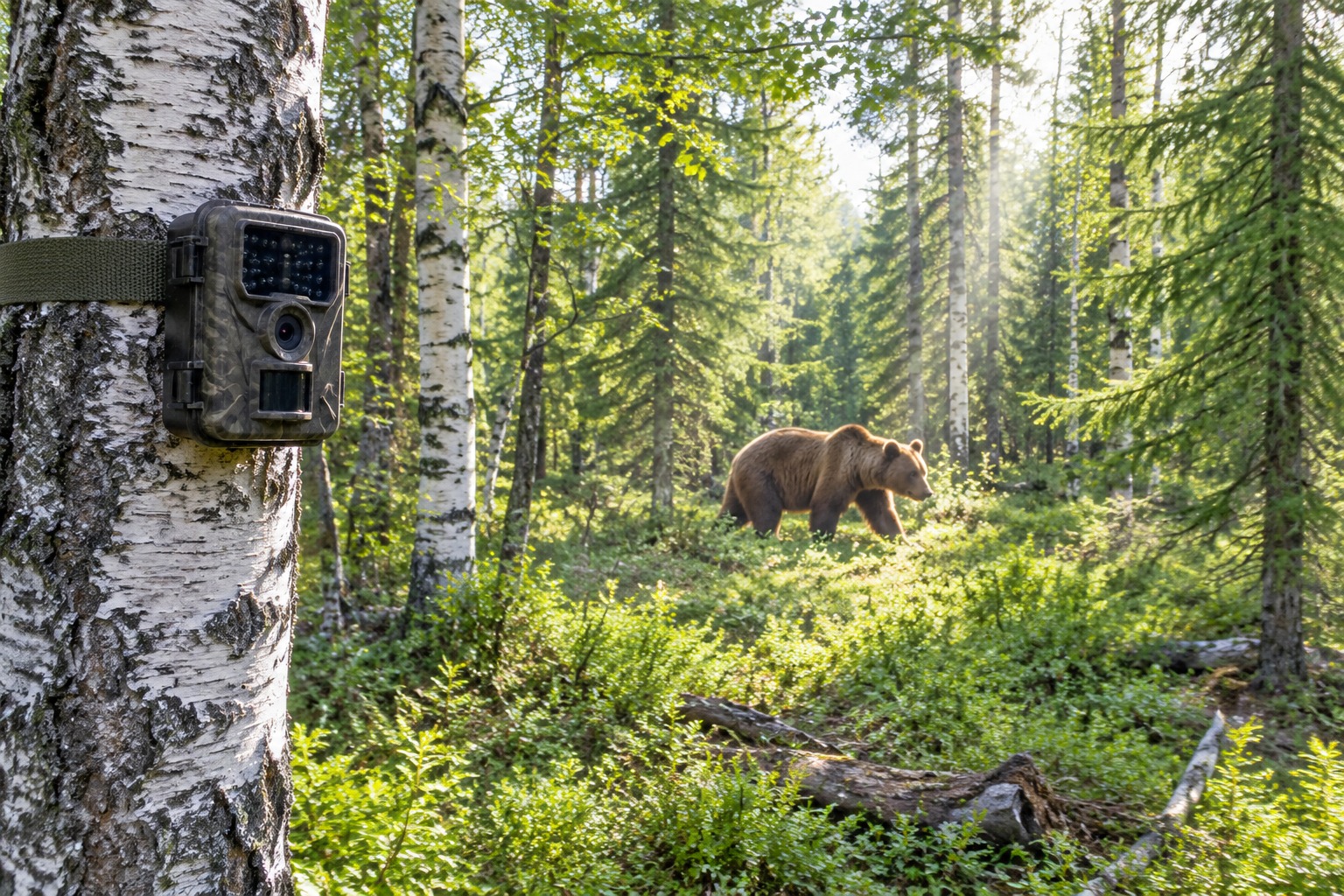
Wildlife began to return as the quiet returned. Camera traps set up by rangers and zoologists have captured species that were rarely seen in the logging era. Brown bears, lynx, and red foxes are now regularly spotted. In 2019, a wild Siberian tiger was filmed in the region for the first time in decades. Officials say the population of sika deer has also grown, which in turn attracts predators.
The connection between forest health and water is also becoming clear. Local records show that the seasonal rivers near Mohe now flow for longer periods each year, and the water level has risen. “Trees hold water like a sponge,” says Wang. “We didn’t understand that when we were cutting.”
New Ways to Make a Living
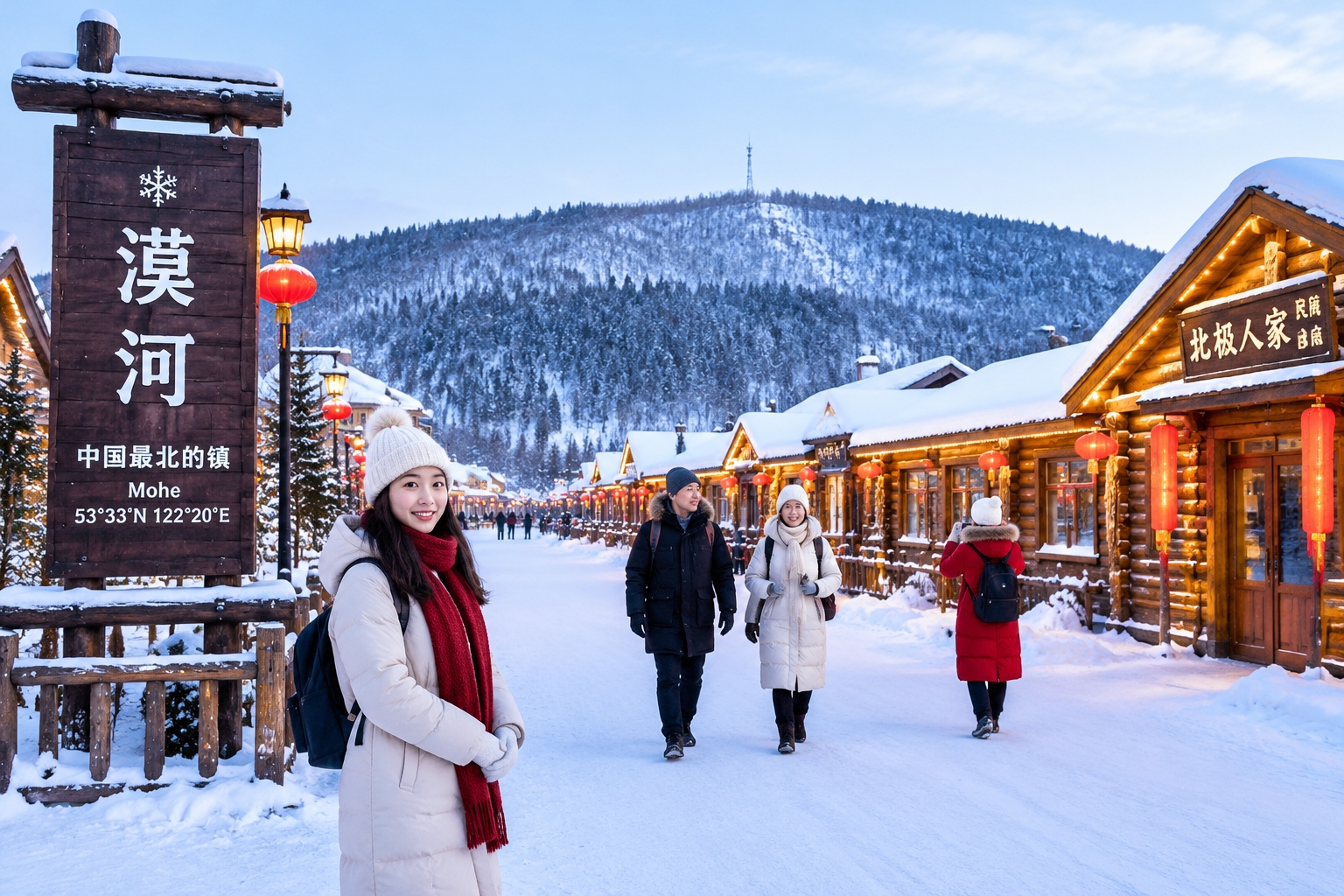
With logging gone, people have had to find alternative livelihoods. Tourism has grown steadily. Mohe, the “North Pole” of China, now attracts thousands of visitors each year, especially in winter, when temperatures drop to -40°C and the aurora borealis lights up the sky. In the summer, the “midnight sun” and the sea of birch trees draw hikers and photographers.
Some former loggers have become beekeepers. The area’s wild plants, including lime and milkvetch flowers, produce a distinctive black honey that sells at a premium. Others collect wild blueberries and mushrooms, which grow abundantly in the recovering forest. Local cooperatives sort, package, and sell these products online.
But tourism and berries cannot fully replace the old economy. The region still relies on financial transfers from the central government, which funds ranger salaries, road maintenance, and public services. Young people continue to leave, and the population is aging. “We have more wildlife now than people in some villages,” jokes Chen Xiangwei, who runs a guesthouse. “But that’s not necessarily a bad thing.”
Preserving a Green Legacy
In 2020, the Chinese government announced a plan to establish the country’s first group of national parks. The Greater Khingan Range is part of the preliminary list, and discussions are underway to make it a fully protected area. If that happens, the region would get more funding, more research capacity, and a stronger brand for eco-tourism.
For Wang and his colleagues, the work is not just about preserving trees. It’s about changing a mindset that once saw nature as a warehouse. “My grandfather thought the forest was there to be used. My father believed the same. When I first started working, I didn’t question it either. But now I teach my children that a tree standing is worth more than a tree cut down.”
A Full Circle
The green shift of the Greater Khingan Range is not a perfect story. It involves economic pain, rural depopulation, and an ongoing dependency on government support. But it also shows that large-scale ecological restoration is possible, even in a country that is still industrializing.
Wang Jianguo paused at the edge of a larch forest, where a family of deer had just crossed his path. He took out his camera. “This is the photo I want to show my daughter,” he said. “When I was logging, I never imagined I’d one day be taking pictures of the forest instead of cutting it. But here I am, and I’ve never been prouder of a job.”
Start the discussion at forum.chinacomes.com