

A Paragraph That Sounds Too Clean
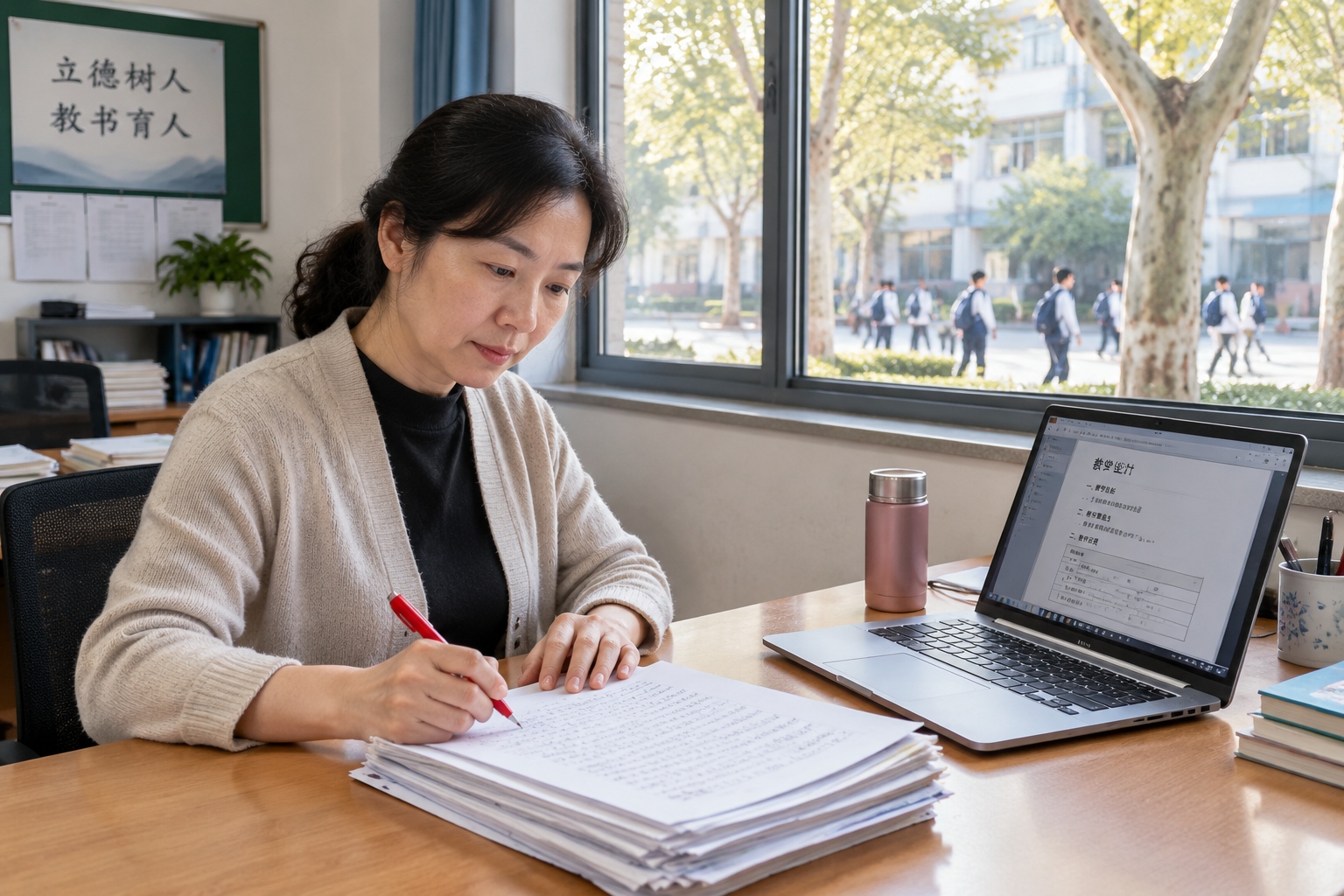
At 7:40 on a Tuesday morning in Hangzhou, Ms. Li is grading eighth-grade essays in a staff room that smells faintly of instant coffee and printer toner. She is 43, teaches Chinese, and has a stack of 46 notebooks beside her. One essay about a grandmother’s kitchen is almost suspiciously smooth: three tidy metaphors, no crossed-out words, not a single stray comma. The next notebook is messier. A boy has written about his grandmother burning the fish and then scraping the burnt skin off with a knife. That paragraph has a smell. Ms. Li reads the clean essay again. She cannot prove anything. But she writes a small question in the margin: Which detail here could only you know?
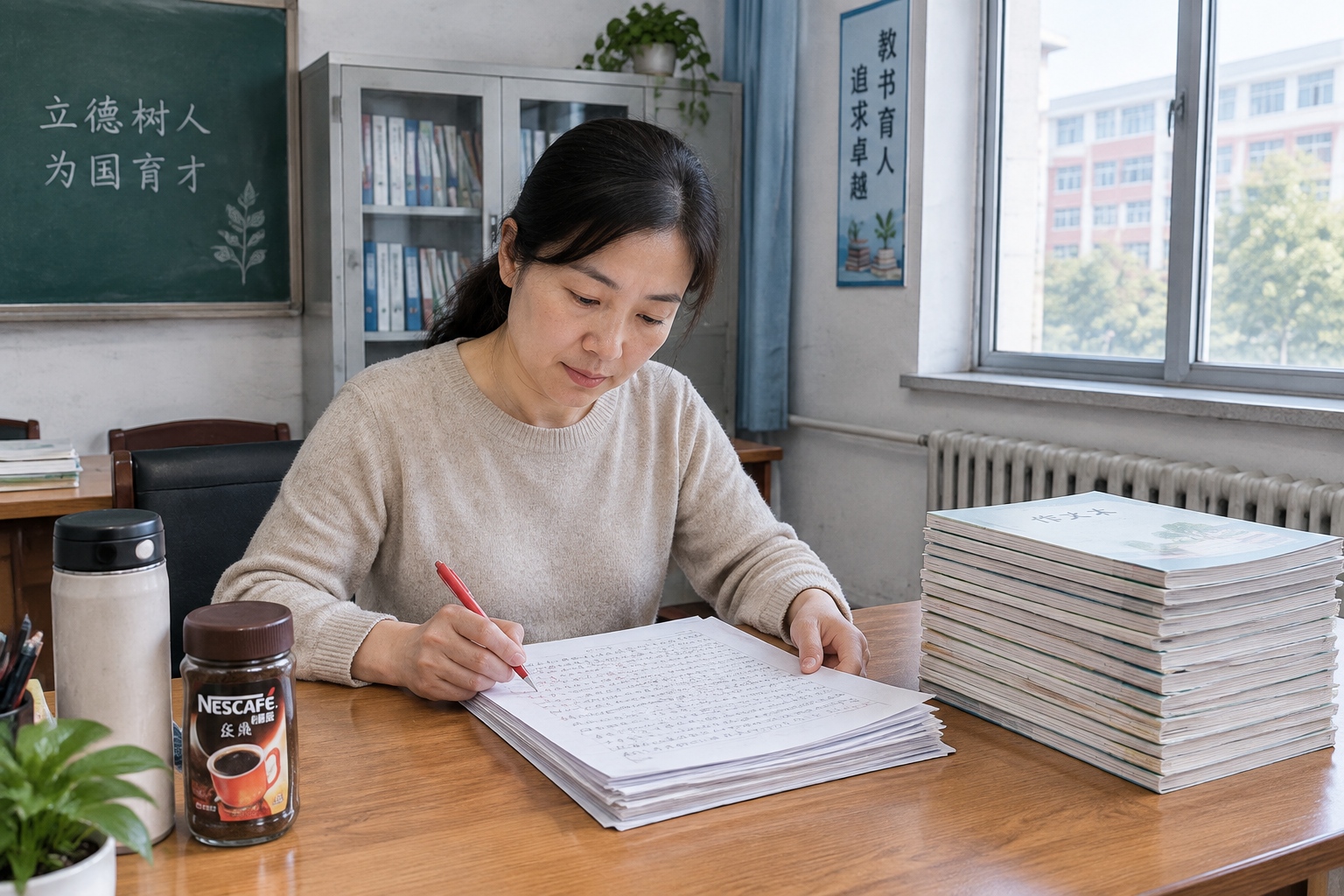
Two months earlier, Ms. Li had used a large language model for the first time. She asked it to draft a lesson plan for a unit on Lu Xun. The result was organized, polite, and slightly hollow. She rewrote most of it. Now she is on the other side of the same technology, trying to work out what her students are doing with it.
AI Is Already in the Backpack
For many Chinese students, AI is not a futuristic idea. It is a tab on a phone. Chatbots such as DeepSeek, Doubao, Kimi, and Tongyi Qianwen are free or cheap, in Chinese, and easy to reach. Students use them to explain a math step, summarize a history chapter, generate an English essay outline, or turn a paragraph into a study plan. Some use them on the bus home. Some use them under the desk during evening study hall.
The spread is uneven. A school in Shanghai may have a smart screen in every classroom; a township school may share one computer room and ask students to keep phones at home. But the question has arrived in almost every staff room: when a piece of homework looks polished, who actually wrote it?
This is not only a Chinese problem. Teachers in the United States, Britain, and India are arguing about the same thing. What makes the Chinese case specific is scale and speed. China has a huge public education system, intense exam pressure, and a mobile-first internet culture. A tool can move from a tech demo to a homework shortcut in a single semester. Schools cannot wait for a perfect national policy before they respond.
How Teachers Learn to Spot AI-Assisted Homework
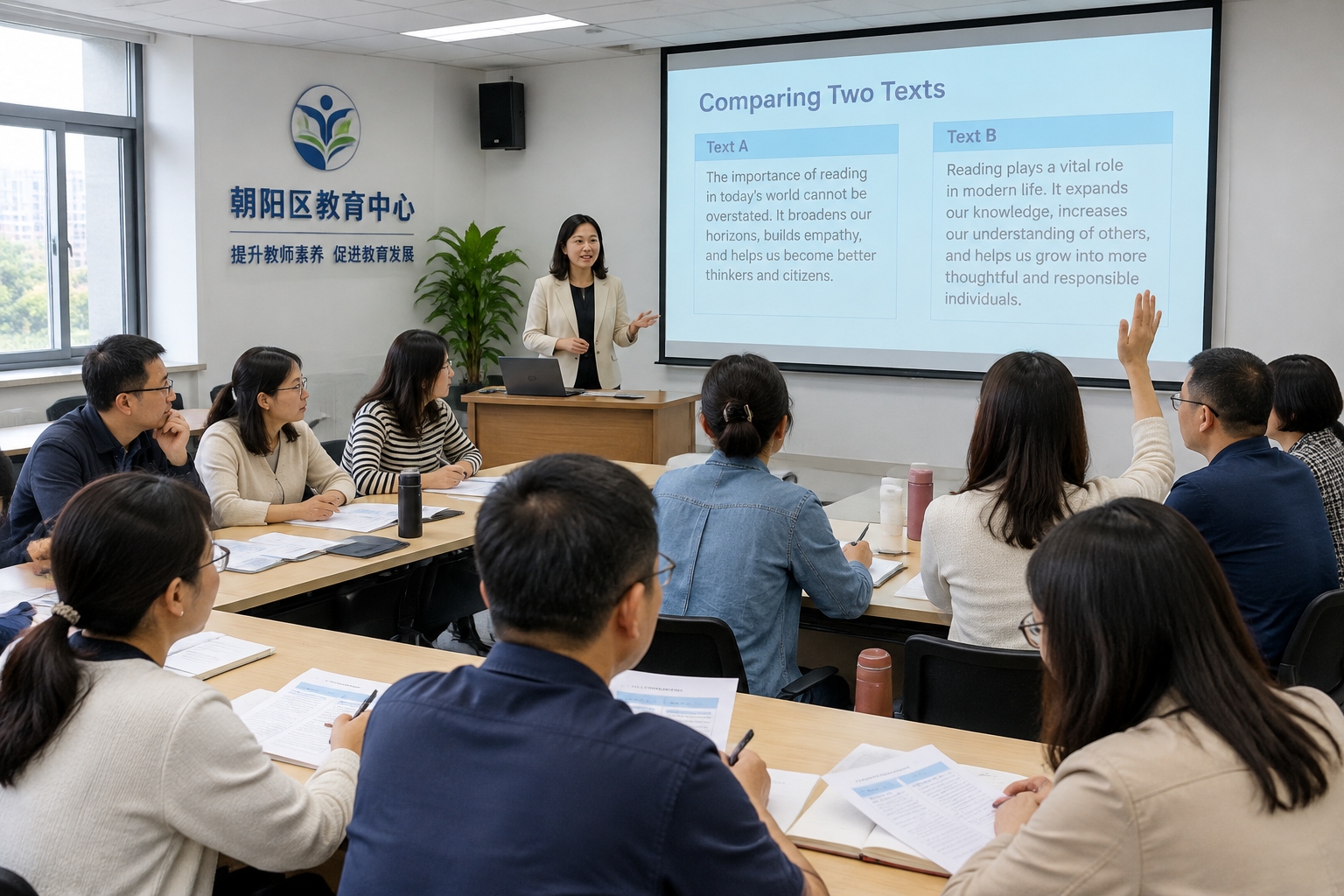
On a Saturday morning in a district teacher-training center, 30 middle-school teachers sit in rows. The projector shows two paragraphs about the Silk Road. One was written by a student. One was generated by a model and lightly edited. The teachers vote. They are wrong often enough to laugh, then to go quiet.
The trainer does not sell a magic detector. She says detectors are unreliable and can flag a nervous student who writes formally. Instead, she offers a slower method. Teachers compare a student’s homework with their classwork. They look for a mismatch in vocabulary. They ask students to explain a sentence aloud. They keep draft notebooks. They require one handwritten paragraph in class before a typed final version.
Ms. Li has developed her own small signals. AI-assisted writing often has clean topic sentences, balanced examples, and a conclusion that repeats the introduction. It rarely has the weird detail a 14-year-old actually notices: the cracked screen of a phone, a mother’s cough at night, the smell of a wet schoolbag. She also watches for students who suddenly lose their usual mistakes. One boy who usually writes ‘because’ as ‘becasue’ handed in a perfect paragraph. She asked him to read it aloud. He stumbled over the word ‘consequently.’
None of this is proof. A careful student can sound like a model. A model can imitate a careless student. Teachers know the line is blurry, and that matters. The goal is not to catch everyone. It is to keep the process of writing visible.
The Other Side: LLMs at the Front of the Class
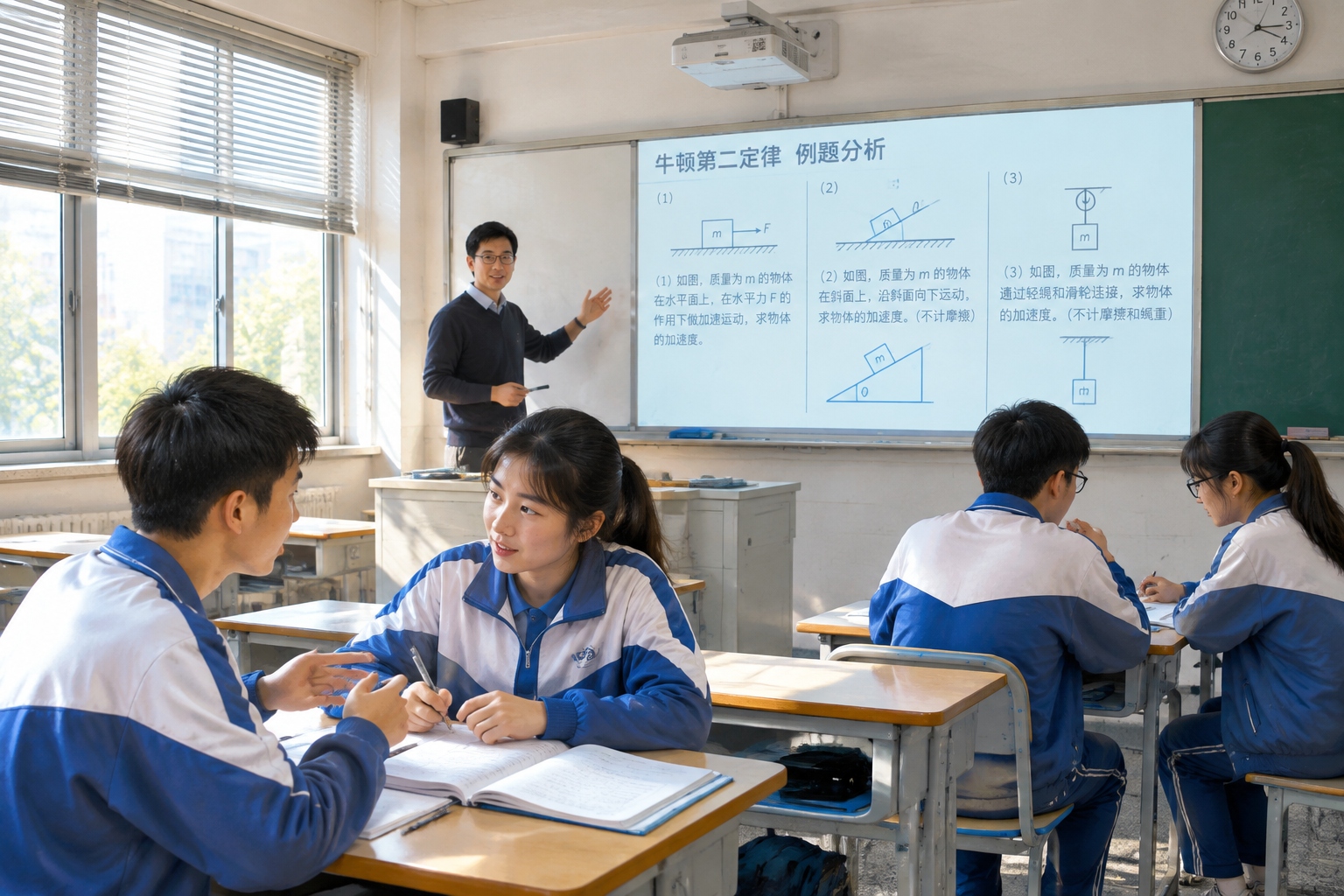
The same technology is also in the teacher’s hands. At 2:10 on a Thursday afternoon, a physics teacher in the same school projects a set of questions onto the whiteboard. Three versions of the same problem are listed: one for students who are still confused, one for the middle, one for the students who finish early. He generated the first drafts with a model, then changed the numbers and deleted an explanation that gave away the answer.
Teachers use large language models for lesson planning, parent messages, translation, quiz drafts, and differentiated worksheets. An English teacher asks a model to role-play a hotel receptionist so students can practice a dialogue. Then she asks the class to find the model’s awkward phrases. In a biology class, students compare a model’s answer about photosynthesis with the textbook and mark the places where it is vague. The model becomes a text to critique, not an authority.
This is where the phrase ‘AI education’ can sound grander than the reality. In most classrooms, it looks like a teacher saving 20 minutes on a worksheet, or a student getting a definition explained at 10 p.m. It does not look like a robot teacher. It looks like a new tab, a new habit, and a new set of classroom rules.
Students, Parents, and the Fairness Question
At a family dinner in Chengdu, a 15-year-old girl tells her mother that she used AI to outline an essay about environmental protection. Her mother puts down her chopsticks. ‘Is that cheating?’ The girl says no, it is like using a calculator. Her father is not sure. He says he never had a calculator that could write.
This argument is happening in many homes. Some parents worry about dependency. Others worry about fairness: a student with a fast phone and a quiet room has an advantage over a student who shares a room with siblings. Some parents pay for AI tutoring tools; others do not know what their children are using. Students themselves are not uniform. Some use AI to get unstuck. Some use it to avoid thinking. Some use it and then feel guilty.
Teachers are careful here. They know that banning a tool does not make it disappear. They also know that a homework grade is not a moral verdict. Ms. Li tells parents in a WeChat group that the question is not ‘Did you use AI?’ but ‘Can you explain what you did?’ That answer is easier to say than to enforce.
Schools Move From Bans to Guidelines
The policy landscape is patchy. Some schools still ban phones outright. Some allow them only for specific tasks. A few have written AI rules: cite the tool, do not use it during exams, keep a draft history, ask before using it for a graded essay. District teacher-training centers run workshops. Principals compare notes. The pace depends on the school, the subject, and the age of the students.
There is no single Chinese classroom responding to AI. A well-resourced school in Shenzhen may have a technology coordinator and a parent workshop. A rural school may have one teacher who has tried a chatbot and a principal who is worried about internet access. The common thread is adjustment. Teachers are not waiting for a national manual. They are building small, local rules, then revising them when something breaks.
What Technology Adoption Looks Like in a Real Classroom
In Ms. Li’s school, the projector is old and the Wi-Fi drops in the afternoon. The building has 1,800 students and a courtyard with two plane trees. The bell is loud. The exam calendar is louder. Teachers have to prepare for the zhongkao, the high-school entrance exam, and they know that parents judge a school by its scores.
That pressure shapes how AI enters. It is welcomed when it saves time. It is suspected when it hides a student’s weakness. It is ignored when it adds one more login. The result is not a dramatic transformation. It is a series of small negotiations: a draft notebook here, an oral follow-up there, a class discussion about why a model’s answer sounds confident but says nothing.
This may be the most honest picture of education technology in China right now. The tools are real. The curiosity is real. The confusion is real too. Teachers are not heroes or gatekeepers. They are people with 46 essays to grade, trying to keep the work legible.
After Class, a Small Correction
At 5:20, the staff room is nearly empty. Ms. Li finds the boy who wrote about his grandmother’s burnt fish. He is waiting by the door with his backpack half-zipped. She asks how he got the idea for the clean essay, the one she questioned. He looks at the floor. ‘I asked AI for an outline,’ he says. ‘Then I wrote the first paragraph.’
She does not tell him he is in trouble. She asks what part of the outline was his. He points to a line about his grandmother’s hands. She asks him to expand that line, by hand, on one page, and bring it tomorrow. He nods. The bell for the last bus rings through the corridor. Ms. Li puts the essay on top of the stack, not at the bottom.
Start the discussion at forum.chinacomes.com