

A Tale of Two Menus
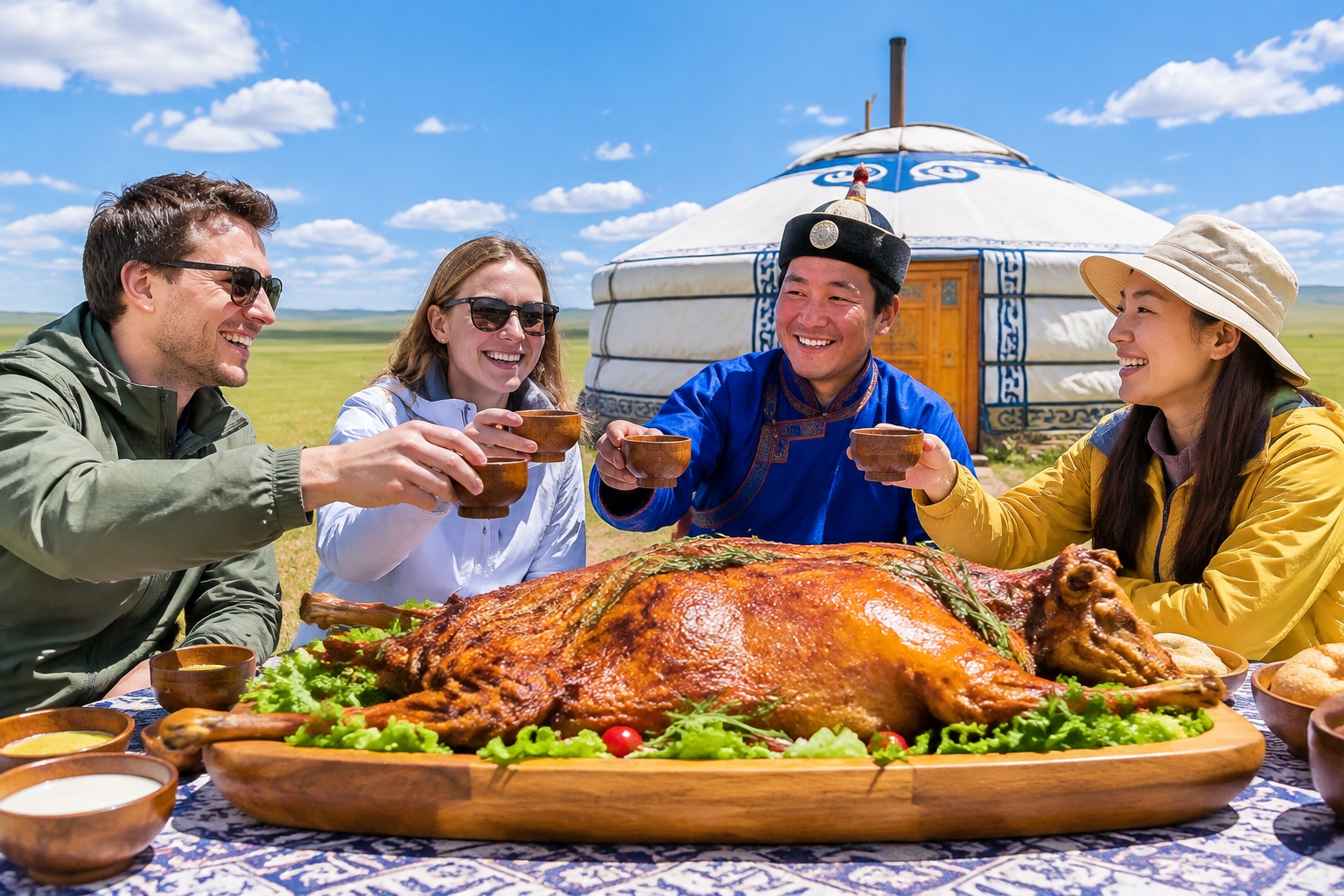
When Li Wei, a 32-year-old graphic designer from Shanghai, flew into Hohhot for a long weekend, she had one thing on her mind: whole roasted lamb. She had seen photos on social media—golden, crackling skin, a whole lamb splayed on a platter, surrounded by shiny-faced tourists holding knives and toasting with bowls of strong liquor. She booked a well-known restaurant near the city center that advertised “authentic Mongolian feast.” The bill came to 680 yuan per person, and they brought out an entire lamb, a cheese platter, and a parade of boiled meat dishes. Li Wei was amazed—and exhausted by the sheer quantity.
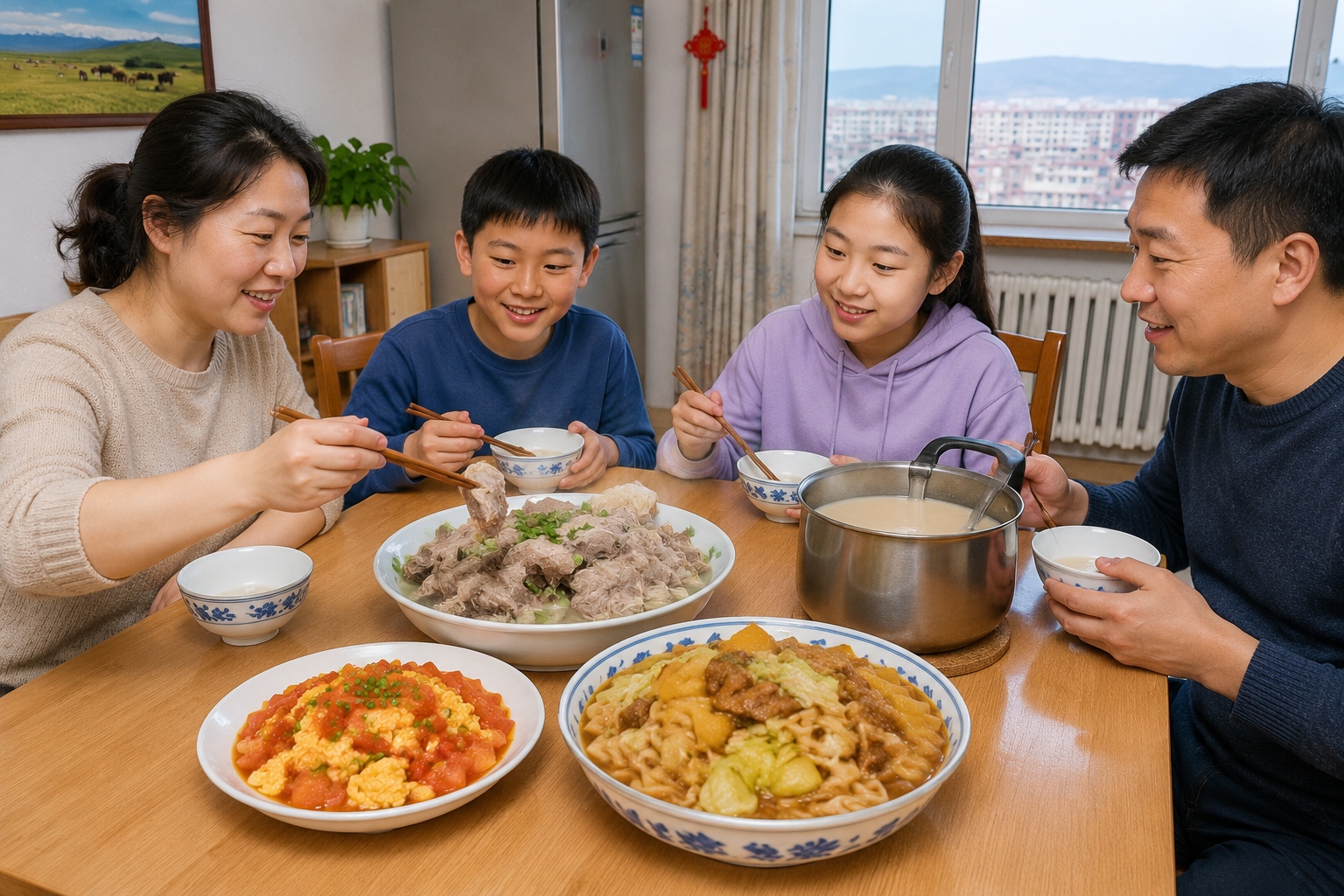
Meanwhile, 15 kilometers away, in a modest apartment in Hohhot’s old district, the Wang family sat down to dinner: a large bowl of shou zhua yang rou (hand-held lamb) simply boiled with salt, a plate of stir-fried tomatoes and eggs, and generous servings of braised noodles with potato and cabbage. For them, this was comfort. Not a single dish was what a guidebook would call a “signature.” But for the Wangs, this was Inner Mongolia on a Tuesday night.
The contrast tells a story that runs deeper than tourist traps. Inner Mongolia—a vast autonomous region stretching along China’s northern border—has a culinary identity that is far more layered than the food bloggers suggest. Understanding the gap between “hard dishes” for visitors and “home cooking” for locals reveals not only a cuisine but also a region in transition.
What Is a ‘Hard Dish’ and Why Does It Dominate Tourist Menus?
The term ying cai literally means “hard dish” — a hearty, often meat-heavy, protein-forward showstopper. In Inner Mongolia, these include whole roasted lamb (kao quan yang), boiled lamb chops (shou ba yang rou), and blood sausage. For travelers, especially from outside China, these dishes promise an exotic encounter with the “steppe lifestyle.” Restaurants near tourist sites naturally lean into this expectation, often dramatizing the presentation: a whole lamb is wheeled out on a cart, accompanied by a ritual of knife-cutting and loud toasting.
But in daily life, most Inner Mongolians (including ethnic Mongols) rarely cook such large-scale dishes at home. “We save whole lamb for weddings, festivals, or when we have ten guests,” says Burentu, a 45-year-old herder turned city-dweller. “It’s not everyday food—it’s a ceremony.”
This is the first layer of the dual face: tourists eat what the local tradition reserves for special occasions. The economics are clear: a roast lamb costs 800–1200 yuan and feeds a group; it’s a profitable item for restaurants targeting visitors, who are willing to pay for the experience. But in a local household, the ingredients are the same—lamb, milk, flour—yet the execution is far simpler: boiled, steamed, or stir-fried with seasonal vegetables.
The Real Everyday Table: Noodles, Potatoes, and Simplicity
If you invite yourself to a local’s home for dinner in Hohhot or Baotou, don’t expect a lamb-on-a-platter. Instead, you’ll likely find men mian (braised noodles) or yang za sui mian (lamb offal noodles), or a one-pot stew of lamb, potatoes, and cabbage called da hui cai. The region’s climate—cold, dry, with a short growing season—shapes a cuisine of preservation and heartiness. Potatoes are a staple (Inner Mongolia is one of China’s top potato producers), and noodles provide the carbohydrates needed for the cold northern winters.
“My mom makes men mian at least three times a week,” says Zhang Yiran, a 28-year-old teacher from Hohhot. “We put in a little lamb if we have it, but mostly it’s potato, green beans, and cabbage. It’s filling and warm. No one calls it a ‘specialty’ but it’s what I think of when I think of home.”
This everyday cuisine is nearly invisible to tourists. It doesn’t photograph as well as a golden sheep. It doesn’t require a video. But it is the steady heartbeat of Inner Mongolian food culture. For locals, “hard dish” isn’t a daily requirement; it’s a break from the ordinary.
Why the Gap? Tourism, Economy, and Cultural Performance
The divergence between tourist and local menus isn’t unique to Inner Mongolia—you can find it in any tourist-heavy region, from Tuscany to Tokyo. But here, the gap is especially wide because of two factors: the region’s historical identity as a nomadic pastoral society and its rapid urbanization in the last 30 years.
Historically, Mongols ate a diet rich in meat and dairy because that’s what the steppe provided. Cereals were traded from agricultural areas. But today, more than 60% of Inner Mongolia’s population lives in cities. Many ethnic Mongols have settled, working in offices, factories, or government. The old herding lifestyle has become a cultural memory more than a daily practice. For tourists, restaurants reconstruct that memory in a vivid, edible form. For locals, home cooking reflects a hybrid: Mongolian roots (lamb, dairy) adapted to Chinese cooking methods (stir-frying, braising) and modern convenience (rice, noodles from the supermarket).
Another layer is performative authenticity. “Tourists want the Mongol thing,” explains Mr. Bai, a restaurant owner near the Grasslands tourist area. “So we give them the show. But if my family comes to eat, I cook differently—we don’t need the whole sheep every time. It’s too heavy.”
Beyond the Binary: When Tourists Become Residents
Interestingly, foreigners or Chinese travelers who stay longer—exchange students, researchers, long-term expats—often discover the everyday side of Inner Mongolian food. They learn to appreciate the subtlety of a simple boiled lamb dipped in vinegar and garlic, or the comfort of a bowl of milk tea with millet and fried dough.
“I used to think Inner Mongolian food was all about huge quantities of meat,” says Sarah, a Canadian English teacher who lived in Hohhot for two years. “But my local colleagues invited me to their homes, and I saw how they cooked: small amounts of lamb used as flavoring, lots of vegetables and grains. It’s actually quite balanced. The tourist version is just one extreme.”
This points to a broader truth: no cuisine can be reduced to its most photogenic dishes. The “hard dish” is a window, but the real house is much bigger.
Two Faces, One Food Culture
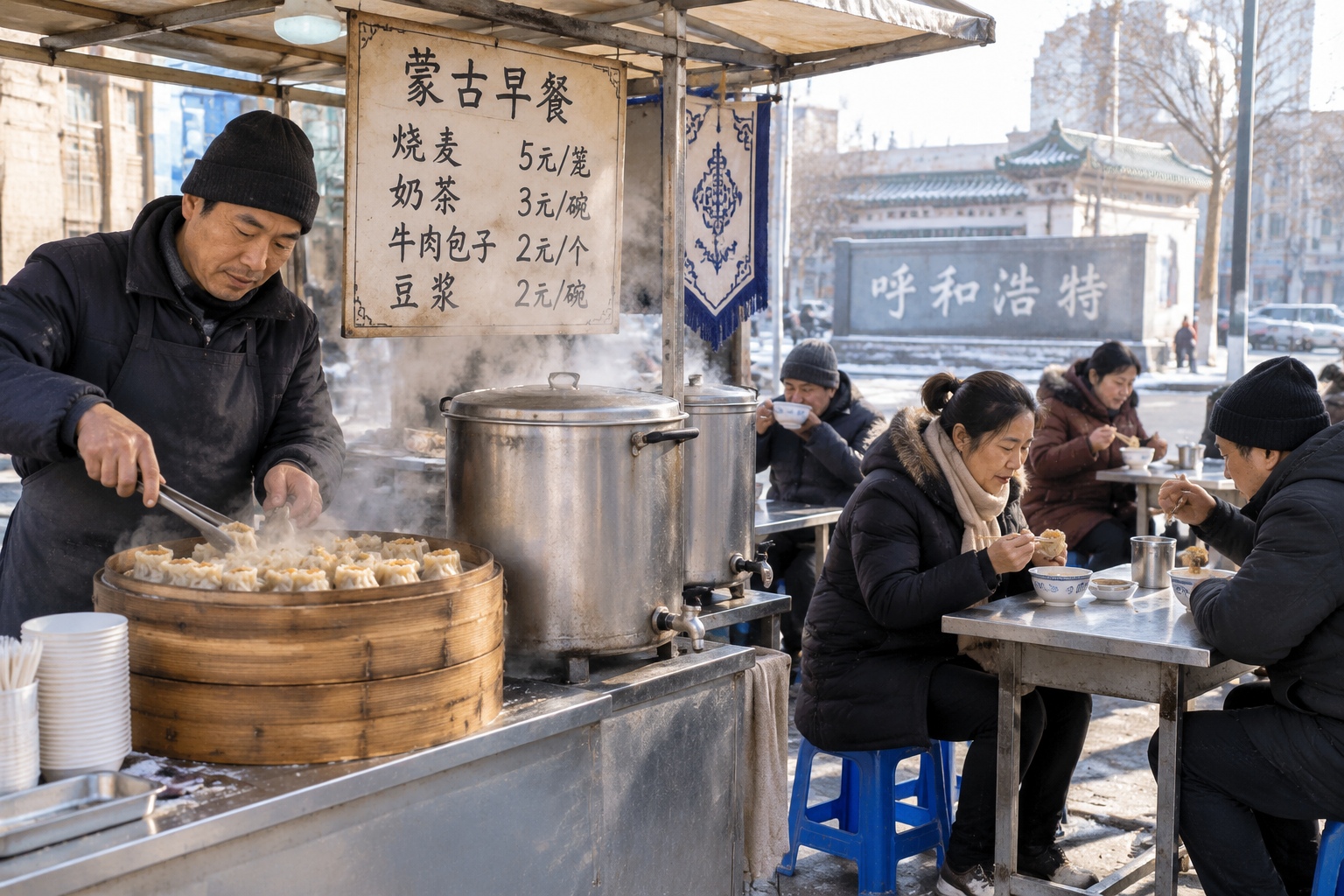
So, if you’re planning a trip to Inner Mongolia, should you skip the roast lamb? Not at all. The experience of sharing a whole lamb under a yurt with friends is memorable, and it’s part of the culture—just the ceremonial part. But if you want to understand the place more deeply, seek out the local noodle shops, the communal stews, the breakfast stalls serving sha mai (steamed dumplings) and milk tea.
Inner Mongolia’s culinary landscape has two faces. One is a proud, loud celebration of nomadic heritage: the “hard dish” that wows visitors. The other is a quiet, resilient everyday cooking that sustains families through long winters and busy city lives. Both are real. But only one tells the full story.
Start the discussion at forum.chinacomes.com