

Introduction: The Smell That Stops You
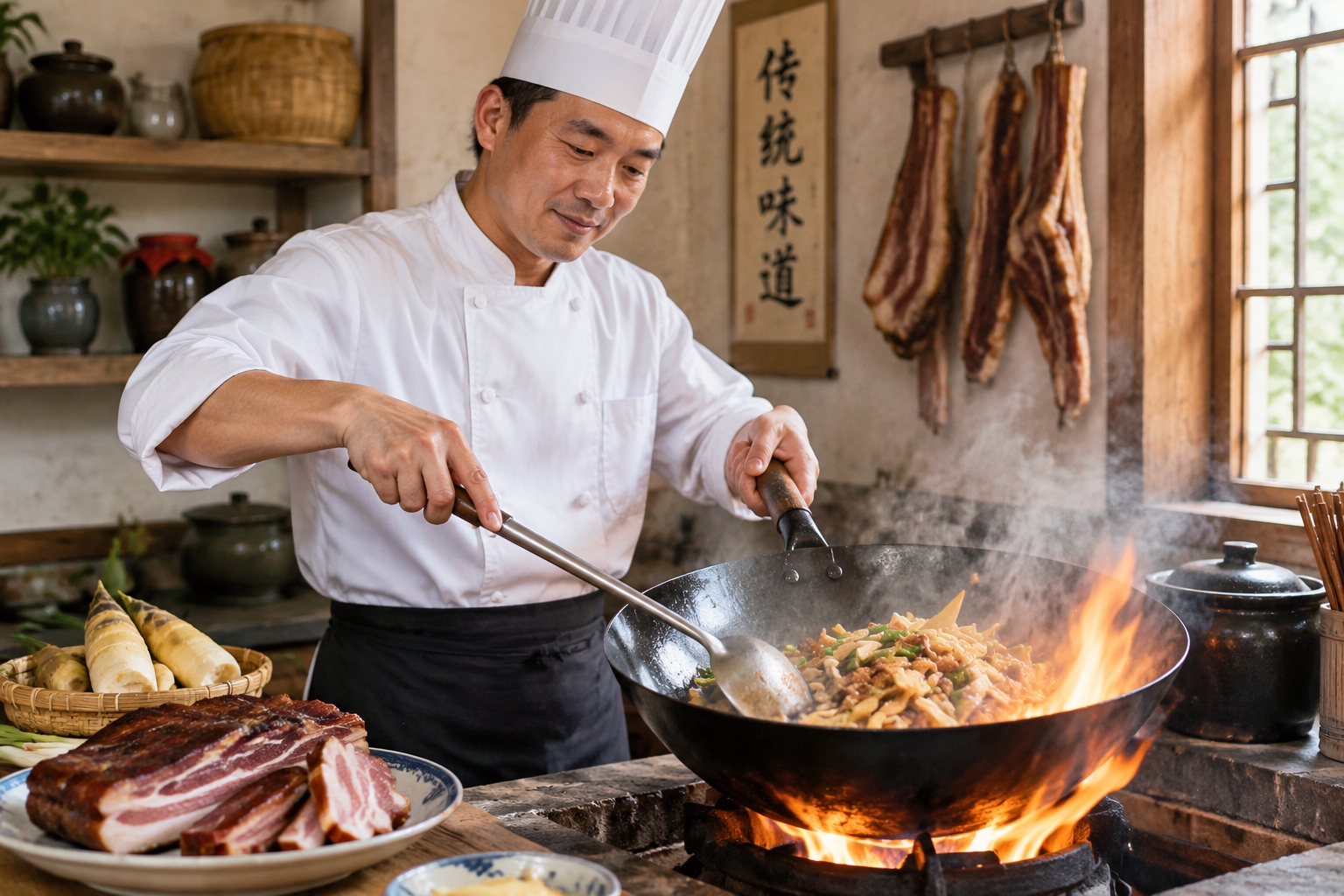
Walk into any proper Huizhou kitchen in Huangshan, Anhui, and the first thing that hits you isn’t the sign above the door—it’s the wok hei. That smoky, almost charred aroma of vegetables hitting blazing oil, soy sauce sizzling against iron. “The sign can be crooked, but the wok hei must be right,” says 58-year-old Chef Zhang, wiping his hands on a stained apron. He’s been cooking Huizhou dishes since he was 16.
Huizhou cuisine (徽菜) is one of China’s eight great culinary traditions, known for its heavy use of cured meats, wild herbs, and slow braises. But like many old cuisines, it’s struggling to stay relevant in an age of fast food and fusion trends. I sat down with three chefs from different generations to ask: What’s the secret to keeping a cuisine alive? Their answers were surprisingly personal.
Chef Zhang: The Old-School Purist
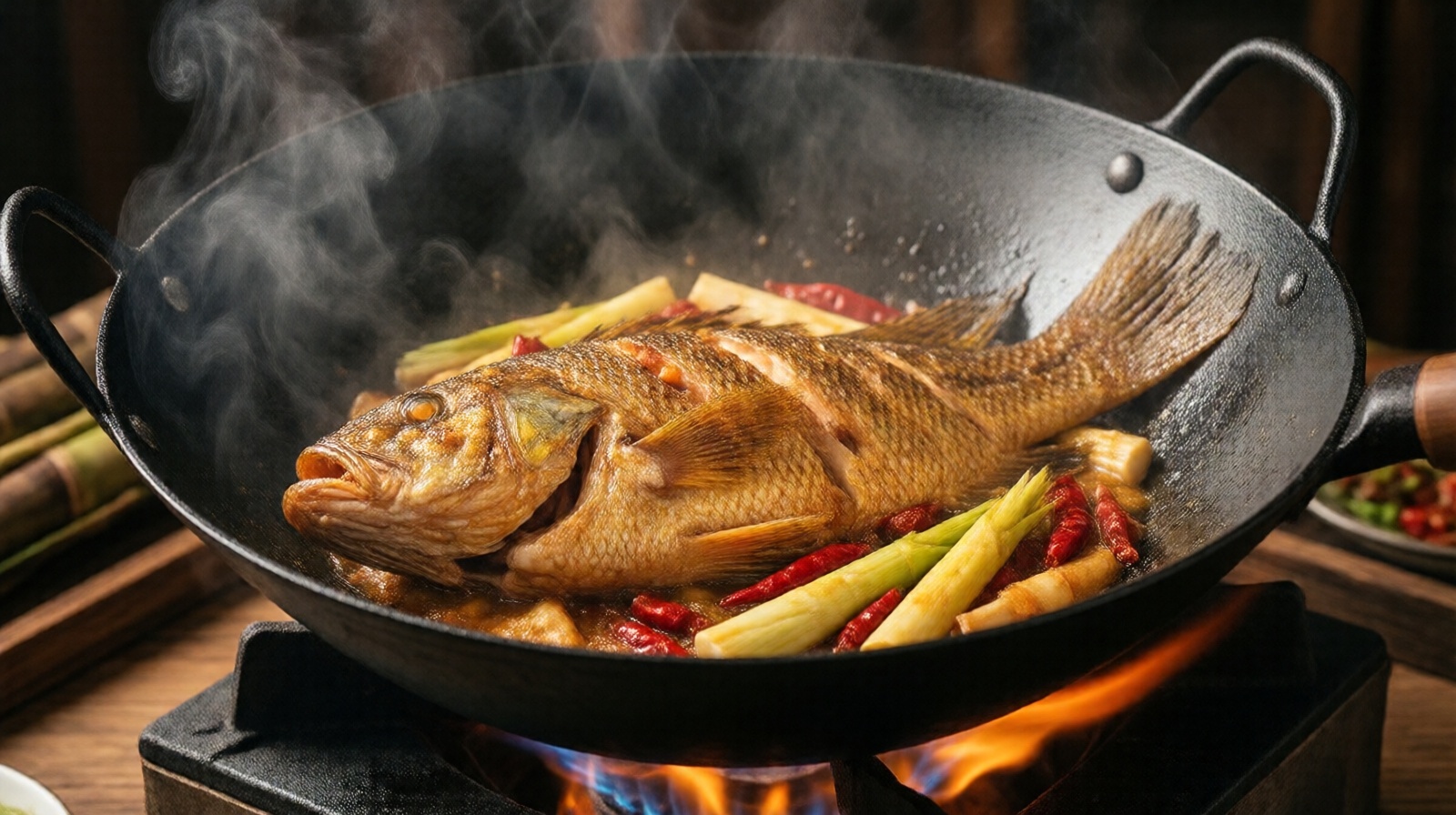
Chef Zhang runs a 20-seat restaurant tucked in a narrow lane of Tunxi Old Street. He doesn’t have a website, and his only marketing is the smoke that drifts onto the street. “Young chefs today care too much about plating and style,” he says, flipping a piece of stinky mandarin fish (臭鳜鱼) in his wok. “But the taste? They forget that the customer eats with the nose first.”
Zhang’s stinky mandarin fish is his signature—fermented for a precise three days, then fried with bamboo shoots and chili. He learned the recipe from his father, who learned from his grandfather. “Every family has a slightly different version. The secret isn’t in the recipe book; it’s in the feel of the wok.” He believes the revival of Huizhou food shouldn’t mean reinventing it. “Make the classic dishes so well that people forget they need to try something new.”
Chef Li: The Young Innovator
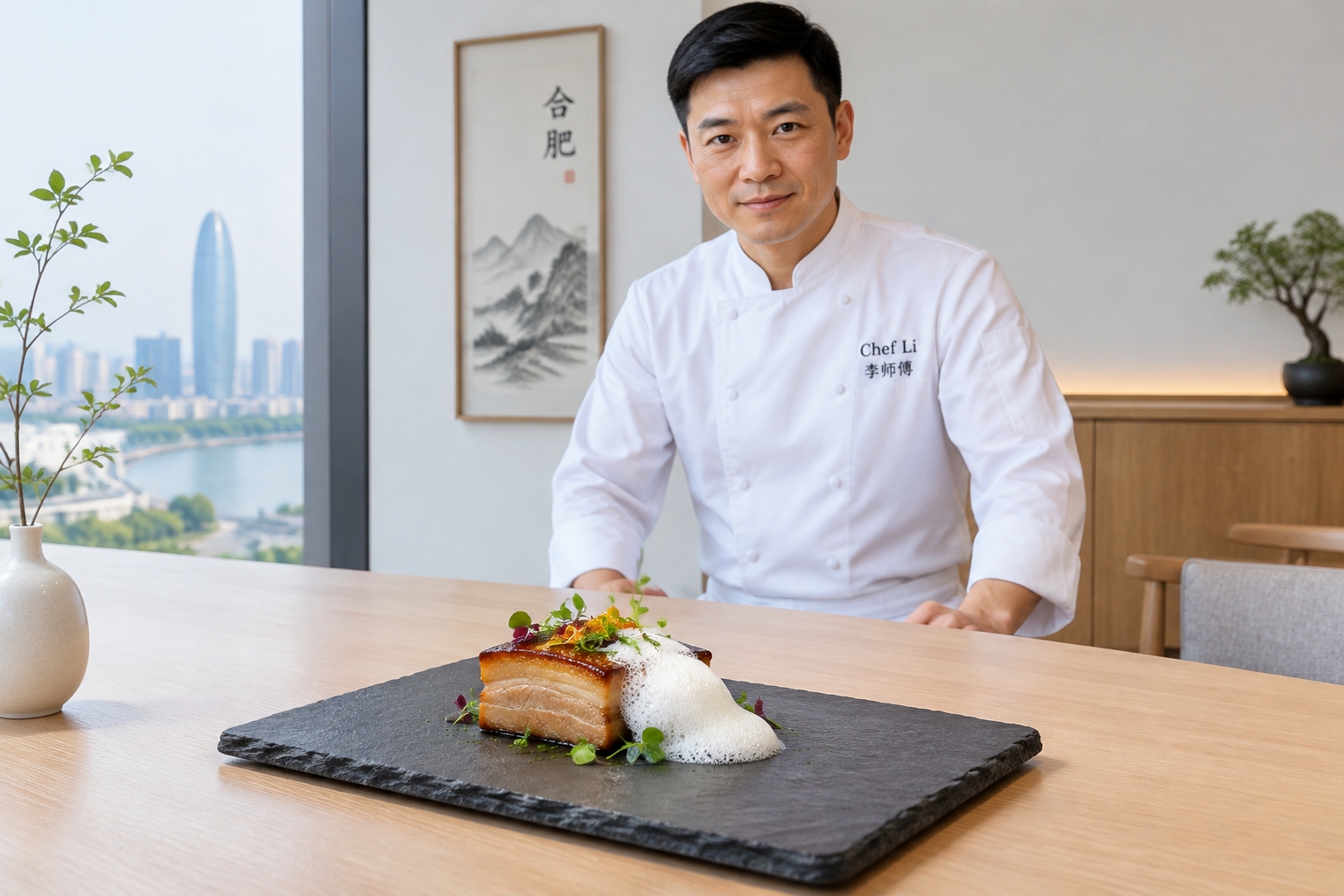
Chef Li, 34, runs a modern Huizhou fusion restaurant in Hefei, the provincial capital. He trained in Shanghai and worked in a Michelin-starred kitchen before returning home. “When I first came back, my uncle—a traditional chef—told me I was ruining the cuisine,” Li laughs. “He saw me drizzle olive oil on a Huizhou-style pork belly and almost had a heart attack.”
Li’s approach is to respect the core—the techniques of curing and braising—but play with presentation and global ingredients. “I use local ham from Jixi, but I pair it with a light foam of aged vinegar. The base is still Huizhou, but the feel is lighter, more adapted to modern palates.” He argues that revival doesn’t mean static preservation. “A cuisine that doesn’t evolve will die. We need to make it accessible to young people who grew up eating pizza and sushi.”
Chef Wang: The Village Host
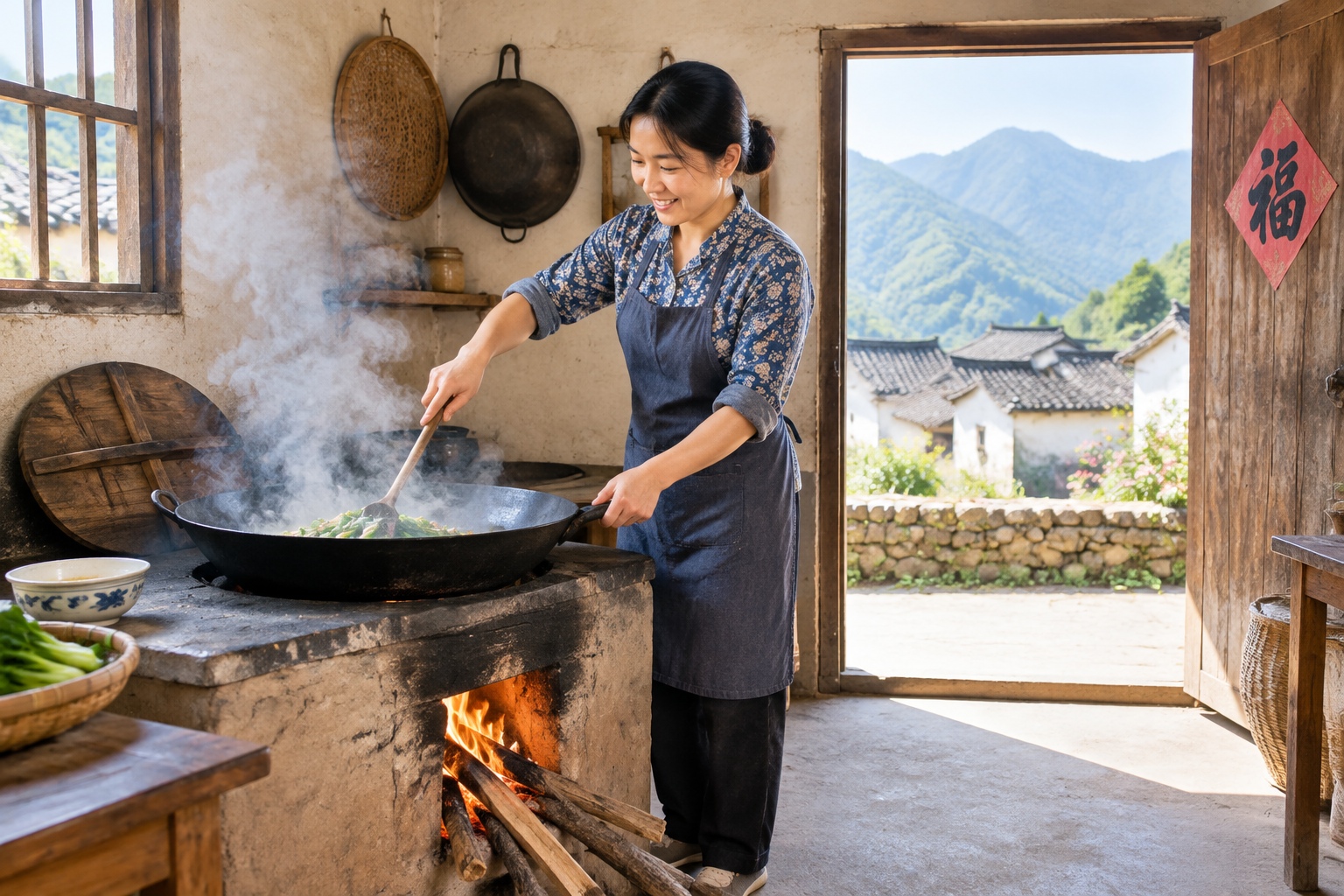
Chef Wang, 46, runs a farm-to-table dining experience in a rural village near Hongcun. She cooks only for booked groups—mostly tourists from Shanghai and Beijing who want “authentic” Huizhou food. “They come here expecting rustic, but they also want cleanliness and comfort. I have to balance.” Wang grows most of her vegetables, raises her own chickens, and sources tofu from a neighbor. “The biggest change I’ve seen is that people are more willing to pay for quality ingredients. Ten years ago, they just wanted cheap food. Now they ask where the pork comes from.”
For Wang, wok hei is also about the firewood. She still uses a traditional clay stove fueled by pinewood—a technique disappearing even in villages. “The electric stoves are efficient, but they don’t give that smoky soul. If we lose the firewood, we lose half the flavor.” She admits that her method is labor-intensive and not scalable, but she sees a growing niche market. “I have guests who drive four hours just to eat my braised bamboo shoots with cured pork. They don’t care about the sign. They care about the taste.”
Common Thread: Wok Hei Over Hype
All three chefs agree that the biggest challenge for Huizhou cuisine today is not competition from other cuisines, but the erosion of patience. “Slow food takes time, and time is what modern life lacks,” says Chef Zhang. Chef Li adds, “I’ve seen so-called ‘Huizhou restaurants’ open and close within months because they used shortcuts—frozen fish, MSG powders. Customers can tell.”
But they also see hope. The rise of food culture on social media, especially short videos showing the cooking process, has sparked curiosity about traditional techniques. Chef Wang’s videos of her stir-frying over a pinewood fire have millions of views on Douyin (Chinese TikTok). “People are tired of fake food. They want something real, something that smells like fire and soy sauce.”
Conclusion: What Revival Really Means
To these chefs, reviving Huizhou cuisine isn’t about UNESCO recognition or fancy restaurant chains. It’s about keeping the wok hei alive—one meal, one customer, one stove at a time. “If you ask me what’s the most important ingredient in Huizhou food,” says Chef Zhang, pointing at his wok, “it’s the heat, the timing, and the heart. The rest is just groceries.”
Start the discussion at forum.chinacomes.com