

An Unusual Morning Walk
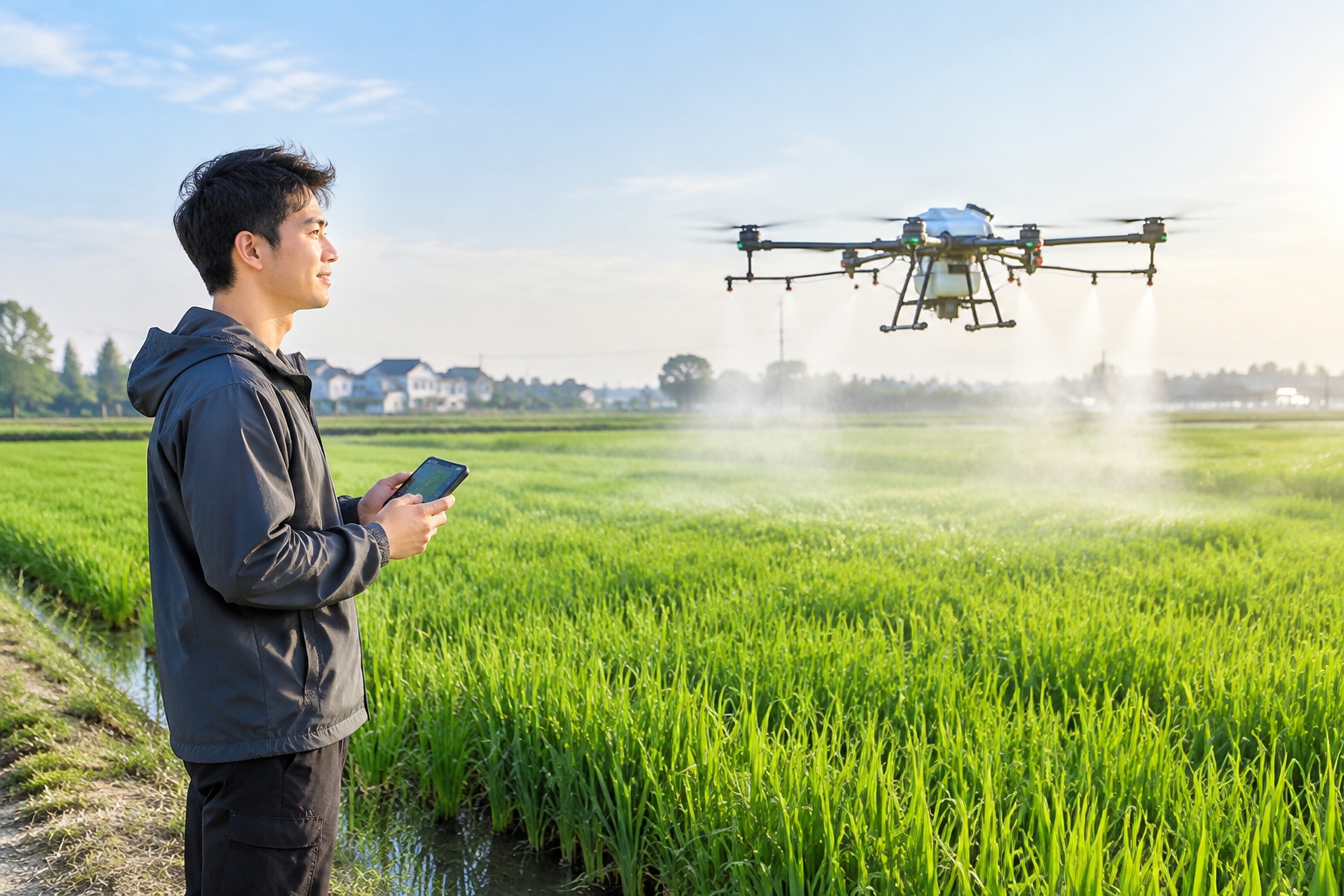
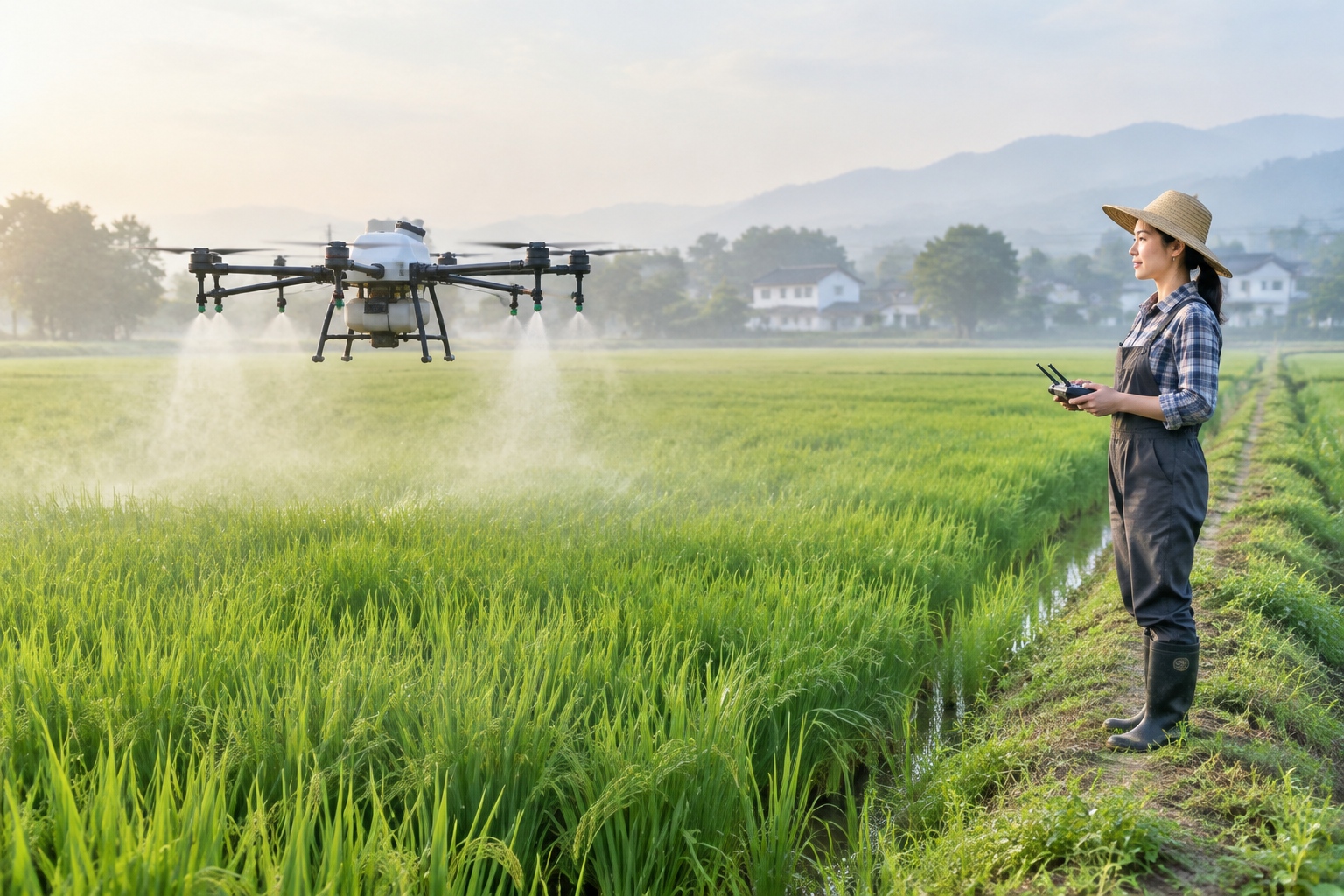
At 6:00 a.m., the rice paddies near Suqian, a town in northern Jiangsu, are easy to miss in the morning fog. But if you look closely, you’ll see a 22-year-old woman in a straw hat and rubber boots walking along the narrow ridges. Her name is Liu Ying, and she’s not checking for insects. She’s checking the GPS map on her phone.
In the past five years, this field has been converted into a “smart farm.” There are soil probes, an automated irrigation system, and a solar-powered weather station. Today, Liu is here to launch a drone mission. With a few taps, she sets a flight path for the sprayer drone. It hums into the air, hovers for a second, and then moves across the field like a lawnmower in the sky.
Thirty minutes later, it lands. The job is done: 2.4 hectares of rice fertilized, with no backpack sprayer, no tractor, and no barefoot workers.
“My grandfather used to say that a farmer’s work is endless,” Liu says, laughing. “He would have been amazed that I can do this in my slippers.”
Why Jiangsu Is the Perfect Test Ground
Jiangsu is often described as China’s “fish and rice land.” It sits on the fertile plain of the Yangtze River Delta, with abundant water and a long growing season. It’s also one of the most industrialized provinces, which means there’s money to invest in technology and a local population that expects modern solutions.
But there’s a problem: arable land per person is only about 0.05 hectares, roughly the size of a small urban apartment. Add an aging workforce — the average farm worker is over 40 — and you get a serious labor shortage during planting and harvest seasons.
This is where technology steps in. In the last five years, the province has aggressively pushed “smart agriculture” projects, with subsidies for equipment and free training. In 2023 alone, Jiangsu had more than 10,000 agricultural drones in use, according to the provincial government. These drones account for a significant share of the total used in China.
The result is a system where farmers of all ages are learning to work with machines. Local “drone service teams” pop up like Uber for the fields — you book them by phone and pay per mu (about one-fifteenth of a hectare).
From Spraying to Seeing: The Data Behind the Drones
Drones are just the most visible part of the story. The deeper change is data collection. “In the past, farmers knew their fields by walking them,” explains Gao Wei, an engineer at a tech company based in Nanjing. “Now they know them by the numbers on a screen.”
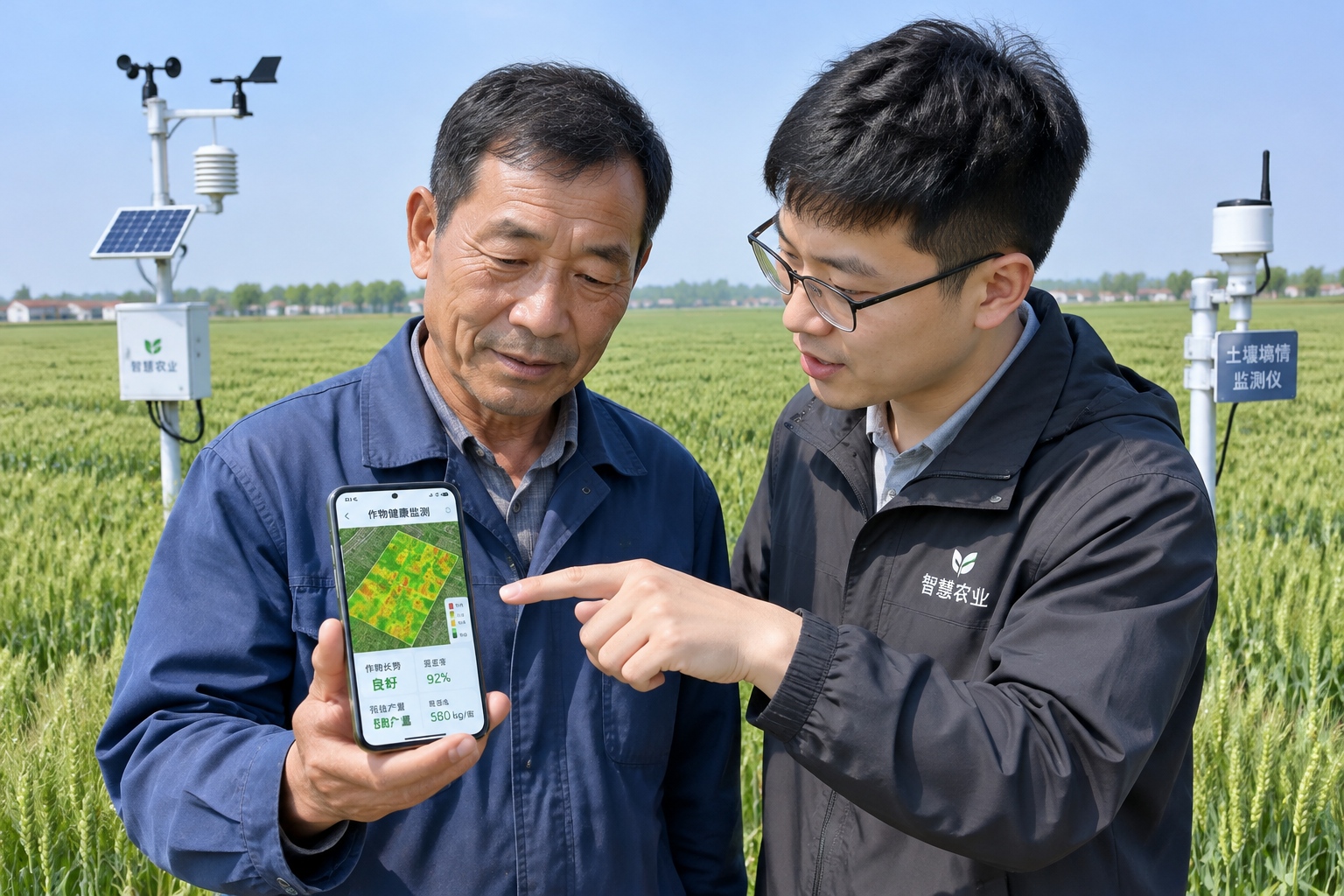
Remote sensing cameras on drones create highly detailed maps of a field. They can spot patches of drought, weed invasion, or early signs of disease. This information is fed into a computer system that overlays historical weather data, soil samples, and even market prices.
For example, a mid-sized rice farm in Yancheng, Jiangsu, uses a smart data platform from a local company. Each plot has a sensor that reports soil moisture and nutrient levels every 10 minutes. When the system decides the rice needs more potassium, it sends an alert to the farm manager’s phone. The manager can then direct a drone to apply fertilizer only to the specific area that needs it, instead of spraying the whole field.
The result? A 15% reduction in fertilizer use, a 20% cut in pesticide use, and about 10% higher yields compared to traditional methods. These figures come from a pilot project run by the Jiangsu Academy of Agricultural Sciences from 2020 to 2023.
Who’s Adopting This, and How Do They Feel?
You might think these tools are only for wealthy, tech-savvy farmers. But the reality is more surprising. The fastest-growing group of drone users in Jiangsu is not 20-year-olds; it’s farmers in their 40s and 50s.
“I was scared the first time I saw a drone,” admits Wang Qiang, a 52-year-old wheat farmer in Xuzhou. “But the price came down, and the government paid half. My son showed me how to use it in two days.”
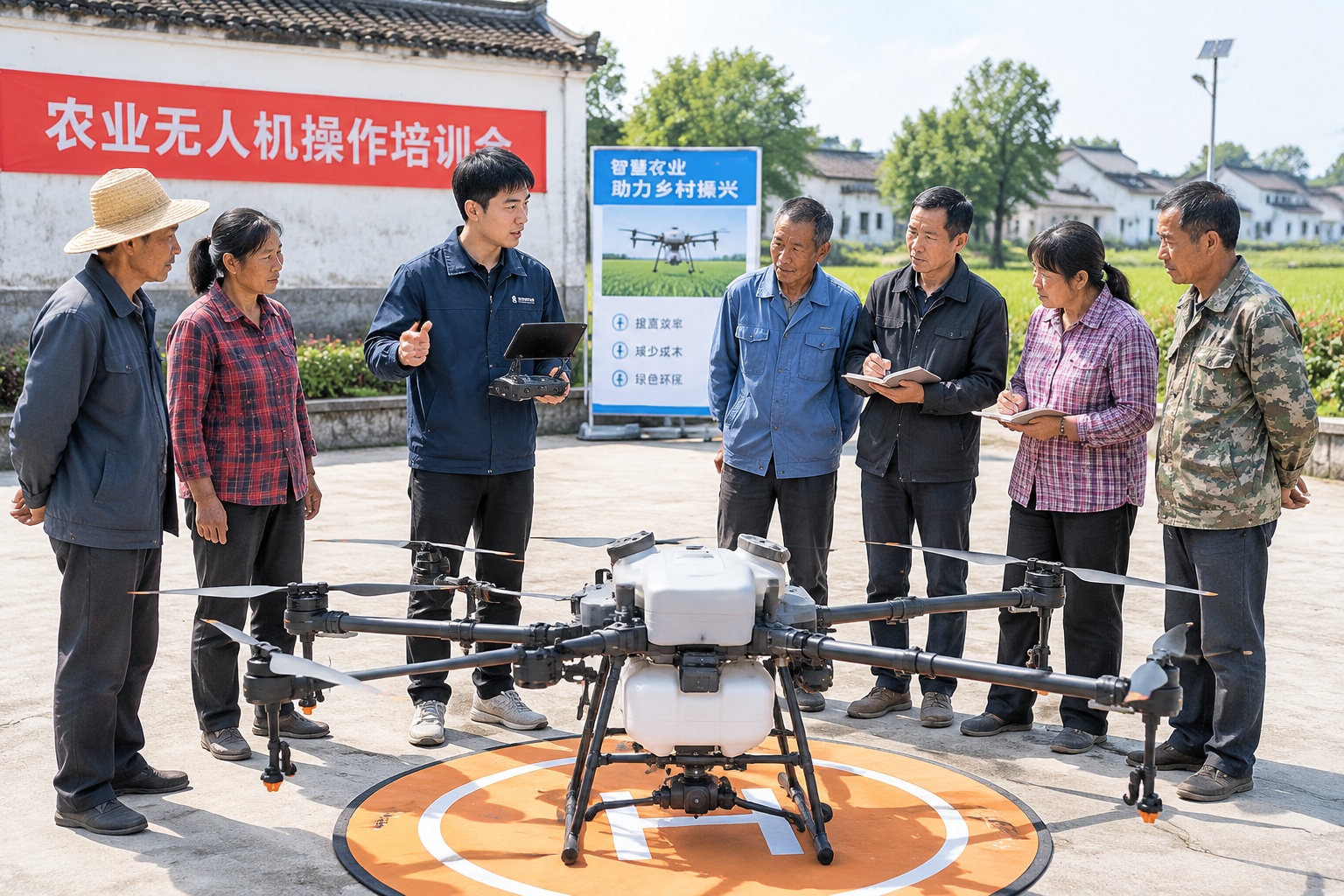
Wang’s experience is common. To speed up adoption, local agricultural extension offices offer free lessons. In some townships, they organize competitions to see who can map their field the fastest with a drone. The winners get prizes, and everybody learns.
Not everyone is enthusiastic. Older farmers who can’t read well sometimes struggle with digital screens. Others worry that the new technology will put traditional workers out of a job. But many have discovered that drones don’t replace people — they replace labor shortages. “We still need workers to unload the rice, fix the irrigation pipes, and check the machines,” says Liu Ying. “The drone just makes sure we do everything at the right time.”
The Hardware: What’s Under the Hood?
Drone spraying is often compared to helicopters used for crop dusting in the United States. But the similarities end there. Chinese agricultural drones are almost always electric, multi-rotor machines that are easier to control and can navigate small, irregular fields. In the US, farms are often hundreds of acres; in Jiangsu, the average plot is about half an acre. Chinese drones are designed for that tight grid.
Battery life is improving too. The XAG P100, a popular model made in China, can cover about 40 acres on a single charge, with the option of quick-swap batteries. That’s still less than the 300 acres a bigger US ag aviation plane can handle, but for Jiangsu’s small plots, it’s more than enough.
The companies have also developed custom nozzles that produce tiny droplets about one-tenth the diameter of a human hair. These droplets are better at sticking to leaves, meaning less chemical run-off and less environmental pollution.
Big Data, Bigger Questions
While the benefits are clear, there are also real challenges. First, the “big data” is only as good as the data itself. Small farmers often can’t afford the sensors or the internet connectivity needed to support real-time monitoring. Jiangsu is relatively rich, but not every village has a strong 5G signal.
Second, there’s a social adjustment. Agriculture has long been a way of life, not just a business. When a drone flies over a field, it changes the rhythm of rural life. Some older farmers feel left behind, even if they appreciate the efficiency. To address this, some towns have created “digital farming” clubs where younger residents teach older neighbors.
Third, government policy matters a lot. China’s support for “smart agriculture” is not just about technology; it’s also about food security. By raising yields and reducing waste, the country hopes to reduce its dependence on imported crops. In 2023, China’s soybean imports dropped by 8% due to higher domestic production, partly thanks to precision farming.
A Glimpse from the Ground
For an outsider, the image of a drone above a rice paddy might seem futuristic. But standing next to a farmer, it feels completely natural. They talk about “flight schedules” and “crop health indices” the way their parents talked about monsoon patterns and water levels.
That doesn’t mean farming is now automated to the point of no human touch. On a recent visit to a village near Changzhou, I watched a team unload crates of leafy greens from a truck. “The drones spray and map, but we still pick by hand,” the owner said. “Technology helps, but the land still needs people.”
Many young people are starting to see farming as something more than a life of hard labor. They call themselves “new professional farmers.” They might wear a polo shirt instead of a worker’s jacket, but their shoes are still muddy.
What This Means for Your Plate
If you live outside China, the next time you order takeout rice or a dish with shrimp from the Yangtze, there’s a good chance the rice was grown in Jiangsu. The sea of green paddies around the Yangtze is now part of a digital ecosystem.
This isn’t a science fiction story; it’s happening right now. And it’s a promising sign for the future of food — especially at a time when climate change and water scarcity are putting pressure on farms around the world.
Jiangsu’s experiment shows that high-tech farming doesn’t have to be a distant dream. It can be as simple as a drone taking off from a patch of grass, as useful as a phone app showing you the health of your field, and as hopeful as a young woman in rubber boots walking through the fog.

Start the discussion at forum.chinacomes.com