

Morning in the Old City
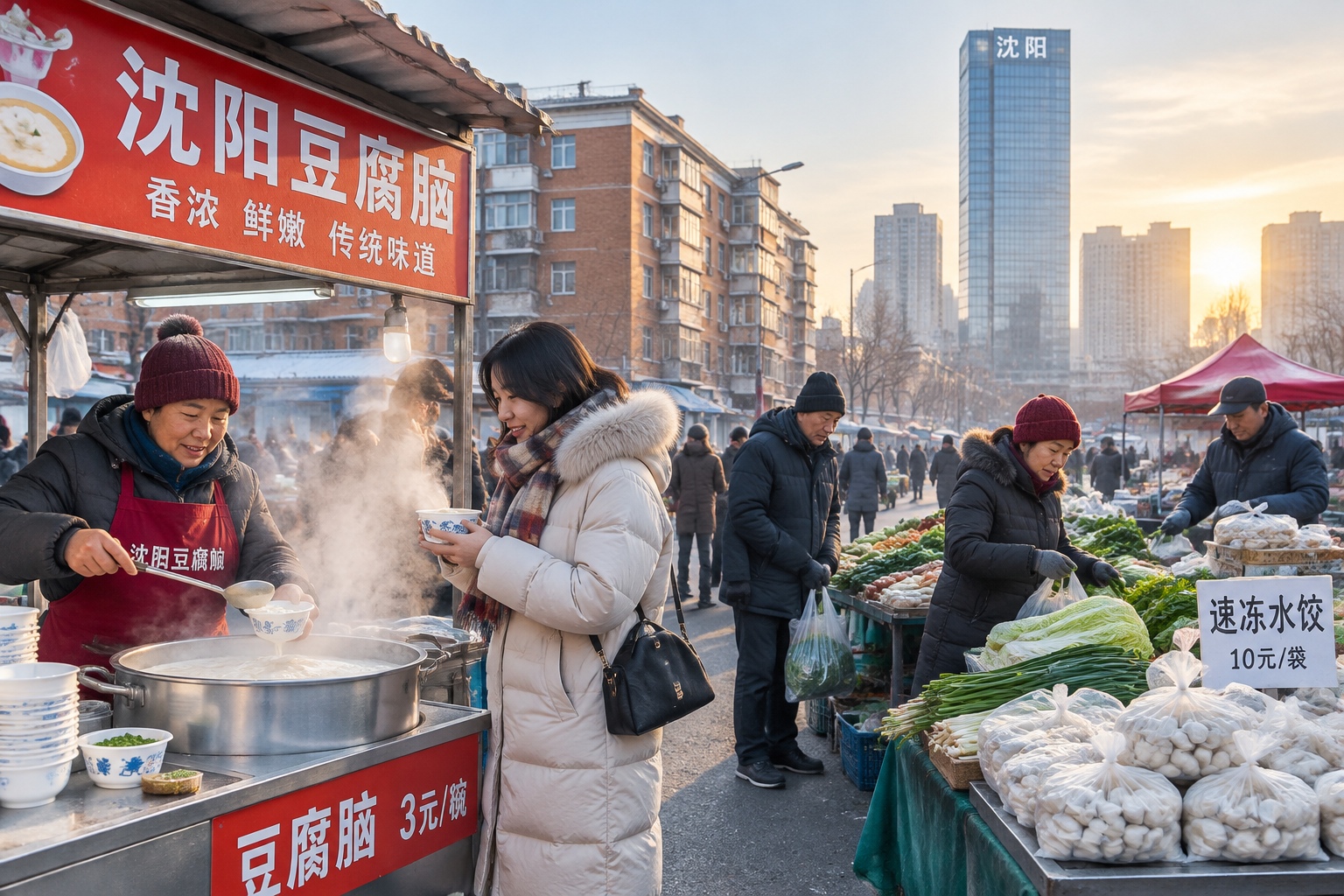
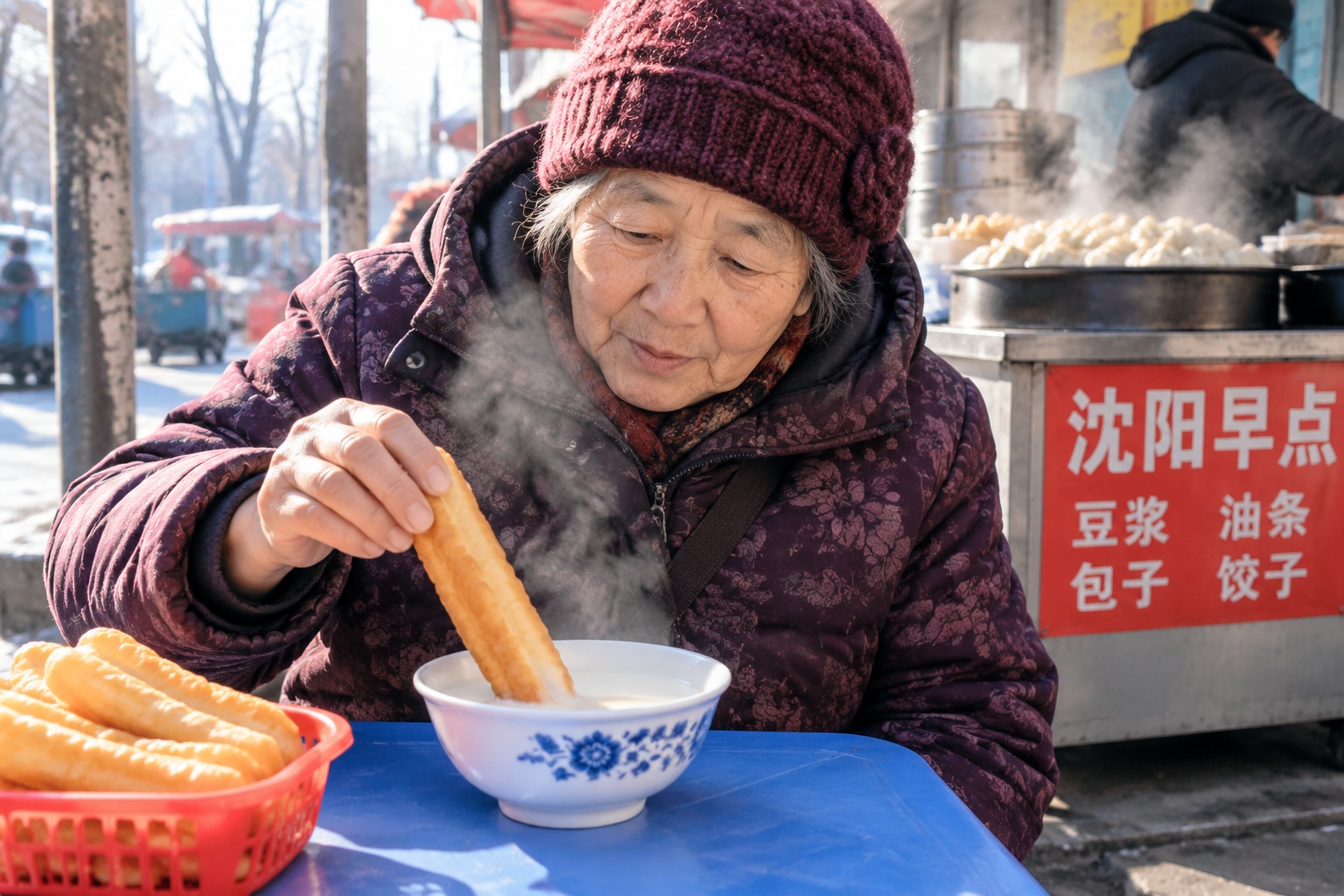
At 6:30 a.m., the alley behind the Shenyang Imperial Palace is already in motion. A vendor lifts the lid off a huge wok, and a cloud of steam rises into the freezing March air. He is making guotie, pan-fried dumplings, their bottoms crisp and golden. Nearby, an elderly woman in a padded jacket and knitted hat grabs a plastic stool at a fold-out table and orders a bowl of doujiang, fresh soy milk, plus a youtiao fried dough stick. She tears the dough stick into pieces and drops them into the bowl, then eats slowly, watching the street wake up. The temperature hovers around minus five degrees Celsius, but the steam from the stalls makes the air feel almost warm.
This is not the Shenyang of old factory photos or neon-lit skyscrapers. It is the everyday pulse of the largest city in Northeast China — a place where 9 million people live with a distinct rhythm shaped by industrial history, cold winters, and a stubborn love for hearty food. Shenyang’s urban area sprawls across more than 10,000 square kilometers. It is the largest city in Northeast China by population, with about 9 million residents in the metro area. Nearby cities like Harbin and Changchun are smaller, and many young people have moved south over the years, but Shenyang still retains a strong gravitational pull.
Industrial Heritage, Repurposed
Just twenty minutes by subway from that market lies Tiexi District, once the heart of China’s heavy industry. For decades, factories churned out machinery, tools, and steel. Many are now silent. But instead of being torn down, some have been reborn as creative parks.
At the 1905 Cultural and Creative Park, built inside the old Shenyang Heavy Machinery Factory, the original steel beams and brick walls are still there. On a Sunday afternoon, young couples browse handmade ceramics, teenagers photograph street art, and a small crowd gathers around a live band in the central courtyard. The space preserves the factory’s raw skeleton while filling it with new energy.
Another example is Hongmei Creative Park, which used to be a ceramics factory. Now it houses design studios, a small theater, and coffee shops. An old kiln has been converted into an installation art piece, with light beams inside. I met a retired worker near the old gate of a former machinery plant. He pointed at a new café inside and said, “I never thought I’d see this place serve lattes.” He laughed, but his eyes stayed on the building for a long time.
Walking through these spaces, you can feel the old and new layering over each other like geological strata. The city does not deny its industrial past — it has learned to reuse it.

Night Markets and Chicken Frame Soup
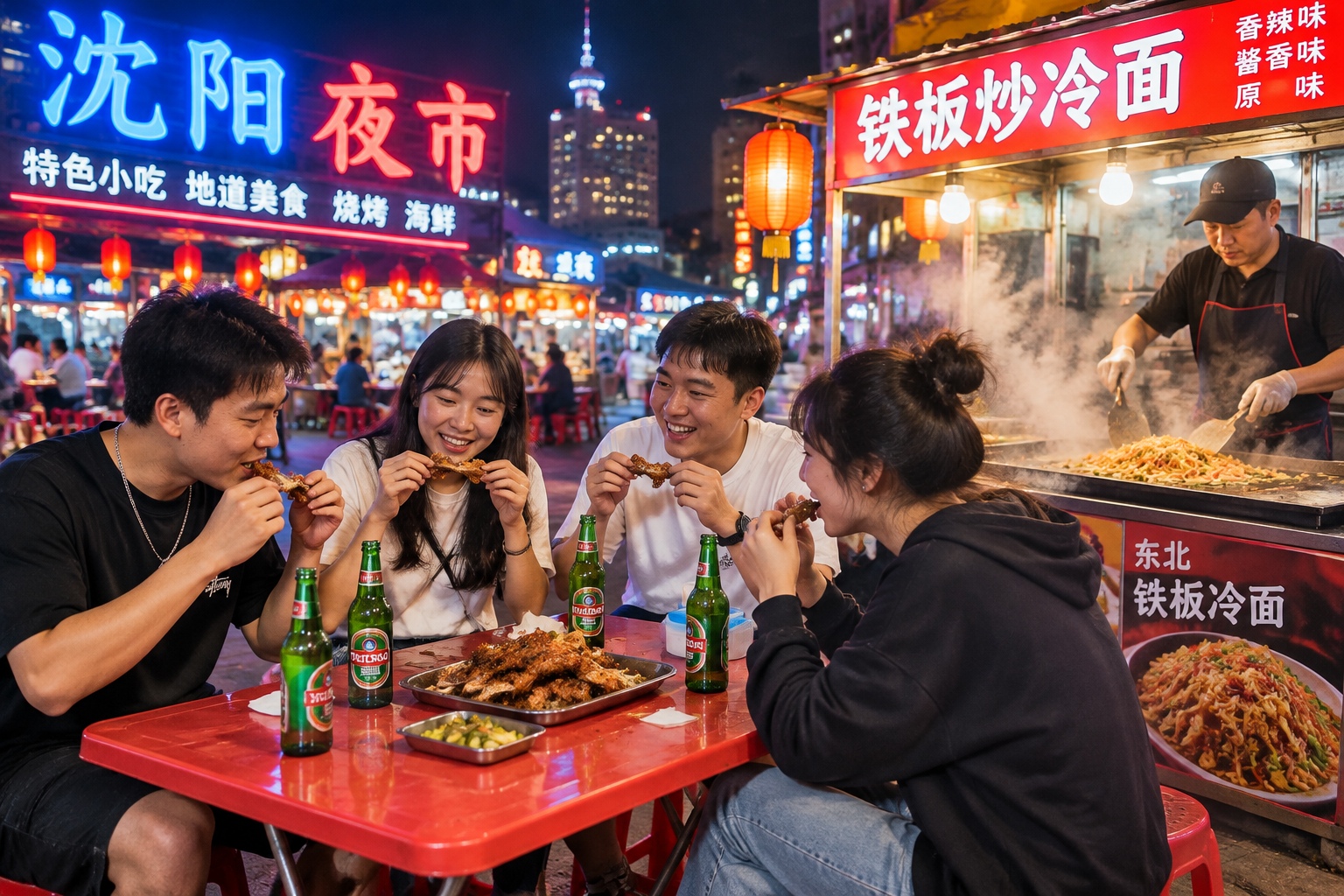
When the sun goes down, Shenyang’s appetite takes over. The Taiyuan Street area is packed with neon signs and the smell of lamb skewers. But the true local icon is ji jia, chicken rack — a bone-heavy, flavor-packed piece that is boiled and often fried with cumin and chili. In Shenyang, eating chicken rack is a social ritual. Groups of friends sit at small tables, tearing meat from the bones with their fingers, washing it down with cold beer.
At a famous place called Qie Ji Jia (literally “Stolen Chicken Rack” — the name has a playful history), the line can stretch for blocks at 9 p.m. “In Shenyang, you can eat chicken rack every night and never get tired of it,” says a 30-year-old man waiting with his friends. The dish costs around 15 yuan (about $2), making it a working-class favorite.
Next to the chicken stalls, a vendor is frying kao lengmian, a sweet-and-sour grilled cold noodle, on a huge iron plate. A plate costs 8 yuan, and the vendor says he sells more than 200 a night. A university student orders one, watches it sizzle, then takes a bite while walking. For about 50 yuan, two people can eat a full meal of chicken rack, grilled cold noodles, and a bottle of beer. That’s less than the cost of a single craft cocktail in Shanghai.
Night markets like this are not just about food — they are the city’s living room. On weekends, entire families wander through, kids carrying balloons, parents sipping sugary drinks, grandparents shuffling along in cotton slippers.
Young Shenyang: Coffee, Lifestyles, and a Slower Pace
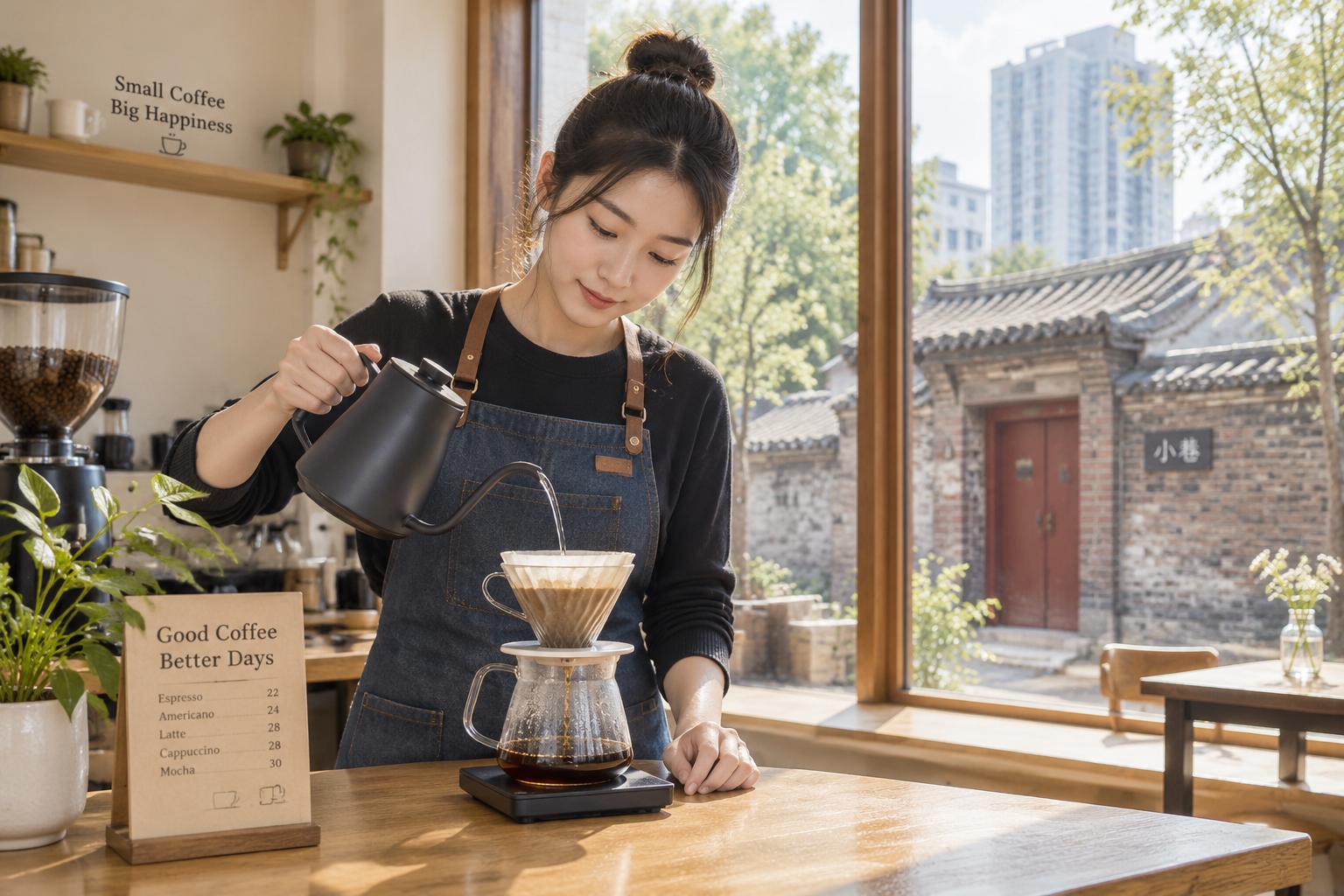
If you look only at the old streets, you might miss how much Shenyang is changing. In the past few years, independent coffee shops have popped up in former residential courtyards. On a rainy afternoon, I found a tiny café hidden in a hutong near Nanchang Street. The barista, a 26-year-old local named Chen, explained why she came back to Shenyang after working in Shanghai for three years. “In Shanghai, I was always running. Here, I have time to make pour-over coffee and actually talk to customers.”
She is part of a quiet wave of young people choosing to stay or return. After years of population outflow to coastal cities, Shenyang has recently stabilized, and some young people are coming back. The city offers a lower cost of living, decent universities, and a growing arts scene. It is not trying to be Beijing or Shenzhen — it is starting to feel like its own version of a livable city.
Coworking spaces are also springing up. One, called “Workshop 66,” lives in a former tool factory in Huanggu District. On a Tuesday evening, about a dozen freelancers and startup founders are working at long wooden desks. A graphic designer tells me she can rent a seat for 500 yuan a month, about $70, and that in Shanghai she paid five times more. In winter, many small shops hang thick plastic curtains at their doorways to keep the cold out, a familiar sight across the city.
That does not mean everything is easy. Shenyang’s GDP growth has been slower than coastal cities, and the local economy still relies heavily on traditional industries. Young professionals often complain about salary levels being lower than in Shanghai. But many appreciate the sense of community and the space to breathe.
Renewal and Its Friction
Shenyang is also going through a physical transformation. Old residential neighborhoods are being renovated with new insulation and facades, part of a nationwide “old community” renewal program. In a compound near the North Pagoda, workers in orange vests are adding thick layers of foam insulation to brick apartment blocks, then painting them in fresh pastel colors. Public toilets have been upgraded, and subway lines have expanded. Line 4, which opened in 2023, connects Shenyang South Railway Station to the city center in about 30 minutes. The renovated neighborhoods also get new playgrounds and fitness equipment, and some now have elderly care centers on the ground floor.
Still, change brings friction. Some residents worry about gentrification, as rents edge up around new cafes. Others lament the loss of older buildings. In a working-class neighborhood in Dadong District, a planned demolition of 1950s brick houses was paused after locals protested. The city listened, at least for now, and the old houses still stand, their wooden windows patched but intact.
This is not a story of smooth progress. It is a story of negotiation — between preserving memory and making space for the new, between a heavy industrial past and a future that is still taking shape.
Finding the Real Shenyang
By late afternoon, I return to the riverbank of the Hunhe, where a wide walkway runs alongside the water. Elderly men fly kites, couples cycle by, and mothers push strollers. The skyline shows a mix of old smokestacks and glass towers. A group of women in silk scarves dances to loudspeaker music, ignoring the cold wind. The Hunhe riverbank is also a common spot for people to skate on ice in winter, another reminder that this is a city shaped by its cold climate.
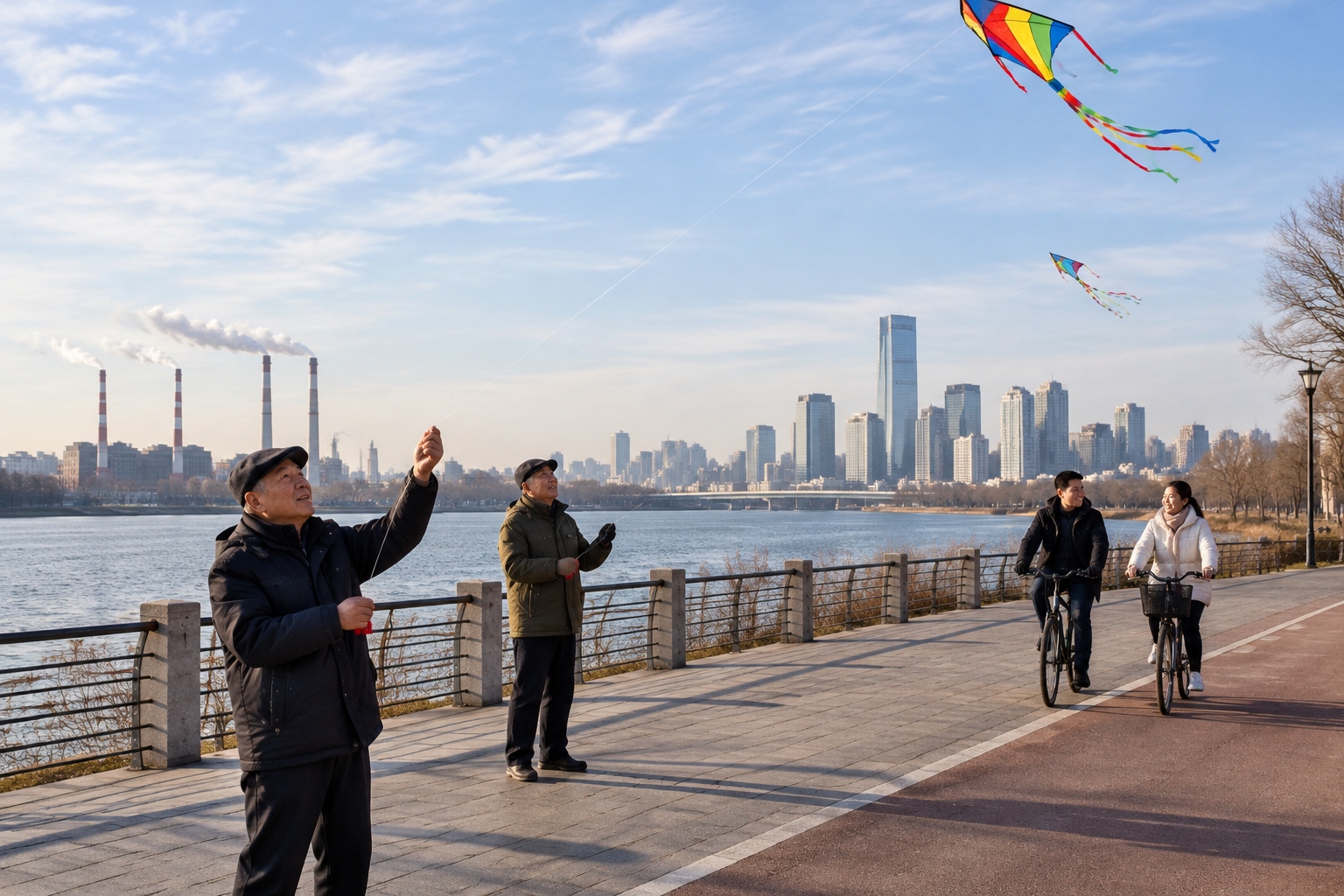
Shenyang is often described as a city “in decline,” but that misses the point. The people here are not standing still. They are adapting, eating their chicken racks, drinking their coffees, arguing about renovations, and laughing loud in the cold. The old and the new don’t compete — they coexist, often in the same street, sometimes in the same person.
To understand China today, you need to see places like Shenyang. It is not a headline-grabbing megacity, but it is where the country’s complicated transition actually lives — in the steam of a morning market, in the echo of a factory wall, in the careful hands of a young café owner pouring a fresh cup.
Start the discussion at forum.chinacomes.com