

Introduction: A Kitchen Without Secrets
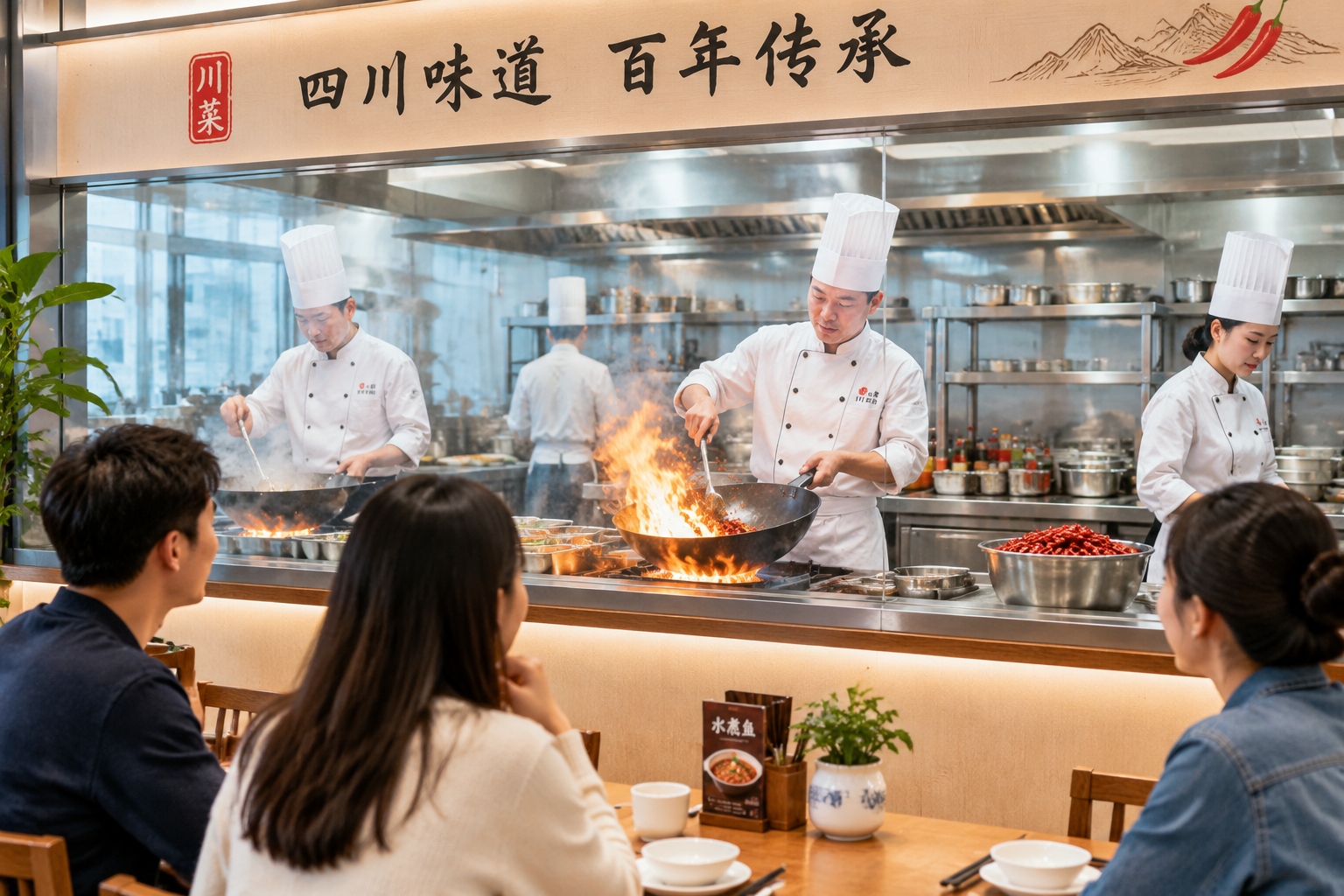
Walking into a bustling Sichuan restaurant in downtown Chengdu, you might notice something unusual: instead of a solid wall blocking the kitchen, a full-length glass window reveals the entire cooking process. Steam rises from massive woks as chefs toss chilies and Sichuan peppercorns in a choreographed dance. Customers at nearby tables can watch every stir-fry, every slice, every seasoning decision. This is not a gimmick—it is a growing norm across China, known as “transparent kitchens” (mingchu liangzao).
The Rise of Transparent Kitchens: From Regulation to Voluntary Adoption
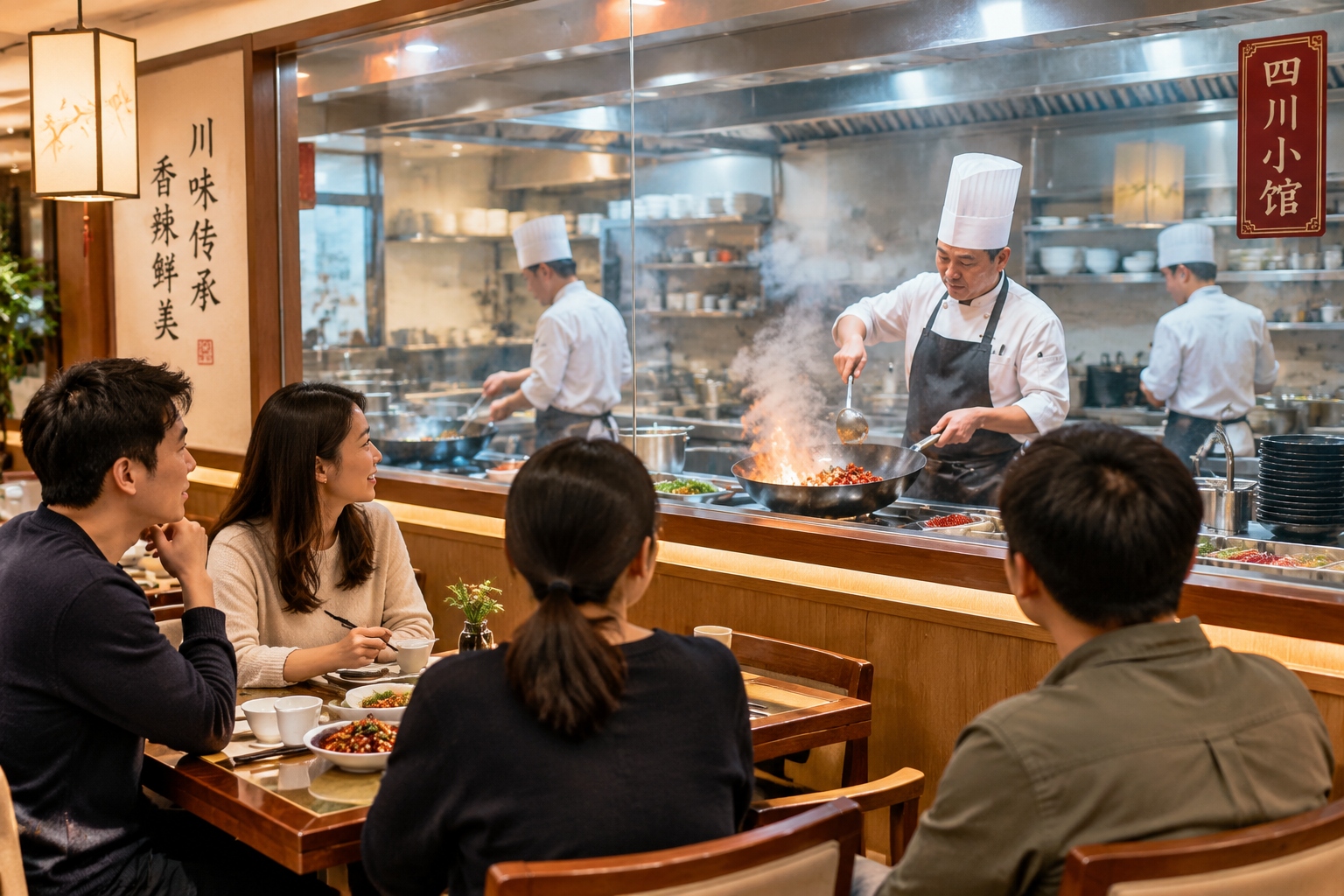
China’s “transparent kitchen” initiative began as a government-driven food safety campaign around 2014, following a series of high-profile scandals. The State Food and Drug Administration promoted the “Mingchu Liangzao” (bright kitchen, clean stove) program, encouraging restaurants to install video monitors or glass walls so customers could see food preparation. By 2022, over 70% of chain restaurants in major cities had adopted some form of kitchen transparency, according to industry reports. In Chengdu, the capital of Sichuan cuisine, the adoption rate among medium-to-high-end restaurants exceeds 85%.
The shift was initially regulatory. Restaurants were required to display live video feeds from their kitchens on screens in the dining area. But as competition intensified, many owners realized that transparency could be a marketing advantage. “Customers trust what they see,” says Li Wei, owner of a popular hot pot chain in Chengdu. “Since we opened our kitchen, word-of-mouth has grown faster than any ad campaign.”
Consumer Perspectives: Visible Peace of Mind
For Chinese diners, transparent kitchens address a deep-rooted anxiety. Food safety incidents—from gutter oil to adulterated ingredients—have made consumers wary. A 2023 survey by the China Consumer Association found that 78% of respondents said a transparent kitchen would increase their trust in a restaurant. “I used to worry about hygiene in the back,” says Zhang Min, a 30-year-old office worker in Chengdu. “Now I can see the chefs wearing gloves, washing vegetables, and using fresh oil. It feels safer.”
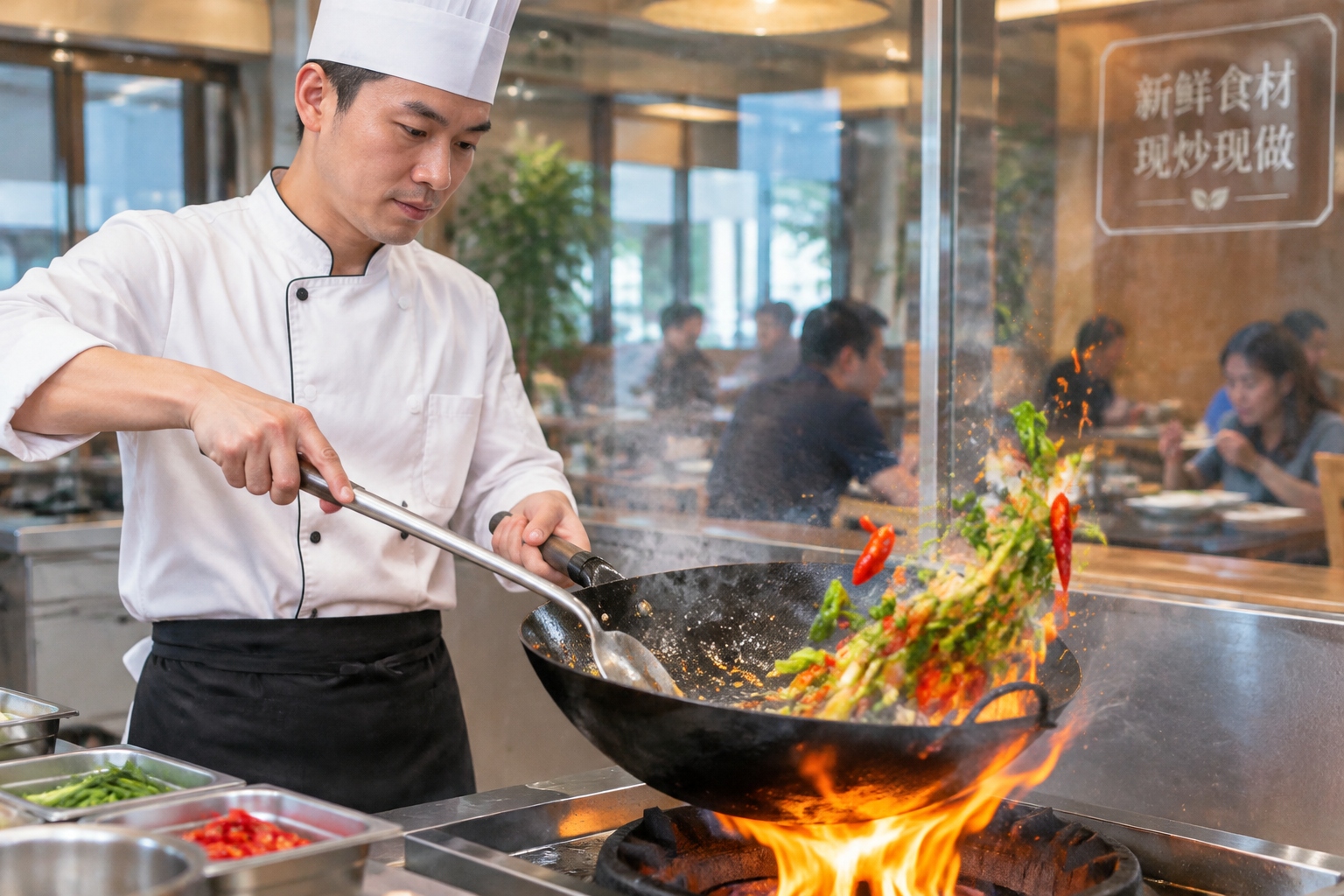
But transparency also brings surprises. Some diners admit they never realized how much oil and salt go into their favorite dishes. “Watching the chef ladle in three spoonfuls of oil was eye-opening,” laughs Chen Yu, a first-time visitor to a transparent-kitchen restaurant. “I might still eat it, but now I know why it tastes so good.”
Restaurant Considerations: Cost, Trust, and Brand Image
Implementing a transparent kitchen is not cheap. Retrofitting an existing kitchen with glass panels, cameras, and proper lighting can cost between 50,000 and 200,000 yuan ($7,000 to $28,000). Larger chains often invest in multiple camera angles and real-time monitoring apps. Yet for many, the investment pays off. “Once you go transparent, you can’t cut corners,” says Wang Fang, manager of a well-known Sichuan restaurant group. “It forces our staff to maintain the highest standards every day. That discipline alone is worth the cost.”
Transparency also helps restaurants build a brand story. Some high-end venues even offer guided kitchen tours, turning the cooking space into a stage. “It’s a performance, but it’s also accountability,” says food critic Zhao Lei. “The best chefs enjoy the attention. They know cleanliness and skill are their best advertising.”
Challenges and Concerns: Hygiene, Privacy, and Performance
Not all transparent kitchens live up to the promise. Some restaurants only show a portion of the kitchen, hiding messy storage areas or dishwashing stations. Others face privacy issues: chefs sometimes complain about feeling watched, leading to stress or theatrical behavior. In rare cases, the glass is clean but the kitchen behind it is not—a problem regulators are still combating through surprise inspections.
Another concern is the gap between appearance and reality. A spotless kitchen display does not guarantee food safety if ingredients are sourced from questionable suppliers. As transparency becomes more common, consumers are learning to look beyond the glass: they check for licenses, read reviews, and trust chains with proven track records.
Relationship with Chinese Culinary Culture: From “Kitchen Important, No Admittance” to Open Invitation
Traditionally, Chinese restaurant kitchens were closed sanctuaries. Signs reading “Kitchen Important, No Admittance” (chufang zhongdi, xianren wu ru) were standard. Chefs guarded their techniques fiercely. The move to transparency represents a cultural shift—a break from the mystique of the “secret recipe” and an embrace of standardization and trust. For Sichuan cuisine, known for its complex layering of flavors, transparency also demystifies the cooking process. Diners can see how ma la (numbing and spicy) dishes are balanced, demystifying what was once considered a chef’s magic.
Conclusion: How Transparent Kitchens Change the Ordinary Dining Experience
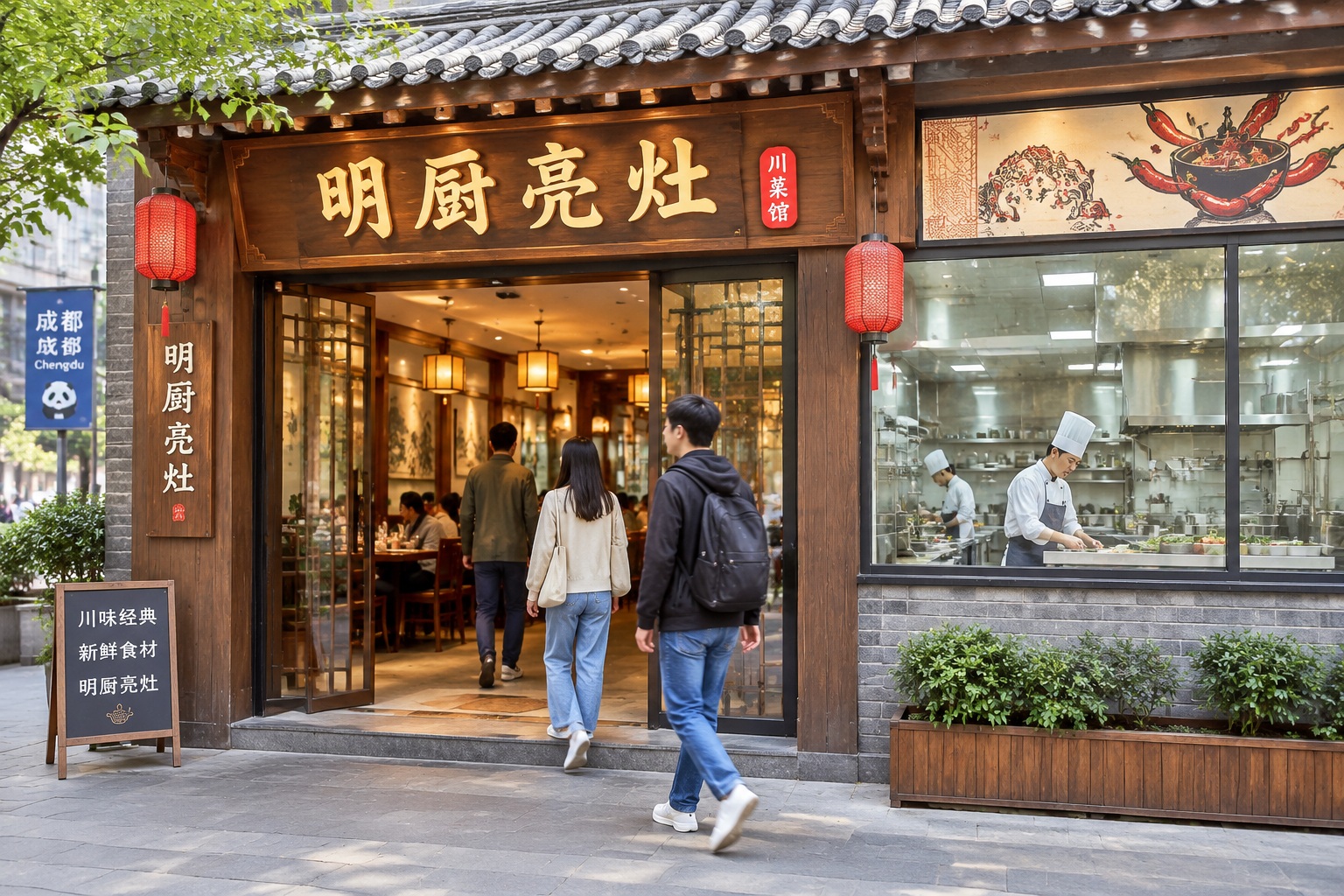
Transparent kitchens are no longer a novelty—they are becoming an expectation. For the average Chinese diner, the glass window is a window into trust. It turns eating out from an act of faith into an experience of observation and reassurance. As one Chengdu retiree put it: “I’ve been eating in this city for 60 years. For the first time, I feel like I really know what I’m eating.”
In a country where food is central to life, that feeling might be the most valuable ingredient of all.
Start the discussion at forum.chinacomes.com