
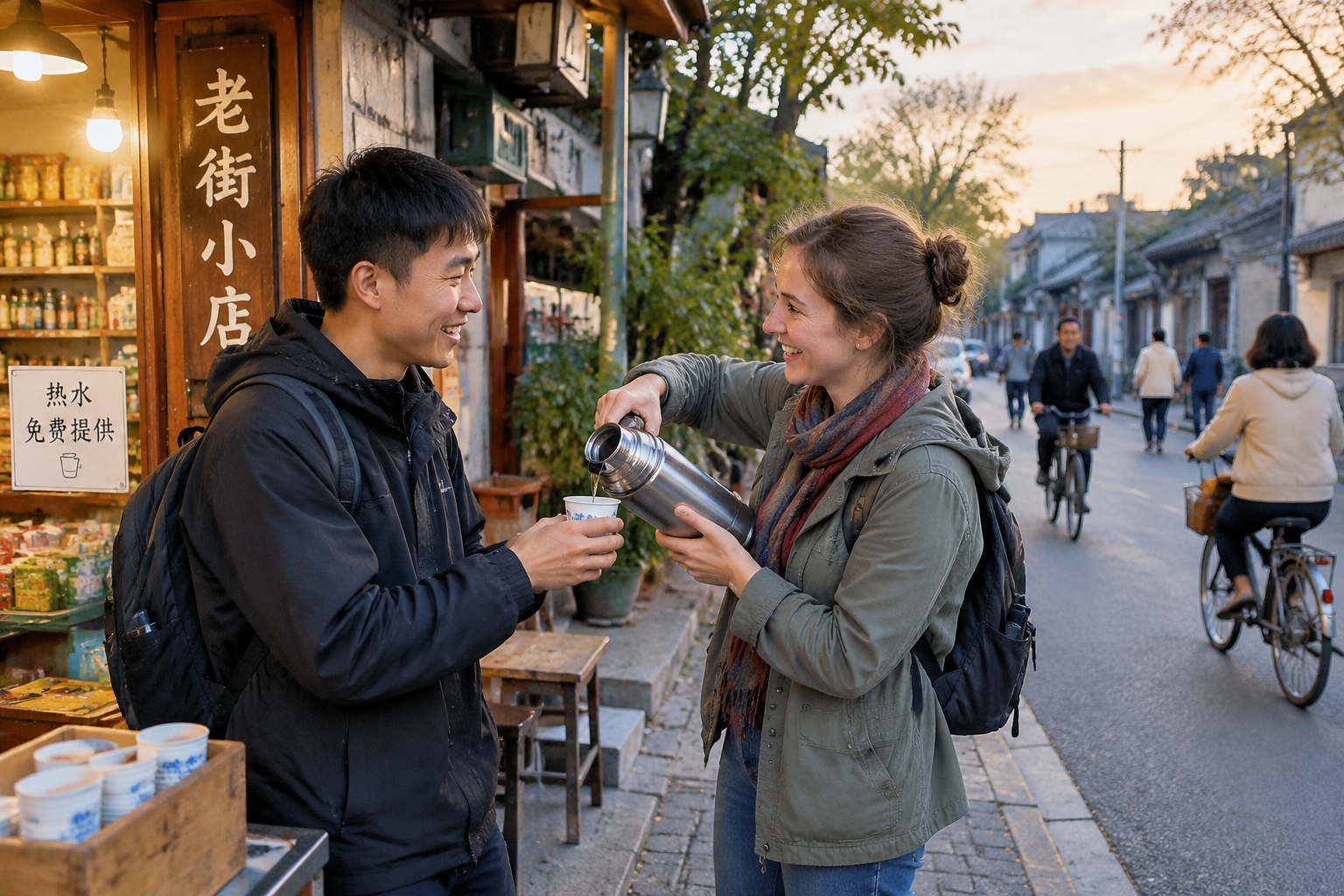

A joke that turned into a serious debate
It started as a throwaway line on an English-language forum: Chinese people are basically elves. Nobody meant it literally. Then the comment section did what comment sections do. Thousands of replies arrived, dragging in history, language, genetics, street life and food. Even Elon Musk got pulled in through clips of him saying he would visit China when he could. What began as a fantasy comparison became a strange, sincere attempt to explain why China feels different to outsiders.
The joke works because it gives people a familiar story frame. Elves are old, patient, clean, clever with their hands and suspiciously good at long-term planning. China, in this meme, is a real place that somehow keeps producing those qualities at national scale. That is not a rigorous argument. It is a way of saying: something here does not fit my usual categories.

Evidence No. 1: place names that sound like Elvish
The first piece of evidence is the map. If you translate some Chinese place names word by word, the result sounds less like an administrative list and more like a fantasy novel. Heilongjiang becomes Black Dragon River. Jilin becomes Lucky Forest. Qinghai becomes Turquoise Sea. Tianjin becomes Heavenly Ford. Jiangsu becomes River Wake Up. Fujian becomes Fortune Built.
These are playful literal translations, not official English names. Chinese place names often carry geography, history, blessings or local legends in a few characters. A Chinese reader may see a province name and think of rivers, mountains or an old administrative story. An English-speaking reader sees a map that looks like it belongs next to a quest chart. One commenter put it well: I thought I was reading a Lord of the Rings map, and then I remembered this is a real place.
The romance is partly a translation effect. But it explains the appeal. In Western fantasy, elves do not live in ordinary suburbs. They live in lucky forests and turquoise seas. China, through a very literal lens, starts to look like that.
Evidence No. 2: the clean-body theory
The second piece of evidence sounds rude at first. Foreign commenters noticed that many Chinese people do not seem to carry the strong body odor common in some Western societies, and they wanted to know why. The discussion soon moved from smell to genetics.
A gene called ABCC11 affects apocrine sweat glands. One variant of this gene, common in many East Asian populations, reduces body odor. Another variant, EDAR, is linked to thicker hair shafts and other physical traits. This is population genetics, not a beauty ranking. Not every Chinese person carries the same variants, and genes are never the whole story of how someone looks or smells.
Still, the internet did what the internet does. It turned a genetic detail into elf lore. People called the look clean, clear and quiet. Some zoomed in on eyes in sunlight and invented the phrase elf eyes. The science is more complicated than the meme. The feeling behind the meme is simpler: in a lot of Western storytelling, elves are associated with a kind of cool, understated cleanliness. The commenters were projecting that frame onto real people.
Evidence No. 3: aging slowly
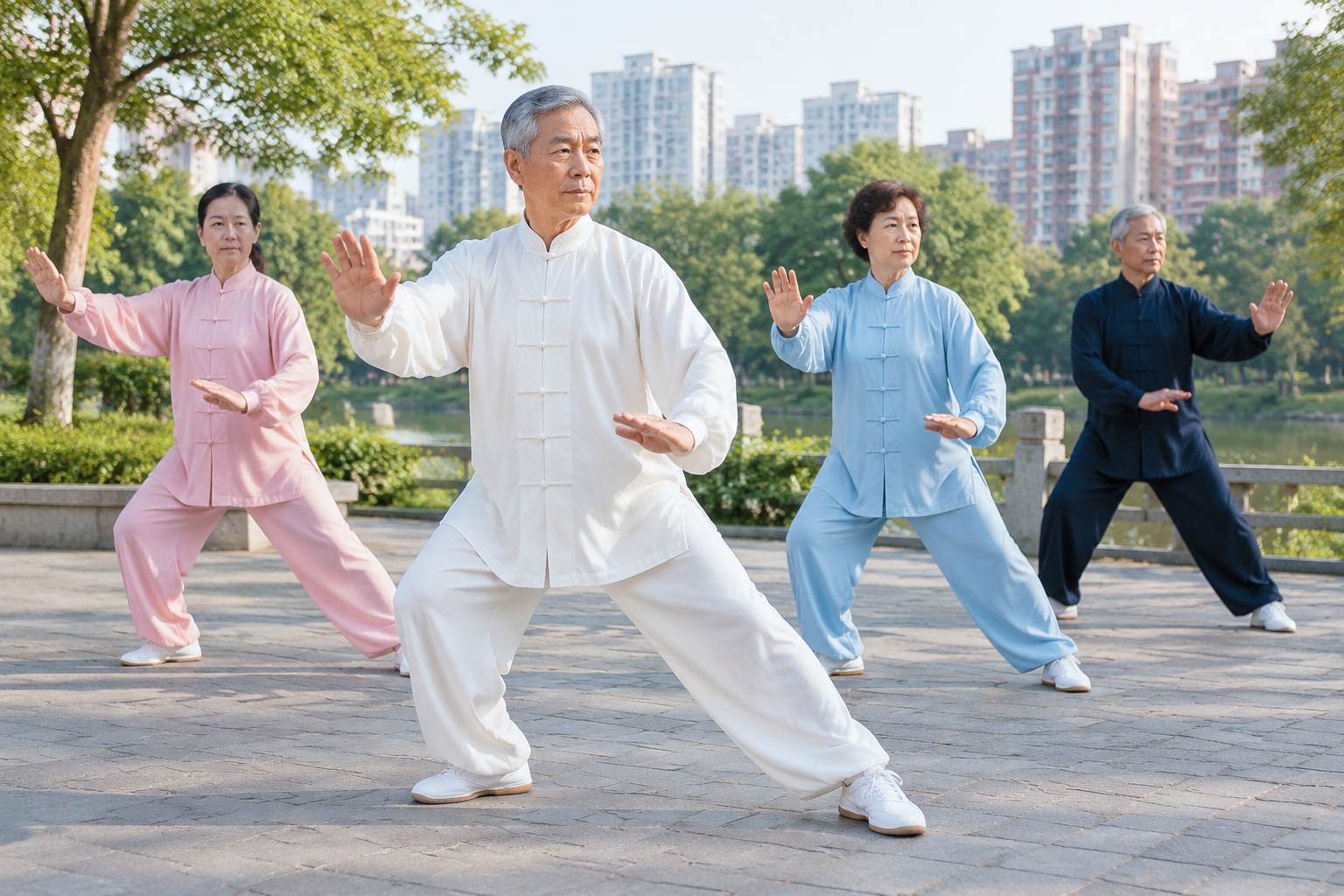
The third piece of evidence is the park. In many Chinese cities, early morning belongs to retirees. They stretch, walk, practice tai chi or do baduanjin, a set of slow breathing and movement exercises. Foreign bloggers keep filming seventy-year-olds who stand straighter than people half their age and asking what is going on.
The internet answer became elf wellness. Drink warm water. Eat hot food. Adjust your routine with the seasons. After childbirth, many families still follow zuo yuezi, a period of recovery and confinement with its own rules about rest, food and cold air. Not every young Chinese person follows all of it. Plenty of people live on iced coffee and late nights. But the older logic survives, especially in families.
Then came the anecdote that really traveled. An American user posted that he tried drinking warm water in the morning for a few days, cut out ice drinks and sugary sodas, and his stomach pain improved enough that he stopped reaching for painkillers. Hundreds of replies followed with their own warm-water experiments. This is not a clinical trial. It is not proof that hot water cures anything. But it explains the attraction. When the medical system feels expensive, slow or pill-heavy, a simple habit that seems to help is appealing. One popular comment said it plainly: this is not cultural curiosity. This is functional recognition.
Evidence No. 4: making things that feel like magic
The fourth piece of evidence is craftsmanship. Traditional Chinese wooden buildings can be held together by mortise-and-tenon joints without a single nail. Traditional Chinese medicine works with a vocabulary that does not map neatly onto Western medicine, yet many people say it helps them. Tea, calligraphy and handicrafts are so precise that outsiders call them magic rather than skill.
Then there is manufacturing. China makes a huge share of the world’s Christmas decorations, gifts and consumer goods. It also builds high-speed rail, drones and electric vehicles. A US commenter wrote: elves were always the ones who made things. This is not a metaphor. It is a fact. That line got a lot of likes because it connected the fantasy frame to something concrete. You can laugh at the elf comparison and still see the factory floor behind it.
The part that made people go quiet: strategic patience
The place names, the genes, the parks and the factories are the fun part. The serious part came when commenters started talking about time.
Henry Kissinger, in On China, used chess and weiqi, or Go, to describe a strategic difference. Chess is about fixed pieces, direct attack and checkmate. Go is about identical stones, territory, patience and accumulation. A chess player wants to win quickly. A Go player is willing to place stones that only make sense many moves later.
For years, that comparison lived in think tanks and外交 memoirs. Now it circulates in comment sections under videos about Chinese infrastructure. One foreign commenter wrote: they are not building roads. They are playing a very large game. Another quoted an old Chinese line: if you do not plan for the whole board, you cannot plan for one corner. An American user translated it and added: this is elf patience. They look at the board fifty years out. We look at next quarter’s earnings.
That is where the meme stops being cute and starts to sting. China’s high-speed rail network, manufacturing base, solar industry and electric vehicle supply chain did not appear overnight. They came from decades of policy, investment, mistakes and correction. You can argue about the costs. You cannot explain the outcome with a single clever move. The elf joke works because long-term thinking looks like magic to people who are used to short-term politics and quarterly reports.

Why this meme blew up now
The elf comparison had circulated for years before it went mainstream. It broke through when public trust in US institutions felt raw. Viral clips of ICE enforcement, the Epstein files and endless online arguments about who the system actually serves gave the meme a mood. For a lot of people, the comparison was less about China than about disappointment at home.
One Chinese internet saying got translated and passed around: an egg opened from the outside is food; an egg opened from the inside is a voice. In the US comment threads, that line hit hard. People started collecting Chinese proverbs, watching videos about Chinese daily life, and copying small habits. Warm water. Hot meals. Fruit tea instead of another cold soda.
An analysis post made the point bluntly: this is not cultural tourism. It is a recognition of function. If a method fixes your stomach ache, it does not matter whether it is Eastern wisdom. It works. If a strategy keeps working for thirty years and pushes an industry to the front of the world, it does not matter whether it is Go thinking. It wins.
Also, the elf frame lets people praise China without fully admitting they are praising China. Elves are a safe fantasy. They are old, clever and good at making things. It is easier to say China is full of elves than to say the current American model may have lost some basic capacity to build, maintain and plan.
What the meme misses
China is not a single ancient forest. It is a country of 1.4 billion people with fast cities, tired commuters, noisy families, ambitious students and young workers who order iced Americanos and complain about overtime. It has burnout, inequality and fierce arguments over housing, education and work. Long-term planning exists alongside messy local compromises and policies that do not always land well.
The elf meme flattens all of that into a type. That is what memes do. It is also why the meme is more useful as a question than as an answer. Why does China seem to age differently, build differently and wait differently? Some of the answer is culture. Some is genetics. A lot is institutions, scale and historical timing. None of it is magic.

So are Chinese people elves?
No. Chinese people do not live forever, do not have magic and do not all drink warm water. They get sick, get tired, get annoyed at traffic and spend too much time on their phones like everyone else.
But the meme has a point buried inside the joke. China has done a lot of unglamorous things over very long periods. It built roads other countries did not want to build. It accumulated manufacturing skills other countries let slip. It drank hot water when others found the habit boring. It kept planning when others kept pivoting to the next election or the next earnings call.
At the end of one long thread, a foreign commenter left a line that got pushed to the top: they are not elves. They just understood earlier that some things are worth waiting a hundred years for.
Start the discussion at forum.chinacomes.com