
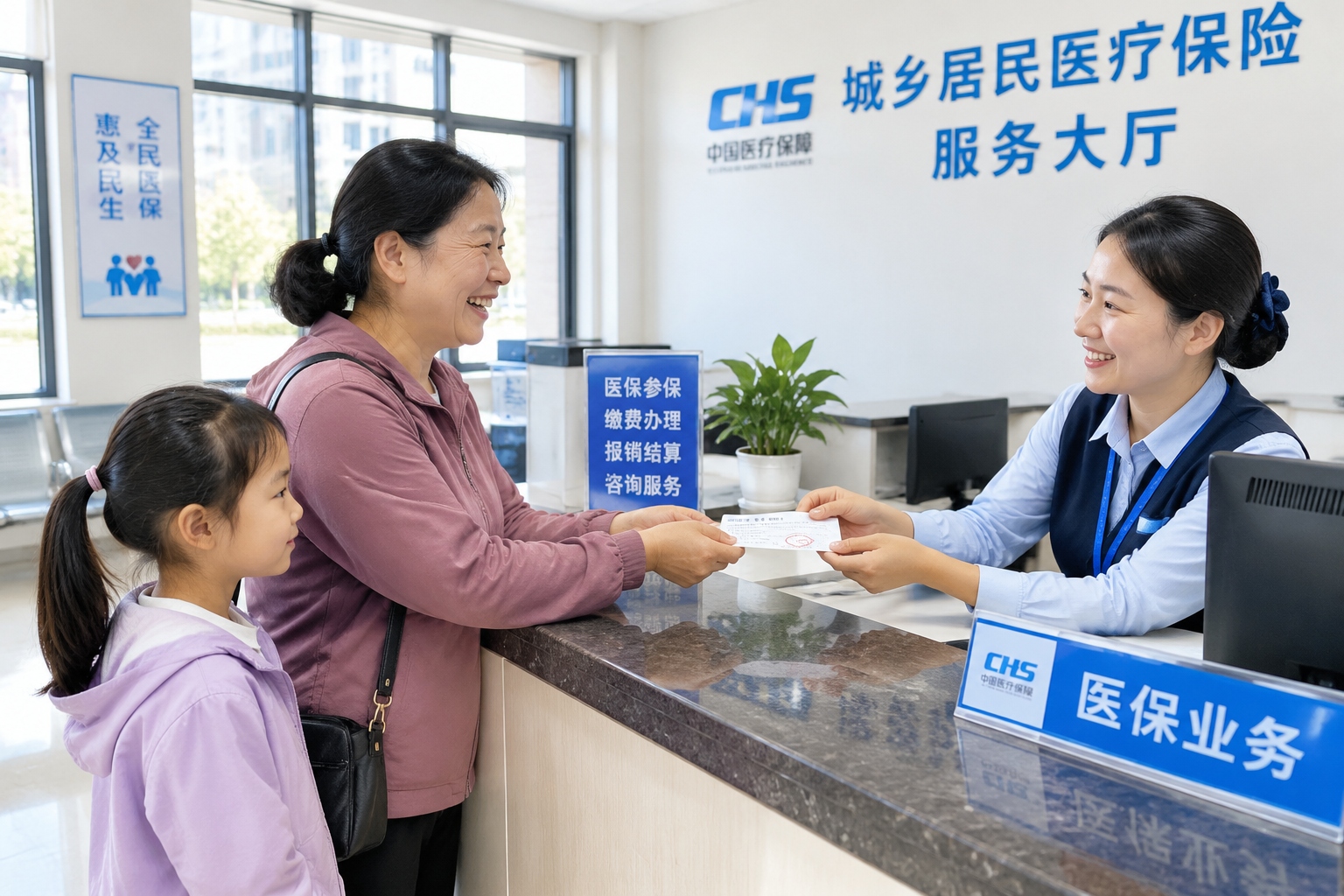

One Morning at a Community Medical Insurance Window
In a county town in central China’s Henan province, Li Xiaohong, a 54-year-old grandmother, queued at the community service center to pay medical insurance for herself and her 7-year-old grandson. The cost for 2025 had gone up again — 400 yuan per person, about 30 yuan more than last year. “It used to be 10 yuan when I first joined,” she said, doing the mental math. “But last year, my husband’s hospital stay cost more than 20,000 yuan, and the insurance covered nearly 15,000. You can’t compare that to the 800 yuan we paid.”
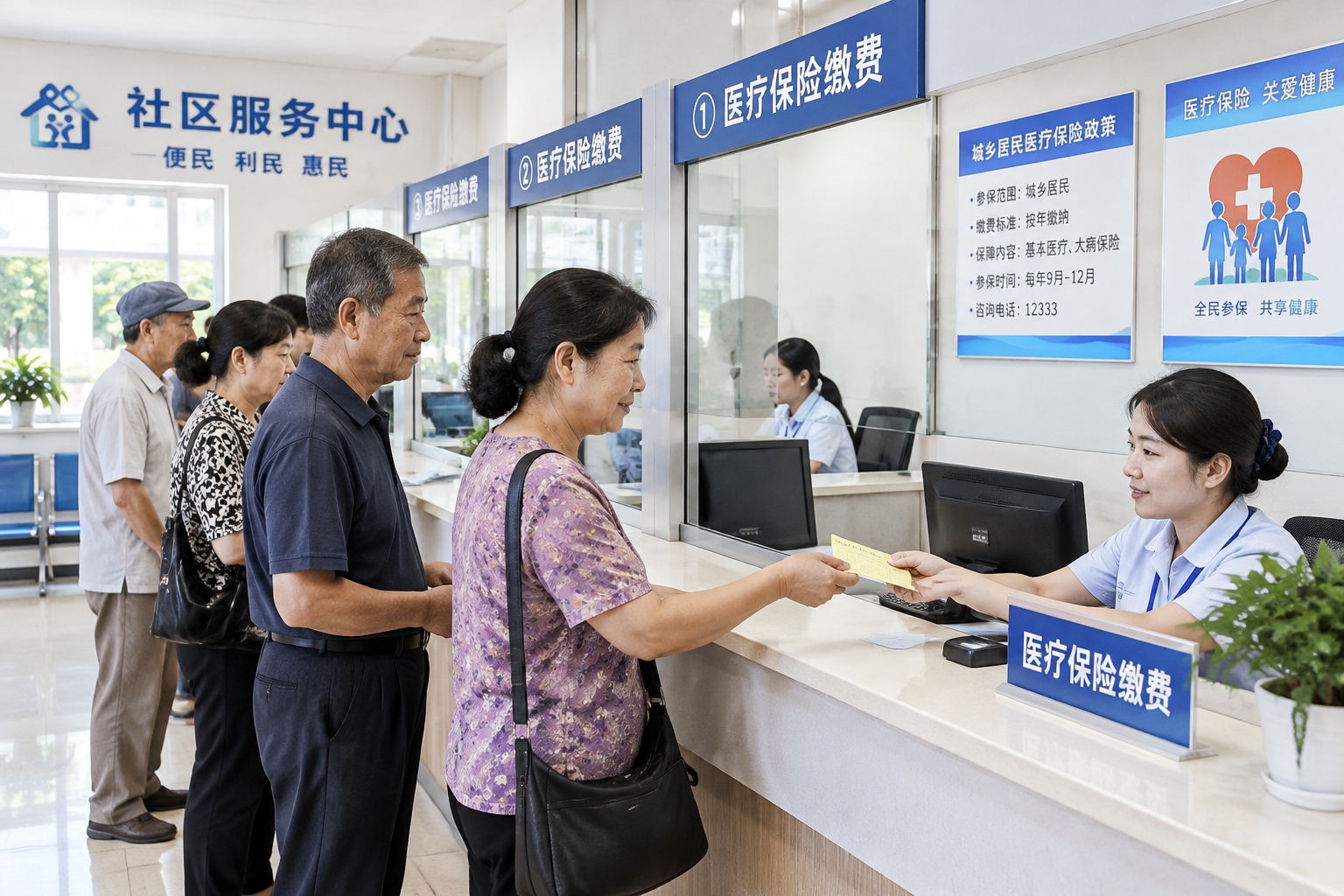
Li Xiaohong is not an exception. Across China, the number of people signing up for the basic medical insurance system has continued to climb, even as the individual contribution for urban-rural residents — the largest insurance category — has risen from 10 yuan per person per year in 2003 to 380 yuan in 2024, and to 400 yuan in 2025. According to the National Healthcare Security Administration, basic medical insurance covered more than 1.33 billion people in 2023, maintaining a participation rate above 95% for years. In 2024, the rate remained stable, with new increases among migrant workers, flexible employees, and the previously uninsured.
This trend seems counterintuitive at first glance. Why would more people voluntarily pay more for something that gets costlier every year? The answer lies in what the insurance actually delivers now, compared with a decade ago — and in the way ordinary people weigh the price tag against the risk of getting sick.
What Exactly Is “Medicare” in China?
To understand the enrollment dynamics, it helps to know how China’s basic medical insurance is structured. There are two main schemes: the Urban Employee Basic Medical Insurance (UEBMI), paid jointly by employers and workers, and the Urban-Rural Resident Basic Medical Insurance (URRBMI), which covers children, seniors, the unemployed, and rural residents. The URRBMI is the one most people refer to when they talk about “premiums going up.” Every year, the national government sets a minimum individual payment level, and local governments can add their own supplement. In 2025, the national minimum individual contribution is 400 yuan per person, while the fiscal subsidy from governments at all levels reaches no less than 670 yuan per person — meaning the government still pays more than half of the actual cost.
For a low-income rural family, 400 yuan per person is not trivial. But it buys coverage that has expanded dramatically in benefits over the past few years.
Better Reimbursement: The Real Reason People Stay In
The single biggest reason more people choose to enroll is that medical expenses that used to be catastrophic are now partially covered. Inpatient reimbursement for residents under URRBMI now averages around 70% at designated hospitals, though the percentage varies by hospital tier — higher at primary facilities, lower at top-tier hospitals. That means a 30,000-yuan hospitalization might leave a patient with 9,000 yuan to pay out of pocket, instead of the full 30,000.
Take Li Xiaohong’s husband: he underwent surgery for a heart condition and stayed in the county hospital for two weeks. The total bill was 22,600 yuan. After deduction of items not covered by insurance, the reimbursable base was 18,400 yuan, and the reimbursement rate was 80%, yielding a payment of 14,720 yuan from the insurance fund. The family paid about 7,880 yuan. “If we hadn’t bought insurance, we would have had to borrow money,” she said.
Stories like this are circulating widely in villages and urban neighborhoods. A 2023 survey by the National Bureau of Statistics found that among households with members who had been hospitalized in the past year, 92% said medical insurance had significantly reduced their financial burden. Those who had not experienced a hospital stay were more likely to complain about premium increases — a classic risk-perception gap.
More Diseases Covered, More Medicines Paid For
Another structural improvement is the expansion of the reimbursement list. In 2022, China’s national medical insurance drug catalog included 3,867 drug varieties, up from 2,435 in 2017. This means many previously fully out-of-pocket drugs for chronic conditions — like certain diabetes, hypertension, and cancer medications — are now partially covered. For a middle-aged person with type 2 diabetes, the monthly cost of a common medicine like metformin can be as low as a few yuan after reimbursement, instead of 50 to 100 yuan.
In 2023, the National Healthcare Security Administration introduced a new round of price negotiations for innovative drugs, cutting the average price of newly added drugs by 61.7%. These cuts directly benefit patients who rely on expensive treatments. For instance, a targeted therapy for lung cancer that used to cost 50,000 yuan per year is now around 15,000 yuan after insurance, a dramatic change for families.
Cross-Region Settlement: A Game Changer for Migrants
One of the most-underappreciated reforms is cross-province direct settlement. China has roughly 380 million migrant workers who often live and work far from their official place of household registration. In the past, if a migrant got sick in Shanghai or Shenzhen, they had to pay the full bill and then return to their hometown to claim reimbursement with paper documents — a process that took weeks and required travel. Since 2018, a national platform has made it possible to register online and settle medical bills directly at thousands of hospitals across the country. By the end of 2023, cross-province direct settlement covered over 600,000 designated medical institutions and handled 220 million person-times of settlement in that year alone.
This convenience matters. A construction worker from rural Sichuan, for example, can have a kidney stone removed in a Guangzhou hospital and pay only the deductible amount on the spot, without flying back home to file claims. That removes a huge barrier to seeking timely treatment, and also removes a reason to avoid insurance.
Critical Voices: The Burden of Premiums
It would be misleading to paint a picture of universal enthusiasm. Many farmers and low-income city residents say the per-person premium has risen too fast, especially for families with several children. A couple with two kids and two grandparents might pay 1,600 yuan a year — a significant sum in a village where annual disposable income per capita is around 20,000 yuan. Some young, healthy individuals choose to drop out, believing they are unlikely to use insurance. But the overall enrollment rate remains high, partly because the consequence of being uninsured in China is severe: a single serious illness can wipe out years of savings.
There is also a growing number of people who are automatically covered through social assistance programs. Low-income families, the disabled, and households in extreme poverty get their individual contributions fully or partially subsidized by the government. In 2023, around 44 million people received full or partial subsidies, and the number of people enrolling through this channel rose by 12% from the previous year. So when the headline says “more people are joining”, part of the story is the state proactively expanding the safety net.
What Will Happen Next: Premium Adjustments Become More Reasonable
Policymakers have heard the complaints about rising premiums. In 2024, the State Council issued a document to deepen the reform of medical insurance payment methods, which explicitly calls for a more rational adjustment mechanism of individual premiums, linking increases to local residents’ income growth. The goal is to prevent premiums from rising faster than the purchasing power of rural and low-income residents. Pilot regions are testing multi-tiered payment options: a basic tier and a higher tier with extra benefits. This flexibility may further boost enrollment, because people can choose a premium that matches their expected needs.
Meanwhile, the medical insurance fund itself is facing financial pressure due to an aging population. According to the National Health Commission, by 2035, people aged 60 and above will account for more than 30% of China’s population. That means fewer workers supporting more retirees, and the insurance fund will need to become more efficient. Measures like centralized procurement of drugs (the “drug price cut relay” that reduced the price of coronary stents from an average of 13,000 yuan to around 700 yuan) are part of the answer. These savings help the fund stretch further, but also make insurance more attractive because the underlying services are cheaper.
Conclusion: A Pragmatic Choice, Not a Cheap One
Li Xiaohong did not hesitate to pay the extra 30 yuan. “It’s like buying an umbrella in the rainy season,” she said. “You hope you never need it, but if the rain comes, you’re glad you bought it.”
The evidence across China suggests that millions have reached the same conclusion. In a system where out-of-pocket costs for a major illness can easily reach tens of thousands of yuan, a 400-yuan annual premium is a rational investment. Rising premiums are not welcomed, but they are tolerated because the alternative — facing a medical bill uninsured — is far worse. The high participation rate is not a mandatory checkbox; it’s a reflection of the public’s continued assessment that basic medical insurance remains the most affordable protection against the biggest financial risk in life.

As China’s health-care system evolves, the challenge will be to keep that calculation true. If premiums keep rising faster than benefits, enrollment could eventually decline. But for now, the data and the stories point in one direction: more people are choosing to join, not because the premium is cheap, but because the protection is real.
Start the discussion at forum.chinacomes.com