

The Scene: A Life Saved on a Screen
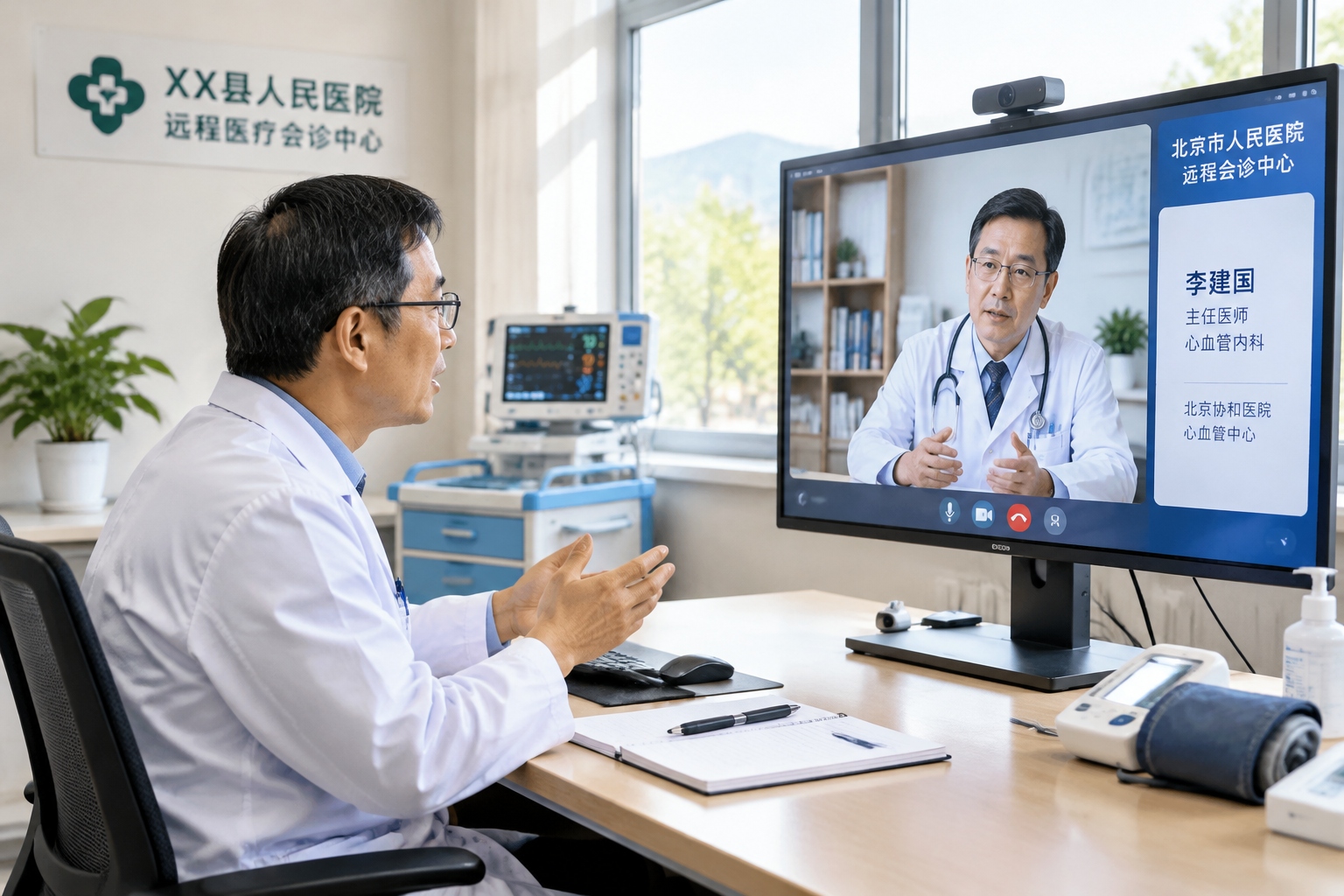
I was sitting in a small hospital in a remote county in Yunnan province last March, watching Dr. Liu, a neurologist, move his mouse across a cluttered desk. On the big screen in front of him, a doctor from Shanghai’s Huashan Hospital was staring at a CT scan of a 56-year-old tea farmer’s brain. The patient, Mr. Chen, had arrived two hours earlier with slurred speech and a drooping face. His wife said he had been fine when he went to the farm in the morning.
Dr. Liu had uploaded the scan to the remote consultation platform and requested an urgent meeting. Within twenty minutes, the Shanghai specialist appeared on screen, wearing a white coat in a bright office hundreds of kilometers away. After a few questions and a careful look at the images, she identified a blocked vessel and recommended immediate thrombolysis—a treatment to dissolve the clot. “Do it now,” she said. Dr. Liu signed off, gave the injection, and watched the patient’s speech slowly return over the next hour. Mr. Chen was out of bed the next day.
This scene is now normal in many parts of China, but it was almost unimaginable a decade ago. The country’s best medical talent is concentrated in a few mega-cities like Beijing, Shanghai, and Guangzhou. For someone living in a mountainous county, seeing a specialist often meant a long, expensive journey that many simply could not afford. Telemedicine is changing that by putting experts directly into consultation rooms where they are needed most.
Why Distance Was a Problem in Chinese Healthcare
China has one of the largest healthcare systems in the world, but its distribution is unequal. Top hospitals in big cities see hundreds of patients a day, while county hospitals struggle to recruit and retain specialists. A stroke, heart attack, or complex pregnancy can become life-threatening if the nearest expert is a six-hour bus ride away. In the past, a patient from a remote village would take a day to reach the provincial capital, then wait days for an appointment at a large hospital. The cost of transport, accommodation, and lost wages was often greater than the medical bills themselves. Many people chose to stay home and hope for the best—a choice that sometimes ended badly.
The government has tried to fix this imbalance. In 2018, the National Health Commission issued guidelines to promote telemedicine across all county-level hospitals. By 2021, nearly every township health center in the country had access to online consultations. The idea is not to replace local doctors, but to give them a lifeline when they face a case that is beyond their training or experience.
How Telemedicine Works in a County Hospital
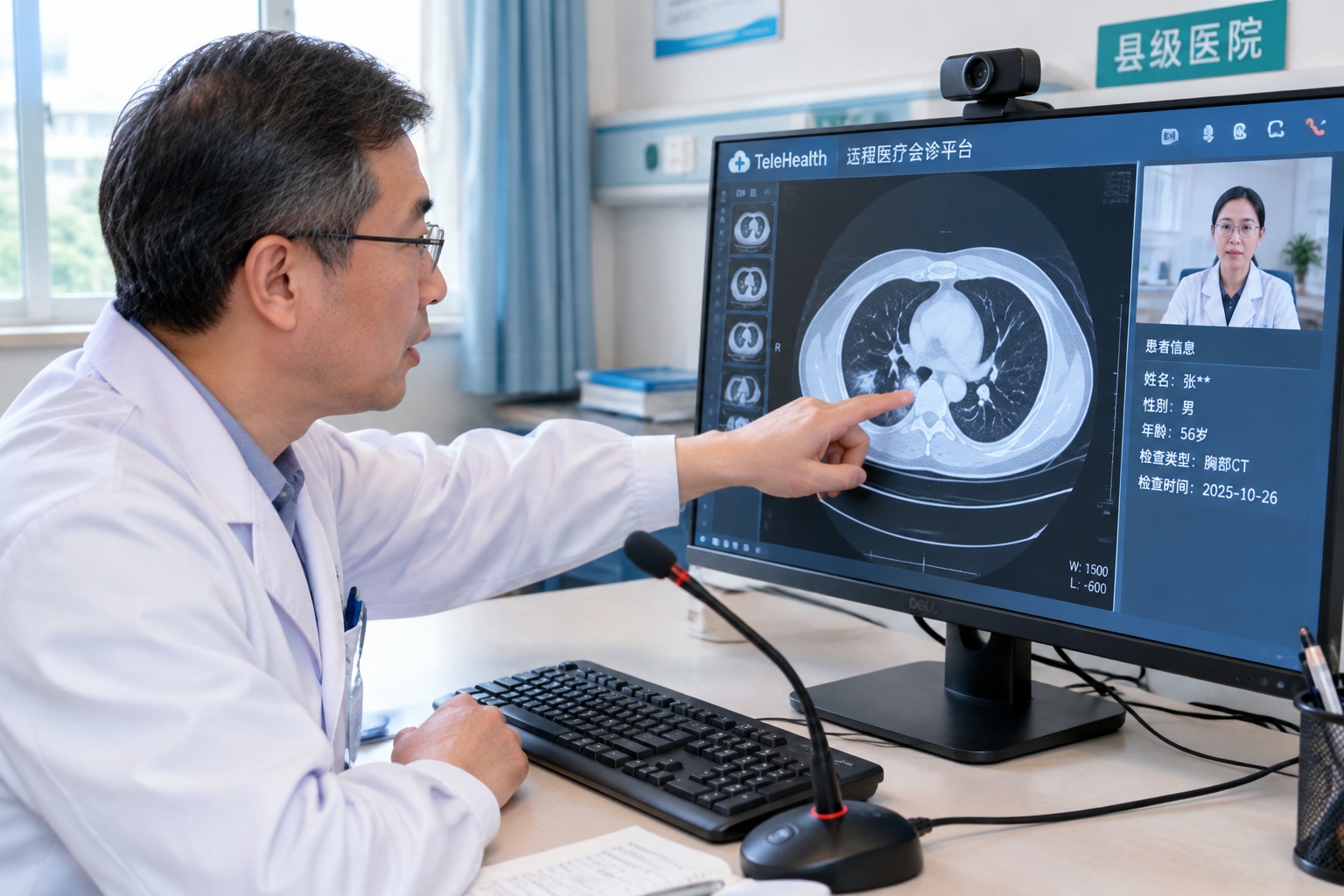
Today, over 3,000 Chinese hospitals participate in remote consultation networks. The setup is practical. A county hospital like the one in Yunnan has a dedicated room with a large monitor, a high-definition camera, and a computer connected to a national platform. Local doctors upload case files—images, lab results, patient history—and then request a consultation with specialists at partner hospitals. The specialist chooses a time from their schedule, usually the same day or the next.
The technology is not exotic. It uses video-conferencing tools that anyone might recognize, but adapted for medical work. The screen is high-resolution so every detail of an X-ray or MRI is visible. The camera can zoom in on the patient’s face when needed. An electronic health record system keeps everything in one place. In rural areas, the expansion of broadband and 5G networks has made these connections much more stable than they were just five years ago.
Telemedicine is not new in China. The first experiments began in the 1980s, but they were limited by poor networks and high costs. The real push came with nationwide internet infrastructure and, later, the COVID-19 pandemic, which forced many hospitals to switch to online consultations. That experience proved that it could work in routine care, not just emergencies.
The simple look hides a deeper difference. Dr. Liu told me that the best part is the chance to learn. “I don’t just get an answer,” he said. “I get to see how a first-class specialist thinks. They ask about the same data I have, but they see something I missed.” For a doctor in a small county, that kind of ongoing education is gold.
Real Impact: Money, Time, and Hope
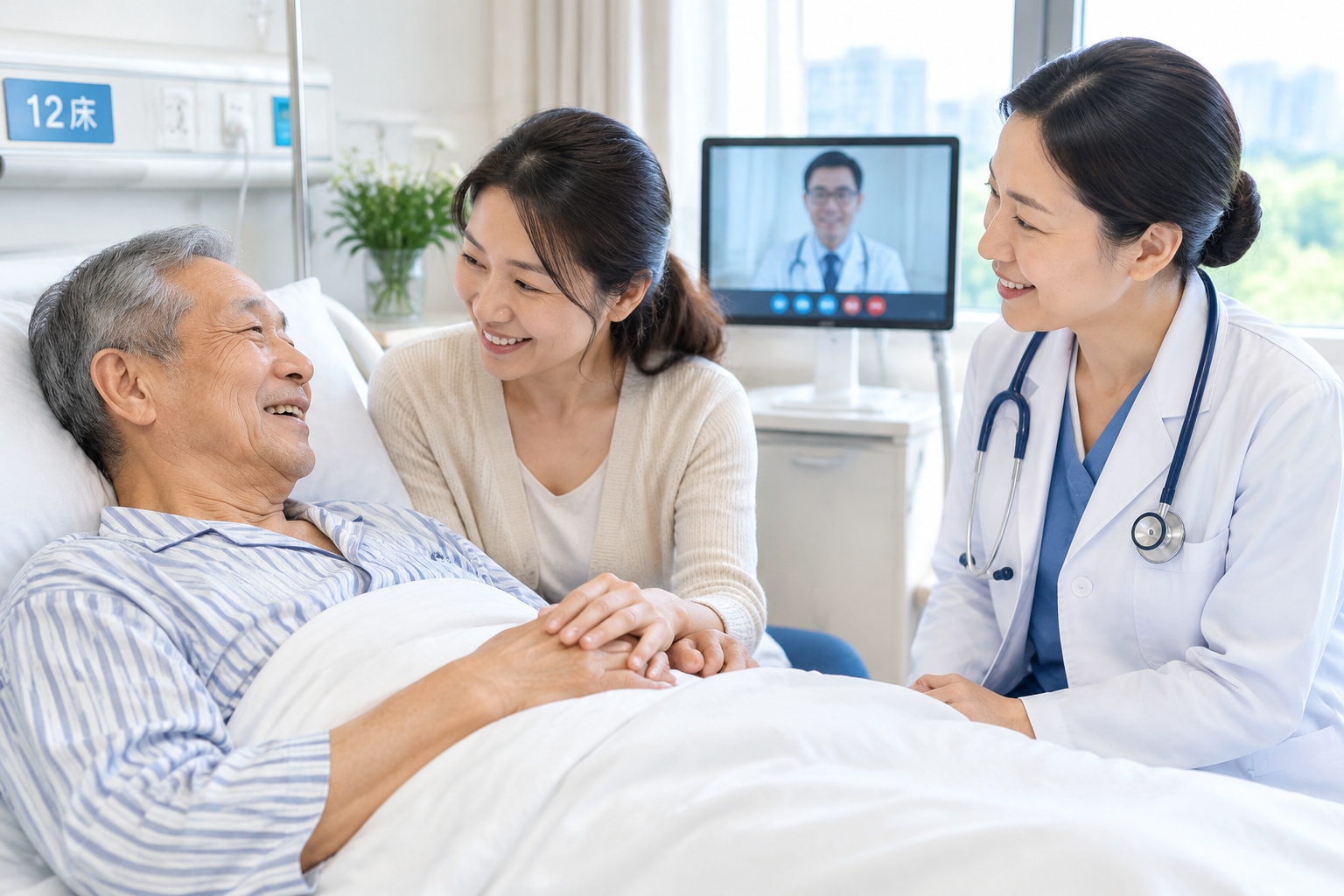
For patients, the benefits are concrete. Mr. Chen’s daughter, who stayed by his bedside, told me that if her father had been sent to Kunming, the trip would have taken six hours on winding roads. “We were scared of the journey more than the illness,” she said. With the remote consultation, the only travel was from their village to the county hospital, about forty minutes away. The hospital bill was also covered by medical insurance, which now includes remote consultations in many counties.
Other provinces have similar stories. In Gansu, a county orthopedic surgeon performed a complex joint replacement under the virtual eye of a professor from Beijing. In Sichuan, a pregnant farmer with a rare condition received guidance from a specialist at West China Hospital without leaving her town. In Hunan, a 7-year-old boy with a suspicious lung shadow was diagnosed through a remote consultation as having a common infection instead of cancer, saving his parents from a panic trip to a big city. These aren’t just medical victories; they are also stories about saving families from financial ruin and emotional exhaustion.
Because remote consultations are often cheaper than a referral, they also relieve pressure on big hospitals. A doctor in Shanghai told me that many patients who travel hundreds of kilometers for a question could have been helped by a video call. “We can solve a lot of problems remotely,” she said. “The challenge is letting people know this option exists.”
Challenges and Messy Realities
Telemedicine is not a miracle cure. Internet connections can still fail in thunderstorms. Not all county hospitals have the budget to replace outdated equipment. Some older doctors feel uncomfortable talking to a screen, preferring the old habit of sending patients away. And there are unresolved questions about legal responsibility: if something goes wrong after a remote recommendation, who is at fault? The law is still catching up with the technology.
There is also the risk of creating a new layer of dependency. Over time, local doctors might rely too much on distant specialists instead of building their own confidence. The best programs, I’ve learned, focus on training, not just prescribing. The Shanghai doctor who helped Mr. Chen now gives monthly video lectures to Dr. Liu’s team.
Another issue is the digital divide. Rural patients are often older and less comfortable with technology. Sometimes the family has to help them set up a video call. But hospitals have staff to handle that, and most consultations happen in the hospital, where doctors manage the technology for them.
What’s Next: AI and Remote Hospitals
The future of remote healthcare in China will probably involve artificial intelligence. Already, some platforms use AI to read chest X-rays and flag suspicious shadows. In a few years, an AI system may do the first triage, ranking urgent cases before a human specialist looks at them. Remote-controlled robots are in early trials for procedures like vascular surgery.
China has also started to formally accredit “internet hospitals”—virtual extensions of real hospitals where patients can consult doctors for follow-up visits and prescription renewals. For chronic conditions like diabetes or high blood pressure, this is a lifeline for rural residents who no longer have to make long trips just to get a refill. In 2023, more than 50 million people in China had used some form of online medical consultation, according to industry estimates.
Conclusion: A Bridge, Not a Screen
When I left the hospital in Yunnan, the rain was starting. Dr. Liu walked me to the gate and showed me a photo on his phone: Mr. Chen standing in his tea field, grinning, a week after the stroke. “He brought us tea,” Dr. Liu said. “I told him the tea is from all of us.”
The technology behind remote consultations is not groundbreaking in the world of global tech. But in a country where a specialist can be a thousand miles away, it creates a very human connection. A doctor in Shanghai sees a farmer in the mountains, and distance stops being a wall and becomes a thin, invisible thread. That thread is the new face of healthcare in China—quiet, practical, and very real.
Start the discussion at forum.chinacomes.com