

Morning in a Peony Field
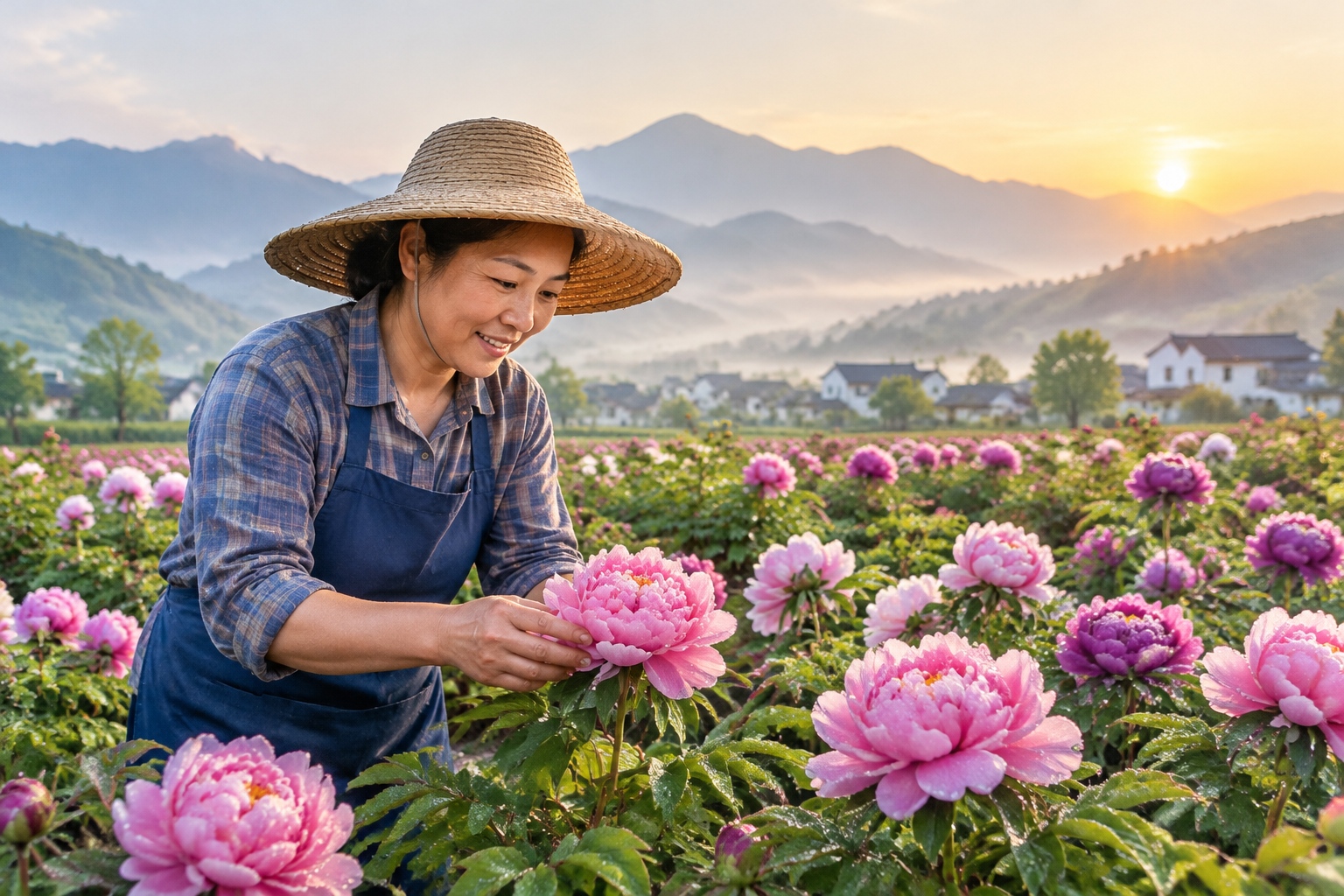
At 6 a.m., the sun is still low over the Yellow River plain when Wang Fengxia kneels in the damp soil of her peony field. Her scissors snip a thick stem at an angle, and she places the blossom—a deep purple double-petal variety called ‘Qing Long Wo Mo Chi’—into a woven basket. ‘Each flower has a moment,’ she says, looking up. ‘If you cut too early, it won’t open. Too late, and it starts to fall.’
Wang is one of tens of thousands of farmers in Luoyang, a city in central China’s Henan Province, who make a living from a flower that has symbolized wealth and honor for centuries. In Chinese, the peony is known as ‘mudan’ and is often called the ‘king of flowers.’ But here in Luoyang, it’s not just a cultural icon—it’s a livelihood that supports, by some estimates, more than one million people.
Why Luoyang Peonies Are Special
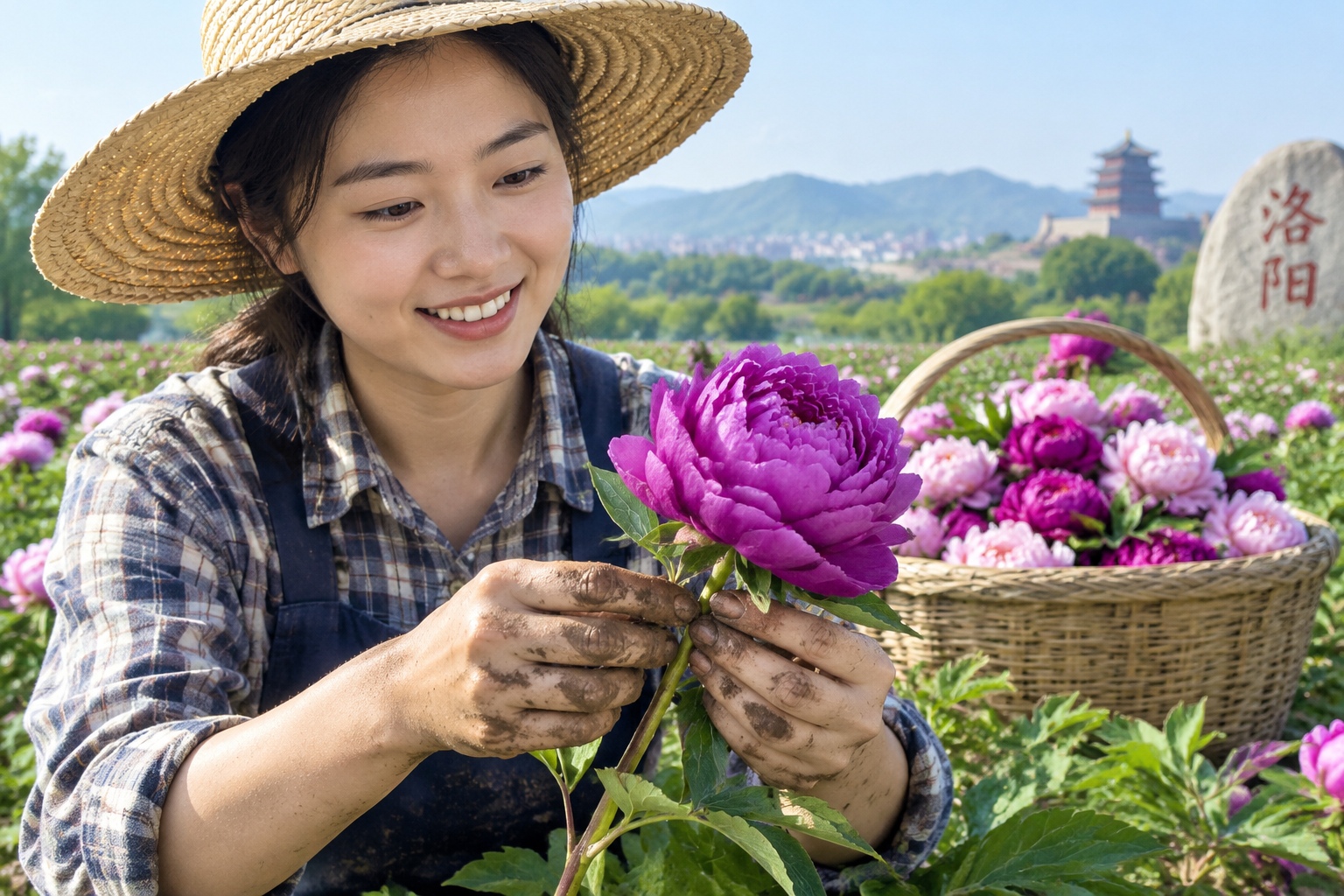
Peonies have been cultivated in Luoyang since the Sui and Tang dynasties, more than 1,400 years ago. The city’s climate—hot summers, cold winters, and a distinct loess soil—gives the flowers rich colors and a strong fragrance. Locals often say, ‘Unless you see peonies in Luoyang, you have never seen true peonies.’
Today, the city’s peony planting areas cover around 400,000 mu (about 26,700 hectares), with more than 1,400 varieties. But the flower’s influence reaches far beyond city parks.
From a Single Flower to a Full Value Chain
Over the past two decades, Luoyang has turned its famous flower into a full industrial chain. Fresh-cut peonies are sold domestically and exported to Japan, Europe, and Southeast Asia. Roots are used in traditional Chinese medicine. Petals are distilled into essential oils or dried for tea. Seeds are cold-pressed into peony seed oil, a high-end cooking oil with omega-3 fatty acids. Even the bark is used in herbal remedies.
This diversification is deliberate. A single peony blossom might sell for only a few yuan at the market, but the same flower’s petals can be worth ten times more as tea. ‘We used to just grow flowers and wait for buyers,’ says Liu Guozheng, a 63-year-old nursery owner in Mangshan, on the northern edge of Luoyang. ‘Now we also sell seedlings, produce, and even flower-based cosmetics. A farmer’s income can be 30 to 50 percent higher than a decade ago.’
Farmers, Cooperatives, and New E-Commerce
Not everyone sells directly. Many farmers join cooperatives that help them with technology, seed quality, and marketing. The local government has also built cold-chain logistics and auction barns, similar to the flower exchange in the Netherlands. In spring, buyers from across China come to bid on truckloads of cut peonies.
E-commerce has made the market even bigger. On platforms like Taobao and Douyin, flower farmers live-stream their harvests and take orders in real time. ‘Last year, we sold over 100,000 peony trees online,’ says Zhang Mei, a thirty-year-old e-commerce manager for a peony cooperative in Luanchuan County. ‘During peak season, we pack from five in the morning until midnight.’
Zhang Mei’s story reflects a broader shift: the average age of farmers is dropping, as younger people see opportunities in technology-enabled agriculture. It’s a rare example of a traditional industry absorbing rather than losing its young workforce.
Peony Tea, Oil, and Skincare
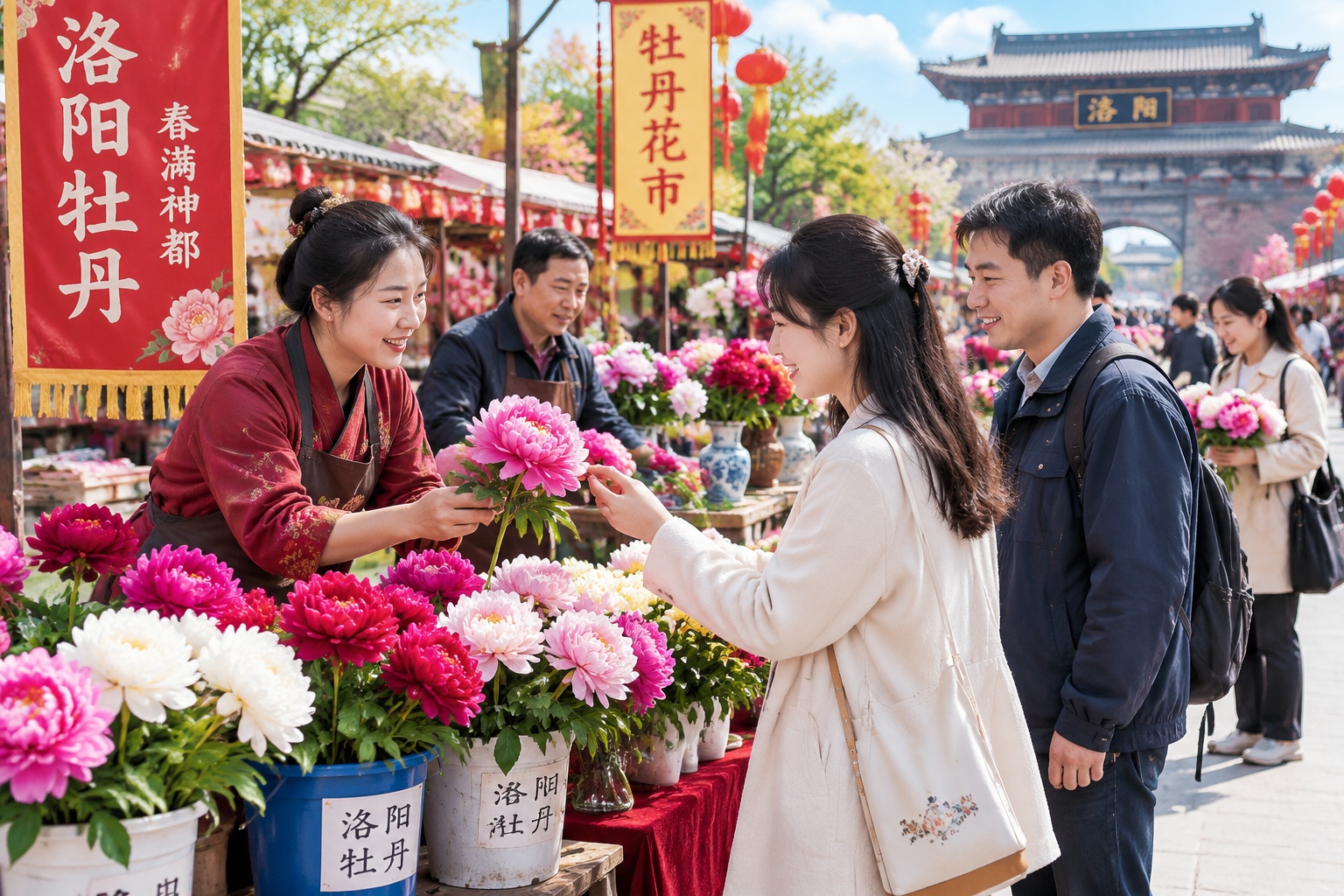
The inedible parts of the plant are just as valuable. Peony seeds are pressed into oil that sells for roughly 500 yuan per liter—several times more than olive oil. The petals are used to make a light yellow tea with a mild, grassy aroma. A growing number of cosmetics brands use peony extract in moisturizers and serums, claiming anti-ageing properties that have made them popular among urban professionals.
In the village of Baiziyuan, almost every household has a small workshop for drying petals or pressing seeds. The village has built a shared processing workshop, where farmers can bring their harvest and leave with bottles of oil or bags of tea bearing the village brand. The workshops employ women who might otherwise stay home, giving them a second income and a stronger voice in the community.
The Peony Festival Brings the World to Luoyang
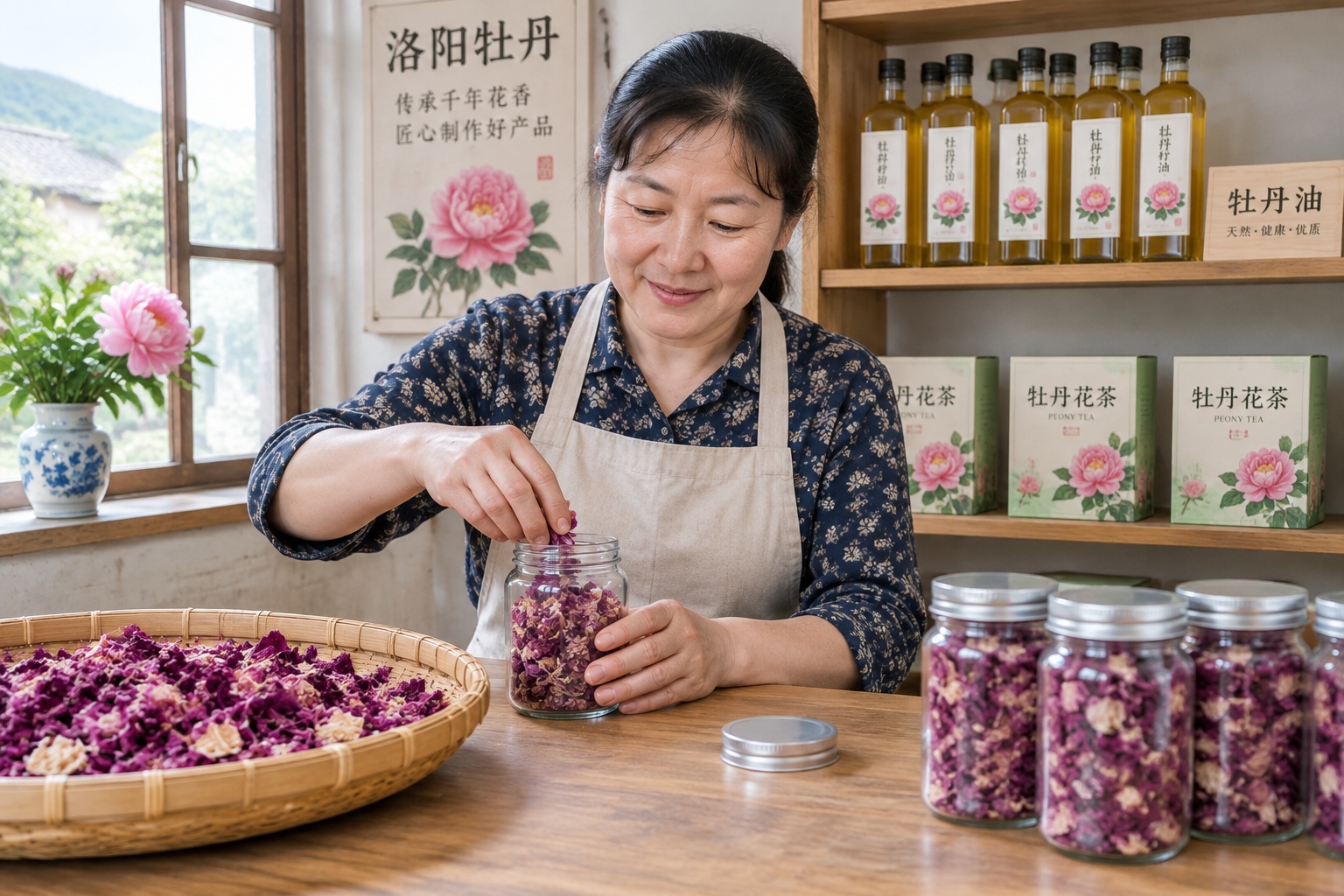
Every April, Luoyang hosts the China Luoyang Peony Cultural Festival, which attracted over 30 million visitors in recent years. During the festival, city parks fill with families, photographers, and bridal photo shoots among the bright clusters. The festival has created jobs in hospitality, food service, and transportation. Many villagers turn their homes into guesthouses, and others sell snacks, souvenirs, and flower-picking experiences.
But the festival is also a pressure point. Inflated prices for hotels and crowded streets can frustrate locals and visitors alike. Some small farmers complain that they don’t capture much of the tourism revenue, which tends to flow to large hotels and tour operators. It’s a reminder that even a beloved flower doesn’t bring equal wealth to everyone.
Living on the Edge: Climate and Competition
Peony farming is not without risks. Spring frosts can destroy an entire season’s flowers, and pests require careful management. Climate change has brought more erratic weather to the region. ‘Three years ago, a sudden hailstorm hit just before the harvest. We lost nearly half of our flowers,’ recalls Wang Fengxia.
There’s also pressure from other peony-producing regions in China, like Heze in Shandong Province. Heze grows peonies at a larger scale and often sells at lower prices. Luoyang has tried to stay ahead by focusing on high-end ornamental varieties and the medicinal and cosmetic products that require quality petals. So far, the strategy has worked, but every farmer knows that reputation alone doesn’t pay the bills.
A Flower with Roots in Everyday Life
For the visitor, Luoyang peonies are a spectacle of color. For the farmer, they are a paycheck, a school for resilience, and sometimes a source of quiet pride. ‘When I see a customer in Shanghai or Tokyo post a photo of a flower we grew, I feel like I’m sending a piece of Luoyang to the world,’ says Wang Fengxia, now packing a box of cut flowers for the evening courier.
That sense of connection may be the real bloom of the peony economy. In a country where urbanization is uprooting millions from the countryside, Luoyang’s peonies offer a reason to stay on the land. The flower is not just a relic of imperial gardens—it is a modern livelihood, passed from one generation to the next, one season to another.
Conclusion: A Flower That Carries a Legacy
The story of Luoyang peonies is a story of how a tradition can evolve. The same flower that once only appeared inside the walls of Tang dynasty palaces now powers an industry that includes global trade, scientific breeding, and online marketing. The path is not always smooth, but the peony remains a remarkable example of how a single plant can feed bodies, minds, and communities.
If you ever find yourself in Luoyang in April, walk into a field, bend down, and take a close look. You’ll see more than petals—you’ll see the faces of the millions of people whose lives are intertwined with this one flower.
Start the discussion at forum.chinacomes.com