

A Spring Morning in Zhengzhou
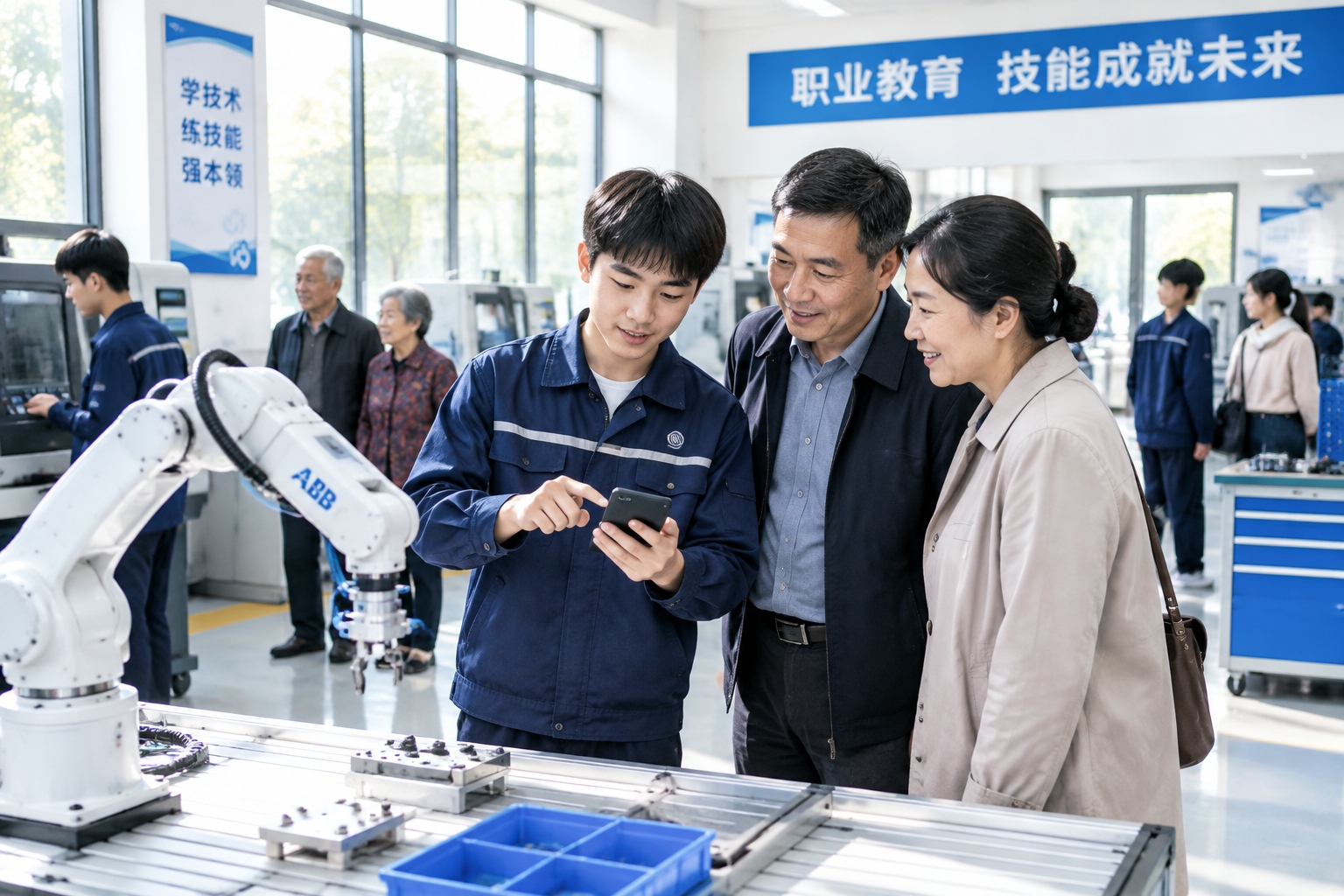
On a bright April morning, I stood inside the training workshop of a polytechnic in Zhengzhou, an industrial city in central China. The air smelled of cutting oil and fresh metal. A group of teenagers in navy workwear were practising on computer-controlled lathes, while their parents wandered among the machines, filming everything on their phones. One mother told me that a year ago she would have begged her son to leave this school and try again for the national college entrance exam, known in China as the gaokao. Now she laughed, because the robotic arm her son had built had just won a provincial prize. “I used to think this was the end of his future,” she said. “Now I see he is building one.”
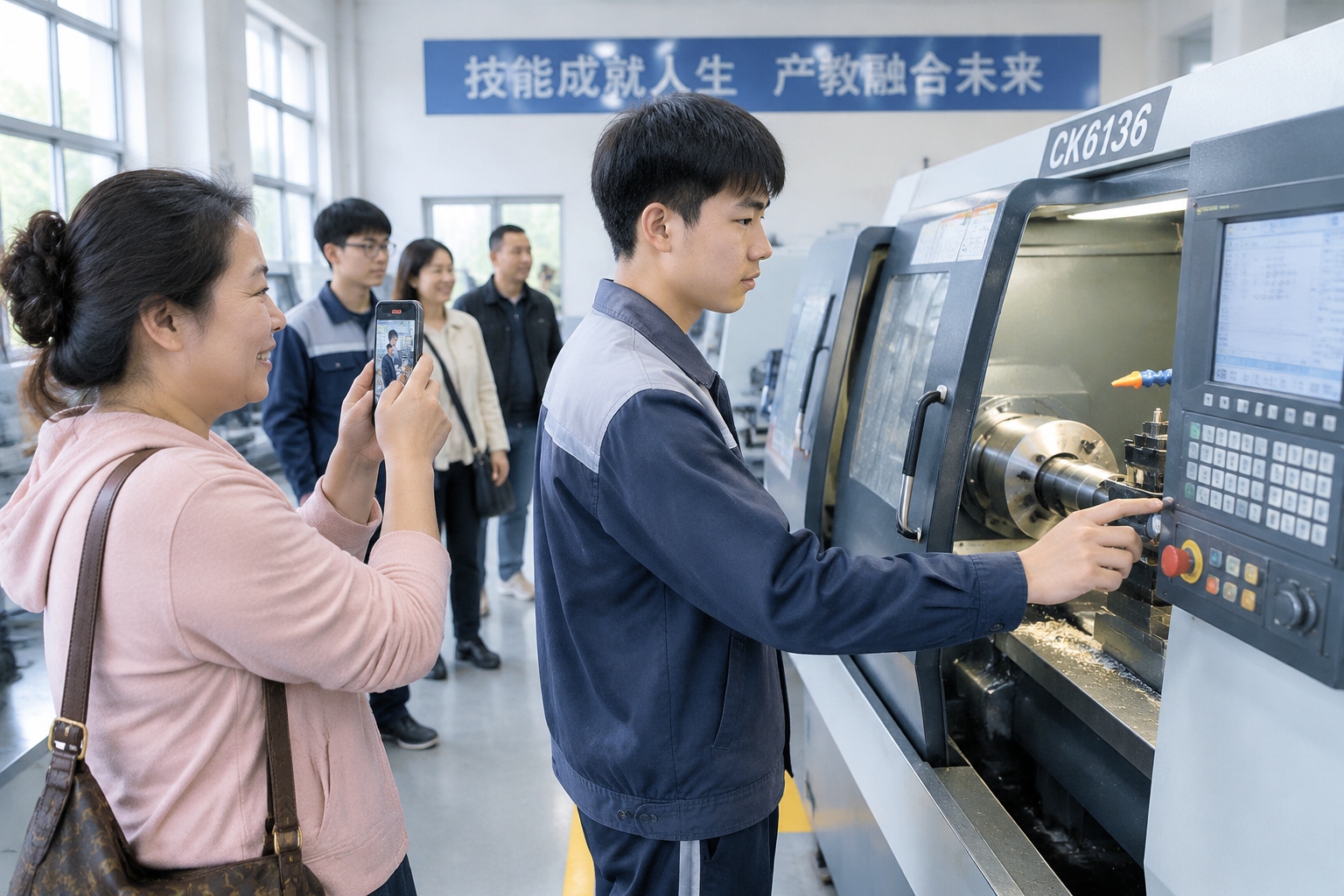
That scene is a small window through which a much larger story is visible. For decades, vocational education in China was treated as the last stop for students who could not keep up academically. The very words “vocational school” made many parents wince. Today, the same schools are finding a new respect, and the change is being felt not just in official documents but in family conversations, factory floors and city night schools.
Why the Old Bias Was So Deep
The prejudice did not appear out of nowhere. In China’s traditional culture, manual work was often placed below intellectual work. The old saying “the best use of a man is to read” reflected a deep belief that education meant escaping the workshop. For centuries, the imperial examination had already created the idea that book learning was the road to status. That mindset kept a firm grip even after the Communist takeover, because a university diploma became the surest way to a white-collar job and urban residence.
This cultural bias was reinforced by the structure of the modern school system. At around age fifteen, after the nine years of compulsory education, students sit a high school entrance exam. If their scores are too low for a regular academic high school, they are directed toward a vocational school. In a society that believes a bachelor’s degree is the only natural path, being sent to a vocational school felt like being told to stop trying.
Most vocational schools did little to change that feeling. A large number were underfunded and badly managed. They used machinery from the 1980s, taught long-outdated curricula and did not have teachers with genuine workshop experience. Some even sent students to factories as cheap labour instead of training them. The failures of these schools confirmed the bias rather than challenging it.
The Economy Pulls the Rug
The Chinese economy, however, has changed far faster than those old perceptions. As the country shifts away from low-cost assembly lines, it now fills its factories with robots, sensors, electric-vehicle drivetrains and renewable-energy equipment, and these factories need operators and maintainers with real skill. Manual work has become technical work.
The numbers make it clear. China currently has more than 27 million students in vocational education and nearly half of senior-high-school-age students are on the vocational track. Despite this, companies in manufacturing hubs like Shenzhen, Ningbo and Changsha repeatedly say that they cannot find enough highly skilled workers. China’s Ministry of Human Resources and Social Security has estimated that the shortage of skilled workers in the country may exceed 30 million by 2025. There is already a serious gap between what schools produce and what factories need.
This shift in demand changes the value of a technical certificate. Someone who has learned to program a five-axis machine or repair a lithium-ion battery can expect a monthly salary that many fresh university graduates only dream of. The idea that “hands-on work is for losers” is slowly dying as employers fight to sign young people who know how to operate modern equipment.
Policy Changes That Go Beyond Paper
The state has not been idle. In 2022, China revised the Vocational Education Law, officially declaring that vocational education is equal to academic education. It also opened a path for vocational universities to grant bachelor’s degrees, not just technical certificates. The new “Double High Plan” aims to build roughly 56 top-level vocational colleges and 141 high-level schools by 2025, giving them extra funding and demanding that they become models for the rest of the country.
There is now a network of vocational universities that offer applied degree programmes in such areas as mechatronics, drone maintenance and electrical-vehicle engineering. In Zhejiang, a province known for its many small factories, one such university has developed a “modern apprenticeship” model with local companies. Students spend two days a week in a factory, learning under an experienced master, and three days in classrooms or labs. By the time they graduate, many have already signed a job contract.
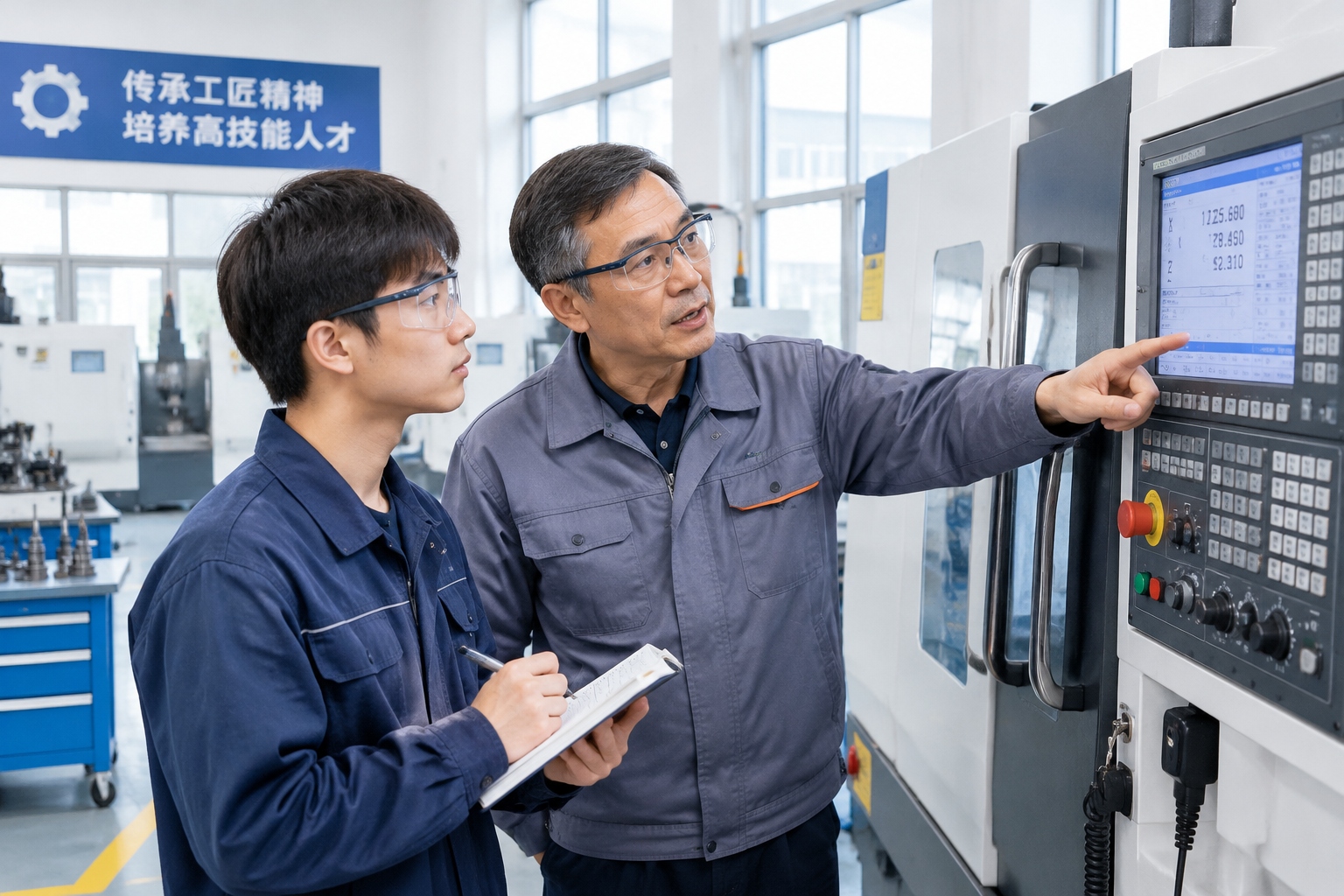
This kind of cooperation is not limited to rich coastal areas. In the southwestern city of Liuzhou, where the economy depends on automobile and construction-machinery production, public vocational colleges have rebuilt their training floors to mirror actual factory layouts. “We have given up the idea of teaching theory for two years and then letting students touch a machine,” one principal told me. “Now they are on real equipment from the very first month.”
Skills Contests and the New Popular Hero
Another vivid sign of change is the growing public enthusiasm for skills competitions. China has become one of the top contenders at the WorldSkills competition, and when a young welder or robot programmer returns from Europe or Asia with a gold medal, they are treated as a hometown hero. In recent editions, Chinese teams have repeatedly finished at the top of the medal table, and winners are welcomed home with the kind of media attention usually reserved for Olympic athletes.
The state has also encouraged what Chinese officials like to call “craftsman spirit” — a devotion to doing skilled work well, rather than cutting corners. The idea appears in school mottos and factory posters, but it also shows up in popular culture. TV dramas now include protagonists who are technicians or mechanics, and social media is filled with short videos about precision work. Young people watch a mechanic fix a leaking pipe or a chef carve a vegetable into a flower, and they share those videos widely.
Shifts Around the Kitchen Table
The deepest change, however, is happening in private life. I have interviewed parents who once refused to tell relatives that their child went to a vocational school, but are now the most vocal fans of those schools, because the child has graduated with a stable job and rising confidence. A father in rural Hebei told me that his son took a plumbing course, found work in Chengdu and now makes more than his own income. “He sends us money every month, and he is respected in his company. That is the first time a builder in our family is proud without hiding.”
Perhaps even more tellingly, urban white-collar workers are returning to basic skills. In Shanghai, Beijing and other large cities, evening “skill schools” have appeared, teaching welding, woodwork, basic plumbing, drone piloting or sewing. Many students are not looking for a job; they are looking for a more balanced life, a way to escape the screen. One young product designer told me that she spent three evenings a week learning to weld. “There is a kind of peace when you turn metal into something solid,” she said. “It makes me feel like my body matters, not just my laptop.”
The Road Is Still Rocky
Anyone who wants a fully polished success story should look elsewhere. The gap between good and poor vocational schools remains enormous. A school in a small rural county in Gansu may have a broken planer and a teacher who has never worked in a factory, while a flagship college in Zhejiang has robot arms and machines worth more than the county’s whole education budget. Students in remote areas are still being educated for a past economy, not the present one.
The teaching profession is another problem. In many vocational colleges, teachers are recruited on the basis of academic records, not actual workshop experience. They have spent their whole lives in school and cannot pass on the practical judgement that only comes from real production. Industry partnerships can help, but not every school has access to willing companies.
There is also the lasting power of old ideas. In many villages, the belief that only a university degree guarantees progress is still unshaken. A vocational diploma is looked at with suspicion. Parents may prefer to spend a large amount on a private high school that promises a place in the gaokao rather than send their child to a well-equipped local technical school. These stubborn perceptions will not dissolve overnight.
Conclusion: A Spring That Has Just Begun
Yet the season has changed. The spring of vocational education is no longer a slogan; it is a set of daily experiences. You can see it in a mother’s changed smile as she watches her son’s robot arm move, in the quiet confidence of a young woman who can weld a perfect joint and in the respect that a factory boss shows when she says she has a certificate in electrical-vehicle maintenance. The road is long and rough, but for the first time in many decades, vocational schools in China are becoming a place where talent can blossom.
For other countries, watching China’s experiment is not just an academic exercise. It raises a deeper question: how does a society give dignity to the people who build, repair and create things? The Chinese direction is to combine policy, industry partnership and cultural storytelling. It is far from perfect, but it is moving. And as the old gates of the gaokao become less of a fortress, more young Chinese will have the chance to walk through the open workshop doors instead. That is a big step for the world’s most populous nation.
Start the discussion at forum.chinacomes.com