


One Morning at the Pharmacy Window
Li Wei, a 31-year-old IT engineer in Nanjing, was scanning a QR code at a pharmacy counter. The cashier looked at the name on the screen. “Is this for you?” she asked. “For my mother,” Li said. The payment went through. The medicine, a box of blood-pressure pills, now came out of Li’s personal medical insurance account, not his mother’s.
That was impossible just a few years ago. China’s basic medical insurance for urban workers had a simple rule: every person’s account is their own. If your mother’s balance was low, she paid cash—even if your own account was sitting with thousands of yuan untouched.
Today, because of a policy called “household co-payment of the personal account” (个人账户家庭共济), workers in all provinces can link their accounts to parents, spouses, and children. It is, by any measure, a modest change. But it speaks to a bigger debate about how China’s massive but fragmented healthcare system adapts to an aging society.
The Basics: A Wallet and a Community Fund
To understand the shift, it helps to know how China’s basic medical insurance for employees works. Workers pay roughly 2% of their salary into the fund, and their employer pays a higher share (typically 6–10% depending on the city). The government splits that money into two parts.
The first is the Personal Account—think of it as a prepaid medical wallet. It covers outpatient visits, pharmacy purchases, and some routine expenses. The second is the Social Pool—a collective fund used for hospitalizations and severe illnesses. If you get cancer or break a leg, the Social Pool kicks in.
The Personal Account was always meant to be flexible, but until recently, it was also strictly individual. You couldn’t transfer the balance to anyone else, not even to your own child who was born before you were insured—that kind of black humor made the rounds on Chinese social media.
The Old Rule: Yours, Only Yours
The rigidity created practical absurdities. A healthy 30-year-old might accumulate several thousand yuan a year in his account. His retired mother, with chronic diabetes, might empty hers within months. When she needed a refill, she would pay out of her own pocket, while her son’s money stayed frozen.
Some people tried to game the system. They would buy expensive vitamins or medical devices with their own card and secretly hand them over to parents, because the balance couldn’t legally be used by anyone else. That was technically fraud, but it happened out of a very human desire to help family.
In many Chinese families, finances are already shared. Parents help with down payments, children pay for dinner, grandparents chip in for school fees. But the health insurance system treated everyone like a lone island. That tension was growing as China’s population aged faster than anyone expected.
The New Rule: Share It With Family
Beginning in 2021, pilot programs in several cities allowed workers to authorize a direct relative to use their personal account balance. By late 2023, the National Healthcare Security Administration confirmed the policy was implemented nationwide.
Technically, it’s not a “card” anymore in most places. Your identity is connected to a digital medical insurance code, usually displayed through a mobile app or mini-program. To share your balance, you log in, add a family member, and upload documents proving the relationship—birth certificates for children, marriage certificates for spouses, or registration records for parents.
Once approved, the family member can present their own medical insurance code at a hospital or pharmacy. The system automatically checks if they have a balance in their own account. If not, it looks for a linked relative’s account and uses that, up to the available amount.
What can you pay for with a shared balance? In most provinces, it covers the self-pay portion of outpatient bills, prescription drugs, and certain medical devices. It can also be used to pay for family members’ basic medical insurance premiums, a feature that is gaining traction but is still not universal.

Why Now? The Money Idles While the Elderly Struggle
“The personal account is like a bank deposit,” explains Dr. Zhou Min, a health policy researcher at Fudan University. “It accumulates when you are young and healthy, but it doesn’t earn much interest, and the government realized it was holding back the system’s efficiency.”
According to the National Healthcare Security Administration, by 2022 the accumulated balance in employee personal accounts exceeded 1.1 trillion yuan (about 150 billion US dollars). That is a huge pool of idle money, largely concentrated in younger, healthier workers.
Meanwhile, many older people—especially those with chronic conditions—saw their own accounts drain quickly. In a family with two retired parents and one working child, the sharing policy can literally move money from a son’s unused wallet to his father’s monthly pharmacy bill.
The reform also aligned with a second change: expanding the Social Pool to cover more outpatient expenses. Traditionally, outpatient care was paid mainly from personal accounts, which penalized the chronic sick. Now, with the Social Pool kicking in for many outpatient treatments, the personal account’s role is shrinking. Family sharing is a way to soften that transition and keep the personal account relevant.
Voices From the Streets: Convenient, but Not a Miracle
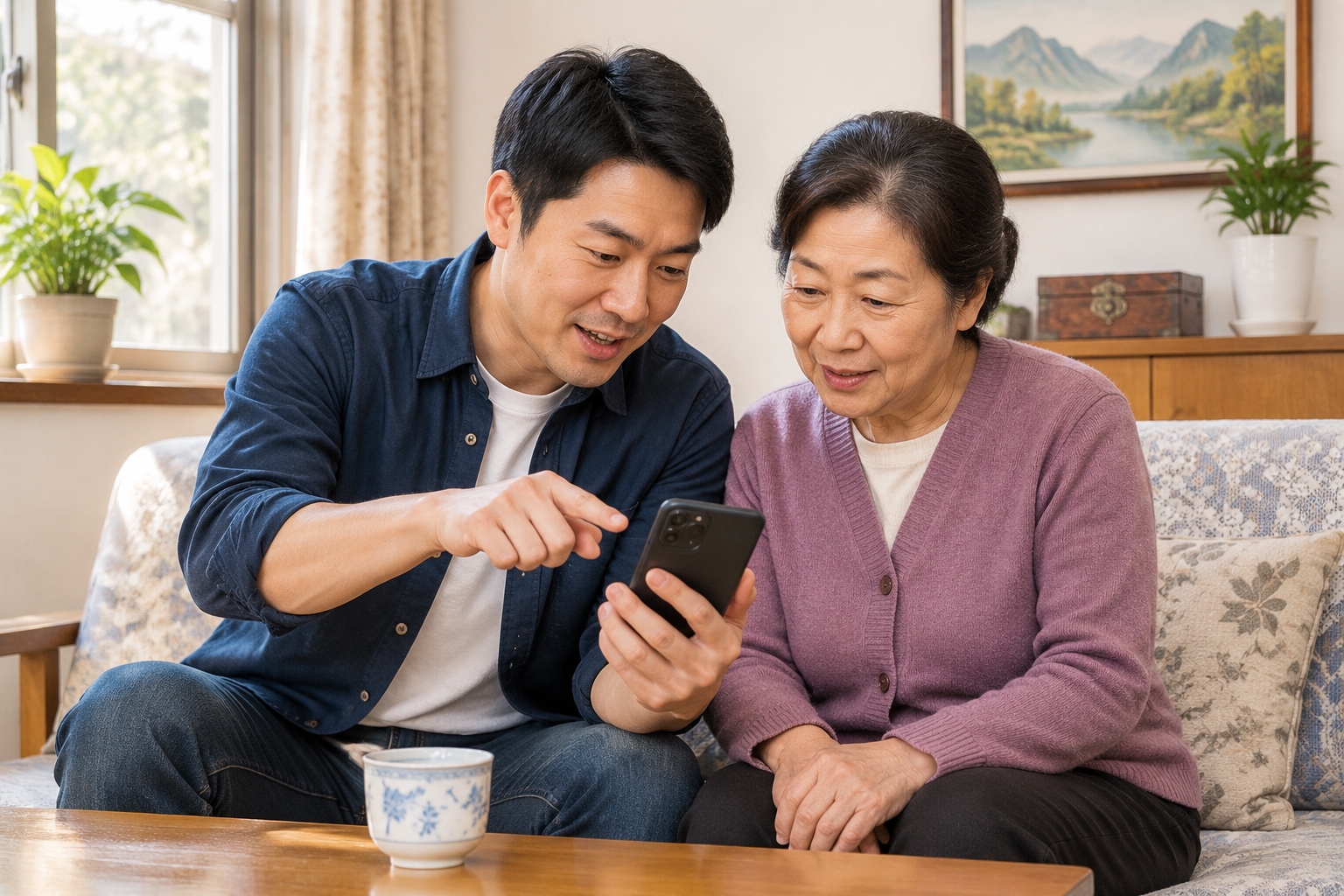
Li Wei, the engineer in Nanjing, says he doesn’t feel the reform at all—which is exactly what he likes about it. “My mother’s medicine costs 300 to 400 yuan a month. I barely go to the doctor, so my account has a good balance. Now I just switch the payment source in the app and it’s done.”
In Guangzhou, a retired teacher named Chen Fang is more cautious. “My son linked me, but I still don’t like to use his money. It feels like I’m taking something away.” Her son, Cheng, laughs: “Mom, that’s what it’s for. If I have too much, it just stays there.”
There are also skeptics. “I’m worried that young people will spend their savings on elderly parents and then when they get old, they’ll have nothing,” says a 45-year-old accountant in Shanghai. But under the current rules, the account can’t be emptied without limit, and the money doesn’t disappear—it just shifts within an approved family network.
Not all residents are covered equally. Rural residents have a different insurance system, and their accounts are not shareable in the same way. Many migrant workers who moved to cities may even have an account in one province and a parent in another, and the cross-province sharing is only slowly being opened up. That causes frustration.
What It Doesn’t Do: Limits and Fine Print
The policy has clear boundaries. You can only share with direct relatives—parents, spouse, and children. Siblings, grandchildren, in-laws? Not yet. Many families feel that’s too narrow, since in China grandparents often raise grandchildren and in-laws live together.
The shared balance can only be used for the family member’s own medical expenses that are not reimbursed by insurance. You can’t use it to pay someone else’s hospital admission fees, buy over-the-counter health products, or transfer the money into a bank account. And the person you share with must be insured in the same province.
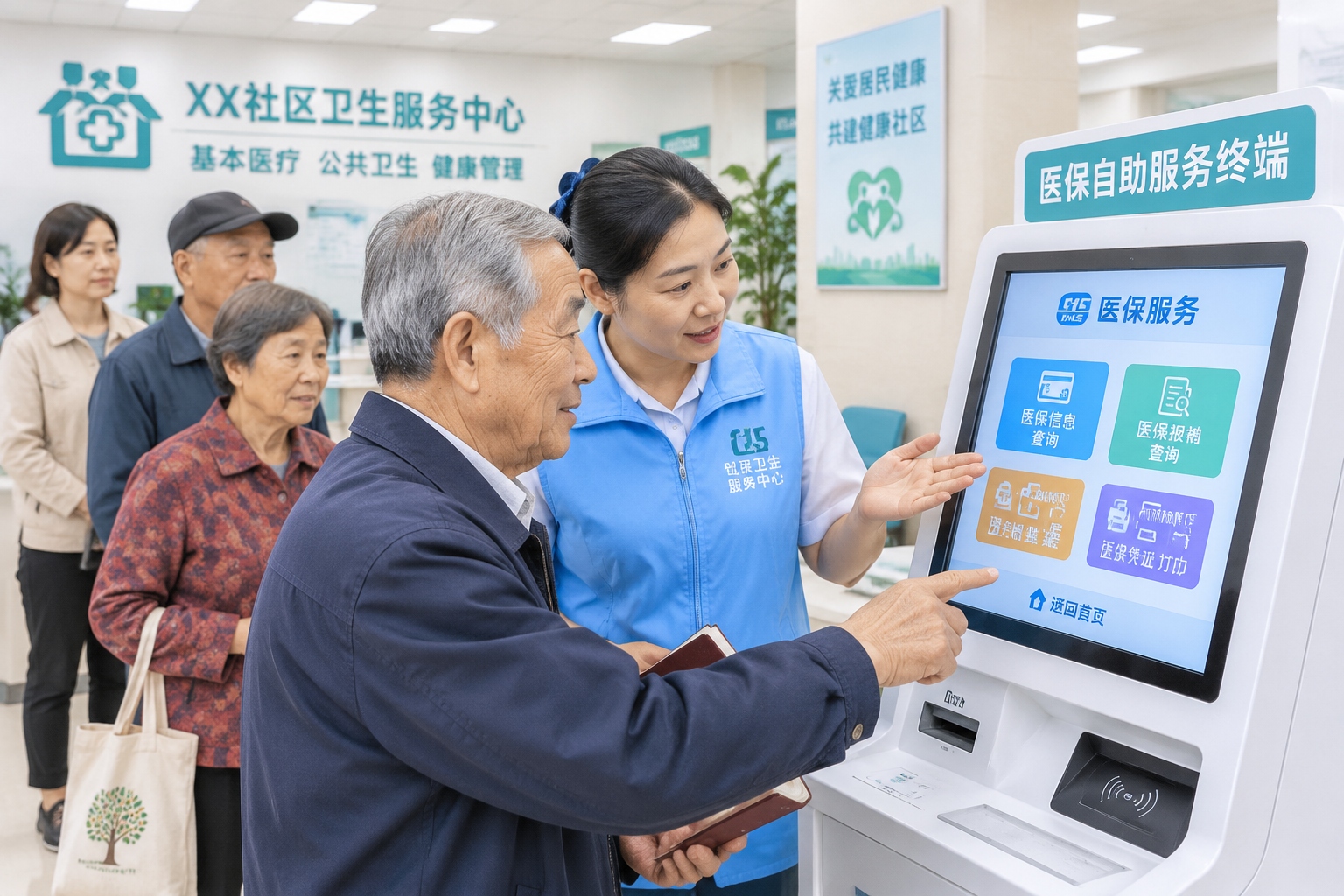
There’s also a practical gap: elderly people who aren’t comfortable with smartphones may struggle to show their digital code. Some cities allow people to bring a printed code, but many local services have stepped in to help, with volunteers at self-service kiosks in hospitals and pharmacies.
Small Step, Big Direction
China’s reform vocabulary often uses the phrase “crossing the river by feeling the stones.” The family sharing policy is a perfect example. It doesn’t promise a new system overnight. Instead, it tests a change in the existing system, learns from user behavior, and expands it.
For policymakers, this is a way to increase the fairness of a system that was built for an earlier industrial era. For ordinary people, it’s a reminder that the government is paying attention to the small, annoying details of daily life—the right to use your own money to help your own family.
When compared with other countries, China’s approach is somewhere between the German system, where spouses and children are often covered for free under one policy, and the American model, where each insured person has separate plans. China is trying to find a middle path that fits its own family traditions and fiscal realities.
Conclusion: A Quiet, Human Innovation
No one stood outside a government building demanding the right to share a medical insurance account. It wasn’t a social movement. It was an administrative decision that responded to a very human complaint: “My money is in there, but I can’t use it for my mother.”
The reform doesn’t create new money. It simply removes a wall between two closely related accounts. That wall was built with a pen, and it can be removed with a pen too.
For the world, it’s a useful lesson in how China’s “small step” reforms operate in the 21st century: quiet, pragmatic, and recorded not in headlines but in countless moments like the one at the pharmacy counter, where a son pays for his mother’s blood-pressure pills without missing a beat.
Start the discussion at forum.chinacomes.com