
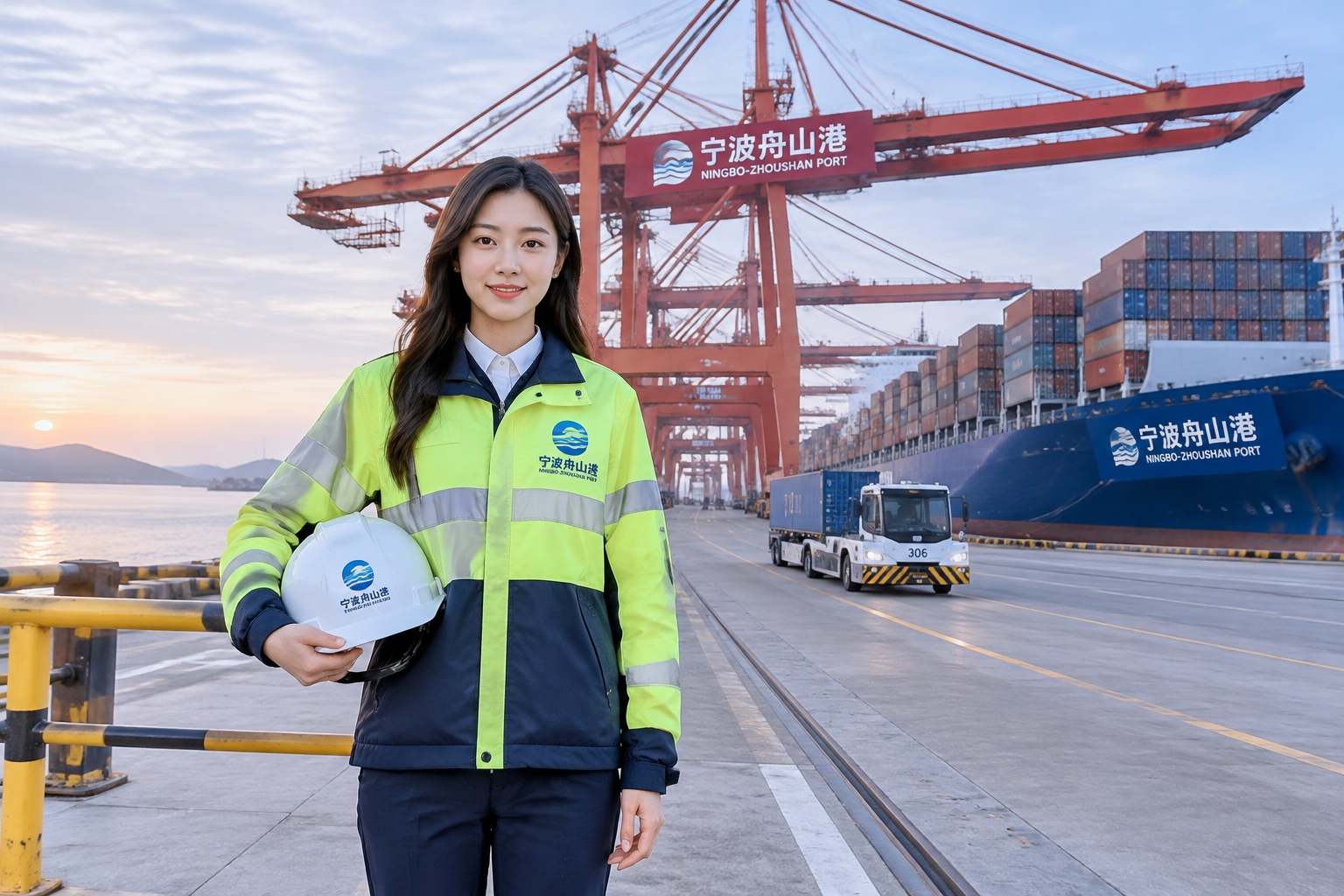

Morning at the World’s Busiest Port
The first light is still gray over the East China Sea when a massive container ship, longer than three football fields, edges toward the berth at Ningbo-Zhoushan Port. On the bridge, a local pilot in a dark jacket gives quiet instructions to the captain. The ship’s engines rumble in reverse, sending ripples across the oily water. Ashore, a row of quay cranes, each as tall as a 20-story building, waits in silhouette.
At 6:15 a.m., the first container is lifted off the ship. Within moments, a driverless truck slides underneath, carrying the steel box toward a vast stacking yard. This scene repeats over and over, around the clock. On average, a container is handled here every 10 seconds, making Ningbo-Zhoushan the busiest port in the world by cargo throughput — a title it has held for more than a decade.
A Colossus Built on Small Steps
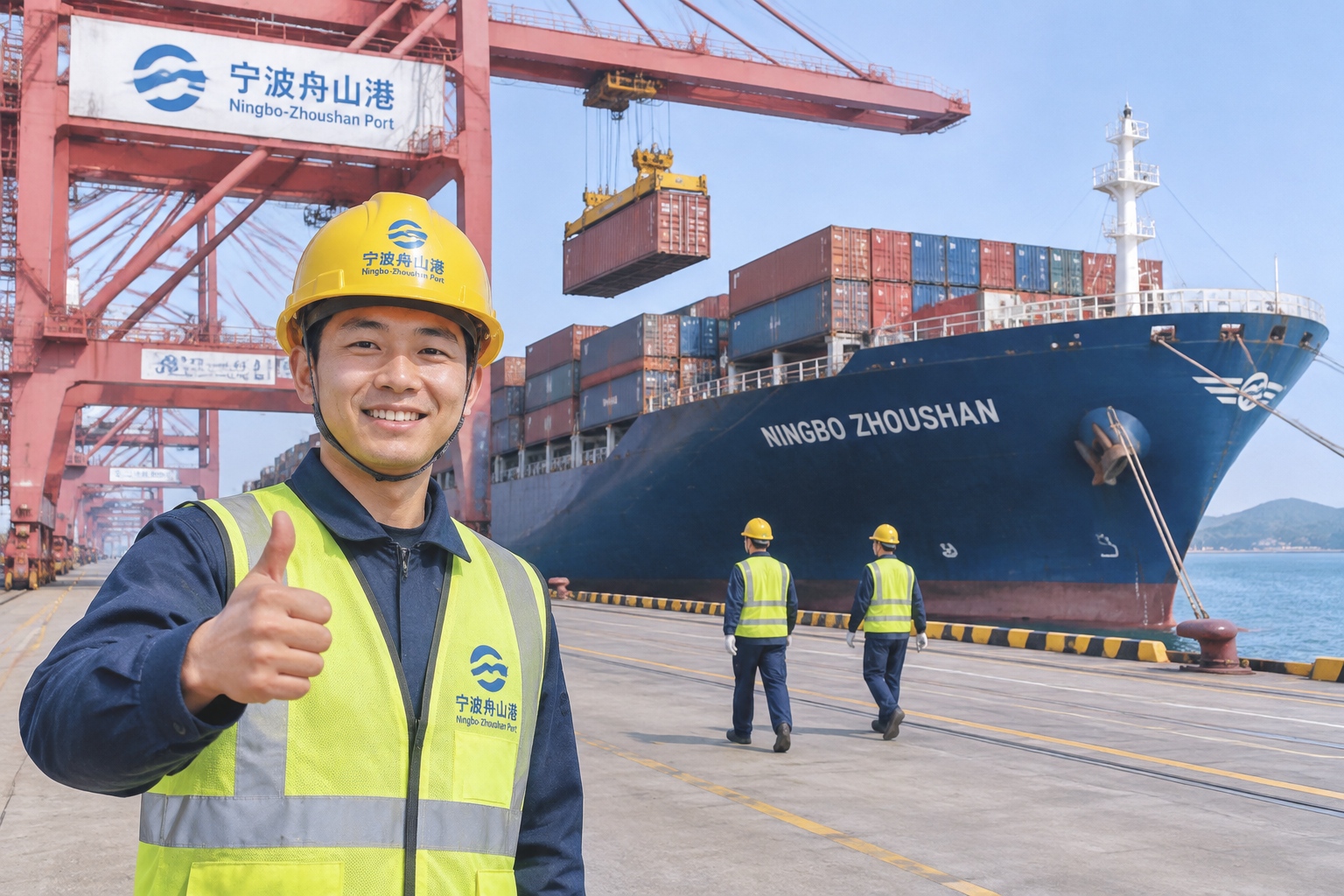
Ningbo-Zhoushan is not a single dock but a sprawling network of terminals spread across islands, bays, and reclaimed land in eastern China’s Zhejiang Province. The port’s 300-plus berths range from small coastal piers to deep-water docks that can accommodate the largest vessels ever built. In 2023, the port handled more than 1.3 billion tons of cargo, a figure so large it is hard to picture. Think of it this way: if every ton were a bag of rice, you could feed the world’s population for a month.
But what strikes a visitor is not the statistics. It is the rhythm. Trucks line up at gate checkpoints with the patience of commuters. Huge rubber-tired gantry cranes straddle rows of containers like robotic dinosaurs. A worker in a yellow vest walks along a lane, scanning barcodes with a handheld device. The scale is immense, yet the movement feels almost choreographed.
The Automated Terminal: Fewer People, More Precision
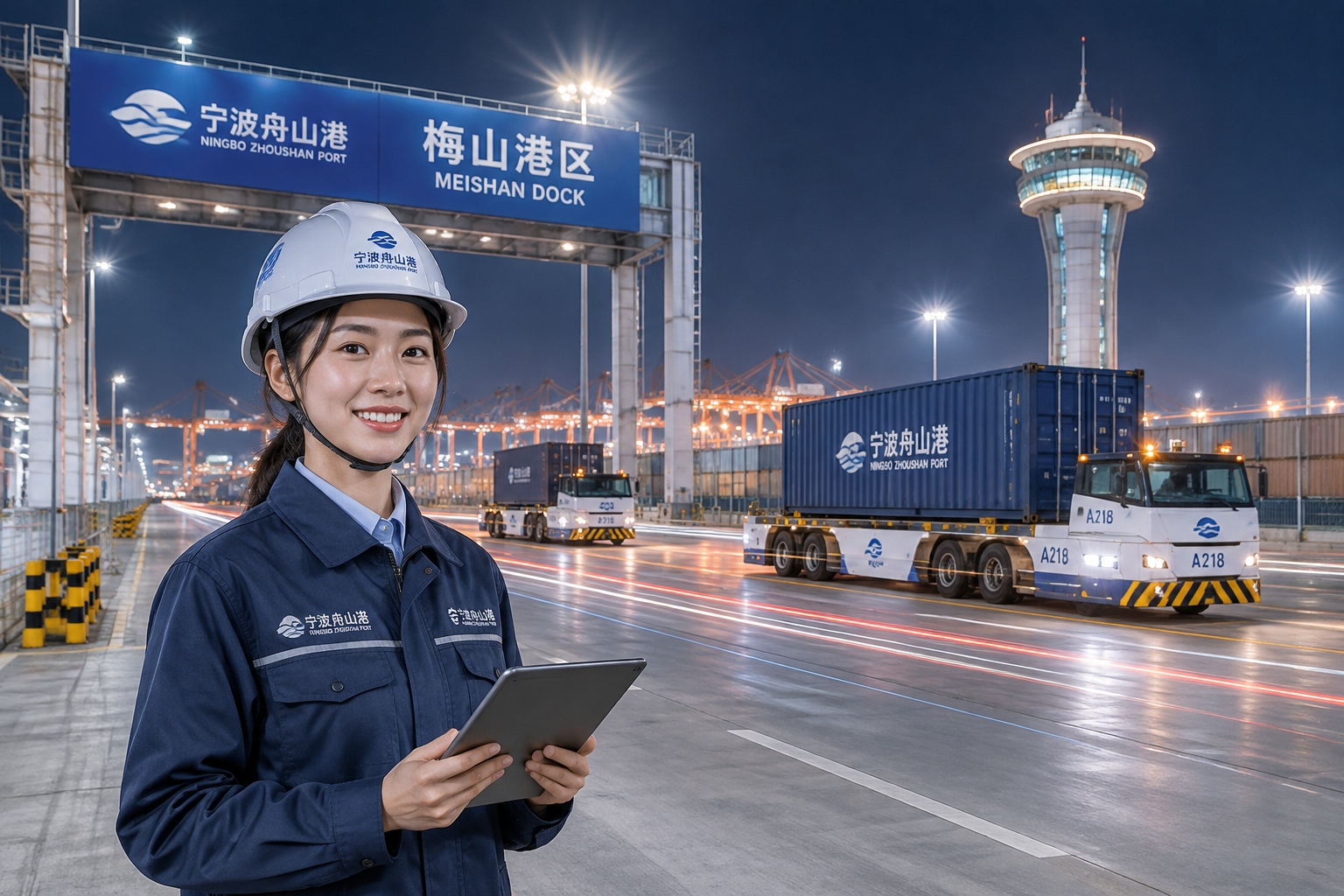
At the port’s Meishan Dock, the future has arrived quietly. Here, in 2023, the port opened a fully automated terminal that runs on 5G, artificial intelligence, and a fleet of driverless vehicles. A small control room overlooks the yard, where a dozen operators monitor screens showing the position of every truck and crane.
Chinese engineer Wang Hui, who has worked at the port for nine years, remembers the shift. “When I started, crane drivers sat in cabs 40 meters above the ground, looking down through a small window. Now we control many cranes from a desk, using cameras and sensors,” she says. “The job is less dangerous and more comfortable, but it requires new skills.”
The automated terminal has boosted efficiency by about 20 percent while cutting energy use. Human workers still handle tricky operations, but the heavy lifting is increasingly done by machines that never tire. Similar automated terminals are being built at other Chinese ports, but Ningbo-Zhoushan is the testbed.
Pilots and Mariners: The Human Knot
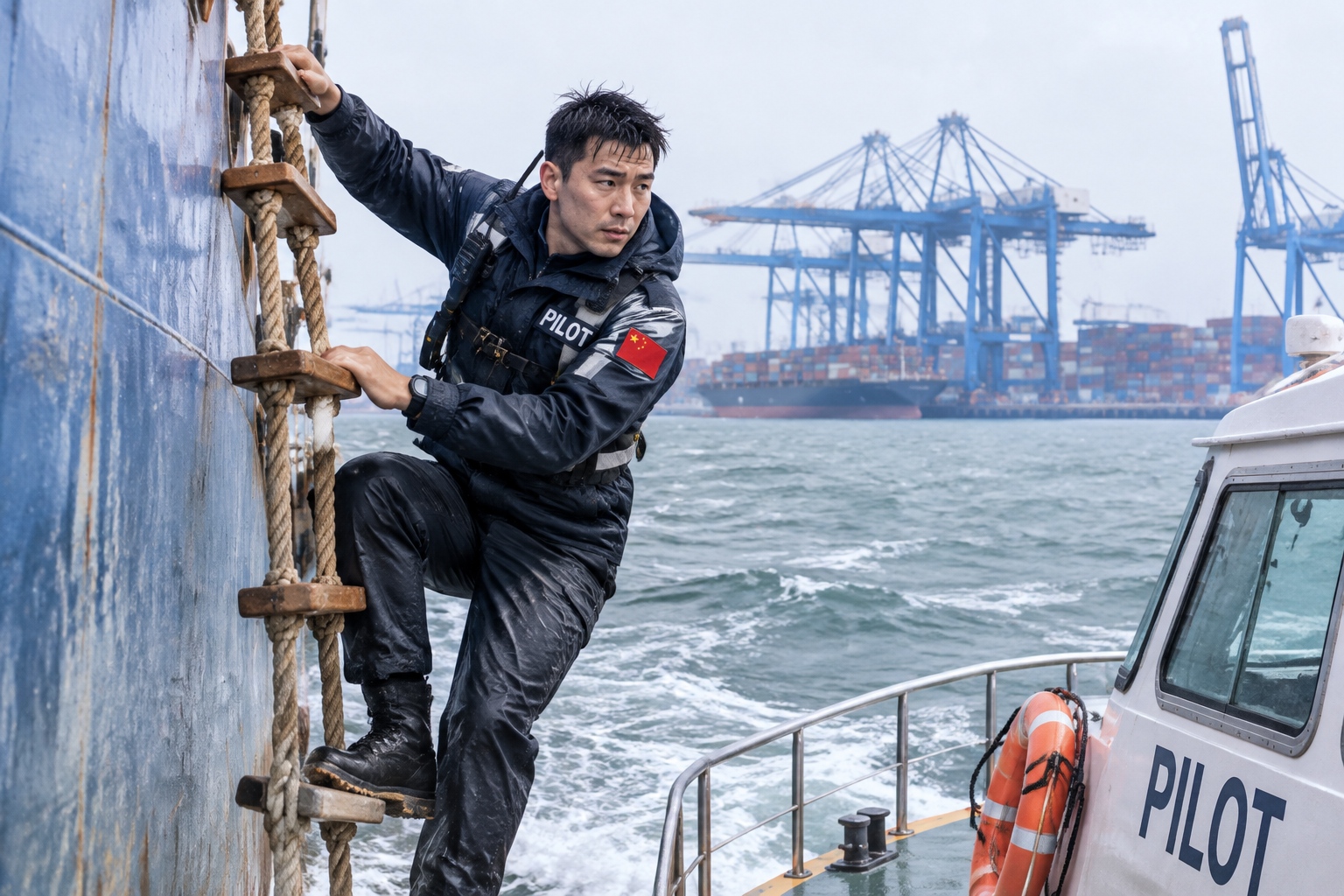
Despite the automation, the port still depends on people in unexpected ways. A pilot like Chen Wei spends his days climbing rope ladders onto moving ships. His job is to guide foreign vessels through the narrow, shallow waters of the approach channel.
“Every ship is different,” Chen says as he unrolls a nautical chart inside a cramped wheelhouse. “The tide, the wind, the current — we have to read all of them in seconds. A mistake here could block the whole port for hours.”
Chen’s day begins before dawn, when the port’s vessel traffic center tells him a Korean cargo ship is waiting at the anchorage. He takes a small launch boat, bounces across the waves, and climbs aboard. For the next three hours, he gives instructions to the captain, steering the behemoth into a precise position alongside the dock. When the job is done, he climbs down and rides back, ready for the next arrival. In a single day, Chen might guide four or five ships, some longer than 400 meters.
Beyond the Crane: The Inland Web
The port is not just a place where ships meet trucks. It is the heart of a logistics network that reaches factories and warehouses across China. Every day, nearly 30,000 trucks enter and leave the port, carrying goods to and from the Yangtze River Delta, one of the country’s most industrialized regions.
Li Ming, a truck driver from nearby Ningbo, has been hauling containers for seven years. He usually picks up a loaded box from the port in the morning, drives an hour to a factory in the city’s industrial zone, and returns with an empty one. “The traffic is heavy, but the port is efficient,” he says. “I can make two rounds a day. Ten years ago, sometimes I had to wait all day just to enter the gate.”
For goods moving inland, the port also connects to the rail network. A dedicated train line carries containers to cities like Yiwu, Chengdu, and Xi’an, where they join rail freight trains to Europe. This combined sea-rail route has grown rapidly, offering an alternative to air and road transport for time-sensitive products such as electronics and auto parts.
The Cost of Being Number One
Being the world’s busiest port does not come without strain. The waters around Ningbo-Zhoushan are crowded, and shipping traffic sometimes causes delays. Environmental concerns are mounting: ships burn heavy fuel, and the port’s expansion has affected coastal habitats. In recent years, the port has tried to go greener. Shore power now allows docked ships to switch off their engines and plug into the local grid, cutting emissions. Trucks using the port are increasingly electric, and a new program rewards shippers who use rail instead of road.
Yet challenges remain. Land is scarce, and the port is continuously digging new berths and deepening channels. There is also competition from other Chinese ports, such as Shanghai and Shenzhen, which are equally ambitious. Ningbo-Zhoushan’s advantage is its natural water depth, which allows the largest container ships to call without limitations.
A Port That Never Sleeps
By late evening, the port is lit up like a small city. Colored containers stack into hills of red, blue, and green. The noise is constant: the rumble of engines, the beeping of reversing trucks, the metallic clank of cranes. A new shift has started, and the cycle continues.
Inside the central control tower, a young dispatcher named Zhou Jia watches a wall of screens. Her job is to coordinate the arrival and departure of vessels, trucks, and trains. “Every minute counts,” she says. “If we save one minute per ship, it adds up to hours over a month.” She takes a sip of tea and turns back to her screen, where a new ship has just entered the channel.
Outside, the pilot Chen Wei is already on his way to another vessel, climbing onto a ladder that leads into the unknown. The port never stops, and neither do the people who make it work.
For the world outside China, Ningbo-Zhoushan is a name that appears on shipping labels and in trade statistics. But for the workers who live and breathe it, the port is a daily rhythm of decisions, motions, and quiet coordination. It is a huge machine, but one made of human hands.
Start the discussion at forum.chinacomes.com