

A Winter Morning in Hohhot
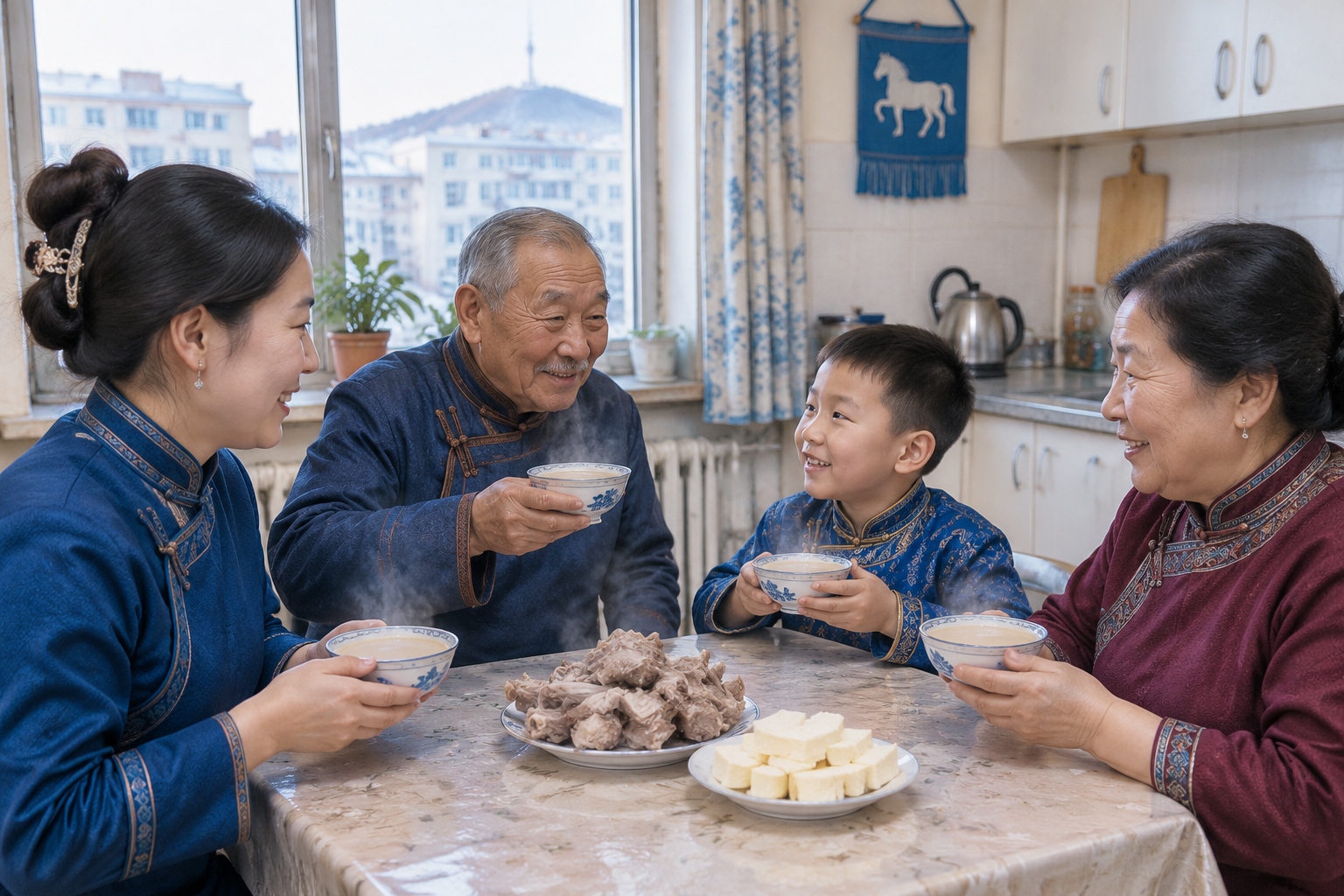
The window in Suren’s kitchen is fogged from the inside. Outside, the morning is well below freezing; inside, a pot of lamb has been simmering long enough to make the air smell of meat, steam, and salt. Suren’s daughter, Naren, is still in a thick sweater, scrolling through her phone with one hand and holding a bowl of hot milk tea with the other. On the table there is a plate of boiled lamb cut into large pieces, a small dish of salt, and a handful of pale milk curd cubes that look a little like chalk and a little like cheese.
This is not a restaurant. Nobody is dressed for a photograph. The tea is salty, not sweet. The lamb is eaten with fingers. The milk curd is chewy and slightly sour, and the first bite makes you slow down. For many families in Inner Mongolia, this is simply breakfast, or a warm pause before going out into the cold.
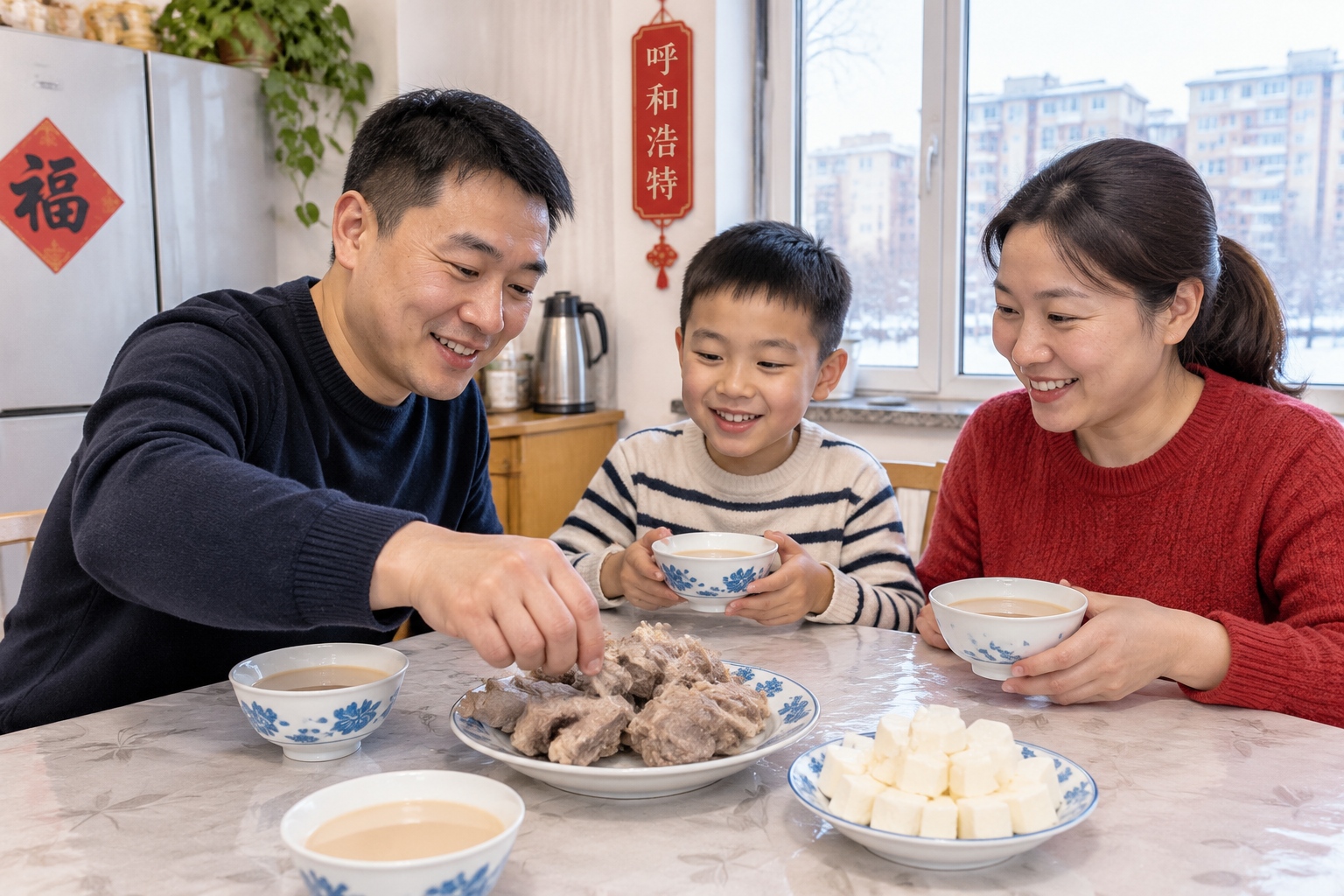
What struck me that morning was how ordinary the food felt. Hand-held lamb, milk curd, and salted milk tea are often presented to visitors as symbols of grassland culture. At home, they are also practical food: filling, warming, easy to share, and easy to keep.
Hand-Held Lamb: Not a Banquet Prop, but a Kitchen Habit
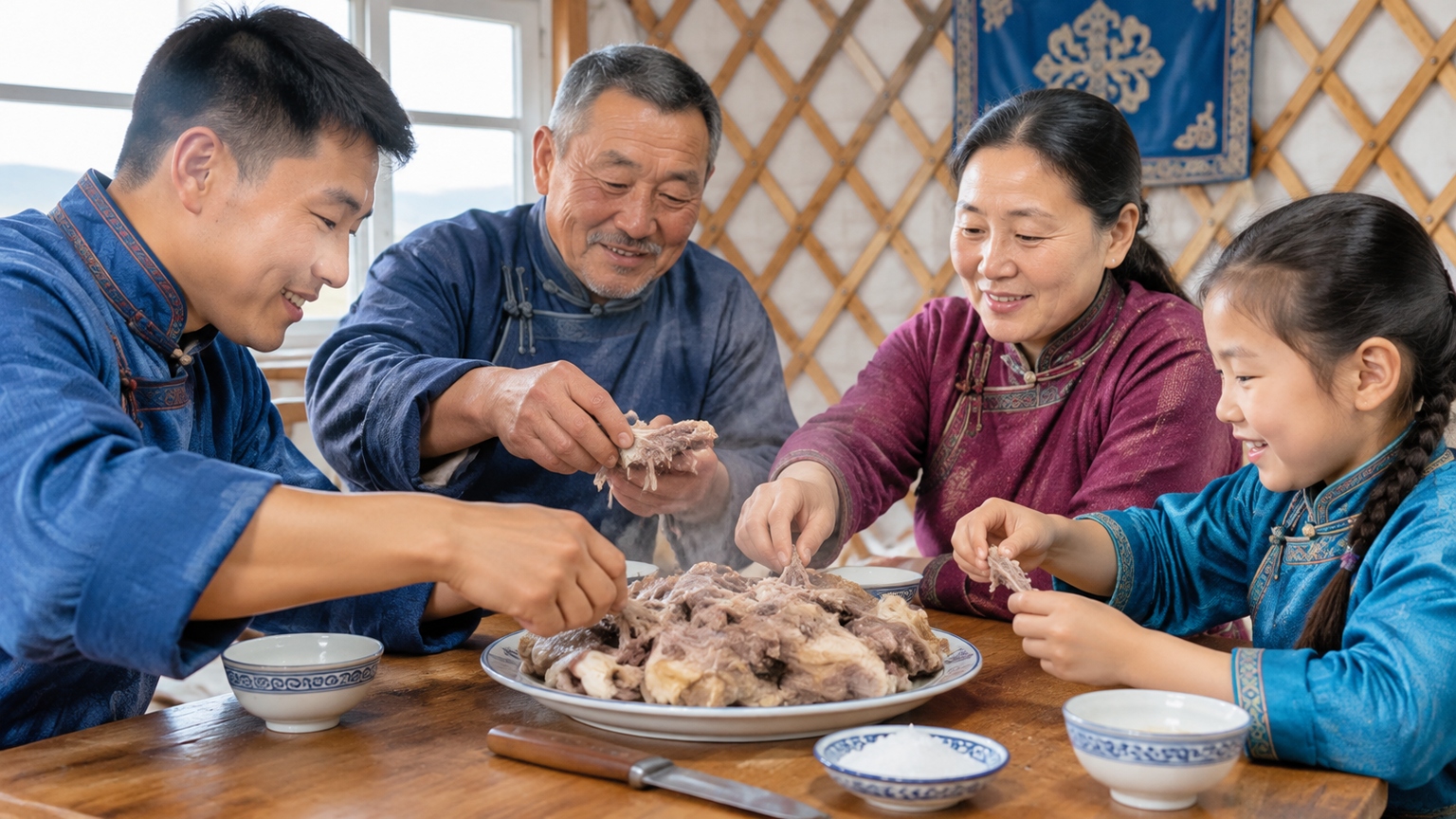
Hand-held lamb, or shouba rou, is boiled mutton eaten by hand. The name can sound dramatic to a first-time visitor, as if it belongs only to a feast. In practice, it is one of the most straightforward dishes in the region. Large cuts of lamb, often ribs, shoulder, or brisket, go into a pot of cold water. The water comes to a boil, the foam is skimmed, and the meat simmers gently. Some cooks add onion, ginger, or a few spices. Many add almost nothing. Salt goes in near the end, or is served on the side.
The meat is taken out while hot. At the table, people tear off pieces with their hands, sometimes using a small knife. A dip can be as simple as salt and pepper, or a mix of garlic, vinegar, chili, and soy sauce. In restaurants, servers may bring plastic gloves. In homes, people just use their fingers and pass around a bowl of water or napkins.
There is a difference between city and pastoral households. A family in Hohhot may buy chilled or frozen lamb from a market or supermarket and cook a smaller pot for three or four people. A pastoral family may know the source of the sheep, cook a larger pot when guests arrive, and keep the broth for noodles the next day. The city version is more compact; the pastoral version is more tied to visitors and weather. But the idea is the same: good meat, hot broth, salt, and company.
What Makes It Taste Like Inner Mongolia
Part of it is the lamb itself. Inner Mongolian lamb is often praised for its mild flavor, though the taste changes with region, season, and feed. Part of it is the method. Boiling leaves little room to hide. If the meat is good, the dish is clean and sweet. If it is not, no amount of sauce will save it. That simplicity is why hand-held lamb feels less like a performance and more like a test of trust between cook and guest.
At the table, the best pieces are not always the biggest. Fatty ribs are prized by some, lean shoulder by others. Children may get smaller slices. Leftovers are not a failure. The broth becomes soup with noodles or vegetables, and the meat may reappear in a stir-fry or a rice dish. In winter, a pot of lamb can carry a family through several meals.
Milk Curd: A Piece of Milk You Can Chew
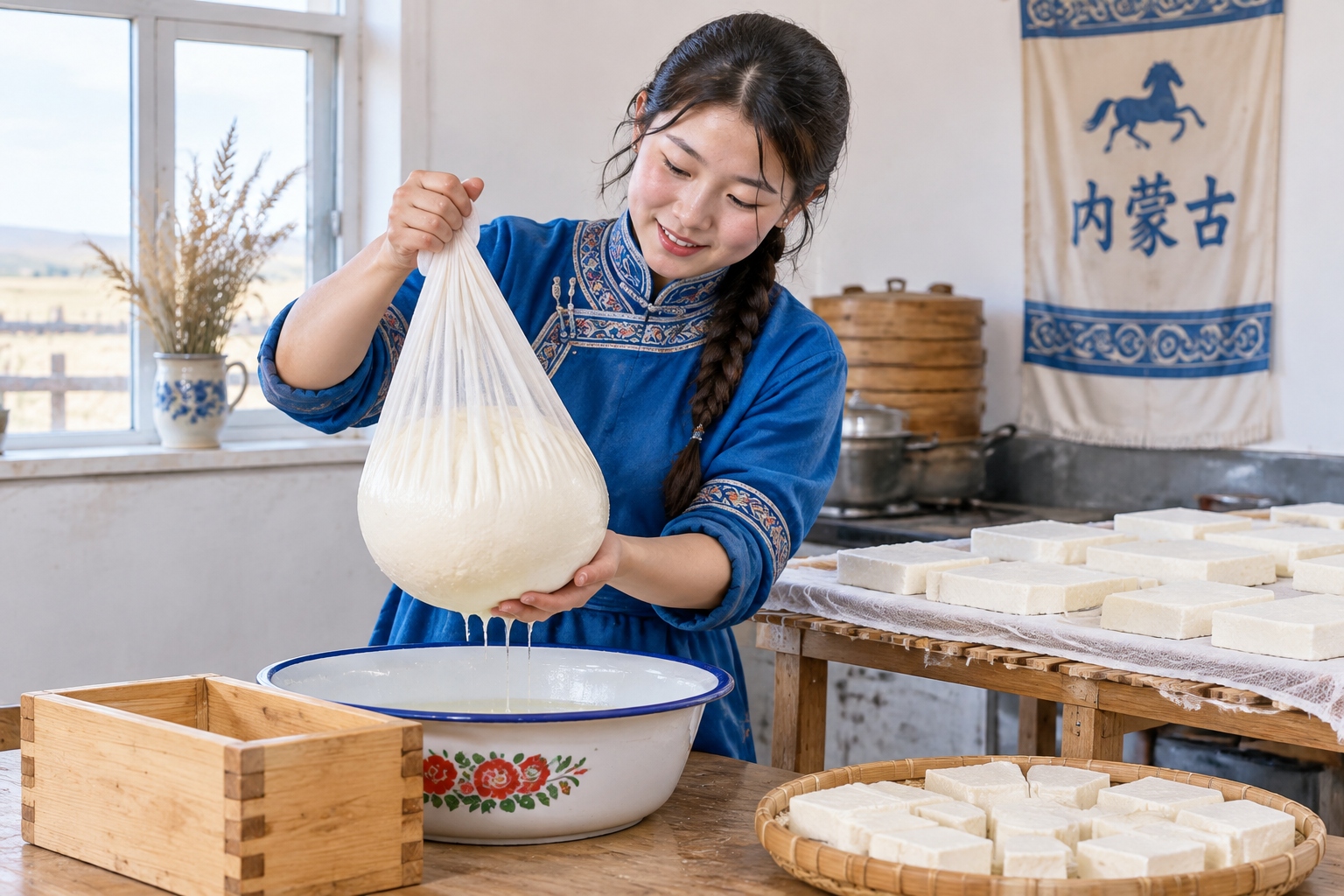
Milk curd, or naidoufu, is not tofu. The name confuses many visitors, but the food is dairy. It is made from milk that is warmed, cultured or soured, then left to curdle. The whey is drained, and the curds are pressed, cut, and dried. The result can be soft and fresh, or firm and chewy, depending on how long it is dried. It tastes milky, lightly sour, and sometimes a little grassy. It is not a sweet dessert by default, though some families eat it with sugar or honey.
In a home kitchen, the process is often small-scale and repeated. A cook may keep a spoonful of starter from the last batch, or use a yogurt-like culture. The milk is warmed gently, not boiled hard. Once curds form, they are poured into a cloth bag or a wooden mold, pressed with a weight, and left to drain. Then the curd is cut into cubes or slices and placed on a rack near the stove or in a sunny, dry spot. Fresh milk curd goes into the fridge; dried milk curd can sit longer and is easier to carry.
For older generations, milk curd is a snack with tea, a travel food, and a way to use extra milk in season. For younger people in the city, it is also a high-protein snack that comes in small packages. Supermarkets in Hohhot sell milk curd in refrigerated cases. Online shops sell it in vacuum packs, and cold-chain delivery has made it easier to send to Beijing, Shanghai, and beyond. Some young people buy it the way others buy yogurt or cheese sticks: for a quick breakfast, a study break, or a hiking snack.
That shift matters. It shows how a food tied to pastoral storage and home dairy can become a city snack without losing its basic identity. The package changes. The taste memory stays.
Salted Milk Tea Is the Everyday Welcome
Salted milk tea, or suan nai cha in some local speech, is the quiet center of the table. It is not the sweet pearl milk tea that has traveled around the world. The home version is usually made with brick tea, milk, water, and salt. Brick tea is compressed dark tea, often broken off with a knife and boiled in water. The tea is strained, milk is added, and salt goes in. Some families add butter, fried millet, or strips of milk skin. The result is warm, lightly salty, and more savory than sweet.
In many homes, the first bowl of the day is tea. It wakes people up without the jolt of coffee. It also gives the table a rhythm. You pour tea, add fried millet, take a piece of milk curd, tear a bit of lamb, and talk. When a guest arrives, tea is the first thing offered. Refilling a bowl is a small gesture of attention. The tea can stay on the stove or in a thermos for hours, ready for whoever walks in.
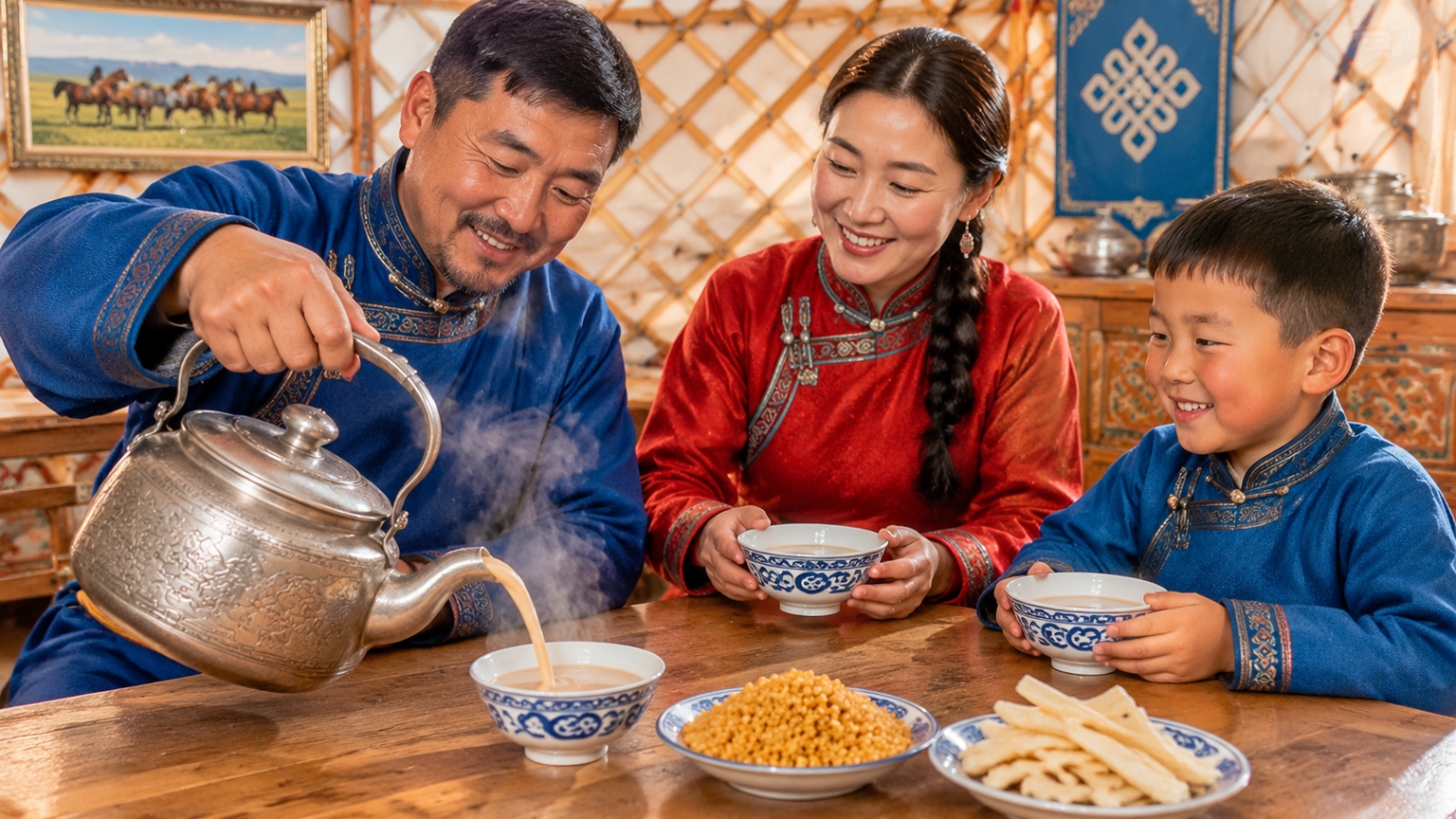
In Hohhot, salted milk tea now shares the city with coffee shops, bubble tea stores, and convenience-store drinks. Young people may drink sweet milk tea with friends in the afternoon. At home, their parents may still make the salty version in the morning. The two habits coexist. One is a treat; the other is a form of welcome.
How Inner Mongolia Food Is Changing
Tourism has changed the way these foods are presented. Restaurants near popular grasslands and city centers offer hand-held lamb on large platters, milk curd on tasting plates, and milk tea in ornate pots. Some of it is very good. Some of it is aimed at the photo. The old home version is less polished but often more generous.
Delivery and packaging are changing the everyday version too. In Hohhot, you can order lamb dishes, dairy snacks, and milk tea through delivery apps. Vacuum-packed hand-held lamb and ready-to-drink salted tea exist for people who want a taste without cooking. Milk curd is sold in small, portioned packs. These products do not replace the home table, but they extend it.
Young people’s eating habits are also shifting. Some are more careful about fat and calories. They may choose leaner lamb, smaller portions, or more vegetables. Milk curd fits neatly into the high-protein snack trend. Salted tea can be made with less salt or with plant milk, though purists may object. Vegetarian choices are more visible in cities, but dairy remains central to the region’s food culture. The table is not frozen in time. It adjusts.
The Table Is the Point
Back in Suren’s kitchen, Naren is getting ready to leave for Beijing. Before she goes, her mother packs a small bag of dried milk curd and a container of frozen lamb broth. Naren complains that it is too heavy. Her mother ignores her and adds another packet. The tea is still warm. Someone refills the bowls.
For a visitor, the easiest way to understand Inner Mongolian food is not to treat it as a checklist of dishes. Watch how the lamb is shared, how the tea is refilled, how the milk curd is kept. These foods are not stage props. They are the way people connect family, guests, and the long cold months. You do not need a grassland backdrop to see it. A kitchen table in Hohhot on a winter morning is enough.
Start the discussion at forum.chinacomes.com