

Morning in Nanchang
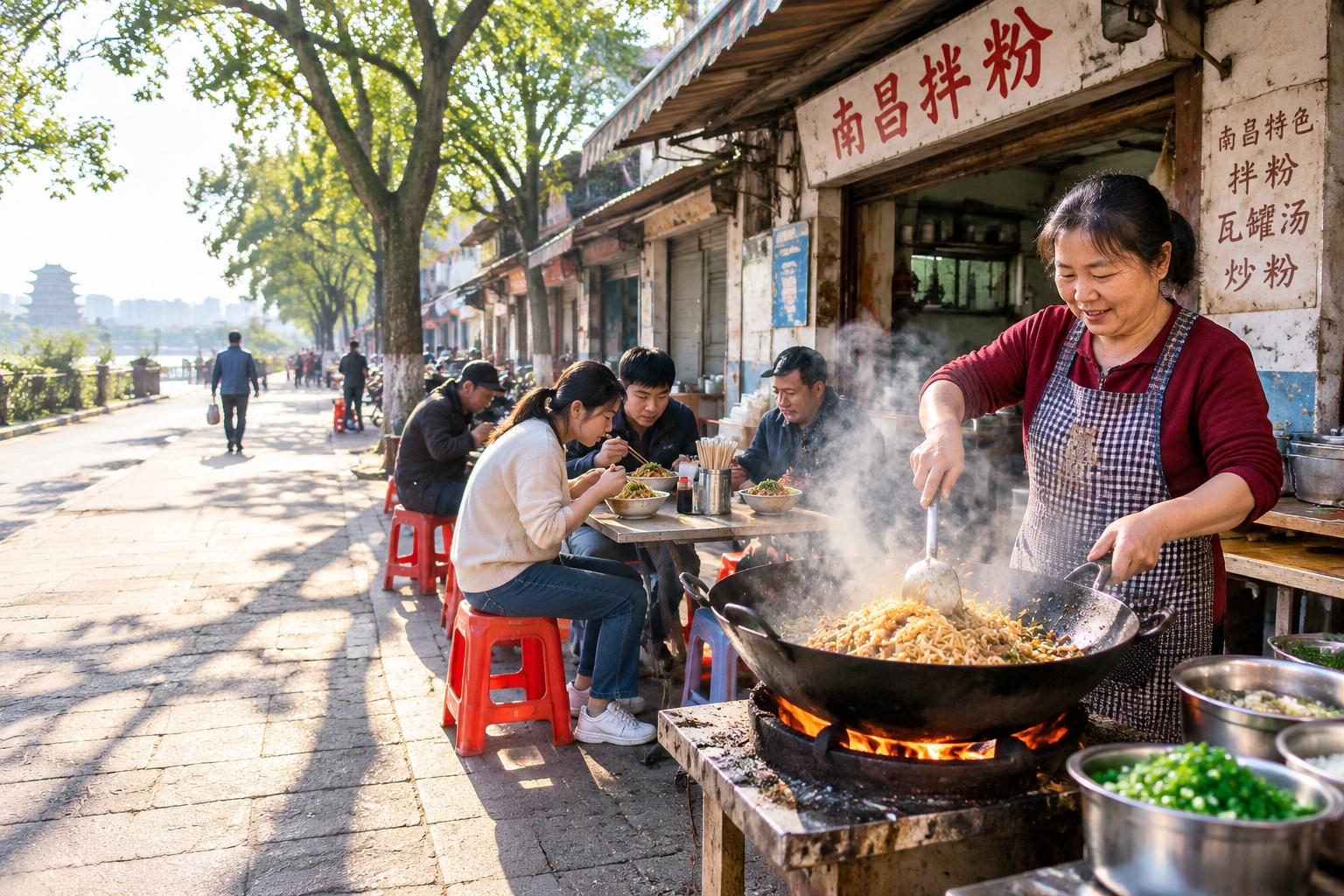
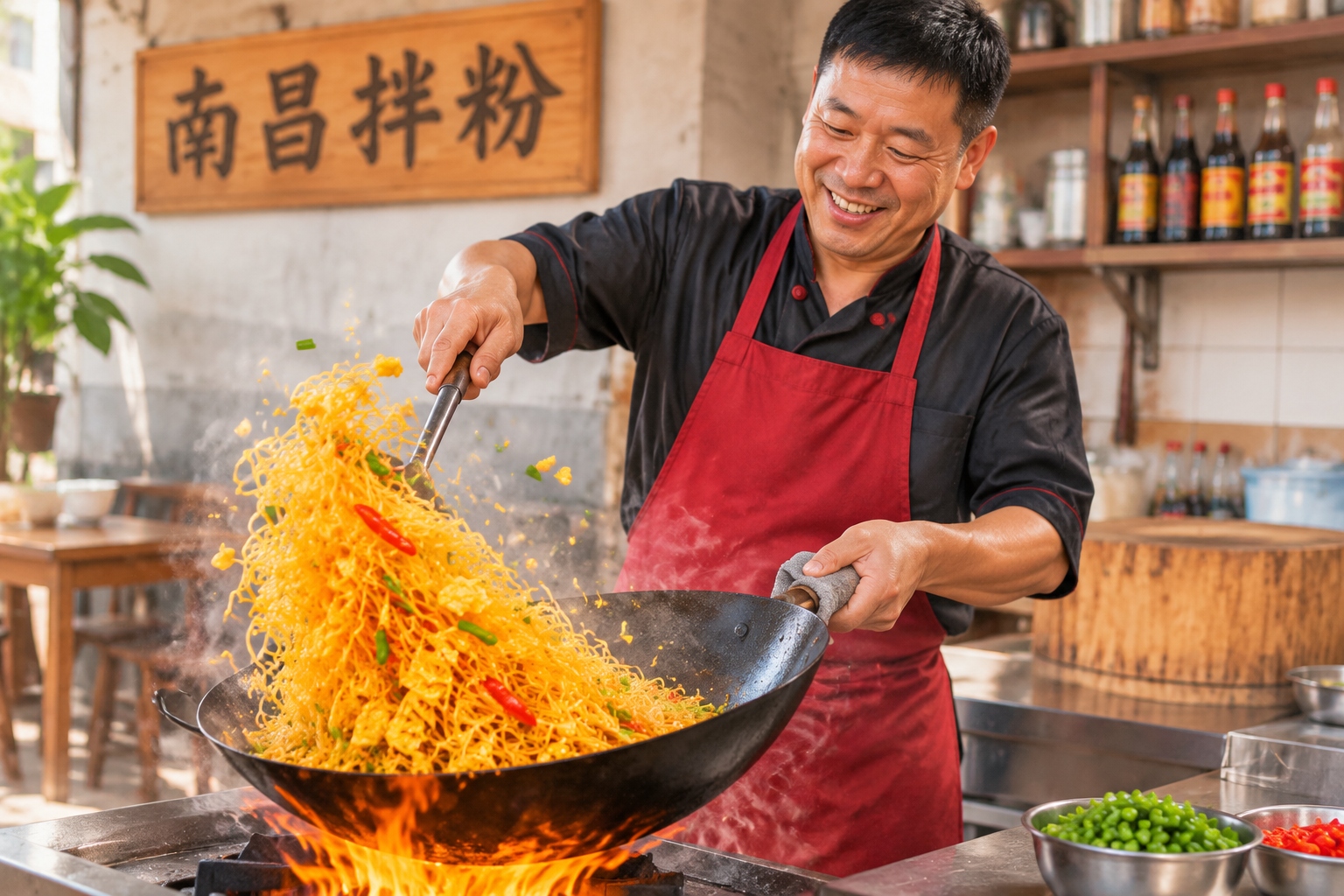
It’s 7 a.m. in Nanchang, the capital of Jiangxi province. In a small shop on the edge of the city, a cook tosses a handful of rice noodles into a blazing wok. Within a minute, they’re mixed with egg, chili, and shredded vegetables, and served steaming. Customers dive in—some standing at the counter, others sitting on plastic stools. This is a typical morning in Jiangxi, where rice noodles are not just breakfast, but a daily ritual.
Yet what looks like a simple local dish is also a serious business. Jiangxi rice noodles have a history of more than a thousand years. Today, they support a chain of farmers, factory workers, chefs, and exporters. According to local trade reports, the province produces more than one million tons of rice noodles a year, generating more than 30 billion yuan (about $4 billion) in economic output. And it’s grown every year, driven by both domestic demand and overseas appetites.
What Makes Jiangxi Rice Noodles Different?
To understand why Jiangxi rice noodles are special, you have to look at how they are made. Unlike Yunnan rice noodles (mixian), which are soft and eaten fresh in soup, or Guilin rice noodles, which are thin and sour-flavored, Jiangxi noodles use a different rice and a different process. The key raw material is early-season indica rice, a type that grows well in Jiangxi’s humid climate. The rice is soaked, ground into a slurry, then steamed into thin sheets. These sheets are cut into strands and dried, either in the sun or in modern machines.
The drying step is crucial. It gives the noodles a firm, elastic texture—what locals call “Q bullet” (a playful expression meaning chewy with a bounce). Jiangxi noodles are usually sold dry, which means they can be stored for a long time. That’s why they travel well and are now exported around the world. In a bowl, they are typically stir-fried with soy sauce, pork, and spring onion, or served in a rich pork bone broth. Each city in Jiangxi has its own variation. Nanchang’s “mixed noodles” (banfen) are tossed in a savory sauce with chili and peanuts. Jingdezhen, the porcelain capital, adds ham. Shangrao’s version is thick and extra chewy, with a unique yellow color from a special rice variety. In fact, Jiangxi has more than 30 regional varieties, each with its own name, thickness, and preferred cooking method.
The craft of making Jiangxi rice noodles was recognized as a national intangible cultural heritage in 2021, reflecting its importance in Chinese food culture.
From Family Workshops to Industrial Clusters
For most of history, making rice noodles was a home-based craft. Early every morning, women would soak rice, grind it on stone mills, and steam the noodles manually. Each family had its own recipe, and the production scale was small. But in the late 1990s, mechanization changed the game. Simple noodle-making machines started to appear in small workshops, increasing production tenfold.
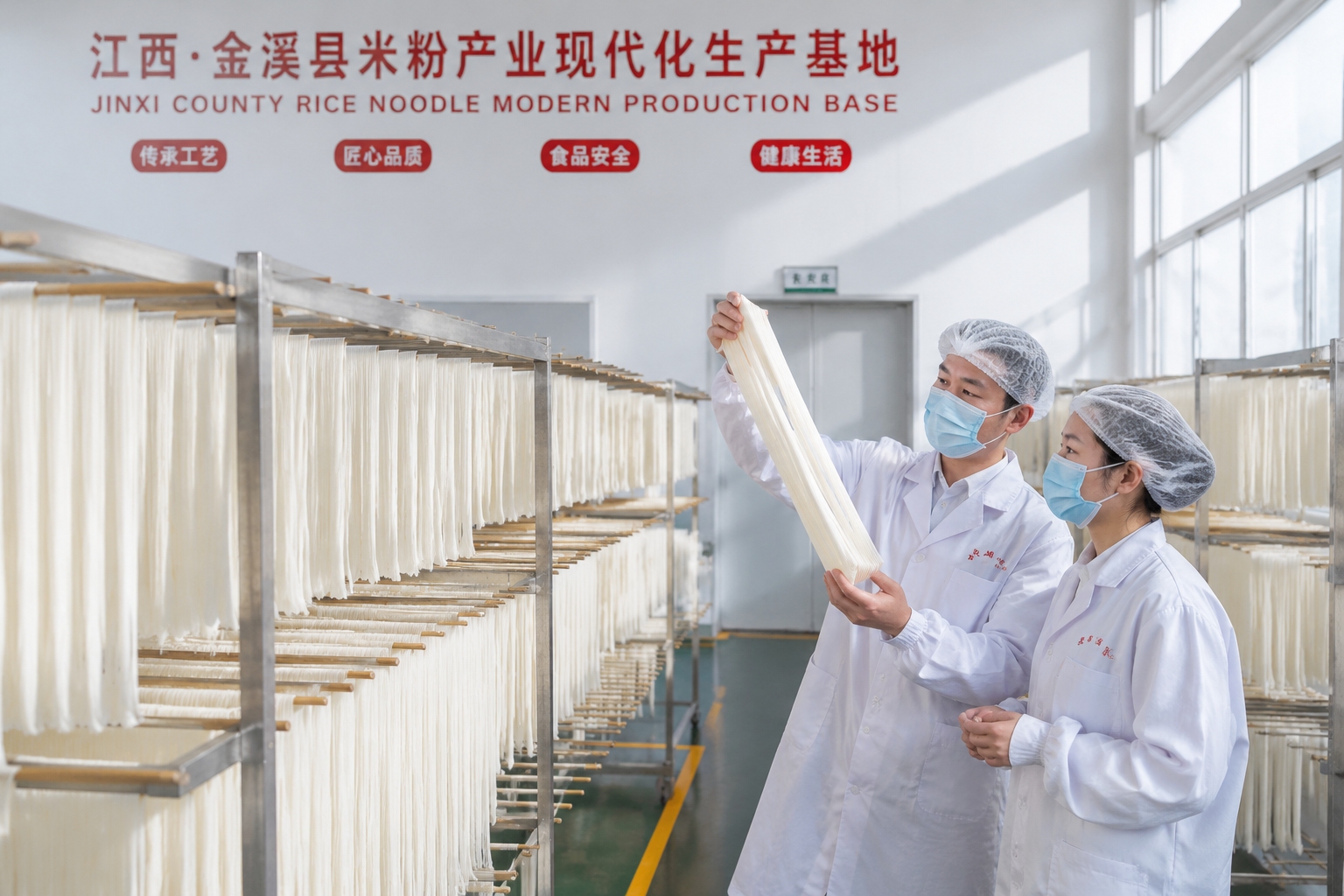
The real transformation began about ten years ago, when local governments in Jiangxi decided to turn this scattered craft into an organized industry. They built industrial parks, such as the Jiangxi Rice Noodle Industrial Park in Nanchang’s Jinxian County. In these parks, companies use automated production lines that can turn out 50,000 kilograms of noodles a day. Giant drying rooms control temperature and humidity with precision, ensuring every batch has the same texture. The park also has research centers developing new products, like instant noodles or gluten-free versions.
This shift had a huge impact. Standardized production meant higher and more consistent quality. It also meant food safety could be properly managed. Before the parks, most noodles were made in dirty backyards. Now, hygiene standards are on par with any food factory in the world. As one veteran worker explained: “In the old days, we dried noodles on the street; now we have clean rooms.” Today, the Jinxian County park alone hosts more than 30 noodle companies, with an annual output of nearly 200,000 tons. The cluster effect is powerful: raw materials, packaging, machinery, and logistics are all within a short distance.
The Chain: From Rice Field to Overseas Table
The rice noodle industry is a classic example of a rural supply chain. At the very beginning, you have farmers. In many counties in Jiangxi, farmers now grow early-season indica rice specifically for noodle factories. Local companies sign contracts with village cooperatives, guaranteeing a minimum price. The result is a more stable income for farmers and a reliable quality for producers.
Next step is processing. Factories turn the rice into noodles, and some even build their own machinery. A startup in Nanchang now exports noodle-making equipment to Vietnam and Thailand. Then there’s packaging and logistics. Dried noodles are light and don’t need cold chains, making them perfect for long-distance trade. According to customs data, China exported over 420,000 tons of rice noodles in 2022, and Jiangxi accounted for nearly half. Jiangxi rice noodles are now sold in the United States, Canada, the United Kingdom, Australia, and Southeast Asian countries. In many Chinese supermarkets abroad, you can find a yellow-green bag labeled “Jiangxi Rice Noodles.”
The chain also feeds a vibrant service sector. Restaurants serve the noodles hot; some have hundreds of outlets. E-commerce platforms sell them in bulk; live-streamers hawk them to millions of viewers. And tourism is a new piece: visitors can tour noodle factories, watch demos, and even make noodles on their own. Altogether, the industry supports an estimated one million workers in Jiangxi, from rice farmers to delivery drivers. A 2022 study from a local university estimated that the industry contributes about 5% of the province’s agricultural economy.
The People Behind the Bowl
Everyone has a story in the noodle economy. Take 56-year-old Li Weimin, a farmer in Yugan County. He used to grow conventional hybrid rice and sell it to a middleman at a modest price. In 2018, he signed up with a noodle company that provided seeds and training. His income has since risen by about 35%. “The best part is the stability,” he says. “I know who I’m selling to and what the price is.”
Another story is Chen Jie, a woman in her 40s. She grew up in a family that made noodles by hand. Before the industrial park existed, she had her own tiny workshop. She’d wake at 3 a.m. every day to make a few dozen kilos of noodles. “My hands were always in water, and I had back pain.” Now, she works as a quality inspector in a modern factory. “It’s less tiring, and I have social insurance. My son is in college. We’re much better off.”
Younger people are also finding opportunities. Zhang Min, 22, operates a computerized packer at the same factory. He joined after vocational school and earns a salary of around 6,000 yuan a month (about $850)—a decent wage in a county town. “It’s not the most exciting job in the world, but it’s stable and closer to home than some factory in Guangdong,” he says.
On the other end of the chain, entrepreneurs like Wu Gang have built new businesses. Wu, now 33, opened his first noodle shop in Shanghai in 2016. He started with a small counter and now runs 30 stores across the city, all serving Jiangxi-style stir-fried noodles. “People in big cities are rediscovering traditional foods, but they want them clean, fast, and consistent,” he says. His stores use a central kitchen that ships pre-made sauce packages to each location.
Challenges and What’s Next
Despite its scale, the industry has not yet achieved the brand recognition of, say, Guilin rice noodles. Many Chinese outside Jiangxi have never heard of “Jiangxi rice noodles.” There are also too many small brands fighting with little differentiation, and no unified national standard. For years, some manufacturers sold their noodles to other provinces, where they were repackaged under different labels. That’s one reason why consumers rarely associated a particular noodle brand with Jiangxi. In 2021, the Jiangxi provincial government announced a plan to build a national brand, aiming to make Jiangxi rice noodles a household name. They set up a government-backed industry association and promoted a group of “leading enterprises.”
At the same time, changing eating habits demand innovation. Today’s young consumers are busy and want convenience. In response, several companies have launched instant rice noodle cups, pre-cooked noodle kits, and even health-oriented high-protein noodles. The COVID-19 pandemic accelerated this trend. Sales of the instant version grew by 300% in 2022, according to industry reports. Tourism is another avenue. In Nanchang, a “Rice Noodle Museum” opened in 2023 inside the industrial park. Visitors can walk through the history of noodles, taste fresh-made bowls, and buy souvenir packages. Nearby, a farm stays connected: tourists can try to harvest early rice in autumn. This “agricultural-tourism” integration is part of a broader rural revitalization strategy in China.
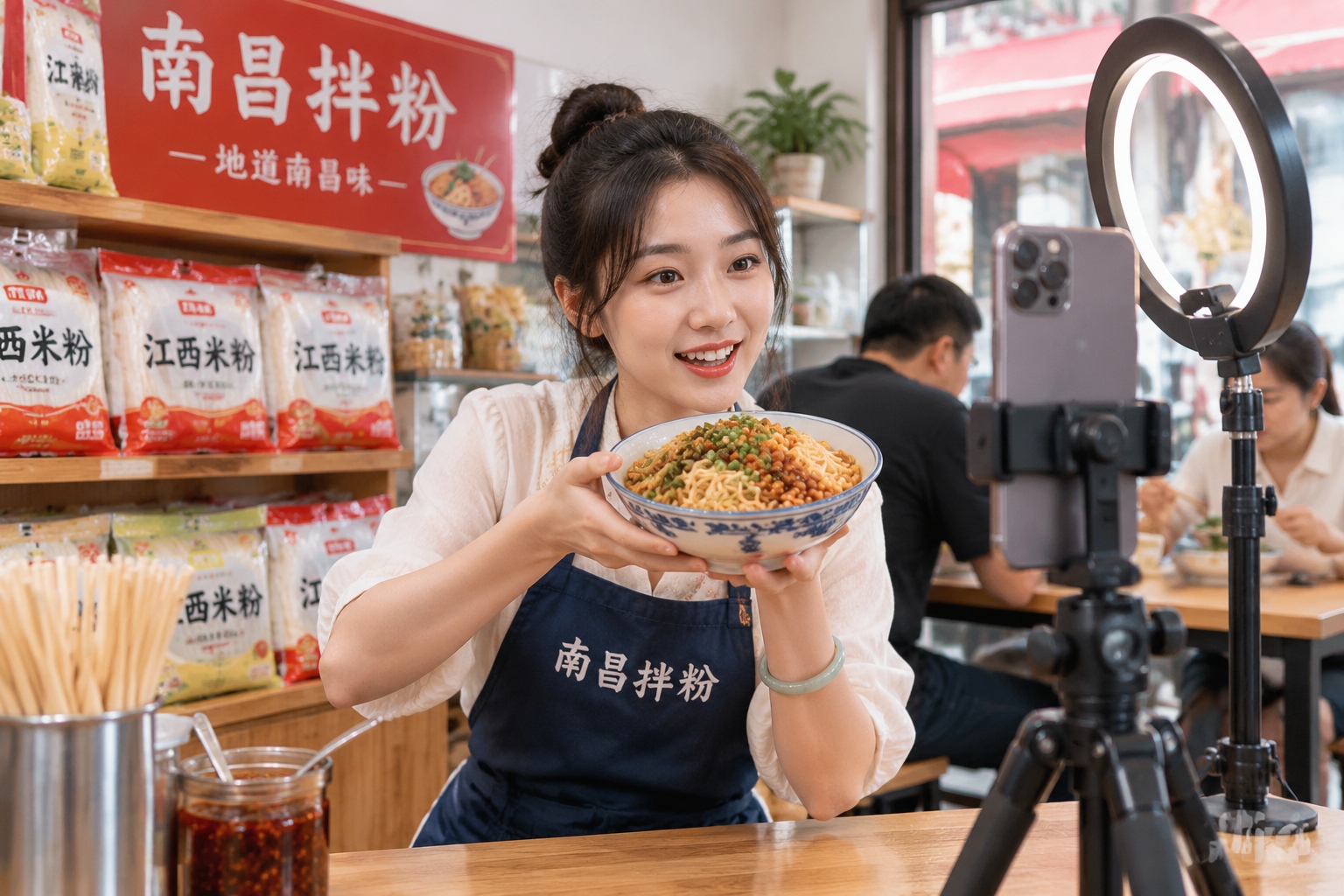
Social media is also a powerful engine. A young woman in Nanchang, who calls herself “Meifen Sister,” has 1.2 million followers on Douyin, China’s TikTok. She regularly broadcasts from noodle shops and factories, and her live streams can sell out 50,000 packages within an hour.
Conclusion
Back at the breakfast shop, the cook, Liu Fang, is taking a short break. She has been making noodles for twenty years. “Rice noodles are in our blood,” she says. “A day without them feels empty.” That passion is visible at every level of the industry—from farmers who plant the rice to factory workers who keep the machines running to entrepreneurs who bring the noodles to new markets.
The story of Jiangxi rice noodles is more than a story about food. It’s a story about how a local craft can evolve into a modern economy, bringing jobs and opportunities to millions. For outsiders, it’s a window into China’s ongoing transformation—where even a humble bowl of noodles can become a serious business. The next time you see a package of rice noodles in a store, remember the province and the people behind it.
Start the discussion at forum.chinacomes.com