
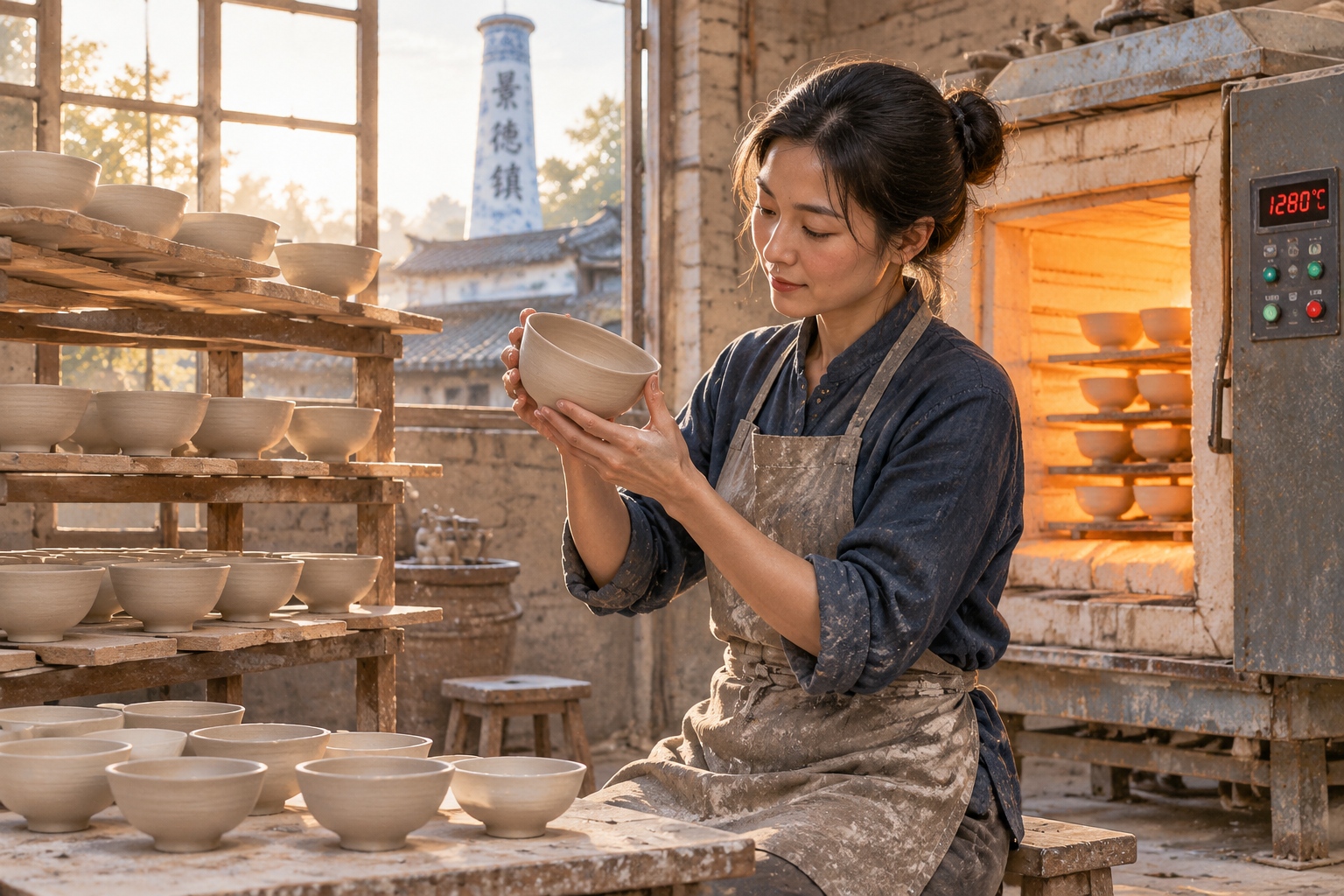

Morning in the Kiln District
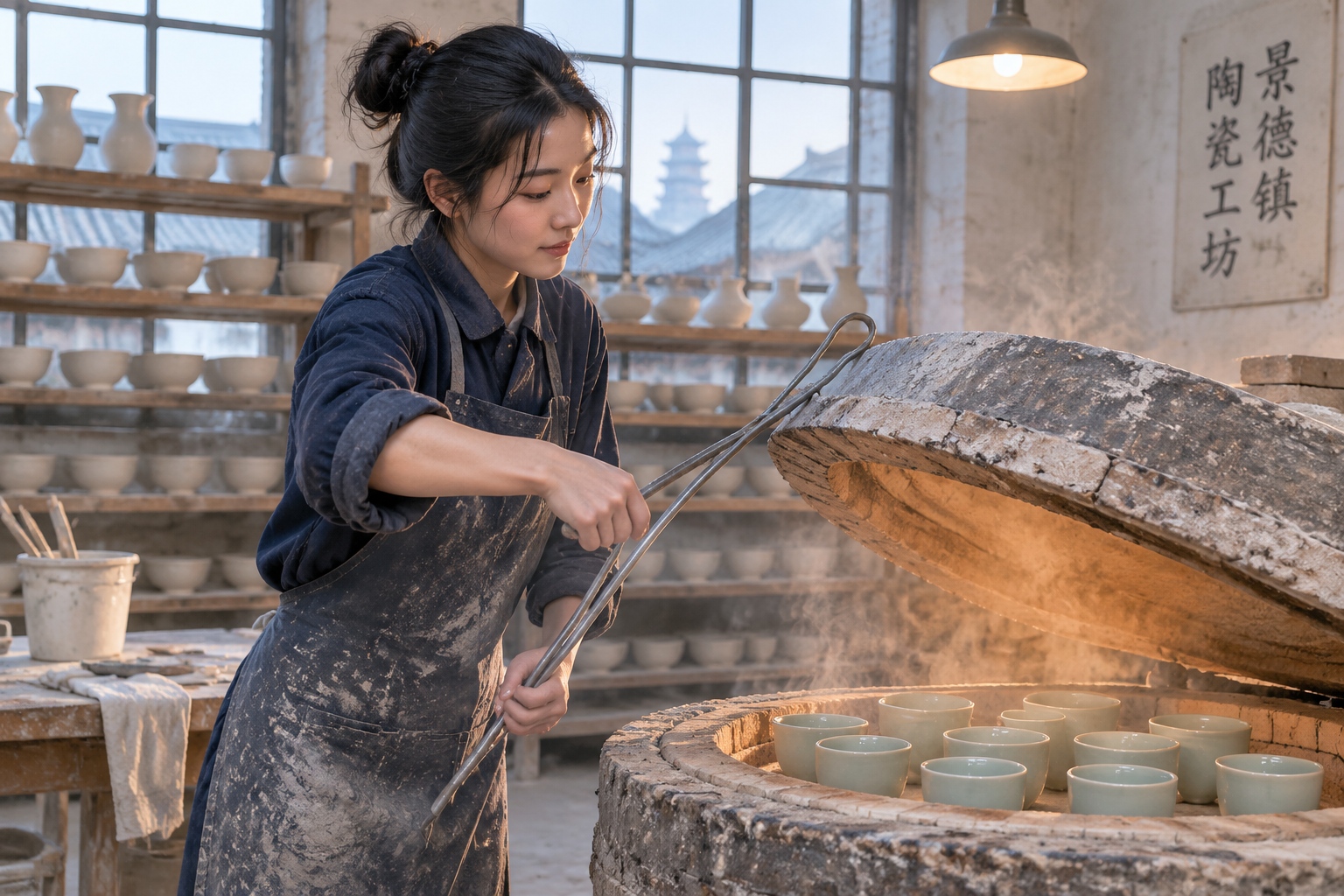
The clock on the workshop wall says 6:30 a.m., but Fang Lin has already finished her first cup of tea. She lifts the lid of a saggar with tongs, and a cloud of heat hits her face. Inside, ten small celadon cups have survived the night’s firing. She taps one with a fingernail; the sound is clear, like a bell.
Fang is 34. She moved to Jingdezhen from Jiangxi’s countryside eleven years ago. She is not a cloistered master, nor an internet celebrity. She is one of thousands of ceramic workers in a city where nearly half the residents have some connection to porcelain. Her workshop rents a former state-owned kiln factory for about 8,000 yuan a month, split three ways. It smells of wood, kaolin, and coal dust—though the coal is gone now, replaced by electric kilns.
A City That Has Fired Kilns for a Thousand Years
Jingdezhen was called the ‘porcelain capital’ centuries before the term made it into English. Its history began in the Song Dynasty; by the Ming and Qing, imperial orders filled its workshops. Blue-and-white porcelain traveled to the Middle East, Europe, and Southeast Asia aboard trade ships. Today, the city still produces a significant share of China’s ceramics—estimates put annual output in the billions of pieces. But what is less visible is the small-scale revolution happening in its alleyways.
Walk along the old streets near the Eastern Market and you see hulking brick kilns mixed with solar panels. Under a concrete bridge, young sculptors sell small tea pets from wooden trolleys. In a former plastic factory, co-working spaces called ‘ceramic studios’ rent out kiln time by the hour. The city has become a workshop and a laboratory, not just a museum.
The Hands Behind the Glaze
Every cup Fang makes goes through eleven steps. She buys kaolin clay from Doushan, a district famous for its white rock. She mixes it with porcelain stone, wedges it by hand, throws it on a wheel, trims, lets it dry, applies slip, carves, glazes, fires. She points to a basket of rejected pieces: ‘These took me two days. The glaze crawled—very common when the humidity changes.’
Her point is not modesty but precision. In Jingdezhen, skill is measured in failures. The government runs a ceramic training center where apprentices learn for six months before touching a wheel. Last year, the center trained nearly 2,000 people, more than half of them from outside the province. Some come to learn a craft; others come to start a business.
What has changed, Fang says, is not the clay but the market. ‘My grandmother threw pots for local farmers. My mother sold bowls to nearby cities. I sell to people I will never meet—from Toronto, Tokyo, Berlin.’

From Kiln to Port: The Trading Chain
Fang’s studio is two hours from the port that handles most of her exports. A parcel can travel direct from Jingdezhen to Shanghai by truck in six hours, then fly to London within a day. But she has learned that speed is not the only issue. Porcelain breaks, customs delays happen, and refunds are costly.
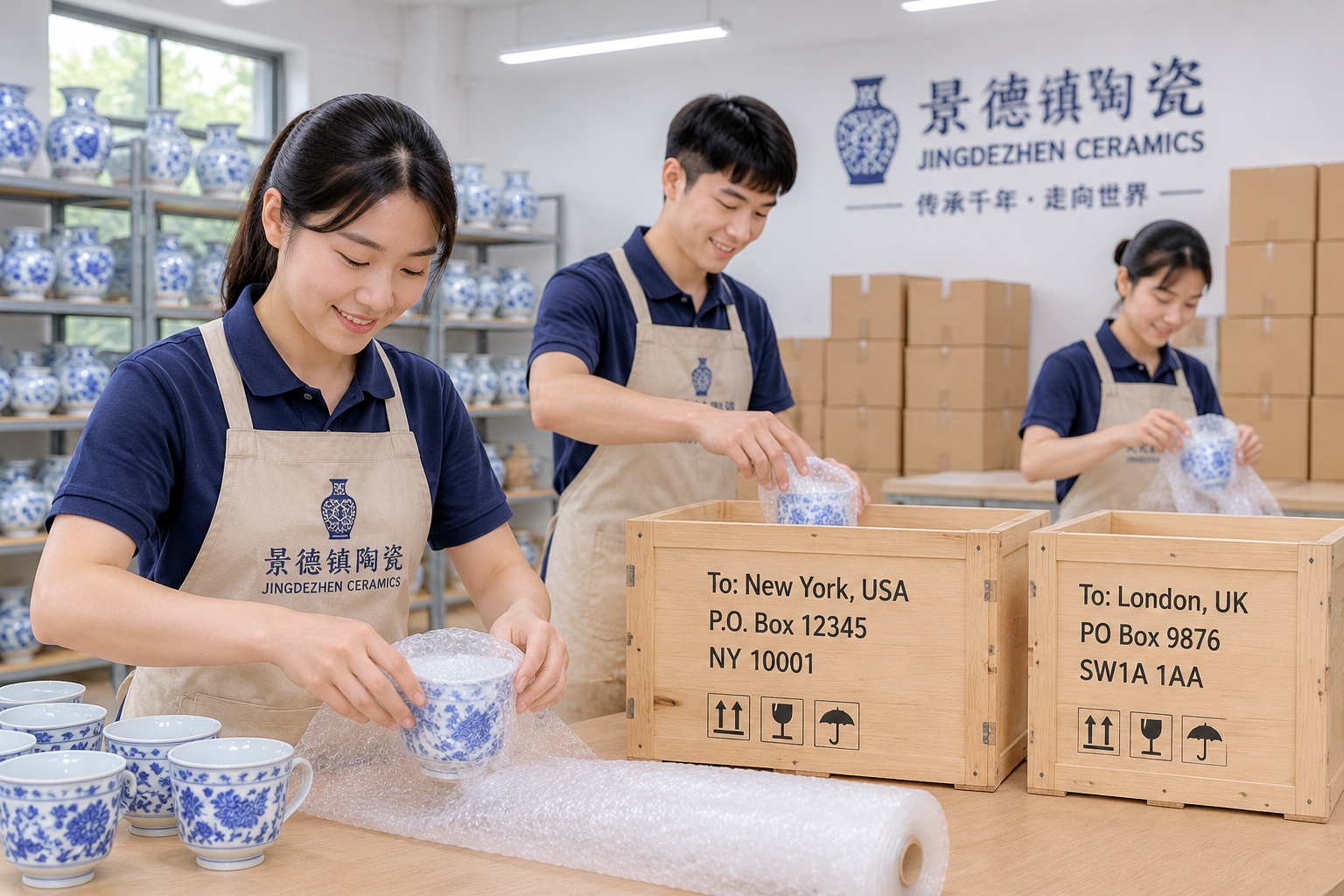
Three years ago she began packing in a special half-wooden crate she designed after a buyer in Hamburg complained about a chipped tea bowl. She now uses 220 boxes per month, each wrapped in bubble film and corrugated paper. Shipping insurance costs her about 3 percent of the order value. ‘It is not romantic work,’ she laughs. ‘But without packaging, there is no craftsmanship.’
Most of her clients find her through two channels: Taobao’s cross-border site, Alibaba.com, and an online marketplace for handmade goods. In 2023, her orders from platforms accounted for more than 60 percent of her monthly revenue, which averaged about 46,000 yuan—roughly $6,300—before costs. She earns more than the average white-collar worker in her hometown, but she also works six days a week, often late into the night.
When the World Sends Ideas Back
The flow is no longer one-way. Fang used to copy traditional patterns from museums. Now, buyers sometimes send her design files—a Scandinavian-style geometric lid, a Japanese-style rice-measuring cup. She makes small batches, often 50 to 100 pieces, and keeps a personal notebook with feedback from overseas customers.
‘In the past, the factory decided what a mug should look like. Now the customer in Brussels decides, and I adapt,’ she says. This has changed how workshops are structured. Instead of a long assembly line, Jingdezhen’s new ceramic businesses operate like flexible studios. A designer might share space with a mold-maker and a photographer. The photographers are the busiest: nearly every export order now includes photos for e-commerce listings.
The city’s municipal government has noticed. It has funded a ceramics e-commerce training program and set up a small customs office inside the local artisan district, so a potter does not have to travel to a provincial capital to clear a parcel. In 2024, Jingdezhen’s ceramic exports were up 18 percent year-on-year, according to local customs data, to roughly 1.4 billion yuan.
An Ordinary Day
By late afternoon, Fang is packing a box for an architect in Oslo who ordered 30 hand-painted wine coasters. The order is small, but she treats it with the same care as the imperial bowls her ancestors made. She writes a short note in English on a card, thanking the customer and explaining the glaze’s ‘pinholes are natural characteristics, not defects.’
Then she sits down with a younger apprentice, a 22-year-old from Shandong who will try throwing a teapot for the first time. The apprentice is quiet; the wheel hums. Outside, the alley is loud with delivery motorcycles. In a city famous for making objects for emperors, the most ordinary act remains the rarest skill: making something that can be sold, shipped, and used by a stranger six thousand miles away.
Fang does not know if the Oslo package will arrive safely. She has learned to accept that risk. ‘The porcelain leaves here a certain way,’ she says, brushing clay dust from her hands. ‘The journey is part of it.’
Start the discussion at forum.chinacomes.com