

A Workshop That No Longer Looks Like a Workshop
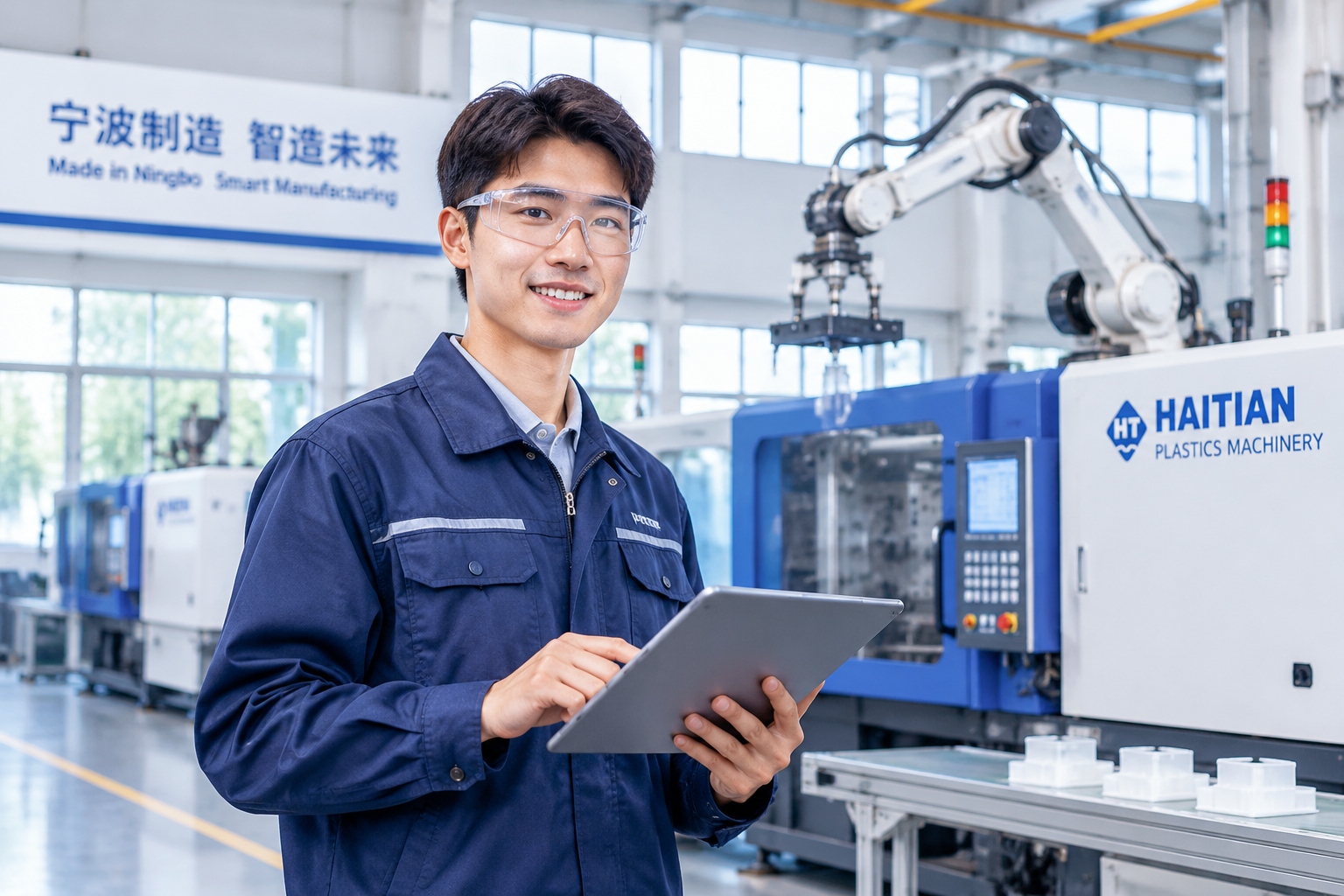
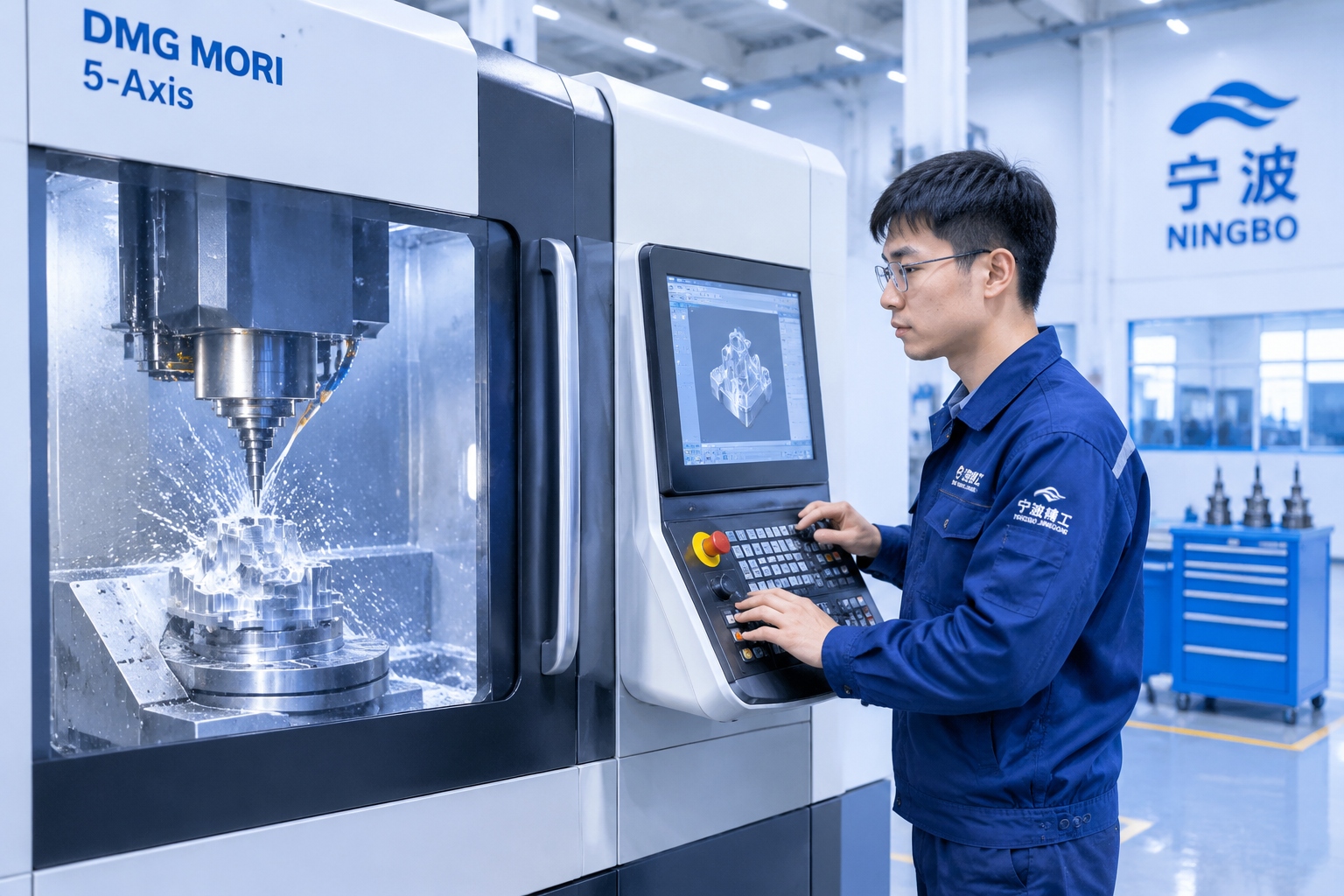
On a weekday morning in Ninghai, a county under Ningbo in eastern China, 27-year-old engineer Li Wei is checking a CNC program on his tablet. The five-axis machine behind him is quietly carving a steel block into a mold cavity for an electric vehicle battery tray. The workshop floor is clean, temperature-controlled, and almost silent. Ten years ago, the same plant was a different place: manual polishing, oil-stained floors, and the constant screech of steel being shaped by hand.
Li Wei, who graduated from Ningbo University in 2020, says his job is more about software than metal. “We used to rely on a senior worker’s hands to adjust a mold. Now we simulate the entire process before the steel touches the machine,” he explains. The factory, part of Ningbo’s industrial heartland, is one of thousands in the city that no longer resemble the traditional Chinese workshop.
Why Ningbo? A City with a Mold-Building DNA
Ningbo has been called “China’s Mold Capital” since the 1990s. Today, over 4,000 mold and tooling companies operate in the city, producing everything from precision connectors to dashboards. In 2023, the local mold industry generated more than 70 billion yuan in annual revenue (US$10 billion), according to the Ningbo Mold Industry Association. Most global automakers and electronics brands, at some point, buy molds made in Ningbo without realizing it.
The city’s journey started in the 1980s, when rural entrepreneurs set up small workshops to repair and produce plastic molds for household appliances. As China’s manufacturing boomed, Ningbo grew into a complete supply chain: tool steels, heat treatment, precision machining, and testing labs are all available within an hour’s drive from the city center. This density is the secret behind its success—if a buyer wants a mold for a refrigerator liner, the necessary materials are stocked within 50 kilometers.
Hard Numbers Behind the Upgrade
But the city is no longer satisfied with being a low-cost mold maker. The transformation is visible in R&D statistics. According to the Ningbo Science and Technology Bureau, R&D spending in manufacturing by local companies grew by 11% in 2023, the sixth consecutive year of double-digit growth. The number of invention patents filed by manufacturing firms in Ningbo reached 34,000 in 2023, up 14% year on year. A large share of these patents is related to injection molding, precision tooling, and industrial robots.
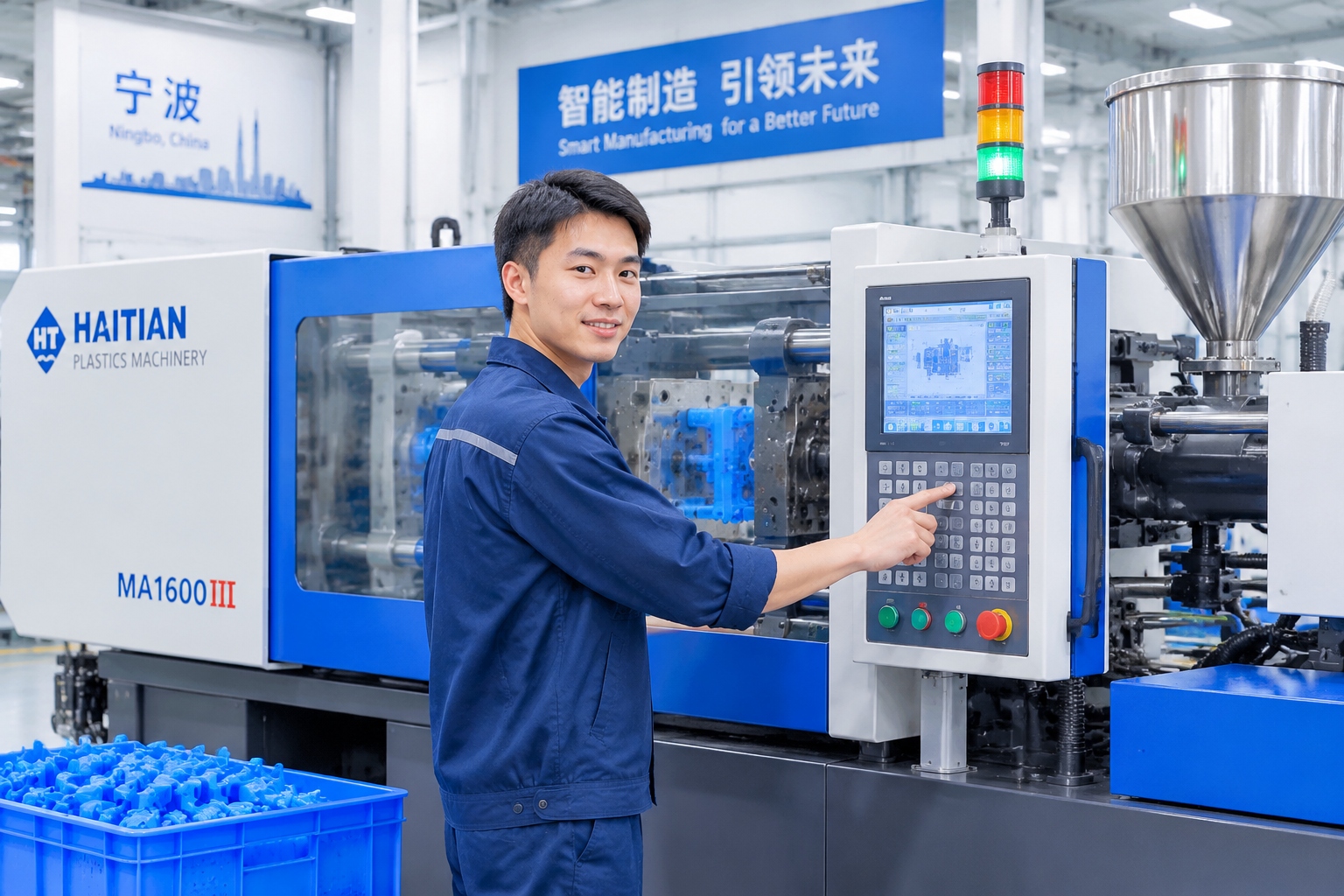
Consider Haitian International, headquartered in Ningbo and the world’s leading supplier of injection molding machines. The company invests roughly 5% of its annual turnover into R&D. It owns more than 3,000 patents and has pioneered electric injection molding machines that consume up to 40% less energy than hydraulic predecessors. Haitian’s latest machines connect to the cloud, allowing operators to monitor production data and receive predictive maintenance alerts from their smartphones.
One indicator of this progress is the presence of 98 national-level “little giant” enterprises in Ningbo—a designation given by the Chinese government to niche-market leaders with strong innovation and market share. This is the highest number in any Chinese city, surpassing even Shenzhen and Shanghai. These companies do not make smartphones or cars; they make, for example, the precise roller screws used in electric vehicles and the special sensors used in injection molding machines. This hidden army of focused manufacturers is the backbone of China’s supply chain.
From Molds to Machines: The Injection Molding Leap
Injection molding is a perfect lens to see Ningbo’s climb up the value chain. Traditionally, a machine would press a standard mold to make plastic parts, leaving quality to the operator. Today, high-end injection molding machines built in Ningbo are equipped with servo drives, AI-based quality control, and IoT connectivity. They are used by automotive suppliers in Germany, medical-device firms in Japan, and packaging companies in the United States.
Another Ningbo manufacturer, Powerjet Plastic Machinery, has developed an all-electric injection molding machine that can adjust itself during a production run. If a sensor detects a slight temperature drift, the control system rebalances the mold pressure automatically, virtually eliminating scrap. The machine can also send a text message to the maintenance team when a component shows signs of wear. This is the kind of intelligent equipment that has begun to reshape the image of Chinese manufacturing.
The boom in electric vehicles has accelerated this trend. Battery housings, structural parts, and large interior panels require much bigger and more precise molding machines. In Ningbo, companies are investing in large-tonnage injection molding machines—over 1,000 tons—to produce these components for Tesla, BYD, and other EV makers. The result is a virtuous cycle: more demand pushes local manufacturers to innovate, and innovation brings even more global demand.
Global Buyers: From Bargaining to Co-Development
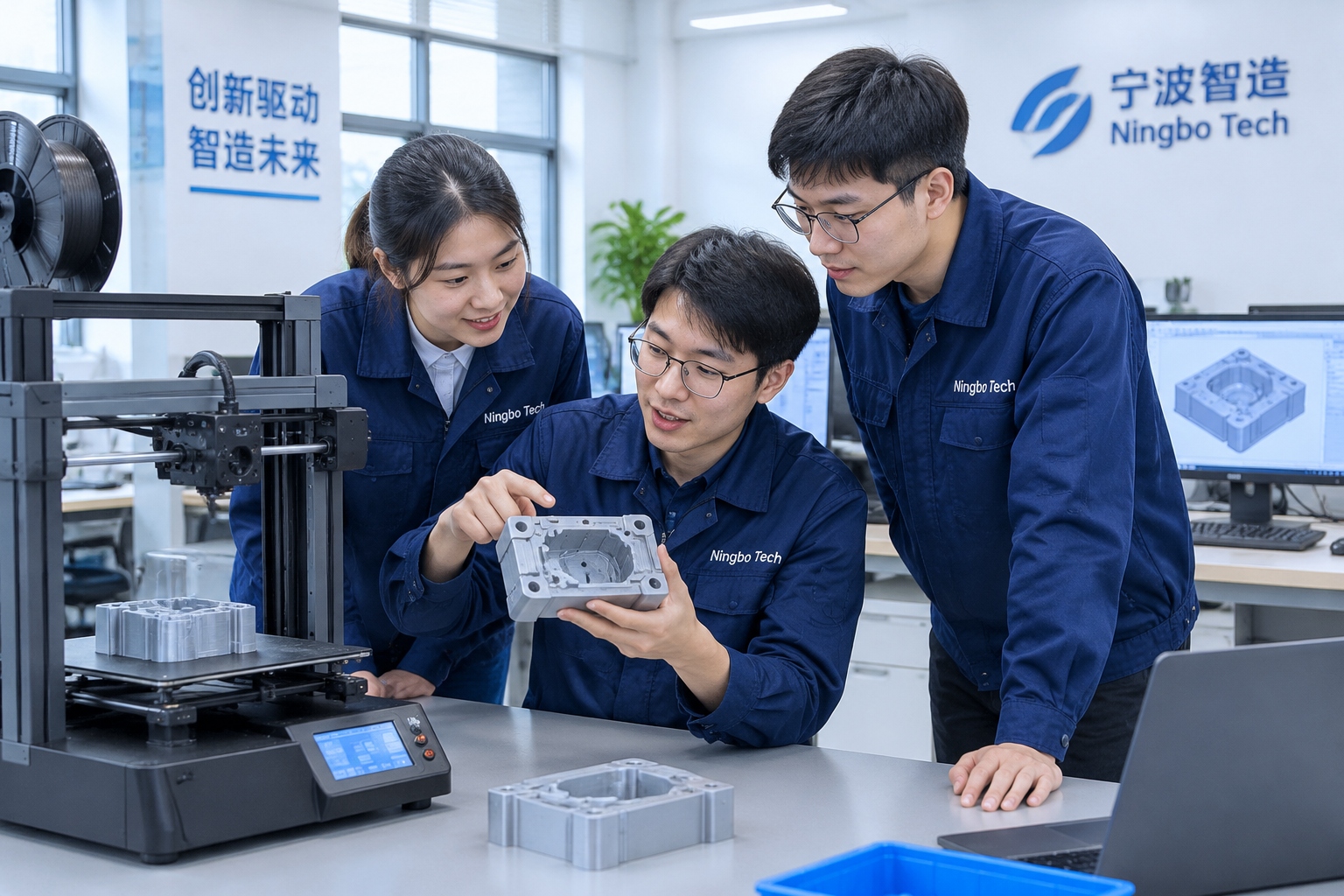
Ten years ago, a foreign purchasing manager would come to Ningbo to bargain over prices for plastic parts. Today, they come to collaborate on engineering. A European automaker may send its CAD files to a Ningbo mold factory, where engineers run finite-element analysis, 3D print prototypes, and test material fatigue before any steel is cut. This co-engineering approach has reduced design-to-sampling time from three months to less than three weeks.
Wages in Ningbo have risen dramatically—factory workers now earn about four times the 2010 average. Yet the region still remains competitive because output per worker has improved as well. The local equipment manufacturing sector recorded an 8.5% increase in productivity in 2023. In other words, Chinese labor is no longer cheap in Ningbo, but it is skillful and increasingly digital.
Building People and Policies Behind the Transformation
This shift is not just about fancy machines. Ningbo has set up 35 public innovation service platforms where small workshops can rent five-axis CNC equipment, 3D scanners, and fatigue-testing machines—tools too expensive for a single family business to buy. The local government also co-funds technical training with universities. Engineering programs at Ningbo University now include courses on robotics, AI in manufacturing, and smart supply chains. Each year, more than 2,000 graduates enter the local manufacturing industry with a digital-first mindset.
There is also a social dimension. Older workers, who once polished molds by hand, are being retrained as machine operators and quality-control technicians. Many say they prefer the clean, air-conditioned workshops to the old dusty ones. One 48-year-old worker at a Ningbo precision tooling company told us that “the factory used to be so loud you had to scream to talk. Now we calculate and discuss in a normal voice.”
Ningbo’s Quiet Miracle
Ningbo’s transformation mirrors what is happening across China’s coastal manufacturing belt, but with a distinctive twist: it is happening in the most “unfashionable” industries—molds, injection molding, and tooling. These are not glamorous sectors, but they are foundational. When a country masters them, it masters a large chunk of the global supply chain.
For the rest of the world, the lesson is not that Chinese manufacturing will take over everything. It is that the Chinese model has evolved from making things cheaply to making things well. Ningbo is a living proof that a plastic mold can become a springboard for intelligent equipment, if the right investments are made by companies, workers, and the state. To understand what this means, listen to the hum of a modern Ningbo factory—the sound of an ordinary miracle.
Start the discussion at forum.chinacomes.com