
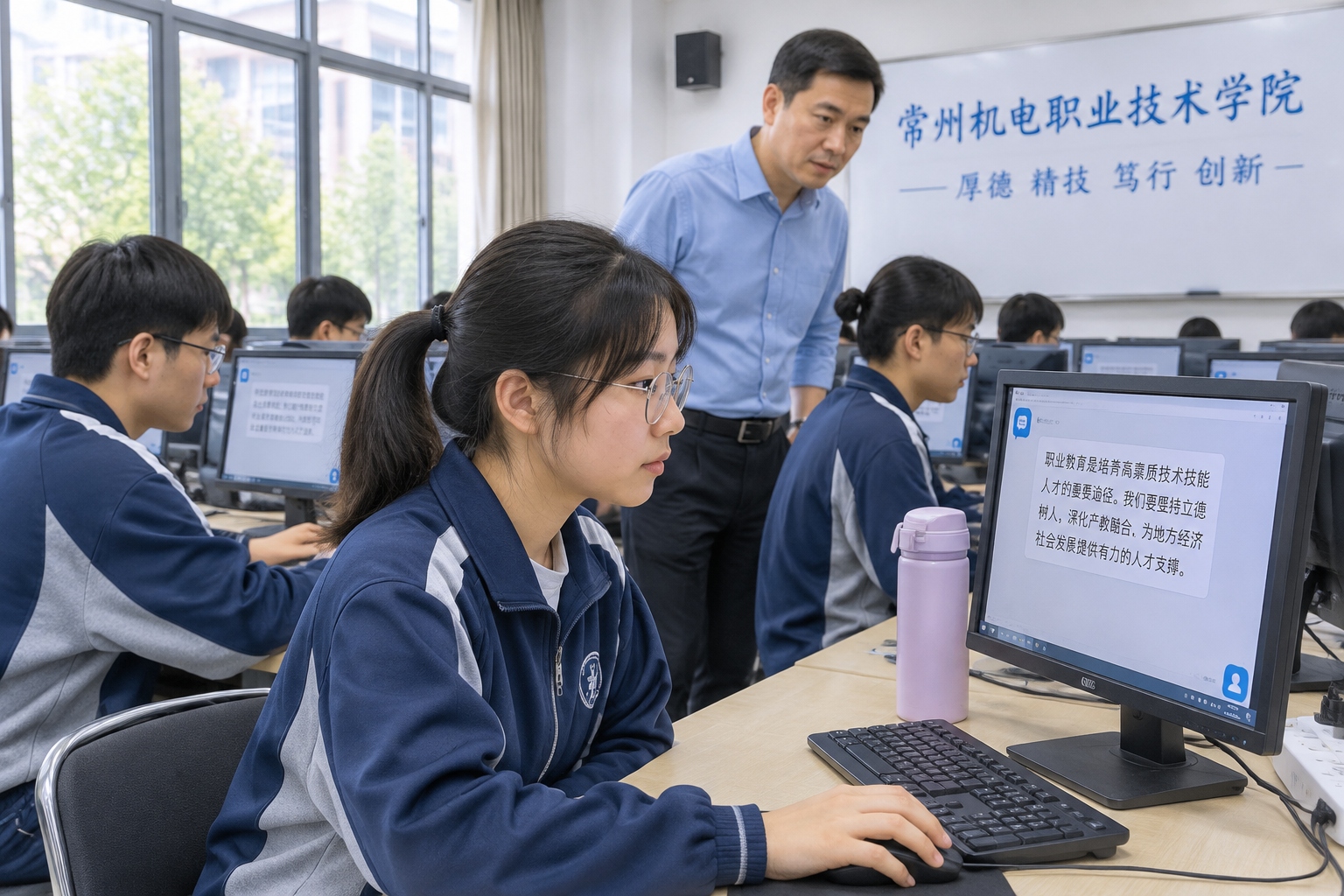

9:20 a.m., Tuesday, Room 402
The projector in Room 402 shows one sentence: Turn this 12-page manual into something a new worker can use on his first day.
Lin Yutong, 18, has the printed manual for a packaging machine on her desk and a chat window open on her screen. She types a single line — turn the manual into a Q&A — and hits enter.
Four seconds later the answer arrives. It is fluent, confident and useless. No page numbers. Steps out of order. A safety warning that sits on page 9 of the manual has simply disappeared.
She deletes it and starts again.
This is a prompt-writing class at a vocational college in Changzhou, an industrial city in Jiangsu province, about an hour by high-speed train from Shanghai. The students are 18 and 19. They did not get into a top university, and most of them were never going to. What they are learning is how to give instructions to a large language model — the technology behind ChatGPT, and behind Chinese tools such as DeepSeek, Alibaba’s Qwen and ByteDance’s Doubao.
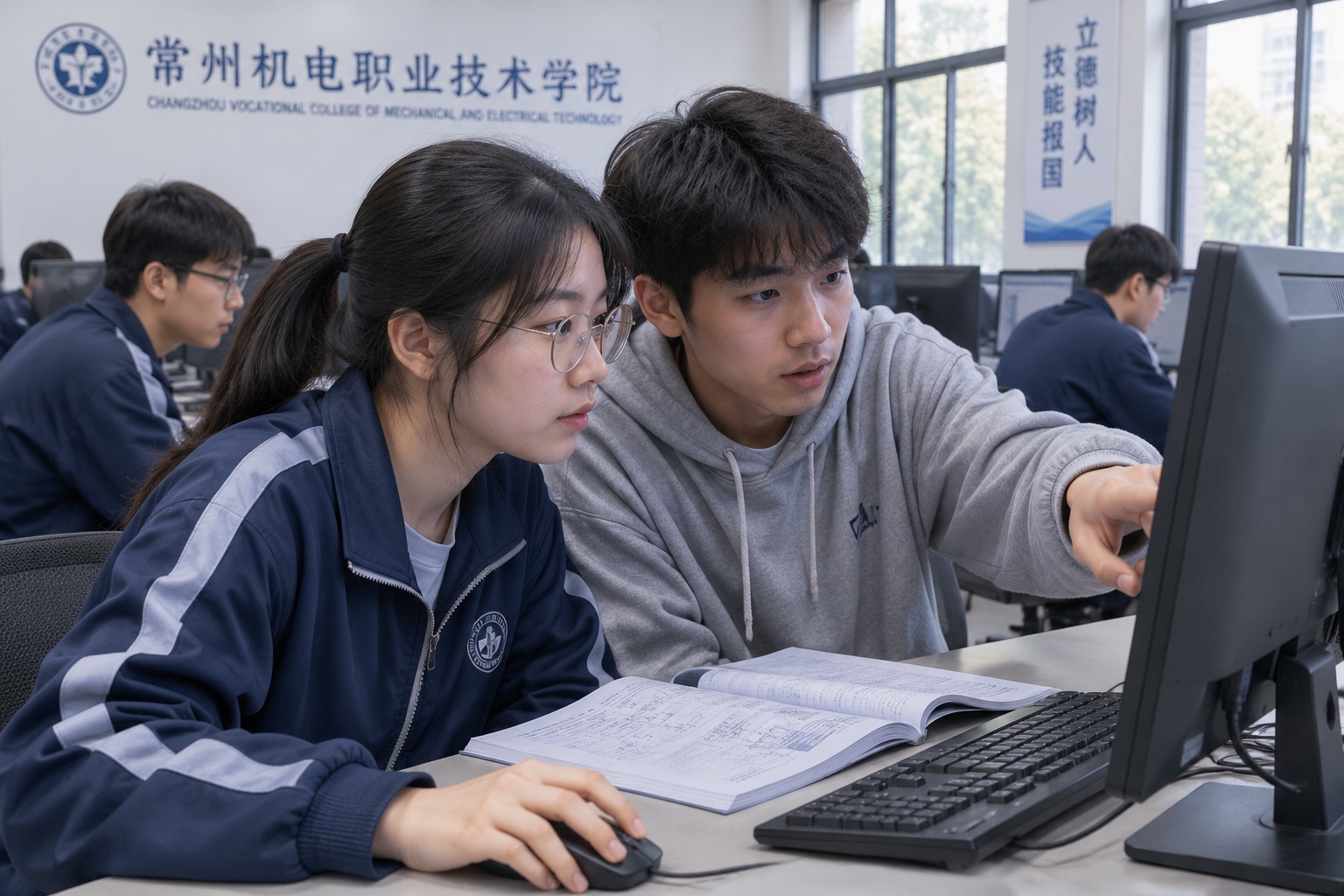
First, what a prompt actually is
A large language model does not know your factory, your manual or your customer. It predicts text based on what you hand it. A prompt is the instruction that closes the gap: who the model should act as, who the answer is for, what shape the answer should take, and what it must not do.
That sounds soft. In practice it is closer to writing a very precise work order — the kind of thing a good shift supervisor does all day. Which is part of why it has landed in a vocational college rather than a computer science department.
China’s vocational system is enormous, and for decades it was treated as the consolation prize of the education system. Roughly four in ten upper-secondary students are in vocational tracks, and higher vocational colleges — three-year programmes that sit between high school and university — enrol well over ten million students. Ministry documents have pushed AI content into vocational curricula since 2019, and the 2024 Government Work Report introduced an “AI Plus” push to spread the technology through ordinary industries.
Schools responded the way they usually do: through partners. Huawei, Baidu and iFlytek all run education programmes that supply courseware, cloud credits and teacher training, and hundreds of colleges have folded them into their teaching. The college in Changzhou launched an applied-AI major in 2021 with two classes. This year it runs five.
What the college does not have is a supercomputer. Nobody here is training a model from scratch. The class works through free web versions and rented API access — a detail that matters, because it is also how most small Chinese companies use this technology.
A 45-minute lesson, in order
Chen, a teacher in his forties who taught networking before he volunteered for the AI course, opens with a deliberately bad prompt on the projector: “Write a guide for the machine.” The class spends ten minutes listing why it fails. No audience. No length. No format. No source.
Then the real task. The manual on their desks belongs to a local factory that makes shrink-wrap packaging equipment. The college’s industry partner sent it over with the model numbers blurred out.
The students break the job into four demands: the reader is a first-day worker, not an engineer; ten questions maximum, ordered by how often they come up; each answer needs a symptom, a check, a fix and a page reference; and if the manual is silent, the model must say so instead of inventing something.
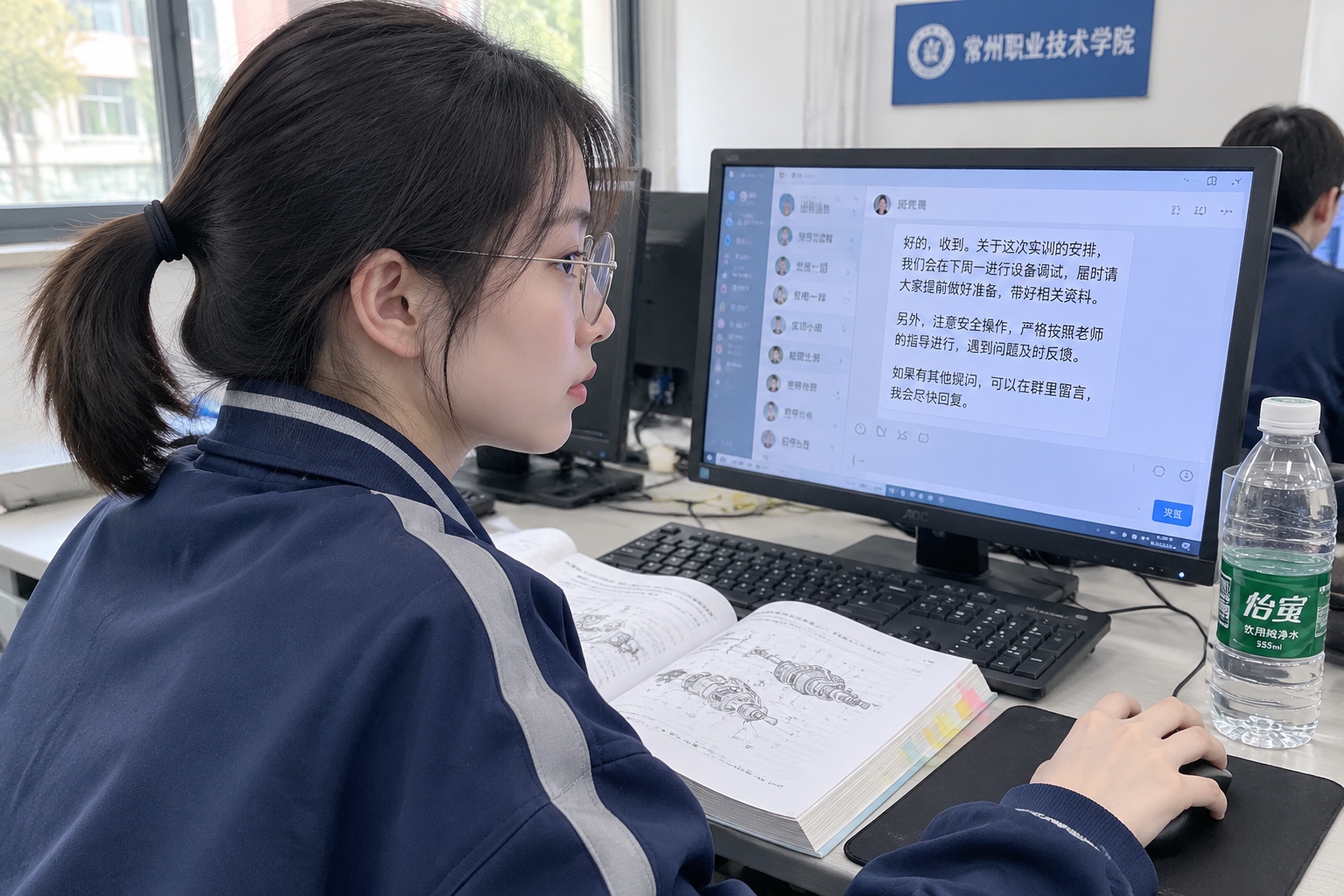
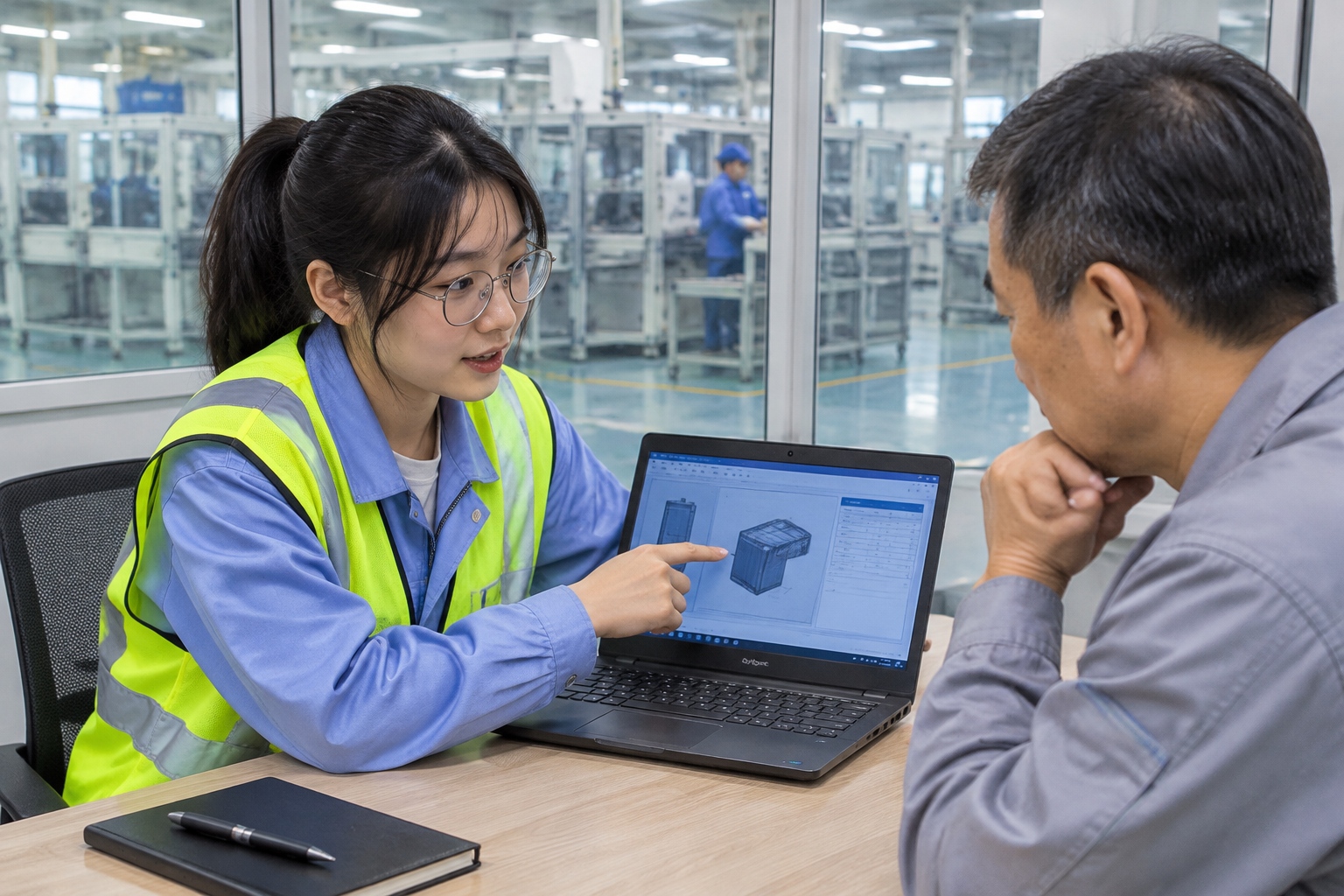
Lin writes her sixth version: “You are a maintenance trainer at a packaging-machine factory. Write a troubleshooting guide for a worker on his first day. He has never touched this machine and reads at a middle-school level. Ten questions, most common first. Each answer: symptom, what to check, how to fix, page number in the manual. If the manual doesn’t cover it, write ‘ask the shift leader’. Do not guess.”
The output is better. Not correct — the model merges two machine models that share a name, and she catches it only because the printed manual is open next to her keyboard. That, Chen tells them afterwards, is the actual job. The model drafts; the human checks.
Grading is a rubric, not a vibe: 40 points for accuracy against the manual, 20 for completeness, 20 for readability, 20 for safety and privacy. A beautiful answer containing one invented number scores badly.
Other groups work on other things. Gao Peng has spent three weeks building prompt templates for his aunt’s shop, which sells plastic storage boxes on Pinduoduo. His first attempt produced product titles stuffed with “the strongest material in the world” — model hype, and the sort of phrase that can get a listing flagged. His current template ends with: “No superlatives. Only claims that appear in this specification sheet.”
Who sits in these chairs
Lin is from Suqian, a smaller city north of here. Her parents run a breakfast stall and get up at four in the morning. She picked the major because the brochure said “big data” and because a cousin working in e-commerce told her the word helps on a CV.
Gao Peng is from a county in Anhui. His father works shifts in a battery plant. About half the class comes from towns like these; the other half is local to Changzhou, which is to say their parents are already inside the industrial economy the college serves.
Their expectations are practical and a little nervous. Job ads for their major list starting salaries around 5,000 to 7,000 yuan a month — roughly US$700 to US$1,000, which goes further in Changzhou than it would in Shanghai. Several students talk about upgrading to a bachelor’s degree later. Others ask the question the adults in the room are also asking.
“If the AI writes the copy faster than me, what am I for?” one student says during a break.
Chen’s answer is not inspirational. You are for the checking, he says. You are for the part where somebody has to know what the machine actually does.
The hard part is teaching the limits
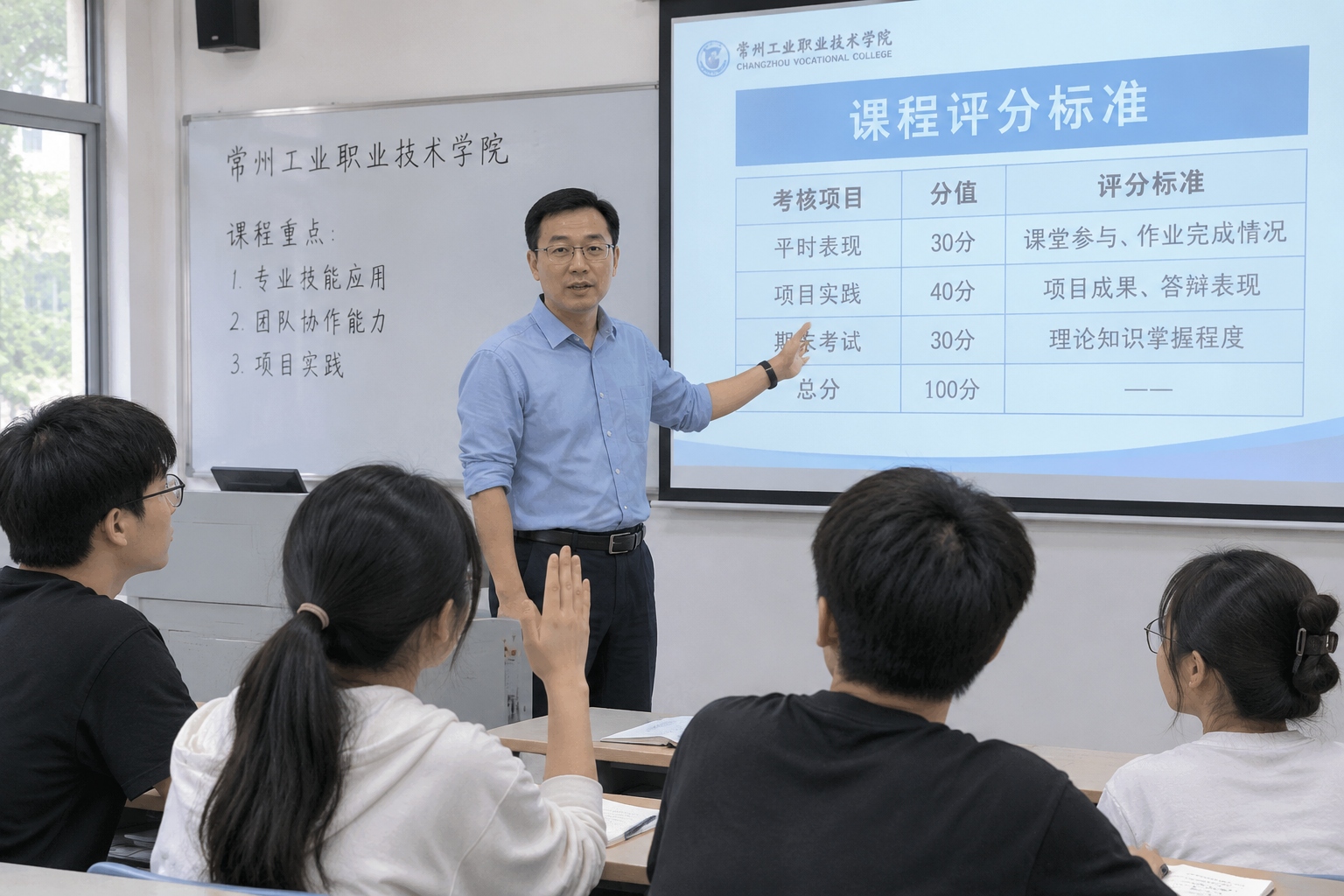
Hallucination is the first lesson, not a footnote. One group asked for the torque setting on a bolt and got a confident “35 N·m”. The manual says 28. Chen’s rule, repeated every week: the manual is the boss.
Privacy is the second. Students are told not to paste customer lists, phone numbers or ID scans into public chat windows, and to think about what a factory’s supplier names reveal. Fake reviews, cloned voices and the ethics of using AI on homework come up too — not as philosophy, but as things that can get you fired.
There is an uncomfortable classroom detail as well. Free tiers of Chinese models are good enough for coursework, but paid versions are better. Some students pay; most do not. The gap between a student who can spend 30 yuan a month and one who cannot shows up in the quality of what they produce.
What the job market actually asks for
“Prompt engineer” as a job title is rare in China too. It shows up in tech hubs and in a handful of big-company listings, not in the industrial parks of Changzhou.
What local employers do ask for is a person who can do ordinary work with these tools: build a customer-service bot for a battery-parts supplier, turn a stack of safety procedures into a searchable Q&A, write and check product listings, summarise quality reports nobody had time to read.
Changzhou is a real market for this. It has become one of China’s densest hubs for battery and solar manufacturing, with plants belonging to CALB and SVOLT within a short drive of the campus. Those factories need people who understand both the shop floor and the software — a combination more common at a vocational college than readers outside China might expect.
The honest version: not everyone converts. Some graduates end up in logistics, quality inspection or IT support, using none of this. The college’s own placement data puts many AI-major graduates into “digital operations” roles rather than AI engineering. The skill works as a multiplier on another job, not as a job by itself.
Cheap tools, uneven classrooms
Something bigger is moving underneath the lesson plan. For most of the past three years, a capable Chinese-language model has been free on a phone. When DeepSeek’s app climbed to the top of the download charts in early 2025, it did so partly because it cost nothing, in a market where a monthly subscription is a considered purchase.
For a student in Changzhou, that means the tools are already in her pocket. It does not mean her classroom looks like every other classroom. Curricula chase models that change every few months; one teacher told me the AI chapter in his textbook was out of date before the book reached students. Schools with a wealthy industry partner get cloud credits and engineers who visit. Schools without one get a teacher who learned it last summer.
Still, something has shifted. A decade ago, a vocational student in a city like this learned to operate software that someone else had designed. Now she is learning to direct a system that writes, and to judge whether what it wrote is true.
The folder called “usable”
Near the end of class, Lin shows me her desktop. Her prompt templates sit in a folder named 能用 — “usable”. There are eleven of them: a packaging machine, a customer complaint reply, a weekly report format, a study plan for the upgrade exam.
The one she is proudest of is the troubleshooting guide. It is now 14 lines long and contains the words “do not guess”.
“It’s not that the model is stupid,” she says. “I just didn’t say it clearly.”
Then the bell goes, 32 people stand up at once, and somebody shouts across the room to ask whether the assignment is due Friday.