
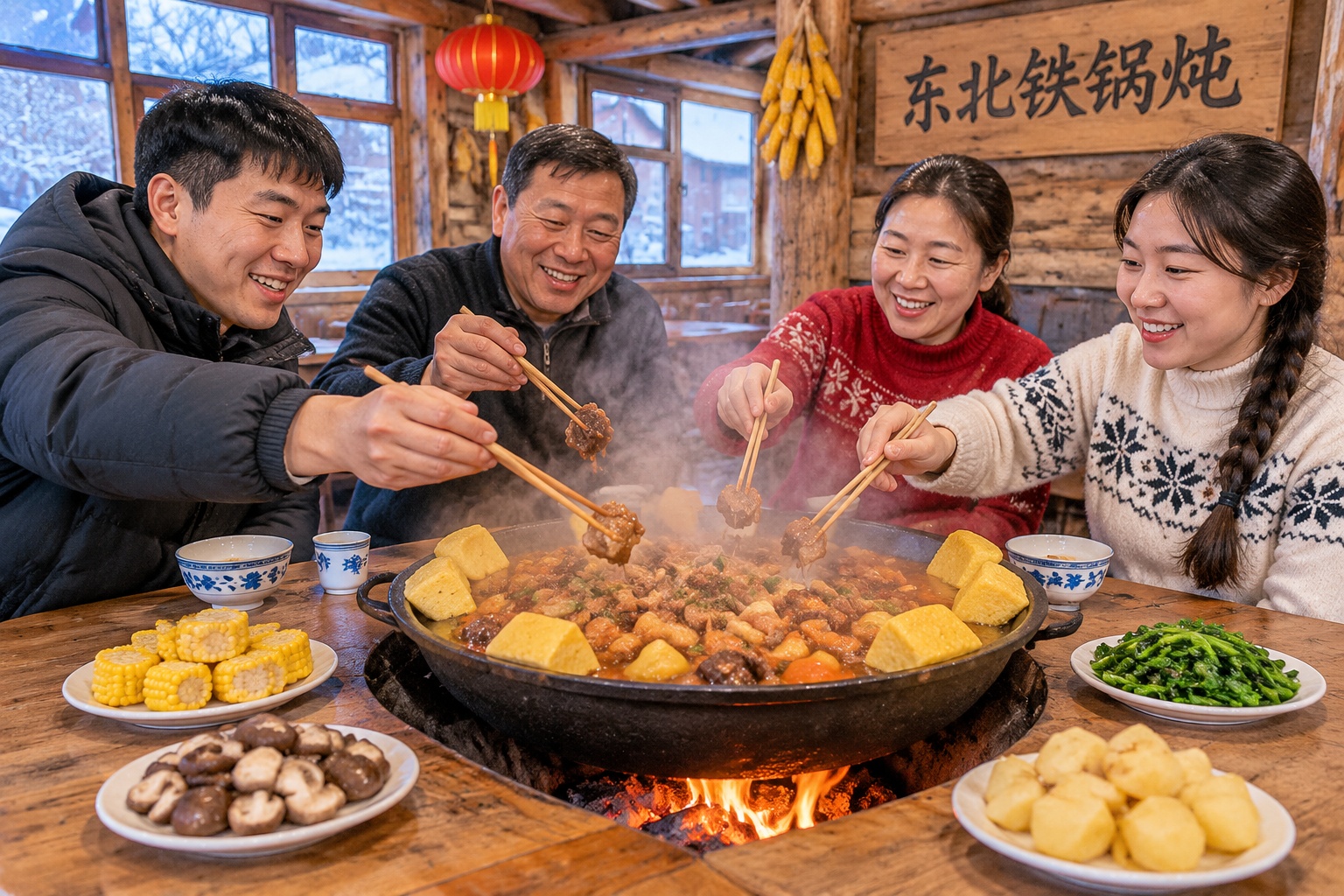

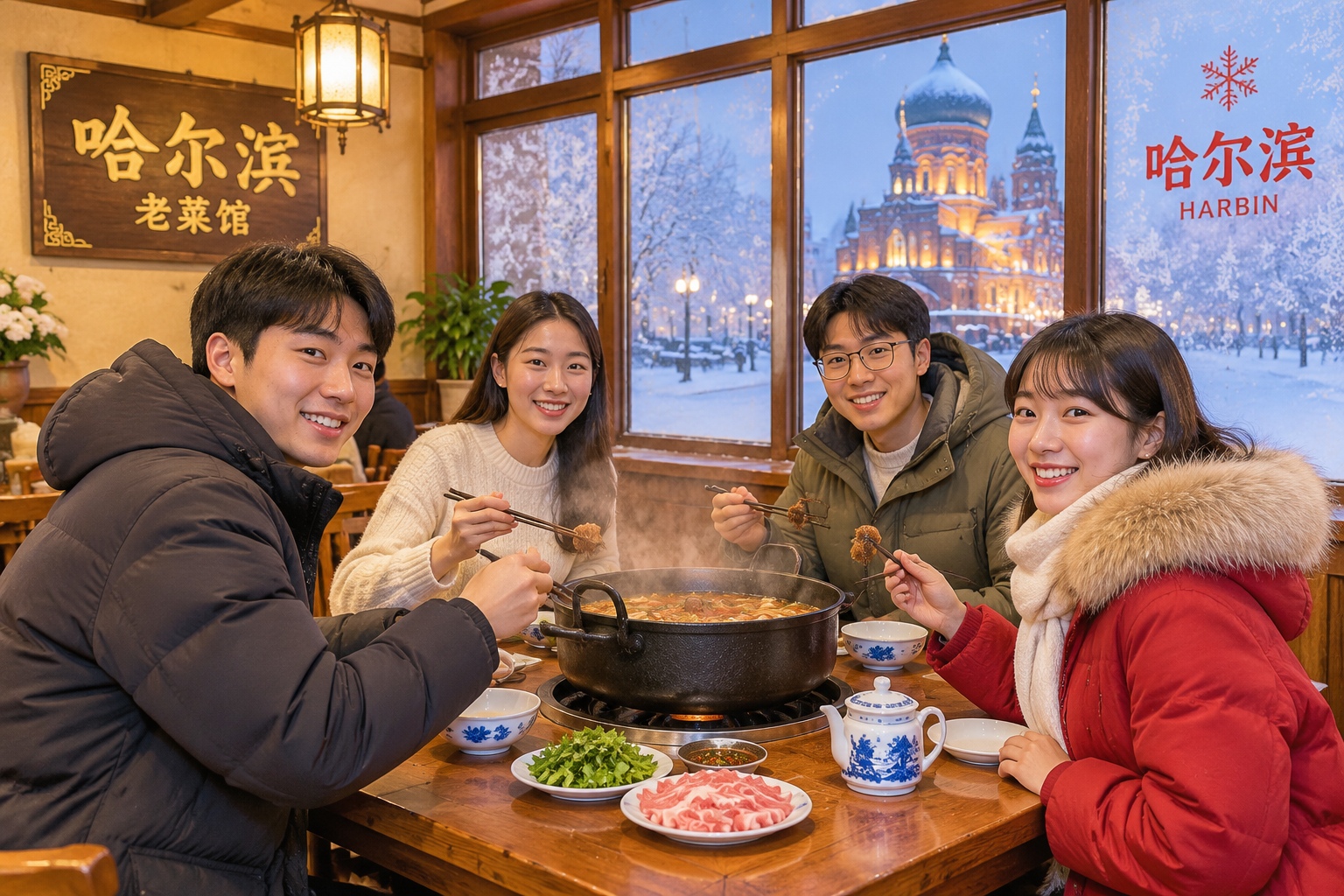
On a frosty January evening in Harbin, the capital of Heilongjiang province, the air bites your cheeks within seconds. The streets are empty, save for a few bundled figures hurrying between snow banks. But step inside a small restaurant called “Old Sun’s Iron Pot Stew,” and the warmth hits you like a hug. The room smells of smoked pork, corn, and burning wood. In the center of each table sits a giant iron cauldron, buried in a hollow wooden table, with fire crackling below. Steam rises from the pot, carrying the rich aroma of broth and braised meat. This is the heart of winter dining in Northeast China.
For outsiders, the phrase “Northeast hot pot” might bring to mind a bubbling metal pot of spicy broth with thin slices of lamb. But in Heilongjiang, the local love affair is with something heartier: tie guo dun, or iron pot stew. It’s not hot pot in the Sichuan sense. It’s a slow-cooked, communal feast that turns a meal into an afternoon event. Here’s what it’s like to eat it, and why it means so much to the people who brave these long, frigid winters.
What Is Iron Pot Stew?
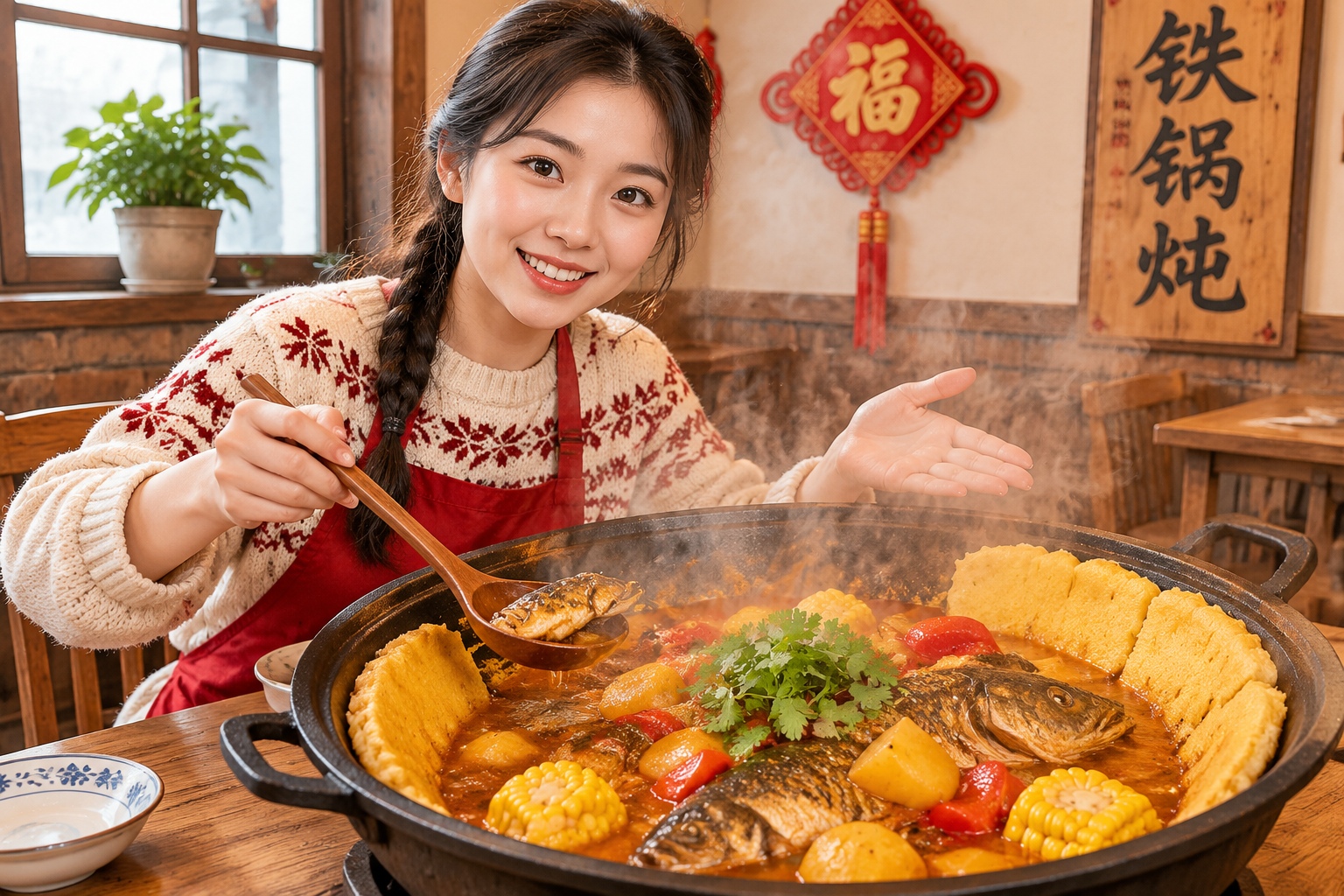
Iron pot stew is exactly what it sounds like: a large cast-iron pot placed over a wood or gas fire, filled with meat, vegetables, and sauce, and simmered for hours. The pot sits flush against the table, so diners sit around it, reaching in with long chopsticks and spoons. The signature version in Heilongjiang uses fish, often a local catch like huchen fish, but chicken, pork ribs, and goose are equally popular.
What makes it special is the way the ingredients are layered. A classic stew might start with a base of cabbage and potatoes, then pieces of fish or chicken, then a ladle of soybean paste and broth. As it bubbles, you add wild mushrooms, tofu, and sometimes vegetables like green beans or eggplant. Near the end, someone presses a lump of corn dough against the inner wall of the pot, where it bakes into a crispy, fluffy cornbread called jie bing. It’s a complete, rustic meal that warms you from the inside out.
Iron Pot Stew vs. Hot Pot: What’s the Difference?
If you’ve tried traditional Chinese hot pot, you know that you cook raw ingredients in a shared broth at the table. Hot pot is fast-paced, interactive, and works best with a variety of dipping sauces. Iron pot stew is different. The cooking is done mostly in advance, or at least in stages. You don’t dip; you wait. You let the flavors meld and caramelize. The broth is thicker, more like a rich gravy. The taste is deeper, smokier, and more rustic.
In Heilongjiang, hot pot has its fans too, especially for mutton or beef hot pot on a cold day. But when locals really want to hunker down with friends or family, they choose tie guo dun. It’s a slower, more deliberate way to share food, and it feels closer to the land and the harvest.
The Social Ritual: Gathering Around the Big Pot
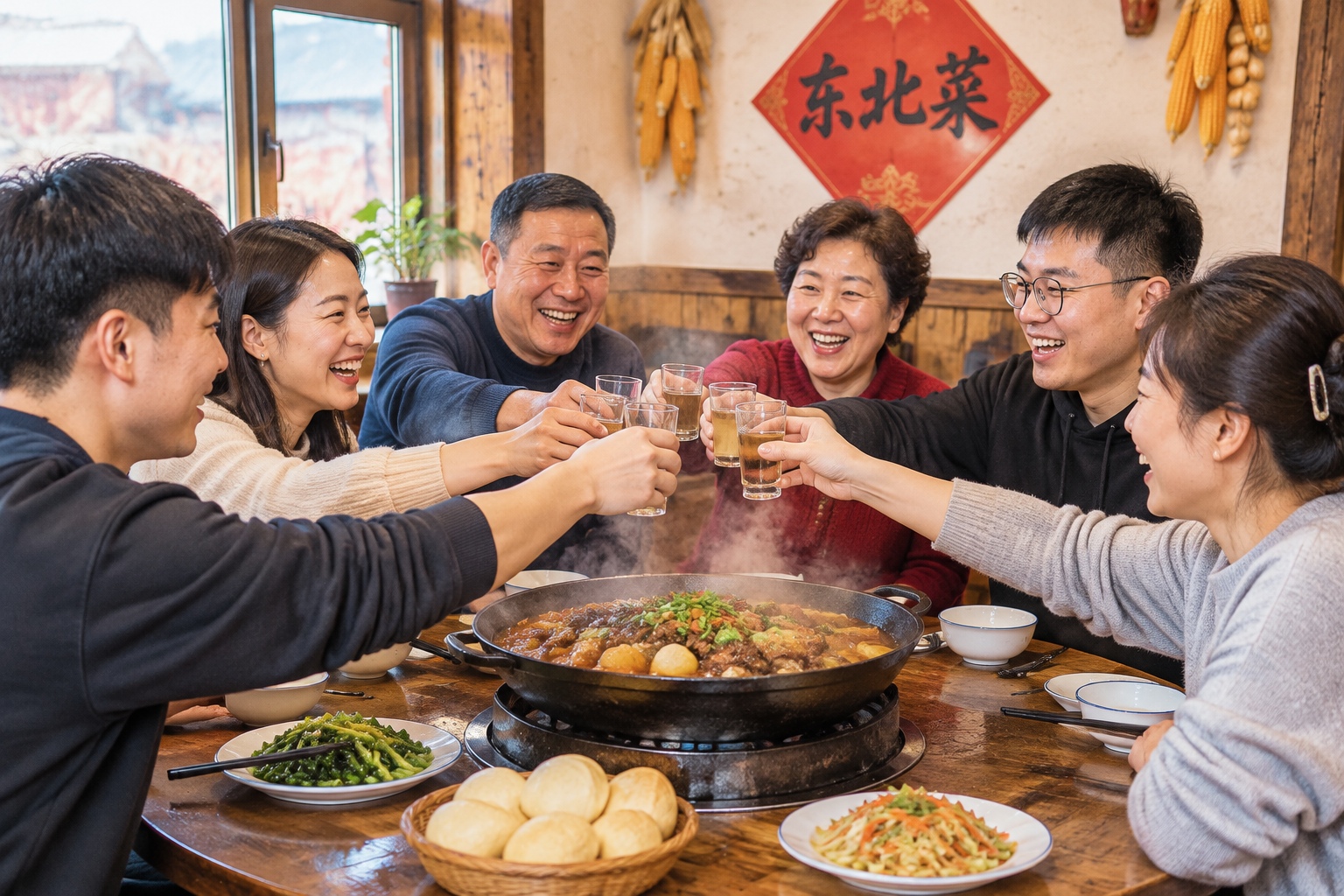
The beauty of iron pot stew is that it’s designed for company. At a typical dinner, six to eight people sit around one pot. There’s no individual portion. You share everything, and that act of sharing makes the meal more intimate. For seniors in Harbin, Sunday lunch at a tie guo dun restaurant is a weekly tradition. For younger people, it’s a way to celebrate a promotion, a birthday, or simply to escape the cold.
I remember my first tie guo dun, a few years back, with a group of colleagues in Harbin. We ordered a chicken stew with mushrooms and corn. As the pot simmered, one of the older men told stories about his childhood in the countryside, when iron pots were the only way to cook for a big family. Another friend showed me how to scrape the cornbread from the side of the pot. Everyone talked, laughed, and reached for food at the same time. No one checked their phone. That’s the effect of a shared pot of stew.
How to Eat It Like a Local
If you’re new to iron pot stew, a few tips can help you enjoy it the way people in Heilongjiang do:
- Order ahead: The stew takes 30-40 minutes to cook, so many locals call the restaurant before they leave home. Some places let you order during the day and pick a time for dinner.
- Bring companions: At least three or four people. The pot’s magic comes from sharing, and you’ll want help finishing a whole chicken or a large fish.
- Don’t skip the cornbread: That golden-brown cake stuck to the pot’s side is not a garnish; it’s the perfect vehicle for soaking up the rich sauce. Scrape it off and eat it while it’s hot.
- Start with the meat: After the pot is opened, let the meat braise for a few more minutes in the sauce. Then use your spoon and chopsticks to fish out the pieces that are fall-apart tender.
- Save some broth: Later, you can ask for a bowl of noodles or drop some vegetables into the leftover sauce. It’s a way to extend the meal and honor the “waste nothing” philosophy of the region.
What Goes Into the Pot: Local Ingredients and Flavors
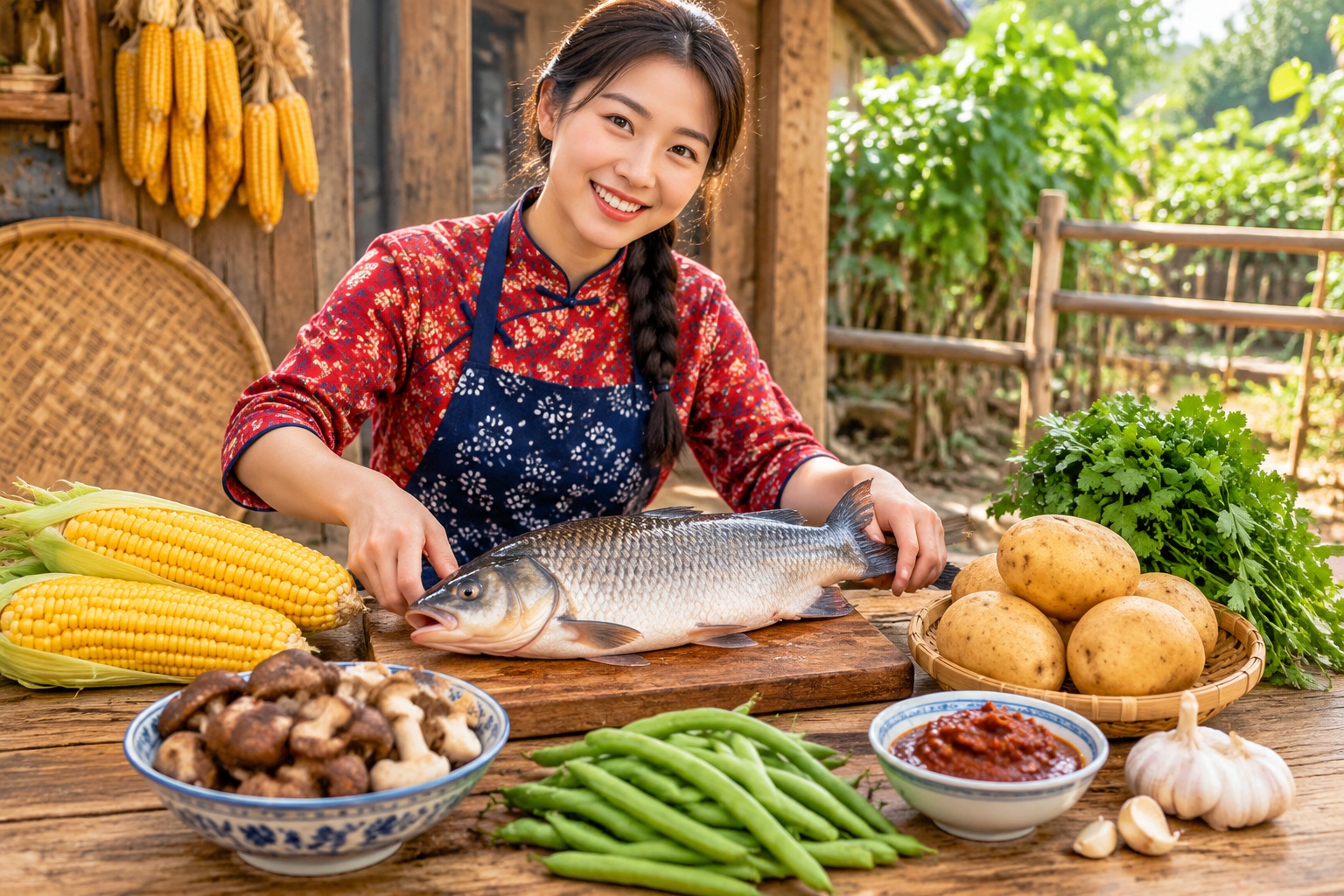
Heilongjiang is one of China’s biggest agricultural provinces. Its fertile black soil grows potatoes, corn, soybeans, and vegetables that are central to the region’s diet. The people here also know how to preserve food for the long winter. Fermented vegetables, dried mushrooms, and cured meats show up in many dishes.
In an iron pot stew, you’ll typically find:
- The protein: fish (often catfish or carp, sometimes local varieties), chicken, spare ribs, or goose, sometimes a mix.
- The starch: potatoes, corn on the cob, or dried green beans soaked back to softness.
- The fungi: wild mushrooms, especially songrong (pine mushroom) from the nearby forests, add an earthy depth.
- The seasoning: soybean paste, ginger, scallions, garlic, and sometimes a touch of chili for a gentle kick.
- The bread: jie bing, the corn-dough discs baked on the pot’s side, perfect for sopping up the sauce.
Each restaurant has its own recipe, passed down through generations. Some use a secret spice blend. Others rely on the quality of the local fish. In the end, the result is a hearty, savory dish that tastes like the landscape itself: tough, generous, and honest.
Where to Eat It: From Tourist Spots to Local Hangouts
In Harbin, you don’t have to look far to find a tie guo dun restaurant. Many are clustered in the old city, in streets that feel untouched by modern development. Some are in converted houses with wooden benches and coal stoves. Others are bigger, with open kitchens and waiters in aprons carrying heavy lids.
For first-timers, central restaurants near Zhongyang Street cater to tourists and offer set menus, often with English labels. But if you want the real experience, go where locals go: the small places near the Songhua River, or even in residential courtyards. Prices are modest, and portions are generous. A stew for two might cost as little as 80 to 120 yuan, enough to feed you and a friend fully.
One tip: go with a group of four or more, so you can order a few sides and taste more dishes. If it’s just two of you, a chicken stew with potato and cornbread is plenty.
The Emotional Side: Food as a Winter Comfort
Why does this dish matter so much in Heilongjiang? Partly because the cold is real. In January, Harbin’s average high is about -13°C (9°F), and it gets much colder at night. After hours of being outside, your body craves something hot, dense, and full of fat and protein. Iron pot stew delivers that better than almost anything.
But there’s also an emotional component. The long winter keeps people indoors. Gathering around a steaming pot is a way to push back against the darkness and boredom. It’s a reminder that winter isn’t just to be endured; it can be enjoyed, especially with good food and good company. That’s why the restaurant tables are always full, from early December to late February, and why the phrase “热乎” (rēhu, meaning “warm” or “hot”) can mean both the temperature of the food and the feeling of being cared for.
Conclusion: More Than Food
If you ever visit Northeast China in winter, don’t leave without trying iron pot stew. It’s not just a meal; it’s an experience that captures the spirit of this region. You’ll eat slowly, laugh a lot, and leave with a full stomach and a warm heart. And when the cold wind hits your face again, you’ll already be planning another visit to the nearest pot.
In a place where the thermometer drops far below zero, “热乎” isn’t just about the food. It’s about being alive, together, and warm.
Start the discussion at forum.chinacomes.com