
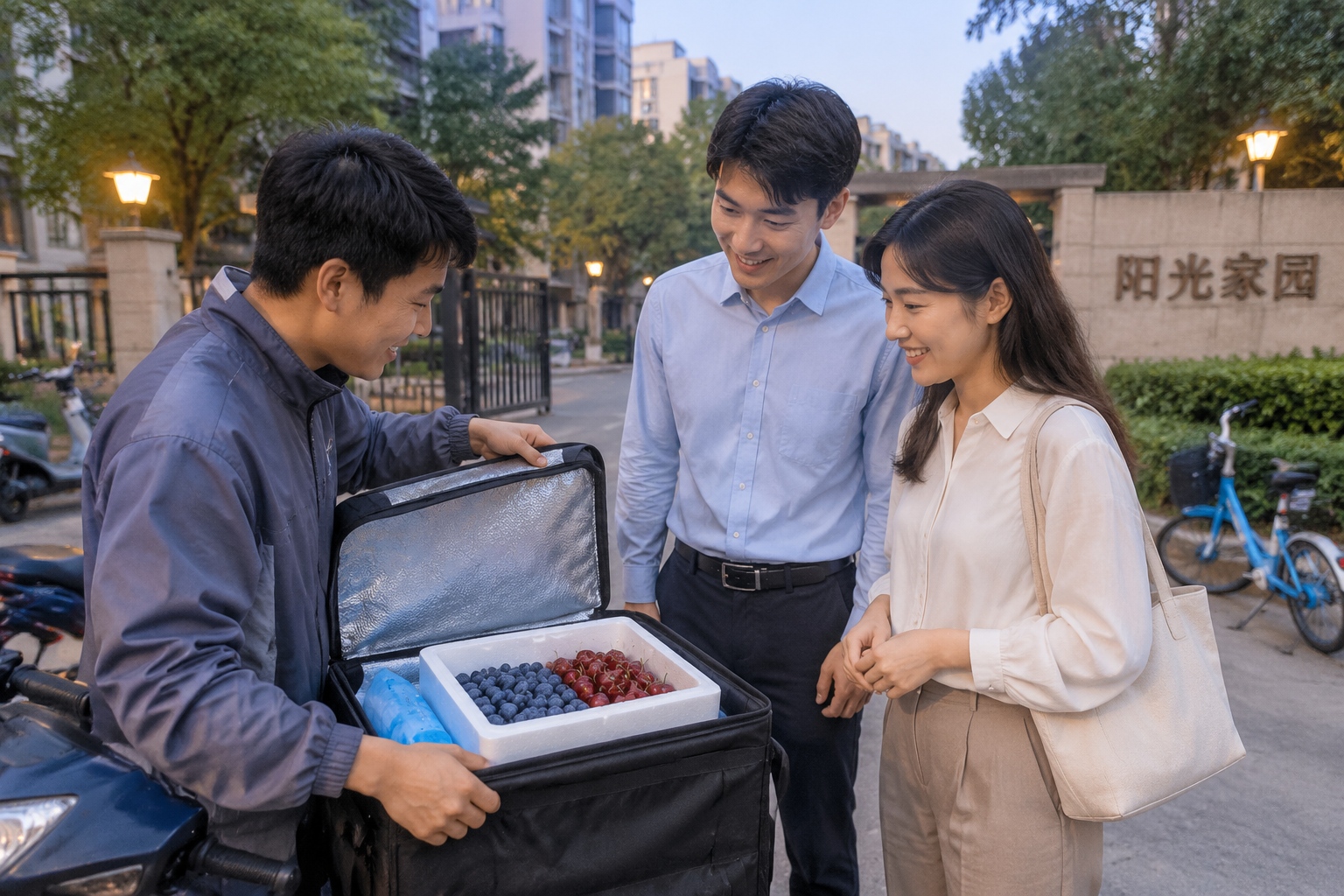

A bag of blueberries at the compound gate
At 6:40 on a Tuesday evening in Hangzhou, a delivery rider stops his electric scooter outside a residential compound gate. He lifts the lid of his insulated delivery bag and takes out a foam box sealed with tape. Two ice packs sit inside, one on each side of a clear plastic punnet of blueberries. Beside it is a paper bag of cherries. The customer, a young couple still in office clothes, walks over from the gate. The woman checks the label and says thanks. The whole exchange takes less than a minute. They ordered the fruit on the subway 22 minutes earlier.
What makes the scene unremarkable is the point. Fresh fruit from another hemisphere, delivered to a gate after work, has become a routine purchase in many Chinese cities. It is not a luxury gift, not a special-occasion purchase, not a story about a rich family. It is a Tuesday. The question worth asking is not why the delivery was fast. It is why the fruit was there at all.
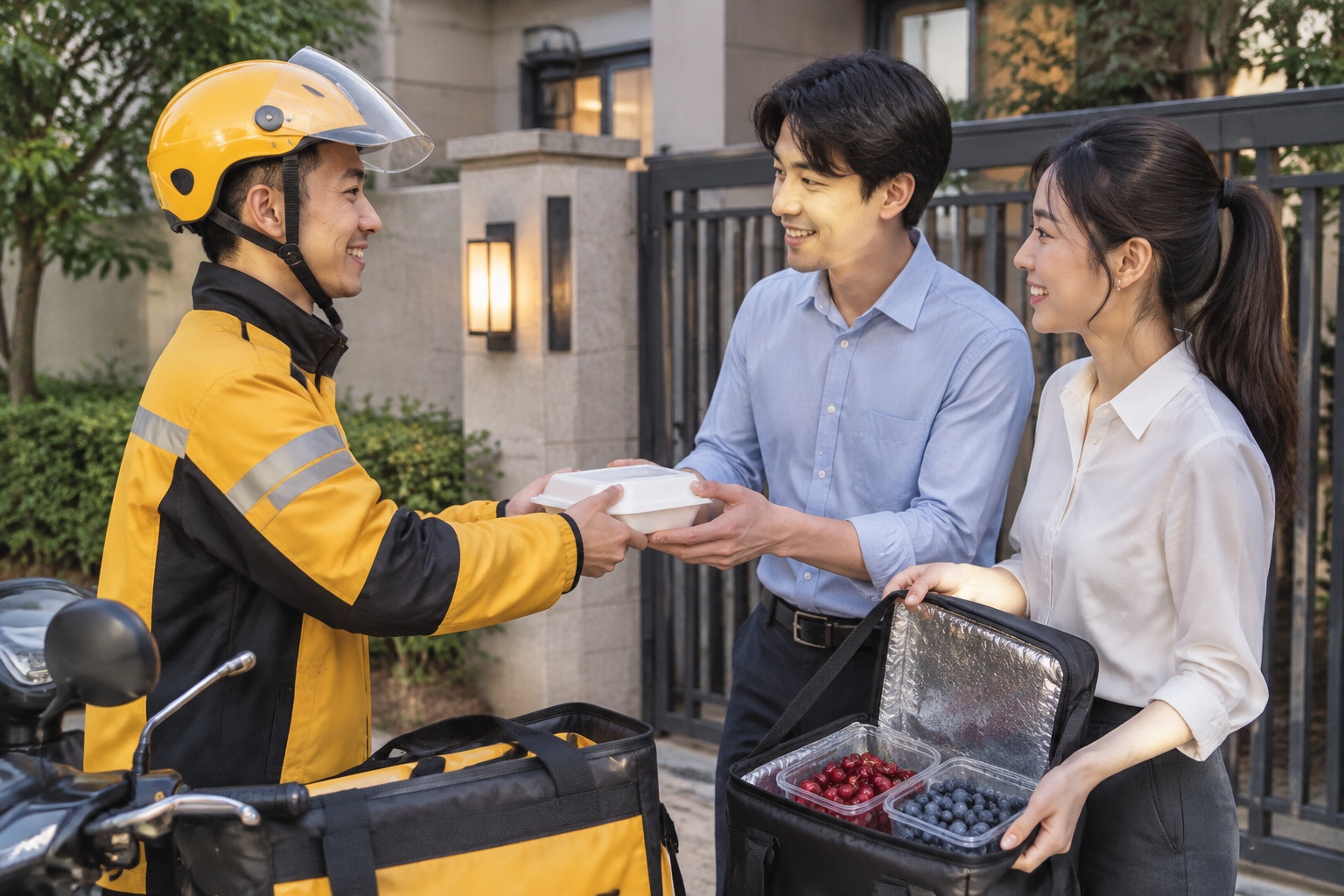
Instant retail in China: from a tap to a front warehouse
The system behind that box is usually called instant retail in China. The term covers groceries, medicine, snacks and fresh food ordered through a phone and delivered in under an hour. For fruit, the key piece of infrastructure is the front warehouse: a small, densely stocked facility inside a residential district, often one to three kilometers from customers. It is not a supermarket. Customers do not walk in. Staff pick orders from shelves and hand them to riders.
When the couple ordered, their request did not go to a distant warehouse. It went to a nearby front warehouse that had already listed the blueberries in its app inventory. A worker received the order on a handheld device, walked to the cold zone, picked the fruit, checked the pack date, and sent it to the packing table. The platform then matched the order with a rider whose route passed the compound. The rider did not choose the route from scratch. The dispatch system suggested an order of stops, based on traffic, distance and how many other orders he was carrying.
None of this is magic. It is a density business. A front warehouse needs enough orders per day to cover rent, cold storage and staff. A rider needs enough nearby pickups and drop-offs to make the trip worthwhile. In dense urban districts, both conditions are easier to meet. In a suburb or a smaller city, the same app may show a longer delivery time or a narrower range. That gap is part of the real picture.
Not every fruit category is available at 3 a.m. Fresh fruit has limits. But in many Chinese cities, the combination of front warehouses, overnight staff and riders means that a late-night order is no longer unusual. The system is closer to round-the-clock than the old neighborhood fruit shop ever was.
Why the promise is 30 minutes in some places and not others
The familiar 30-minute promise is not a single technological breakthrough. It is the result of many small arrangements: inventory data that tells the app what is actually on the shelf, demand forecasts that tell warehouses what to stock before a weekend, order batching that lets one rider serve several nearby customers, and route planning that avoids the worst of the evening traffic. When those pieces fit, the delivery feels effortless. When one piece fails, the app shows a delay.
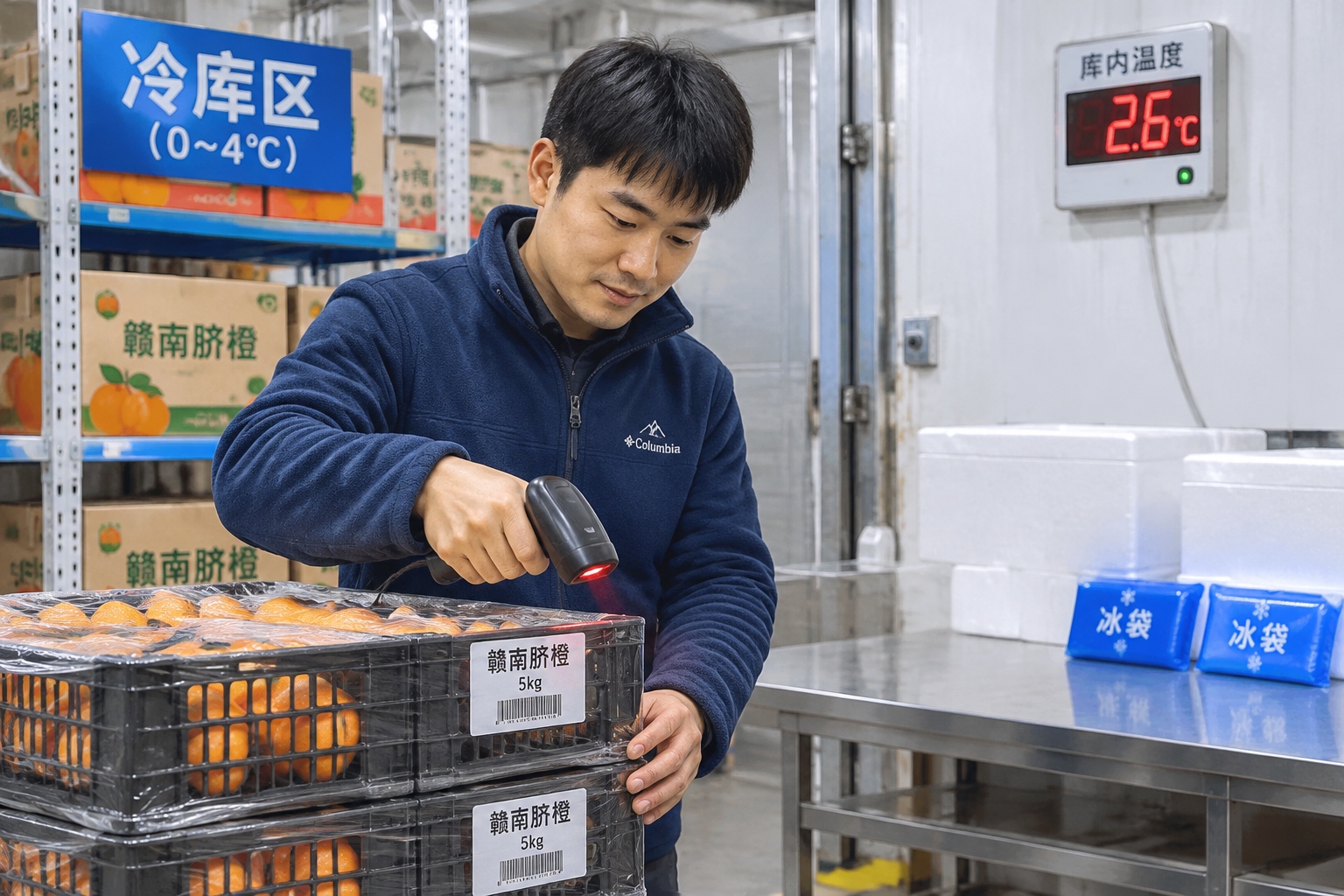
Cold chain logistics: ice packs, thermometers and a scanner
The most important part of the journey is not visible in the app. Fruit is alive in a biological sense. It respires, loses water and bruises. Berries are fragile. Cherries soften in heat. Cut fruit is more sensitive still. The cold chain is the set of spaces and habits that keep the product inside a safe temperature range from the warehouse to the door.
At the front warehouse, fruit is stored in different zones. Berries and cut fruit usually sit at 0 to 4°C. Some tropical fruit is kept warmer. A worker with a handheld scanner checks the batch, the arrival date and the remaining shelf life. At the packing table, staff place the fruit in a foam box or an insulated liner. In summer, they add more ice packs. In winter, they may use fewer. A thermometer on the wall is a plain piece of equipment, but it is part of the system.
The last mile is the hardest part. The rider’s insulated bag is not a refrigerator. It buys time. On a hot day, a rider may keep the bag closed between stops and park in shade. On a rainy day, the bag must stay dry. If a building has no lift or the customer does not answer the phone, the ice packs start to work against the clock. The 30-minute promise is kept by people who know how long the ice will last.
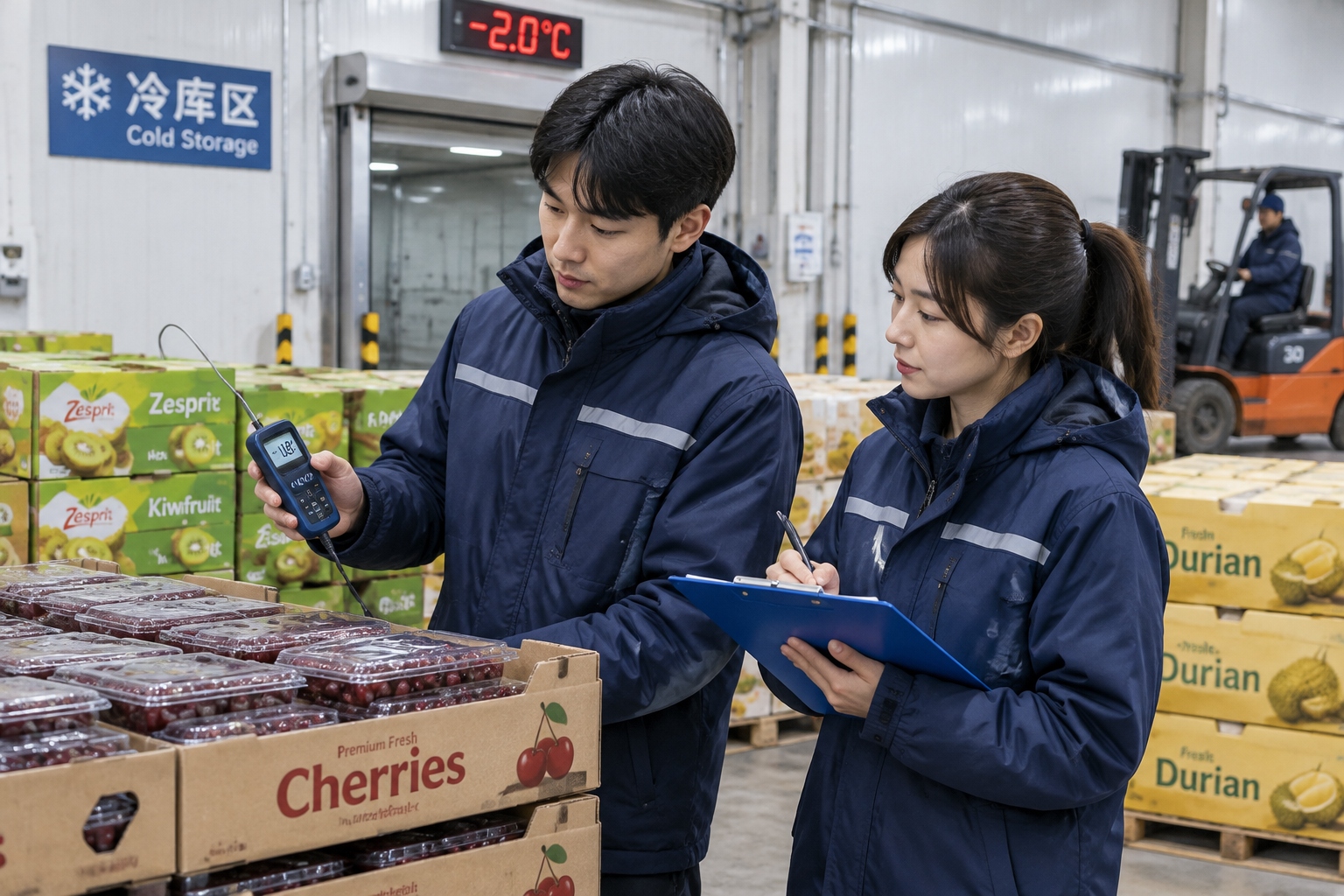
How Chilean cherries and Thai durians reach a Chinese kitchen
The global part of the story starts far from the compound gate. Chile’s cherry season runs roughly from November to February, which overlaps with Chinese New Year demand. Fruit is picked, cooled and packed near the orchard, then moved by refrigerated truck to a port. Sea freight to China takes about three to four weeks; air freight takes days rather than weeks but costs far more. After arrival, customs clearance can take hours or a few days, depending on documents, inspections and port congestion. Then the fruit moves through wholesale markets, importers, cold storage and e-commerce warehouses.
Thai durian follows a different route. Much of it crosses land borders in southern China after traveling through Southeast Asia, while some moves by sea. New Zealand kiwifruit arrives by sea in refrigerated containers. The fruit is not new to China. What has changed is the coordination. Large platforms can buy directly from exporters, reserve cold storage, and move fruit into front warehouses before a promotion. Importers can track containers and sell online before the ship docks. A fruit that once appeared only in a specialty shop can now show up in a neighborhood app.
This does not make every imported fruit cheap. Early-season cherries can be expensive. A gift box is priced differently from a small snack pack. Durian is still a high-value purchase for many families. The more accurate statement is that the range has widened and the price ladder has become longer. There is a 20-yuan punnet for a single person and a 300-yuan box for a family gathering. Both can be ordered from the same phone.
What ordinary families gain, and what the convenience costs
For a young couple in a city, the gain is simple: choice. They can buy two kinds of fruit after work without visiting a market. They can order a small pack instead of a large box. They can eat strawberries in winter or cherries in a season when local orchards are bare. The line between seasons has blurred, not because weather changed, but because supply chains became longer and better organized.
There is also a price to the system. A foam box, plastic film, a paper bag and two ice packs are used for a purchase that may take ten minutes to eat. Some cities have recycling points; many do not. Cold storage and refrigerated transport use electricity. Fruit still spoils when a rider is delayed or a warehouse over-orders. And the rider’s work is physically demanding: stairs, heat, rain, phone calls, and the pressure of a countdown on the screen.
These costs do not cancel the benefit. They sit alongside it. The honest picture is not that technology solved fruit. It is that technology made a wider range of fruit available at a wider range of prices, with new kinds of waste and new kinds of labor. That is a more useful way to understand the change than a slogan about convenience.
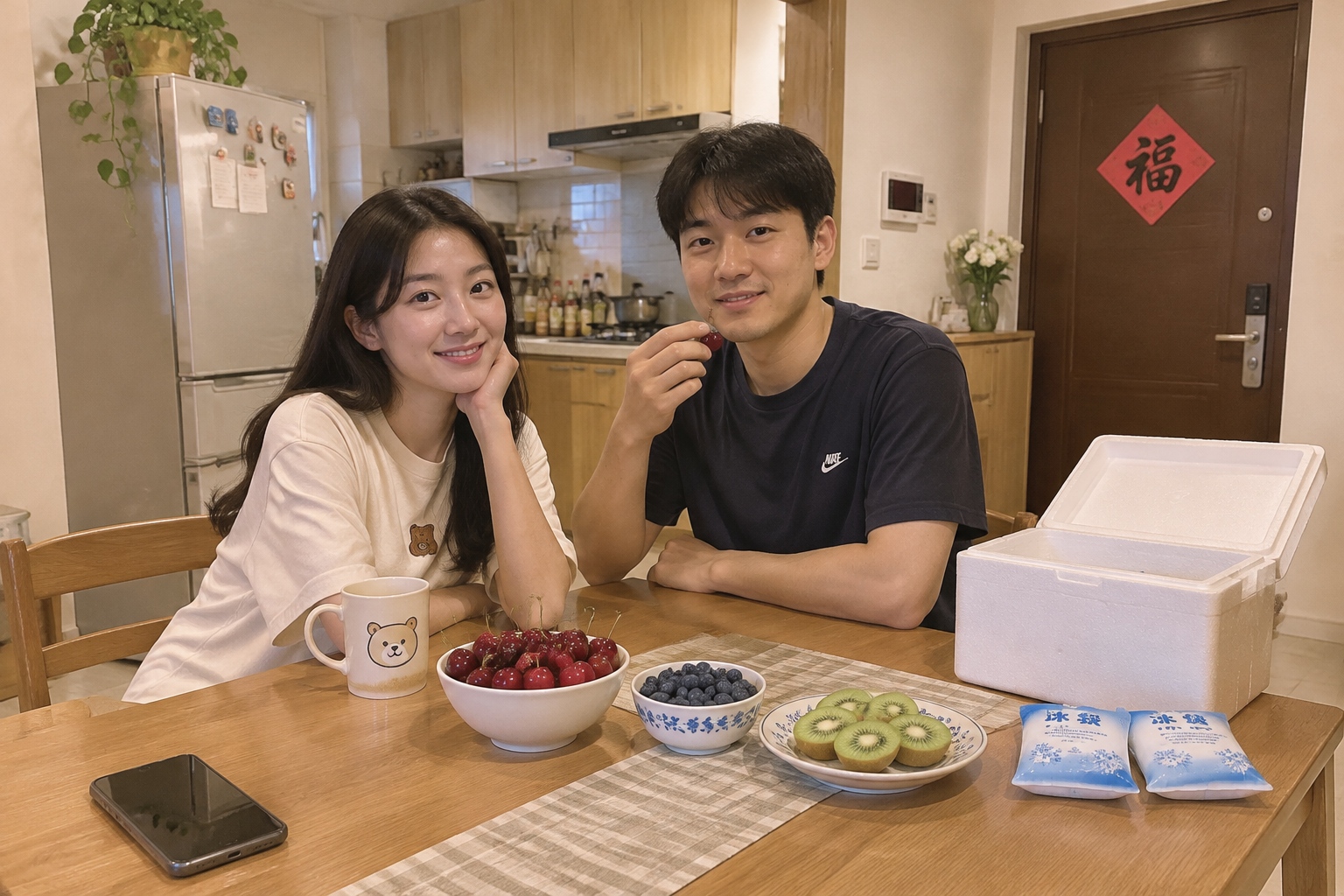
Back to the insulated box
The couple carries the foam box upstairs. They put the blueberries in the fridge and leave the cherries on the table. One of them opens the app to rate the delivery. The rider is already on his way to the next compound. The ice packs will be reused or thrown away. The box will be folded and put by the door, maybe for the next delivery.
This is what technological change looks like in ordinary life. It does not always arrive as a robot or a headline. Sometimes it arrives as a sealed foam box at 6:40 on a Tuesday. A family that once bought fruit by season and by neighborhood now buys it by app, by price and by mood. The system behind that choice is complex. The result is simple: tonight, there is fruit on the table.