
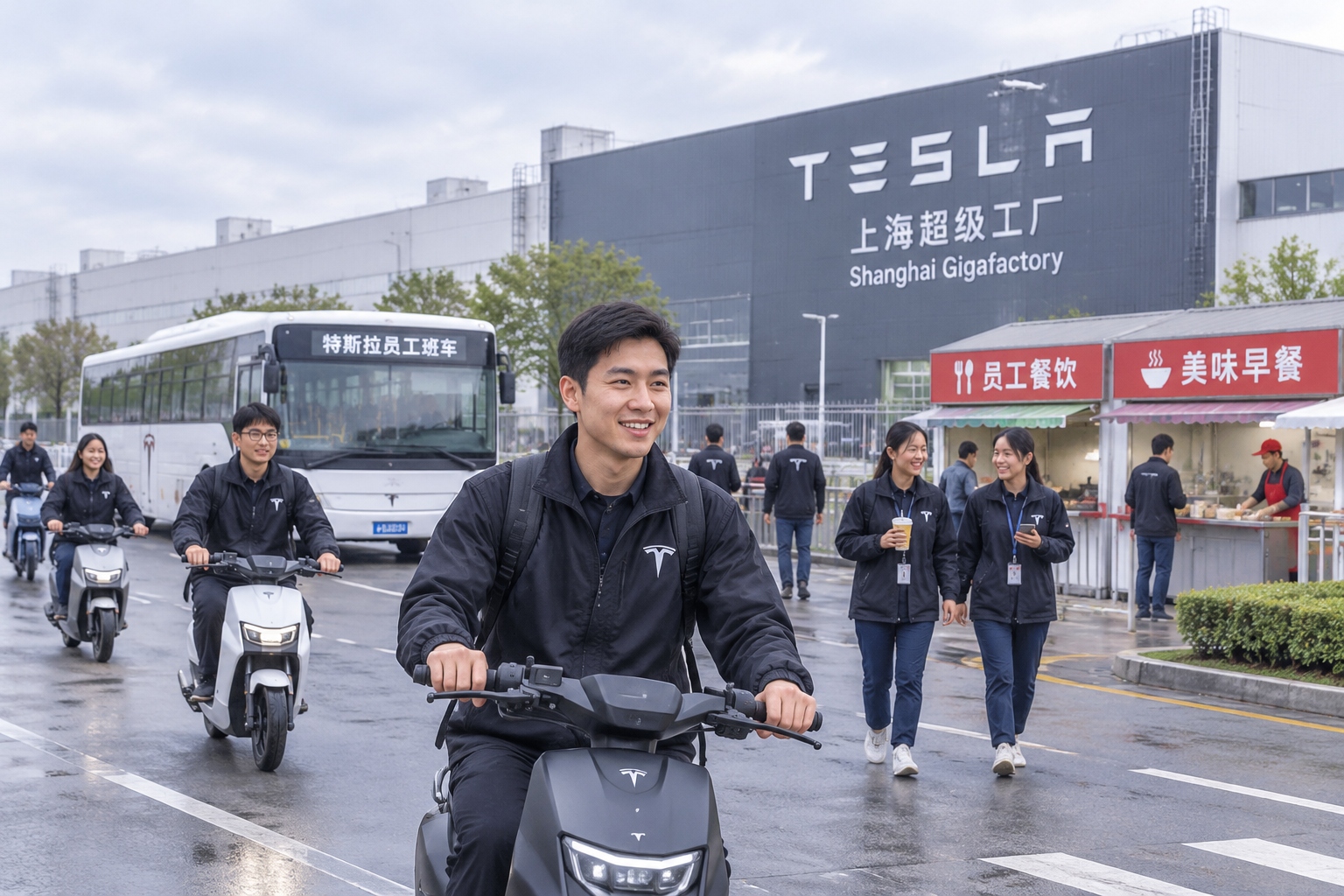

A factory gate at 6:40 a.m.
At 6:40 a.m., the road outside Tesla’s Shanghai Gigafactory is already busy. Electric scooters hum past food stalls selling steamed buns and soy milk. Shuttle buses stop near the gate, and workers in blue and gray jackets step out into the damp morning air. A few trucks wait to enter the logistics area. On the horizon, the low buildings of Lin-gang stretch toward the Yangtze River estuary.
This is not how the site looked in 2018. Back then, it was mud, construction fencing and a promise. Today, it is one of Tesla’s largest vehicle plants and a major export hub. The story of how that happened is often told as a single phrase: China speed. But speed is not a spell. It is a schedule made of permits, ports, suppliers, machines and people.
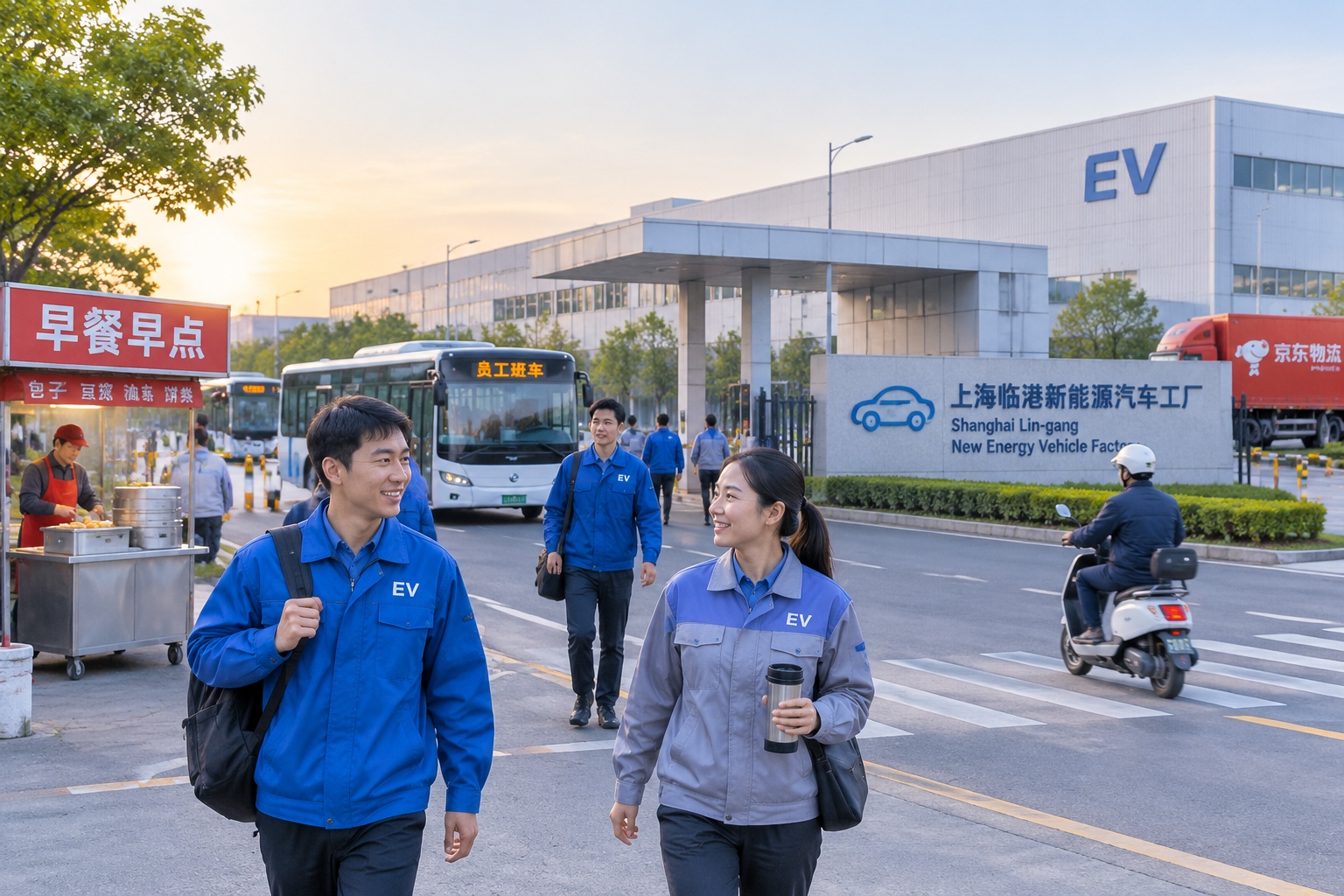
The timeline that made ‘China speed’ visible
Tesla signed its agreement with Shanghai in July 2018. It secured land in the Lin-gang Special Area that October. Construction began in January 2019. By December 2019, the first China-made Model 3 cars were being handed to customers. A plant that had been a field of construction fencing was suddenly part of the daily commute.
The timeline matters because Tesla was allowed to build a wholly foreign-owned passenger car plant in China, a first for the industry. That decision removed a layer of joint-venture negotiation that had shaped foreign carmaking in China for decades. It did not, by itself, build the factory. But it cleared the way for a single company to move at its own pace.
Lin-gang also helped. The site sits near Shanghai’s deep-water ports and within the dense manufacturing belt of the Yangtze River Delta. Customs, road links and local government services were organized around the project. Suppliers in Jiangsu, Zhejiang and Shanghai could reach the plant by truck in hours, not weeks. The speed was real, but it was assembled from many ordinary things.
Inside the plant: robots, tablets and shift changes
Inside the factory, the pace is set by the line. Massive presses stamp body panels. Robots weld frames in a blur of orange arms. In the assembly hall, workers move between stations with tablets and handheld tools, checking torque, gaps and software settings. The plant is highly automated, but it is not empty. People still guide parts, fix errors, inspect finishes and keep the flow moving.
Many of the engineers are young. They learn on the job, moving between model launches, quality checks and process improvements. Production workers follow shift patterns, with training that covers safety, tools and the specific model being built. The work is repetitive and precise. A small delay at one station can ripple down the line.
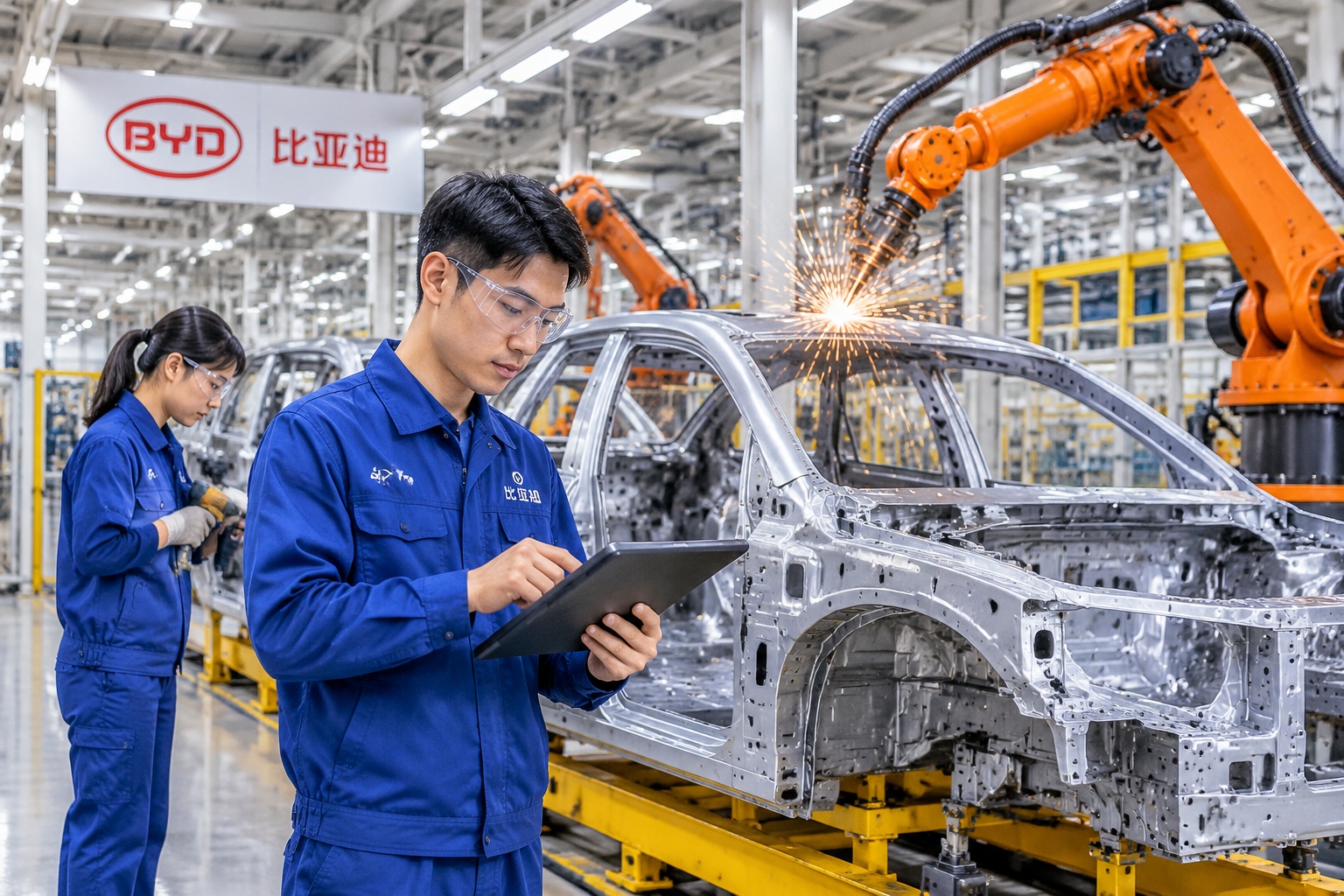
The plant builds the Model 3 and Model Y. Over time, Tesla has pushed more production into Shanghai, not just for Chinese buyers but for export markets. In 2023, the plant delivered about 947,000 vehicles, according to figures reported by Chinese media. That was more than half of Tesla’s global deliveries that year. The numbers are large, but they rest on daily routines: a shift starting, a robot recalibrating, a quality inspector signing off.
The supply chain is a map of the Yangtze River Delta
Look beyond the factory gate and you see another kind of speed. Trucks arrive with seat frames, stamped parts, glass, electronics and packaging. Some suppliers are in Suzhou, about two hours away by road. Others are in Ningbo, Changzhou or closer to Shanghai. The region is one of the world’s densest clusters of auto suppliers.
For Tesla, that geography shortens the distance between a schedule change and a parts delivery. Inventory can turn faster. A problem with a component can be discussed in person, not just by email. Small and medium-sized suppliers play a real role here. They may not appear in headlines, but they adjust molds, add shifts and solve quality issues so the line keeps moving.
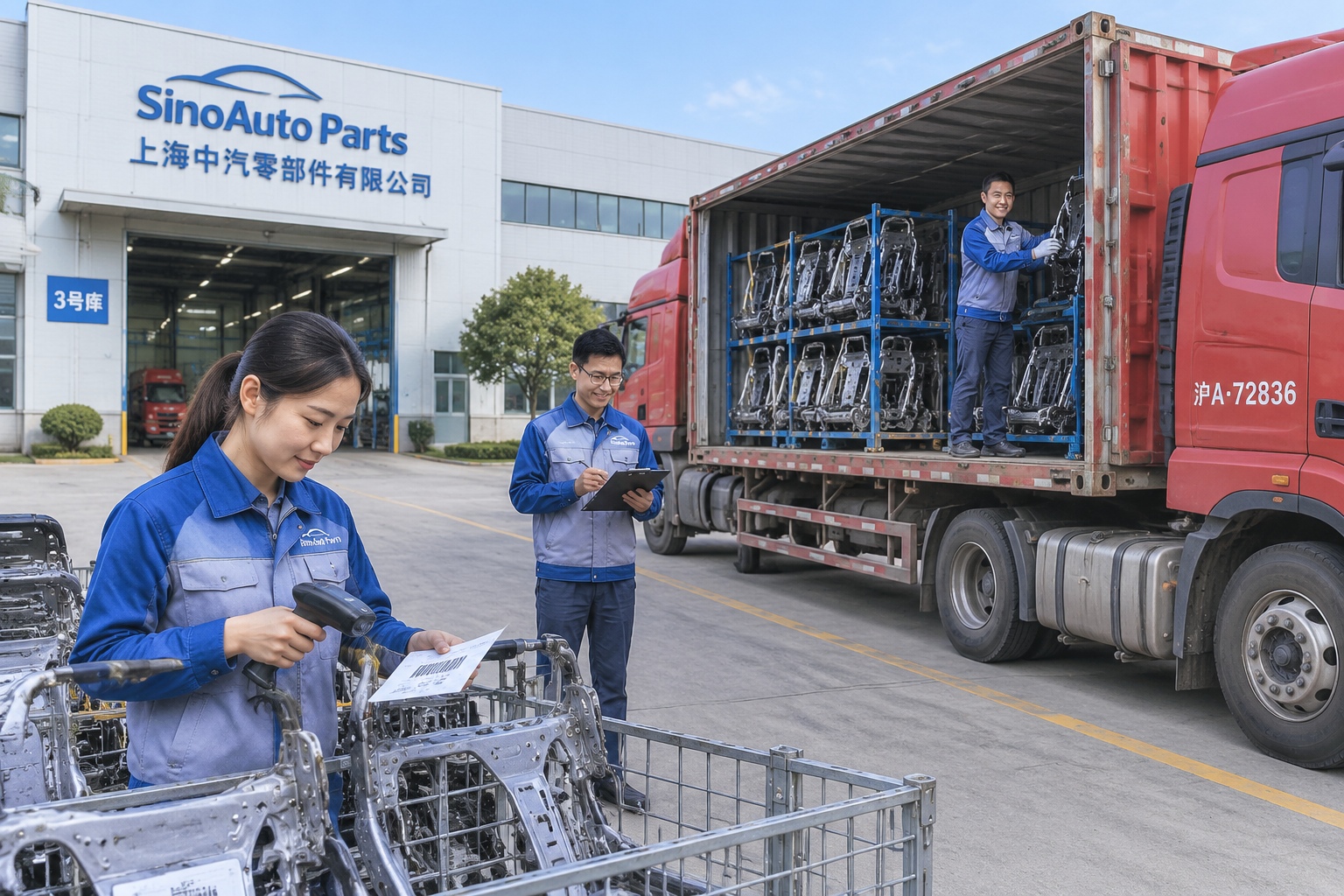
This is also where ‘China speed’ becomes less mysterious. It is not only a government promise or a construction crew working at night. It is a supplier in Jiangsu repacking a truck before lunch, a warehouse manager checking a barcode, a driver joining the queue at the plant gate. The system works because many firms are close enough to respond quickly.
A new rhythm for Lin-gang
The factory has changed the neighborhood around it. Lin-gang was planned as a new city before Tesla arrived, with wide roads, new housing and room for industry. But a plant of this size brings its own rhythm. Shuttle buses run at shift changes. Convenience stores near the gate stay open late. Noodle shops and coffee stands fill up before 7 a.m. and after 8 p.m.
Metro Line 16 connects the area to central Shanghai, but the last leg to the factory is usually by bus, car or company shuttle. For some residents, the plant means jobs and a reason for new apartments and services. For others, it means more trucks on the road and a louder edge to daily life. Both experiences are part of the same story.
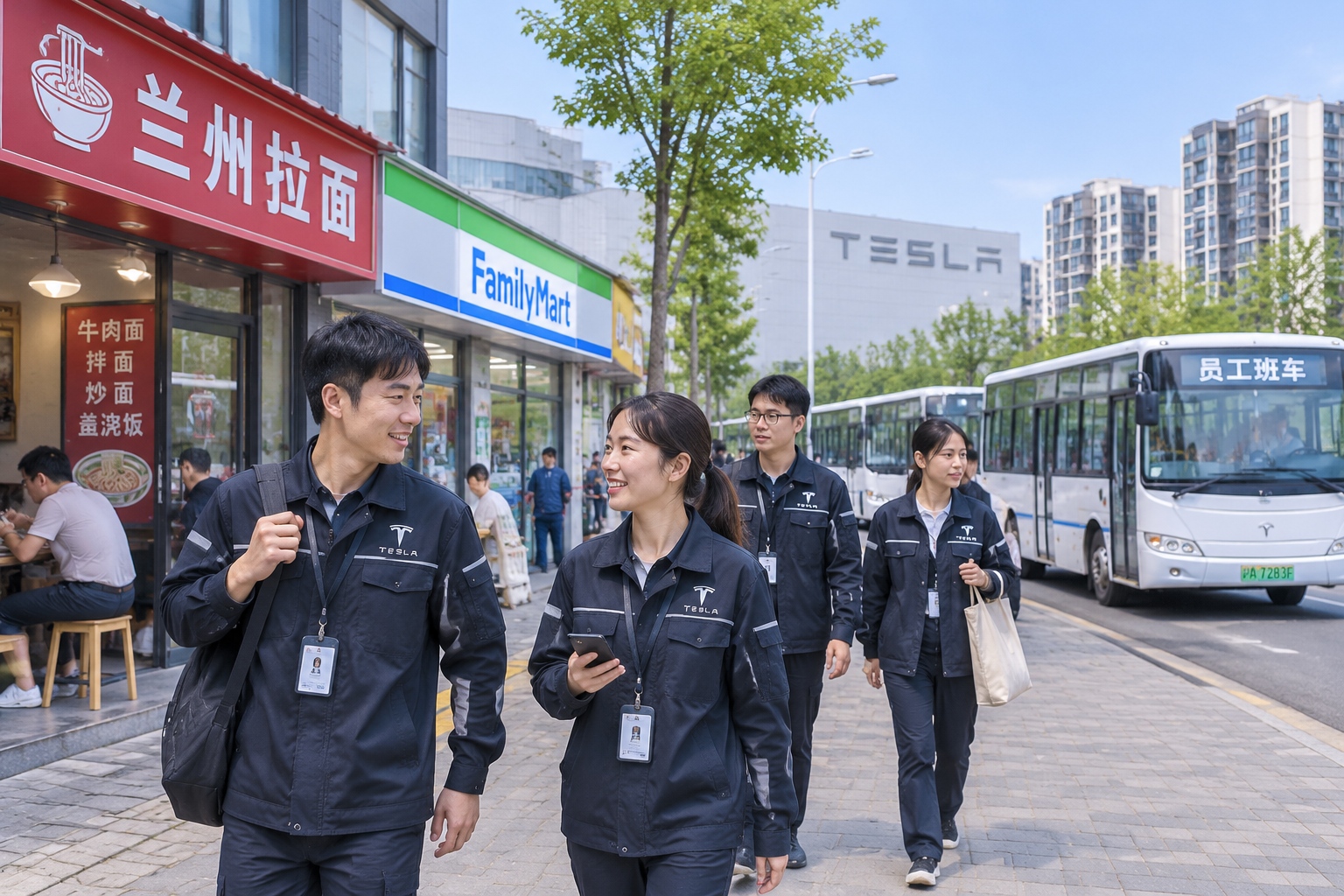
Housing, commuting and public services are still catching up with the industrial growth. That gap is common in fast-developing areas. It also shows why a factory is never just a factory. It changes traffic, rents, restaurant hours and the kind of people who move into a neighborhood.
From the line to the ship
Once a car is finished, it does not stay long. Many vehicles are loaded onto trucks and taken to Shanghai’s Haitong automobile terminal, where roll-on/roll-off ships wait at the dock. The cars drive up the ramps and disappear into the hull. A single ship can carry thousands of vehicles.
From Shanghai, Tesla cars head to Europe, Asia-Pacific markets and the Middle East. The Model 3 and Model Y made in Lin-gang are sold in countries where buyers may never see the factory. They see a car in a showroom, a charging app, a delivery date. The export chain is part of the product.
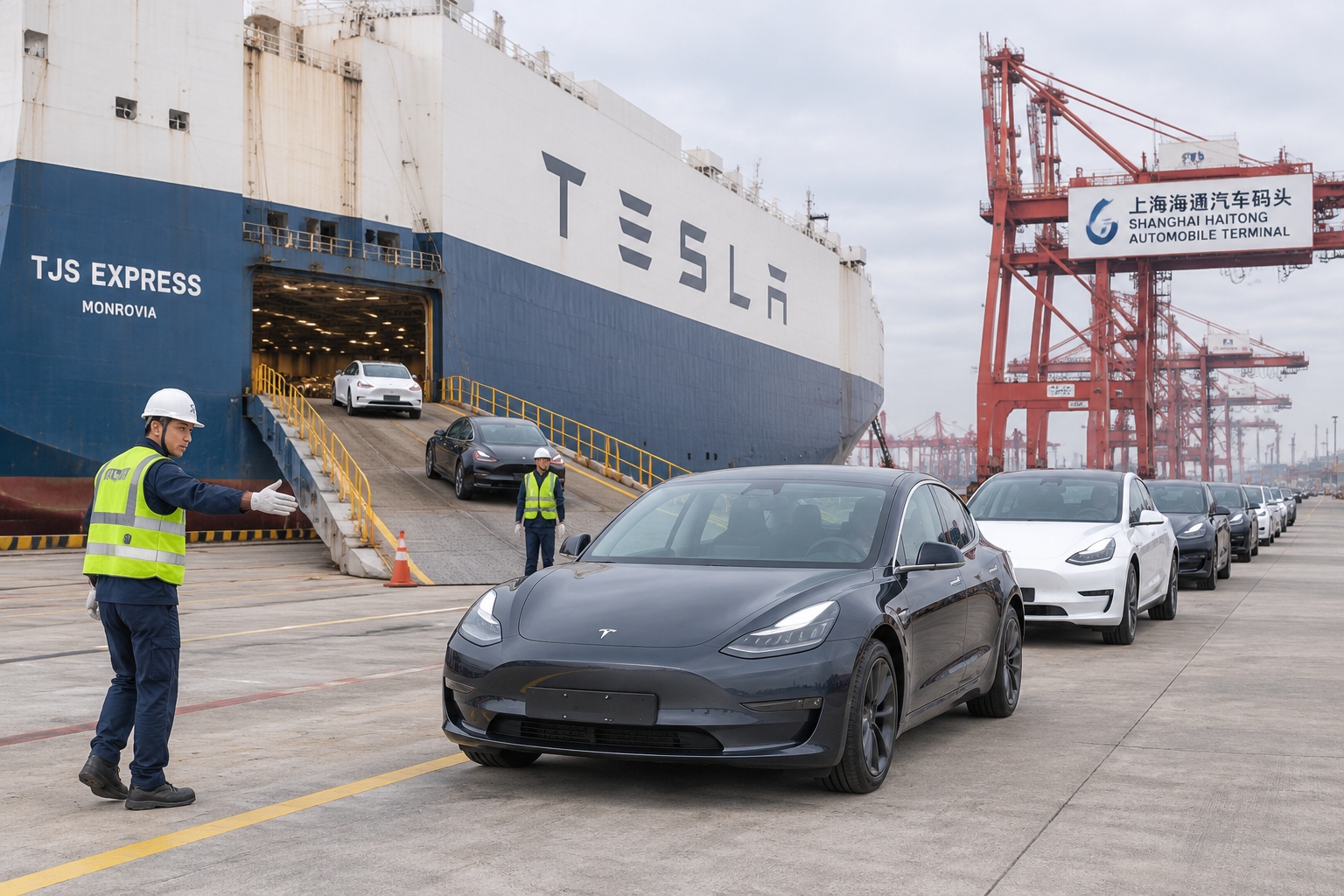
Exports also explain why the plant matters beyond China. It is not only serving the domestic market. It plugs Shanghai into a global car trade that moves through ports, shipping schedules and customs systems. When a ship leaves the Yangtze estuary, the factory’s daily output becomes part of a market in Berlin, Melbourne or Bangkok.
The real challenges behind the record
The success story has friction. China’s electric vehicle market is fiercely competitive. Tesla faces price pressure and fast-moving rivals, including BYD. Factory output can rise and fall with demand, model changes and export orders. A plant built for high volume must also manage quiet months.
Work intensity is another issue. Assembly lines are demanding, and shift work can be hard on families. Communities near the plant must deal with truck traffic, noise and environmental concerns. None of this cancels the achievement. It simply makes it more human.
There is also a question of scale and dependence. A single large factory can lift a local economy, but it can also make the area sensitive to one company’s decisions. Local officials and residents know this. The next phase is not just about building faster. It is about making the ecosystem more resilient.
What overseas readers can take from this
For readers outside China, the useful lesson is not that China can build anything overnight. It is that speed comes from a specific mix: port access, supplier density, streamlined permits, a large labor pool, engineering talent and local government capacity. Some of that can be copied. Some of it depends on Shanghai’s geography and the Yangtze River Delta’s industrial depth.
The Tesla Shanghai Gigafactory also shows how foreign investment and Chinese manufacturing now interact. A US company built a plant in China, imported know-how, hired local workers and then exported cars back into the global market. That is a more complicated relationship than the old labels of ‘factory of the world’ or ‘copycat economy’ suggest.
Shift change at 8 p.m.
At 8 p.m., the gate opens again. Workers stream out, some looking at phones, some heading for the shuttle buses. The food stalls switch on their lights. Inside, the line keeps moving. Outside, a truck pulls away toward the port. The next ship is already on a schedule, and the factory will fill it one car at a time.
Start the discussion at forum.chinacomes.com