
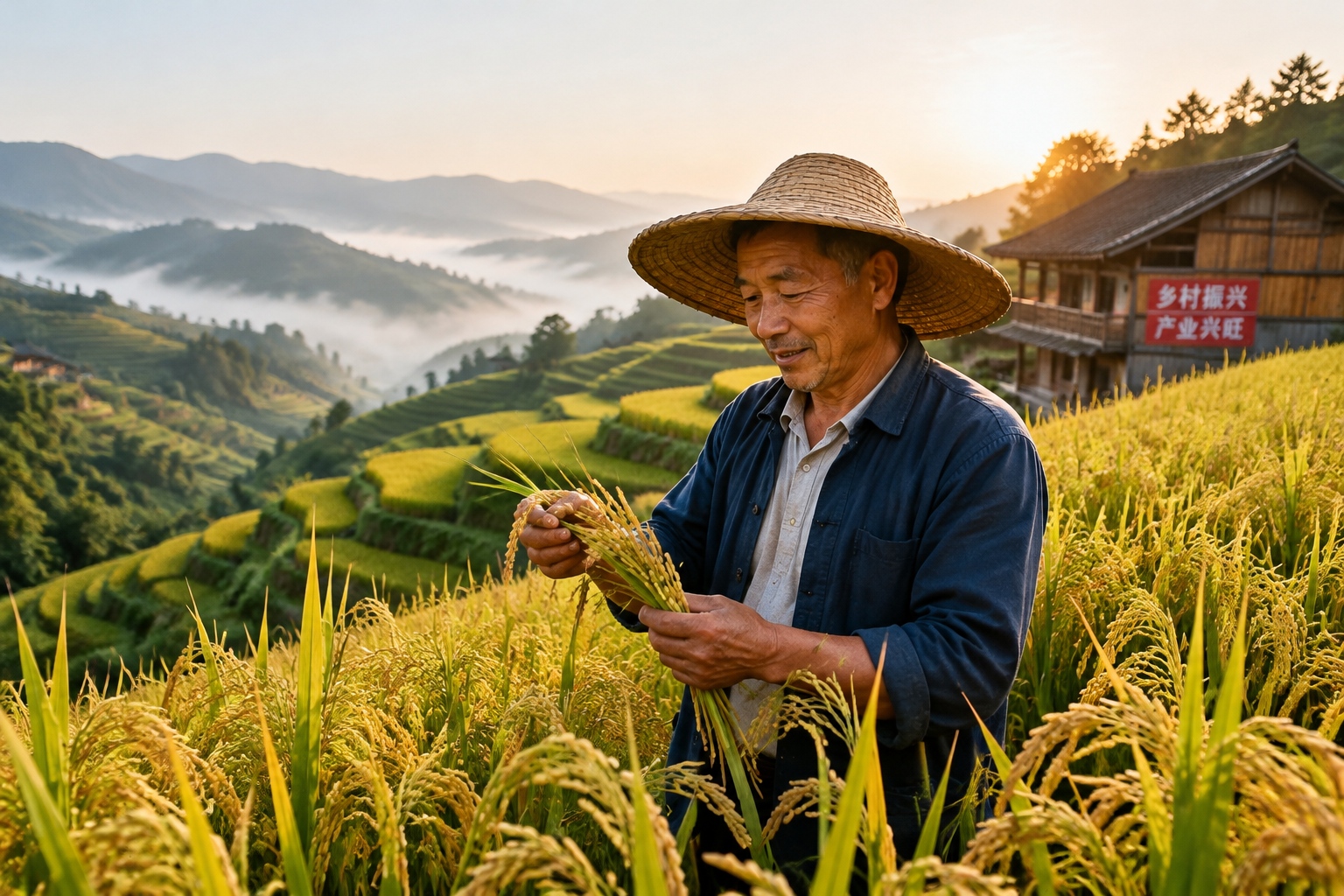

Hunan’s Harvest: A Farmer’s Morning
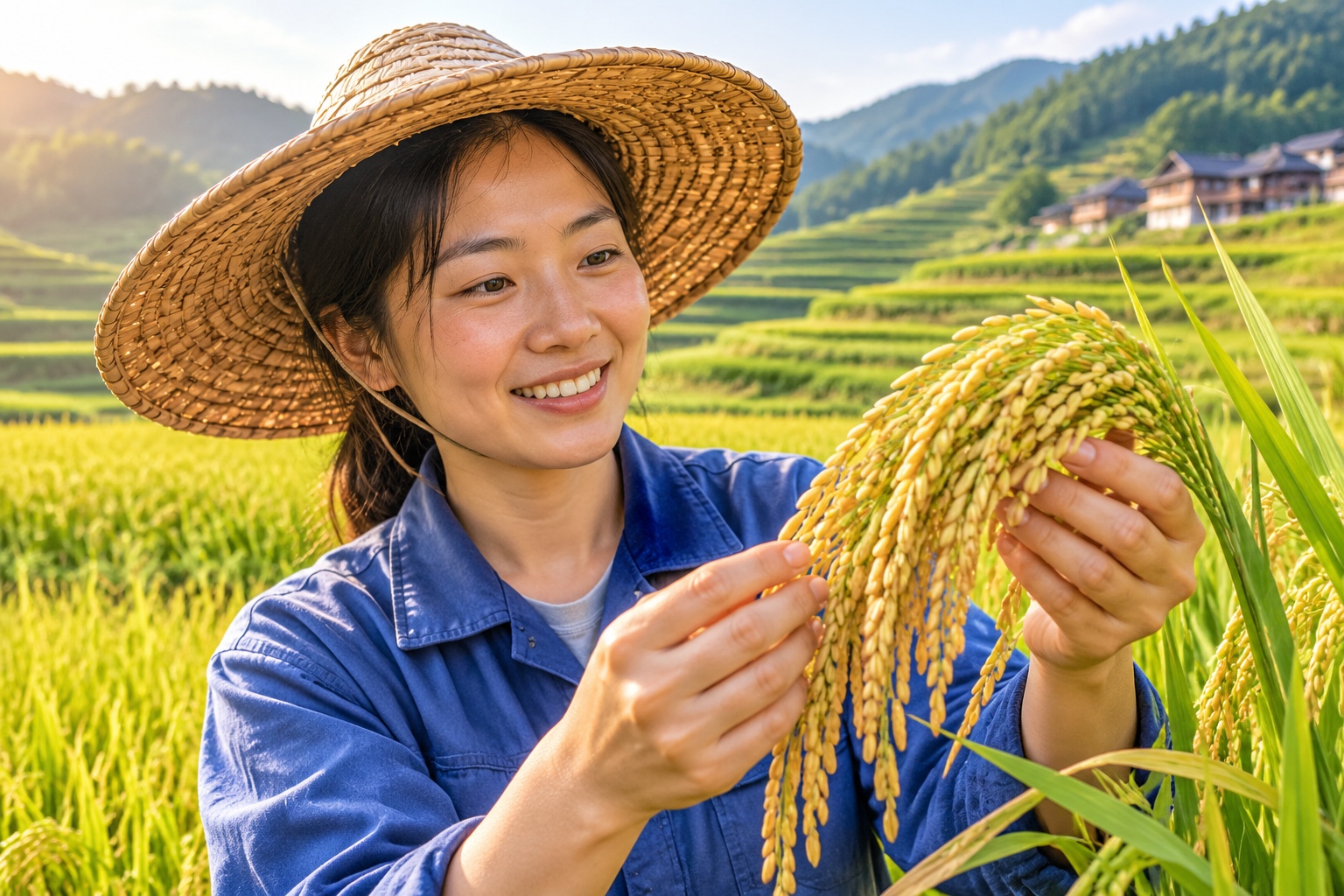
Longhui County sits in the hills of central Hunan, a province often called China’s rice bowl. On a warm October morning, Tan Lianxiu, 54, breaks off a panicle of rice and rolls it between her palm. “Each of these ears has twenty or thirty more grains than the varieties I planted in the 1980s,” she says. Her field is one of thousands in Hunan planted with super hybrid rice. Last autumn, the measured yield on Tan’s 0.4-hectare plot reached 11.8 tonnes per hectare, more than double China’s average in the 1990s. “The seed is smarter,” she laughs. “I just follow its instructions.”
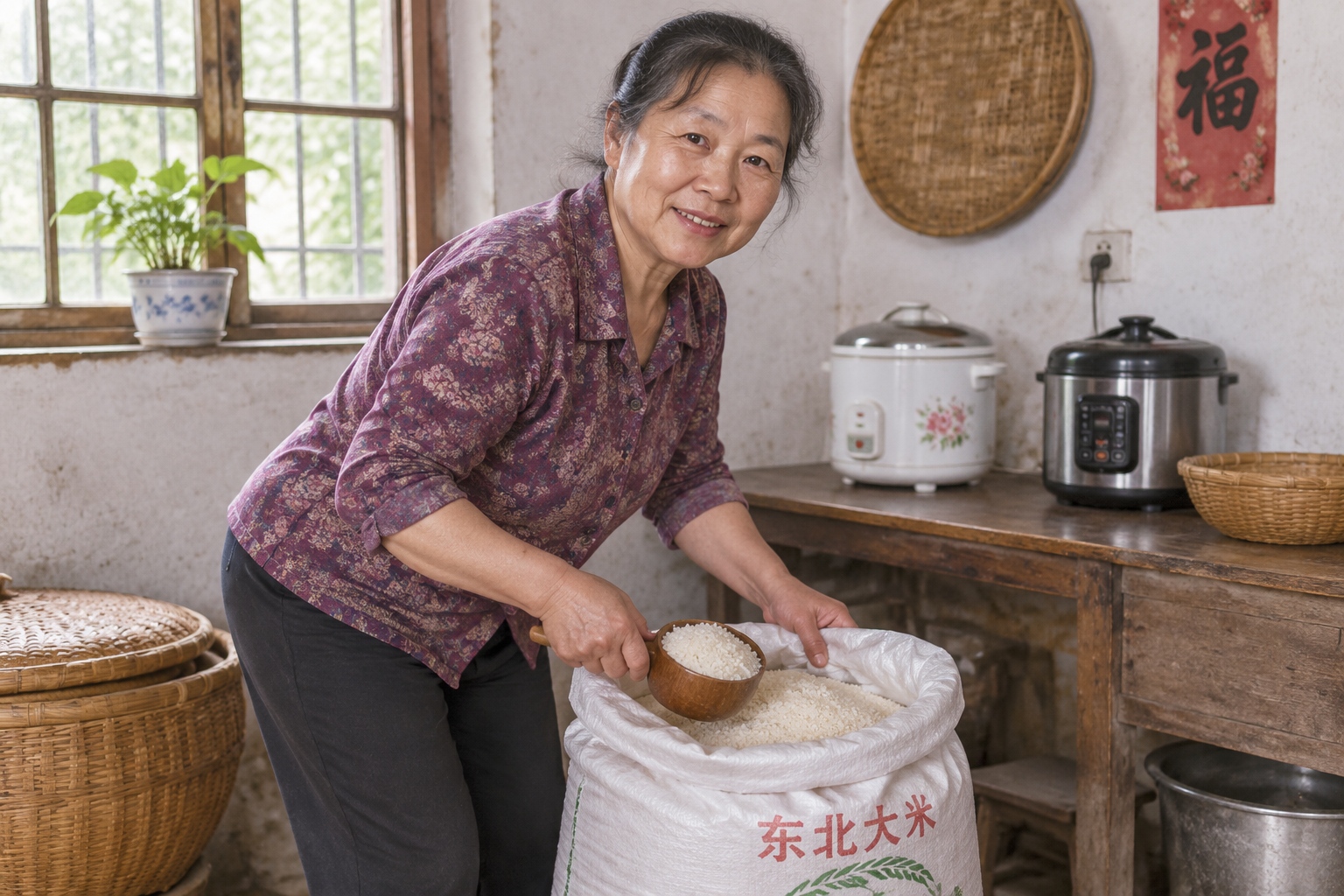
Tan’s kitchen is full of that abundance. A 25-kilogram sack of her own rice sits by the stove, while the surplus brings in roughly 8,000 yuan (about $1,100) a year after costs—money she uses to repair her house and visit her grandchildren in Guangzhou. Hers is an ordinary story in Hunan, and it started with one man who spent decades staring at rice plants.
What Makes Rice ‘Super’?
The term “super hybrid rice” can sound like advertising. It is actually a precise scientific category. Rice is mostly a self-pollinating plant—each flower fertilizes itself. That makes conventional breeding slow and hybrids hard to produce. But in 1970, Yuan Longping and his colleagues found a wild rice male-sterile strain on Hainan Island, a natural rice plant unable to produce functional pollen. With that discovered, they could create a “three-line” breeding system: one line provides sterile mothers, another restores fertility in the children, and the third helps reproduction. The resulting first-generation hybrids are then grown by farmers.
Why bother? Because of heterosis—the offspring of two genetically different parents can be more vigorous and productive than either parent. In Chinese rice breeding, “super” means the hybrid meets two tests: it yields at least 15 tonnes per hectare in demonstration fields, and it shows good resistance to pests and diseases. This national target, launched after 1996, transformed Chinese rice production. Yuan Longping, who led the research from Changsha in Hunan, liked to say, “The yield ceiling is a ladder; you climb it one step at a time.” His team pushed the record from 13.5 tonnes per hectare in 2012 to more than 15 tonnes a few years later.
The Hunan Numbers
Hunan is not just where Yuan Longping worked. It is where his seeds meet soil and water. Over the past decade, Hunan has built 28 national field demonstration stations. In Longhui County, the local government ran an experiment with 10,000 farmers. Those using certified super hybrid seeds saw average yields rise by 23 percent compared with conventional high-yield varieties—while using roughly the same amount of fertilizer. That was a concrete step for grain security, because every percentage point of yield matters in a country of more than 1.4 billion people.
Province-wide, Hunan plants about four million hectares of rice and produces around 13 percent of China’s grain. In a normal year, every Chinese citizen effectively receives about 17 kilograms of rice from Hunan. The province’s smallholder families still make up most of these fields. For them, super rice is not an abstract breakthrough; it is a 1,000-yuan note in their pockets at harvest. A 2022 survey by Hunan Agricultural University found that after subtracting costs, farmers growing super hybrid rice in Changde earned about 30 percent more per 1/15th hectare (a mu) than those growing older varieties.
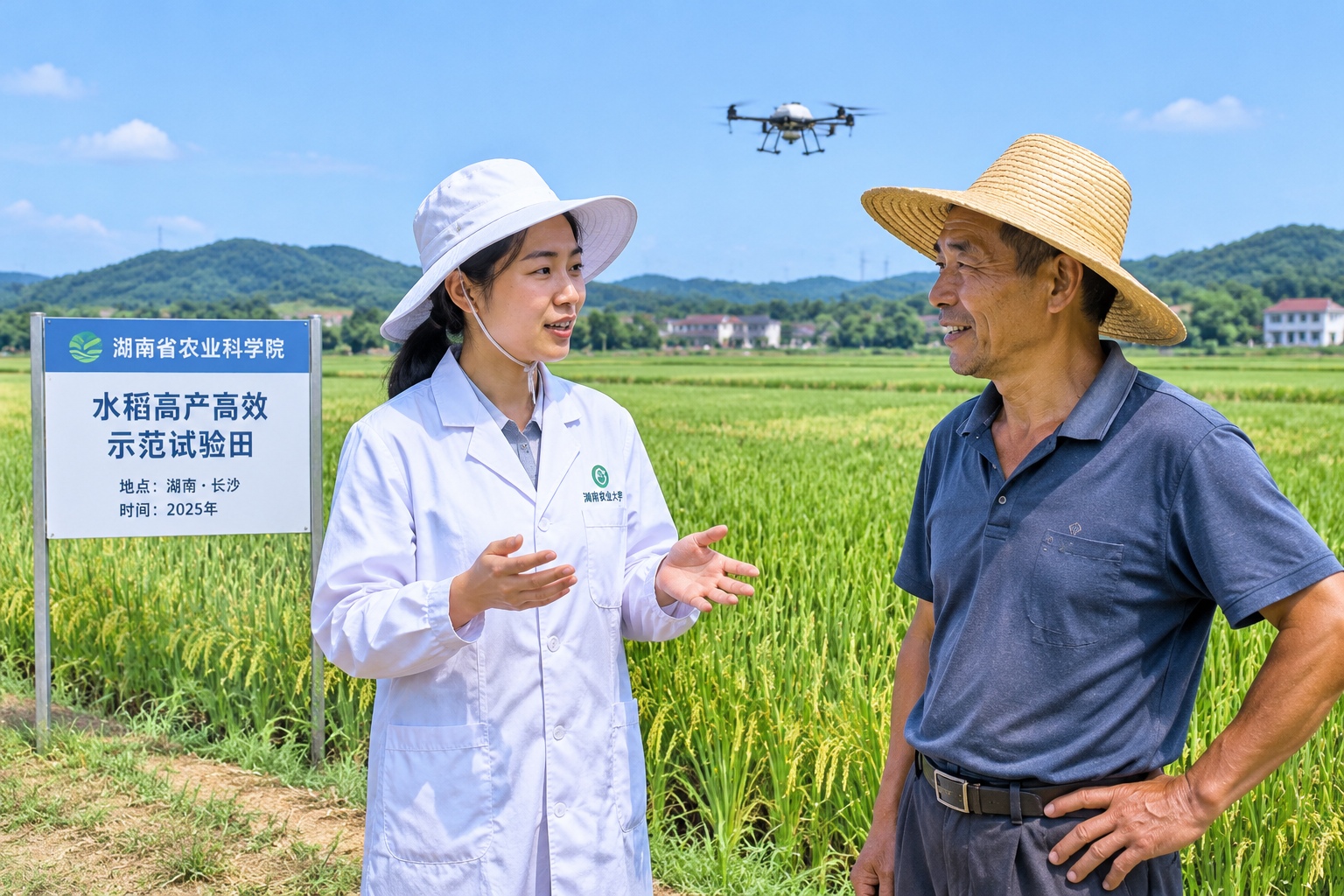
One reason is that new hybrids are pumped full of disease resistance. In the village of Renai, pesticide use in rice paddies fell by one-third after farmers switched to a resistant variety with the same yield, according to the village’s agricultural cooperative. More income and less exposure to chemicals—this is what the province’s agricultural expansion looks like on the ground.
From Ration Coupons to Rice Arriving at the Door
To understand why Chinese people care so much, look at a handful of old ration coupons. Before reforms in the 1970s, urban residents could buy rice only with government-issued tickets, and the quota was small. Today, no one queues for rice. Supermarkets in Changsha sell neatly packaged 5-kilogram bags of indica rice for 20 to 30 yuan, and a simple meal of rice with braised pork cost less than a metro ticket. Cheap, reliable rice is now part of everyday stability.
Eating habits have changed too. Young Chinese in cities buy less rice and more noodles, and food delivery apps are overflowing with other options. Yet consumers still notice rice quality. Fragrant super hybrid varieties such as “Y Liangyou 1” and “Xiangliangyou 900” are now sold under regional brands, and restaurants advertise “Hunan rice” as a tasting mark. Older farmers still measure the country’s welfare by the rice basket. “When even a bad year looks like a good year, you know the rice changed,” Tan says.
Seeds Without Borders
What happens in Hunan does not stay in Hunan. Since the International Rice Research Institute began cooperating with Chinese teams in the 1980s, hybrid rice has been tested on nearly every rice-growing continent. More than 60 countries and regions have introduced Chinese hybrid rice, according to China’s Ministry of Agriculture. In Madagascar, where local rice fields often yield less than three tonnes per hectare, Chinese-backed demonstration plots have reached more than eight tonnes. In Kenya, drought-tolerant hybrid lines have shortened the growing period by a week and reduced water demand by 20 percent.
The reason these seeds matter is simple: by 2050, Asia and Africa will need to feed 1.7 billion more people without converting much more land to agriculture. Unlike chemical fertilizers or irrigation systems, improved seeds can be multiplied quickly and locally. But there is a catch. Hybrid seeds are also company-owned or licensed; they must be repurchased by farmers each season if they want the same high yield. That affordability gap is one of the reasons Chinese scientists now prioritize “green super rice” that can fit into smallholders’ low-input systems.
The Hidden Costs and the Next Paddy
Honesty requires a caveat. Super hybrid rice is not a silver bullet. It often needs more nitrogen fertilizer and water than traditional varieties. Relying on a few high-yield lines can narrow genetic diversity. In a changing climate, that makes a country susceptible to a new pest or a heat wave. Chinese researchers know this, which is why new breeding programs combine high yield with stress tolerance, better nutrient efficiency, and shorter growth periods.
At the Hunan Hybrid Rice Research Center in Changsha—once led by Yuan Longping—a new generation works with gene markers and drone-guided field scouting. They are developing varieties that can tolerate salt water in coastal soils and flood-resistant lines that hold up under monsoon rains. Along with these scientific aims, there is an effort to train smallholders in more precise fertilizer management. In other words, the next miracle will be lower-carbon and more inclusive.
One Plant, Many Lives
Standing in a paddy in Hunan, you do not see a heroic single stalk. You see thousands of them, planted in rows, bending under grain. The “miracle” is not only photosynthesis and hybrid vigor—it is an entire social machine that connects a university laboratory to a 50-year-old farmer’s hands. It is the chance to eat well for a country that remembers famine.
For the rest of the world, Hunan offers a lesson, not a patent. It shows that agricultural science can raise the floor for the poorest, but only when governments invest in extension services, roads, and markets. Yuan Longping once said: “Science is not entertainment. It is about bringing good seeds to the hands of ordinary people.” In the hills of Hunan, that sentence is planted in every field.