

A sword flight that used to look like a screensaver
If you watched a Chinese cultivation drama in the mid-2010s, you may remember the moment: a hero steps onto a flying sword, puts his arms behind his back, and the camera tilts as the background slides past like wallpaper. A spell battle becomes two colored beams meeting in the air, bright enough to hide the fact that the actors are not quite looking at the same spot. Chinese viewers had a phrase for it: 五毛特效, or ‘five-mao effects’—half a yuan VFX. The joke was never that every shot cost fifty fen. It was shorthand for a visible gap between ambition and finish.
Then watch a recent premium xianxia series. A barrier spell ripples across a courtyard and throws firelight onto the actors’ faces. A spirit beast has weight when it lands. A sword flight has speed, distance and weather. The improvement is not uniform. Some shows still look rushed; some genres do not need photoreal polish. But the baseline has moved. That shift is a useful window into how Chinese entertainment production has industrialized—unevenly, quickly and under pressure from a very demanding online audience.
What a cultivation drama actually is
Xianxia, often translated as cultivation or immortal-hero fantasy, is a genre rooted in Chinese folk religion, Taoist alchemy and web novels. Characters train their bodies and spirits, refine elixirs, fly on swords, form sects, fight demons and ascend through realms. The visual vocabulary is specific: hand seals, glowing meridians, floating palaces, spirit beasts, magical weapons, qi blasts and heavenly tribulations.
For overseas readers, the closest analogue may be a mix of high fantasy, superhero serials and martial-arts soap opera—except the cosmology is Chinese and the episode order is long. A typical series runs 30 to 60 episodes, though streamers now favor tighter 24- to 36-episode seasons. Platform data from CNNIC put China’s online video audience above 1 billion people; even a niche genre can reach tens of millions of viewers. That scale shapes budgets, schedules and audience expectations.
Where ‘five-mao effects’ came from
The phrase sounds like an insult, but its roots are practical. During the 2000s and early 2010s, many xianxia and wuxia dramas were made for television on fixed budgets. A 40- to 60-episode season had to be shot in four to six months, often with several units working at once. Post-production was squeezed into the gap before delivery. VFX was treated as a finishing step, not a design tool.
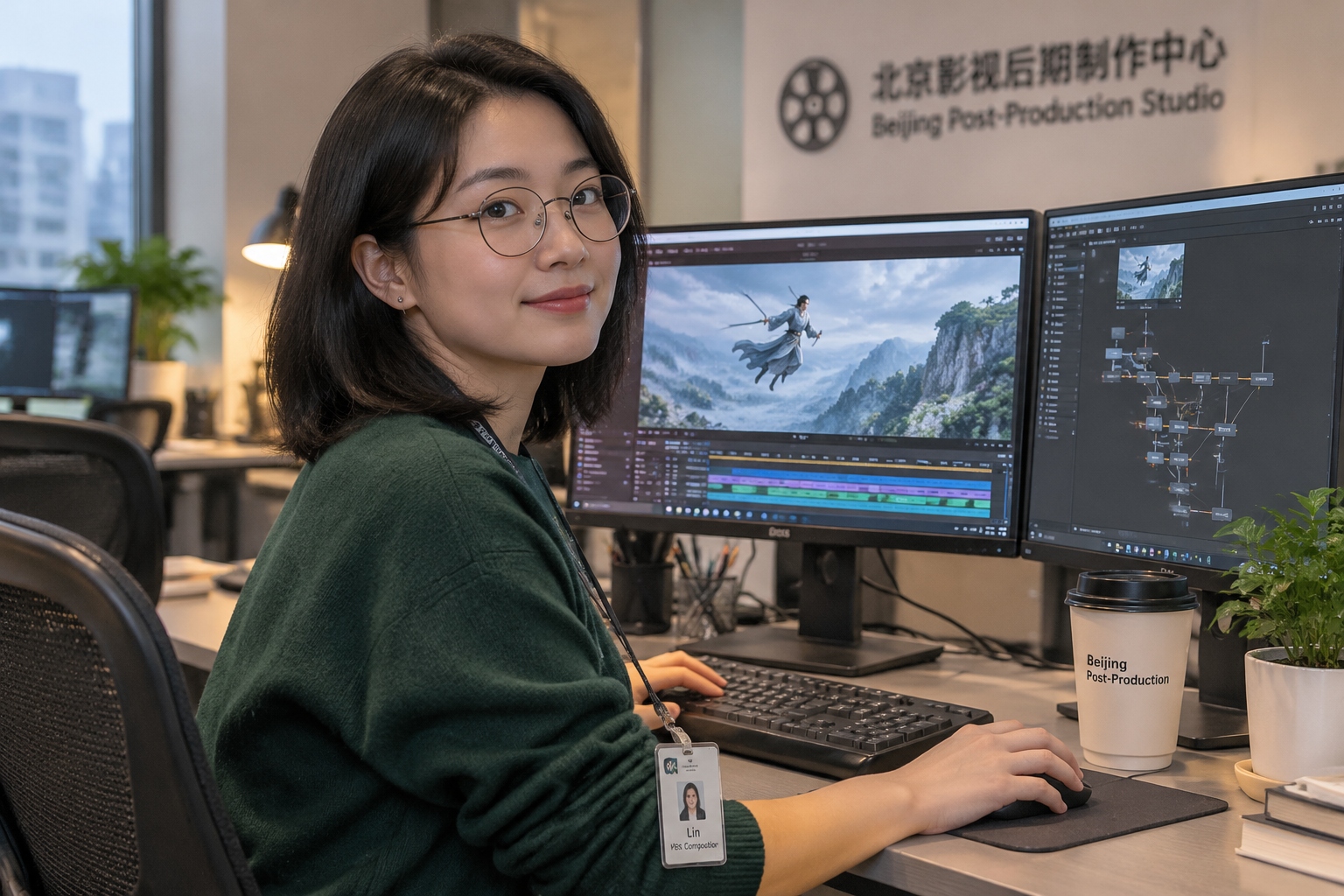
Actors performed against green cloth. Background plates arrived late. Lighting on set did not match the digital environment. Compositors had days, not weeks, per episode. Low-bid contracts went to small studios that had to churn through hundreds of shots. A flying sword might be a simple 2D element tracked over a blurred mountain plate; a spell clash might be two particle layers and a lens flare. Some shots looked cheap because they were cheap. Others looked cheap because the pipeline had no time to test them.
That distinction matters. The old model did not prove that Chinese artists lacked skill. It showed what happens when a visual-effects-heavy genre is produced on a schedule designed for dialogue-driven TV.
The set has changed before post begins
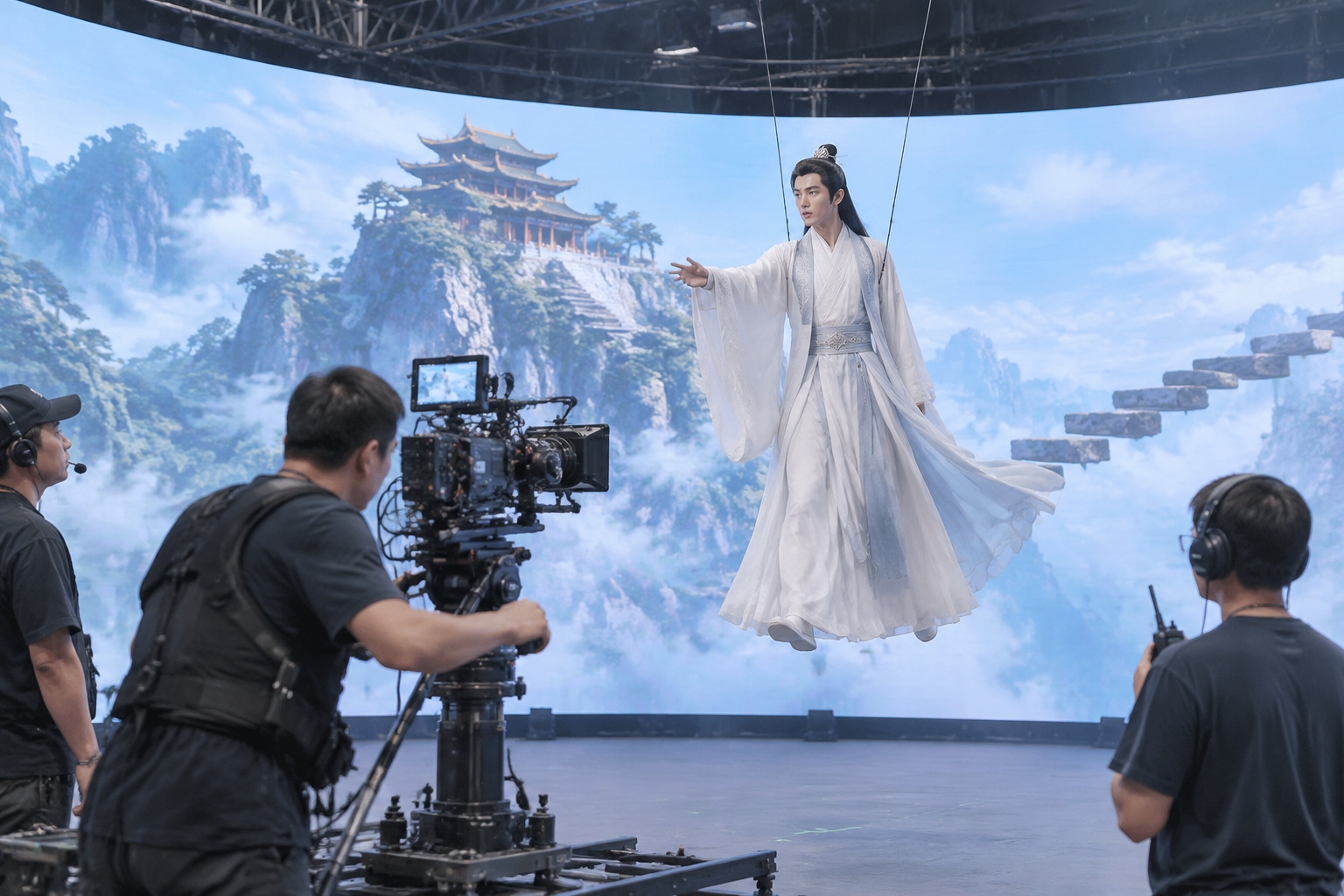
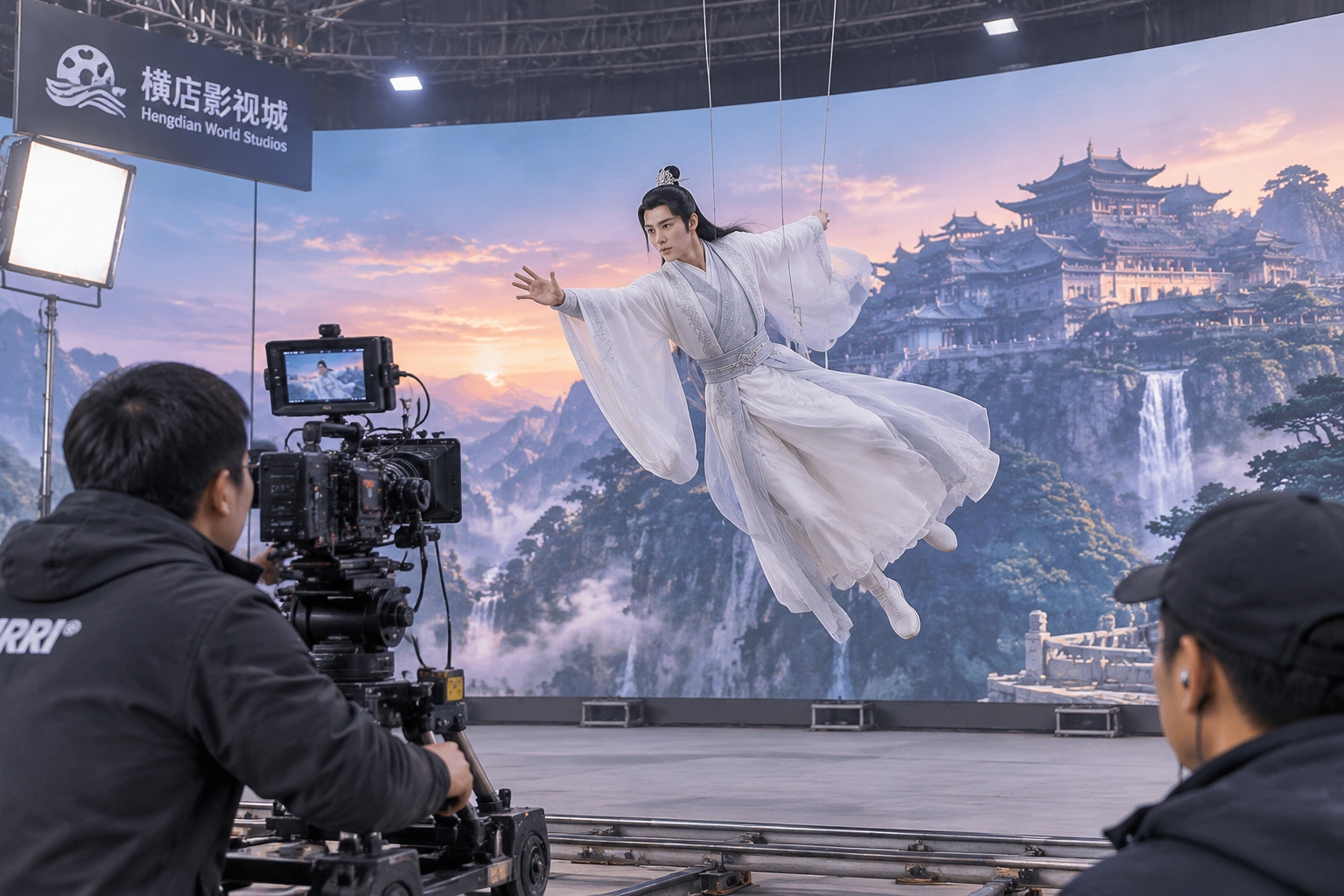
Walk into a virtual production stage in Beijing, Shanghai or Qingdao today and the first thing you notice is not a computer. It is a wall—an LED volume tall enough to wrap around a group of actors. On it, a mountain temple or a starry sea can move in real time as the camera tracks. Unreal Engine renders the background; camera tracking tells the system where the lens is; the wall lights the actors with something closer to the final scene. The compositor’s work does not disappear. It moves earlier.
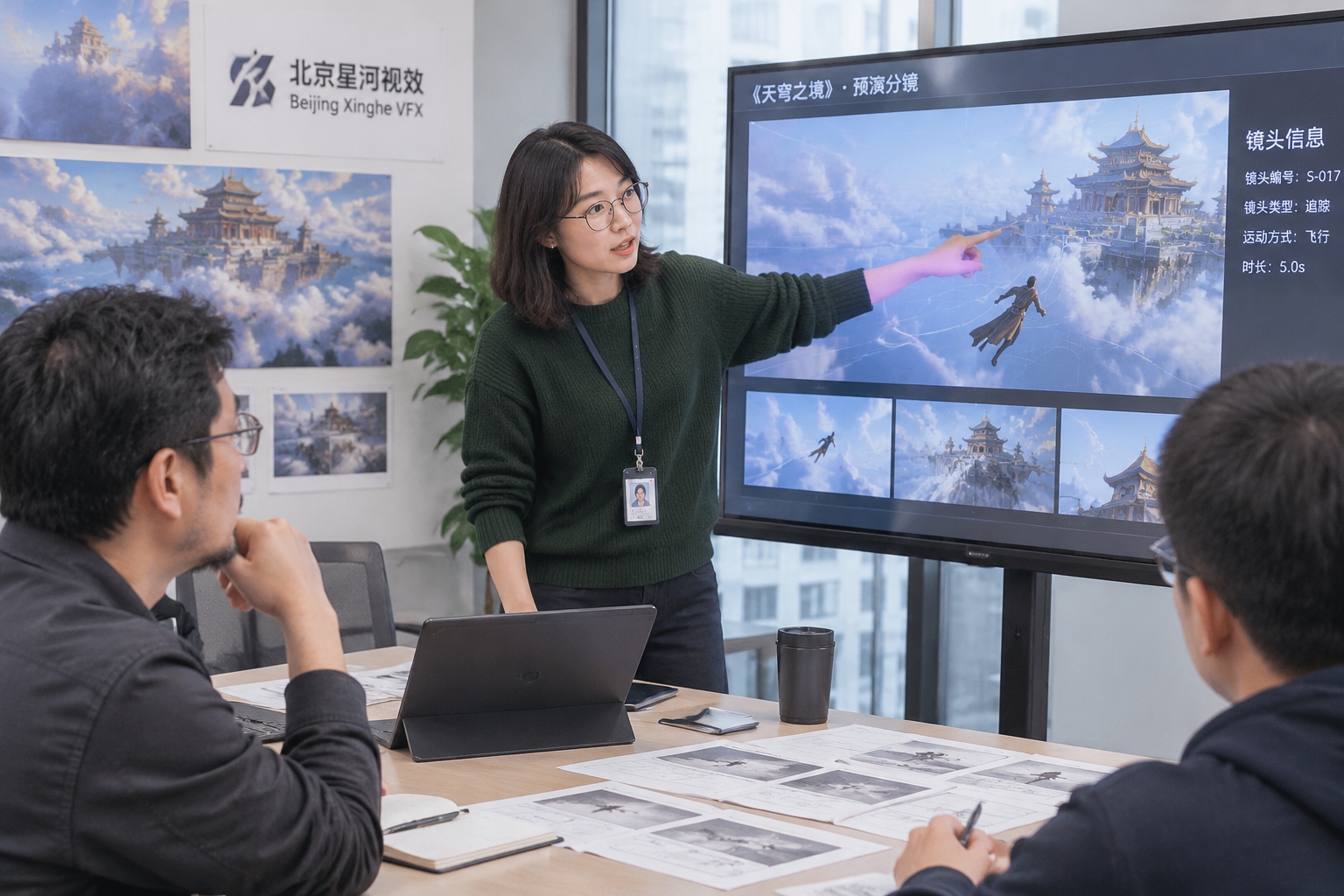
In a well-run project, previz starts months before the shoot. The director, VFX supervisor and stunt team block a sword-flight sequence in a 3D previs, decide where the camera should be and mark where a spell will land. On set, the actor may hang from a rig in front of the LED wall while the background moves at the right speed. The data from that day—camera moves, lighting, lens metadata—goes into post. A compositor can then add the close-up magic, atmospheric haze and finishing touches without rebuilding the whole world.
None of this is automatic. LED volumes are expensive, and bad virtual production can look worse than green screen. The technology only works when the script, art department, stunt team and post team plan together. That is the real change: effects are no longer a cleanup crew at the end. They are part of production design.
Money, people and a longer pipeline
Streaming competition changed the math. iQiyi, Tencent Video and Youku moved into premium original series, and costume fantasy became a way to attract subscribers. Budgets rose, but so did scrutiny. Producers cut episode counts to protect per-episode spending. A top-tier xianxia project may now spend 20–30% of its production budget on VFX, though estimates vary by source and by how costs are counted. A 40-episode series can contain 8,000–15,000 VFX shots; a single magical battle may pass through 10 departments.
The workforce has changed too. Hengdian World Studios, a vast film and TV base in Zhejiang, hosts costume, props, stunt and set-building suppliers within a few streets. Post houses in Beijing and Shanghai specialize in environment extension, creature work, destruction simulation and compositing. Companies such as More VFX and Base FX have built teams that can handle large sequences, while smaller studios fill gaps. Universities and private training programs now teach technical direction, matchmoving and compositing as production jobs, not just software skills.
Outsourcing still exists, but the flow is more layered. A key shot may be designed in Beijing, animated in Chengdu, rendered on a farm in the west and finished in Shanghai. Cloud rendering has made it possible to rent time instead of building a server room. The result is not a single ‘Chinese Hollywood’ but a distributed industry with uneven standards—and a deeper bench than a decade ago.
The audience is part of the production cycle
Chinese viewers watch with a second screen in hand. On Bilibili, Douban and Weibo, they pause, screenshot and compare. A badly composited flying sword becomes a meme within hours. Danmaku—bullet comments that scroll over the video—turn a private viewing into a live group critique. ‘Five-mao’ is no longer only a joke about old TV. It is a warning label.
This feedback loop has real commercial weight. A premium series needs a strong Douban score and social buzz to justify its budget. Young subscribers ask a practical question: is this worth my time and my monthly fee? When a show gets the effects right, viewers reward it with clip compilations, fan edits and overseas discussion. When it does not, the mockery travels faster than the marketing.
The pressure can be unfair. Not every romance-driven xianxia needs Hollywood creature realism; some stories work with stylized visuals. But the floor has risen. Audiences now expect consistent scale, believable light and a sense of physical space even in a fantasy world.
How close is it to Hollywood?
The honest answer is mixed. Chinese TV VFX has improved fastest in speed, volume and integration. Art departments can build elaborate sect palaces and costume armies at a scale few markets can match. Wirework and martial-arts choreography remain a strength. Virtual production has moved from demo reels to working sets. For high-fantasy television, the best Chinese work now sits comfortably in international streaming territory.
Gaps remain in the hardest photoreal work: convincing digital humans, dense fur and hair, large-scale fluid simulation and seamless de-aging. Those shots require long iteration and stable pipelines, which collide with TV schedules. A feature film has the luxury of years; a 36-episode series does not. International collaboration helps—Chinese studios have worked as vendors on global films, and foreign supervisors consult on Chinese projects—but knowledge transfer is uneven. It is not a simple story of catch-up, and claims of a total surpassing are premature.
What has changed is the baseline. A decade ago, a xianxia drama could assume viewers would forgive the seams. Today, the seams are the first thing they photograph.
What a better spell actually buys
For a viewer outside China, better effects do more than make a fight scene look expensive. They make the story legible. When a character forms a hand seal and the air around him bends, you understand the cost of the magic. When a sect palace has weight and weather, the politics inside it feel real. When a sword flight has speed and distance, you believe the journey.
That is the quiet point behind the ‘five-mao’ joke. Chinese cultivation dramas are not trying to become American superhero films. They are trying to put a very Chinese imaginative world on screen without losing its rules. The effects are getting better because the industry learned to plan, budget and collaborate—and because viewers refused to accept the old shortcuts.