
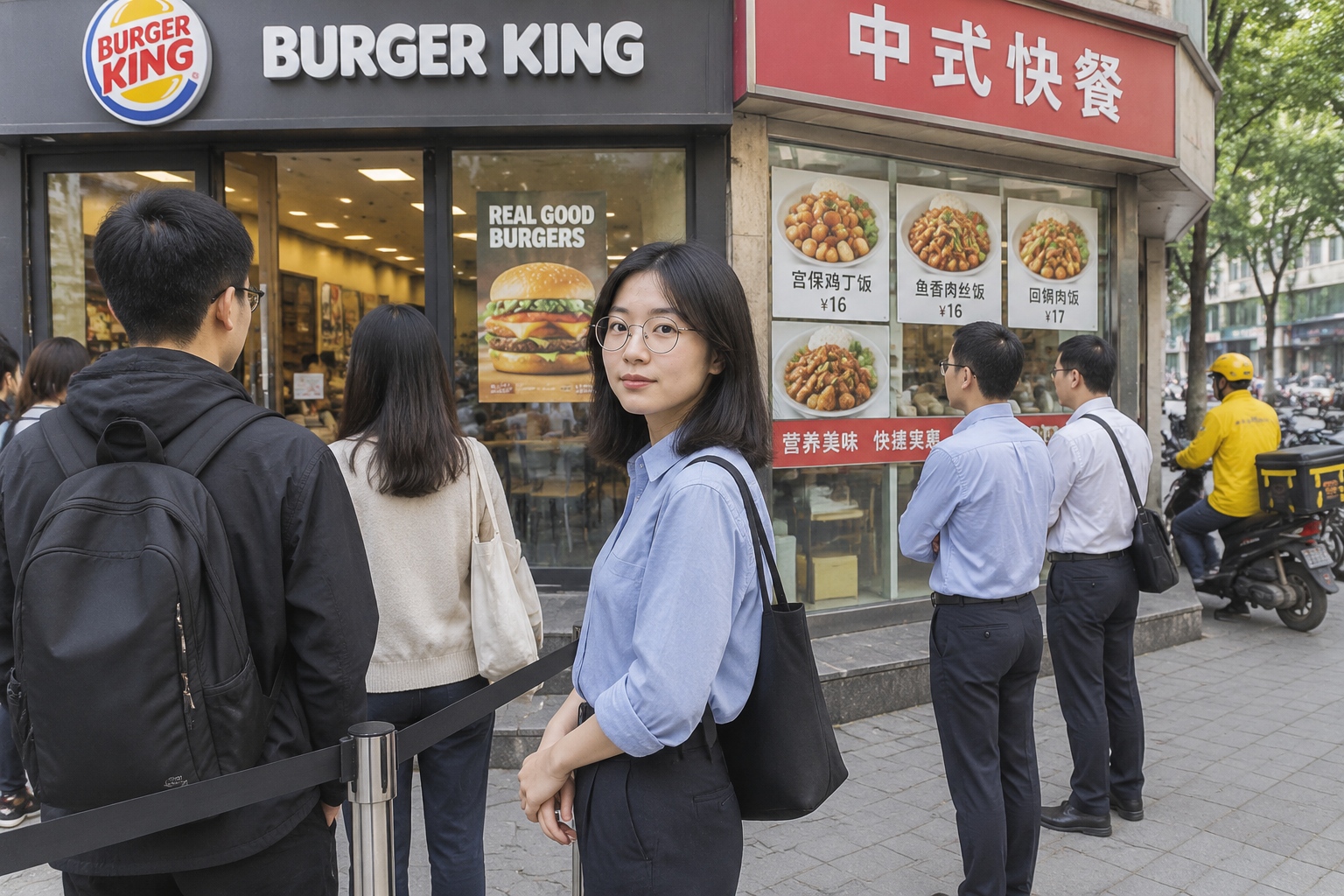

12:10 p.m. in Hangzhou: two queues, one lunch break
At 12:10 on a Tuesday, the ground floor of the office tower where Lin Yao works turns into a small traffic jam. She is 24, a product assistant on the eleventh floor, and she has exactly 50 minutes to eat. To her left, a burger chain that opened last spring — the queue bends past the door. To her right, a plain kuaican shop with a laminated picture menu of rice sets: braised chicken with rice, twice-cooked pork with rice, tomato and egg with rice. That queue is just as long.
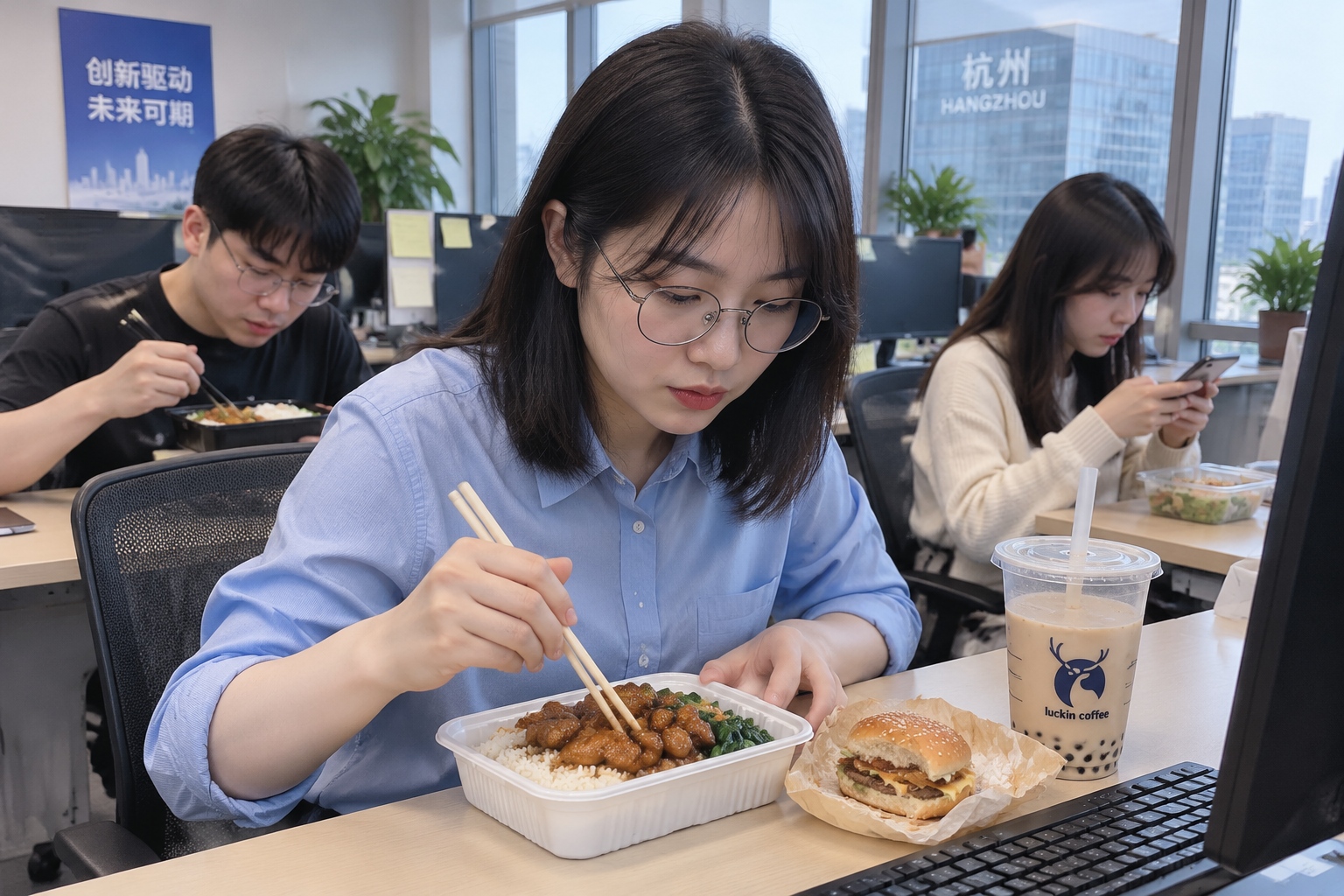
Lin Yao joined the burger queue. The colleague who came down with her joined the other one. They met back at the desk, split a portion of fries, and argued — mildly, the way coworkers do — about whose line had been the smarter choice.
That small scene is a decent answer to a question I get from friends abroad: I hear young Chinese people eat burgers and fried chicken now. Are they dropping rice the way their peers in Japan and Korea did?
First, the part that is true
Young city dwellers in China really do eat more Western fast food than their parents did. McDonald’s has passed 6,000 restaurants in mainland China and plans to get close to 10,000 by 2028. Yum China, which runs KFC, crossed 10,000 KFC stores in 2023. Burger King, Shake Shack and a wave of domestic chains are squeezed into the same market, including Tastien, a Chinese burger brand with thousands of outlets selling a chewier, made-in-China version of the format for around 15 yuan.
Delivery made all of it frictionless. Meituan handles tens of millions of food orders a day, and a burger, a wrap and a milk tea can reach your desk in half an hour for less than a sit-down lunch.
So yes, the burger is ordinary now. It sits in the lunch rotation the way pizza sits in a college student’s week in Ohio.
But “they stopped eating rice” is not what is happening
Rice consumption per person in China has drifted down, but gently, and from a very high starting point — it remains well above Japan’s level. Walk into any office canteen, hospital cafeteria, university dining hall or delivery-only kitchen at 12:30 and rice is not a nostalgic side dish. It is the base of the plate.
The evidence is easy to find. The cheapest and most reliable delivery category in any Chinese city is the gaifan: a bowl of rice with a wet, salty dish poured over it. Braised chicken with rice. Pig-trotter rice. Pepper-fried beef with rice. A generation that supposedly gave up rice built a delivery economy on top of it.
Japan and Korea: the comparison needs more care than it usually gets
The Japanese and Korean story is real, but it is usually told in shorthand. Japan’s rice consumption per person fell from roughly 118 kg a year in the early 1960s to around 50 kg today. South Korea’s dropped from about 136 kg in 1970 to 56 kg in 2023. Those are genuine, generation-long shifts, and they reshaped supermarkets, school lunches and breakfast.
Even so, “young Japanese and Koreans don’t eat rice” is an exaggeration. Rice still turns up as onigiri from the convenience store, as the bed of a bento box, in gimbap, in fried rice, in rice cakes, at the end of a long drinking night. What actually changed is the volume of plain steamed rice eaten at home, and the number of meals where rice is the centre of the plate. Western food took over occasions — breakfast, snacks, weekend social meals — rather than deleting the staple.
China’s version of that shift started later and is more uneven. The country splits roughly between a rice-eating south and a wheat-eating north, and eating habits here are stubbornly regional. A 24-year-old in Hangzhou, a 24-year-old in Xi’an and a 24-year-old in Harbin do not share the same default starch.
Why rice keeps its seat: price, fullness and the shape of a meal
It is still the cheapest way to get full
A burger set meal in a Chinese city costs roughly 35 to 45 yuan. A gaifan with rice, meat and a vegetable lands around 20 to 28 yuan, and delivery discounts push it lower still. For a 24-year-old earning 7,000 yuan a month and paying 2,500 in rent, that gap is not abstract. It is a few hundred yuan a month, which is a train ticket home or a new pair of shoes.
Rice is the hinge of a shared meal
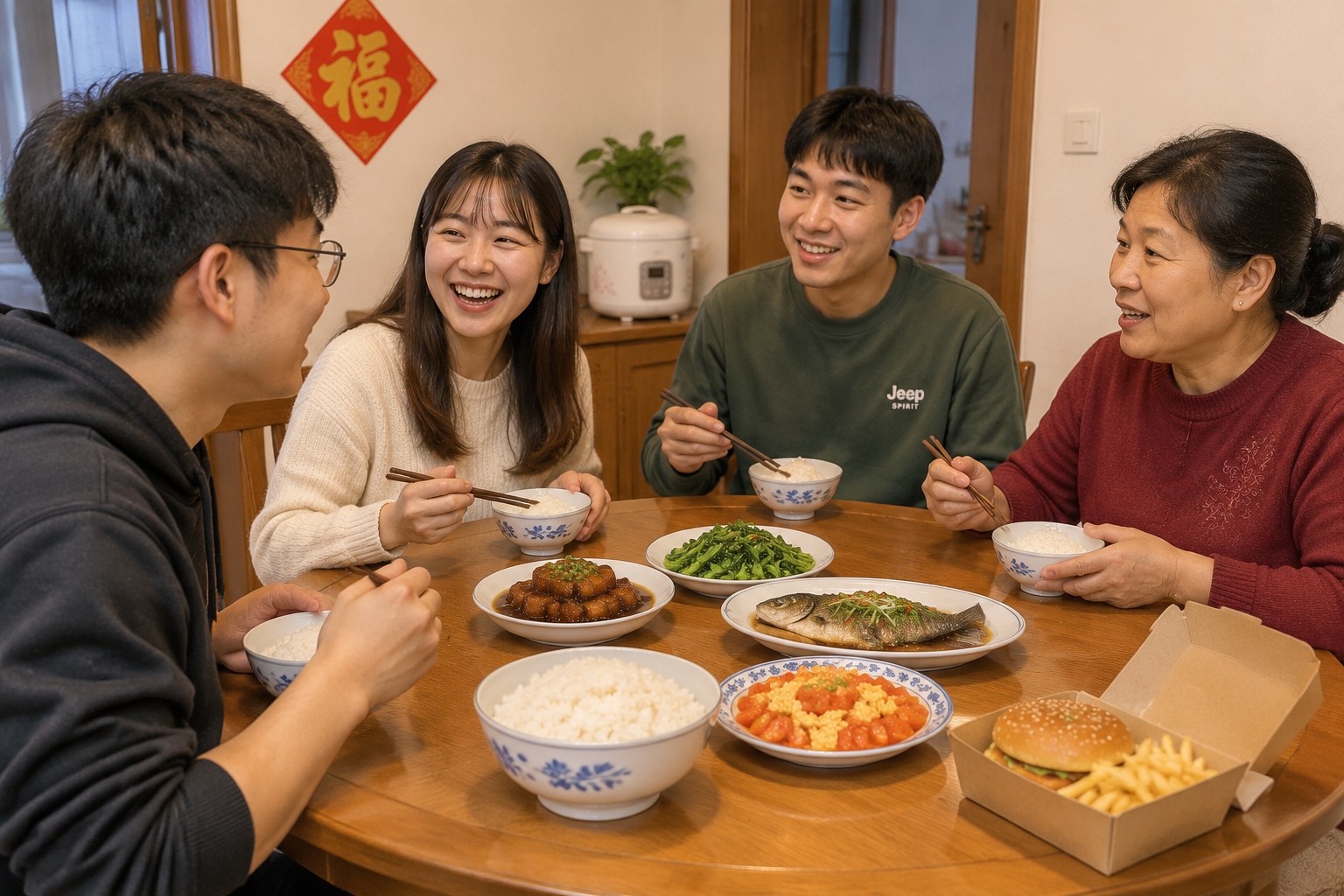
Ordering in a Chinese restaurant is not one dish per person. It is several dishes placed in the middle of the table, and rice is what turns them into a meal. Two people, two dishes, one bowl of rice each. Burgers do not work that way; they are individually portioned and self-contained. The architecture of the meal itself protects rice.
Canteens and families keep it in the loop
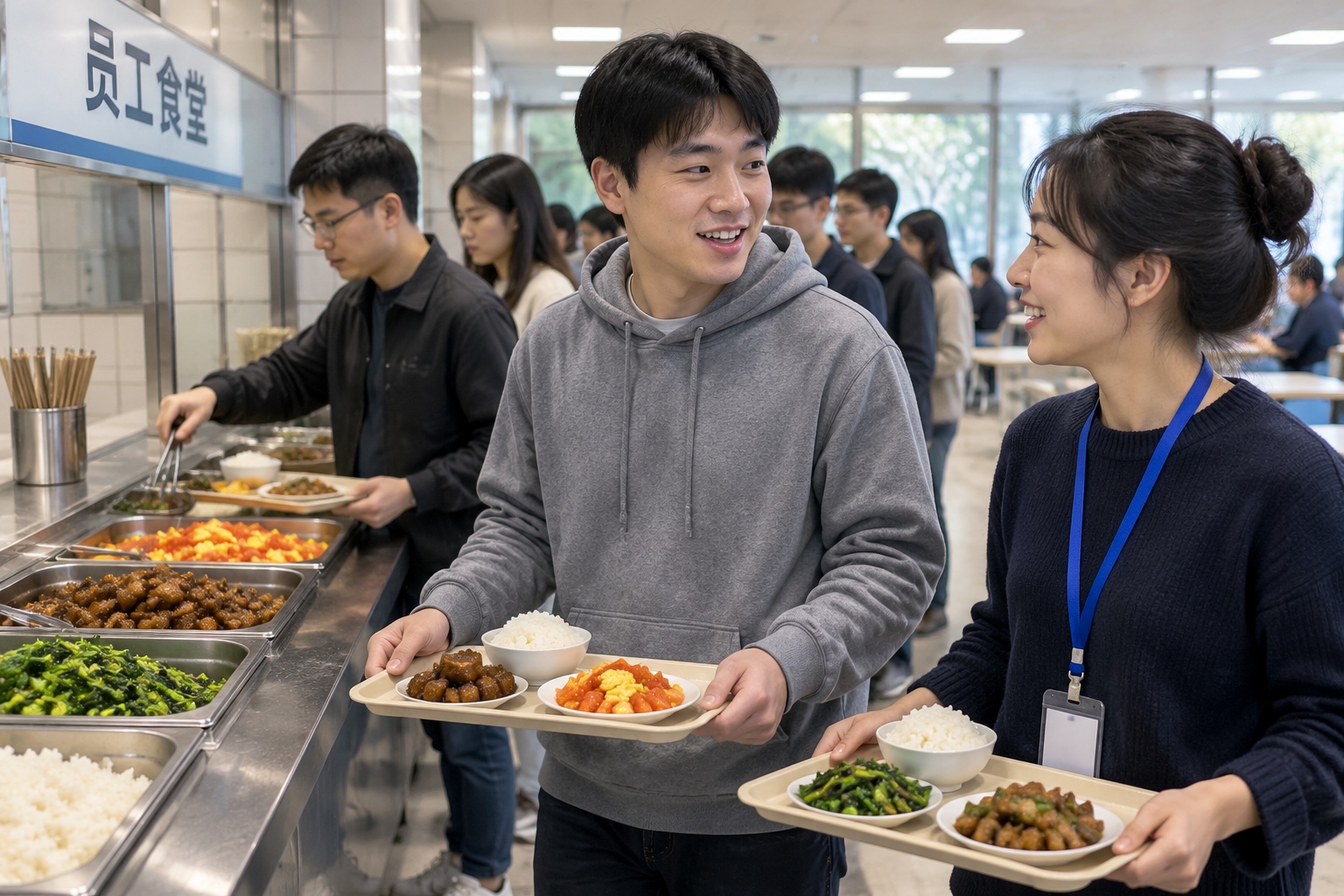
Many offices and almost every school run a canteen where rice is standard and cheap. At home, rice is the thing you cook without thinking. A young woman who orders a burger on Wednesday may still sit down to her mother’s rice and three dishes on Sunday — and on the nights she cooks for herself, she probably still scoops two cups of rice into a small rice cooker.
Where the burger actually sits in the week
Ask young Chinese consumers what a burger is for, and the answers come back surprisingly consistent: a quick lunch when you are busy, a treat, a meet-up with friends, a late-night craving, something to eat while studying or gaming. It is good-time food, not the food you eat at 6:30 on a Tuesday because you are hungry and tired.
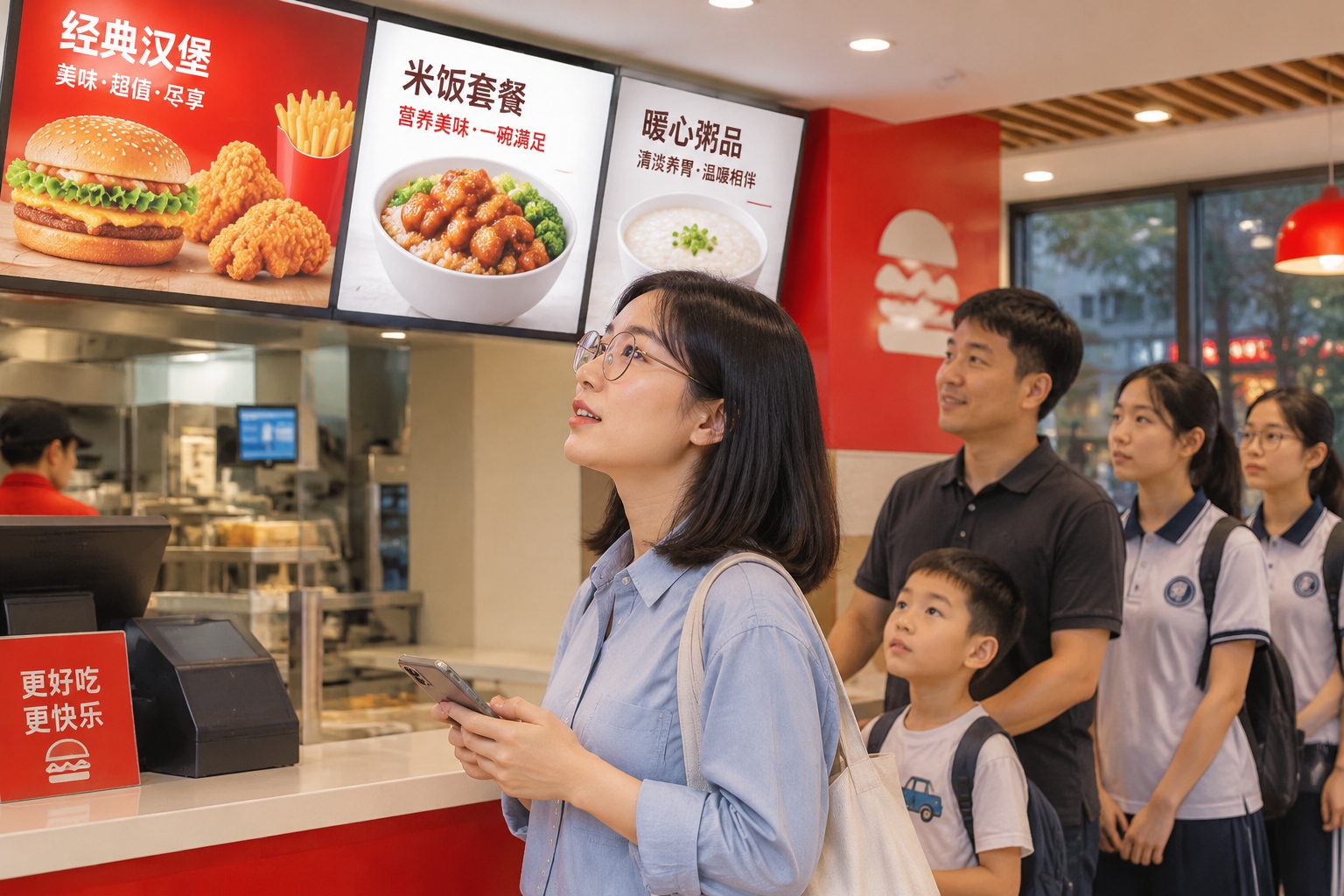
There is an irony worth noticing. The Western chains themselves sell rice in China. KFC’s Chinese breakfast menu includes congee, and its lunch and dinner menus have carried rice bowls for years. McDonald’s has tested rice dishes too. These companies did not try to convert Chinese customers away from rice. They localised, because that is what the market rewarded.
Rice is changing too — that is the part people miss
The more interesting story is not rice versus burgers. It is how rice is being repackaged for people who eat alone, eat late, and eat out of a plastic box.
Convenience stores — 7-Eleven, FamilyMart, Lawson — sell single-portion rice bowls, rice balls and bento boxes for 8 to 20 yuan, and they are standard lunch for students and office workers near metro stations. Supermarkets stock 300-gram and 500-gram rice bags aimed at one- and two-person households. Delivery apps have whole categories built on rice: braised chicken rice, Chaoshan claypot congee, Hainanese chicken rice, claypot rice, Korean-style stone-pot rice. Pre-made dish companies sell vacuum-packed mapo tofu and braised pork that you heat and pour over rice you cooked yourself.
Rice did not disappear. It was repackaged into faster, smaller, more individual formats — which is roughly what happened to bread in Europe, and to rice in Japan.
Carbs, gyms and the identity question
Health is the one force that genuinely pushes against rice, and it is visible in any Chinese city. Gyms are everywhere, “cut the carbs” is standard advice on fitness accounts, and light-food chains sell chicken breast and grain bowls to people who are counting. Some young office workers skip rice at dinner entirely, swapping it for sweet potato, corn or nothing at all.
But this is stratification, not abandonment. The same person who orders a low-carb salad on Monday will happily eat a bowl of beef noodles on Friday and post about “carb happiness” at the weekend. Rice has become one option in a set of choices, sorted by time of day, mood and gym schedule.
What the two queues actually tell you
Back in Hangzhou, it is 12:40. Lin Yao’s colleague returns with a plastic container of braised chicken and rice, steam fogging the lid. Lin Yao has half a burger left. They trade: she gets a spoonful of rice and sauce, he gets the last of the fries.
That is the whole story, really. Chinese Gen Z is not choosing between tradition and Westernisation at lunch. They are choosing between 22 yuan and 38 yuan, between a fork-friendly food they can eat with one hand while replying to messages, and a hot, salty, filling bowl that costs less and keeps them full until seven.
The burger has won a permanent place at the Chinese table. It just has not won the whole table.