
One Dish, A Hundred Years of Wisdom
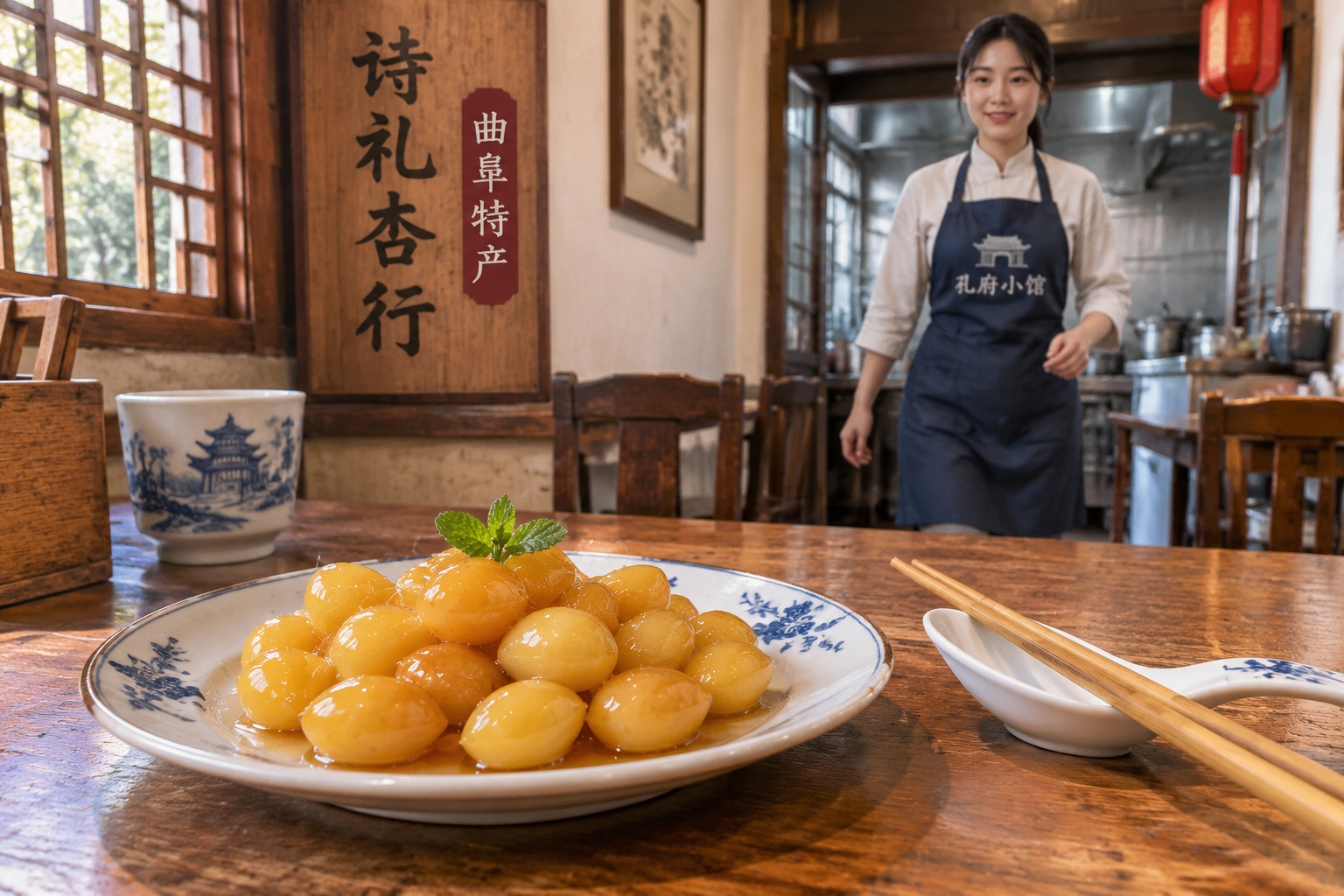
Inside a small restaurant just five minutes from the gates of Qufu’s Temple of Confucius, the owner placed a plate of pale, honeyed ginkgo nuts in front of me. “This is shili yin xing,” she said, “Poetry, Ritual, Ginkgo.” The dish, she explained, originally comes from the private kitchen of the Kong family, the direct descendants of Confucius. The name itself is a lesson: Confucius once told his son that unless he studied poetry, he could not speak properly; unless he studied ritual, he could not stand properly. So a plate of sweet and slightly bitter nuts carries a whole educational philosophy.
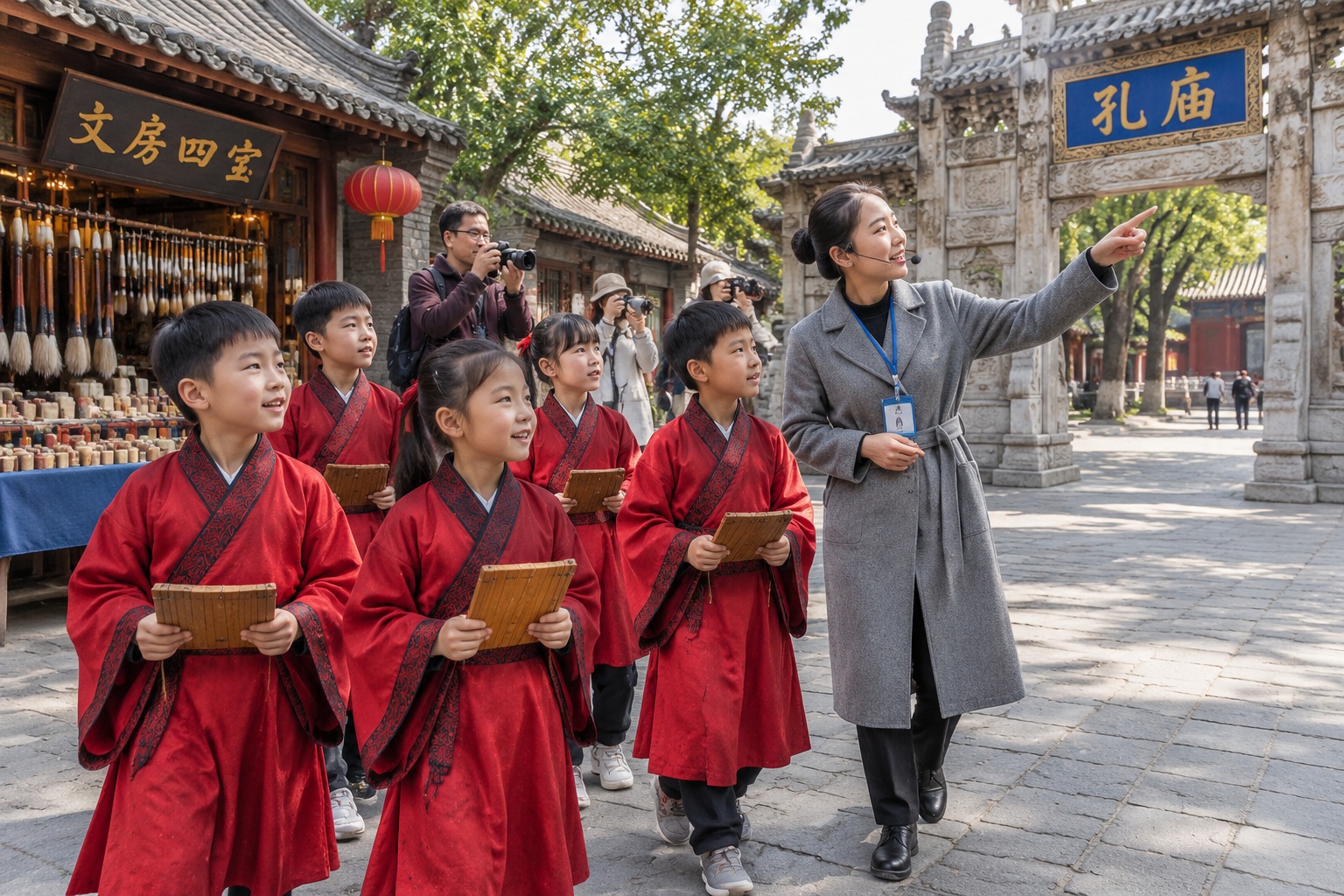
I finished the dish, which tasted like autumn, and looked out the window. A group of primary-school children in red Hanfu robes was walking toward the temple, each carrying a wooden writing tablet. At that moment, I realized that the culture wasn’t just on the table. It was in the streets, in the air, and increasingly in the local bank accounts.
Confucius as an Industry: Qufu’s Cultural Economy
Qufu is a small city in southwest Shandong with a permanent population of just over 600,000. It receives tens of millions of trips every year, and its centerpiece, the Three Confucius Sites, is a UNESCO World Heritage Site. For decades, the local tourism model was simple: show the temple, sell a ticket, send the visitors home. That model has changed in a big way since the 2010s.
Now, the fastest-growing part of Qufu’s cultural business is not sightseeing but what Chinese educators call “study tours”—organized trips for students who come to learn Confucian tradition at the source. School groups from Beijing, Shanghai, and farther cities fill the alleyways around the old town, wearing dark red robes called Hanfu. They bow at the Dacheng Hall, copy lines from The Analects on wooden tablets, and attend tea-and-ceremony workshops run by local families. According to public tourism data, Qufu hosted several hundred thousand student-study tours in a single year, and the number keeps rising.
I met a woman named Wang Li, who used to give historical lectures for a state-owned travel service. In 2018, she left her job to open a Hanfu rental and photography studio near the north gate of the Temple of Confucius. On a busy spring Saturday, her shop rented out more than three hundred outfits. She also helped run a small ceremony in which a child bows to an elder, an ancient ritual that local families now book in advance. “It looks old-fashioned,” she said, “but parents pay good money to see their children learn how to show respect.”
Around the corner, a young designer from Qingdao has opened an on-site print shop selling themed stationery: bookmarks with Confucius’s face, hand-carved wooden seals with inspirational words from the Analects, and ink paintings of ginkgo leaves. He told me his best-selling item is a set of ten “virtue cards,” each with one Chinese character such as ren (benevolence) or li (ritual). They sell for 20 to 80 yuan, and the volume is huge because every tour group wants a small memory to take home.
The most dramatic project is further out of town: Nishan Holy Land, a large cultural theme park built around a 72-meter-tall statue of Confucius. Its evening performance, “The Sound of Gold and Jade,” turns classical texts into a spectacular dance and light show. Ticket prices start at around 100 yuan, and local hotels double their prices during holidays. Even the park’s gift shop does well, selling ginkgo-shaped pencils and miniature bamboo books. The park is a joint investment by the provincial government and private companies, and its success shows that traditional culture can compete with amusement parks.
Weifang Kites: From Rural Craft to Global Brand
Two hours east of Qufu lies Weifang, a city known around the world for one strange, beautiful product: kites. Every April, the International Kite Festival brings kites the size of cars to the city beaches, with dragon-shaped kites more than 20 meters long floating above the crowd. In 2024, a former festival attracted participants from more than 30 countries, and the city received around half a million visitors during the three-day event, according to local media reports. But the industry is not only about the festival.
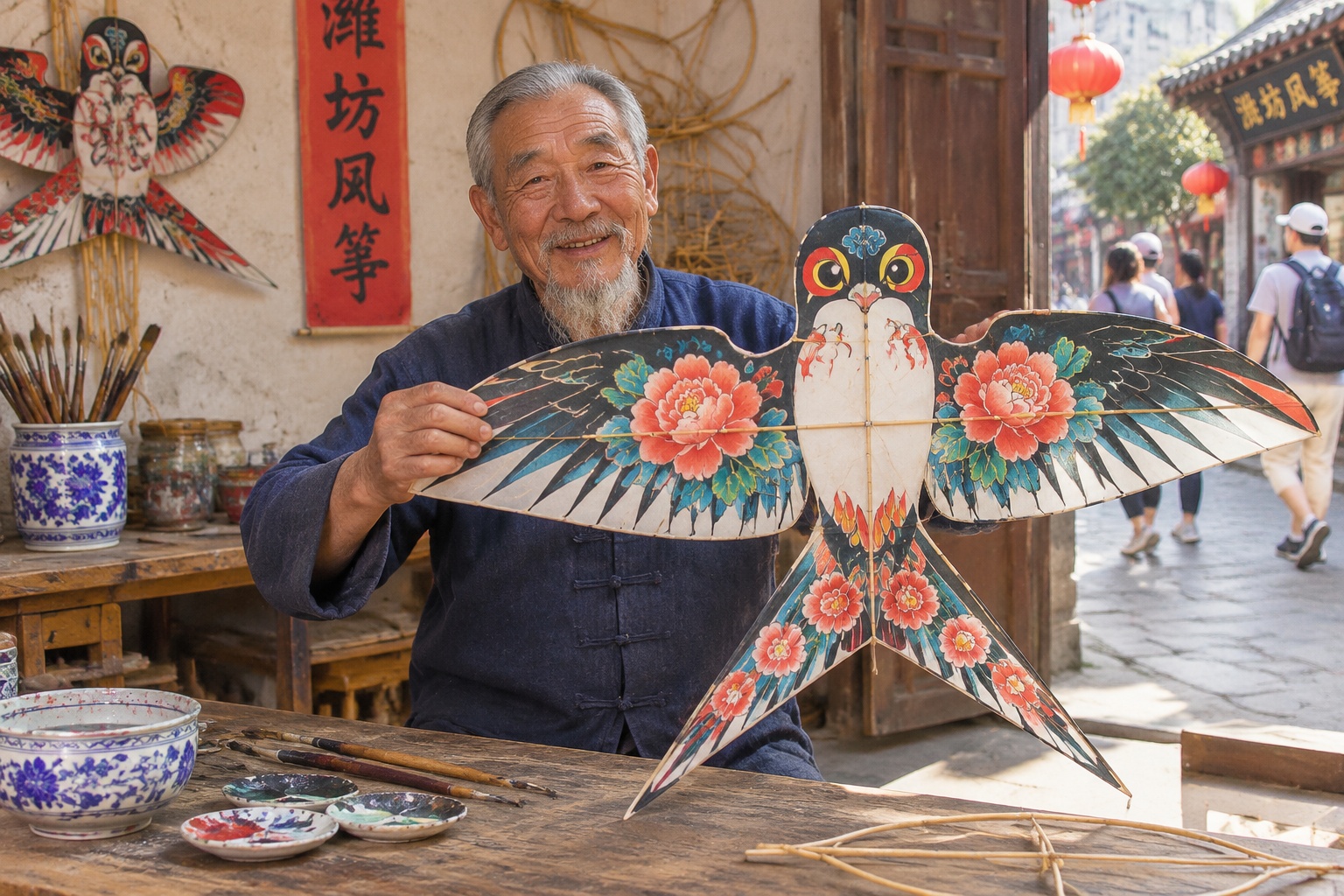
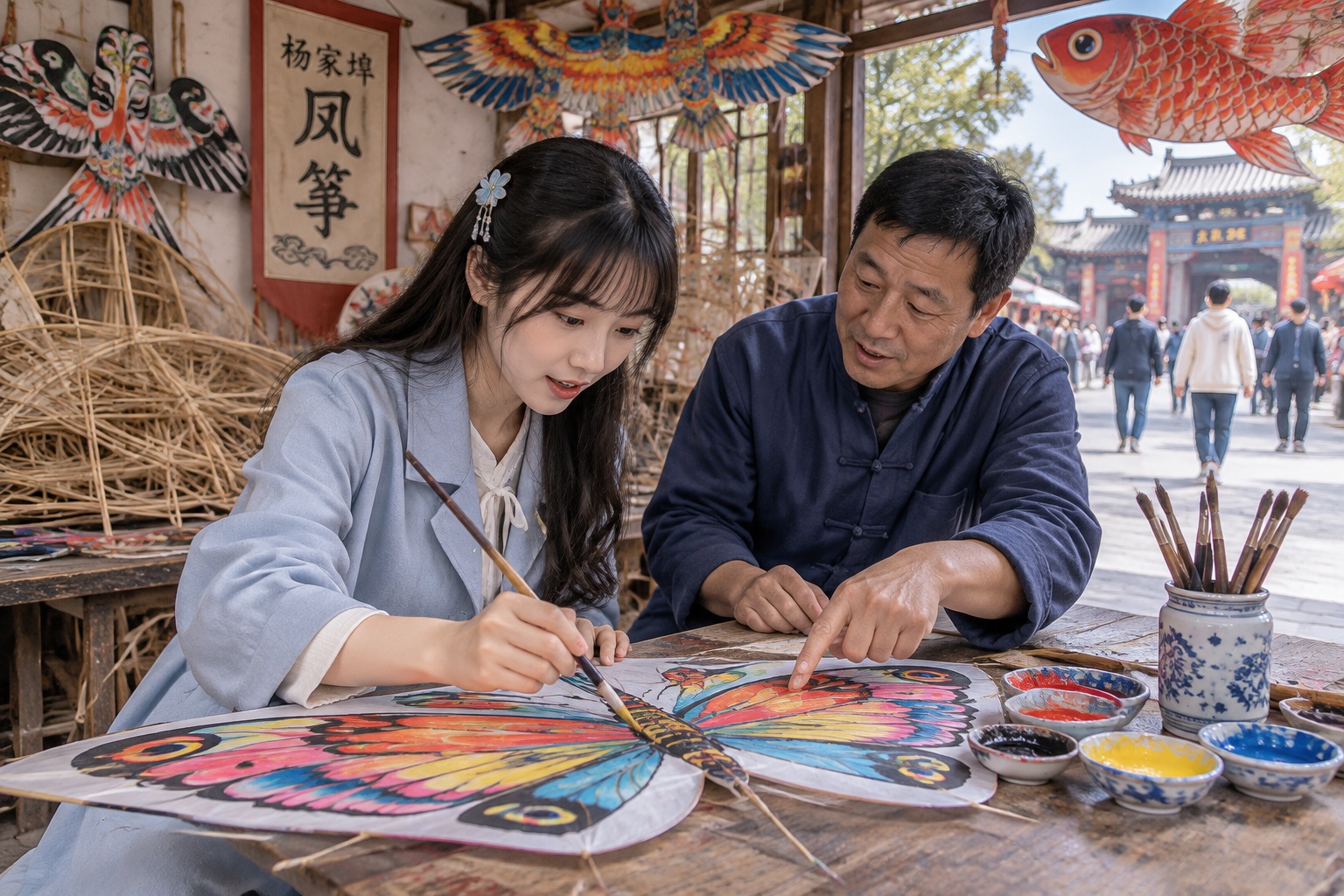
In the suburb of Yangjiabu, many families have been making kites for generations. The traditional craft involves thin, flexible bamboo sticks wrapped in rice paper, painted with swallow or butterfly patterns. Along the main street, workshops open their doors so that visitors can try to put a kite together instead of just buying one. I followed a middle-aged man, Yang Jianguo, who has been a kite maker for 38 years. He told me that in the past, his father sold kites to nearby towns and made barely enough money to buy rice. Now, Yang sells his best handcrafted kites for over 500 yuan apiece through an online store, and some are purchased by buyers from Japan and Europe. He also teaches short classes to tourists, charging 60 yuan per person for materials and two hours of his time. “In the old days, a kite was a toy for one day,” he said. “Now it is a piece of art that you hang on your wall.”
The industry has also attracted younger people. One of Yang’s neighbors, Chen Xinyu, is a 24-year-old who studied product design at a university in Jinan. She came back to her hometown and created a brand called “New Wind.” She combines the old butterfly shape with modern graphic design styles, uses plastic film instead of paper for cheap, water-resistant models, and sells her kites as room decorations. In the first year, her online store earned over 200,000 yuan. “The festival made Weifang famous,” she said, “but the real trick is to sell stories, not just bamboo and paint.”
Weifang’s kite industry now includes official national-level “intangible cultural heritage” recognition, and the local government gives small direct subsidies to workshop masters who agree to take on apprentices. This kind of support does not create a boom, but it helps keep the tradition alive while business based on tourism, e-commerce, and events grows. A decade ago, most kite workshops in Yangjiabu closed after the Lunar New Year. Today, many stay open year-round because visitors arrive throughout the year, not just during the festival.
What “Cultural GDP” Really Means
For many visitors, “cultural GDP” sounds like an abstract statistic. But in the streets of Qufu and Weifang, it takes very concrete shapes. First, there is direct income from cultural consumption: tickets, workshops, souvenirs, and festival-related spending. The tourism bureau of Qufu reported that in 2023, cultural tourism revenue grew by roughly 20% compared with the year before, and a significant part came from younger visitors booking experiences rather than only buying entrance tickets. Second, there is indirect income: the kites sold online support shipping companies, printing workers, bamboo suppliers, and packaging factories. In Weifang, more than a thousand firms are linked to the kite business, producing everything from nylon line to custom designs.
Third, cultural GDP includes what urban planners call “city branding.” When Qufu becomes a place people think of as “the hometown of Confucius,” it attracts conferences, investments, and even film crews. Weifang uses its weekly open-air kite-flying sessions to bring families together, and that improves the livability of the city, which in turn attracts young tech workers to start small companies. City officials in both places will tell you the same thing: the biggest benefit of culture is not the money you get directly, but the way it makes the whole place more alive.
That does not mean everything is smooth. Some locals complain that the commercialization has made the temple area too crowded and that many “traditional” experiences are shallow copies of the real thing. Old craftsmen worry that the hand-painted kites are losing ground to cheap factory versions sold online for ten yuan each. And there is a constant risk of the culture becoming a theme park, where a formal bow becomes just another photo opportunity.
Still, there is a more human side to the balance sheet. During my visit, I met a retired teacher in Qufu who earns extra money by teaching evening courses on classical Chinese poetry in a small, makeshift library. She told me that, twenty years ago, nobody wanted to invest in such “useless knowledge.” Now, the local community center pays her for each class, and around fifteen students, aged eight to sixty, come every week. “We always say Confucius was never about making money,” she said, laughing, “but if this knowledge feeds our families, that is not shameful—it’s a good way to keep it alive.”
Conclusion: A Culture that Eats Bread
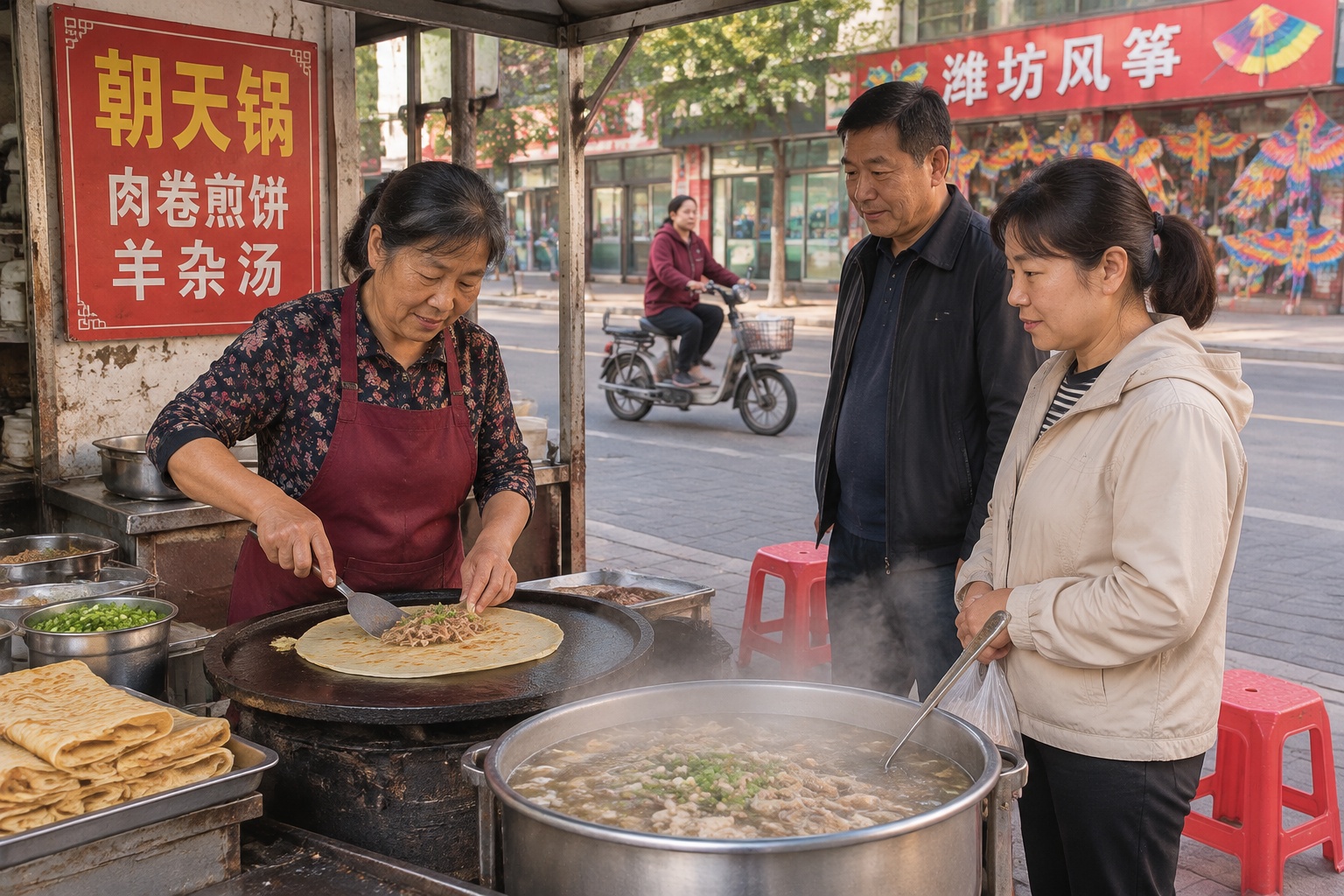
On the train back from Weifang, I ate a “Chaotian Guo”—a thin pancake wrapped around a soft meat stuffing, with a bowl of bubbling tripe soup. The vendor, a woman in her late fifties, told me she learned the recipe from her mother-in-law, who used to sell the same food to kite makers in Yangjiabu. She pointed out that the taste had not changed in sixty years. “Kites and soup—they both have long memories,” she said.
That is the real answer to how Confucian culture brings modern GDP. It is not only about national projects or famous festivals. It is about families finding daily income in what they inherited—a dish, a craft, a sentence in a book—and passing it forward. The economic numbers matter, but they only work if the culture continues to be something that people actually want to live with. In Qufu and Weifang, that very ordinary miracle is still happening.