
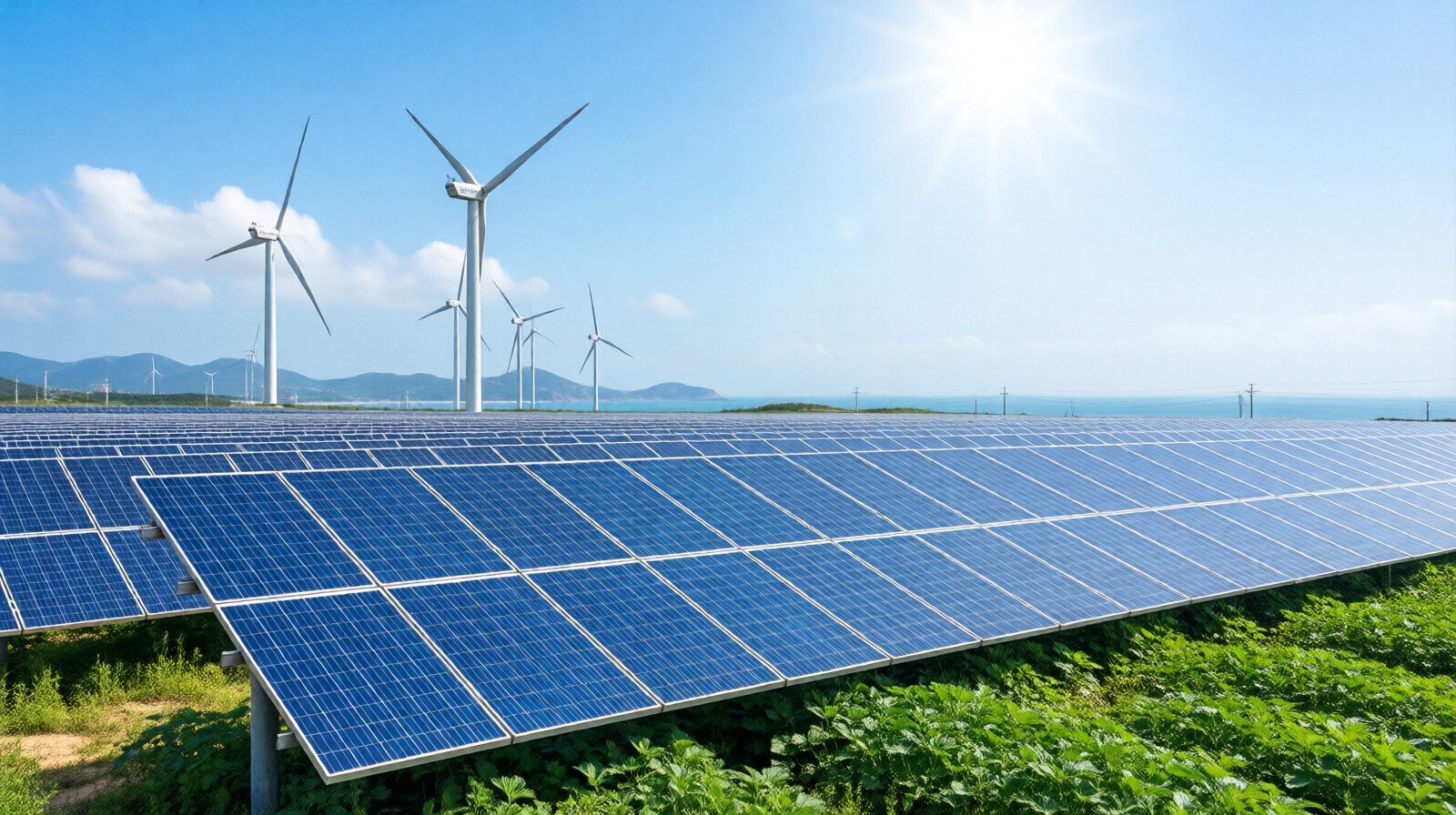

On the windswept coast of eastern Shandong, a province on China’s Yellow Sea, the skyline is changing. White turbines revolve in the salt breeze, and endless rows of photovoltaic panels shimmer across former salt flats. Just a few years ago, this area was better known for coal mines and heavy chemical plants. Today, it is a quiet but powerful symbol of China’s most ambitious energy shift.
Shandong is the country’s third-largest provincial economy, home to over 100 million people. It has long burned more coal than almost any other province, fueling steel mills, refineries and power plants. But as China pushes toward carbon neutrality by 2060, Shandong has emerged as an unlikely leader in wind and solar. By the end of 2023, its installed renewable capacity had reached 90 gigawatts, with solar accounting for about 57 gigawatts – the most of any Chinese province.
A Province Built on Coal
For decades, coal was the backbone of Shandong’s economy. The province produced over 100 million tonnes of raw coal annually even in recent years, and its power grid relied heavily on coal-fired plants. This industrial model brought wealth, but also heavy air pollution and carbon emissions. The smokestacks that once symbolized prosperity became a source of public concern.
Shandong consumes about 7% of China’s coal, even though it only produces 3% of it. The gap is made up by rail shipments from Inner Mongolia and Shanxi. The region’s heavy industries, from steel to chemicals, were built on cheap coal. By 2020, however, the cost of that model had become impossible to ignore: the province was one of the country’s biggest sources of CO2 and smog.
In 2020, China announced its ‘dual carbon’ goals: peaking emissions by 2030 and achieving carbon neutrality by 2060. Shandong, as one of the top emitting provinces, had no choice but to transform. The process began with phasing out obsolete coal-fired power plants and shifting subsidies toward renewables. But the scale of change was daunting – how do you retool an entire industrial province?
The Clean Energy Explosion
The answer has been a rapid, state-driven build-out of wind and solar. Between 2020 and 2023, Shandong’s solar capacity more than tripled. In 2023 alone, the province installed more than 10 gigawatts of new solar panels – a national record. The province now has more solar panels than any other region in China. Much of this is distributed: farmers have installed panels on their roofs, warehouses are topped with photovoltaic sheets, and even fish ponds are covered with floating solar arrays.
Solar’s Unlikely Champion
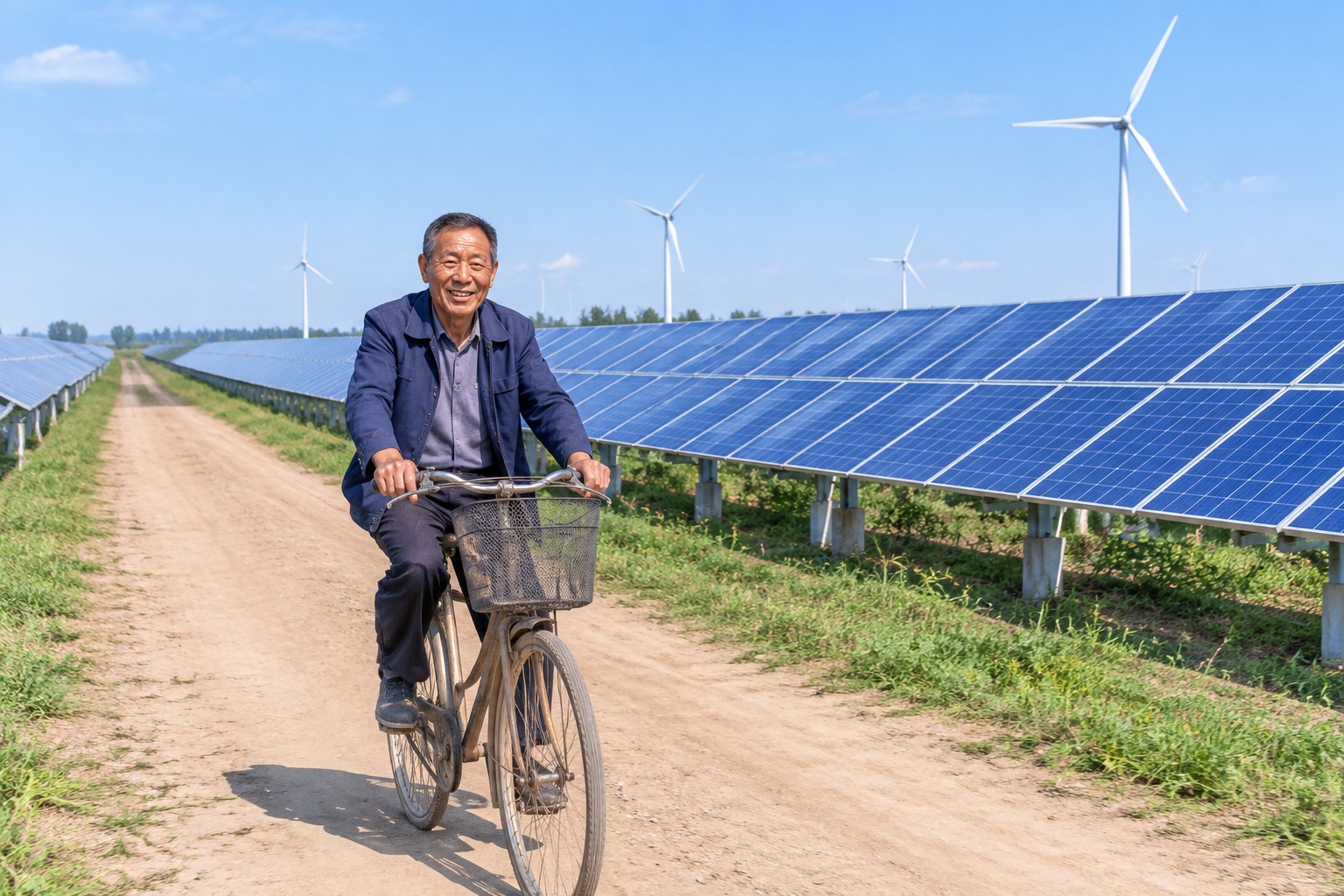
In rural Shandong, solar power has become a household income source. A typical family can lease their roof to a solar company, earning 1,000 to 3,000 yuan per year, or install panels themselves and sell electricity back to the grid. Villages like Dalujia in Dezhou have become showcases of this ‘village solar’ model.
Large utility-scale projects are also multiplying. In the Yellow River Delta, where land is often too salty for agriculture, companies have built massive photovoltaic farms beneath which grass grows and sheep graze. It’s a double win for land use.
Offshore Wind Arrives Off the Coast
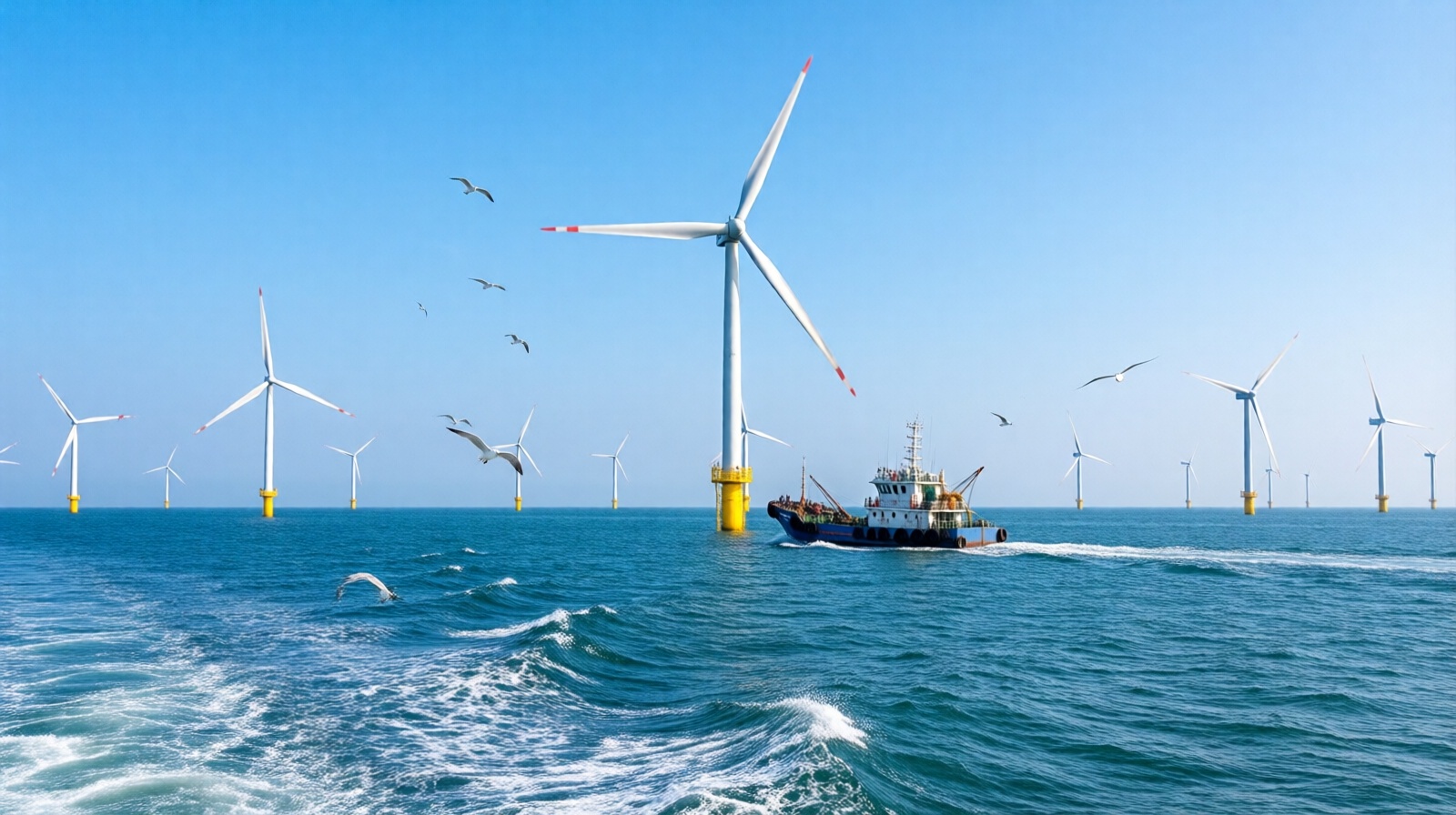
Shandong’s coastline stretches over 3,000 kilometers, making it ideal for offshore wind. In 2021, the province connected its first offshore wind turbine to the grid. By 2023, it had installed more than 3 gigawatts of offshore capacity, with plans to reach 35 gigawatts by 2030. Fishing villages that once depended on the sea now also host turbine maintenance teams and underwater cables. In Laizhou Bay, local crews share the sea with monopiles, and some villages receive annual payments from wind developers.
Living Through the Transition
While numbers tell a story of growth, the more human side of the transition is visible in the lives of workers and communities.
From Coal Miner to Solar Technician
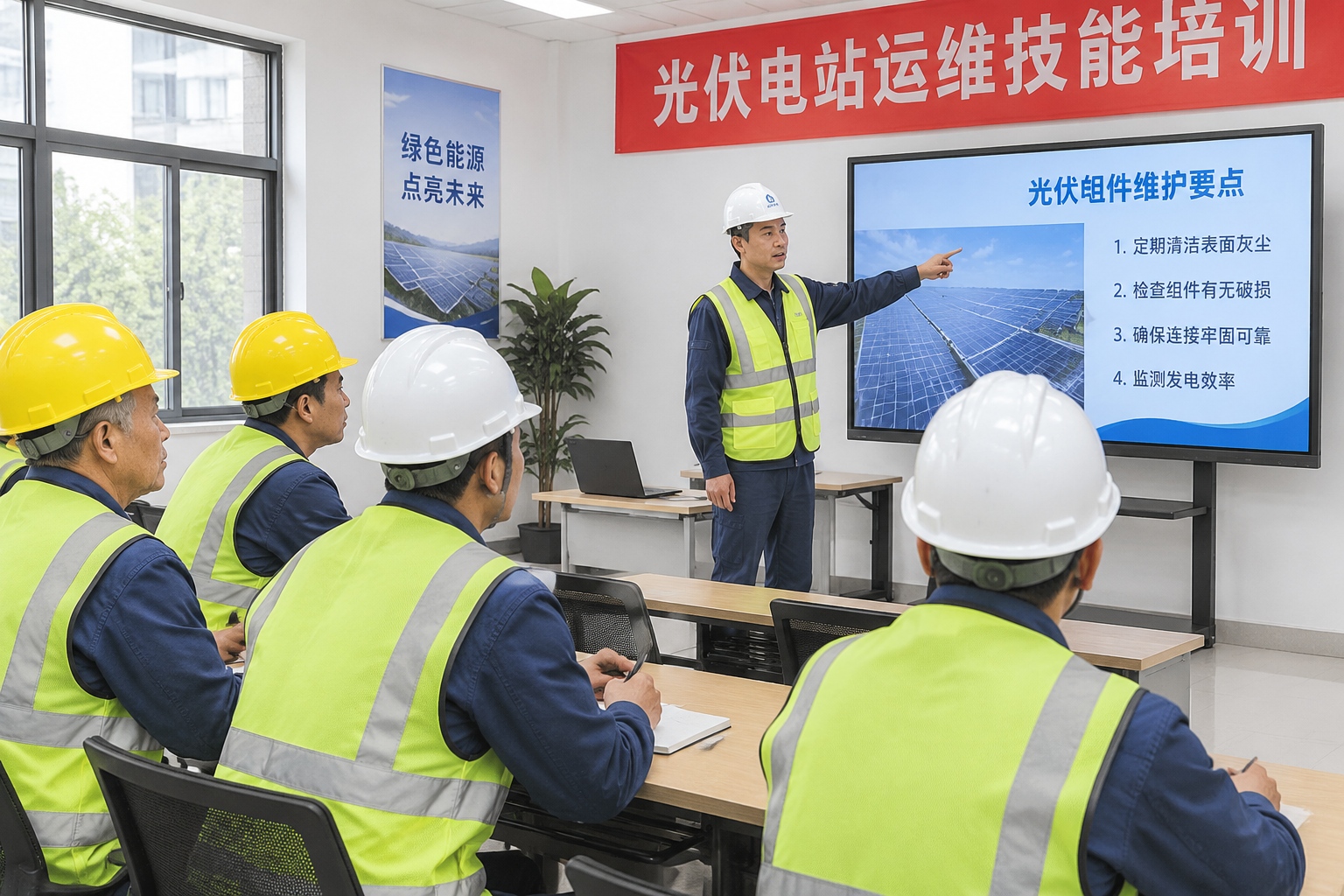
Wang Qiang, 44, spent 15 years underground in a coal mine near Jining, in the south of Shandong. When his mine was closed in 2021 due to overcapacity, he worried about his future. But the provincial government funded a retraining program, and Wang now works as a maintenance technician at a solar farm on the outskirts of the city. ‘The work is cleaner and safer,’ he says. ‘The pay is similar, but I no longer worry about accidents.’
He is one of tens of thousands of workers who have made the switch. Shandong has established special training centers for coal industry workers, offering courses in solar panel installation, wind turbine maintenance, and electric vehicle repair.
Fishing Villages and Wind Farms Share the Sea
On the coast, fishermen like Liu Haifeng in Haiyang have seen their livelihoods change. The construction of offshore wind farms created jobs in boat piloting, turbine inspection, and seafood farming around the foundation pillars. ‘We used to fight over fishing grounds,’ Liu says. ‘Now we cooperate with the wind companies – they hire our boats and we keep an eye on the turbines. It’s a new way to use the sea.’
What’s Still Holding the Transition Back?
Shandong’s energy transformation is far from complete, and there are real bottlenecks. The power grid, originally designed for large coal plants, must now handle the variability of wind and solar. Blackouts and curtailment – when excess renewable power is wasted – still occur. To solve this, Shandong is investing heavily in energy storage, including giant battery stations and pumped hydro. By 2024, the province had more than 5 gigawatts of commercial energy storage, the most of any Chinese province, and new policies reward flexible power sources.
Coal still accounts for more than half of the province’s electricity generation, and many coal plants are kept on standby to ensure reliability. Natural gas is also being expanded as a ‘bridge fuel.’ Managing the phase-out of coal while keeping industries running is a delicate balancing act.
There’s also a social cost. In coal-mining towns, the closure of mines has led to unemployment and economic anxiety. While retraining helps, not every miner is willing or able to switch careers. The transition has to be handled carefully to avoid leaving whole communities behind.
A Future Written in Wind and Sunlight
Despite these challenges, no one in Shandong doubts which direction the province is heading. By the end of 2024, renewables are expected to account for more than 45% of the province’s installed power capacity, and the goal is to become a ‘coastal clean energy hub’ by 2027. The shift is visible everywhere: in the fields where turbines now tower over wheat, in the rooftops covered with blue panels, and in the new training centers where former miners learn to work with electrons instead of coal.
Shandong’s story is not a simple success tale. It’s a messy, ongoing process that involves politics, economics, technology and human lives. But standing on a beach in Haiyang, watching offshore wind turbines spin against the horizon, you begin to feel that this might be one of the most consequential industrial transitions in modern history.