

A Culinary Pilgrimage Through China: Four Cities, Four Flavors
On this trip, the question “Where are we going today?” usually gets the same answer: “What are we eating today?”
Ten days. Four cities. Four completely different flavor systems: the freshness of Guangzhou, the numbing tingle of Chengdu, the blunt heat of Chongqing, and the sour, wheaty fragrance of Xi’an. By the end, you realize that half of what you understand about China has entered through your tongue.
Guangzhou: The Taste of Freshness
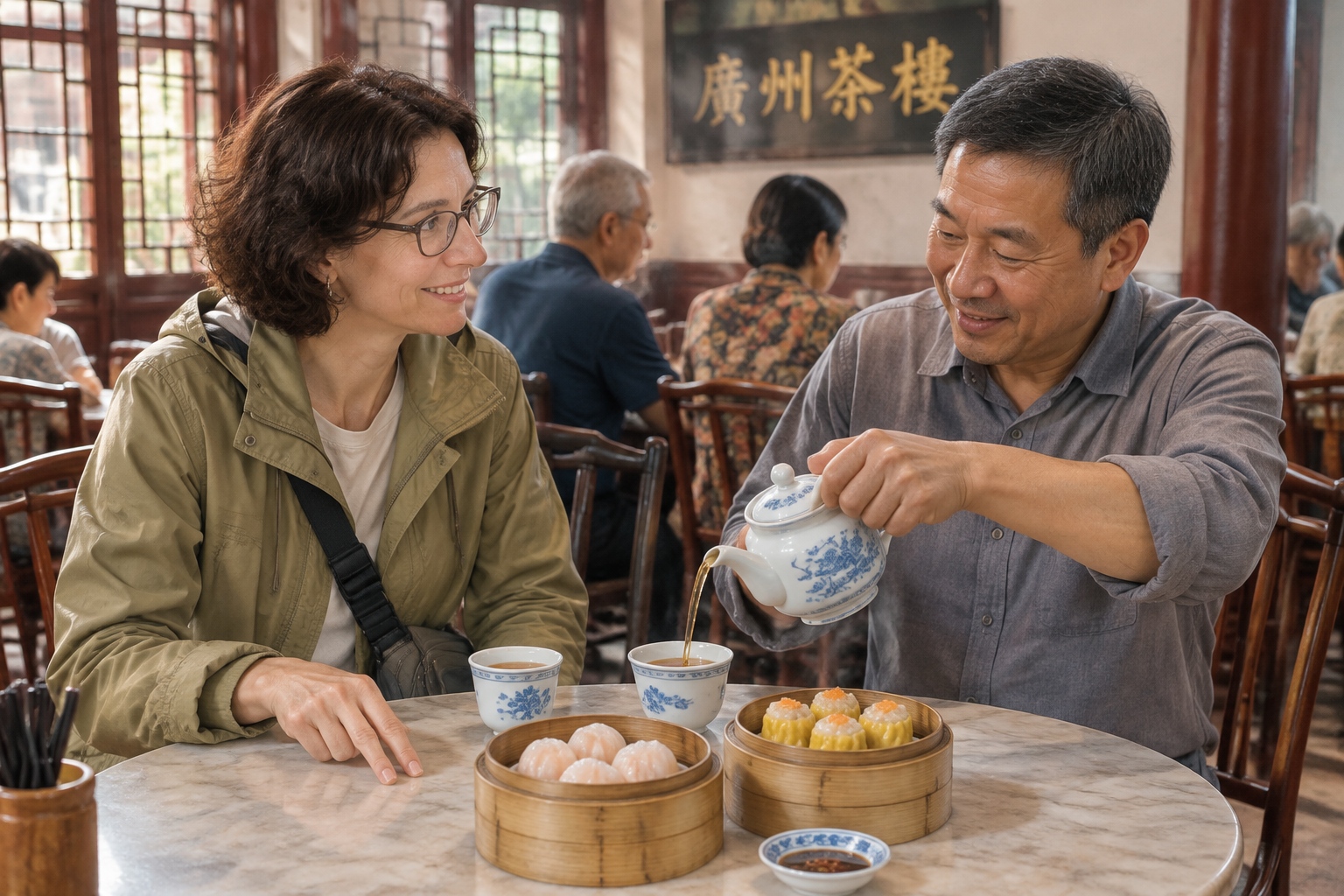
Guangzhou is “fresh.” The ambition of Cantonese cooking is not to cover up the ingredient. Blanched shrimp come with a small dish of soy sauce. Steamed fish gets ginger and scallion, and little else. The point is the fish.
Morning tea is the most ordinary ritual: one pot of tea, two dim sum, maybe more if no one is counting. Har gow wrappers are thin enough to show the pink shrimp inside. Chicken feet are braised until the bones feel soft. In Guangzhou, people will sit over morning tea until noon, not because they are slow, but because the table is the destination.
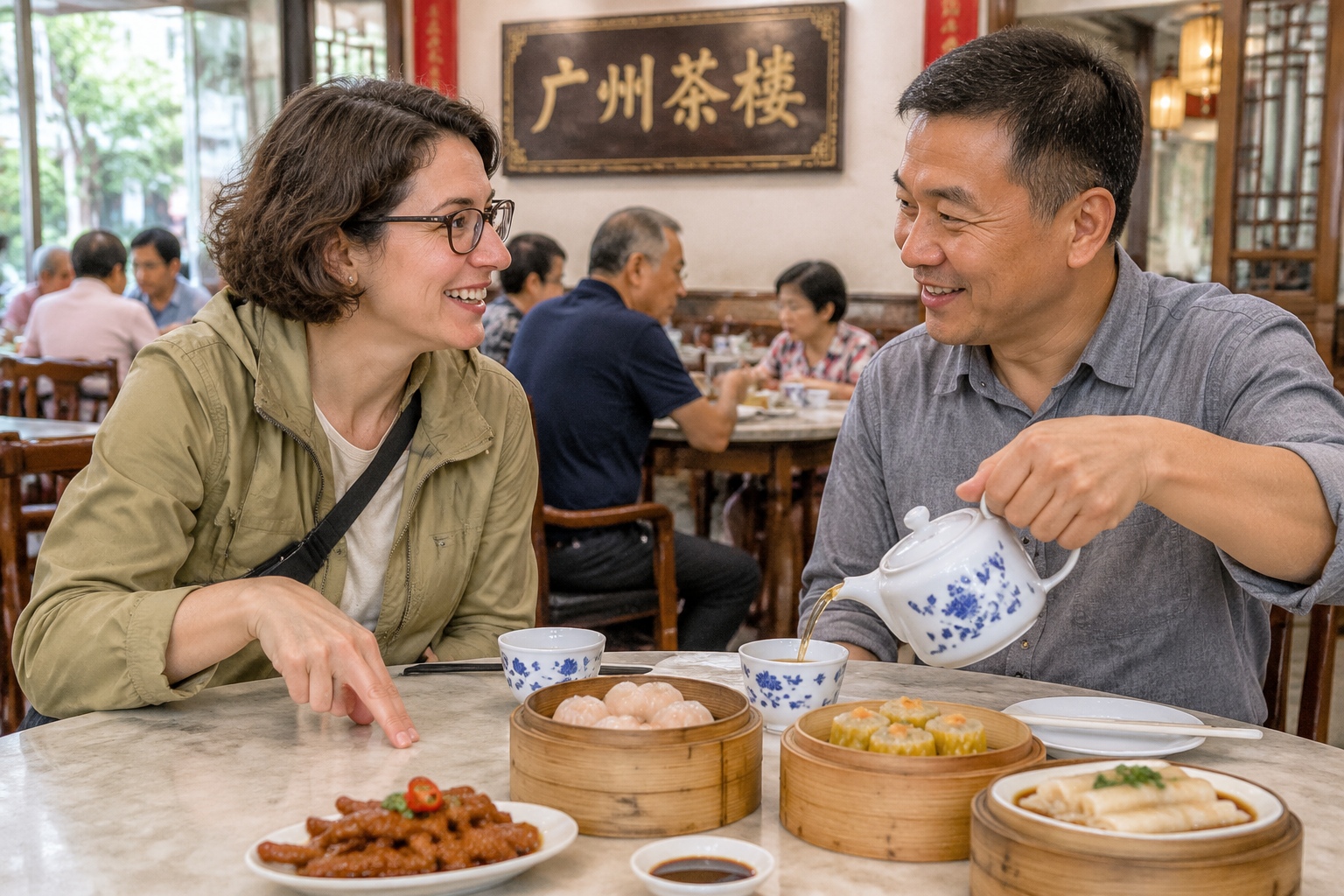
There’s a small table rule to learn. When someone pours tea for you, tap the table twice with two fingers. It means thank you. It looks casual; it is also a whole social language.
Chengdu: The Numbing Heart of Sichuan
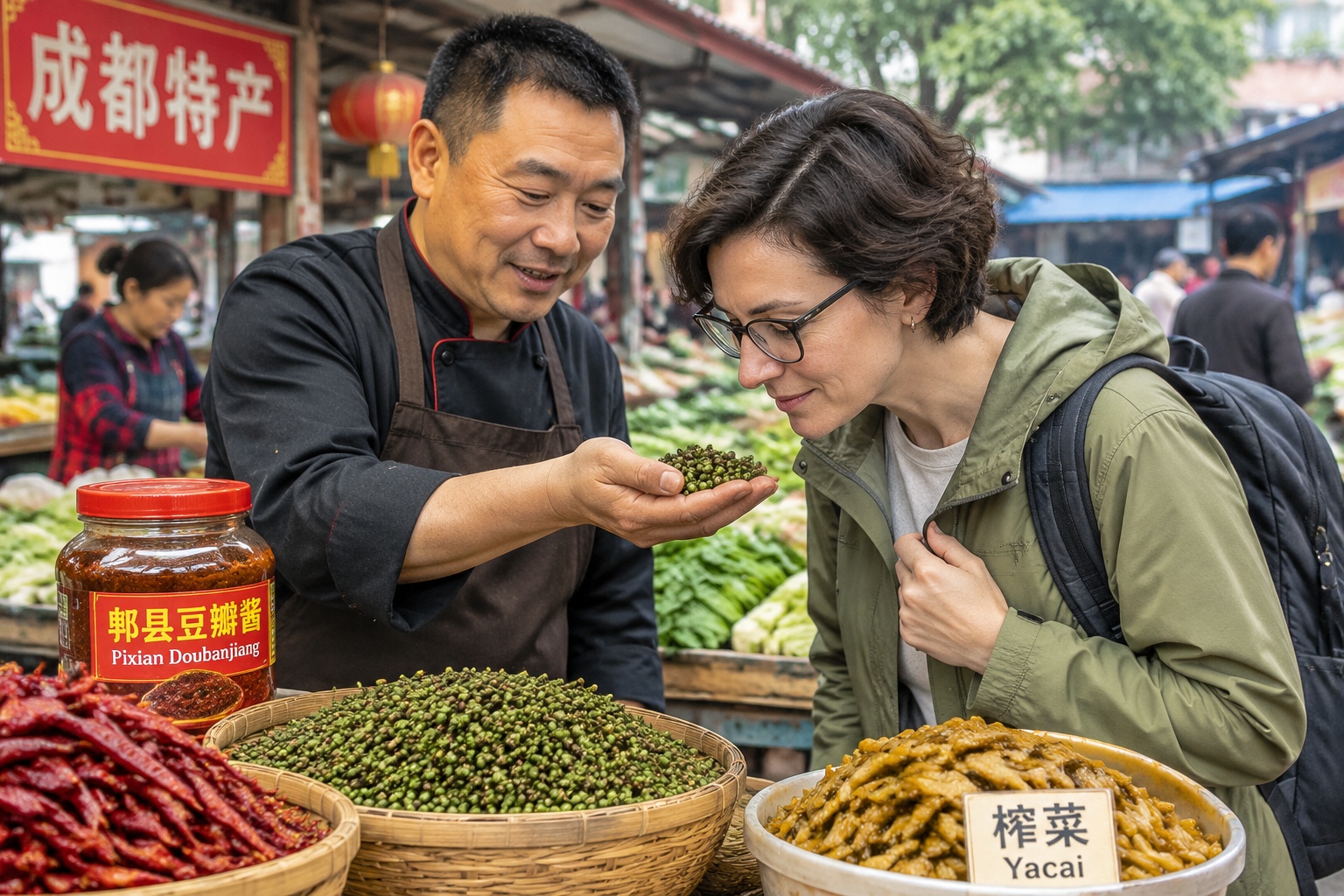
Many visitors assume Sichuan food is about chili. The signature is actually the Sichuan peppercorn—the little husk that makes your lips buzz and your tongue suddenly pay attention to everything. Mapo tofu has to hit eight notes at once: numbing, spicy, hot, fragrant, crisp, tender, fresh, alive. Kung pao chicken hides a little heat inside sweetness and sourness. Twice-cooked pork is a test of doubanjiang, the fermented broad-bean chili paste.
Chengdu treats eating as something you don’t rush. A cup of tea can last a day. In People’s Park, the teahouse chairs are bamboo, the lids are porcelain, and the ear cleaners walk around with tuning forks. No one is in a hurry.
Chongqing: Bold, Loud, and Unapologetically Hot
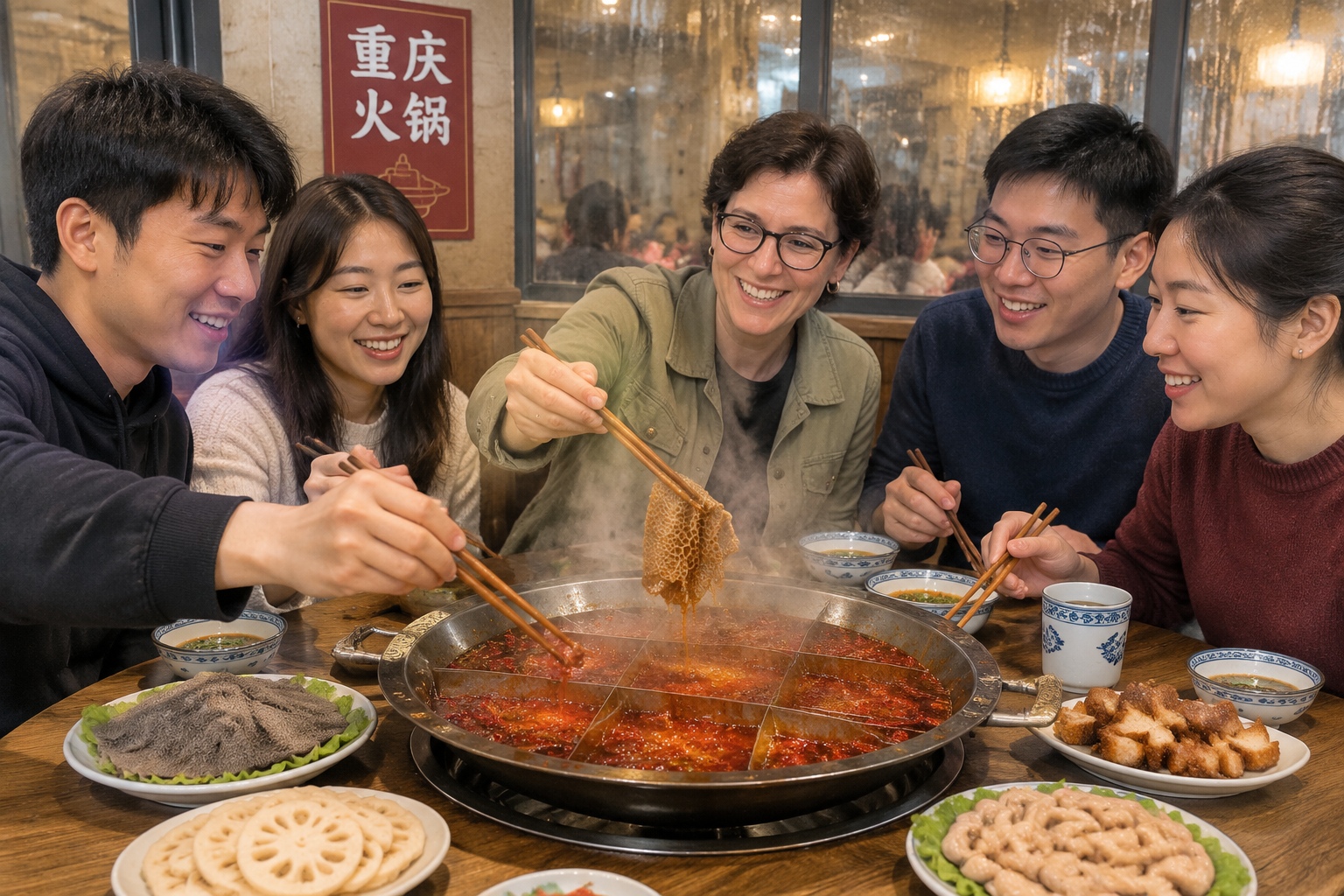
Chongqing is “fierce.” The nine-grid beef-tallow hotpot arrives with red oil rolling in the center. Tripe goes in for seven up-and-down dips, maybe ten or fifteen seconds. Duck intestine is ready the moment it curls. Xiaomian is breakfast food: at six in the morning, plastic stools sit on the sidewalk, and people order two liang of noodles with a fried egg before work.
Local “jianghu” dishes are about directness. In laziji, the pile of dried chilies is bigger than the chicken. Maoxuewang comes in a basin of red oil. Douhuafan is just three things—tofu pudding, rice, and a spicy sauce—but you keep eating.
Xi’an: Sour, Fragrant, and Built on Wheat
Xi’an is “sour and fragrant.” This is a kingdom of wheat. The bun for roujiamo should have “an iron ring, a tiger’s back, and a chrysanthemum heart”—crisp around the edge, soft inside. The braised pork is chopped fine and packed in, and the oil seeps into the paper bag. Liangpi is dressed with vinegar and chili oil, sour and clean. For yangrou paomo, you tear the flatbread yourself; pieces the size of soybeans are considered correct.
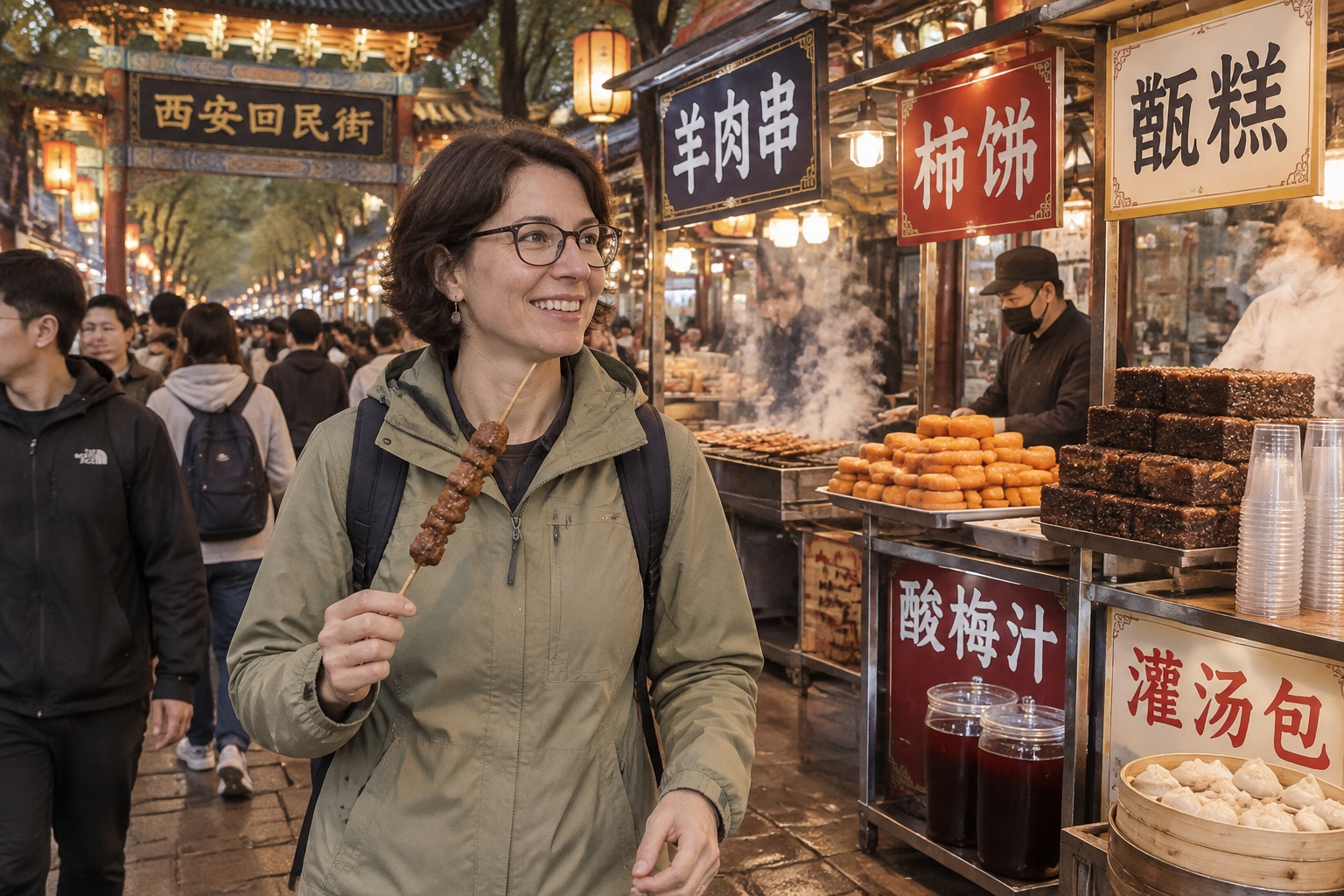
At night in the Muslim Quarter, smoke from lamb skewers, oil from persimmon cakes, the sweetness of zenggao, and the chill of sour plum juice stretch a single street into a two-hour walk.
Ten Days, One Bite at a Time
Day 1: Guangzhou—Land with a Bowl of Congee
Don’t schedule anything hard on arrival. At night, eat clay-pot congee: rice cooked until the grains split, with shrimp, crab, or frog, brought to the table still boiling. Order a plate of fried rice noodles on the side.
Day 2: Guangzhou—Morning Tea Is the First Lesson
Go to a teahouse in the morning: har gow, siu mai, char siu bao, chicken feet, rice rolls, sticky rice in lotus leaf. One basket at a time. When the teapot is empty, someone refills it. Remember the two-finger tap on the table when someone pours for you.
In the afternoon, walk the arcade streets of Shangxiajiu, then look at the old foreign buildings on Shamian Island. For dinner, roast goose and clay-pot rice. The goose skin should crackle. Scrape the crispy rice from the bottom of the pot with a spoon.
Day 3: Chengdu—Teahouses and Snacks
Fly to Chengdu, about two and a half hours. In the afternoon, go to a teahouse in People’s Park: bamboo chairs, lidded tea bowls, ear cleaners with tuning forks. In the evening, do a snack crawl—Zhong dumplings, Long chaoshou, dan dan noodles, sweet water noodles, bobo chicken, egg waffles. Small portions, one after another.
Day 4: Chengdu—Into the Kitchen
In the morning, go to a market with a chef. Learn what tengjiao, erjingtiao chilies, Pixian doubanjiang, and yacai actually look like—things you will never find at home. At noon, cook three dishes: mapo tofu, kung pao chicken, twice-cooked pork. You will remember this meal more than any restaurant.
Day 5: Chengdu—Hotpot and Skewers
Wander Kuanzhai Alley during the day. Drink tea in the afternoon to save energy. At night, go for hotpot properly: order a divided pot, and get tripe, goose intestine, aorta, brain, crispy pork, lotus root. Use an oil dip—sesame oil and garlic—not sesame paste. Then comes round two: skewers, grabbed in bunches, paid by the stick.
Day 6: Chongqing—Morning Train, Noodles on Arrival
Take the high-speed train, about an hour and a half. The first thing to do in Chongqing is find a noodle shop: two liang of xiaomian, and be clear about the spice level. In the afternoon, walk the hill city. At night, eat nine-grid hotpot. The center grid is hottest, good for tripe; the corners are cooler, better for potatoes and lotus root that need time.
Day 7: Chongqing—Jianghu Dishes and Night Views
For lunch, eat jianghu dishes: laziji, maoxuewang, spring-water chicken, douhuafan. Near dusk, go to Hongya Cave, where eleven floors of stilt houses light up gold. A bowl of bingfen goes well with the view—brown sugar, hawthorn, raisins, crushed peanuts. After the heat, that sweetness is Chongqing’s hidden menu.
Day 8: Xi’an—The Night Market Comes First
The high-speed train takes four to five hours. Go straight to the Muslim Quarter at night: lamb skewers, persimmon cakes, zenggao, sour plum juice, soup dumplings. The street is touristy, but it is also the densest concentration of Xi’an flavor. We will take you to the side lanes where locals eat.
Day 9: Xi’an—Three Must-Eats and a Class
In the morning, roujiamo—the braised pork should be a mix of fat and lean—and liangpi with extra vinegar and chili oil. At noon, yangrou paomo, and tear the bread yourself. In the afternoon, a dumpling class: make dough, roll wrappers, fold three shapes, then eat what you made.
Day 10: Xi’an—Breakfast Under the City Wall
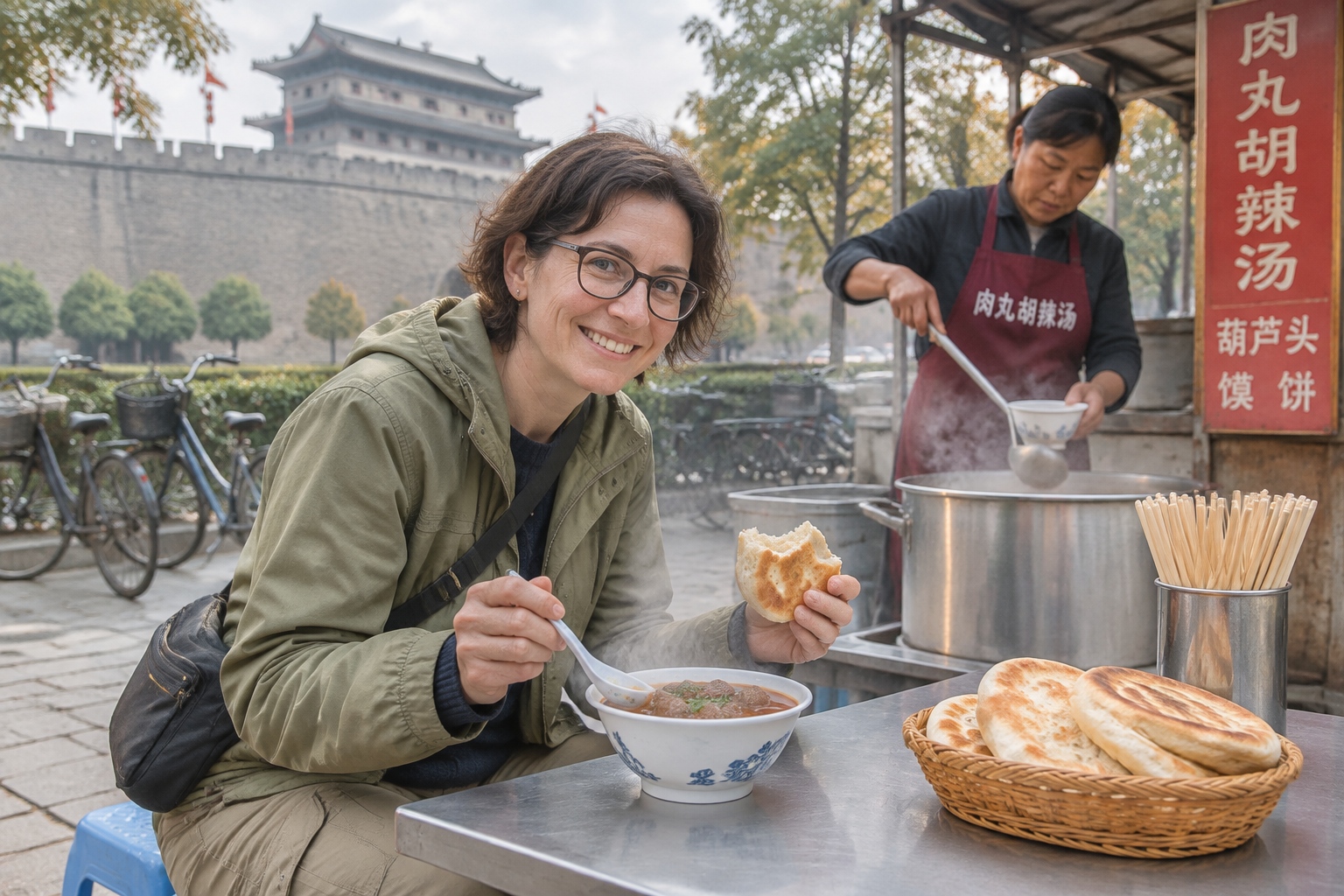
In the morning, a bowl of meatball hu la tang with tuotuo bread. Then ride or walk on the city wall. After that, head to the airport. Keep the last meal simple—that is how you leave room to come back.
Beyond the Table: Markets and Shared Meals
Visit a wet market. It is the fastest way to understand a city: see what locals buy, how they bargain, how the market at 7 a.m. is a different world from the one at 7 p.m.
Eat with people. Hotpot and barbecue are built for sitting around together. The people at your table will put food in your bowl, show you how long to cook it, and ask whether it is too spicy. This is one of the easiest places for a foreign visitor to start a real conversation in China.
Five Practical Truths Before You Go
- Spice levels are negotiable. “Mild” in Sichuan and Chongqing can still be hot for a foreign palate. Say “wei wei la” or “no chili.” A divided hotpot is safest. In Chengdu, the numbing is often harder to adjust to than the heat.
- Ordering is easier than it looks. Many restaurants have picture menus and QR-code ordering. If you can’t read it, ask the staff to recommend something, or use a translation app on the menu.
- Vegetarian and halal food both have solutions. Xi’an’s Muslim Quarter is halal. Chengdu has many vegetarian restaurants. In Guangzhou, order steamed and blanched dishes. Tell people in advance.
- Bring basic stomach medicine. Ten days and four cuisines is a lot for your gut. Drink bottled water, and choose street stalls with a crowd.
- Eat on China time. Many old restaurants close from 2 to 5 p.m. Morning tea is a morning thing. Late-night food starts after 10 p.m. The right time is part of the right dish.
Who This Trip Is For—and Who It Isn’t
This is for people who travel mainly to eat; who are willing to enter a wet market and cook; who don’t fear spice, or want to test themselves; and who want the easiest way to talk with locals.
It is not for people who only eat Western food, or who reject chili and offal completely—this route will be hard. It is not for people who need polished restaurant environments; the best food often comes on a plastic stool. And it is not for people who rank sightseeing above eating.
What You’ll Bring Home
Not souvenirs. Your tongue remembers things: the two taps on the table at morning tea, the first bite of a dumpling you folded yourself, the few seconds when everyone at the hotpot table goes quiet as the broth rolls.
After you get home, you will do one thing: search for the nearest Chinese supermarket and look for Pixian doubanjiang.
Ten days. Four flavors. You arrive a tourist. You leave with a bias—a bias toward chili.