
The Living Room of the City
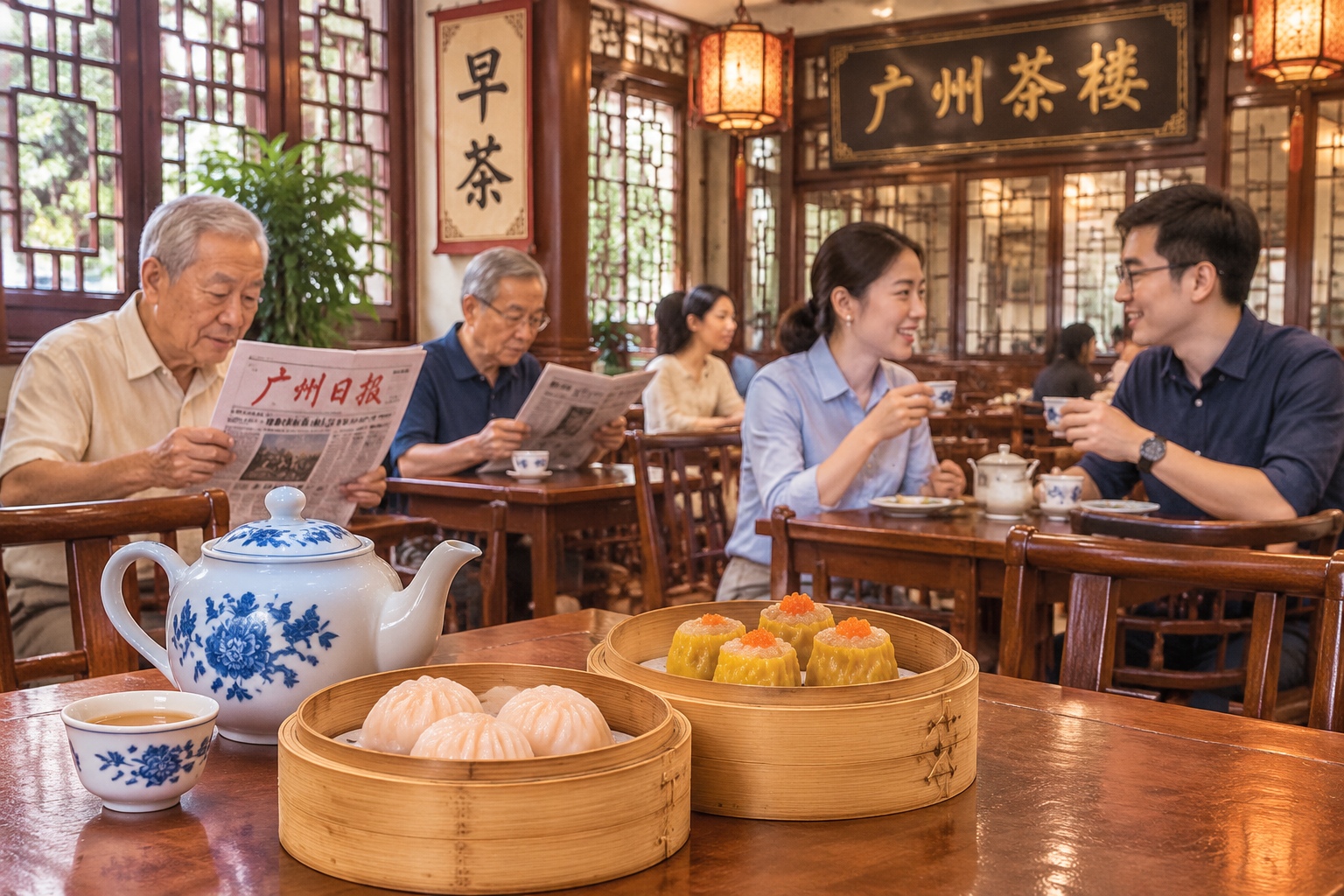
At 7:30 AM on a Tuesday, the air inside a bustling tea house in Guangzhou’s Liwan district is thick with steam and chatter. It doesn’t smell like a typical restaurant kitchen; it smells like jasmine tea, steamed bamboo baskets, and the faint, metallic scent of old wooden chairs being dragged across tiled floors. For an outsider, this might look like a chaotic breakfast rush. But for the locals, this is the city’s living room.
Unlike the hurried coffee culture in New York or London, where people grab cups and flee to offices, Guangzhou’s morning tea—known locally as Yum Cha, literally “drinking tea”—is designed to slow time down. A single pot of tea might last for three hours. The food is secondary; the conversation is primary. To understand modern China, you cannot just look at its skyscrapers or tech hubs. You must sit in a Guangzhou tea house and observe the silent negotiations happening over shrimp dumplings.
The Digital Shift: From Paper Tickets to QR Codes
For decades, the entry ritual was physical. Families would arrive at 6 AM to claim a seat, often leaving behind a thermos or a hand-written note on the table to reserve it. This “seat-saving” culture was a chaotic but effective informal queue system. Today, that scene has transformed. Younger generations rarely wake up at dawn for tea. Instead, they arrive later, around 9 or 10 AM, and immediately scan a QR code on the table.
This shift isn’t just about convenience; it changes the social dynamic. In the past, ordering was a loud, interactive process where waitresses carried clipboards through aisles. Now, orders are placed silently via WeChat mini-programs. This digital layer has streamlined the service but also introduced new etiquette challenges. For instance, if you order too much food via an app without realizing your companions’ preferences, you might end up with a table full of dishes nobody wants to finish—a modern faux pas that elders notice immediately.
The bill-splitting process has also evolved. Traditionally, one person (often the host or the eldest) would pay, reinforcing hierarchical respect. Today, while this still happens among older generations, younger groups frequently use WeChat Pay’s “split bill” feature. However, there is an unspoken rule: even if you split the bill digitally, the person who invited the group usually covers the tea pot and the initial round of dim sum. This subtle gesture maintains the face-to-face warmth that pure digital transactions lack.
The Finger Tap: A Silent Language of Respect
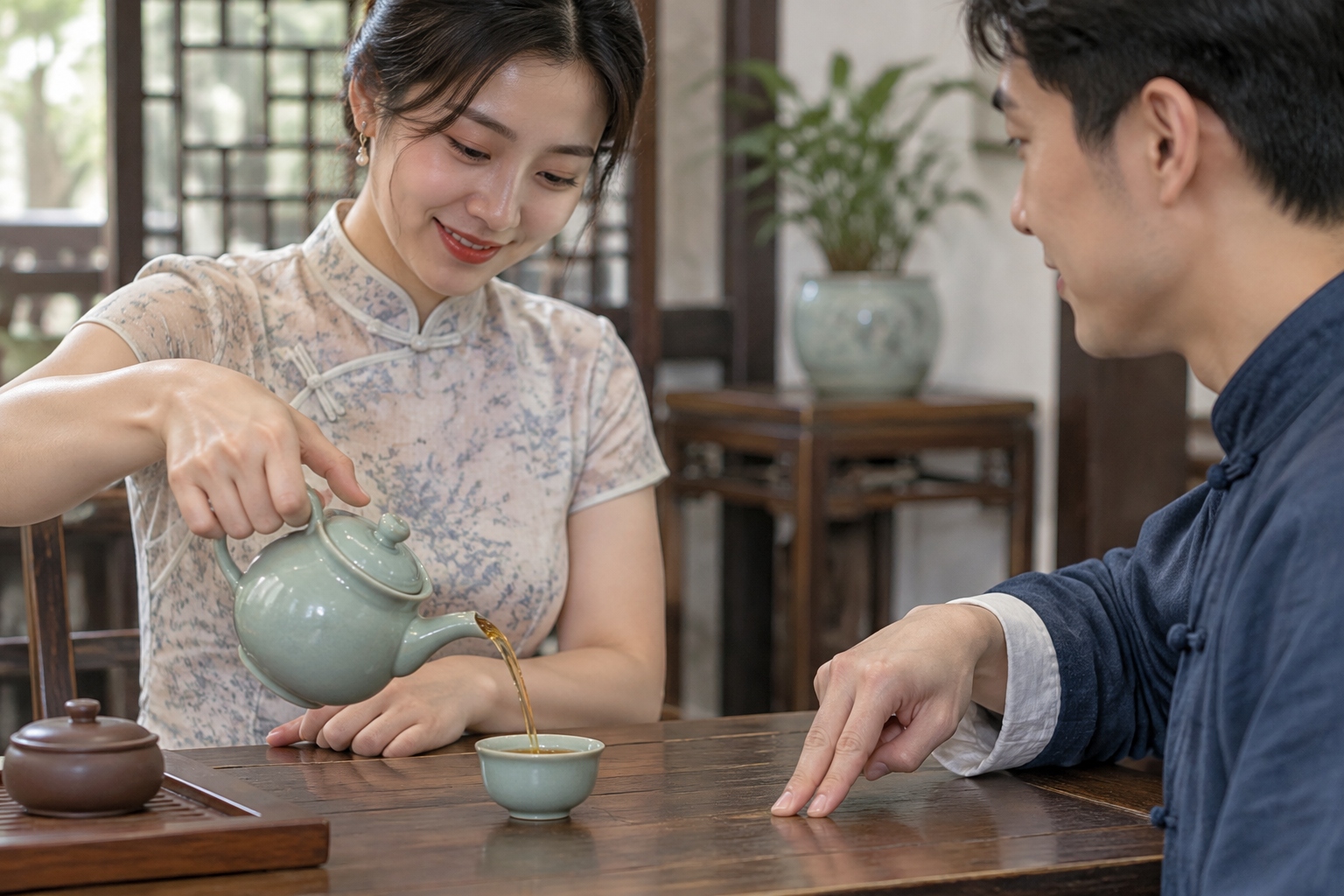
One of the most confusing customs for foreign visitors is the kou zhi li (finger-tapping). When someone pours tea for you, you do not say “thank you” out loud. Instead, you tap two or three fingers on the table. This gesture originated during the Qing Dynasty, when an emperor traveled in disguise to avoid bowing to himself. He tapped his fingers on the table to simulate kowtowing without revealing his identity.
Today, it is a universal code among Cantonese speakers. If you pour tea for a friend and they tap their index and middle fingers, they are thanking you. If an elder pours for you, you tap with all five fingers flat on the table—a full-body bow in miniature. This silent dialogue reveals a core aspect of Chinese social interaction: respect is often shown through action rather than words. In Western dining etiquette, verbal gratitude is standard. In Guangzhou’s tea houses, excessive noise can be seen as disruptive to the communal harmony.
Intergenerational Harmony in a Fast-Paced City
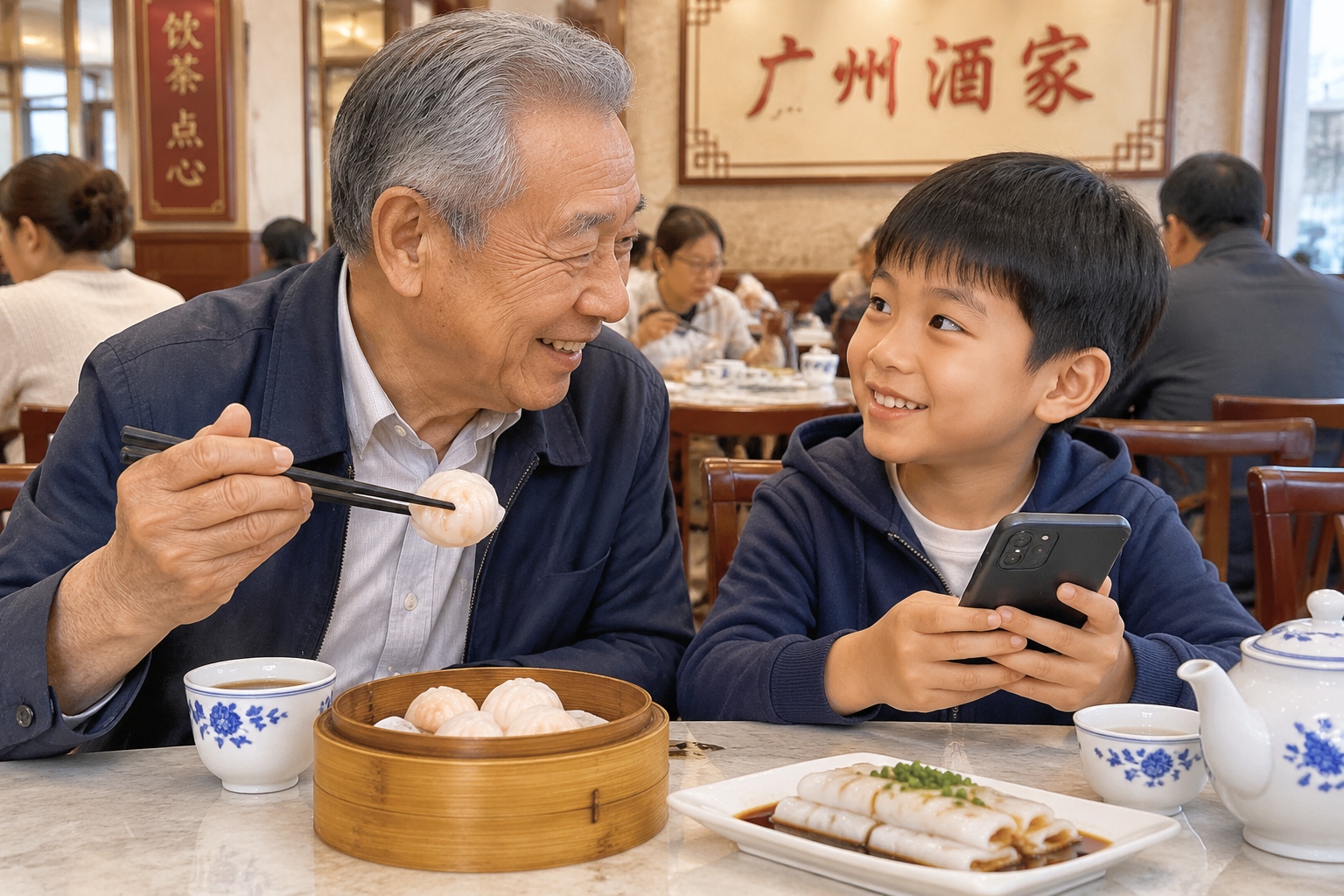
Guangzhou is one of China’s fastest-growing cities, home to massive tech and manufacturing industries. Yet, morning tea remains a sanctuary for the elderly. At many tables, you will see a mix of generations: grandparents discussing stock prices or family news with their grandchildren, who are checking emails on their phones between bites of rice noodle rolls.
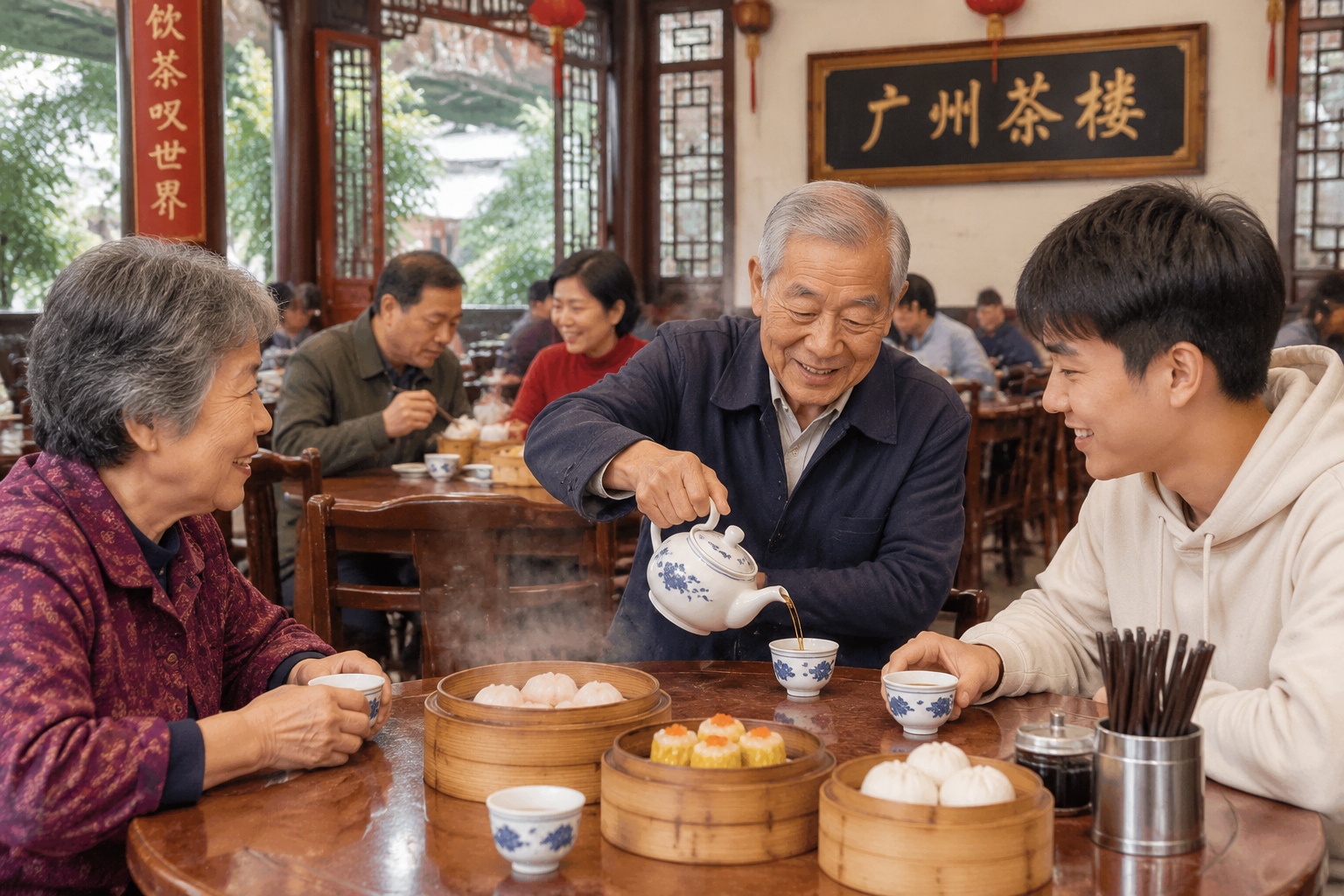
This intergenerational mixing is not accidental. In China’s rapidly aging society, morning tea serves as a critical social infrastructure for the elderly. It combats isolation and provides a structured environment for community interaction. For young professionals, it is a rare opportunity to maintain close ties with parents outside of obligatory family dinners. The tea house becomes a neutral ground where age hierarchies are softened by the shared ritual of eating.
However, tensions exist. Some elders complain that young people are too glued to their screens, missing the point of “slow living.” Conversely, younger people sometimes find the rigid seating arrangements and long durations exhausting. The solution is often compromise: younger groups might book private rooms for noise control, while still adhering to the traditional menu and etiquette. This adaptability shows how traditional culture survives not by resisting modernity, but by integrating it.
More Than Food: Understanding the Social Contract
Why does this matter to an observer of China? Because Yum Cha is a microcosm of Chinese social logic. It demonstrates how relationships (guanxi) are maintained through consistent, low-stakes interaction. It shows how technology adapts to culture rather than replacing it. And it highlights the value placed on collective harmony over individual efficiency.
If you visit Guangzhou, do not just treat morning tea as a culinary experience. Treat it as a lesson in social engineering. Observe who pours for whom. Notice how silence is managed. Watch how the bill is handled without awkwardness. These small details reveal that in China, eating is rarely just about hunger. It is a contract of belonging, respect, and continuity.