
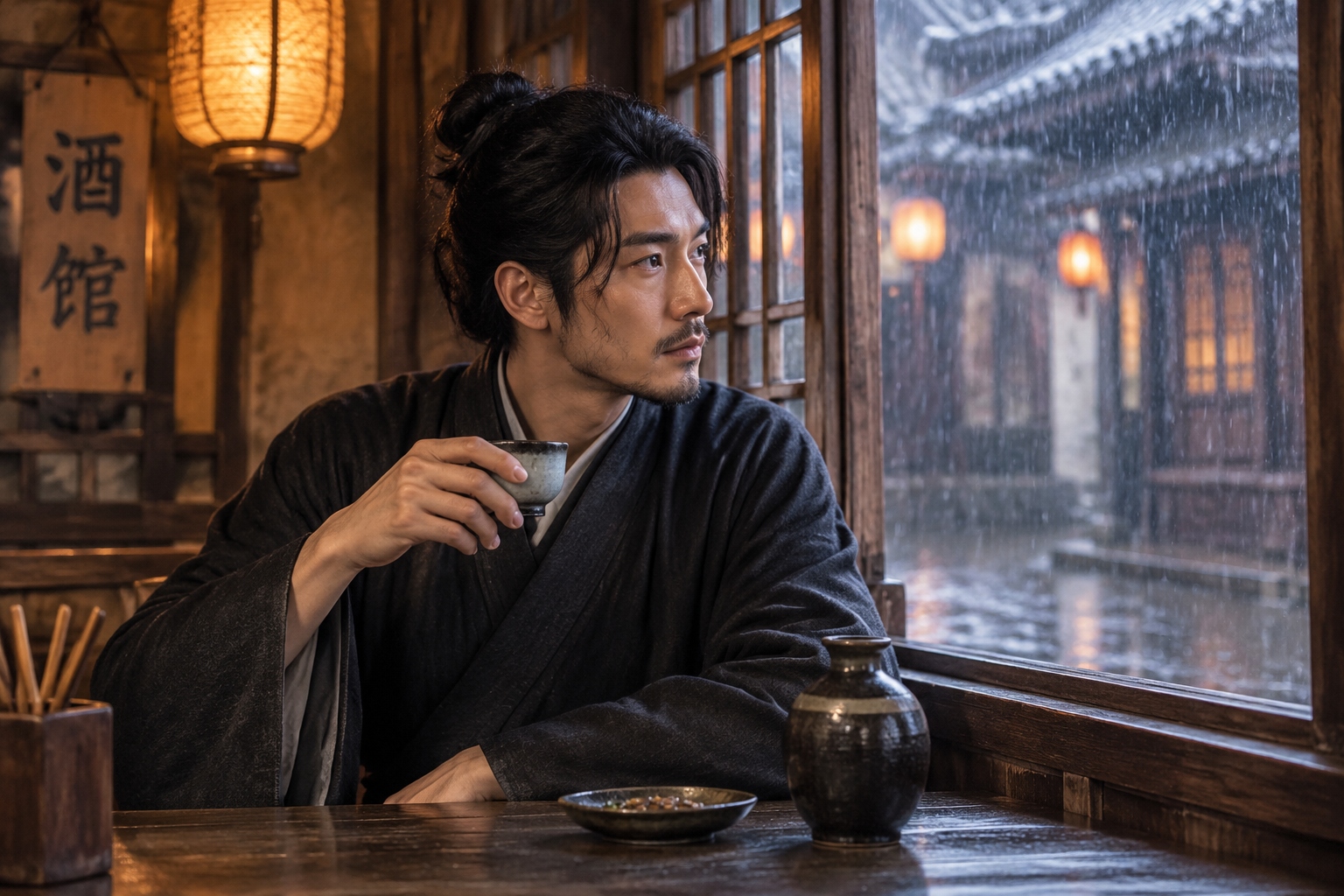

If you ask a Chinese person to name the most famous martial arts novelist, they will almost certainly say Jin Yong. His stories are epics: complex plots spanning generations, intricate historical backgrounds, and heroes who grow from naive youths into saviors of the nation. It is the literary equivalent of Game of Thrones or The Lord of the Rings.
But if you ask a young urban reader in Shanghai or Beijing who writes like Raymond Chandler, they might pause, then say: “Gu Long.”
Why Gu Long Feels Familiar to Noir Fans
To understand Gu Long, you don’t need to know Chinese dynastic history. You just need to recognize the rhythm of a hardboiled detective story. Unlike Jin Yong, who writes in long, flowing paragraphs describing landscapes and philosophical debates, Gu Long writes in fragments.
His sentences are short. Sometimes, an entire paragraph is one word. “Blood.” Or “Silence.”
This stylistic choice creates a sense of urgency and isolation that feels instantly recognizable to anyone who has read American crime fiction. The prose moves like a camera lens: quick cuts, close-ups on eyes, shadows in corners, and the clink of a wine cup instead of a whiskey glass.
The Hero Who Drinks Alone
In Jin Yong’s world, heroes are often part of a sect, a school, or a family lineage. They have mentors, rules, and clear moral compasses. In Gu Long’s world, the hero is usually an outsider.
Take Xiao Shiyilang (The Handsome Spearman) or Li Xunhuan (from The Twins). These characters are not young prodigies learning to fly on swords. They are damaged adults. They drink heavily—not because they enjoy it, but because they are tired. They have lost friends, lovers, or their innocence.
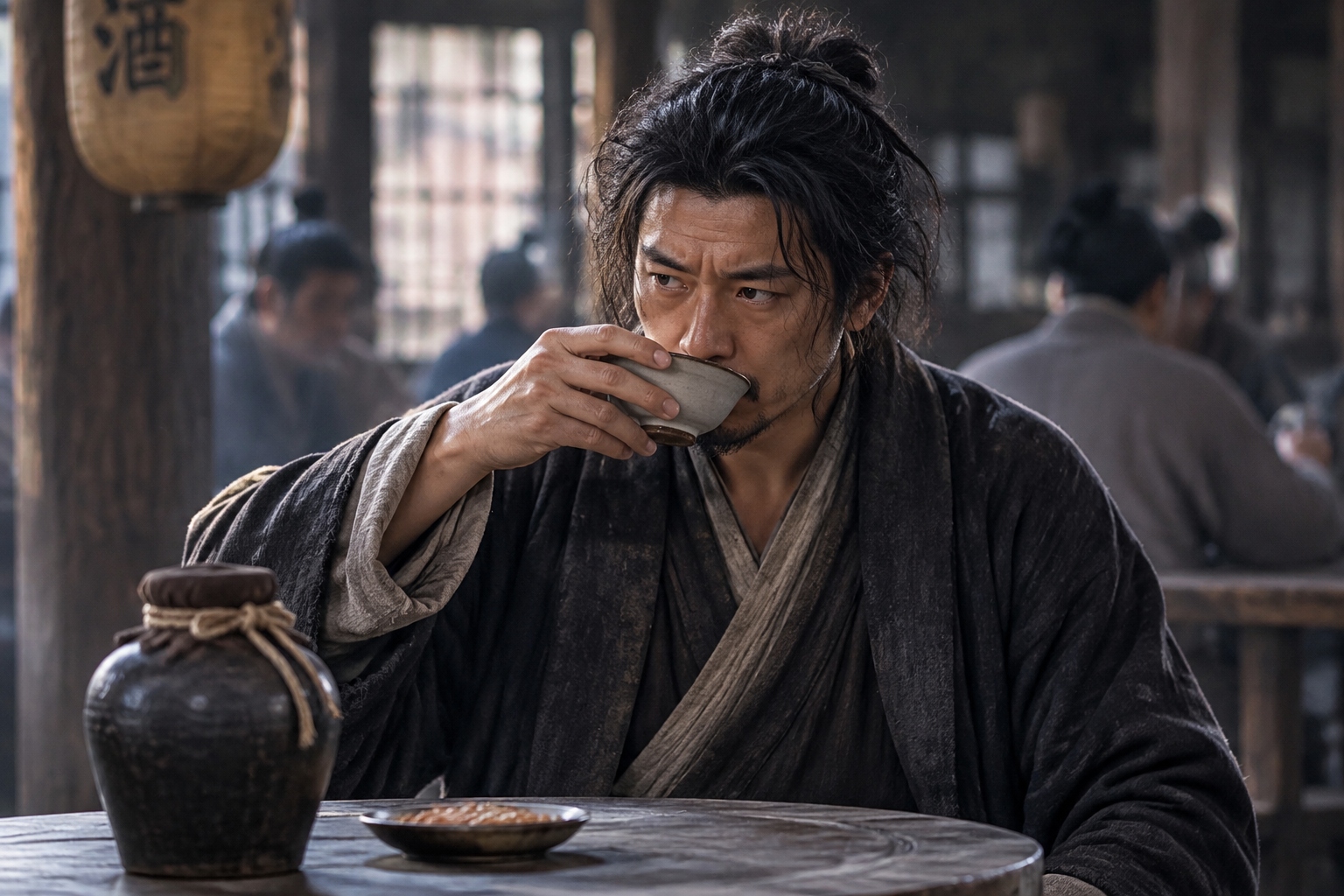
When Li Xunhuan walks into a tavern in a Gu Long novel, he doesn’t order the best wine. He orders something cheap and strong. He sits alone. This is not a celebration; it’s a coping mechanism. The Western reader sees this and thinks of Philip Marlowe or Harry Bosch. The hero is flawed, cynical about power structures, but ultimately holds onto a personal code of honor.
This “hardboiled” aesthetic resonates because it shifts the focus from power to psychology. In wuxia, martial arts skills are often metaphors for social capital. Gu Long strips away the fantasy of invincibility. His heroes can be poisoned, ambushed by their own friends, or broken by betrayal. The fight isn’t just about winning; it’s about surviving the night.
Cinematic Pacing in a Digital Age
Gu Long died young, in 1985, but his style has seen a massive revival among China’s Gen Z. Why? Because Gu Long writes like he’s directing a movie.
In the age of TikTok and short-form video, attention spans are shorter. Modern Chinese readers, who grew up watching Hollywood action films and anime, find Jin Yong’s dense historical context slow. Gu Long’s pacing is faster. He skips the training montages. He jumps straight to the confrontation.
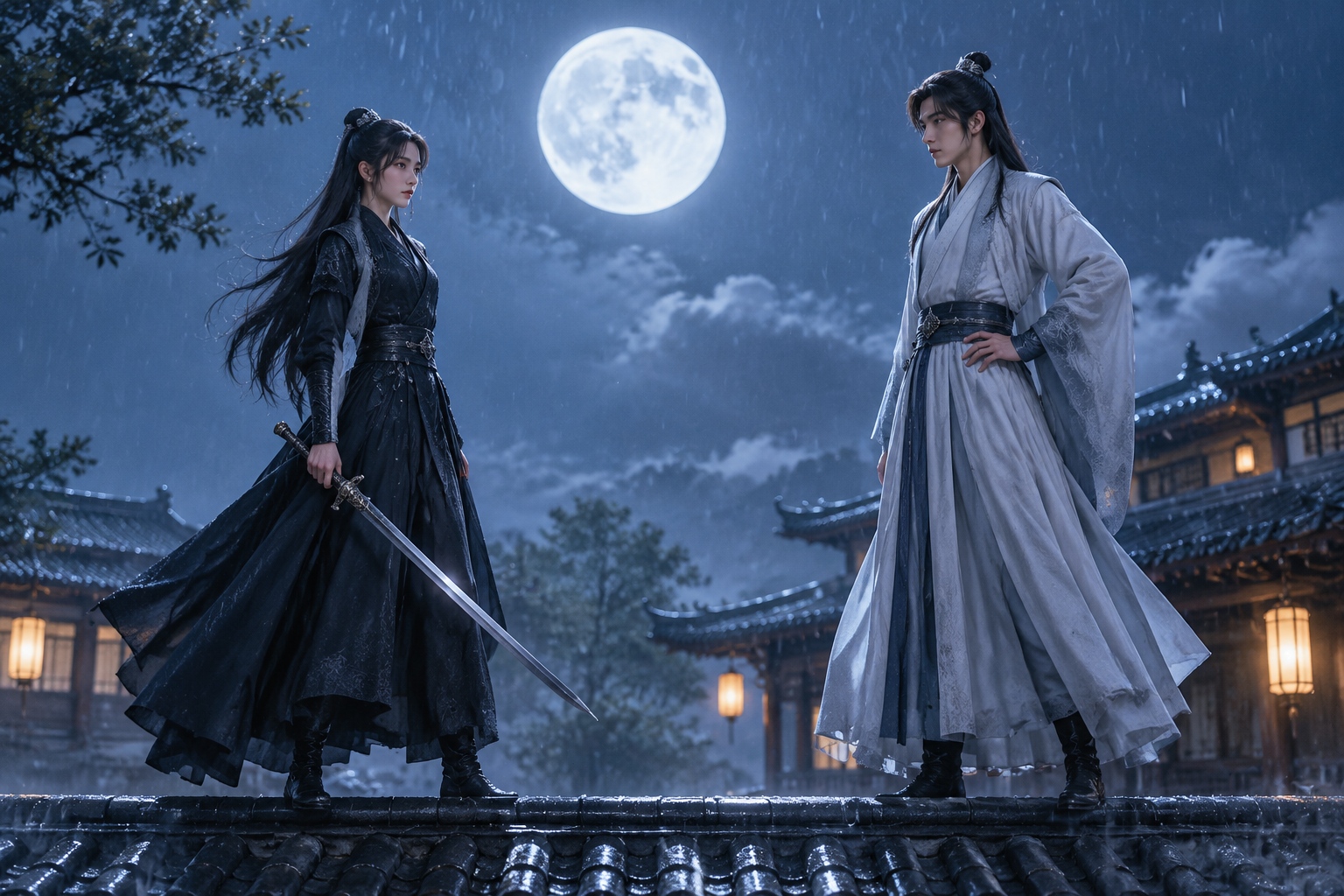
Consider a typical scene in Juedai Shuangjiao (The Twins): Two enemies meet on a rooftop at midnight. There is no long dialogue about lineage. One draws a sword. The other smiles. A flash of light. One falls. Gu Long doesn’t describe the move in technical detail; he describes the feeling of the wind and the regret in the loser’s eyes.
Where to Start: Two Doors into Gu Long
If you want to try Gu Long, don’t start with his most complex works. Start with stories that focus on character dynamics rather than sprawling conspiracies.
1. The Handsome Spearman (Xiao Shiyilang)
This is the closest Gu Long gets to a classic romance thriller. It’s about a thief who steals treasure not for money, but because he’s in love with the woman who owns it. The plot is tight, the dialogue is sharp, and the ending is bittersweet. It feels like a noir film where the detective falls for the femme fatale.
2. The Twins (Juedai Shuangjiao)
This is Gu Long’s most famous work, often compared to Shakespeare’s comedies but with more swords and less poetry. It follows two brothers raised separately by rival clans, who eventually meet without knowing their connection. The humor is dry, the violence is sudden, and the themes of identity and nature vs. nurture are universal.
Why This Matters Beyond Literature
For overseas readers, Gu Long offers a bridge into Chinese culture that doesn’t require decoding ancient history. He deals with universal emotions: loneliness, betrayal, friendship, and the search for meaning in a chaotic world.
In modern China, you see echoes of Gu Long’s style in everything from video games to advertising. The “cool,” detached, slightly melancholic hero is a cultural archetype now. When young people in Beijing go to bars, they often quote Gu Long: “A man’s sword may be slow, but his heart must not be.”
Reading Gu Long isn’t just about martial arts. It’s about understanding a specific kind of Chinese masculinity and vulnerability—one that respects silence, values loyalty over law, and finds beauty in the broken.