

For years, if you asked a typical English-speaking reader to name a classic Chinese novel, they might struggle. They know The Three Kingdoms or Journey to the West, often through fragmented TV adaptations. But ask them about Wuxia—the genre of martial arts chivalry that defines a massive chunk of modern Chinese popular culture—and you’ll likely get blank stares or confused references to kung fu movies.
This gap wasn’t due to a lack of interest in action or fantasy. It was a translation problem. For decades, the prevailing view in Western literary circles was that Wuxia was “untranslatable.” The concepts were too culturally specific, the internal logic too foreign, and the prose too dense with idioms. Today, however, something has shifted. A quiet but significant revolution is underway, driven by a new wave of translators who finally understand how to render the spirit of Jianghu (the martial arts world) into English.
The “Untranslatable” Myth and Early Struggles
To understand why this matters, you have to look at what Wuxia actually is. It’s not just fighting. It’s a moral universe where heroes navigate complex social codes, honor debts, and balance personal desire against collective responsibility. In the mid-20th century, early attempts to bring these stories to the West were often clumsy. Translators treated them like pulp fiction, stripping away the poetic nuance and philosophical underpinnings that made them beloved in China.
The result was a market that felt alienating. Western readers couldn’t connect with characters who seemed irrational by Western standards—heroes who would sacrifice their lives for a promise or refuse to kill an enemy out of sudden mercy. The cultural context was missing, so the stories felt flat. For a long time, publishers in the US and UK were hesitant to invest in high-quality translations, fearing there was no audience.
The Architects of Understanding: Three Key Translators
The turning point didn’t happen overnight. It was built brick by brick by a few key individuals who refused to treat Wuxia as disposable entertainment. Among them, Anna Holmwood stands out. Her translation of Jin Yong’s Legends of the Condor Heroes, published in 2018, was a landmark moment. Holmwood didn’t just translate words; she translated cultural logic.
Holmwood understood that for an English reader to accept a hero’s actions, they needed to understand the concept of Yi (righteousness) not as abstract morality, but as a tangible social currency. She made choices that prioritized readability without dumbing down the source material. This approach opened the door. Suddenly, readers in London and New York were discussing plot twists from 1950s Hong Kong novels on Goodreads.
Then there is Zhang Jiayi, whose work has been crucial in bringing contemporary Xianxia (a sub-genre involving cultivation and immortality) to global platforms. Unlike traditional Wuxia, Xianxia involves complex systems of magic and progression that resemble video game mechanics. Zhang’s translations helped normalize terms like “cultivation,” “qi,” and “dantian” in English, moving them from niche fantasy jargon to mainstream vocabulary.
Finally, we must acknowledge the legacy of John Minford. While best known for translating Dream of the Red Chamber, his broader advocacy for Chinese literature set a high bar for literary fidelity. His insistence that Chinese classics deserved the same scholarly respect as Western ones created an environment where serious translators could thrive.
From “Almost None” to “A Choice”: The Market Shift
The most tangible sign of this revolution is availability. Ten years ago, finding a good English translation of Jin Yong or Gu Long in a bookstore was difficult. Today, major publishers like Penguin Random House and specialized indie presses are actively acquiring rights to Chinese web novels and classic Wuxia series.
This shift is driven by data. The rise of apps like WebNovel and Wuxiaworld proved that there was a massive, hungry audience willing to pay for translated content. These platforms started with fan translations—often rough but passionate—which showed publishers the demand existed. Now, professional publishers are stepping in to offer polished, edited versions.
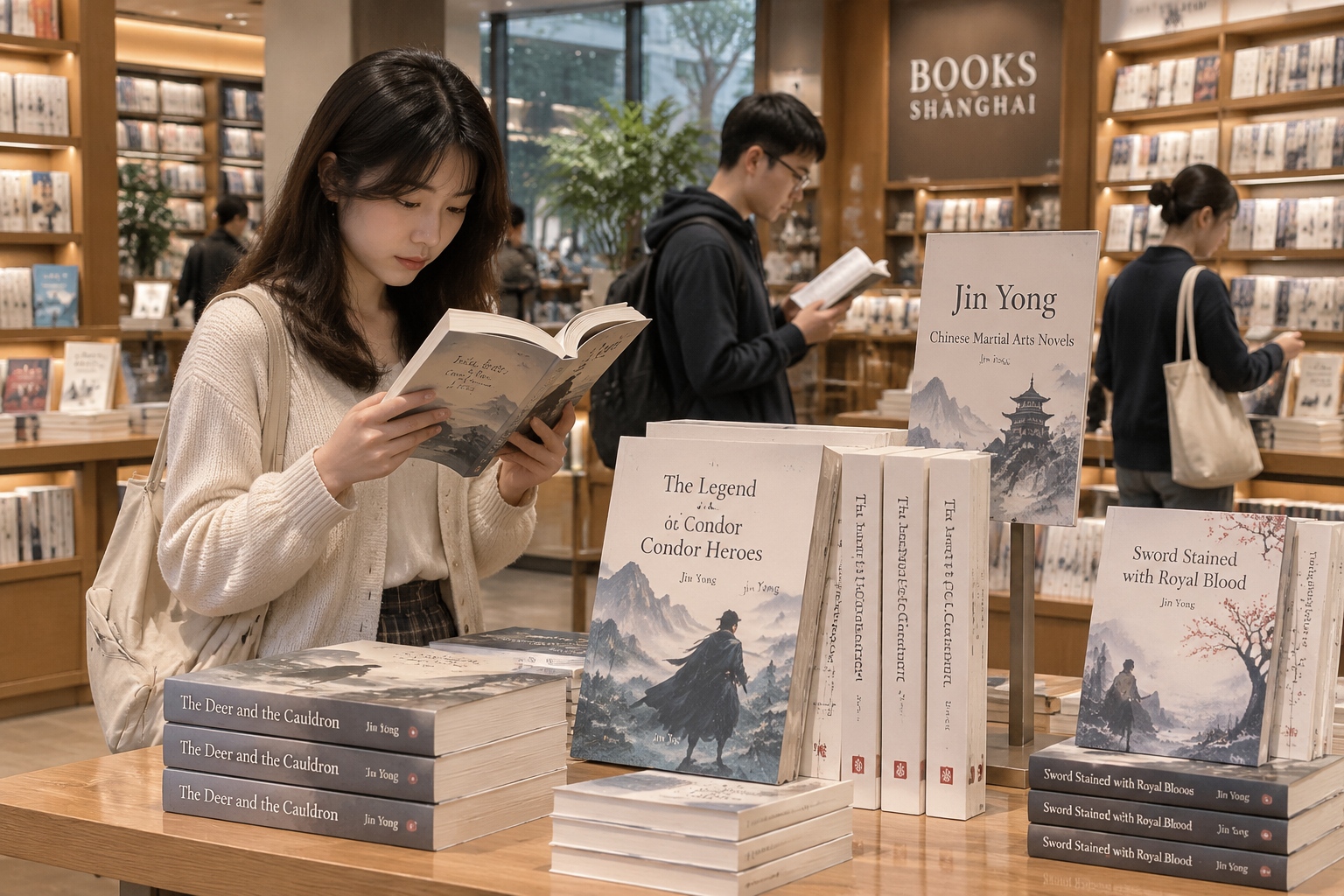
The change is also visible in retail spaces. In independent bookstores in cities like Shanghai and Beijing, you see English editions of Chinese fantasy sitting alongside Harry Potter or Game of Thrones. It’s a subtle but powerful signal: these stories are no longer exotic curiosities; they are part of the global conversation.

A Starter List for the Curious Reader
If you’re an overseas reader who wants to dive in, the barrier to entry is lower than ever. Here are a few accessible starting points that represent this new era of translation:
- Legends of the Condor Heroes by Jin Yong (translated by Anna Holmwood): The gold standard for classic Wuxia. It’s epic, emotional, and culturally rich.
- The First Immortal by Tang Jia San Shao (web novel translations): For those who like progression fantasy. Note that web novel translations vary in quality, but popular titles have improved significantly.
- Moonlight Blade series: Available through various digital platforms, offering a darker, more noir take on the genre.
The revolution isn’t just about selling books. It’s about mutual understanding. When an English reader cries over a hero’s sacrifice in Wuxia, they aren’t just consuming entertainment; they’re engaging with a specific way of viewing honor, loyalty, and human connection that has shaped Chinese society for centuries.
The Road Ahead
Challenges remain. Translation is expensive, and finding translators who are both native English speakers and deeply versed in Chinese culture is hard. But the momentum is undeniable. The “untranslatable” label has been peeled away. What remains is a vibrant, growing library of stories that invite the world to step into Jianghu, not as tourists, but as participants.