

A Small School on a Cloudy Mountain
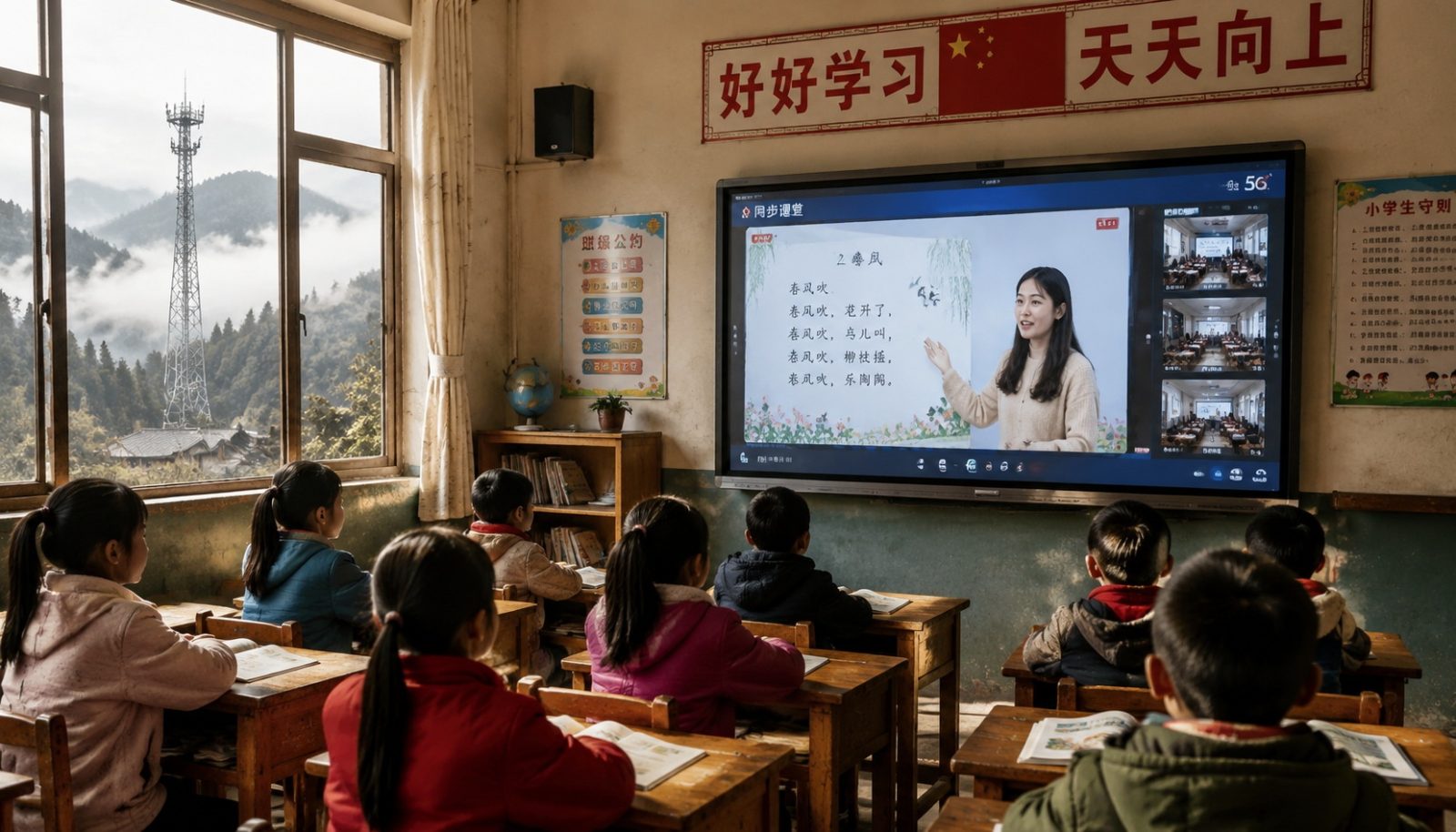
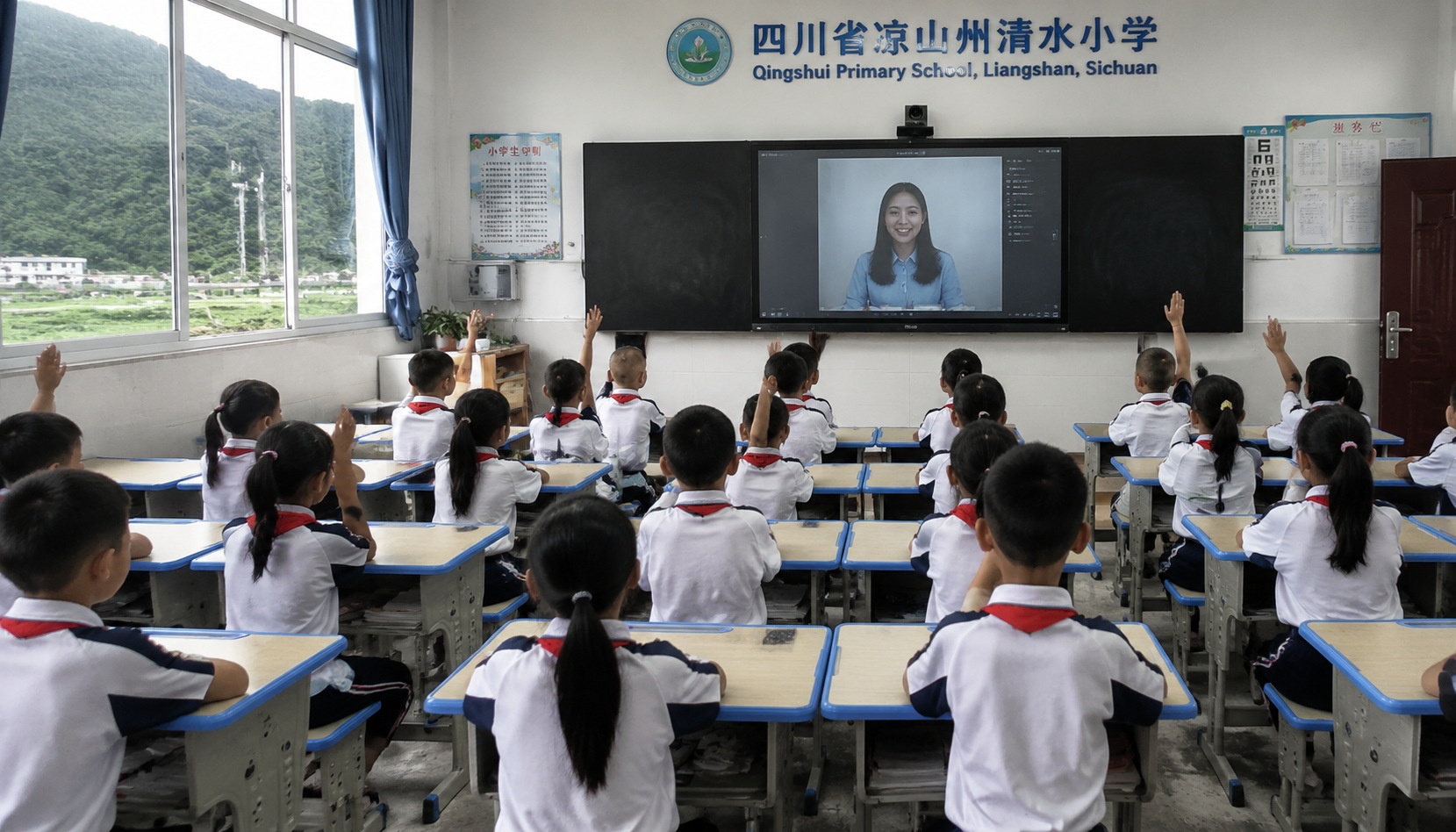
At 8:50 a.m., the morning mist still clings to the peaks of Liangshan Yi Autonomous Prefecture in Sichuan Province. Inside a two-story concrete building, 18 third-graders sit in front of a 75-inch screen. On the screen, a young English teacher in Chengdu—more than 500 kilometers away—is leading a phonics lesson. The students in the mountain school, called Qingshui Primary, can see her face clearly, hear her voice without delay, and even answer her questions through a microphone. Five years ago, such a scene was impossible. Now it’s a daily routine.
Why 5G, Not Just 4G?
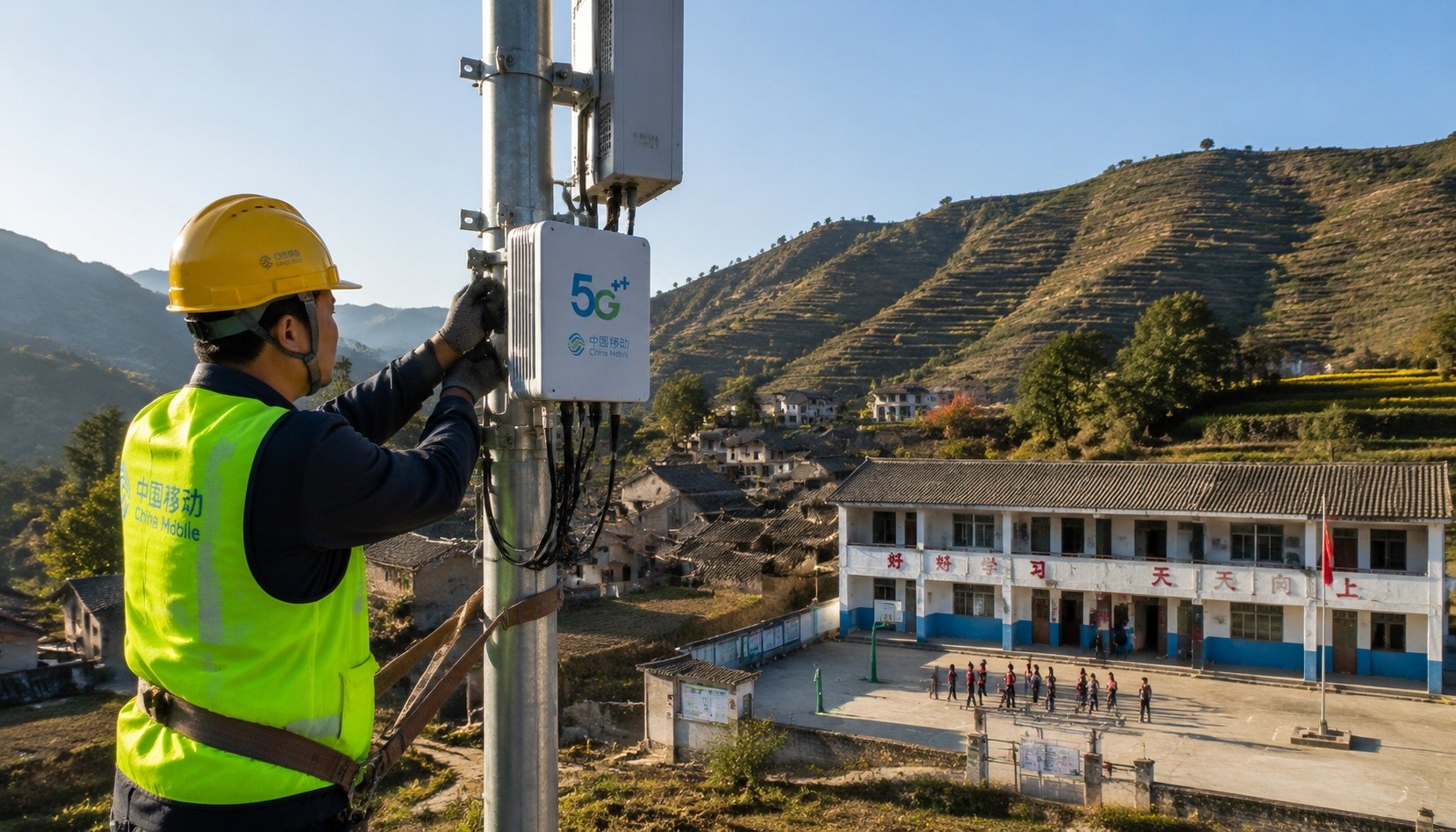
You might wonder: Don’t most Chinese villages already have 4G? Yes, but 4G struggles with multi-student high-definition video conferencing, especially in mountainous terrain. China Tower and the three major telecom operators have built over 1.1 million 5G base stations by 2025, but many remote areas were still left out because of high costs. The breakthrough came when the government released the 700MHz frequency band (originally used for TV broadcasting) for 5G. This low-frequency band can travel much farther and penetrate through mountains, so a single tower can cover a radius of 5–10 kilometers. Qingshui Primary now has a small tower just 200 meters away, installed in 2022 thanks to a universal-service subsidy program.
Chinese officials call this a “democratization of high tech.” The school’s principal, Mr. Yang, told me: “We used to have a satellite dish for one-way video lessons—no interaction. Now it’s like the teacher is in the room.”
What Happens in a 5G-Powered Classroom?
The school’s daily schedule now includes a “live remote class” block from 9:00 to 10:30 a.m. Subjects include English, math, and science. The city teacher uses a smart board; the children see the board on their screen and can write on their own tablets, with the work synced in real time. Sometimes the teacher asks a question, and each student writes an answer on a small whiteboard, holds it up to the camera, and receives instant feedback.
Beyond lectures, 5G enables virtual experiments. For example, during a physics lesson on electricity, students wear VR goggles donated by a tech company and “build” a circuit in a simulated lab. The 5G connection keeps the graphics smooth, with latency under 20 milliseconds—good enough for immersive learning.
Another hidden benefit: teacher training. Every Wednesday afternoon, the Qingshui teachers join a city-based online workshop via 5G, watching master teachers demonstrate techniques. “I used to feel very isolated here,” says Ms. Liu, a young math teacher who moved from a city two years ago. “Now I can ask questions and see how other teachers handle difficult topics.”

Real Voices, Real Impact
The students themselves notice the difference. 11-year-old A Gu (a Yi ethnic name) says: “The teacher on TV makes funny jokes. I used to think English was just memorizing words, but now we sing songs.” Her mother, who works on a nearby farm, adds: “I didn’t go to school. If my daughter can learn English well, maybe she can go to college in the city.”
Not everything is perfect. The school still faces occasional power outages (solved by a backup battery system), and some students lack high-speed internet at home (though the village now has free Wi-Fi in the community center). But the overall trajectory is clear: technology is narrowing the gap.
Is This Happening Across China?
Qingshui Primary is not alone. By 2024, the Ministry of Education reported that over 90% of primary and middle schools in China had access to the internet, with more than 20% using 5G for teaching in remote areas. The “5G + Smart Education” pilot program covers 300 schools in 27 provinces. In Tibet, similar setups allow children near Mount Everest to interact with teachers in Shanghai. The government plans to add 100,000 5G base stations in villages by 2026, prioritizing education hubs.
Of course, infrastructure alone doesn’t solve everything. Teacher turnover in remote areas remains high, and digital literacy varies. But the combination of high-bandwidth connectivity and interactive content is reshaping what’s possible.
The Bigger Picture: 5G and Future Equity
China’s push for 5G in remote schools is part of a broader ambition: leveraging technology to deliver equal opportunities—especially in education, healthcare, and e-commerce—to the country’s 600 million rural residents. The logic is simple: if a child in a mountain village can access the same quality of real-time teaching as a child in Beijing, the rural-urban education gap could shrink dramatically within a generation.
Visiting Qingshui, you can feel the change. The children no longer see themselves as left behind. Their gaze, when looking at the screen, is full of curiosity—not awe at the technology, but anticipation for the next lesson. And that, perhaps, is the most telling sign of progress.
Start the discussion at forum.chinacomes.com